There are days when cooking feels like just another task on a long list. You open the fridge, look at what’s inside, and nothing really stands out. It’s all familiar, maybe even a bit boring. In moments like that, cooking doesn’t feel creative or enjoyable — it just feels like something you need to get done.
But every now and then, the same situation plays out differently. You start anyway, without overthinking it. Slice an onion, heat a pan, add a bit of oil. The first steps aren’t anything special, but they’re not difficult either.
Somewhere along the way, your attention shifts. Not completely — you’re still aware of everything else going on — but enough that the process feels more steady, more contained. You’re not rushing through it anymore.
What’s interesting is that this usually happens with simple, familiar dishes. Not the complicated ones, but the kind you can cook without constantly checking instructions or worrying about exact timing.
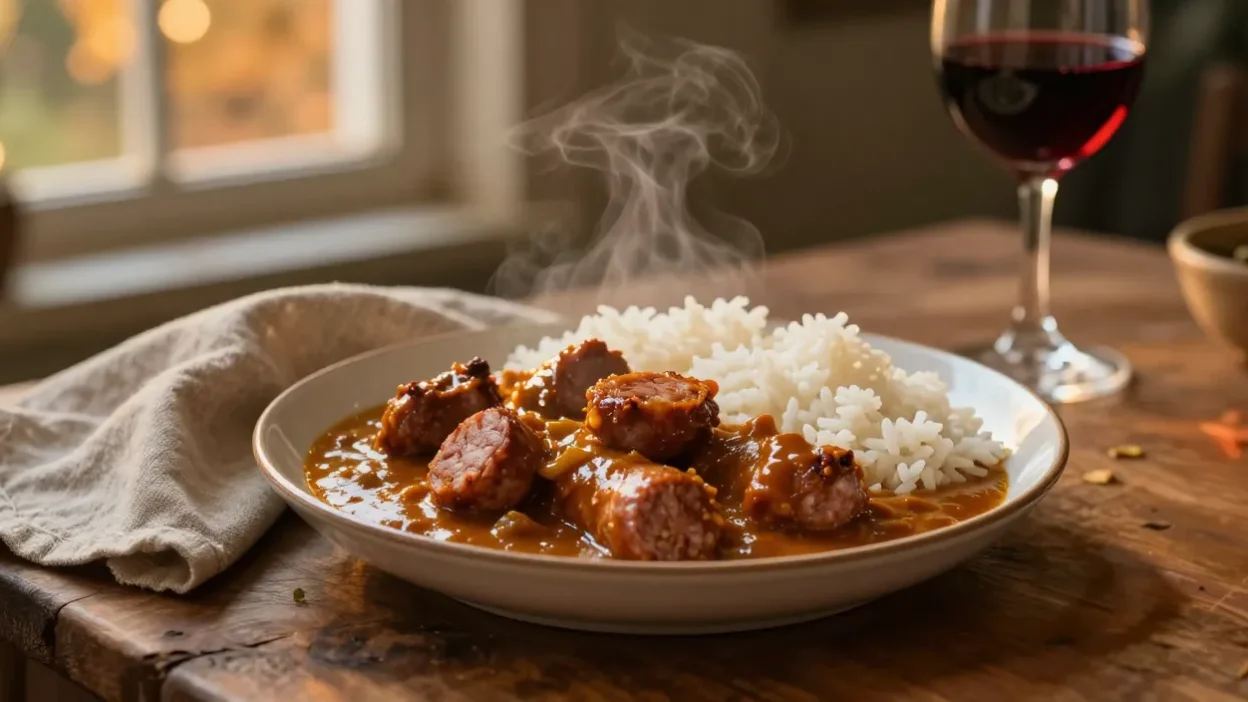
Curried sausages fit into that category almost perfectly. They don’t need precision, and they don’t fall apart if something isn’t exact. You can adjust things as you go, and the dish still comes together in a way that feels complete.
Part of that comes from how everything develops gradually. The smell doesn’t hit all at once — it builds. The sauce doesn’t thicken instantly — it takes time. Even the flavor deepens step by step instead of appearing all at once.
You don’t need much to get there:
- basic ingredients you can find anywhere
- a simple process that doesn’t need constant attention
- enough time to let everything come together on its own
By the time the dish is ready, something has shifted a little. Nothing dramatic, but you notice it. Cooking doesn’t feel like something you rushed through — it feels like something you actually took part in.
🍲 A Dish That Adapts to You
One of the biggest strengths of this dish is how easily it adapts. It doesn’t need a fixed list of ingredients or a strict method. Instead, it gives you a base you can build on, depending on what you have and what kind of meal you want.
That’s especially useful on days when you don’t feel like planning. You open the fridge, see what’s there, and work from that. You don’t have to follow a recipe exactly — the dish still comes together, even if it changes a bit each time.
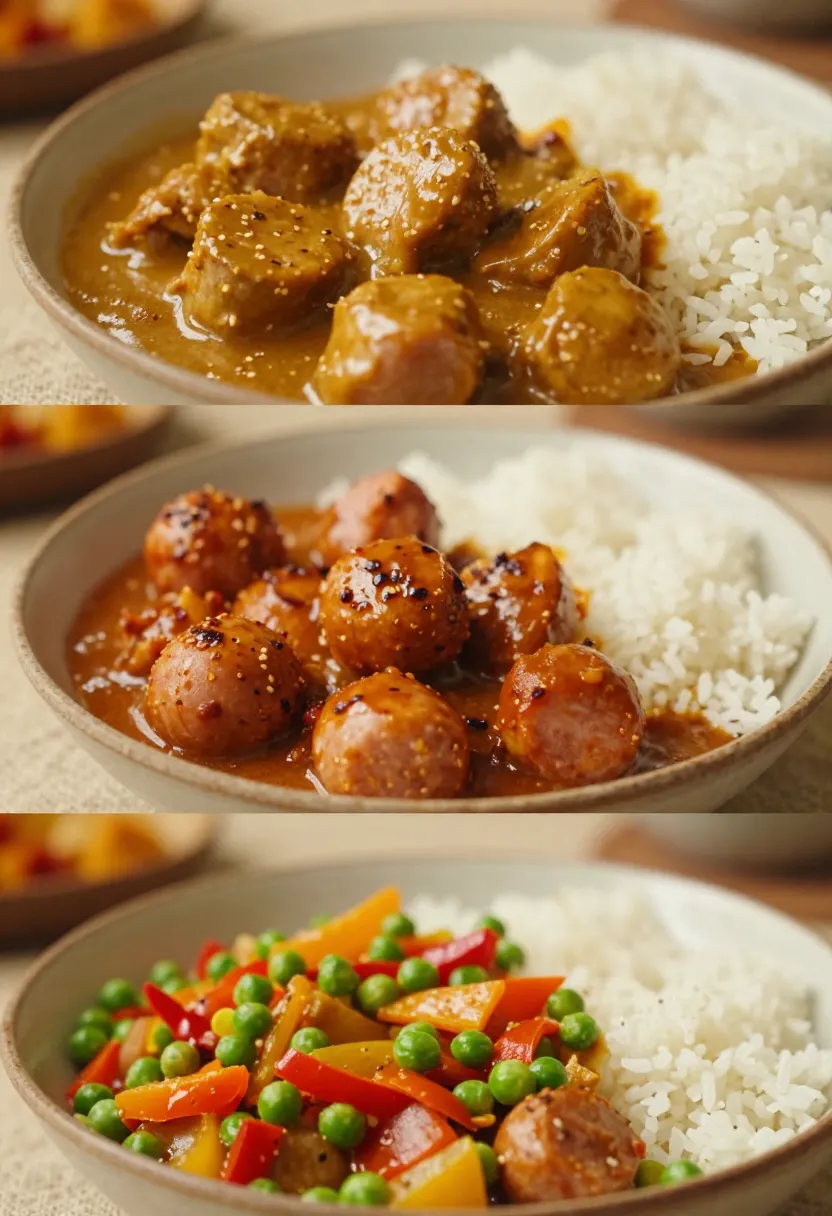
Small changes can shift the result more than you’d expect, and that’s where it gets interesting. Here’s a closer look at how different choices affect the dish:
| Change or Addition | What It Affects | Flavor Impact | Texture Impact | When It Works Best |
|---|---|---|---|---|
| Add cream or coconut milk | Sauce base | Softer, slightly sweeter, more rounded flavor | Thicker, smoother consistency | When you want a richer, more comforting meal |
| Increase curry powder | Spice intensity | Deeper, warmer flavor | No major change | When the dish feels too mild |
| Add chili flakes or fresh chili | Heat level | Noticeably spicier, sharper | No change | When you want more contrast and kick |
| Use pork instead of beef sausages | Base flavor | Slightly sweeter and juicier | Softer bite | When you want a milder, richer taste |
| Use chicken sausages | Overall balance | Lighter, less intense | Leaner texture | When aiming for a lighter meal |
| Add potatoes | Bulk and structure | Mild, slightly earthy | Thicker, more filling | When you want a heartier, one-pot meal |
| Add bell peppers | Freshness | Slight sweetness and brightness | Softer, slightly juicy | When the dish needs balance |
| Add peas or green beans | Fresh contrast | Light, slightly sweet | Adds variation | When you want more texture without heaviness |
| Add a bit of sugar or chutney | Flavor balance | Slight sweetness that rounds spices | No change | When the sauce feels too sharp or acidic |
| Use stock vs. water | Depth of flavor | Richer and more layered | Slightly fuller body | Almost always worth doing |
| Cook longer on low heat | Flavor development | More blended, deeper taste | Thicker sauce | When you have extra time |
| Add tomato paste | Base intensity | Slight tang and depth | Slightly thicker | When you want a stronger sauce |
What stands out is how forgiving the dish is. None of these changes break it — they just push it in a slightly different direction. That’s what makes it so useful for everyday cooking.
Over time, this kind of flexibility starts to feel natural. You stop thinking in strict steps and start noticing patterns instead — when something needs more depth, more balance, or a bit of contrast.
And that’s usually the point where cooking gets easier, not harder.
🍛 Why Simple Food Still Wins
With so many new recipes and food trends popping up all the time, it’s easy to feel like cooking always has to be something new or exciting. There’s this quiet pressure to try different things, improve old ones, or make a dish more “interesting.”
But in everyday life, that doesn’t always work.
Most of the time, what you actually need is something reliable. A meal that doesn’t take much thinking, doesn’t drag on for hours, and still turns out satisfying. That’s where simple dishes keep proving themselves.
Curried sausages are a good example. They’re filling without being too heavy, and flavorful without going over the top. The ingredients are basic, and the process is straightforward — no extra steps that don’t really add much.
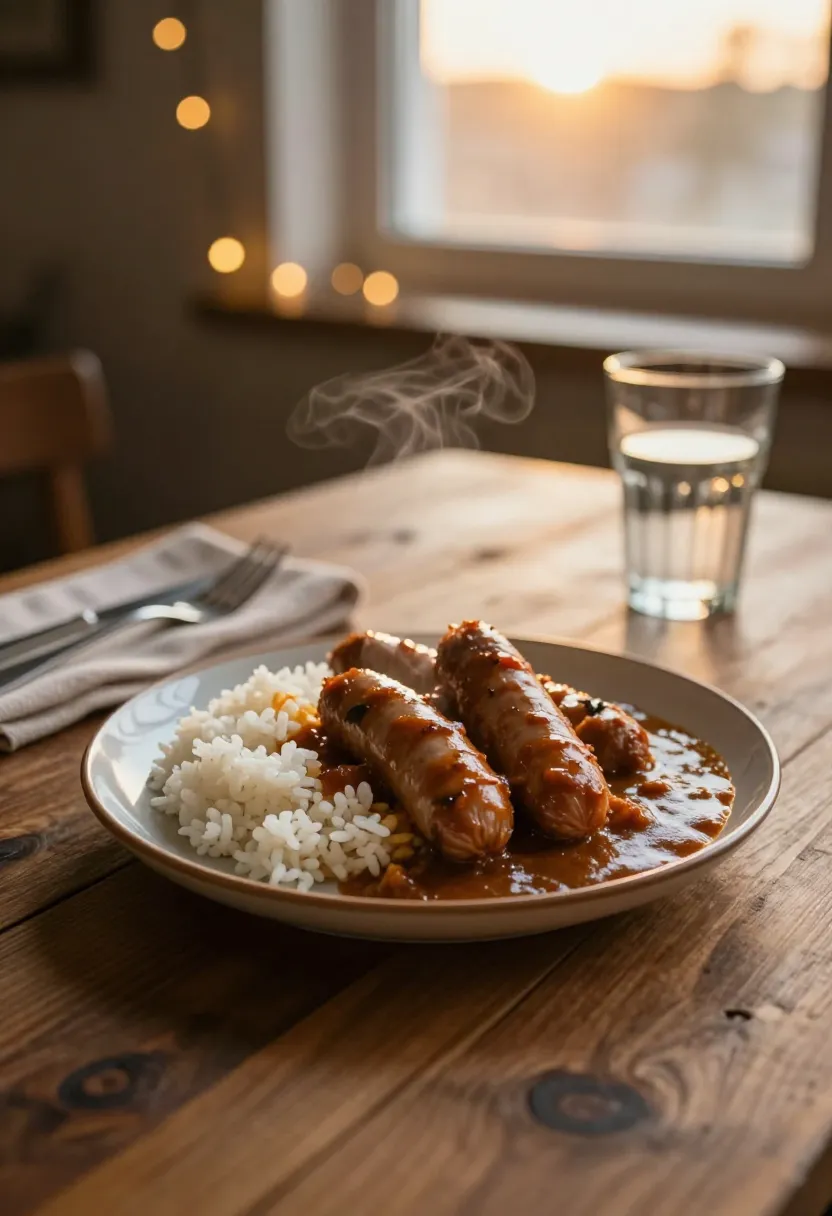
More importantly, the result is consistent. You more or less know what you’re going to get, and that kind of predictability is underrated — especially on days when you don’t feel like experimenting.
Simple meals have a few clear advantages:
- they’re easy to repeat without relearning everything each time
- they use ingredients you probably already have
- they handle small changes without falling apart
- they don’t need constant attention or precise timing
That’s what makes them stick. Instead of being something you try once and forget, they become part of your routine.
And that’s really the difference. Some dishes stand out because they’re new. Others stay with you because they just fit into your life.
Curried sausages are the second kind. They’re not trying to impress — they just work.
And most days, that’s exactly what you need.
🍛 Curried Sausages Recipe: A Hearty Classic Made Easy
At its core, this dish is about balance — but not in a strict, “everything has to be perfect” kind of way. It’s more the kind of balance that happens on its own when simple ingredients have enough time to come together.
You’ve got the richness of the sausages, which carry most of the flavor. Then there’s the curry — not too strong, not too sharp, just enough to add warmth and a bit of character. And then the sauce, which slowly brings everything together. It’s not as heavy as a stew, but it’s not light either. It sits somewhere in the middle, which is probably why it works for so many people.
What makes this recipe especially practical is how easy it is to work with. You don’t have to be precise with every step, and it doesn’t matter if something isn’t cut perfectly or measured exactly. It’s one of those dishes where small imperfections don’t really change the result — it still comes together just fine.
Another thing is how the flavor develops over time. At the start, it can taste pretty simple — sausages, vegetables, a bit of spice. But as it simmers, everything blends. The sharper notes soften, the sauce thickens slightly, and the whole dish feels more put together. It’s not a dramatic change, but you notice it if you’re paying attention.
It’s also the kind of meal that tastes better if you give it a little time. Not even the next day (though that helps), just letting it sit for a few minutes before serving makes a difference. The flavors settle, and everything feels a bit more rounded.
Ingredients
- 8 sausages (beef, pork, chicken, or plant-based)
- 1 tablespoon cooking oil
- 1 large onion, sliced
- 2 medium carrots, chopped
- 2 cloves garlic, minced
- 1–2 tablespoons curry powder
- 2 cups (500 ml) stock (chicken, beef, or vegetable)
- 1 can (400 g) diced tomatoes
- 1 cup frozen peas
- 1 teaspoon sugar (optional)
- Salt and pepper to taste
- Fresh herbs for garnish (optional)
For serving:
- Cooked rice or mashed potatoes
Cooking Instructions
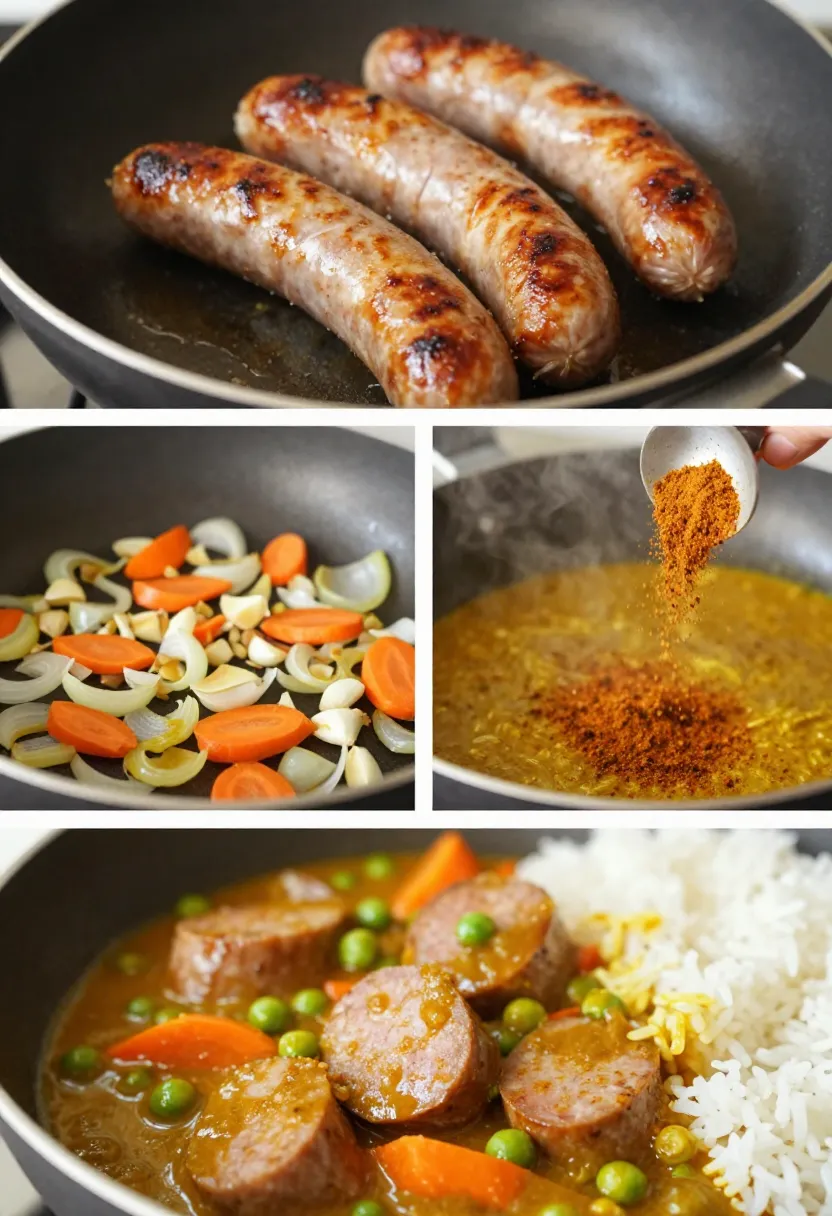
- Heat oil in a large pan over medium heat. Add the sausages and cook them until browned on all sides. Remove from the pan and slice into bite-sized pieces.
- In the same pan, add the onion and carrots. Cook for about 5 minutes until they begin to soften and develop a bit of color.
- Add the minced garlic and cook for another minute, stirring gently to avoid burning.
- Sprinkle in the curry powder and stir well, allowing the spices to heat and release their aroma.
- Pour in the stock and diced tomatoes. Stir everything together, making sure to scrape up any bits from the bottom of the pan.
- Return the sliced sausages to the pan. Bring the mixture to a gentle boil, then reduce the heat.
- Let the dish simmer for 20–25 minutes, stirring occasionally, until the sauce thickens and the flavors come together.
- Add the peas in the final few minutes of cooking.
- Taste and adjust with salt, pepper, and a small amount of sugar if needed.
- Serve hot with rice or mashed potatoes, and garnish with fresh herbs if desired.
💡 Small Tips That Actually Make a Difference
- Let the sausages brown properly — that color adds more flavor than you might expect
- Don’t rush the simmering step; this is where the sauce really comes together
- If the sauce feels too thin, just give it a bit more time instead of adding thickener
- Taste near the end, not the beginning — the flavor changes more than you think
- If you have leftovers, keep them — the dish usually tastes better the next day 👍
🍽️ Making It Part of Your Routine
Some meals are saved for special occasions — when you have the time, the energy, and maybe the mood to try something new. But most everyday cooking doesn’t look like that. Most of the time, you just need something that works. Something you can rely on without thinking too much about it.
That’s where dishes like this slowly become part of your routine.
At first, it still feels like a recipe you’re following. You check the ingredients, keep an eye on timing, try to get everything “right.” But after making it a few times, that approach starts to fade. You remember the flow, the order of steps, roughly how long things take. And at that point, you’re not really following instructions anymore — you’re just cooking.
It’s a small shift, but it changes a lot. Cooking becomes less about getting a perfect result and more about repeating something you already understand. You think less, and that makes it easier to keep up, especially on busy days.
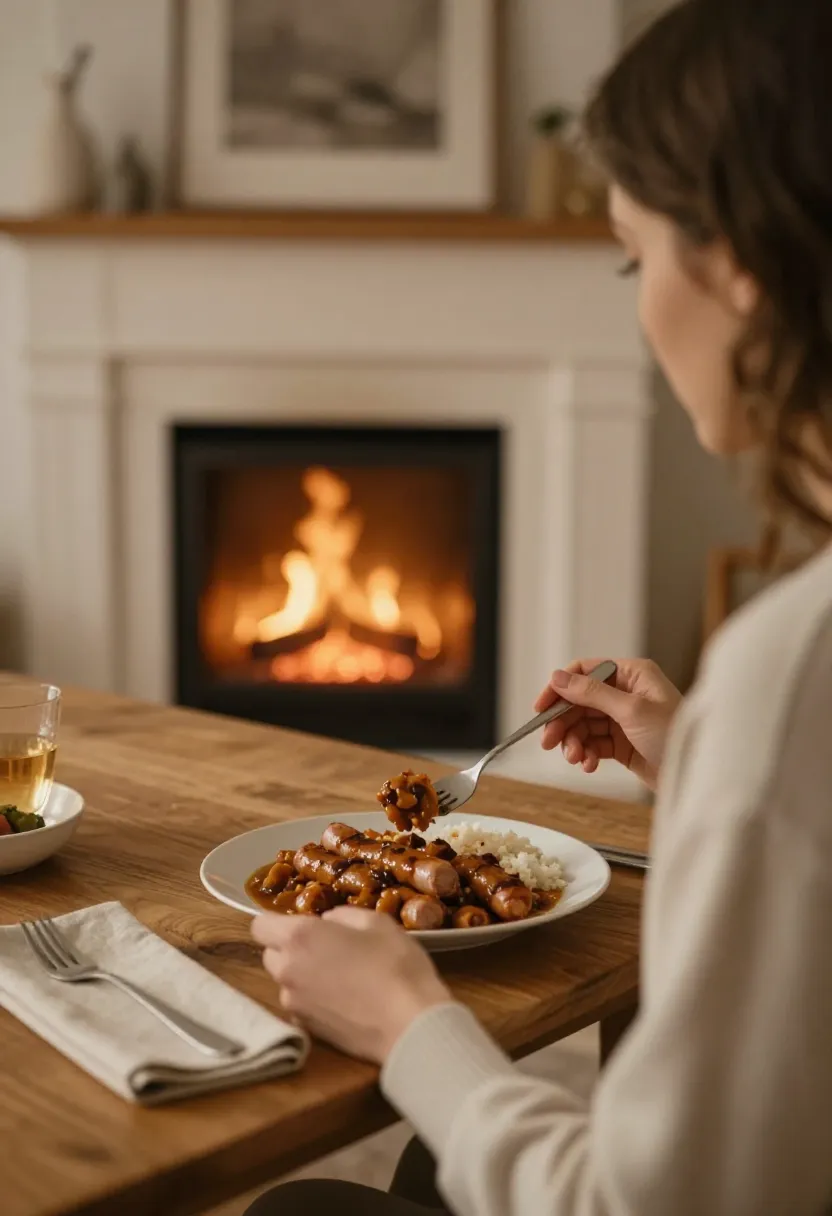
Another thing that changes is flexibility. You stop measuring everything exactly. You adjust based on what you have or what you feel like eating. Missing an ingredient? You swap it without overthinking. Want it a bit different? You tweak it and move on.
That’s usually when a recipe becomes personal. Not because you’ve completely changed it, but because it fits into your routine.
Meals like this tend to stick for a reason:
- they don’t need much planning
- they use ingredients you can easily keep on hand
- they handle small changes without falling apart
- they fit both busy days and slower ones
Over time, having a few dishes like this makes everyday cooking feel a lot more manageable. You don’t have to decide from scratch every time or chase something new. You’ve got a few solid options you can fall back on.
And in the end, that’s what keeps you cooking regularly.
🍲 Small Changes, Big Impact
Once you get comfortable with the base version of the dish, you start noticing how even small tweaks can change the result. Nothing dramatic, but enough to make each version feel a bit different.
That’s part of why the dish doesn’t get boring. You’re not cooking the exact same thing every time — you’re working with a structure that lets you adjust as you go. And because the process itself is simple, those changes are easy to handle.
A lot of it comes down to small decisions while you’re cooking. Add a bit more curry powder, and the flavor gets deeper. Stir in something creamy, and suddenly the sauce feels softer and richer. Even the type of sausages you use can shift the whole dish — some are heavier, some are lighter, some bring more flavor on their own.
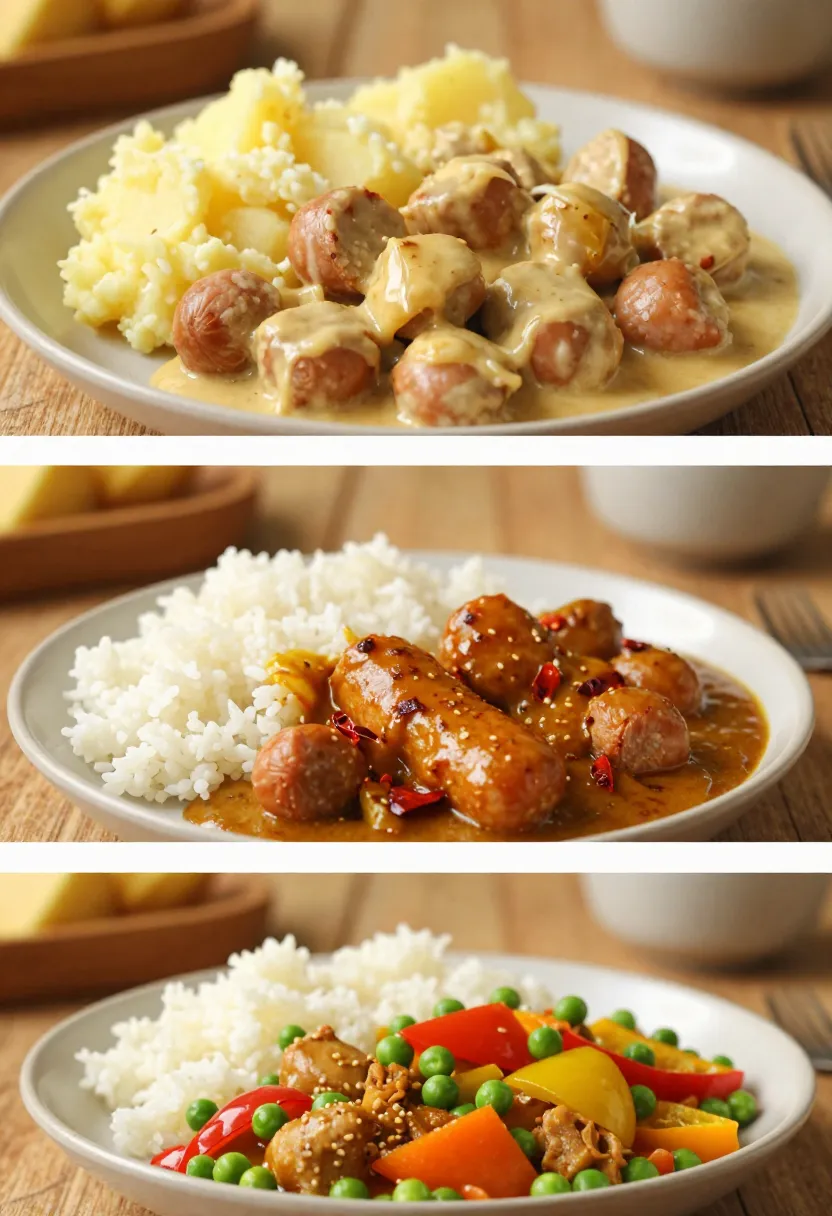
Serving makes a difference too. With rice, the dish feels lighter and more balanced. With mashed potatoes, it leans more into comfort food — heavier, more filling. Neither is better, it just depends on what you’re in the mood for.
Here’s what those small changes usually do:
- adding cream or coconut milk makes the sauce smoother and richer
- increasing the spices brings out a deeper, more noticeable flavor
- switching the sausages changes the overall taste quite a bit
- adding vegetables can make the dish lighter or more filling
- choosing rice or potatoes shifts the whole feel of the meal
The key thing is that none of this makes the process more complicated. You’re not adding extra steps — just making small choices along the way.
Over time, that builds confidence. You rely less on instructions and more on instinct. You start noticing when something needs a bit more balance, when it could use more depth, or when it’s already good as it is.
That’s usually when cooking stops feeling mechanical and starts feeling natural.
🧡 Food That Feels Like Something
At some point, food stops being just about ingredients and technique. They still matter, of course, but they don’t really explain why certain meals stay with you.
A lot of it comes down to how a dish fits into your day and how it feels in the moment.
Meals like this aren’t trying to impress. They don’t rely on presentation or complexity. What they offer is something quieter — a sense of stability. You know what you’re going to get, and that predictability can feel reassuring, especially after a long or unpredictable day.
There’s also something about the act of cooking itself. Even a simple process creates a small pause. You focus on a few basic steps, and for a while, that’s enough. You’re not rushing, not juggling ten things at once — just moving through something with a clear beginning and end.
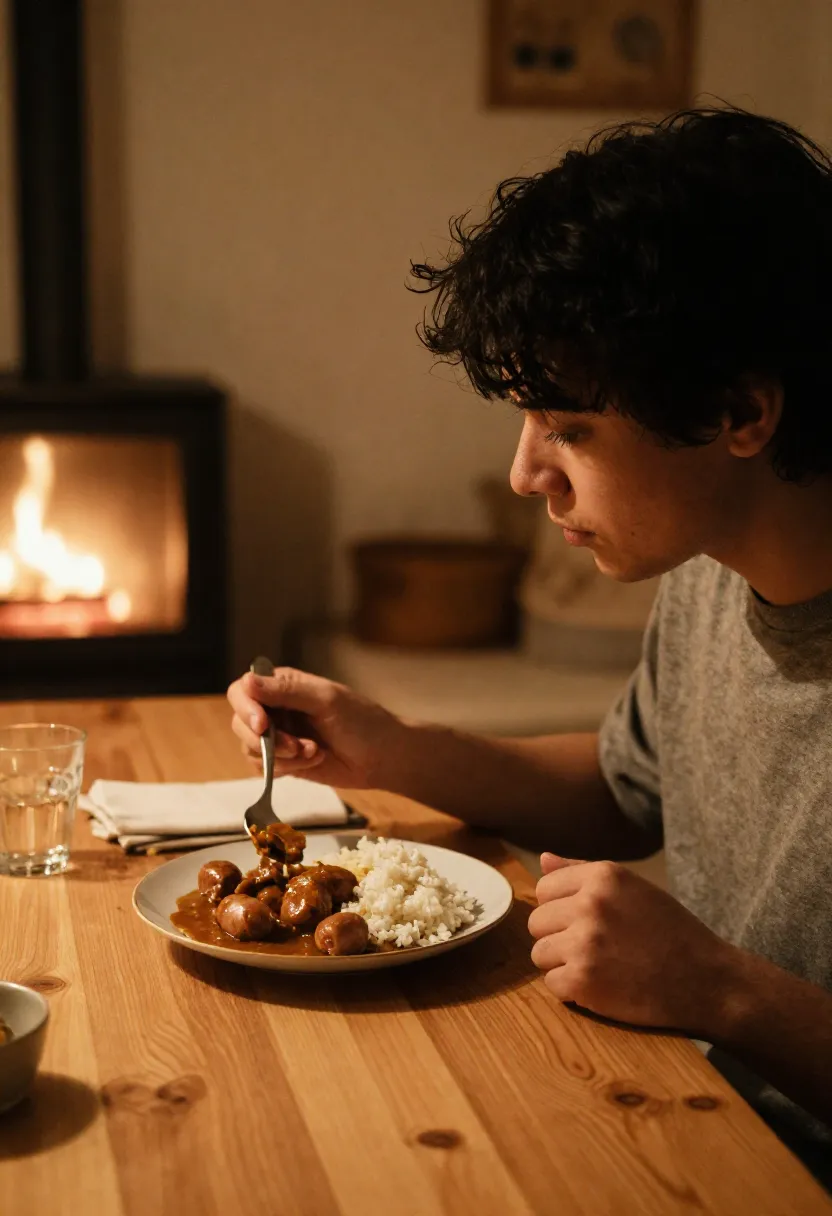
And that changes how the meal feels once it’s ready.
It usually comes down to a few small things:
- familiar flavors that don’t need explaining
- the warmth of the dish, especially when it’s cold outside
- the time you spend cooking, even if it’s not long
- the fact that nothing has to be perfect
On their own, these details don’t stand out much. But together, they create a meal that feels complete in a quiet way.
Curried sausages aren’t meant to be a highlight or a special occasion dish. They don’t need to be. Their value is in how consistent and easy they are — something you can come back to without thinking twice.
And in everyday life, that kind of reliability often matters more than trying something new every time.