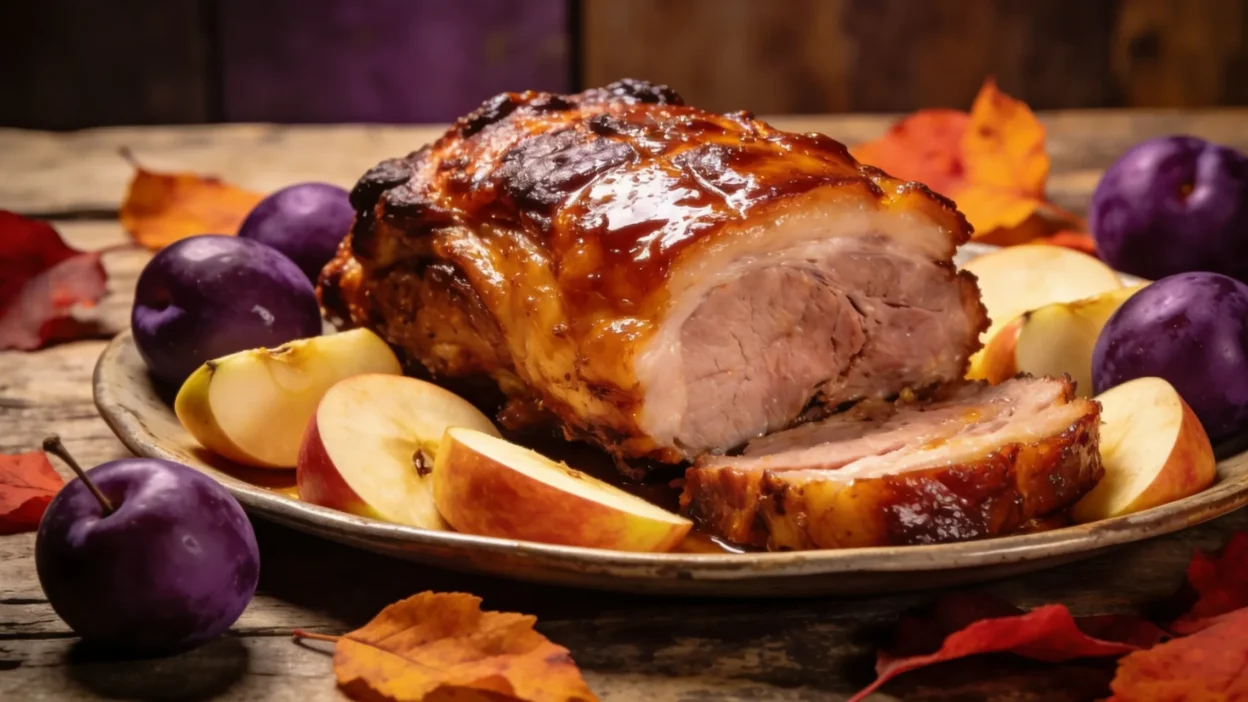
There are dishes you cook simply because you’re hungry — something quick and practical that almost makes itself. You open the fridge, throw a few things together, and not long after, dinner is ready. It does its job, and that’s enough. But there are also dishes that start differently. Not from hunger, but from a certain mood. A quiet desire to cook something slower, something that fills not just the table but the space around you. Roast pork with apples and plums falls into that category.
What makes this dish stand out isn’t complexity. If you look at the ingredients or the steps, it might even seem too simple at first. There’s no intricate prep, no careful plating, no moment where you feel like you’re doing anything particularly advanced. You season the meat, cut the fruit and vegetables, put everything into a roasting pan, and that’s basically it. But that simplicity is a bit misleading. What really defines the dish isn’t what you do at the start, but what happens while it cooks.
Once the pork goes into the oven, everything slows down. At first, there’s not much to notice. The meat heats through, the fruit softens a little, but nothing dramatic happens right away. Then, gradually, you start to pick up the aroma. It doesn’t come all at once — it builds. First, it’s mostly savory, the kind of smell you expect from roasting meat. Then a light sweetness starts to come through as the apples and plums warm up. After a while, it all blends into something deeper.
At some point, you realize you’re paying attention without really meaning to. You walk into the kitchen just to check, even if you know it’s too early. The smell gets warmer, slightly caramelized, richer than before. It doesn’t take over the room, but it settles into it. The kind of background presence that quietly changes how the space feels 🍂
Another thing about this dish is how familiar it feels, even the first time you make it. Nothing about it seems complicated or hard to understand. Roasted meat with fruit just makes sense. It doesn’t surprise you in a sharp way — it feels complete, like something you already knew without thinking about it.
That’s probably why it doesn’t rely on complexity to stand out. It doesn’t need bold contrasts or unusual techniques. It works because everything stays in balance — the richness, the sweetness, the texture, even the pace of cooking. And that balance gives it a kind of quiet confidence that feels more natural than anything overly polished.
🍎 The Beauty of Sweet and Savory Together
At first, pork with fruit can feel like a slightly unexpected combination. Not strange, exactly, but not something everyone reaches for right away. There’s usually a brief pause — a quick “will this actually work?”
Then you taste it, and that hesitation disappears pretty fast.
Pork sits somewhere in the middle when it comes to flavor. It’s not too strong and doesn’t overpower everything else, but it’s not bland either. It gives the dish structure while still leaving room for other ingredients to shape how it ends up tasting.
That’s where apples and plums come in — and they do more than just add sweetness.
Apples bring a bit of freshness. Not sharp or overly acidic, just enough to keep the dish from feeling too heavy. Without them, the pork can start to feel dense after a few bites. With them, everything feels more balanced.
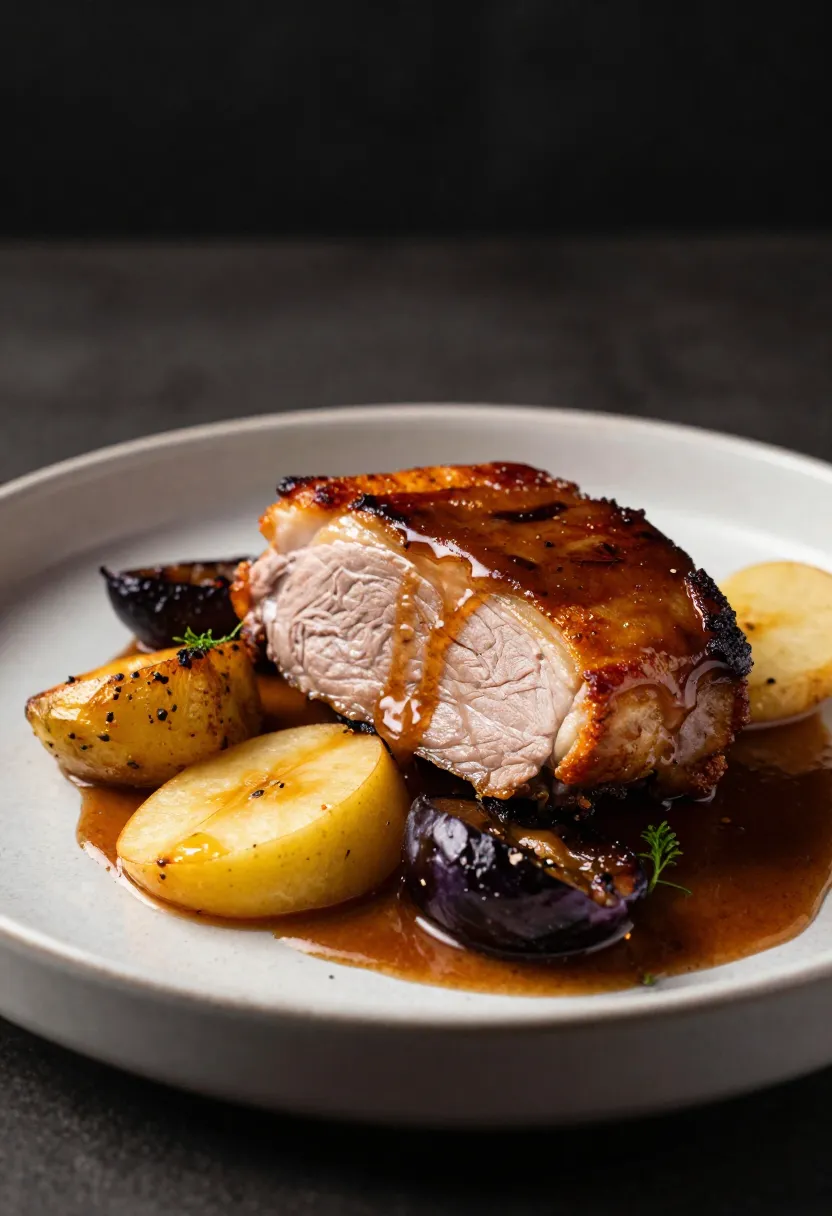
Plums go the other way. They add depth. As they roast, they soften and break down slightly, releasing juices that mix into the pan. The flavor becomes richer, more concentrated — almost like a sauce forming on its own.
What’s interesting is how all of this changes while the dish cooks.
At the start, everything is separate. You can clearly see each ingredient — meat, fruit, vegetables. But over time, those boundaries start to fade.
The pork releases fat and juices, the fruit absorbs some of it, and the sugars begin to caramelize, especially around the edges. The liquid in the pan reduces and thickens, picking up flavor from everything.
Nothing happens all at once. It’s a slow shift.
And then, at some point, it stops feeling like separate ingredients and starts feeling like one dish where everything works together.
You notice it in small ways:
- the apples lose their sharp edges and turn softer, with a light golden color on the outside 🍏
- the plums break down just enough to release their deep color into the sauce
- the potatoes pick up flavor they didn’t have at the beginning, almost like they’ve been soaking it in the whole time
- the juices at the bottom go from thin and watery to something thicker, richer, and more cohesive
At that stage, it’s no longer about contrast. It’s about how everything comes together.
And that’s why it feels so natural when you eat it. Nothing is forced or overworked — it all happens at its own pace. From the outside it looks simple, but there’s more going on than it seems.
🧾 Flavor Structure of the Dish (Expanded)
| Component | Texture Before Cooking | Texture Mid-Cooking | Texture After Cooking | Flavor Profile Before | Flavor Evolution During Cooking | Flavor Profile After | Role in the Dish | Interaction with Other Elements | Visual Change During Cooking |
|---|---|---|---|---|---|---|---|---|---|
| Pork | Firm, structured | Tight but softening | Tender, juicy | Mild, slightly sweet | Releases fat and juices, absorbs surroundings | Rich, savory, deeper umami | Main structure and protein base | Absorbs fruit notes, enriches sauce with fat | Turns golden, develops crust |
| Apples | Crisp, fresh | Softening edges | Soft, lightly caramelized | Light sweetness, mild tart | Sugars begin to caramelize, acidity softens | Balanced, mellow sweetness | Adds freshness and light contrast | Cuts through fat, blends into pan juices | Slight browning on edges |
| Plums | Firm, juicy | Soft, beginning to collapse | Soft, partially broken down | Sweet with gentle tartness | Juices release, color deepens, sugars thicken | Deep, rich, almost syrupy | Adds depth and complexity | Enriches sauce, intensifies overall flavor | Darkens, releases purple/red tones |
| Potatoes | Dense, starchy | Softening interior | Soft inside, crisp outside | Neutral | Absorbs fat and stock gradually | Savory, infused with juices | Provides substance and texture | Carries combined flavors across the dish | Edges become golden, slightly crisp |
| Onion | Firm, slightly sharp | Softening, losing structure | Very soft, almost creamy | Mildly pungent, aromatic | Sweetness develops as it cooks | Sweet, mellow, rounded | Builds aromatic foundation | Blends into sauce, supports overall richness | Becomes translucent, slightly golden |
| Stock | Thin liquid | Simmering, reducing slowly | Slightly thickened | Light savory | Concentrates as water evaporates | Fuller, more intense flavor | Prevents dryness, base for sauce | Combines all elements into cohesive liquid | Darkens slightly, becomes glossy |
| Pan Juices | Not yet formed | Mixing with ingredients | Glossy, rich, cohesive | N/A | Gains complexity from all components | Deep, layered, concentrated | Final unifying element | Connects all textures and flavors together | Thickens, coats ingredients |
🔥 Cooking as a Way to Slow Down (rewritten)
One thing that often gets overlooked with dishes like this isn’t even the flavor — it’s the pace they set. Slow cooking, especially roasting, doesn’t care how busy you are or how quickly you want dinner ready. It just takes as long as it takes.
At first, that can feel a bit uncomfortable. You prep everything, put it in the oven, clean up… and suddenly there’s nothing urgent left to do. If you’re used to always doing something, that pause feels strange.
Most people react the same way. You check the oven too early, open it “just to be sure,” or keep walking back into the kitchen for no real reason. It’s almost automatic, like you’re trying to stay involved even when there’s nothing to fix.
You notice it in small habits:
- you check the oven earlier than needed
- you open it just to make sure everything is “fine”
- you keep coming back without a clear reason
- you feel like you should be doing something
After a while, though, that urge fades. You realize the food doesn’t need constant attention, and it’s not going anywhere. So you step away more, stop interrupting the process, and let it do its thing.
That’s when you start noticing details you’d normally miss. The sound changes, going from a sharp sizzle to something softer and more even. The smell gets deeper and warmer. Even the color shifts slowly — not all at once, but enough to catch if you leave it alone.
The whole process settles into a steady rhythm. You’ve already done the important part. Now it’s just about letting things develop without rushing them. You still check from time to time, but more out of curiosity than necessity.
Somewhere along the way, it stops feeling like a task you need to finish quickly. It gets quieter, less demanding. Not exactly relaxing, but definitely less tense.
By the time the dish is ready, you’ve already spent time with it — you’ve smelled it, watched it change, waited without pushing it along. So when you finally sit down to eat, it doesn’t feel rushed.
It just feels right.
🍽️ Roast Pork with Apples and Plums Recipe
This is one of those dishes that feels a bit more special than it actually is in terms of effort — and that’s exactly why people keep coming back to it. At its core, it’s just roasted pork with fruit and a few simple additions. But once everything comes together, it tastes like you put more thought into it than you actually did.
The pork turns tender and juicy if you give it enough time and don’t rush it. The apples soften and turn slightly golden, almost buttery, but still keep a bit of their freshness. The plums go in a different direction — they break down a little, releasing juices that mix into the pan and turn into a natural sauce without much effort on your part.
One of the best things about this dish is that it doesn’t depend on precision. You don’t have to measure everything exactly or follow each step like a checklist. It’s forgiving. Leave it in the oven a bit longer? It still works. Fruit a little riper than expected? It just ends up softer and a bit sweeter.
It’s the kind of meal that works just as well for a slow Sunday when you have time as it does for a casual dinner when you want something comforting but not complicated. And honestly, it often tastes even better than it looks — which says a lot, because it already comes out of the oven looking pretty good.
🧾 Ingredients
- 1.5–2 kg pork shoulder or pork loin
- 2 tablespoons olive oil
- 1–2 teaspoons sea salt
- 1 teaspoon black pepper
- 1 large onion, cut into wedges
- 500–700 g potatoes, halved
- 2–3 apples, cored and cut into wedges
- 4–5 plums, halved and pitted
- 2 cups chicken stock
- 1 tablespoon apple cider vinegar
- 2–3 sprigs fresh thyme or rosemary (optional)
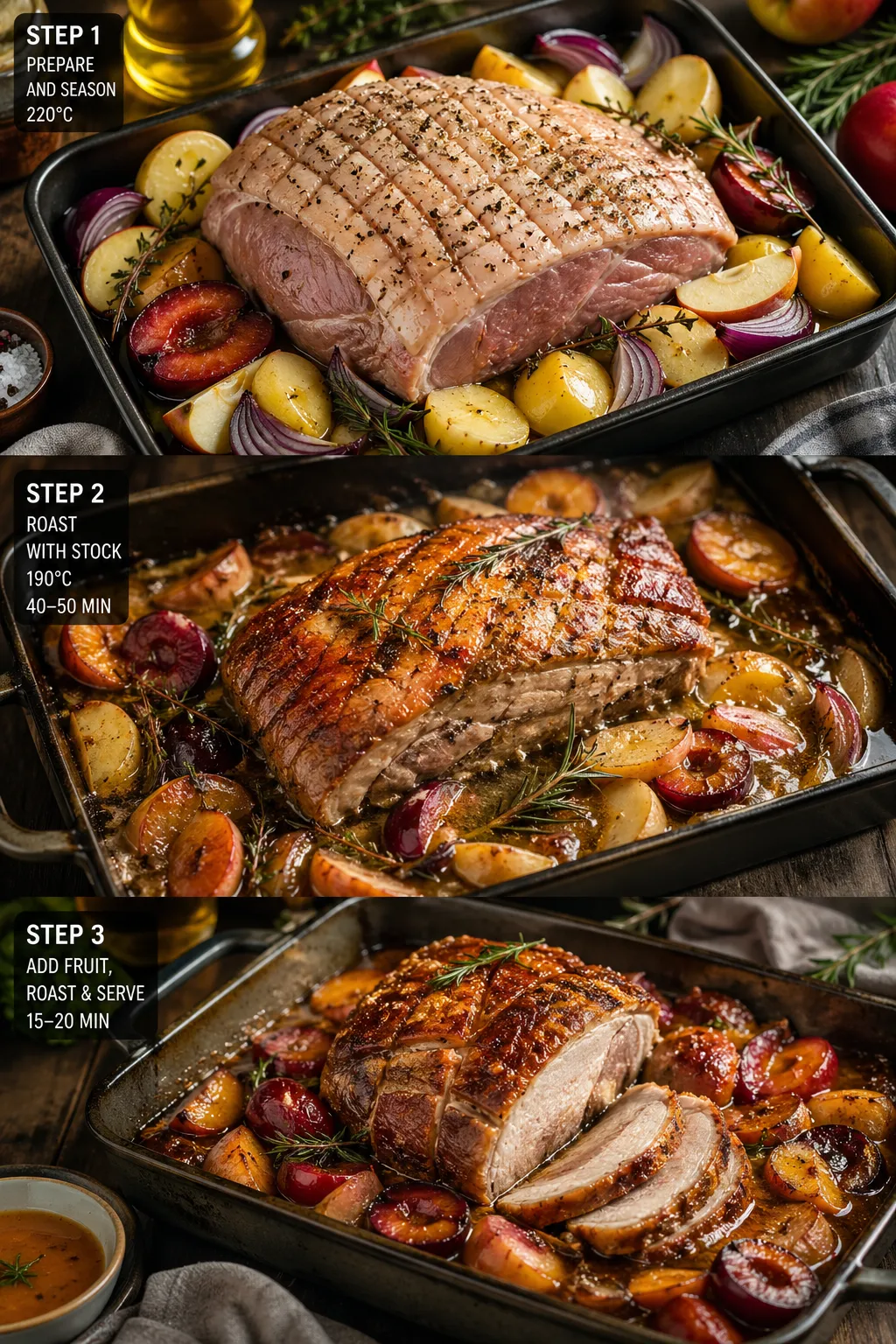
👩🍳 Preparation Steps
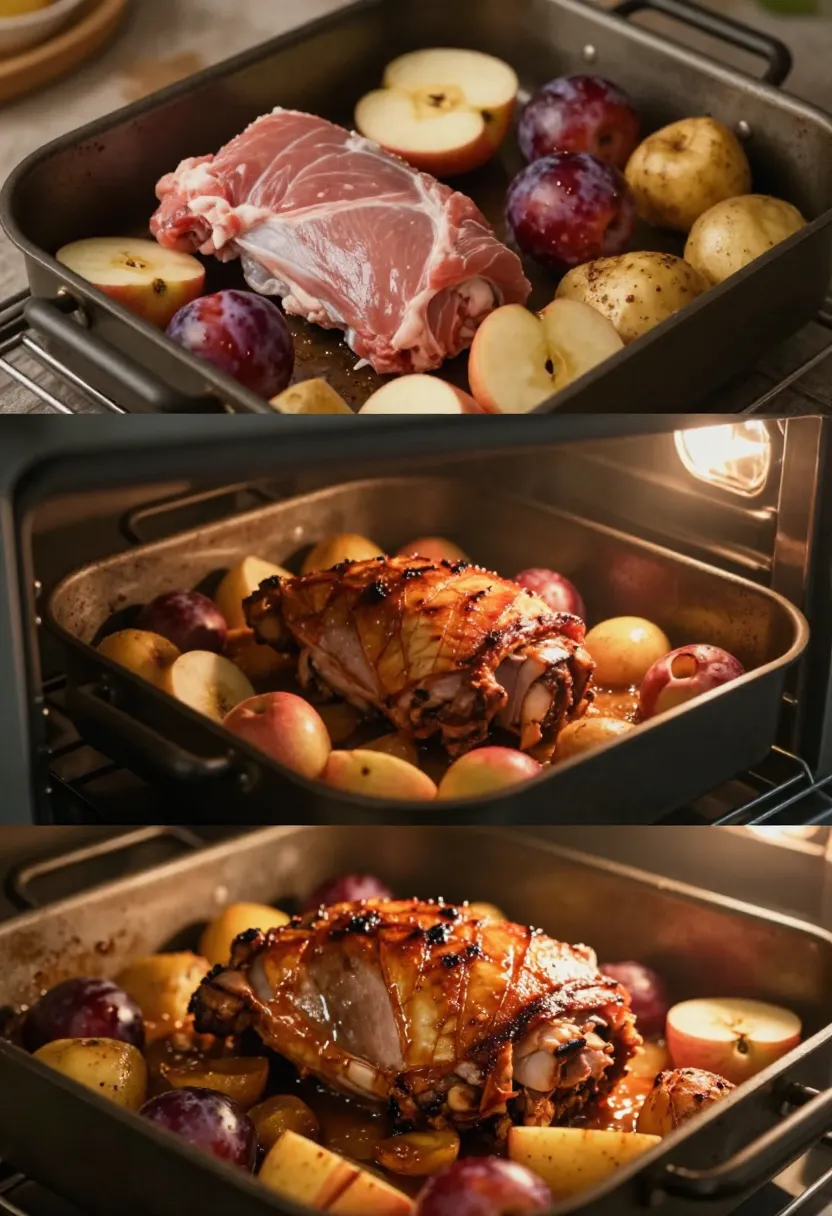
- Preheat your oven to 220°C. While it heats, pat the pork dry with paper towels — this helps create a better crust and prevents the surface from steaming.
- Rub the pork with olive oil, then season generously with salt and pepper. If the skin is still on, it’s worth taking a moment to make sure it’s properly scored and seasoned — that’s what helps it crisp up later.
- Place the pork in a roasting pan, fat side up, and roast for about 25–30 minutes until the surface begins to turn golden and slightly crisp.
- Lower the oven temperature to 190°C. Carefully remove the pan and add the potatoes, onion, and chicken stock around the pork. Try not to cover the top of the meat — you want it to stay exposed for proper roasting.
- Return the pan to the oven and roast for another 40–50 minutes. During this time, the potatoes will start absorbing flavor, and the pork will cook through more gently.
- Add the apples and plums to the pan, placing them around the pork rather than on top of it. Continue roasting for 15–20 minutes, until the fruit softens but still holds its shape.
- Remove the pork from the oven and transfer it to a cutting board. Let it rest for 10–15 minutes — this step really does make a difference when it comes to juiciness.
- Meanwhile, place the roasting pan over medium heat. Add the apple cider vinegar and gently stir, scraping up the caramelized bits from the bottom. Let it simmer for a few minutes until the sauce thickens slightly.
- Slice the pork and serve it with the roasted fruit, potatoes, and generous spoonfuls of the pan sauce.
💡 A Few Helpful Tips (that actually make a difference)
- Don’t skip drying the pork before seasoning — it’s a small step, but it really helps with texture
- If the top isn’t crisping enough, you can increase the heat slightly for the last 10 minutes
- Try not to overcrowd the pan — ingredients need space to roast, not steam
- Taste the sauce before serving — sometimes it just needs a tiny pinch of salt or an extra splash of vinegar
- If you have leftovers, they’re great the next day (sometimes even better, honestly 😄)
🧡 More Than Just Flavor
Some meals are just good. You eat them, enjoy them, and that’s it. They do what they’re supposed to do, and you don’t really think about them again. And then there are meals like this one — not complicated, not rare, but they stay with you a little longer than you expect.
It’s not that easy to explain why.
Part of it probably comes from the process itself. By the time this roast is ready, you’ve already spent a fair amount of time around it. Not in a busy, “always doing something” way, but more in the background. You prep everything, put it in the oven, and go on with your day. But you still keep coming back. You check on it, notice the smell, catch small changes.
And somehow that makes a difference.
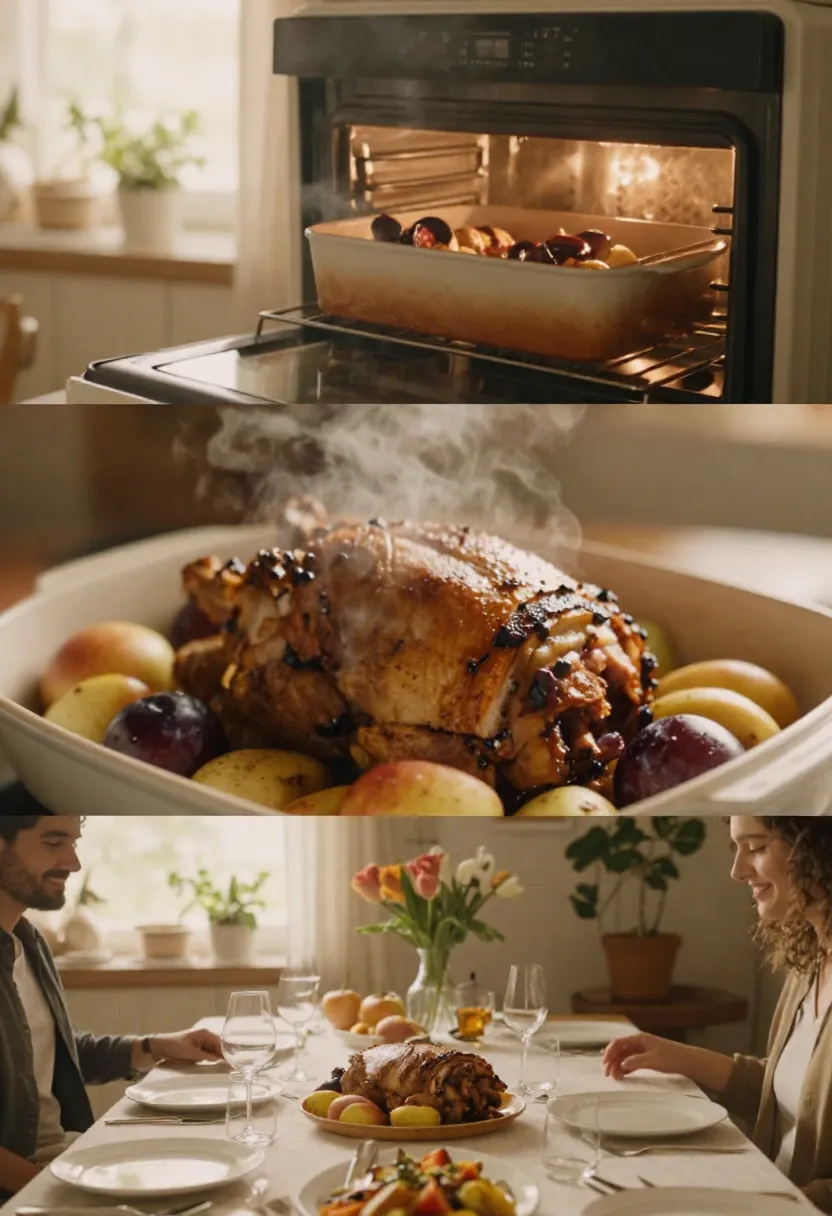
The smell does a lot on its own. It doesn’t hit all at once — it builds. First it’s just the pork, then a bit of sweetness as the fruit warms up, and later it all settles into something deeper and more rounded. It’s the kind of smell that quietly changes how the room feels, even if you’re not paying full attention 🍂
You might not notice it right away, but it shifts your mood a bit. The space feels warmer, calmer. Nothing dramatic, just… different.
Another thing — this dish tends to pull people into the kitchen without trying. Not in a forced way, just naturally. Someone walks in to see what’s cooking. Someone else opens the oven “just to check.” Small moments, but they happen on their own.
And when it’s finally time to eat, it doesn’t feel rushed. You’re not just sitting down because you’re hungry. You sit down because it feels like the right moment. It’s a small thing, but it changes the experience.
The textures, the warmth, the mix of flavors — all of it slows you down a bit. You take a bite and actually notice it. Not in a technical way, just… you pay attention.
And that’s probably why it lingers. Not because it’s complicated, but because the whole experience around it feels complete. Cooking it, waiting for it, eating it — it all connects in a way that feels natural.
🍷 A Dish That Fits Any Occasion
One of the things that makes this roast so easy to come back to is how adaptable it is. It doesn’t belong to just one kind of occasion. You don’t have to save it for something special, but if you want, it can still feel special without much extra effort.
On a quiet weekend, for example, it works almost on its own. You don’t need to overthink anything. Cook it in a relaxed way — no pressure, no perfect timing, no need to make it look like something from a restaurant. Take it out of the oven, serve it straight from the pan, and that’s already enough. In that setting, it feels like comfort food in the best sense — warm, filling, familiar, but not boring.
What’s interesting is how easily it shifts when the situation changes.
If you have a couple of people over, you don’t need a different recipe. You just treat the same dish a bit differently. Slice the pork more carefully, arrange the fruit and potatoes on a plate instead of leaving everything in the pan, pour the sauce over the top instead of letting everyone do it themselves.
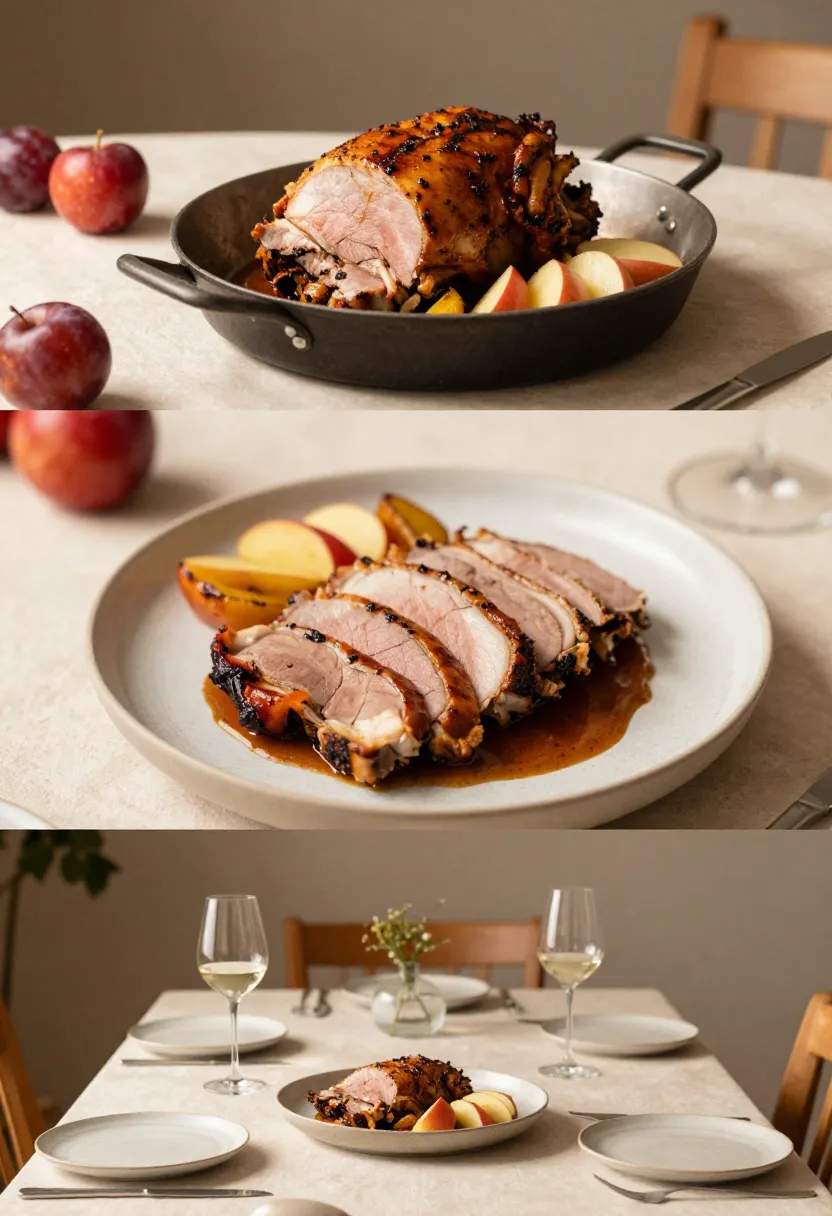
Add a simple side, maybe open a bottle of wine 🍷, and suddenly it feels more put together. Not formal or stiff — just a bit more intentional.
It also fits naturally into colder seasons. When the weather isn’t great and you want something warm and steady, this kind of roast just makes sense. It’s not light in a summer way — it’s more grounding.
At the same time, it doesn’t feel too heavy, because the fruit keeps it from becoming overwhelming.
In practice, people use it in all kinds of situations:
- slow weekends when there’s no reason to rush
- casual dinners when you want something homemade but not complicated
- small gatherings where you don’t want to spend the whole evening cooking
- days when you just want something that smells good and lasts for more than one meal
That flexibility is what makes it reliable. You don’t have to rethink everything each time. You already know it works — you just adjust a few details depending on the mood.
🌟 Making It Your Own Over Time
What usually happens with a dish like this is pretty predictable. The first time you make it, you more or less follow the recipe. You measure things, double-check the steps, maybe pay extra attention to timing.
But by the second or third time, something shifts.
You stop treating it like a strict set of instructions and start seeing it as a base. Something you understand well enough to tweak without worrying you’ll ruin it.
Maybe you decide you want a bit more acidity, so you add an extra splash of vinegar. Or you use a different kind of apple because that’s what you have — and it turns out a little sweeter, a little softer, and you realize you actually prefer it that way.
Sometimes you’re not even trying to change anything. You just cook with what’s there.
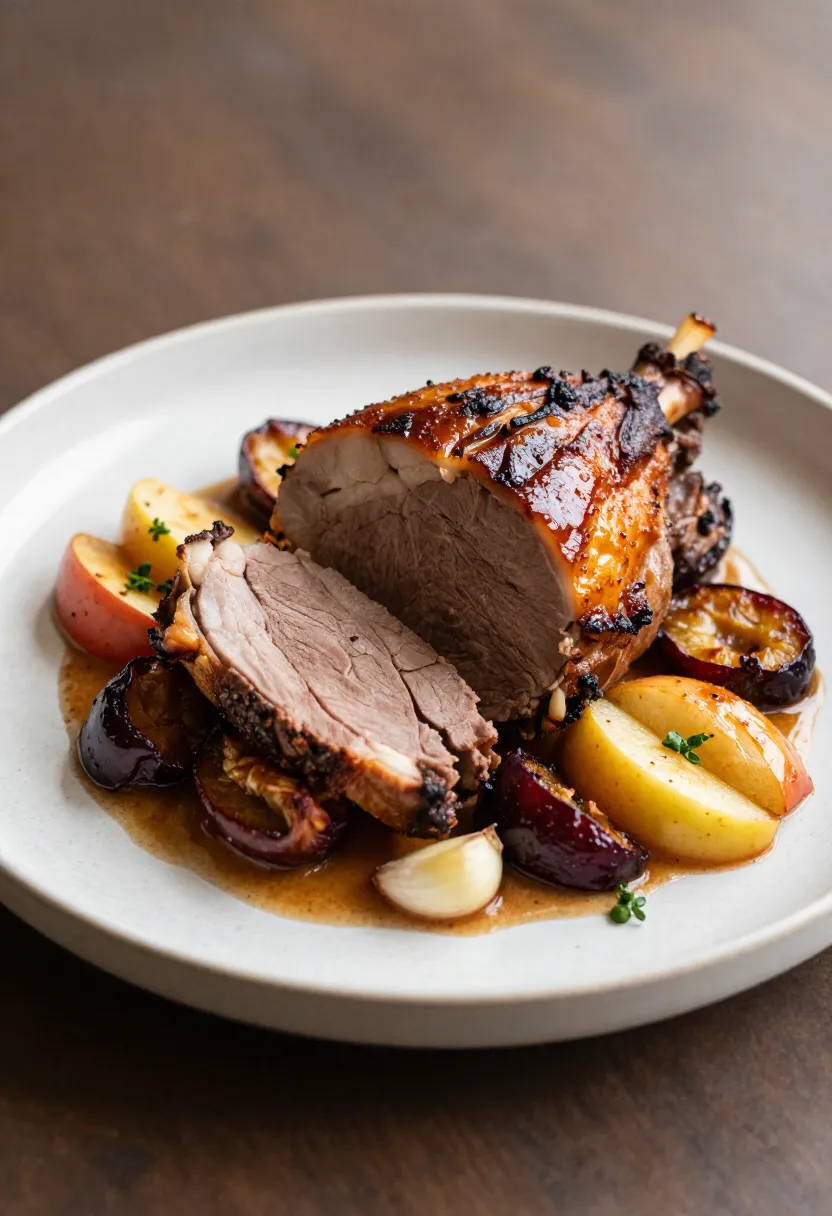
Over time, those small adjustments start to add up:
- swapping plums for something else when they’re not in season
- adding garlic or extra herbs without really measuring
- shifting the balance between meat and fruit depending on what you feel like
- trying a different cut of pork just to see how it turns out
None of this is dramatic, but it slowly shapes the dish into something more personal.
And the nice part is that it still holds together. Even with changes, it doesn’t fall apart or lose its identity. It just shifts a little depending on what you do.
At some point, you stop thinking “this is the recipe” and start thinking “this is how I make it.” It’s a small shift, but it matters.
That’s usually how recipes stick. Not the ones you follow perfectly every time, but the ones that let you change things without overthinking it.
And honestly, that’s probably the best sign that a dish is worth keeping.