Some of the most genuinely satisfying meals don’t come from complicated recipes or expensive ingredients. More often than not, they come from the kind of food you can put together without planning too much. You open your fridge, check a couple of shelves, and realize you already have what you need—flour, eggs, yogurt, maybe some herbs that are just on the edge of needing to be used.
At first, it doesn’t look like much. Nothing about it suggests anything memorable. But that’s usually how these things start.
There’s something interesting that happens when simple ingredients are treated with just a bit of care. They don’t suddenly become fancy, but they start to feel complete. The flour turns into something warm and soft, the yogurt adds a slight tang that keeps things from feeling flat, and the eggs bring richness that ties everything together. The herbs—often the last thing you throw in—end up making a bigger difference than you expect.
It’s not about transformation in a dramatic sense. It’s more subtle than that. You’re not turning basic ingredients into something unrecognizable—you’re just letting them work together in a way that makes sense.
The process itself plays a big role here. It’s one of those dishes where you actually notice what you’re doing. When you mix the dough, it doesn’t come together perfectly right away. It’s a bit sticky, maybe slightly uneven. You adjust it without really thinking too much—add a little flour, press it together again. After a minute or two, it feels different. Softer. More manageable.
Rolling it out isn’t about precision either. It’s rarely a perfect circle, and honestly, it doesn’t need to be. When it hits the pan, that’s when things get interesting. You see small bubbles forming, the surface changing color, the smell shifting into something warm and slightly buttery. That moment—when it starts to look and smell like actual food—is always a bit satisfying.
And maybe that’s the point. This kind of cooking doesn’t ask for perfection. It just asks you to pay a bit of attention.
There’s also a certain comfort in knowing that nothing here is too delicate or easy to mess up. Even if the dough is slightly off, or the heat is a bit too high or low, you’ll still end up with something good. That takes a lot of pressure off, especially if you’re not in the mood to follow something too strict.
By the time everything comes together, the result feels earned in a small way. Not because it was difficult, but because you were involved in it from start to finish. And that makes a difference, even if you don’t consciously think about it while eating.
A Dish That Fits Any Moment ☀️
What makes this dish stand out in a practical sense is how easily it fits into different parts of the day. It’s not locked into being “just breakfast” or “just brunch,” even though it works really well for both. It’s flexible in a way that feels natural, not forced.
On slower mornings, especially when you don’t have anywhere to be, it turns into something more than just food. You might start making it while still waking up, moving around the kitchen without much urgency. There’s enough time to let the dough rest properly, to heat the pan without rushing, to focus on small details like getting the eggs just right.
It creates a kind of rhythm. Not in a dramatic, life-changing way—just a small pause in the day that feels a bit more intentional.
Then there are days when things are less calm. Maybe you’re cooking for someone else, or you just want something that feels a bit more put together without spending hours in the kitchen. In that case, it still works. You can move faster, skip overthinking certain steps, and it will still come out well.
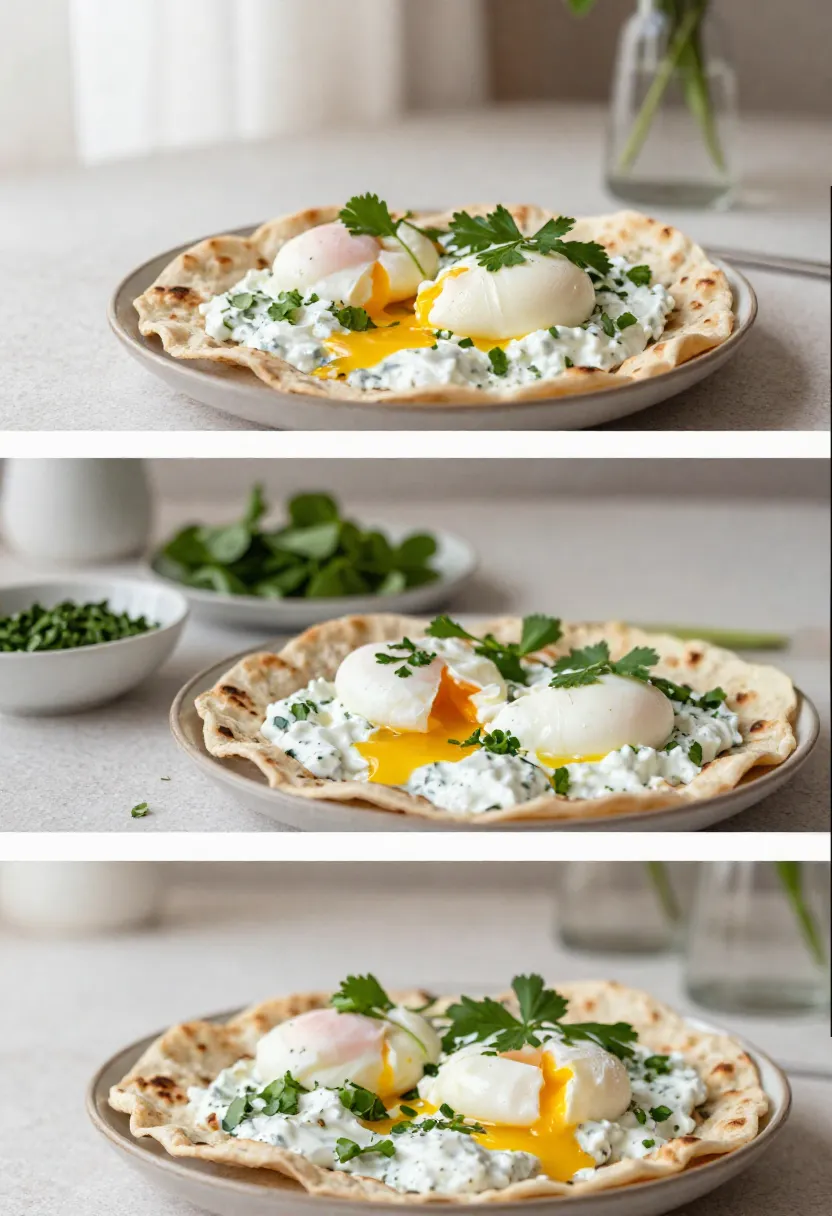
It’s also a good option when you’re somewhere in between—when you want something warm and homemade, but not something that turns into a full project. That middle ground is surprisingly hard to find, and this dish sits there quite comfortably.
One of the reasons it works so well is that it doesn’t rely on exact timing. You’re not juggling five things that all need to be ready at the same second. The elements are forgiving:
- The flatbread can be made slightly ahead and kept warm without losing too much texture
- The eggs don’t have to look perfect to taste good
- The yogurt doesn’t need any preparation beyond being spooned onto the plate
- The final assembly can happen at your own pace
That lack of strict timing makes the whole experience feel calmer. You’re not racing against the clock, and you’re not worried about getting everything exactly right.
Another thing worth mentioning is how this dish works socially. It’s not the kind of food that needs careful plating or individual portions. You can easily place everything on the table and let people build their own plates. That makes it feel more relaxed, a bit more shared.
And over time, it becomes something you return to without thinking too much about it. The first time might feel slightly unfamiliar, but after that, it settles into your routine. You start remembering small details—how the dough should feel, how hot the pan needs to be, how long the eggs take.
It becomes less about following instructions and more about recognizing patterns. And that’s usually when cooking starts to feel more natural.
The Balance of Flavors and Textures 🧈🍳
If you had to point to one thing that really makes this dish work, it would probably be balance. Not in a technical or overly precise sense, but in how everything fits together without competing.
When you take a proper bite—one that includes a bit of everything—you start to notice how each element behaves. The flatbread is warm and slightly crisp in places, soft in others. It’s sturdy enough to hold the toppings, but not so firm that it feels heavy. It also absorbs just enough of the egg yolk and butter to become more flavorful as you eat.
The yogurt plays a quieter role, but an important one. It brings a coolness that contrasts with the warmth of the bread and eggs. The slight tang cuts through the richness, preventing the dish from feeling too heavy. Without it, everything would lean too far in one direction.
The eggs are probably the most noticeable part, especially once the yolk breaks. There’s a moment where it starts to spread slowly across the plate, mixing with the yogurt and soaking into the bread. That combination creates a kind of natural sauce—nothing added, nothing forced.
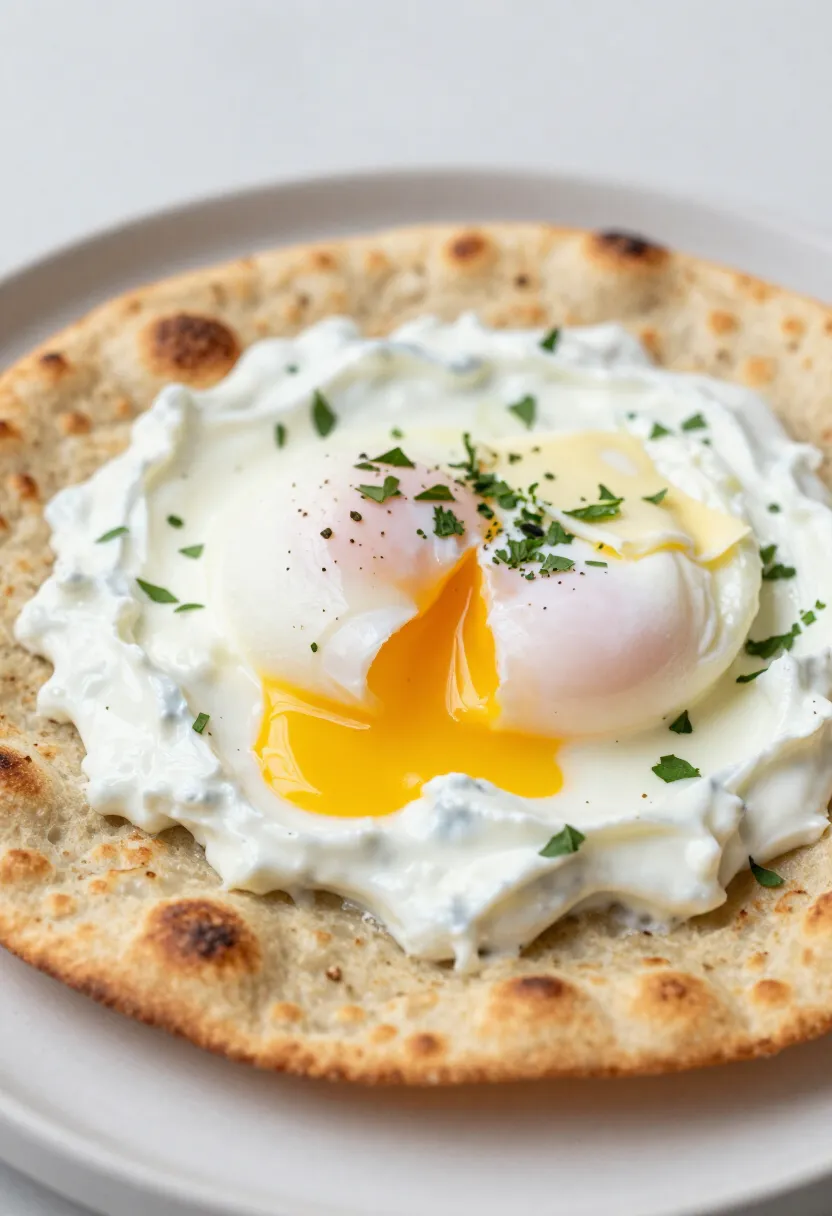
Butter, even in a small amount, changes the overall feel of the dish. It smooths things out, adds a bit of depth, and connects the different components. It’s not meant to stand out on its own, but you would definitely notice if it wasn’t there.
And then there are the herbs. They might seem like a small detail, but they shift the entire balance. Without them, the dish would feel heavier, a bit too soft and rich. The herbs add a fresh edge, something slightly sharp and green that lifts everything else.
Here’s a simple way to look at how these elements interact:
| Component | Texture Contribution | Flavor Impact | Role in the Dish | What Happens Without It | Possible Alternatives |
|---|---|---|---|---|---|
| Flatbread | Soft inside, lightly crisp | Mild, slightly toasted | Acts as the base, holds everything | The dish loses structure, feels messy | Pita, naan, or even toasted bread |
| Yogurt | Creamy, smooth | Tangy, refreshing | Balances richness, adds contrast | Becomes too heavy and one-dimensional | Sour cream, labneh, crème fraîche |
| Eggs | Silky yolk, tender whites | Rich, comforting | Main source of depth and “sauce” | Dish feels incomplete, less satisfying | Soft-boiled eggs, fried eggs |
| Butter | Velvety, slightly glossy | Warm, indulgent | Connects flavors, adds roundness | Flavors feel less unified | Olive oil, flavored oil |
| Herbs | Light, slightly crisp | Bright, fresh, slightly sharp | Lifts the dish, adds freshness | Dish feels flat and too rich | Green onions, dill, arugula |
| Lemon Juice | Light, almost invisible | Acidic, clean | Cuts through fat, sharpens overall taste | Flavors feel heavier and less defined | Lime juice, mild vinegar |
| Chili Oil (optional) | Slightly oily, smooth | Spicy, aromatic | Adds warmth and complexity | Dish stays mild, less dynamic | Chili flakes in oil, hot sauce |
What’s interesting is that even though there are rich elements—like butter and egg yolk—the dish doesn’t feel overwhelming. It’s filling, but not in a way that makes you feel heavy afterward.
It also doesn’t rely on strong or aggressive flavors. There’s no single ingredient trying to dominate the plate. Instead, everything stays relatively balanced, which makes it easier to keep eating without getting tired of it.
In a way, it’s the kind of food that doesn’t demand your attention but quietly keeps it. You take one bite, then another, and before you really think about it, the plate is almost empty.
And that’s usually a good sign.
🍽️ Herb Yogurt Flatbread with Poached Eggs Recipe
This is one of those recipes that looks almost too simple on paper, but once you actually make it, it turns into something much more satisfying than you’d expect.
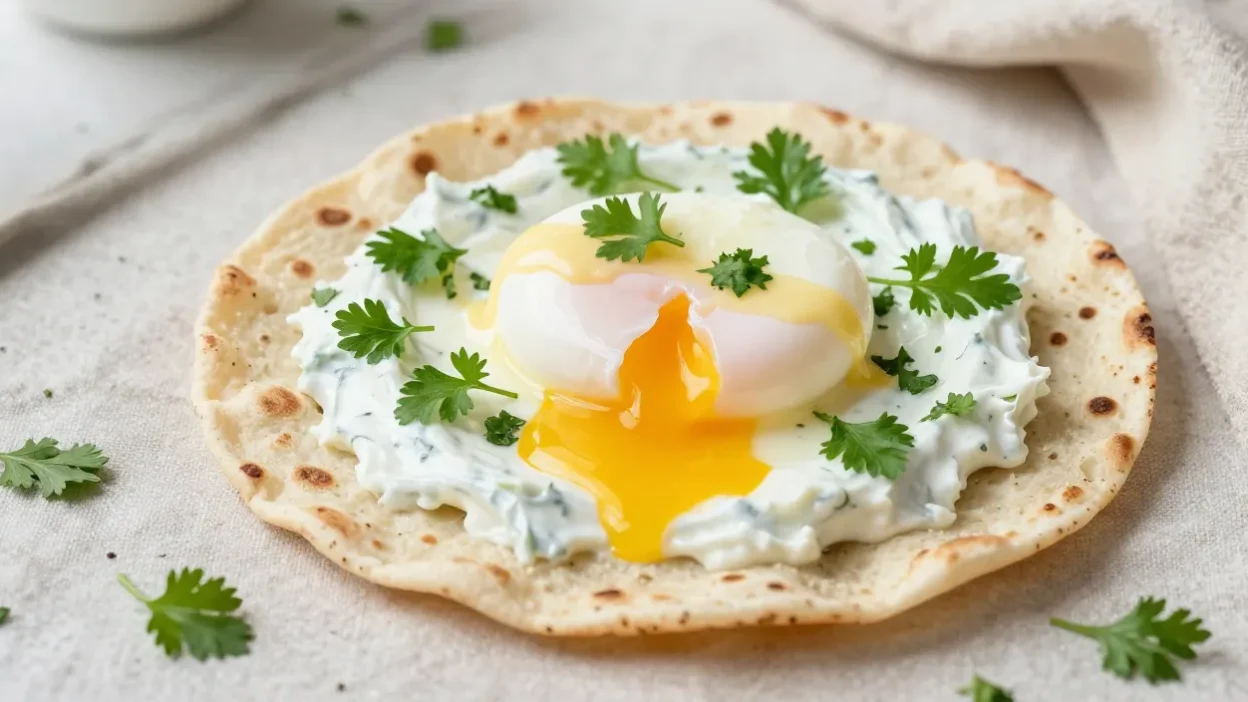
At its core, it’s just flatbread, eggs, yogurt, and a bit of butter. But the way these elements come together makes it feel like a complete dish rather than just a combination of parts. The flatbread is soft and warm, with little buttery layers inside. The yogurt adds a cool, slightly tangy contrast. And the poached eggs—probably the highlight—bring everything together once the yolk starts to run.
It’s the kind of meal that feels comforting without being too heavy. You can eat it slowly, tearing off pieces of bread, dragging them through the yolk and yogurt, adjusting each bite without even thinking about it. It’s not overly structured, which honestly makes it more enjoyable.
Another nice thing is that it doesn’t require perfect timing or restaurant-level precision. Even if your eggs are slightly over or your flatbread isn’t perfectly shaped, it still works. In fact, it often feels more natural that way.
Ingredients
For the flatbread:
- 120 g all-purpose flour
- 90 g plain yogurt
- ½ teaspoon salt
- 40 g cold butter (cut into small cubes)
- 2 tablespoons chopped fresh herbs (parsley, coriander, or chives)
For the eggs:
- 4 fresh eggs
- 1 tablespoon vinegar
- A pinch of salt
For the sauce:
- 40 g butter
- 1–2 teaspoons chili oil (optional)
- 1 teaspoon lemon juice
For serving:
- Extra yogurt
- Fresh herbs
- Black pepper
Cooking Instructions
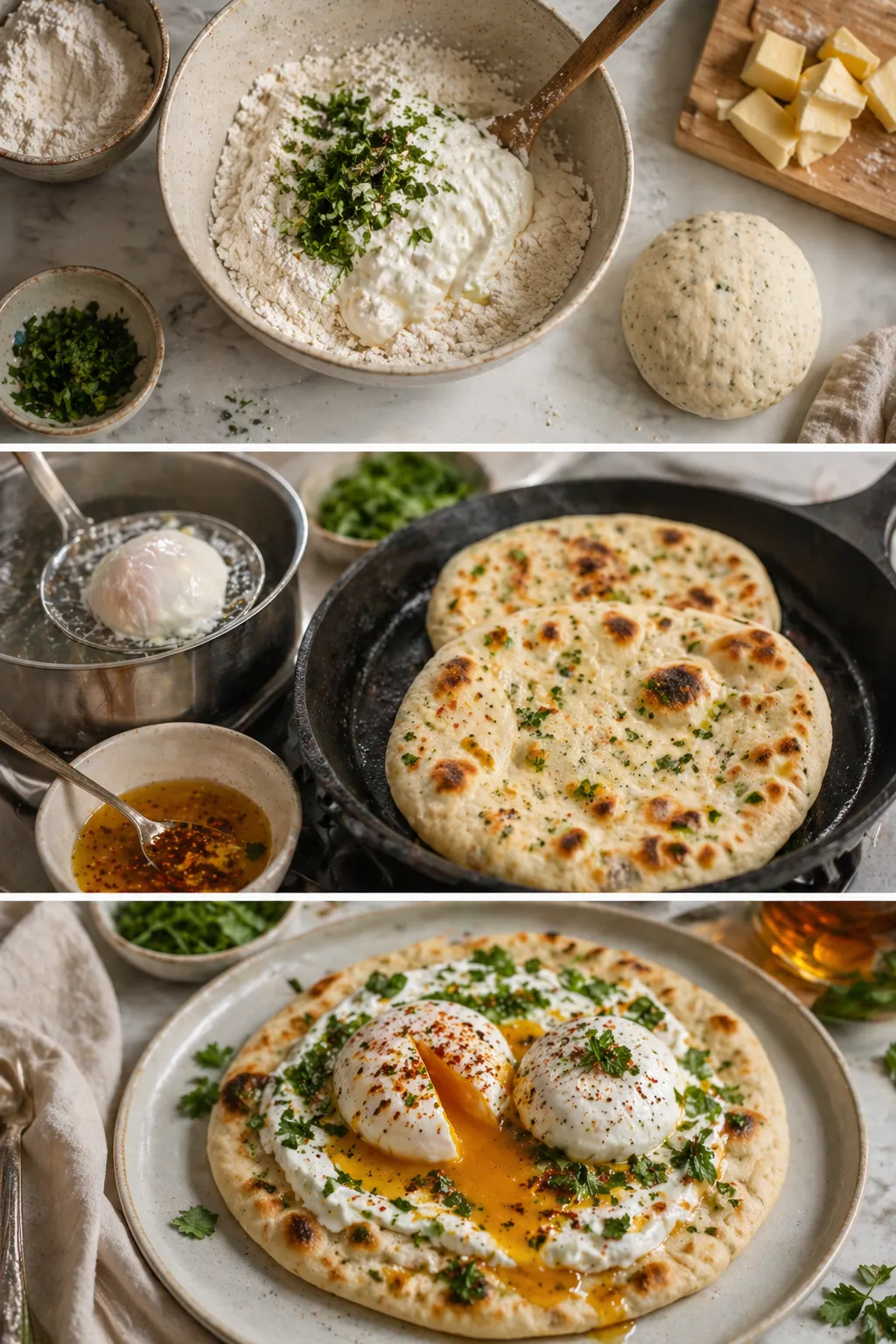
- In a bowl, combine the flour, salt, yogurt, and chopped herbs. Mix everything together until it forms a soft dough. It might feel a bit sticky at first—that’s normal. If it’s too wet, add a little flour. If it feels too dry, a small spoon of yogurt usually fixes it.
- Let the dough rest for about 10 minutes. It doesn’t seem like much time, but it really helps. The dough relaxes, becomes softer, and is much easier to roll out later.
- Divide the dough into equal portions. Take each piece, flatten it slightly, and place a few cubes of butter in the center. Then fold the dough around the butter and seal it. It might feel a bit awkward the first time, but it doesn’t need to be perfect.
- Roll each piece into a round flatbread. Aim for medium thickness—not too thin, or the butter might leak out, but not too thick either.
- Heat a pan over medium-high heat. Cook each flatbread for about 2 minutes per side. You’re looking for golden spots and a bit of puffing. If it smells slightly buttery and toasted, you’re on the right track.
- Bring a pot of water to a gentle simmer—not a rolling boil. Add the vinegar.
- Crack each egg into a small bowl first (this makes things easier), then gently slide it into the water. Cook for about 3 minutes, until the whites are set but the yolk is still soft inside.
- Remove the eggs with a slotted spoon and let them drain for a few seconds. You don’t want too much water on the plate.
- Melt the butter for the sauce. If you’re using chili oil, add it in. Finish with a bit of lemon juice to keep things balanced.
- To assemble, place the flatbread on a plate, add a spoonful of yogurt, then the poached eggs. Drizzle with the butter sauce and finish with fresh herbs and black pepper.
Quick Tips & Little Tricks 💡
- Use the freshest eggs you can find — they hold their shape much better when poaching
- Don’t stress about perfect circles when rolling the dough — uneven looks more natural anyway
- Keep the pan properly heated before adding the flatbread, otherwise it won’t puff as nicely
- If the butter leaks out a bit while cooking, it’s not a problem — it actually adds flavor to the crust
- Taste as you go (especially the sauce) — a small squeeze of lemon can make a big difference
Easy Variations You Can Try 🥑
Once you’ve made the basic version a couple of times, it’s almost impossible not to start adjusting things. Not in a dramatic way — more like small changes here and there, depending on what you have at home or just what you’re in the mood for that day.
That’s actually one of the nicest things about this dish. It doesn’t feel fragile. You can tweak it without worrying that everything will fall apart.
For example, adding avocado is probably the easiest upgrade. It blends in naturally with the rest of the textures, making the whole dish feel even softer and creamier. On the other hand, if you want something a bit more “grounded,” sautéed mushrooms work really well. They bring a deeper, slightly earthy flavor that balances the freshness of the yogurt and herbs.
If you’re leaning more toward a brunch-style version, smoked salmon is an obvious choice. It adds a bit of saltiness and richness without making the dish heavier. And if you like a bit of heat, even a small spoon of chili sauce or chili crisp can completely shift the overall feel — suddenly it’s warmer, sharper, a bit more intense.
Even small changes can make a noticeable difference. Something as simple as switching herbs can subtly change the direction of the dish. Coriander feels brighter and slightly citrusy, parsley is more neutral and clean, and chives add that mild onion-like edge that works surprisingly well with eggs.

If you want a few ideas to play around with, here are some combinations that tend to work nicely:
- Avocado + chili oil → creamy with a bit of heat
- Mushrooms + parsley → deeper, more savory feel
- Smoked salmon + yogurt + lemon → lighter, slightly fresher version
- Extra herbs + olive oil → more herb-forward, almost green and vibrant
None of these are strict rules. More like starting points.
And honestly, some of the best versions come from random decisions — using what’s already in your fridge, or just trying something because it sounds good at the moment.
There’s no single “correct” way to make it. Once you understand the base, the rest is flexible. And that flexibility is exactly what makes the dish so easy to come back to.
Serving and Presentation Tips 🍽️
This isn’t the kind of dish that depends on presentation, but a few small details can make it feel more complete. Not in a fancy, restaurant way — more in a “this looks really good, I want to eat it immediately” kind of way.
First thing that actually makes a difference: the plate. If you serve everything on a cold plate, the flatbread cools down faster than you’d expect. It’s a small thing, but using a slightly warm plate keeps everything at the right temperature a bit longer.
When it comes to assembling, it’s better not to overthink it. Spread the yogurt casually, place the eggs on top, and let the yolk do its thing. Once it breaks and starts to run, it creates a natural, slightly messy look — and that’s exactly what you want here.
Trying to keep everything too neat can actually make it look less appealing. This dish works best when it feels a bit relaxed.
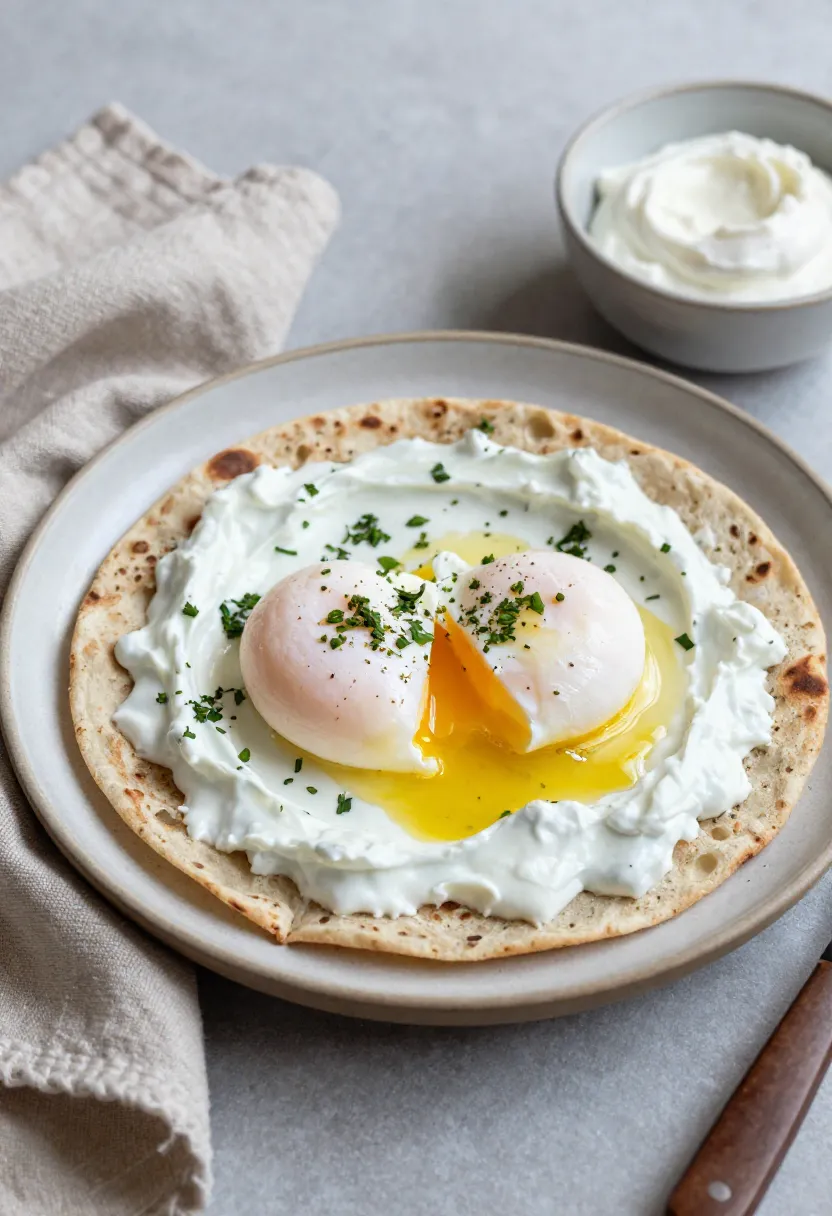
Adding herbs at the very end is one of those small steps that really changes the final result. They bring color, yes, but also that fresh smell right before eating. It’s subtle, but noticeable.
A spoon of extra yogurt on the side is also worth it. Not everyone will use it, but having the option lets people adjust the balance as they eat. Some bites might need more freshness, others are already perfect.
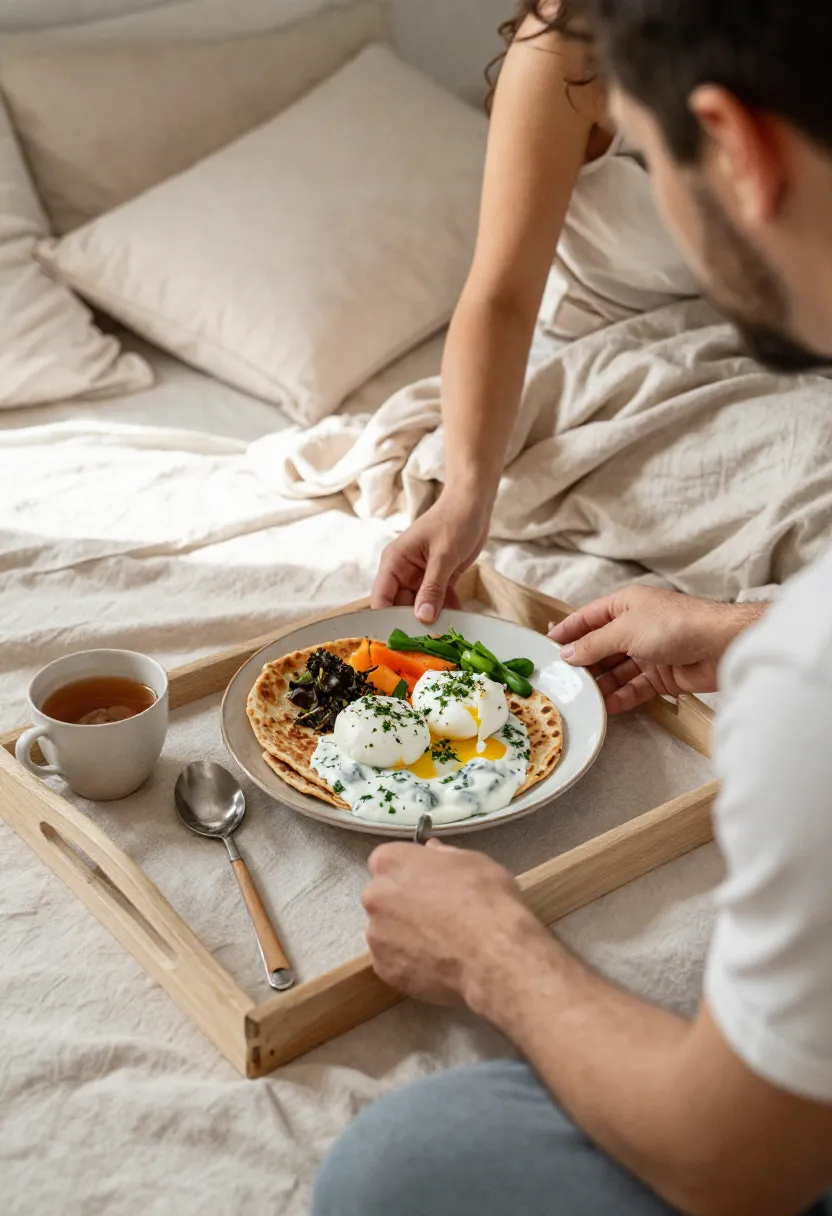
If you’re serving this for more than one person, it’s often easier not to plate everything individually. Just put the flatbreads, eggs, and toppings in the center and let people build their own plates. It makes the whole thing feel more relaxed, less formal.
A few small details that tend to help:
- Don’t cut the flatbread — tearing it feels more natural and fits the dish better
- Add the butter sauce right before serving so it stays warm and glossy
- Use black pepper at the end, not during cooking, for a bit more aroma
- Let the egg yolk flow — it’s part of both the flavor and the look
None of this is complicated. It’s more about paying attention to the moment when everything comes together.
Final Thoughts: Why This Dish Stays With You 💛
Some recipes impress you once, and that’s it. You try them, maybe even enjoy them, but you don’t really feel the need to make them again.
This isn’t one of those.
There’s something about this dish that makes you come back to it. Not immediately, not in an obsessive way — but every now and then, it just feels like the right thing to cook. Especially on days when you don’t want anything too complicated, but still want something that feels a bit special.
It’s probably because it sits somewhere in the middle. It’s not overly simple, but it’s not demanding either. You don’t need a perfect setup, you don’t need rare ingredients, and you don’t need to follow everything exactly.
It leaves room for small mistakes, small changes, even small moods.
And that makes it feel more real.
There’s also something about the process itself. It slows you down just enough. You mix, you cook, you assemble — not rushing, not overthinking. It’s a short process, but it still feels like you’ve actually done something, not just thrown ingredients together.
And then you sit down, take a bite, and everything just works. The textures, the temperature, the balance — nothing stands out too much, but nothing feels missing either.
That kind of balance is hard to get right, and this dish does it without trying too hard.
In the end, it’s not about whether it looks perfect or tastes “impressive.” It’s about how it feels to make and eat.
Warm, a little indulgent, but still light enough to enjoy without thinking twice.
The kind of meal you don’t get tired of.
And, honestly, those are usually the ones that stay with you the longest.