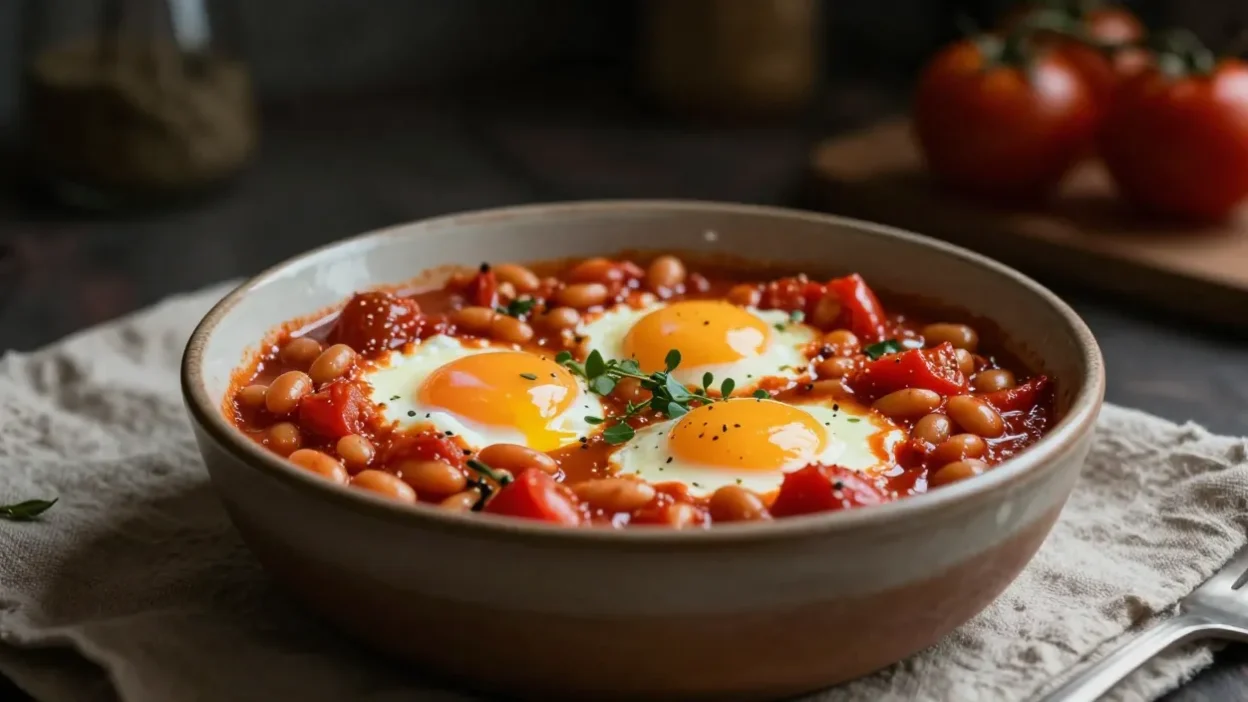
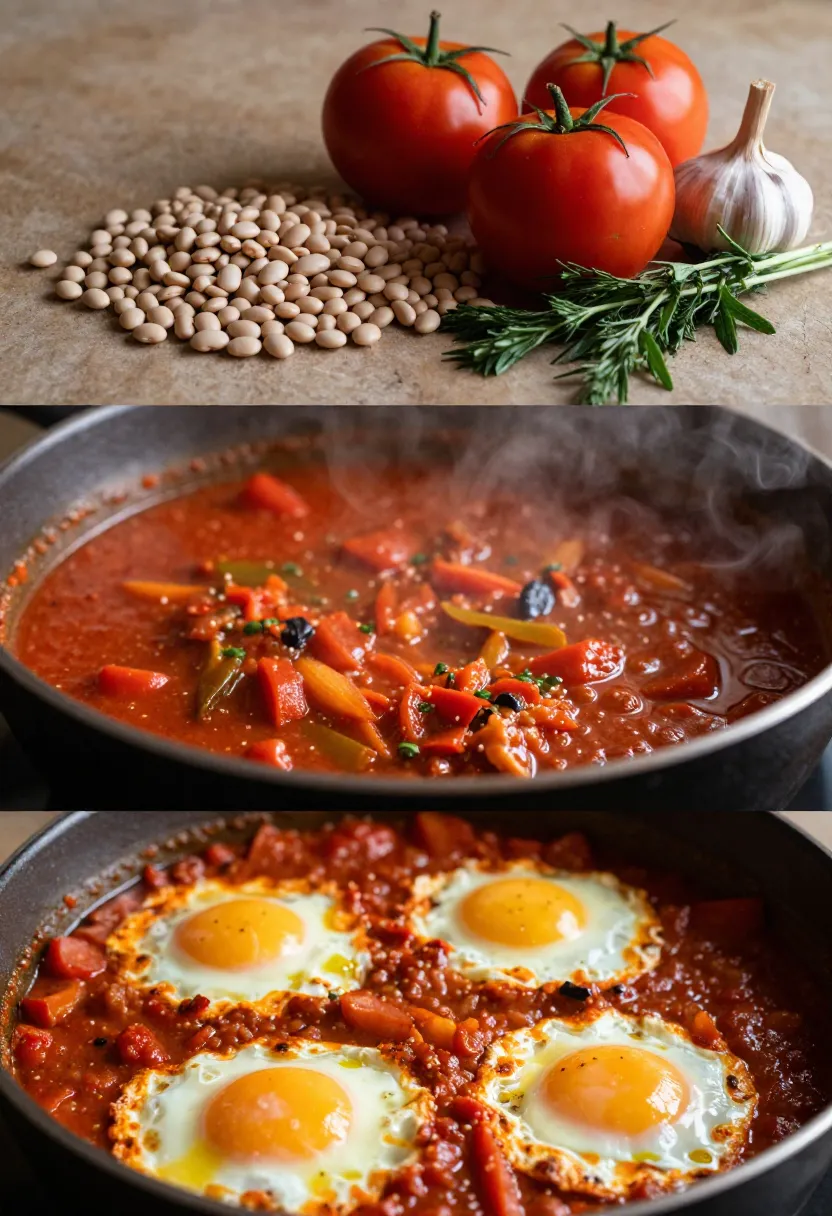
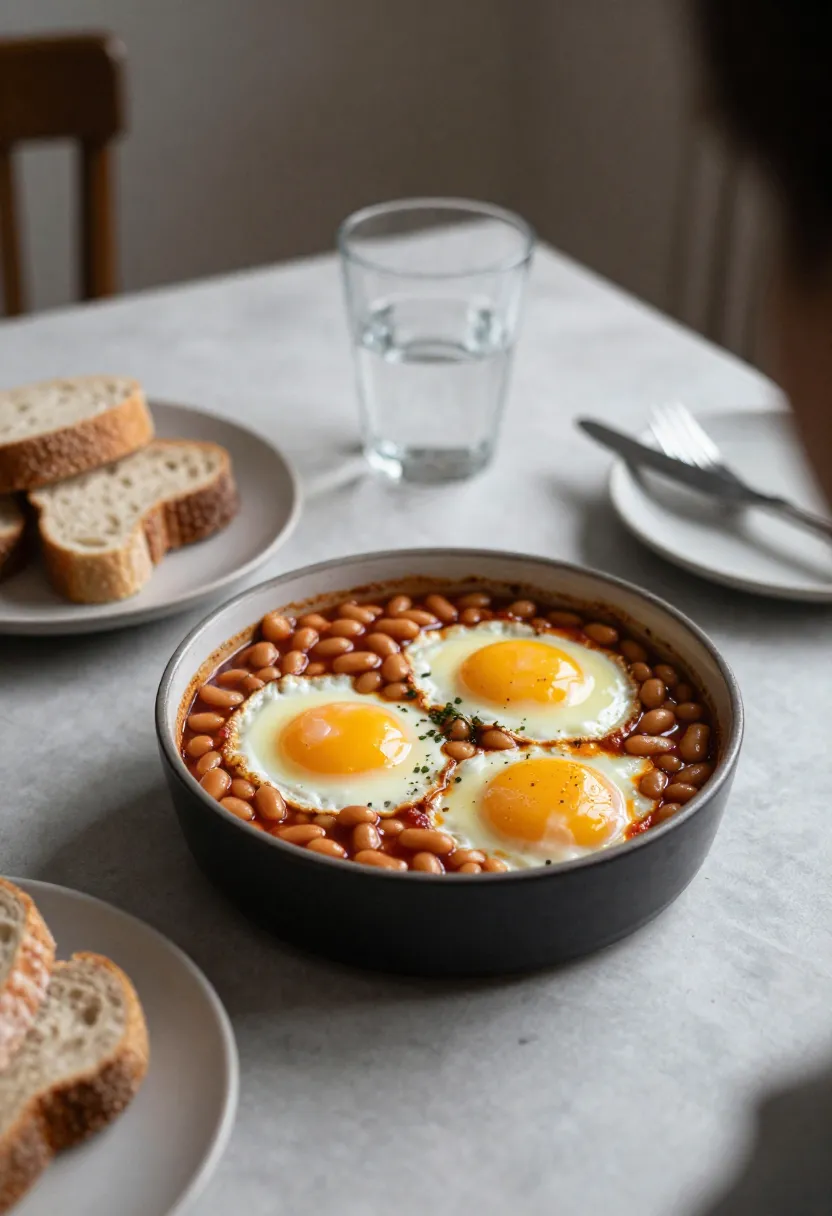
🍳 Gigantes with Baked Eggs Recipe
This is one of those dishes that doesn’t try to impress you at first — but ends up doing exactly that.
On paper, it’s very simple: beans, tomato sauce, herbs, eggs. Nothing unusual. But once you actually cook it, you start to notice how everything slowly comes together. The sauce thickens, the beans absorb flavor, and by the time you add the eggs, the whole dish already feels complete.
What makes it especially satisfying is the texture. The beans are soft and almost creamy, the sauce is rich but not too heavy, and the eggs bring that final layer — slightly runny yolks that mix into everything and make it feel smoother.
It’s also a very “real life” kind of recipe. You don’t need perfect timing. You don’t need to stand over it constantly. Most of the work happens quietly in the oven, which gives you space to step away for a bit.
And maybe that’s why it works so well — it’s simple, but it doesn’t feel basic. It’s the kind of meal you make once, and then somehow come back to again without really planning to.
🧾 Ingredients
- 250 g dried large white beans (or 2 cans, drained and rinsed)
- 1 medium onion, finely chopped
- 1 carrot, diced
- 2 celery stalks, chopped
- 3 garlic cloves, minced
- 2 teaspoons dried oregano
- 1 teaspoon dried thyme
- 1 tablespoon tomato paste
- 400–500 g canned chopped tomatoes
- 1 tablespoon red wine vinegar
- 3–4 tablespoons olive oil
- Salt and black pepper
- Fresh parsley, chopped
- 6–8 eggs
- Crusty bread for serving
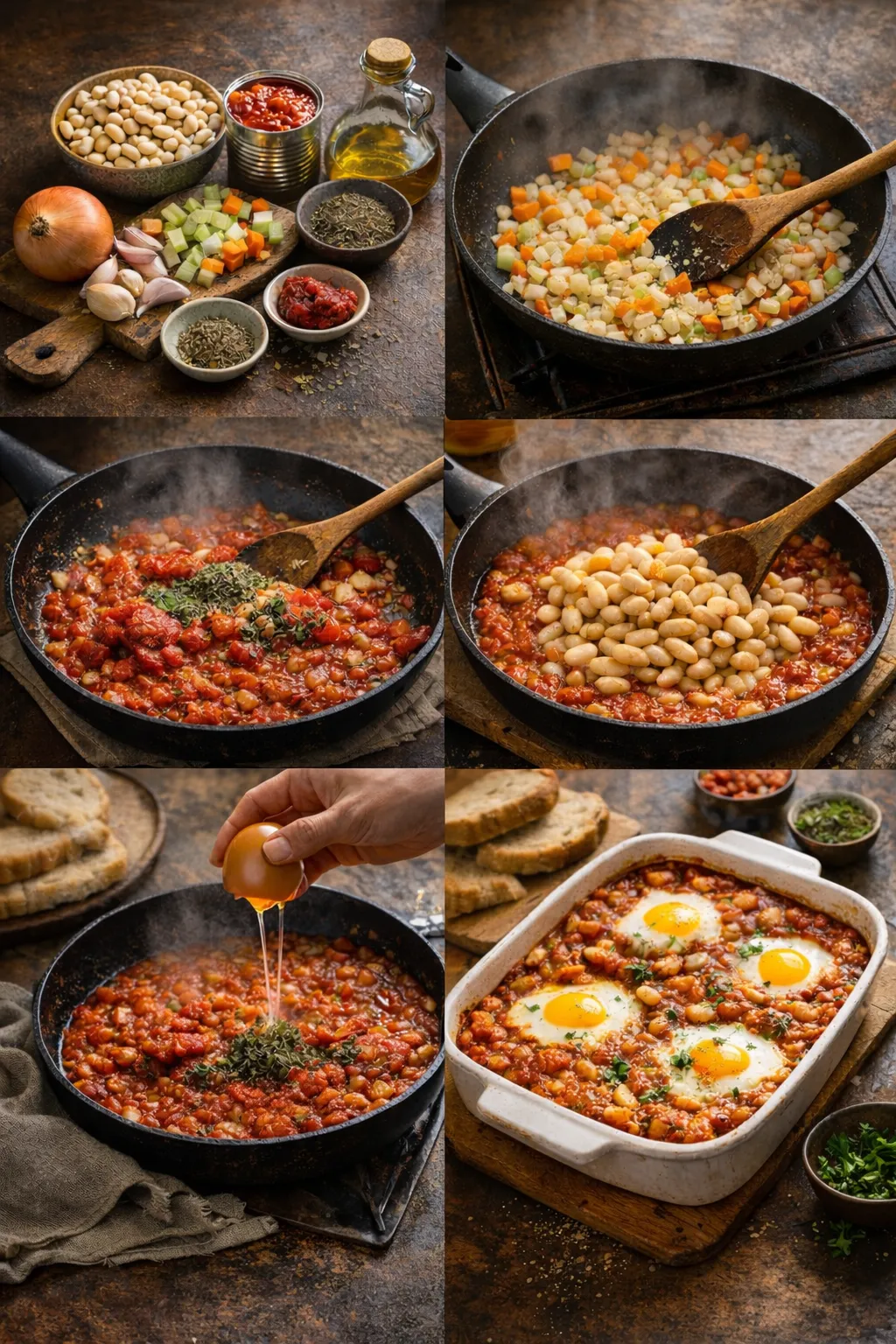
👨🍳 Cooking Steps
- If you are using dried beans, soak them in water overnight. The next day, drain and rinse them, then cook in fresh water until they are tender but still holding their shape. This usually takes around 45–60 minutes.
- Preheat the oven to 180°C.
- Heat olive oil in a large pan over medium heat. Add the chopped onion and cook slowly until it becomes soft and slightly golden. Try not to rush this step — it builds the base flavor.
- Add the carrot and celery. Continue cooking for several minutes until the vegetables soften and start to release a mild sweetness.
- Stir in the garlic, oregano, and thyme. Cook briefly, just until the aroma becomes noticeable. It happens quickly, so don’t overdo it.
- Add the tomato paste and cook it for about a minute. This helps deepen the flavor and makes the sauce feel more developed.
- Pour in the vinegar and let it cook off slightly. This step might seem small, but it really helps balance everything later.
- Add the chopped tomatoes and a small splash of water. Season with salt and black pepper. Let the sauce simmer gently for about 10–15 minutes.
- Add the cooked or canned beans to the sauce and mix everything well so the beans are fully coated.
- Transfer the mixture into a baking dish. Drizzle with a bit more olive oil, cover with foil, and place it in the oven.
- Bake for 40–60 minutes. During this time, the sauce thickens and the beans absorb more flavor. You don’t need to stir it — just let it do its thing.
- Remove the dish from the oven and make small wells in the beans using a spoon.
- Crack the eggs into these spaces.
- Return the dish to the oven, uncovered, and bake for another 6–8 minutes, or until the egg whites are set but the yolks are still soft.
- Remove from the oven, sprinkle with fresh parsley, and serve immediately with crusty bread.
💡 Tips & Small Cooking Hacks
- Don’t rush the onion step — a few extra minutes here make a noticeable difference
- If the sauce tastes a bit flat, add a tiny splash of vinegar at the end
- Keep an eye on the eggs — even one extra minute can make the yolks fully set
- If you want a thicker texture, bake a little longer without the foil at the end
- Always serve it hot — this dish loses some of its charm once it cools down
💛 It Offers Reliable Comfort
Some recipes are exciting the first time you try them. They feel new, maybe even impressive, but after that — you rarely come back to them. Either they take too much effort, or the result doesn’t feel worth repeating.
This dish is different.
Gigantes with baked eggs is the kind of meal that quietly proves itself over time. You make it once, and it feels good. You make it again, and it feels even easier. Eventually, it becomes something you rely on without even thinking about it too much.
Part of that comes from how forgiving the recipe is. It doesn’t require perfect timing or exact measurements. Even if you slightly overcook the sauce or adjust the ingredients, it still turns out well. That kind of flexibility removes pressure, and cooking starts to feel more relaxed.
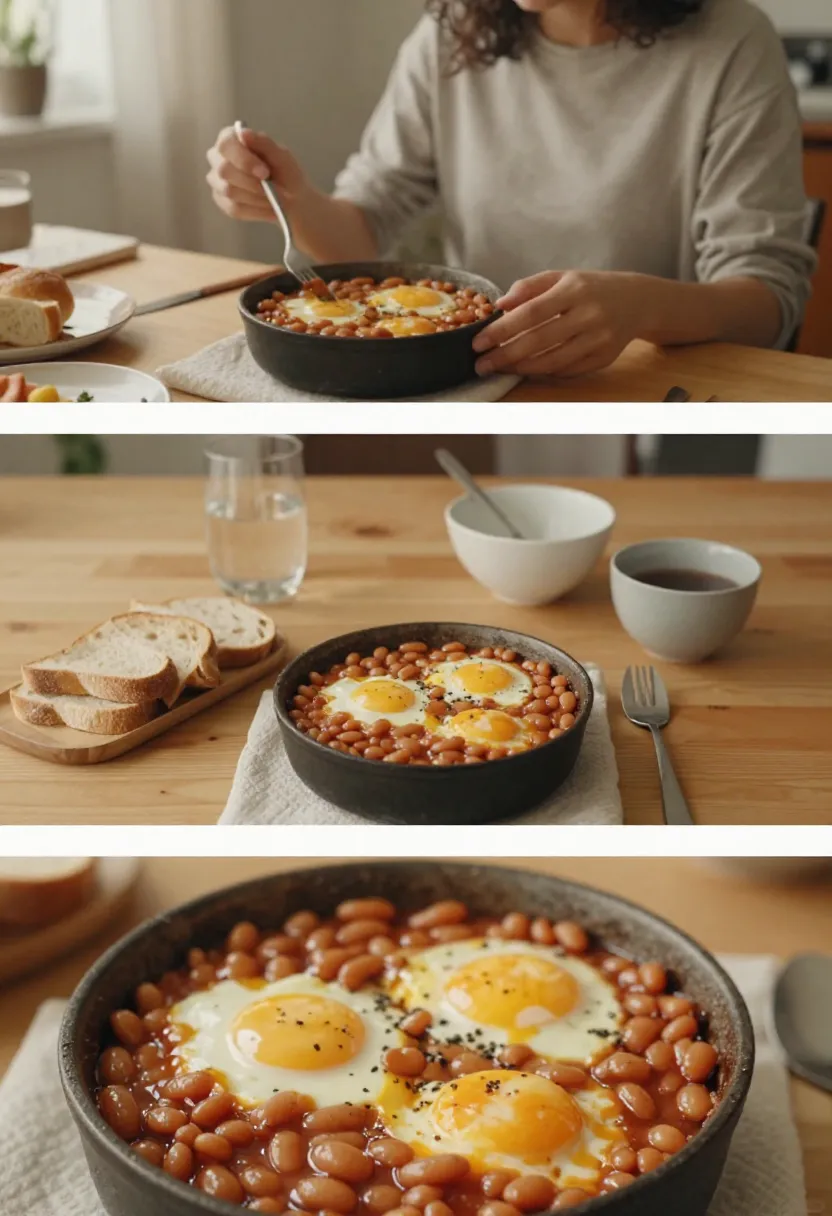
Another reason it works so well is the balance it offers. It’s filling, but not too heavy. You finish eating and feel satisfied, not overwhelmed. That’s actually harder to achieve than it sounds.
It also fits different situations surprisingly well. For example, you might cook it just for yourself after a long day when you don’t want to think too much. At the same time, it works just as naturally when you have people over and need something simple but still comforting.
What makes it reliable, in a practical sense, is a combination of things:
- it uses basic, easy-to-find ingredients
- the cooking process is mostly hands-off
- the result is consistent even with small changes
- it works both as a main dish and as part of a larger meal
Because of all that, it stops feeling like “a recipe you try” and starts feeling like “a dish you know.”
And those are usually the ones that stay.
🕯️ It Improves with Time
Not every dish handles time well. Some meals are best eaten immediately and lose their appeal once they cool down or sit in the fridge. This one works differently.
Gigantes with baked eggs actually benefits from resting.
After a few hours — or even the next day — the flavors settle and blend more fully. The sauce thickens slightly, the beans absorb even more of it, and everything feels more cohesive. It’s not a dramatic change, but it’s noticeable.
You might even find that the dish tastes more “complete” the next day.
Another advantage is how well it reheats. It doesn’t fall apart or lose its texture. With gentle reheating, the beans stay soft, the sauce remains rich, and the overall structure holds together.
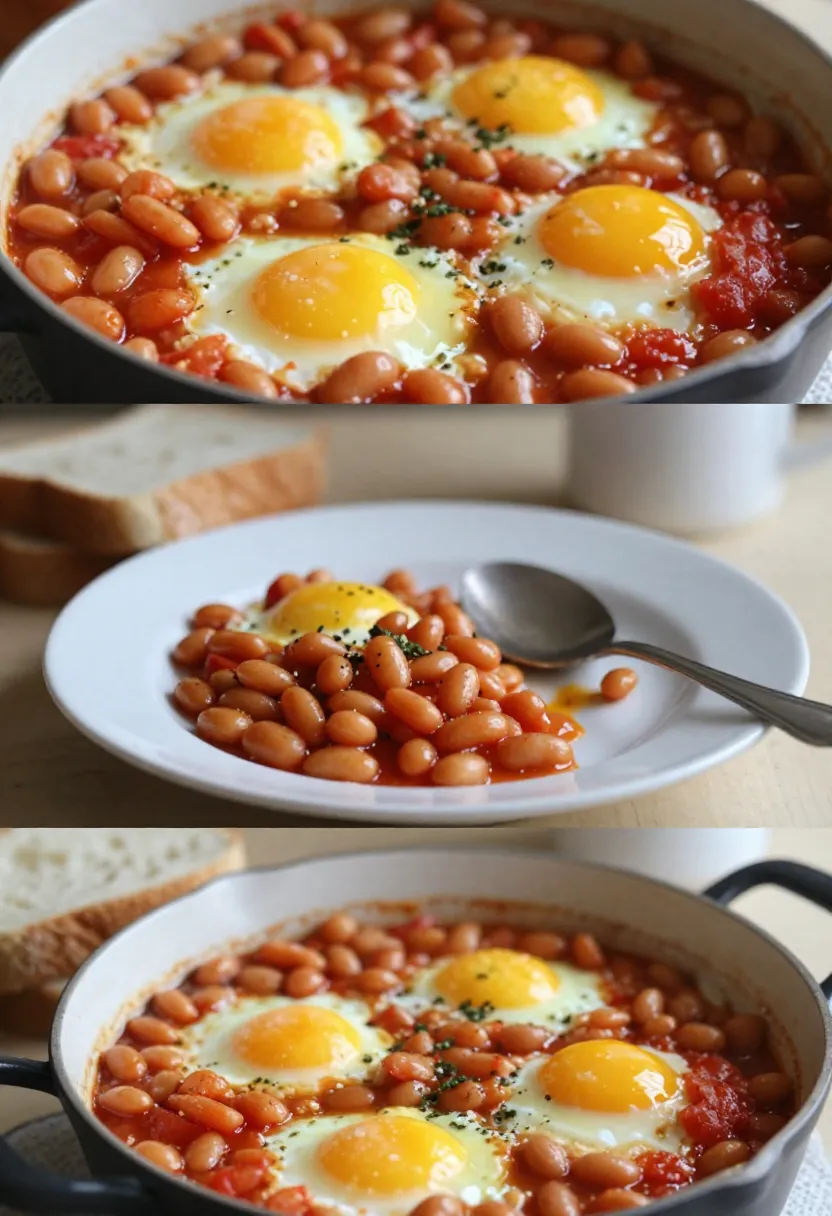
If you want to bring it closer to the original version, you can always add fresh eggs when reheating. That small step makes a big difference and brings back that contrast between the creamy sauce and the soft yolk.
In terms of practicality, this makes the dish very convenient. You can cook it once and enjoy it over multiple meals without feeling like you’re eating leftovers in the usual sense.
Here’s how it generally behaves over time:
| Time after cooking | What changes |
|---|---|
| Same day | Fresh, slightly lighter texture |
| Next day | Thicker sauce, deeper flavor |
| 2–3 days later | More blended taste, very cohesive |
| After reheating | Still rich and satisfying, especially with added eggs |
Because of this, it fits well into a more realistic cooking routine. You don’t always need to cook from scratch every day — sometimes one good dish can carry you through a couple of meals.
🔁 It Naturally Becomes Part of Your Routine
There’s a difference between a recipe you try and a recipe that stays with you.
Some dishes feel interesting in theory, but you rarely think about them again. Others slowly become part of your routine without any effort. You don’t even notice when it happens.
This is one of those dishes.
At first, you follow the steps carefully. You check the ingredients, you pay attention to timing, you try to get everything “right.” But after making it a couple of times, something changes.
You start remembering the process.
You stop measuring everything exactly. You adjust things without thinking too much — a bit more olive oil, slightly less tomato, maybe an extra herb if you feel like it. It becomes more intuitive.
And that’s usually a sign that the recipe works.
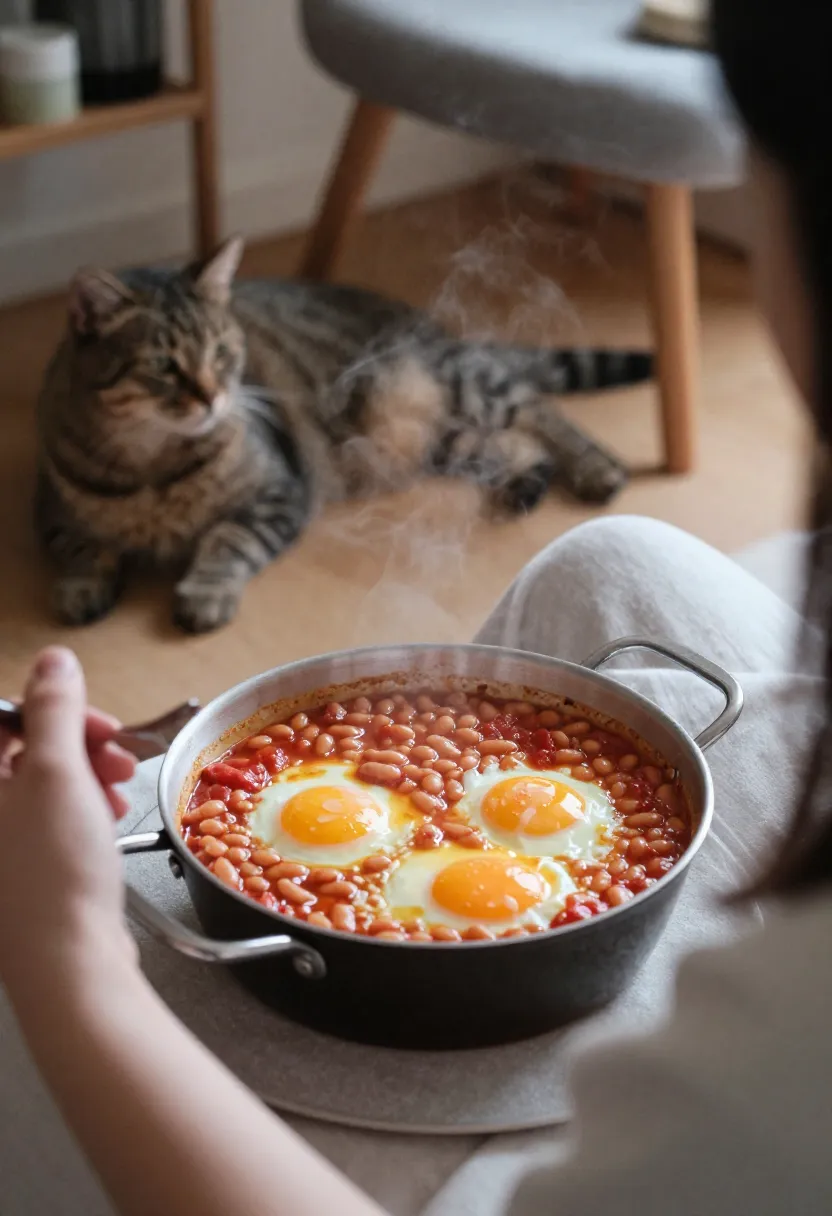
It doesn’t demand precision. It allows small variations. It fits into your habits instead of forcing you to change them.
Over time, it might even adapt to your personal preferences. Some people like it richer, others keep it lighter. Some add extra ingredients, others keep it minimal. The base stays the same, but the details shift.
That’s how a recipe becomes personal.
You might notice a few small changes in how you approach it over time:
- you stop checking the recipe and cook from memory
- you adjust seasoning based on instinct rather than measurement
- you change ingredients depending on what’s available
- you cook it more often without planning to
And eventually, it becomes one of those meals you return to without thinking too much about why.
It just works.
Gigantes with baked eggs fits into that category easily. It combines simplicity, flexibility, and a satisfying result in a way that makes it feel natural to come back to it again and again — not because you have to, but because you want to.