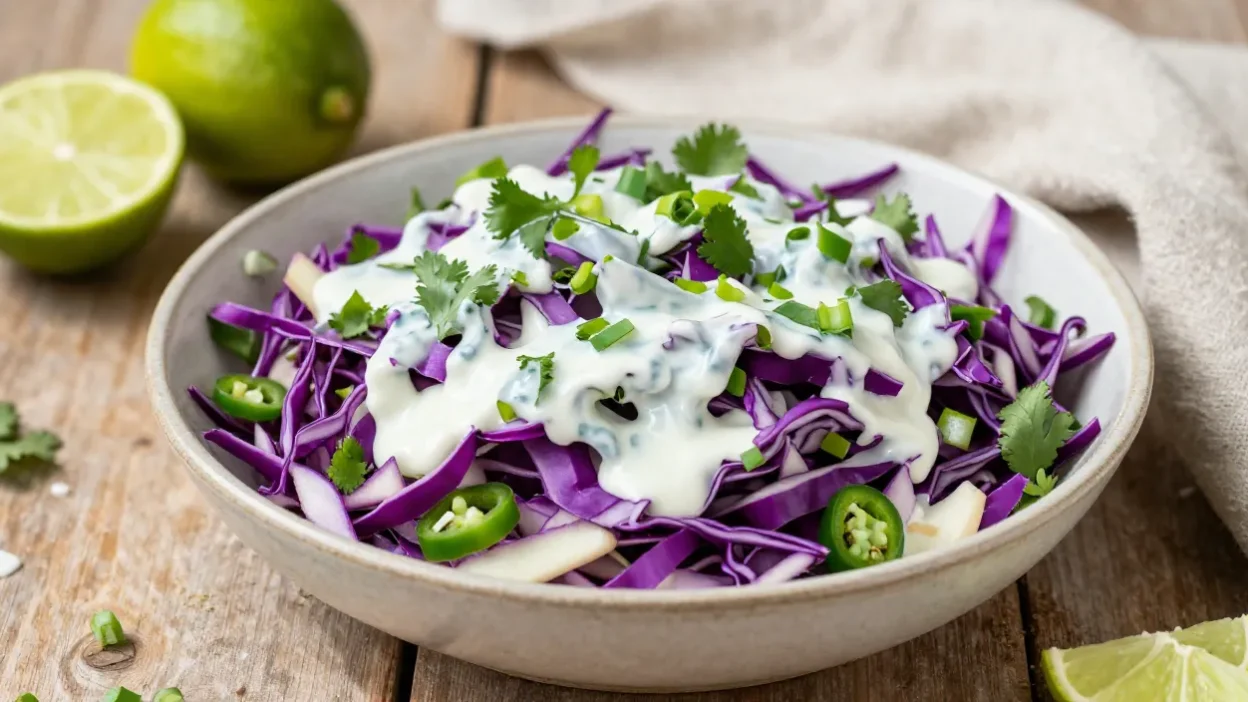
There are dishes you cook because you have to… and then there are the ones that quietly become part of your routine. You don’t plan it, you don’t even think much about it — you just end up making them again.
Cilantro lime slaw fits into that second category in a very natural way.
At first, it doesn’t look like anything special. Just shredded cabbage, some herbs, a creamy dressing. The kind of thing you might overlook if it’s sitting next to something more “interesting.” But once you actually try it, there’s a moment where you realize it’s doing more than it should for something this simple.
The texture hits first — really crisp, almost unexpectedly so. Then the lime comes through, bright and sharp, and suddenly everything feels fresher. Not in an overwhelming way, just enough to wake up your palate. The cilantro follows right after, adding that slightly bold, green note that gives the slaw its identity.
And what’s interesting is how it affects everything else on the plate. It doesn’t just exist on the side. It actually changes how the rest of the meal tastes. Rich dishes feel lighter, grilled flavors feel more balanced, even something simple like a sandwich starts to feel more put together.
There’s also a certain ease to it. You don’t have to measure everything perfectly. You don’t need to follow strict steps. It’s one of those recipes where a little variation doesn’t ruin anything — it just shifts the result slightly.
That’s probably why people keep coming back to it.
If you had to sum up what makes it work so well, it would be something like this:
- it’s quick to make without feeling rushed
- it uses ingredients that are easy to find and hard to mess up
- it adds freshness without overpowering the main dish
- it feels light enough to eat often, not just occasionally
And maybe the most important thing — it actually tastes like something you’d choose to eat, not something you feel obligated to include.
🍋 The Flavor Balance That Makes It Work
What makes this slaw stand out isn’t any single ingredient — it’s how everything interacts. There’s a kind of quiet balance going on that you don’t always notice immediately, but you feel it as you eat.
The cabbage gives structure. It’s crisp, slightly watery in that refreshing way, and it holds everything together. Without it, the whole dish would lose its backbone.
Then comes the lime. This is where things start to wake up. It cuts through the natural sweetness of the cabbage and adds that clean, citrus edge. Not too sour, not too sharp — just enough to keep things from feeling flat.
Cilantro is where the personality comes in. It’s fresh, a little bold, and not completely neutral. Some people notice it more than others, but either way, it plays a big role in making the slaw feel distinct rather than generic.
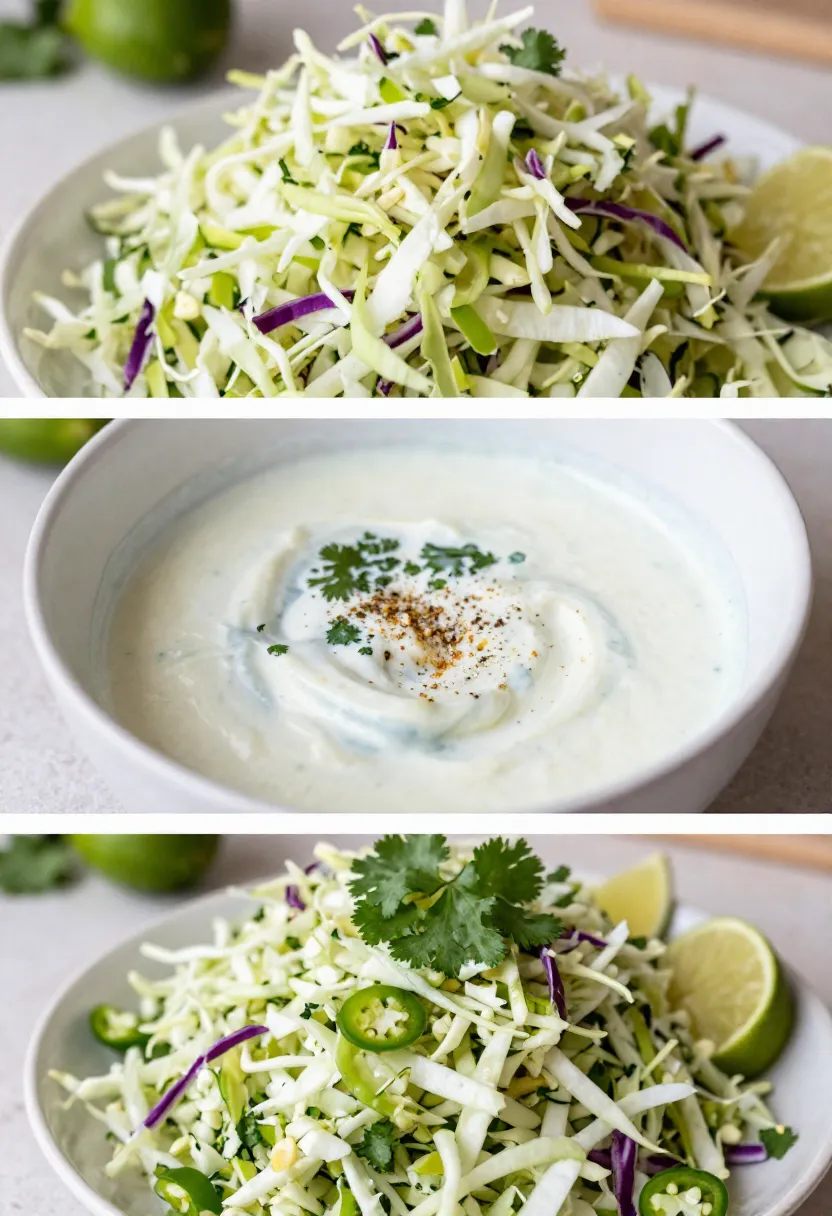
The creamy base (usually yogurt) smooths everything out. It softens the acidity, rounds the texture, and makes the slaw feel more complete. Without it, the dish would lean too sharp. With it, everything settles into a more balanced place.
And then there are the background flavors — garlic, cumin, a bit of seasoning. You don’t always notice them directly, but if they’re missing, the whole thing feels slightly off.
Here’s a simple breakdown of how these elements work together:
- Cabbage → provides crunch and structure
- Lime juice → adds brightness and contrast
- Cilantro → brings freshness and identity
- Creamy base → balances and softens
- Garlic & spices → create depth without overpowering
What’s interesting is that no single element dominates. The experience changes slightly with each bite. Sometimes it feels more citrusy, sometimes more creamy, sometimes more herb-forward.
That subtle variation is what keeps it from becoming boring. You don’t get tired of it halfway through — if anything, you keep going back to figure out why it works so well.
🥗 Not Just a Side Dish (And Honestly, That Matters)
Most side dishes are easy to ignore. They’re there because they’re expected, not because they add something essential. You take a few bites, maybe finish them out of habit, and that’s it.
This slaw behaves differently, even though it doesn’t try to stand out.
It naturally fits into a meal in a way that feels useful. Not decorative — useful. It brings contrast, and that changes how everything else feels on the plate.
For example, when you pair it with something rich or heavy, it acts almost like a reset between bites. You eat something savory or fatty, then a bit of slaw, and suddenly your palate feels refreshed again. It makes the next bite taste just as good as the first.
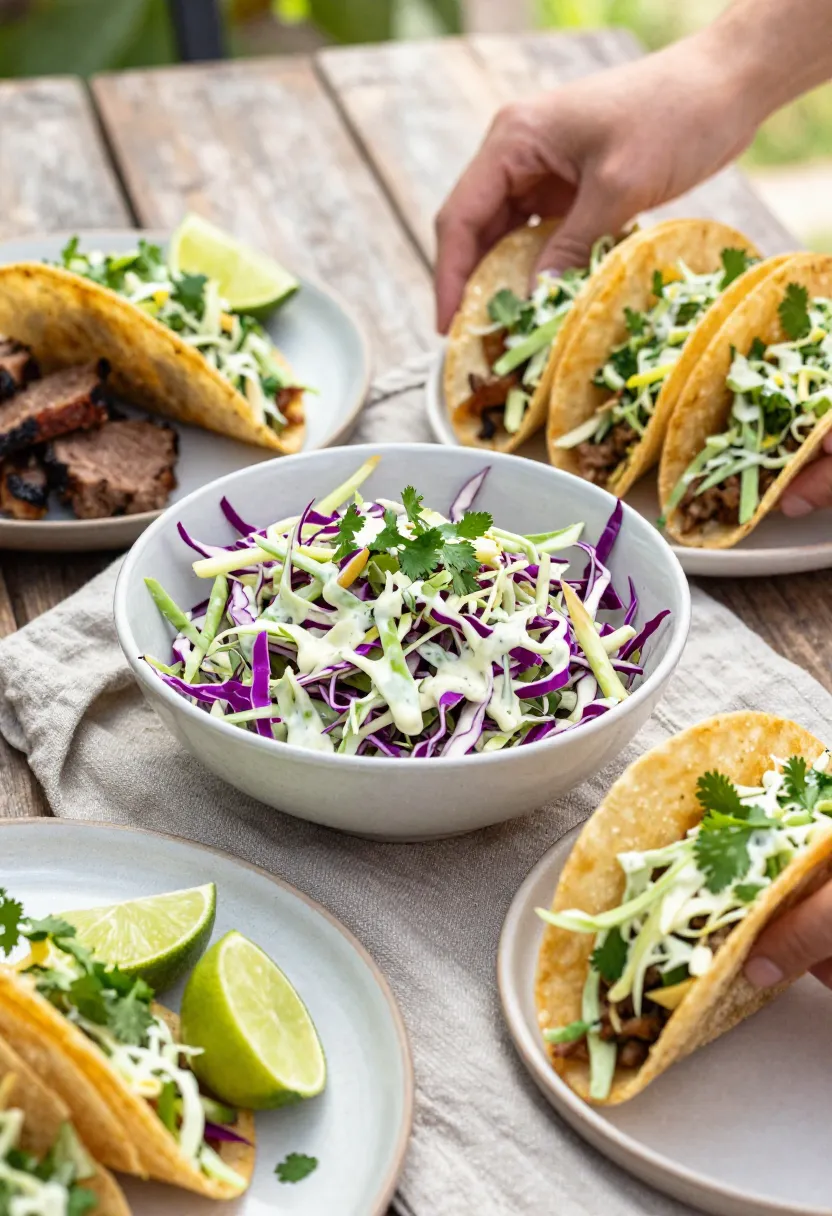
It also works across different kinds of meals without needing adjustments. You don’t have to rethink the recipe depending on what you’re serving it with. It just adapts.
Some of the most natural ways to use it include:
- adding it to tacos, where it brings crunch and freshness
- layering it into sandwiches or burgers to balance richness
- serving it alongside grilled or roasted dishes for contrast
There’s also something to be said about how it feels to eat over time. It doesn’t become overwhelming. You can have a full portion and still feel comfortable, not overly full or weighed down.
And that’s probably why it ends up being used more often than expected.
It’s not trying to be the main dish.
It’s not trying to impress.
But it quietly improves everything around it — and that’s the kind of role that ends up mattering the most.
🥬 Cilantro Lime Slaw Recipe
There’s something really satisfying about recipes that don’t ask much from you but still give back a lot. This is one of them.
Cilantro lime slaw sits somewhere in that sweet spot between “I need something quick” and “I want this to actually taste good.” It’s simple, yes — but not in a boring way. More like… everything in it has a purpose, and nothing feels extra.
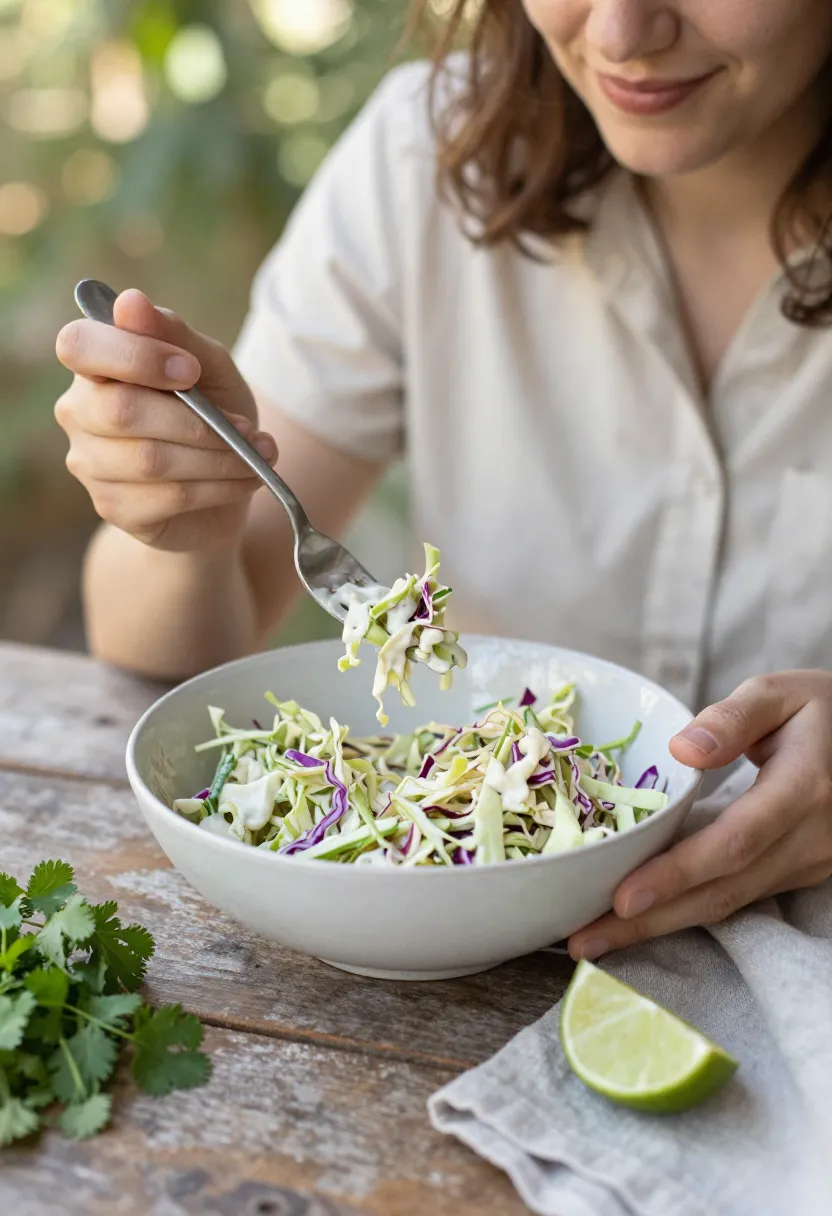
What makes it stand out is how fresh it feels from the very first bite. The cabbage stays crisp, the lime adds that clean brightness, and the creamy dressing pulls it all together without making it heavy. It’s the kind of dish that works just as well on a busy weekday as it does when you’re putting together a table for friends.
Also — and this matters more than people admit — it’s hard to mess up. Even if you eyeball a few ingredients or tweak things slightly, it still turns out good. Maybe a little more citrusy, maybe a bit creamier… but never bad.
And once you’ve made it a couple of times, you stop thinking of it as a “recipe” and more like something you can just throw together without much effort.
🧾 Ingredients
For the slaw:
- 7–8 cups shredded cabbage (or a ready-made coleslaw mix)
- 2–3 green onions, thinly sliced
- A handful of fresh cilantro, roughly chopped
For the dressing:
- 1 cup plain Greek yogurt
- ½ cup fresh cilantro
- ¼ cup freshly squeezed lime juice
- 2 cloves garlic
- ½ teaspoon ground cumin
- ½ teaspoon salt
- ¼ teaspoon black pepper
- 1 small jalapeño (optional, depending on your heat preference)
Optional additions:
- 1 tablespoon honey (for a subtle sweetness)
- Lime zest for extra citrus aroma
- Chili flakes for more heat
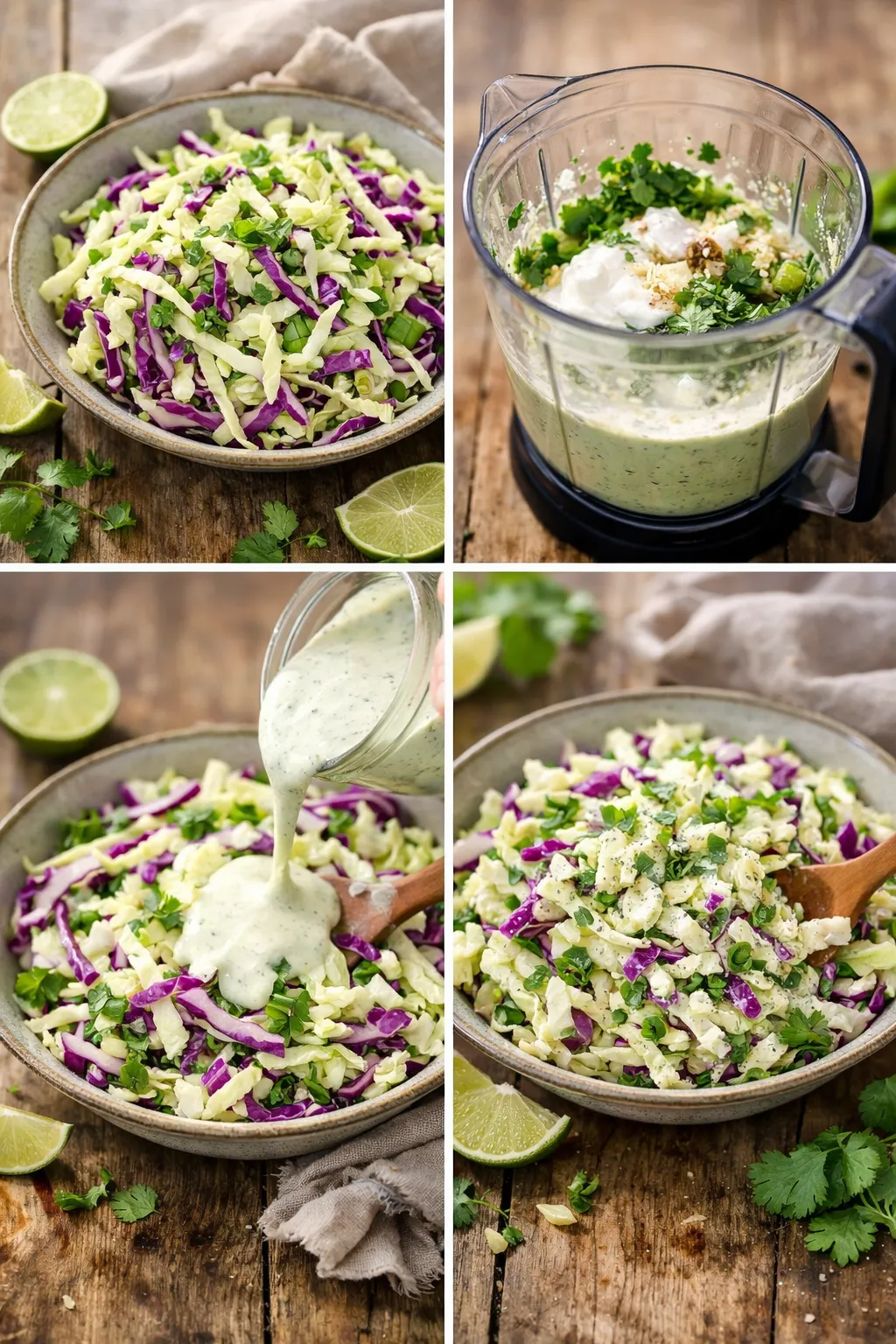
👩🍳 Instructions
- Start with the dressing. Add the yogurt, cilantro, lime juice, garlic, cumin, salt, pepper, and jalapeño into a blender or food processor. Blend until smooth and slightly thick. It should look creamy but still light.
- Give it a quick taste. This step is easy to skip, but it really makes a difference. If it feels too sharp, you can soften it with a bit more yogurt. If it feels flat, a squeeze of lime or a pinch of salt usually fixes it.
- Place the shredded cabbage and green onions into a large bowl. Try to use a bowl that gives you enough room to mix properly — cramped mixing usually means uneven coating.
- Pour most of the dressing over the cabbage. Not all at once. It’s easier to add more later than to fix an overdressed slaw.
- Toss everything together until the cabbage is evenly coated. You can use tongs, but honestly, clean hands work best here — you get a better feel for the texture.
- Take a moment to check how it looks and tastes. If it seems a bit dry, add more dressing. If it needs a lift, a pinch of salt or an extra squeeze of lime usually does the trick.
- Let it sit for about 5–10 minutes before serving, if you have the time. It won’t lose its crunch, but the flavors will settle and come together a bit more.
✨ Small Tips That Make It Even Better
- Don’t overdress it right away — cabbage releases moisture as it sits
- Use fresh lime juice if possible, it really changes the flavor
- If the slaw sits too long, just toss it again before serving
- For extra crunch, mix in a handful of fresh cabbage right at the end
- If it tastes “almost right but not quite,” it usually just needs a bit more salt or lime
🌮 Making It Your Own: Small Changes That Actually Change Everything
One of the best things about this slaw — and this is something you only really notice after making it a couple of times — is how flexible it is.
You don’t have to follow it strictly. In fact, it almost works better when you don’t.
Some days you might want it lighter, especially if you’re pairing it with something already rich. In that case, it makes sense to dial back the creamy part a bit and let the lime take the lead. Add a splash of olive oil, maybe an extra squeeze of citrus, and suddenly it feels more like a crisp, refreshing salad than a traditional slaw. Same base, completely different vibe.
Other times, you might want a bit more personality. That’s where spice comes in. Jalapeño is the obvious choice, but honestly, it doesn’t stop there. A pinch of chili flakes, a drop or two of hot sauce, even something like cayenne — they all work. And the interesting part is how well the heat plays with the lime. It doesn’t overpower, it kind of builds slowly.
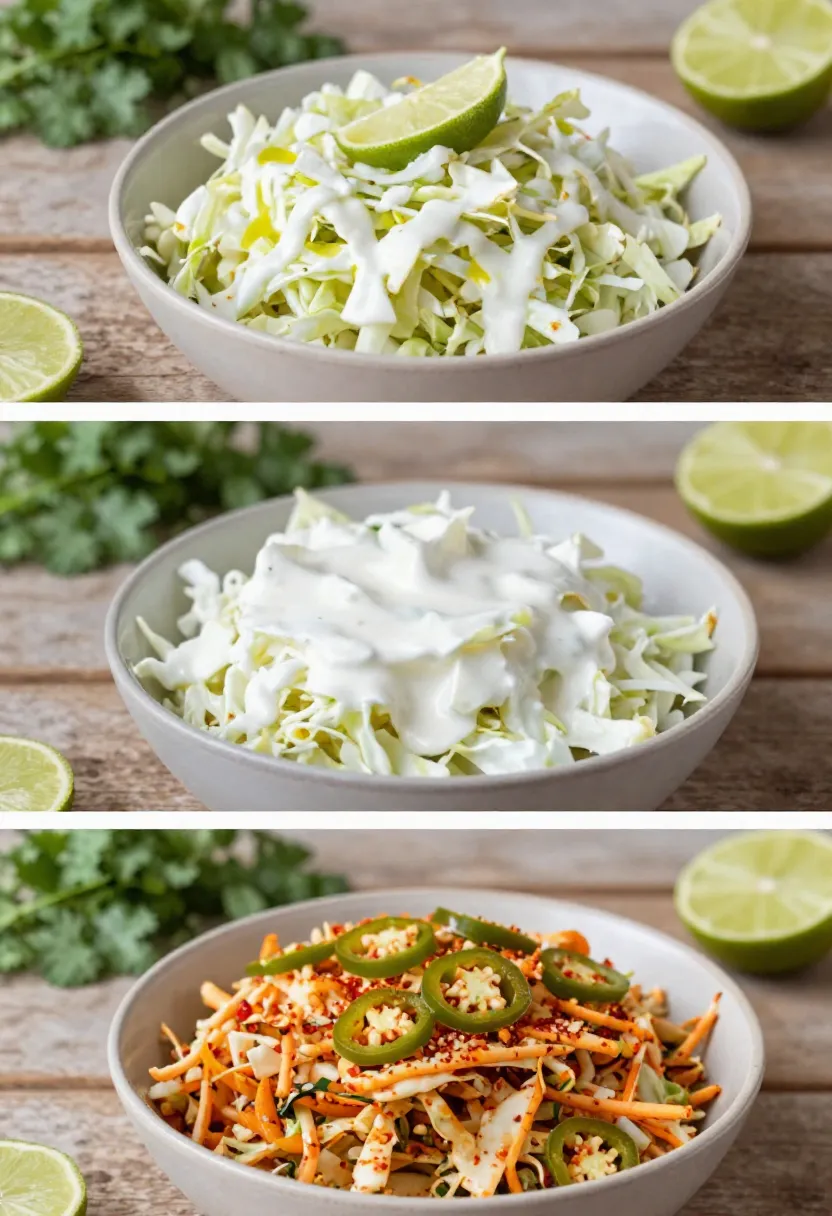
Texture is another thing people often underestimate. A small change can make the whole dish feel different. Something sharp like thinly sliced red onion adds bite. Something slightly sweet — like apple or even mango — softens the edges and gives a bit of contrast. Not in an obvious way, just enough to make you pause and notice.
If you had to think of it simply, this slaw gives you room to adjust depending on what you feel like that day:
- lighter and more citrus-forward
- creamier and more mellow
- spicier with a bit of heat
- slightly sweet with unexpected add-ins
And the nice part? It’s hard to mess up. It doesn’t really break — it just shifts a little depending on what you do.
🍽️ Where It Actually Works Best (More Than You Expect)
This is where the slaw really proves its value.
On its own, it’s good. Fresh, crunchy, easy to eat. But it becomes a lot more interesting when you pair it with other food. It’s not trying to be the center of attention — it just makes everything else around it better.
Tacos are probably the first thing that comes to mind, and for a good reason. Especially fish tacos or grilled chicken. The slaw adds crunch, cuts through richness, and brings that brightness that tacos sometimes need. Without it, things can feel a bit heavy. With it, everything balances out.
Sandwiches are another place where it really shines. Pulled pork, grilled veggies, even something simple like a wrap — adding this slaw changes the texture completely. Instead of just soft and heavy, you get that fresh crunch in every bite. It makes the whole thing feel more put together, even if the sandwich itself is pretty basic.
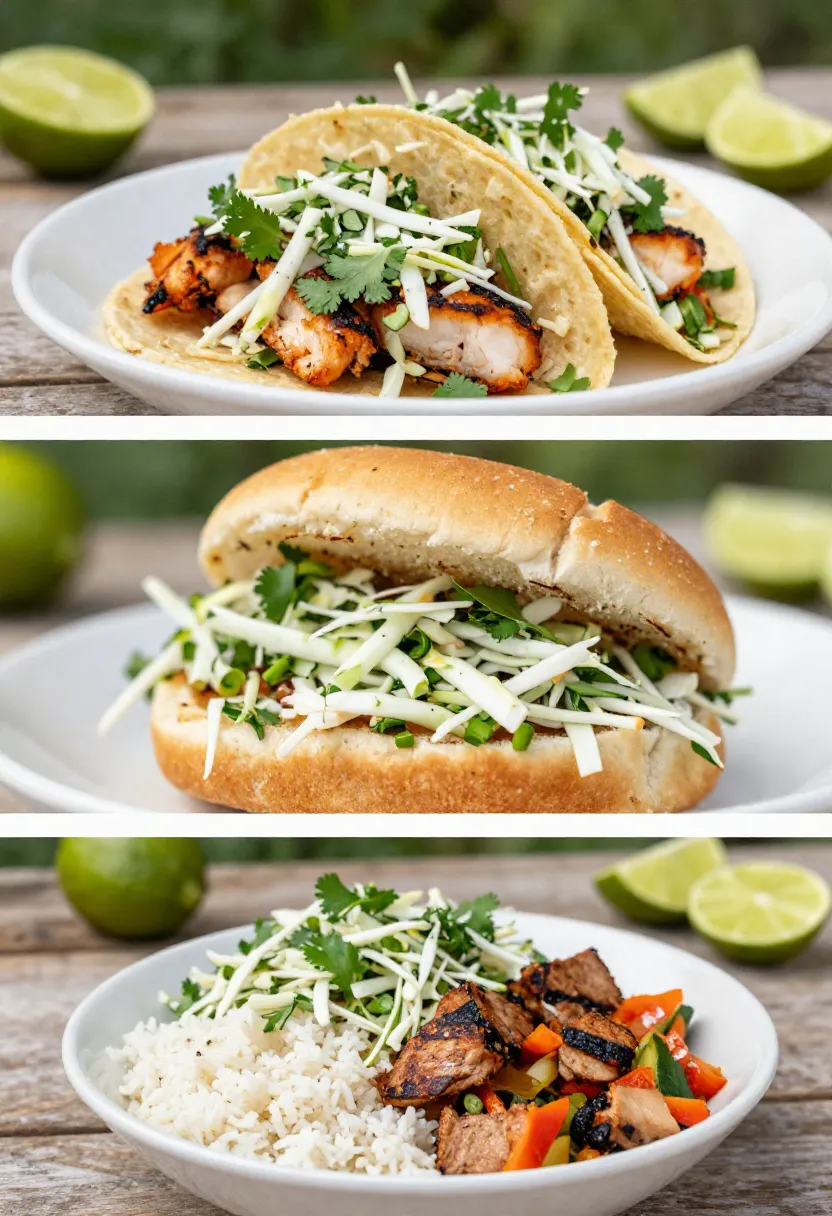
Bowls are probably the most underrated option. Rice, some protein, maybe roasted vegetables… it can all feel a bit one-note if everything is warm and soft. This slaw fixes that instantly. It adds contrast, both in texture and flavor, and suddenly the whole bowl feels more balanced.
Some of the most natural ways to use it:
- inside tacos or wraps for freshness
- layered into sandwiches or burgers for crunch
- served next to grilled or roasted dishes to balance richness
And honestly, there are days when you don’t even need to pair it with anything. Especially when it’s warm outside, a bowl of this on its own just works. It’s light, it’s refreshing, and you don’t feel like you need anything else.
🧊 Keeping It Fresh + Final Thoughts
Here’s the part that people don’t always think about until it’s too late — texture.
This slaw is at its best when it’s fresh. That crispness is a big part of the experience. The longer it sits, the more the cabbage softens as it absorbs the dressing. It still tastes good, but it’s not quite the same.
If you’re planning ahead, the easiest way to handle this is to keep things separate. Mix the dressing, prep the cabbage, but only combine them when you’re ready to serve. It takes maybe an extra minute, but the difference is noticeable.
If it’s already mixed and sitting in the fridge, it’s not a disaster. It’ll still taste fine the next day — just softer. Sometimes even a quick toss or adding a bit of fresh cabbage can bring some life back into it.
To make things clearer, here’s a quick comparison of how storage affects the slaw:
| Storage Method | Texture Result | Flavor Result | Best Use Case |
|---|---|---|---|
| Freshly mixed | Very crisp | Bright and balanced | Best overall experience |
| Rested (30–60 minutes) | Slightly softer | More blended | Good for serving guests |
| Stored overnight (mixed) | Noticeably softer | Still good, less fresh | Quick leftovers |
| Stored separately | Fully crisp (when mixed later) | Fresh and vibrant | Meal prep / best control |
A few small things that help keep it at its best:
- store the dressing separately if you can
- don’t overdress it right away — cabbage releases moisture over time
- give it a quick toss before serving if it’s been sitting
- add a squeeze of lime at the end to refresh the flavor
And stepping back for a second — this is one of those recipes that doesn’t demand much from you. No precision, no stress, no overthinking.
You make it once, then the next time you adjust something without even realizing it. Maybe a bit more lime, maybe less dressing, maybe you throw in something extra just because it’s there.
And somehow, it keeps turning out good.
That’s usually the sign of a recipe worth keeping. Not because it’s perfect, but because it fits into real life.
Simple, flexible, and consistently satisfying — the kind of thing you end up making again without planning to 🥬✨