
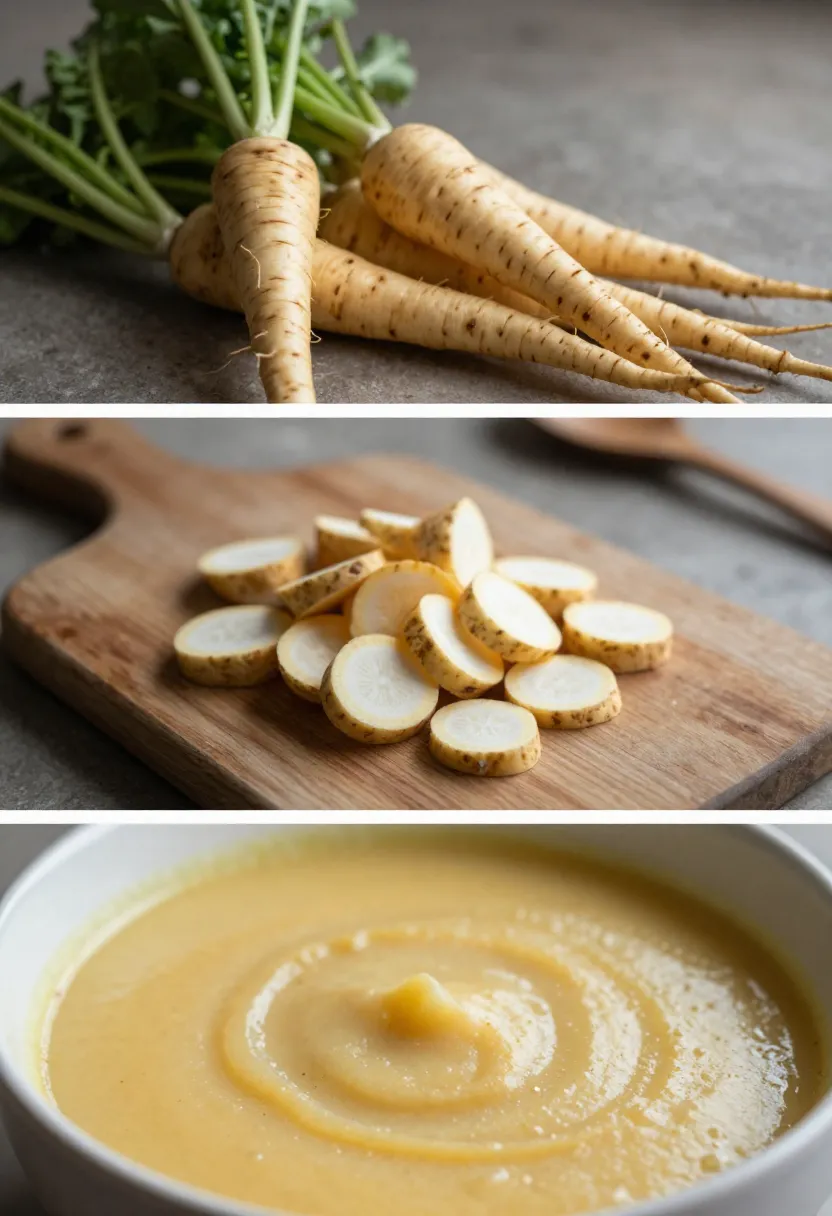
🍲 Coconut Parsnip Soup Recipe
This is one of those soups that doesn’t look particularly exciting at first, but once you make it, you start to understand why it works. It’s warm, smooth, and quietly comforting — the kind of food that doesn’t demand attention but still delivers more than you expect.
The texture is creamy without feeling heavy, which makes it easy to come back to for a second bowl without hesitation. The flavor sits somewhere in between mild sweetness and gentle spice, with just enough freshness at the end to keep it from feeling too rich.
It’s also the kind of recipe that doesn’t need to be followed perfectly. You can adjust things depending on what you have, skip an ingredient here and there, and it will still turn out good. That flexibility makes it especially useful on days when you don’t feel like overthinking every step.
Another nice thing about it — it works in different situations. It can be a quick weeknight dinner, something you meal prep for a few days, or even a simple starter if you’re cooking for someone else. It adapts pretty easily.
🧾 Ingredients
- 3–4 medium parsnips, peeled and chopped
- 1 onion, roughly chopped
- 2–3 tablespoons oil (coconut oil works especially well)
- 3 cloves garlic, finely chopped
- A thumb-sized piece of fresh ginger, sliced
- 1 small chili (optional)
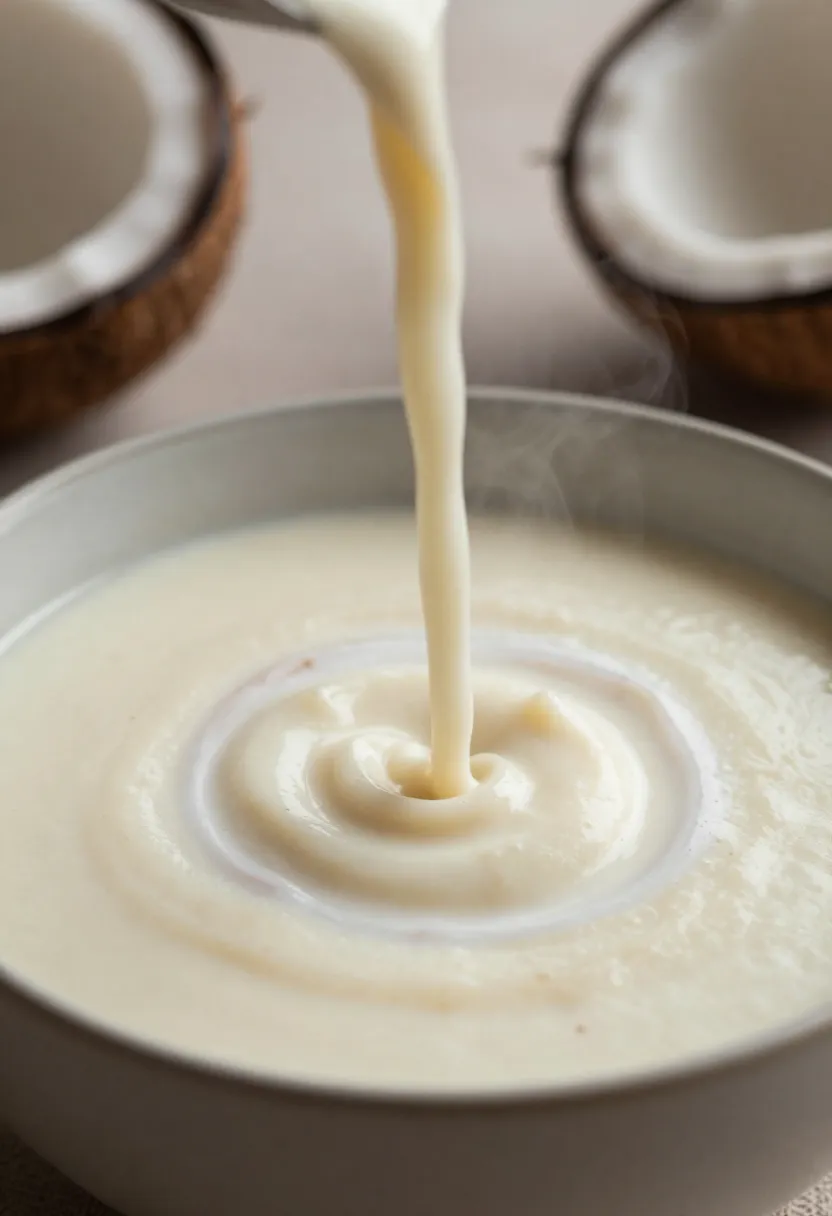
- 2 cans full-fat coconut milk
- 1 to 1½ cups vegetable or chicken broth
Optional ingredients for extra aroma:
- 1 stalk lemongrass, lightly crushed
- 2 lime leaves
- A handful of fresh herbs (such as cilantro)
For finishing:
- Salt, to taste
- Fresh lime juice
For serving:
- Fresh herbs
- Toasted nuts (cashews or peanuts)
- Chili oil (optional)
👩🍳 Instructions
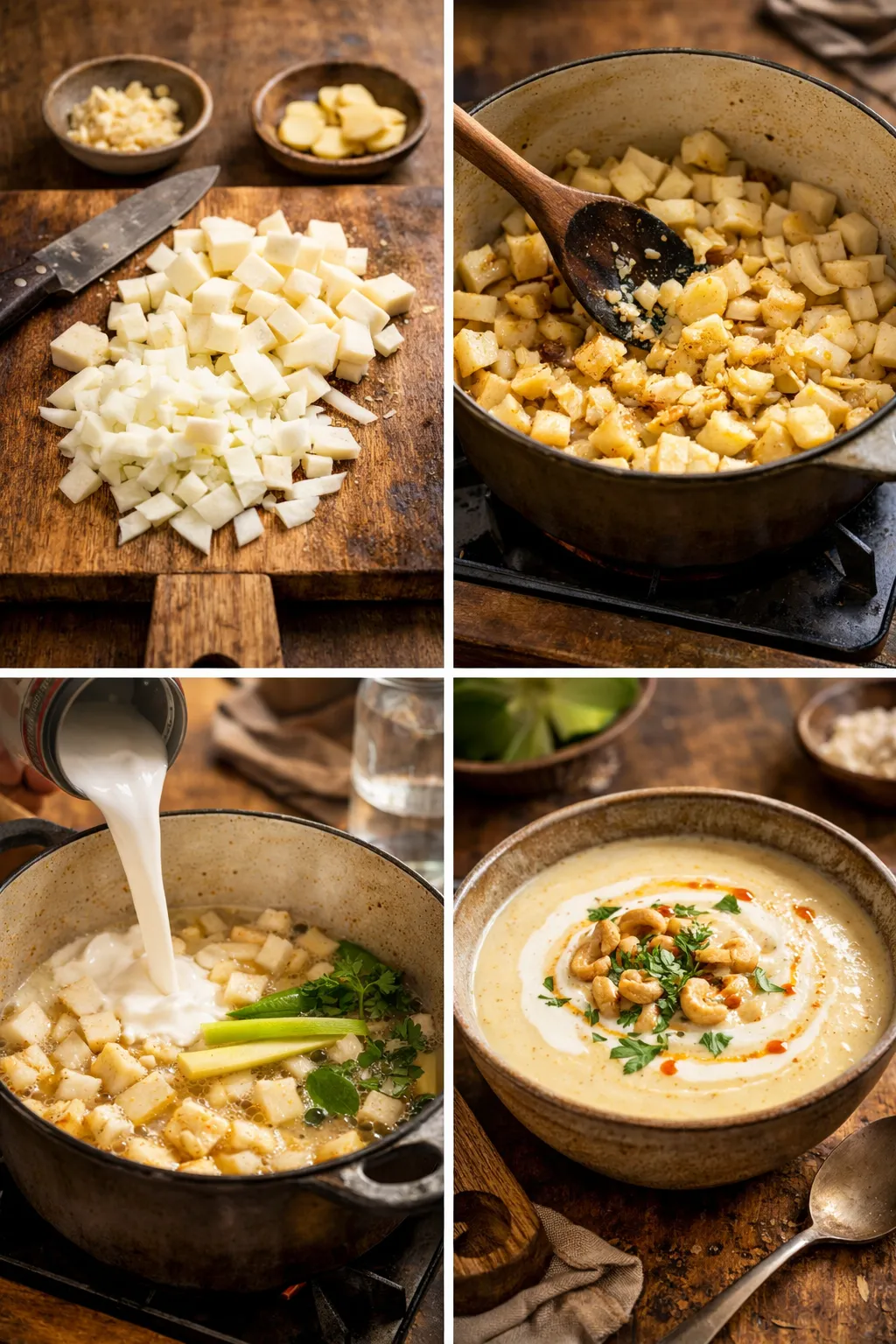
- Heat the oil in a large pot over medium heat.
- Add the chopped onion and cook until soft and slightly translucent.
- Stir in the parsnips and cook for a few minutes to develop their flavor.
- Add garlic, ginger, and chili. Cook briefly until fragrant.
- Pour in the coconut milk and broth, stirring to combine.
- Add lemongrass, lime leaves, and herbs if using.
- Bring the soup to a gentle boil, then reduce heat and let it simmer for about 20 minutes, until the parsnips are very tender.
- Remove any large aromatics like lemongrass or lime leaves.
- Blend the soup until completely smooth and creamy.
- Season with salt and finish with fresh lime juice.
- Serve hot with your choice of toppings.
💡 A Few Small Tips That Actually Help
- Don’t rush the onions at the beginning — giving them a few extra minutes makes the base taste noticeably better
- If the soup feels too thick after blending, just add a bit of broth or even water until it feels right
- Taste before adding lime — sometimes you need more than you expect to balance everything
- If you want a deeper flavor, you can lightly roast the parsnips before adding them to the pot
- The soup thickens as it sits, so leftovers will usually need a splash of liquid when reheated
🌶️ Making the Soup Your Own (Without Overthinking It)
One of the things you start to notice after making this soup a couple of times is how little pressure there actually is. It’s not fragile. You don’t feel like one wrong step will ruin everything, and that changes the whole experience of cooking it.
At first, you might follow the recipe more closely, just to understand how it works. But after that, it naturally becomes more relaxed. You stop measuring everything so carefully. You taste more. You adjust things without really thinking about it too much.
And somehow, it still works.
That’s probably because the base of the soup is quite forgiving. Parsnips, coconut milk, a few aromatics — nothing here is too sharp or difficult to balance. Everything leans toward soft, rounded flavors, which gives you a bit of freedom to experiment without worrying that something will suddenly feel out of place.

Over time, you start noticing small preferences. Maybe you like it a bit brighter, so you add more lime. Maybe you want it slightly richer, so you reduce the broth or let it simmer a bit longer. These aren’t big changes, but they slowly shape the recipe into something that feels more like your own version.
And then there are days when you just work with what you have. No lemongrass? It’s fine. No chili? Still good. Even missing a few ingredients doesn’t really break the dish — it just shifts it slightly in a different direction.
That’s where this soup becomes more interesting. It’s not fixed. It adapts depending on your mood, your ingredients, or even how much time you feel like spending in the kitchen.
If you start experimenting a bit, you’ll notice how small adjustments can change the overall feel:
- adding curry paste gives it a warmer, slightly deeper flavor
- roasting the parsnips beforehand makes the soup taste a bit sweeter and more developed
- a splash of soy sauce adds depth without making it obvious
- extra ginger or chili shifts it toward something sharper and more noticeable
None of these changes are dramatic on their own, but together they show how flexible the base really is.
And at some point, you stop thinking of it as “a recipe” and more as something you understand. You know roughly how it should taste, and you just move toward that without needing exact instructions.
🍽️ Serving It in a Way That Feels Natural
Serving this soup is one of those things that doesn’t need to be overcomplicated. You can, if you want, take the time to make it look more refined — smooth surface, neatly placed toppings, maybe a drizzle of oil. And it does look good that way.
But most of the time, that’s not really how it ends up being served.
More often than not, it’s something you ladle into a bowl without thinking too much about presentation. Maybe you’re standing in the kitchen, maybe you’ve already sat down somewhere comfortable. It’s simple, and it works.
What matters more than how it looks is how it feels when you eat it.
Because the soup itself is smooth and creamy, adding a bit of contrast can make a noticeable difference. Without it, everything blends together a bit too much. With it, each spoonful feels more complete.
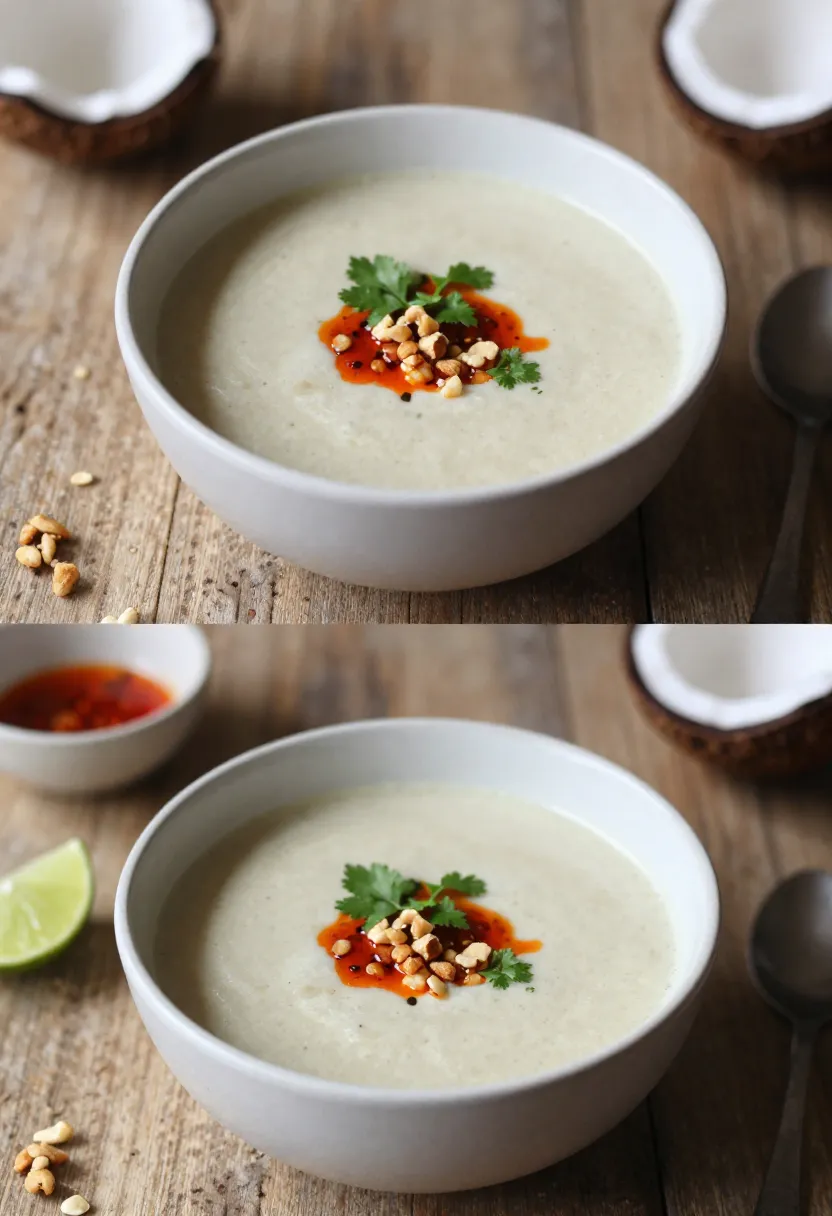
You don’t need anything complicated for that. In fact, the simplest additions usually work best:
- something crunchy, like toasted nuts or seeds
- fresh herbs for a bit of brightness and freshness
- a drizzle of chili oil if you want a little heat
- bread on the side, mostly for texture and to make it more filling
And then there’s lime, which might be the most important finishing touch, even though it seems minor. Adding a bit right before eating changes the balance more than you’d expect. It cuts through the creaminess slightly and makes the whole soup feel lighter and more defined.
Another thing you might notice is how the experience changes depending on when and where you eat it. The same soup can feel different if you’re having it as a quick lunch versus a quiet dinner. It’s not just about the ingredients — it’s also about the moment.
That’s probably why this dish works in so many situations. It doesn’t require a specific setting. It just fits.
🧊 Why It Gets Better Over Time
This is one of those soups that doesn’t necessarily peak right after cooking. In fact, it often improves once it’s had a bit of time to sit.
Right after blending, everything is there, but the flavors can feel slightly separate. Not in a bad way, just not fully settled yet. But after a few hours — or even better, the next day — something changes.
The flavors start to blend together more naturally. The soup tastes more balanced, a bit deeper, and somehow more complete. It’s like everything has had time to adjust and find its place.
You might not notice it immediately, but if you compare a fresh bowl to one that’s been in the fridge overnight, the difference is there.
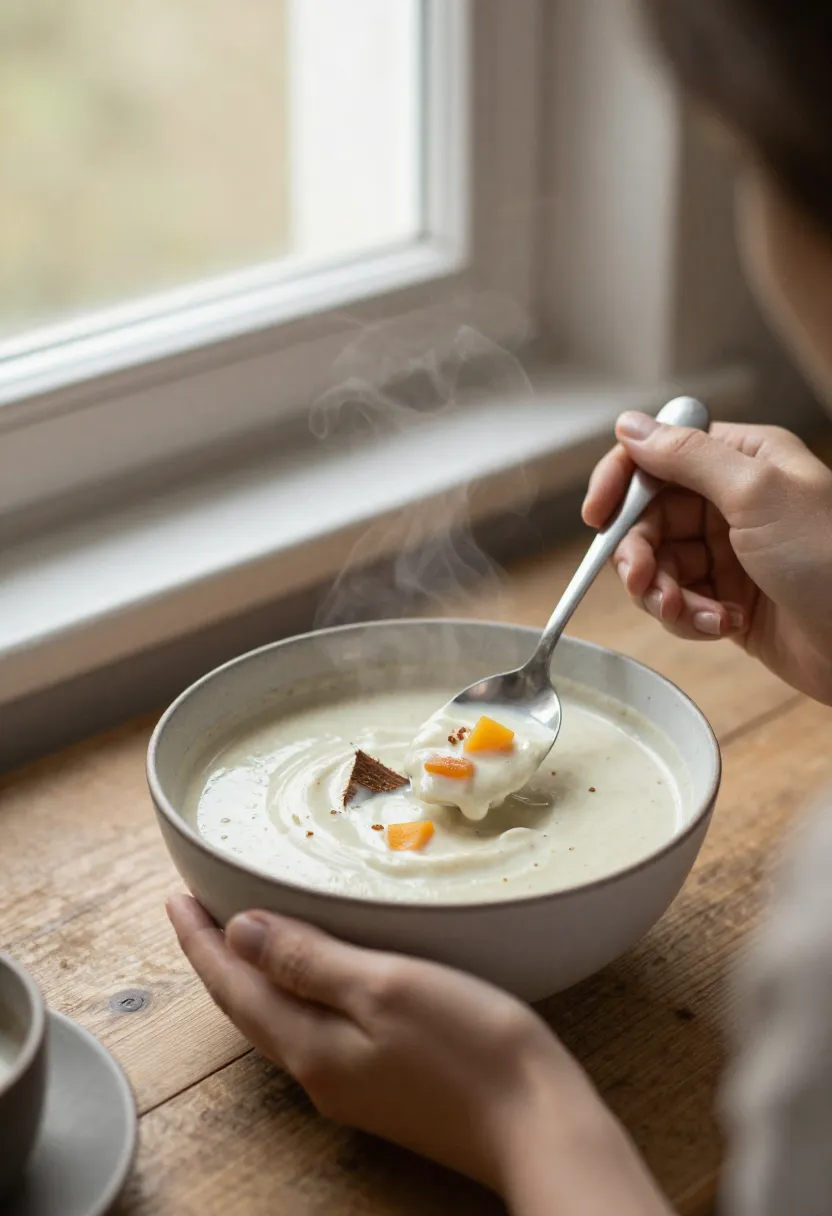
The texture also changes. It usually thickens as it cools, which can make it feel heavier than it originally was. But that’s easy to fix. Adding a bit of broth or even water while reheating brings it back to a smoother consistency.
This is also where the soup becomes practical, not just enjoyable. You can make a larger batch without worrying about it losing quality. It holds up well, which makes it useful for busy days when you don’t feel like cooking from scratch again.
There are a few small things that help when storing and reheating:
- the soup thickens in the fridge, so adjust the texture when reheating
- the flavor becomes slightly deeper after a day or so
- it freezes well, especially if you leave out toppings until serving
- reheating gently helps keep the texture smooth and consistent
And over time, this becomes part of the routine.
You make it once, then again a week later, and then without really planning it, it becomes something you return to. Not because it’s the most exciting thing you’ve ever cooked, but because it works every time.
And maybe that’s the real reason it stays with you.
It’s simple, reliable, and flexible enough to fit into real life without much effort. At some point, you stop thinking about the recipe altogether — you just know how to make it 🥥✨