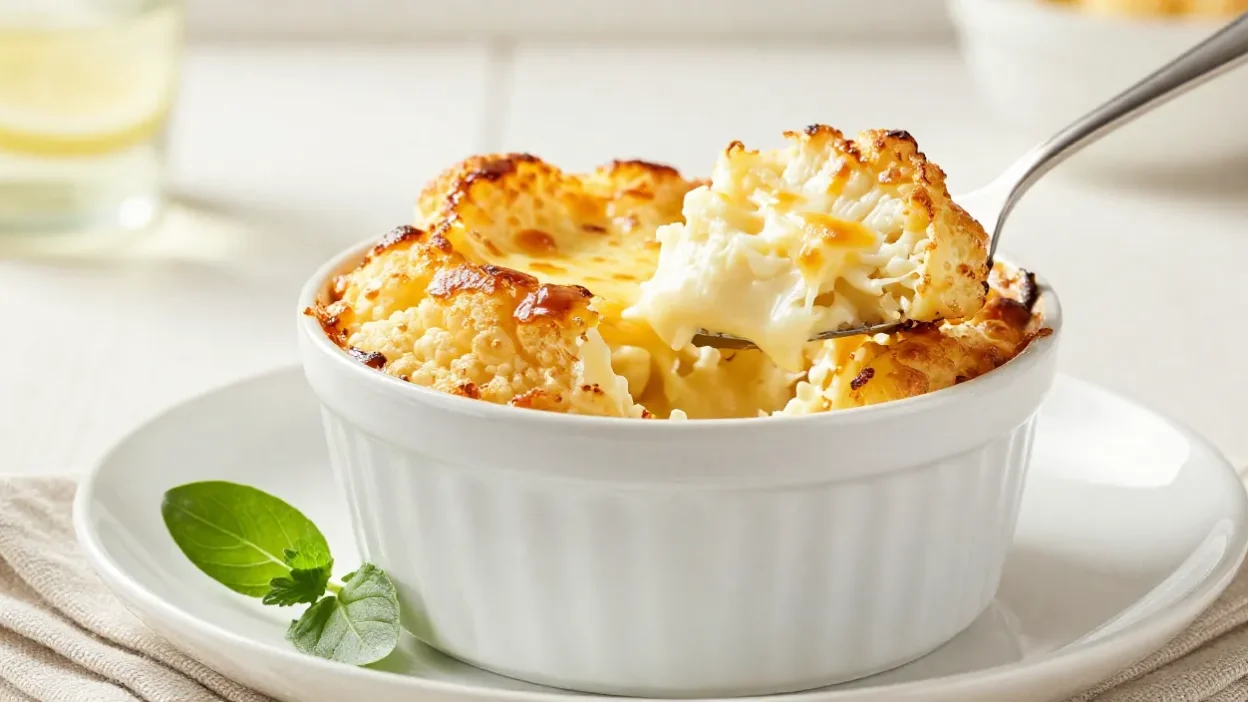
There are some dishes that seem to live comfortably in two worlds at the same time. On the one hand, they feel elegant enough to appear on a restaurant menu. On the other hand, they bring the kind of warmth and satisfaction we usually associate with home cooking. A twice-baked cauliflower soufflé is exactly that kind of dish.
At first glance it might look like something complicated, maybe even a little intimidating. The word soufflé alone can make people imagine precise techniques and strict timing. But the reality is actually much more relaxed than that. Once you taste it, the dish feels surprisingly comforting. The flavors are soft, creamy, and familiar — almost like something you’d want to eat slowly on a quiet evening.
The texture is usually the first thing people notice. When a spoon breaks into the soufflé, the inside feels incredibly light — almost airy — while the top carries a thin golden crust of melted cheese. That contrast is what makes the dish so satisfying. The inside stays soft and delicate, while the surface adds a little richness and depth. 🧀
And then there’s the ingredient that makes it all possible: cauliflower.
For many people, cauliflower doesn’t immediately sound exciting. It’s often treated as a simple side vegetable — roasted, steamed, maybe added to soup. But when it’s cooked gently and blended into a smooth base, it transforms completely. The texture becomes silky and creamy, almost like a velvety puree.
Once you mix that puree with eggs, cream, and good cheese, the flavor deepens and the whole dish starts to feel surprisingly luxurious. It’s one of those moments in cooking when you realize how much potential a simple ingredient can have.
Many people end up loving this dish because it manages to combine several things at once:
- a light and airy texture
- comforting, creamy flavors
- and surprisingly simple ingredients 🥦
Another interesting thing about this recipe is how approachable it becomes once you understand the cooking method. Many home cooks avoid soufflés because they’ve heard that they collapse easily or need to be served immediately. That reputation has followed the dish for years.
But the twice-baked technique changes the experience completely.
Instead of rushing to serve the soufflé the second it comes out of the oven, this method allows the dish to rest and even be prepared ahead of time. That small difference removes a lot of pressure from the process. You can cook calmly, focus on the flavors, and enjoy the experience rather than worrying about perfect timing.
In the end, this is the kind of meal that quietly impresses people. It doesn’t depend on complicated presentation or rare ingredients. What makes it memorable is something much simpler: the balance between texture, warmth, and flavor.
Sometimes those are the dishes we remember the longest. ✨
Why Cauliflower Works So Well in This Recipe 🥦
Cauliflower has slowly become one of the most appreciated vegetables in modern kitchens, and it’s not difficult to understand why. For a long time it was considered fairly ordinary — something that appeared next to carrots or broccoli as a supporting ingredient. But once cooks began experimenting with different techniques, they realized how incredibly versatile it actually is.
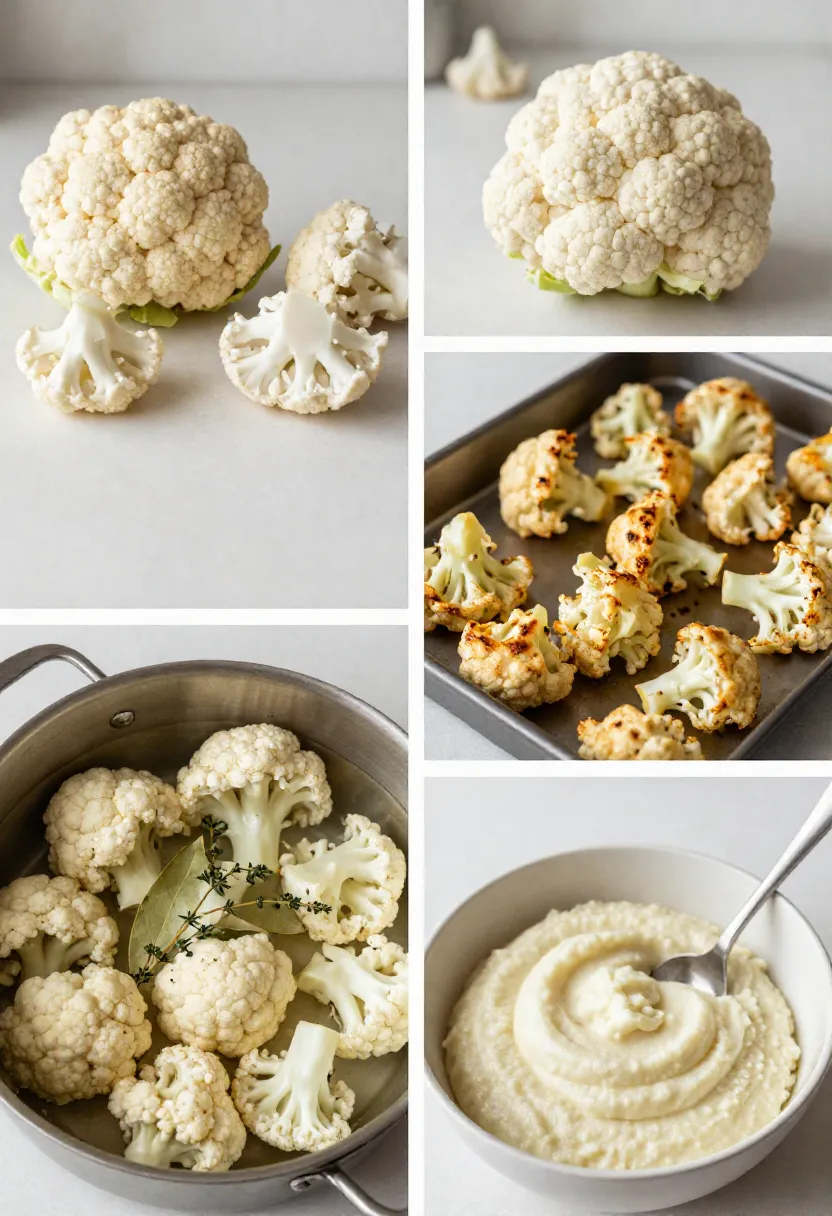
One of cauliflower’s biggest strengths is how easily it adapts to different cooking styles. Depending on how it’s prepared, the vegetable can develop completely different flavors and textures. Roasting brings out a slightly nutty taste, while steaming keeps it mild and tender. Blending it creates a smooth puree that feels almost creamy on its own.
This flexibility makes cauliflower particularly useful in dishes that depend on texture. A soufflé, after all, is not just about flavor — it’s also about creating something light and delicate that still feels satisfying.
When cauliflower is cooked until tender and then blended, it forms a base that is naturally smooth. It doesn’t become watery or grainy. Instead, it creates a gentle, velvety texture that blends beautifully with ingredients like butter, milk, and cheese.
Another advantage is its mild flavor. Some vegetables can dominate a dish and make it taste too strong or heavy. Cauliflower behaves differently. Its flavor is subtle and slightly sweet, which allows other ingredients to shine while still giving the dish its character.
Sometimes cooks like to enhance that natural flavor with a few simple aromatics while the cauliflower simmers. Even small additions can add depth to the dish, for example:
- thyme or rosemary 🌿
- bay leaf
- a small piece of onion
- or a clove of garlic
These ingredients don’t overpower the vegetable. Instead, they quietly support the overall flavor and make the final dish feel more complete.
There’s also something comforting about cooking with cauliflower. It’s a familiar vegetable, widely available, and easy to work with. Even though the final dish feels elegant, the ingredient itself keeps everything grounded and approachable.
And of course, cauliflower brings some nutritional benefits as well. It’s naturally rich in fiber, vitamins, and antioxidants. So even though the dish includes cream and cheese, it still contains a wholesome vegetable foundation.
That balance between indulgence and simplicity is one of the reasons cauliflower has become so popular in recent years.
The Secret Behind the Twice-Baked Technique ✨
The real charm of this dish lies in the cooking technique. Traditional soufflés have a certain reputation for being delicate. They rise dramatically in the oven thanks to whipped egg whites that trap air inside the mixture. As the heat expands those air pockets, the batter lifts and becomes wonderfully light.
Watching a soufflé rise can actually be pretty satisfying.
But there’s a small challenge that comes with it. Once the dish leaves the oven, the structure begins to relax. The airy interior slowly settles, and the height of the soufflé starts to decrease. That’s why classic soufflés are usually served immediately.
For restaurant kitchens this isn’t a major problem. But at home — especially when cooking for guests — the timing can feel stressful. Nobody wants to rush dinner just to keep a dish from collapsing.
That’s where the twice-baked method becomes such a clever solution.

During the first bake, the soufflé rises just like a traditional one. However, instead of serving it right away, the dish is allowed to cool slightly. At this point the structure has already set enough to hold its shape.
That means the soufflé becomes much easier to handle.
Once it has cooled, it can be gently removed from its mold and set aside. In fact, many cooks prepare this stage earlier in the day and simply store the soufflés in the refrigerator until dinner time.
Later, when everything else is ready, the soufflés return to the oven for a second bake. This step is where the magic really happens. A little cream is poured over the top, followed by a generous layer of grated cheese. As the heat works its way through the dish again, the cheese melts and forms a beautifully golden surface. 🧀
The final texture becomes especially satisfying because it combines several elements at once:
- a lightly crisp, golden top
- a creamy and soft center
- and the airy structure created during the first bake
You end up with a dish that feels both light and comforting at the same time. The airy structure from the first bake remains, but the second bake adds richness and depth.
Perhaps the most practical advantage, though, is how relaxed the cooking process becomes. Instead of worrying about perfect timing, you can prepare most of the dish ahead of time and simply finish it when you’re ready to eat.
And honestly, that small detail makes the whole experience of cooking a soufflé far more enjoyable. 🍽️
Recipe: Twice-Baked Cauliflower Soufflé 🥦🧀
A Creamy and Elegant Vegetable Dish
At first glance, a soufflé might sound like something complicated or overly delicate — the kind of dish people imagine chefs making in quiet restaurant kitchens. But this twice-baked cauliflower soufflé proves that elegant food doesn’t have to be intimidating. In fact, once you understand the basic idea behind it, the process becomes surprisingly manageable and even enjoyable.
What makes this recipe special is the way it transforms very simple ingredients into something that feels refined and comforting at the same time. Cauliflower, which many people think of as a humble vegetable, becomes the heart of the dish. When cooked until tender and blended into a smooth puree, it develops a silky texture that works beautifully with creamy sauces and melted cheese.
The result is a soufflé that feels light and airy when you take the first bite, yet still rich enough to feel satisfying. The inside stays soft and almost cloud-like, while the top develops a golden layer of melted cheese that adds both flavor and texture. That contrast — delicate inside, slightly crisp on top — is what makes this dish so memorable.
Another wonderful thing about this recipe is the twice-baked technique. Instead of rushing to serve the soufflé the moment it leaves the oven, the dish is baked once to create its structure and then baked again with cream and cheese. This second bake deepens the flavor and creates that irresistible golden surface.
Because of this method, the recipe is actually quite practical for home cooks. The first baking stage can be done earlier in the day, leaving you free to finish the dish later when it’s time to serve. That makes it a great option for dinner gatherings, weekend meals, or even special occasions when you want something a little more impressive without too much stress.
This soufflé can easily take different roles at the table. Depending on the portion size and what you serve alongside it, it can work as:
- an elegant appetizer for a dinner party 🍽️
- a light vegetarian main course with salad
- or a flavorful side dish next to roasted vegetables or fish
Either way, it’s the kind of recipe that tends to surprise people. Something that begins with a simple head of cauliflower suddenly becomes creamy, airy, and wonderfully comforting.
Ingredients
- 200 g cauliflower florets
- 350 ml milk
- 80 g butter
- 120 g flour
- 4 eggs, separated
- 300 ml thick cream
- 140 g Gruyère cheese, grated
- ½ onion, finely chopped
- 1 bay leaf
- a few sprigs of fresh thyme
- salt and freshly ground black pepper
- butter for greasing ramekins
- fresh salad greens for serving
Preparation Steps
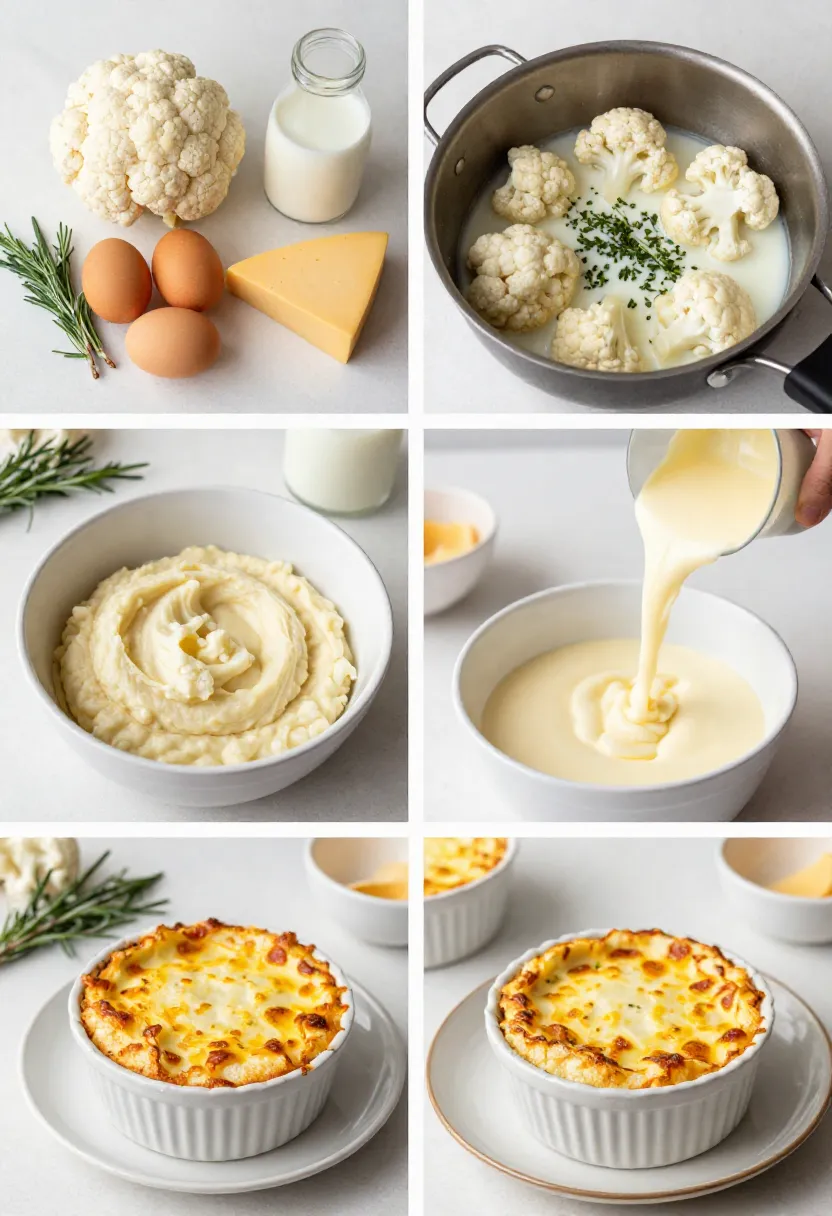
- Preheat the oven to 180°C (350°F) and generously grease four ramekins with butter. Set them aside while preparing the soufflé mixture.
- In a saucepan, combine the cauliflower florets, milk, chopped onion, bay leaf, and thyme. Bring the mixture to a gentle simmer and cook for about 8–10 minutes, until the cauliflower becomes tender.
- Strain the mixture, reserving the milk. Remove and discard the bay leaf and thyme. Blend the cooked cauliflower until it becomes smooth and creamy.
- In another saucepan, melt the butter over medium heat. Add the flour and stir continuously for two to three minutes to create a light roux.
- Slowly pour in the reserved milk while whisking constantly. Continue stirring until the sauce thickens and becomes smooth.
- Remove the pan from heat and mix in the egg yolks, half of the grated cheese, and about half of the cream. Season with salt and pepper.
- Stir the cauliflower puree into the sauce until the mixture becomes completely smooth and evenly combined.
- In a clean bowl, whisk the egg whites until stiff peaks form. Add a small spoonful of the whipped whites to the cauliflower mixture and stir gently to loosen it.
- Carefully fold the remaining egg whites into the mixture using slow, gentle movements so the air stays inside the batter.
- Divide the mixture evenly between the prepared ramekins.
- Place the ramekins into a deep baking tray and pour hot water into the tray until it reaches halfway up the sides. Bake for about 20 minutes, until the soufflés rise and set.
- Remove the ramekins from the oven and allow them to cool slightly. Carefully run a knife around the edges and gently remove the soufflés from their molds.
- Place the soufflés on a baking tray. Pour the remaining cream over them and sprinkle with the rest of the grated cheese.
- Return them to the oven for another 10–15 minutes until the tops become golden and slightly crisp.
- Serve warm with fresh salad greens.
Helpful Tips & Small Kitchen Tricks ✨
Even though this recipe is fairly forgiving, a few small tips can make the process smoother and help the soufflés turn out beautifully every time:
- Use room-temperature eggs. They whip more easily and create better volume in the egg whites.
- Fold the egg whites gently. Stirring too aggressively can remove the air that helps the soufflé rise.
- Grease the ramekins well. This helps the soufflés release more easily after the first bake.
- Prepare the first bake ahead of time. The soufflés can rest in the refrigerator for several hours before the second bake.
- Choose good-quality cheese. A flavorful Gruyère or similar cheese makes a noticeable difference. 🧀
With just a little patience and attention to detail, this dish becomes much easier than it first appears — and the result is always worth it.
A Recipe That Combines Comfort and Technique
One of the reasons this dish continues to find its way into modern kitchens is the balance it strikes between simple comfort and classic cooking technique. At its heart, it still carries the spirit of traditional European cuisine — the kind of food that feels thoughtful and carefully prepared. But at the same time, it remains surprisingly approachable. You don’t need a professional kitchen or years of culinary training to make it work.
Yes, the process has a few steps. There’s the sauce, the egg whites, the first bake, and then the second one. But once you go through it once, it starts to feel quite natural. Each step has a clear purpose, and none of them are particularly complicated on their own.
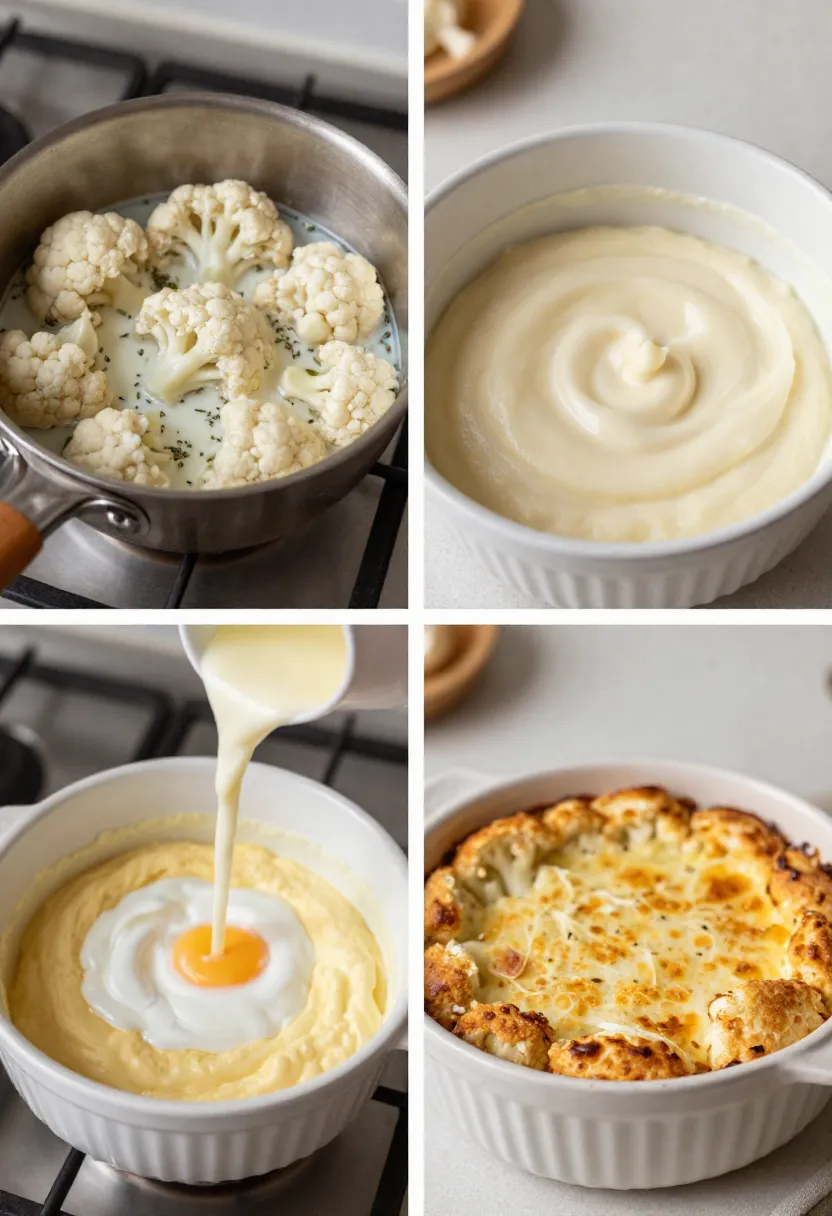
As the cauliflower cooks slowly in milk with herbs, its flavor begins to soften. Something subtle happens there. The vegetable becomes sweeter, more delicate, almost creamy even before blending. When that puree is mixed with the warm sauce and airy egg whites, the texture becomes incredibly light while still holding enough richness to feel satisfying.
Then comes the second bake — and honestly, that’s where the dish really comes alive. The cheese melts slowly on top, forming a golden layer, while the inside stays soft and fluffy. When you cut into the soufflé, the contrast is immediately noticeable: a lightly crisp surface giving way to a smooth, delicate interior.
It’s a small detail, but that contrast is exactly what makes the dish memorable.
What many people end up loving about it is how it combines several qualities at once:
- light but still comforting
- elegant but not overly complicated
- simple ingredients turned into something special ✨
In a way, the recipe feels like a reminder that good cooking doesn’t always need to be elaborate. Sometimes it’s just about treating ingredients with a little care and patience.
Perfect for Sharing Around the Table 🍽️
Food often tastes better when it’s shared. Maybe it’s the conversation, maybe it’s the atmosphere — but somehow meals feel more meaningful when they bring people together around the same table.
This particular dish works beautifully for that kind of occasion. It fits naturally into small dinner gatherings, relaxed weekend lunches, or even quiet evenings with family. Because the first stage of cooking can be done ahead of time, the cook doesn’t have to rush around at the last minute.
Instead of worrying about timing, you can focus on the people sitting around the table.

When the soufflés go back into the oven for their second bake, the kitchen slowly fills with the warm aroma of melting cheese and cream. It’s one of those smells that makes everyone wander into the kitchen asking what’s cooking. 🧀
By the time the dish is ready, it feels a little celebratory without being overly formal. The golden tops look inviting, the texture is soft and creamy, and the whole meal feels relaxed rather than complicated.
Many people like to serve the soufflé alongside something simple and fresh. For example:
- a crisp green salad with a light vinaigrette
- roasted seasonal vegetables
- or a chilled glass of white wine 🍷
Those small additions balance the richness of the soufflé and make the meal feel complete without overwhelming the dish itself.
And sometimes that’s exactly what makes a meal memorable — not complexity, but balance.
A Dish Worth Returning To Again and Again 🥦
One of the nicest things about cooking is how certain recipes grow with you over time. The first time you make them, you follow the instructions carefully, paying attention to every step. But after a while, once the technique becomes familiar, you start to experiment a little.
This soufflé is a great example of that kind of recipe.
Once you understand the basic method, it becomes surprisingly flexible. The cauliflower base stays the same, but the surrounding flavors can change depending on what you feel like cooking that day. Different cheeses, herbs, or vegetables can easily be incorporated into the mixture.
Some cooks like to add sautéed mushrooms for a deeper, earthy flavor. Others fold in spinach or caramelized onions for a slightly sweeter note. Even a small change — like using a sharper cheese or adding fresh herbs — can give the dish a new personality.

Over time, you might find yourself adapting the recipe in small ways, depending on what ingredients are available or what mood you’re cooking in.
Some popular variations people enjoy include:
- adding mushrooms for a richer, savory flavor 🍄
- mixing in spinach or herbs for freshness 🌿
- experimenting with different cheeses like cheddar or parmesan
But even with those little adjustments, the heart of the dish remains unchanged. It still begins with a simple vegetable, gently cooked and blended into something soft and airy.
And maybe that’s the real beauty of this recipe. It shows that even the most modest ingredients — a head of cauliflower, a few eggs, some cheese — can become something surprisingly elegant when treated with a bit of care.
Simple, comforting, and quietly impressive. ✨🧀