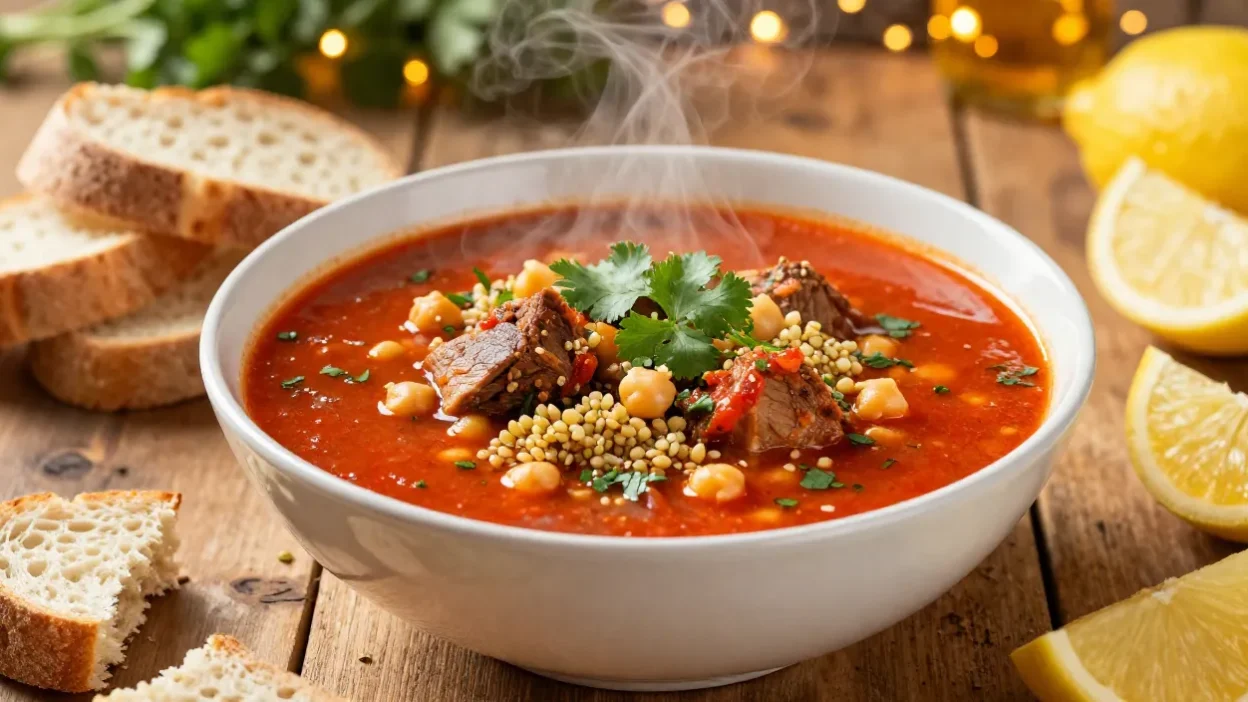
Some dishes are simply good. You cook them once, maybe twice, and then move on to something else. Chorba Frik is not really that kind of dish.
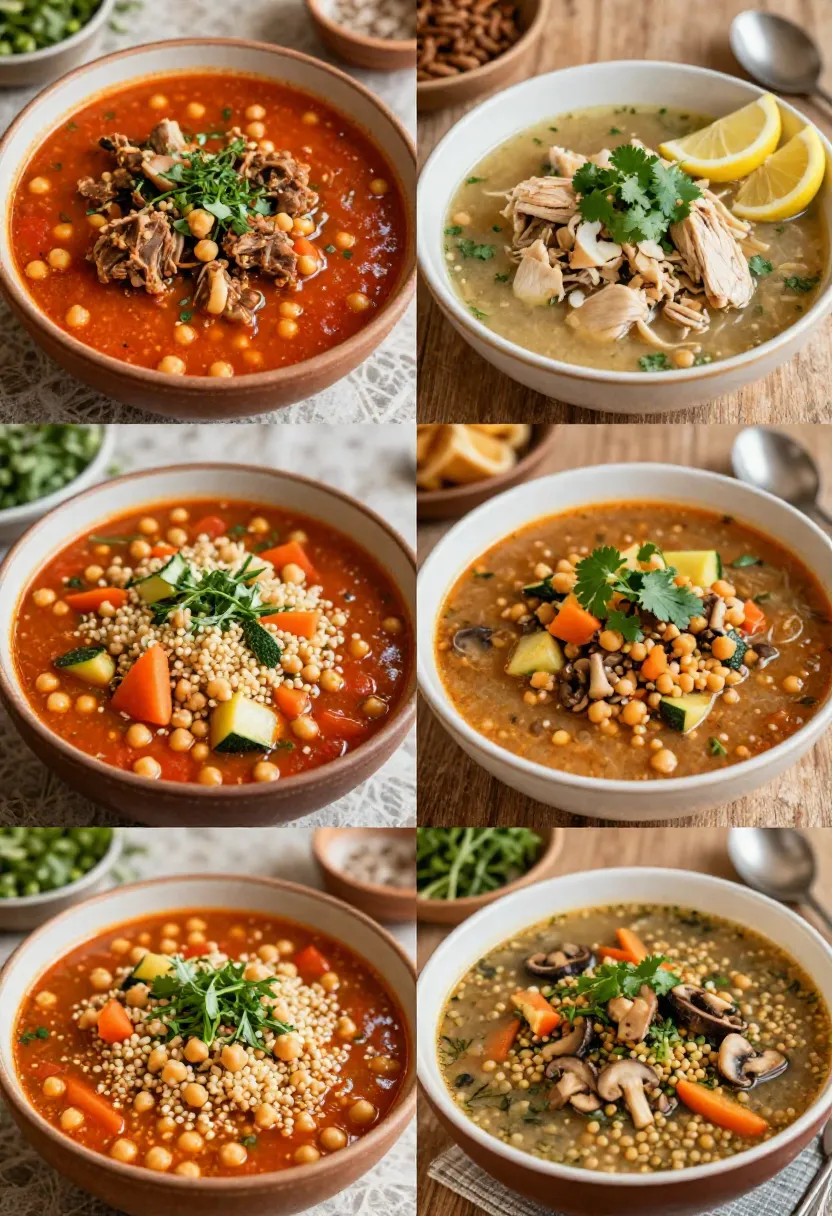
This soup feels different almost immediately. The first spoonful is warm and rich, with the broth carrying a gentle spice and a faint smokiness that you don’t always expect from a simple soup. Then you notice the texture — the soft chickpeas, the tender pieces of meat, and the freekeh that gives the whole thing a bit of chew. Somehow everything fits together in a way that feels both comforting and surprisingly complex. 🍲
In many Algerian and Tunisian homes, Chorba Frik is something people grow up with rather than something they discover later in life. It’s the type of meal that appears quietly on the table during ordinary evenings. Nothing dramatic about it. Just a big pot on the stove, the smell of garlic and spices drifting through the kitchen, and someone inevitably asking, “Is the soup ready yet?”
Ramadan is one of the moments when Chorba Frik becomes especially meaningful. After a long day of fasting, people usually want something warm and gentle to start the meal. This soup does exactly that. It restores energy without feeling heavy, and the flavors wake up the appetite in a very natural way. That’s probably why it has stayed such a reliable part of the evening meal during that time.
But honestly, Chorba Frik doesn’t need a special occasion to make sense. On a cool evening, when the weather outside feels a little grey and everyone is slightly tired, a pot of this soup can completely change the mood of the kitchen. It’s one of those meals that quietly brings people to the table.
What makes it work so well is the balance of flavors. Nothing is overly bold or aggressive. Instead, the ingredients support each other in a very natural way. You usually notice a few things happening at once while eating it:
- the light smokiness from freekeh
- the comforting richness of the broth
- the brightness that tomatoes bring to the soup
- the gentle warmth from spices like paprika or cinnamon
None of these flavors try to dominate the dish. Instead they layer slowly on top of one another, which is why the soup feels so satisfying even though the ingredients themselves are quite simple.
For people trying North African cuisine for the first time, Chorba Frik often becomes a favorite surprisingly quickly. The dish feels both familiar and new at the same time. It has the comfort of a classic soup but with just enough difference — that smoky grain, those warm spices — to make it memorable.
The Grain That Quietly Defines the Soup 🌾
If you asked someone what makes Chorba Frik unique, they would probably mention freekeh almost immediately. Without it, the soup would still exist, but it wouldn’t quite have the same character.
Freekeh has been used in Middle Eastern and North African cooking for centuries, long before anyone started calling ancient grains “trendy.” The process used to make it is actually quite unusual, which explains its distinctive flavor.
The grain begins as young green wheat. Instead of letting the wheat fully mature in the field, farmers harvest it early while the kernels are still soft. The freshly harvested wheat is then roasted over open flames. During roasting, the outer husk burns away while the grain inside absorbs heat and smoke. Afterward the grains are rubbed and cracked into smaller pieces.
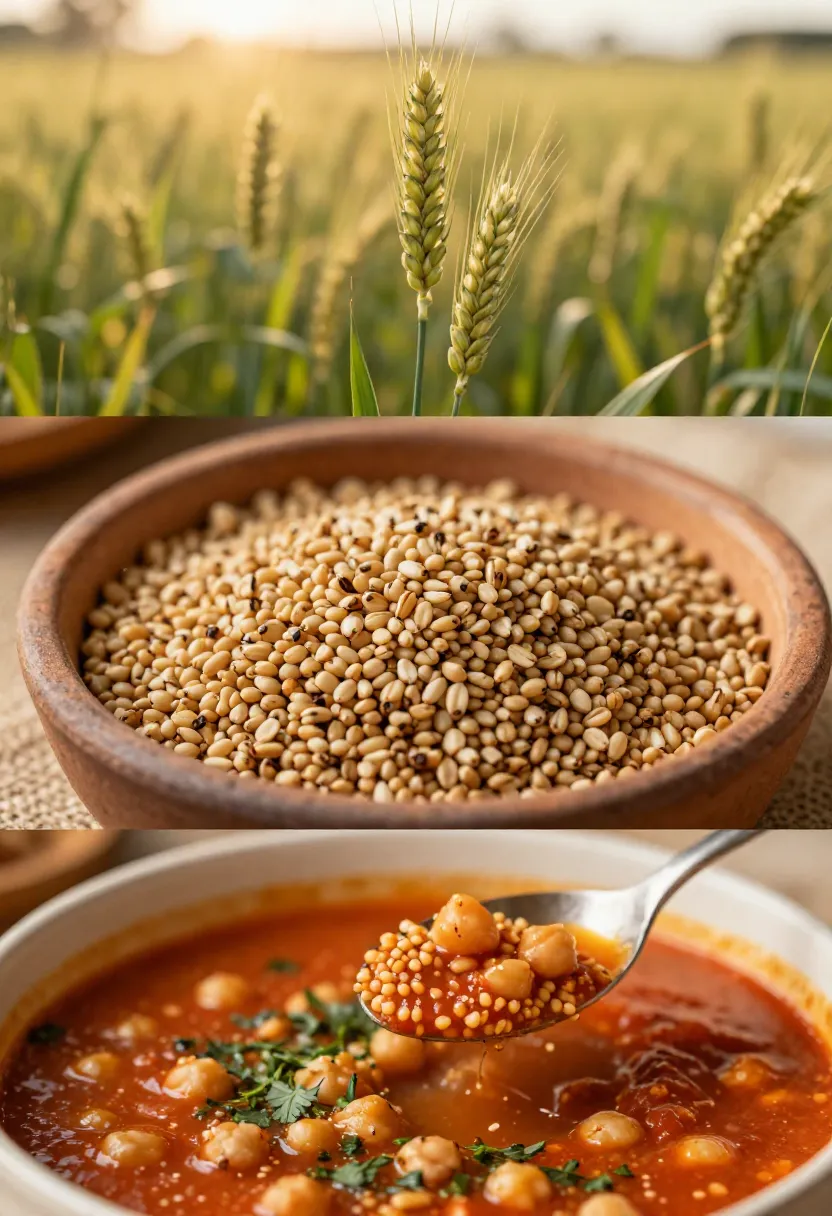
That roasting step changes everything.
Once freekeh cooks in a pot of soup, the flavor becomes immediately noticeable. It’s slightly smoky, a little nutty, and much deeper than what you would get from plain wheat or rice. At the same time, the grain keeps a pleasant chewiness that gives the soup more texture.
That texture matters more than people might expect. Without it, Chorba Frik would feel closer to a light tomato soup. With freekeh, the dish becomes heartier and more satisfying. Each spoonful carries a bit of substance.
Freekeh also happens to be quite nourishing, which is probably another reason it has remained popular for so long. Long before nutrition labels and food trends existed, people already understood that meals made with this grain kept them full and energized for longer periods of time.
Inside a pot of Chorba Frik, freekeh quietly does several things at once:
- it absorbs the flavor of the broth
- it thickens the soup slightly as it cooks
- it adds the signature smoky note that makes the dish recognizable
Remove that one ingredient and the soup would still taste good, but it would lose something essential.
Why People Keep Cooking This Soup Generation After Generation ❤️
Many traditional dishes slowly disappear over time, especially as modern cooking habits change. Chorba Frik, however, has managed to remain a steady presence in North African kitchens. One reason is simply that it adapts well to different households.
There isn’t a single strict recipe that everyone follows. Instead, families adjust the soup according to taste, season, and whatever ingredients happen to be available that day. Some prefer lamb because it gives the broth a deeper richness. Others use beef, which adds a slightly stronger flavor. In some kitchens the soup is made with chicken for a lighter version.
Spices and herbs can change too. One cook might add a bit more chili for warmth, while another prefers a softer flavor where herbs play a bigger role. Even the thickness of the soup varies. Some people like it closer to a stew, while others keep the broth lighter.
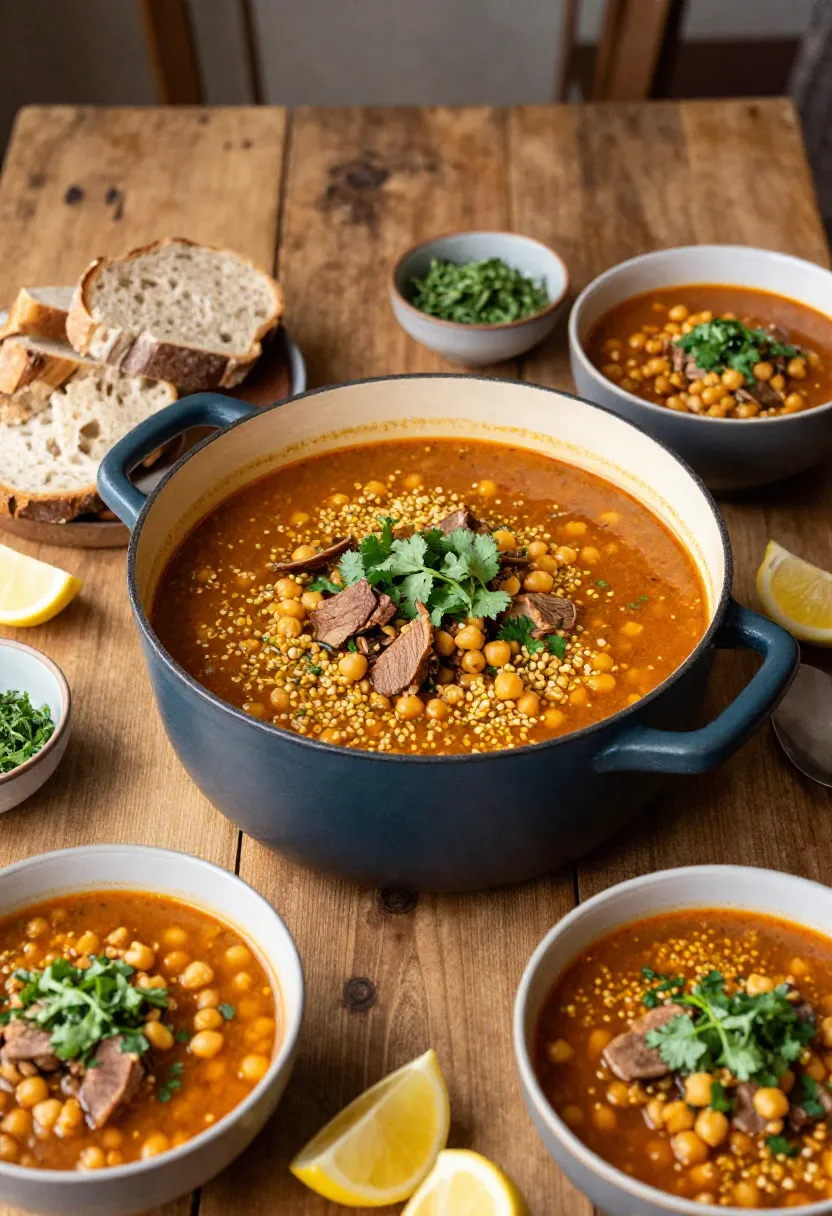
Despite these variations, the overall feeling of the dish remains the same. Chorba Frik is still something that cooks slowly on the stove while the kitchen gradually fills with aroma. First onions soften in olive oil. Then garlic and spices release their fragrance. After that the broth begins to simmer gently, carrying all those flavors together.
By the time the soup is ready, people have usually already wandered into the kitchen more than once just to see how it’s coming along.
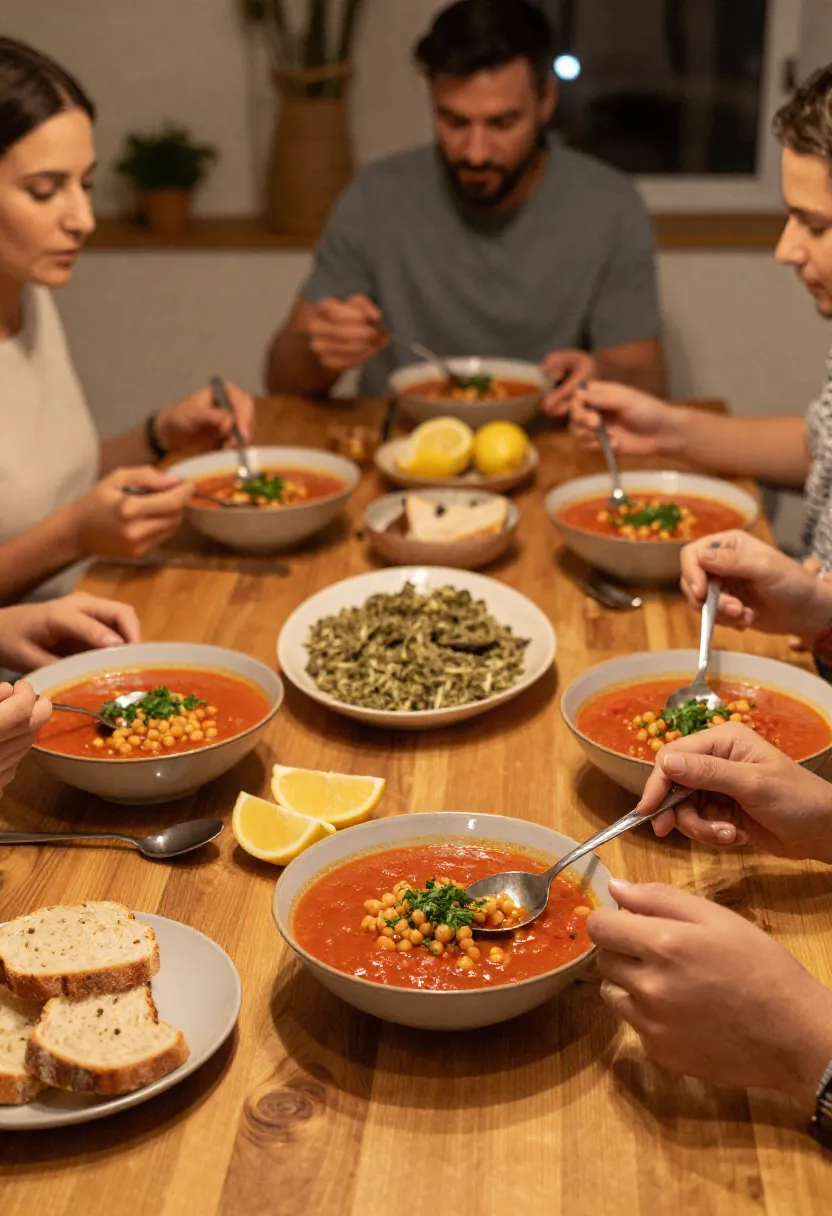
Serving the soup tends to be simple. A large pot is placed on the table, bowls are filled, and fresh bread appears almost automatically. Someone might squeeze a bit of lemon over their portion. Another person reaches for a second helping before anyone else notices.
Meals like that are probably the real reason Chorba Frik continues to exist in so many kitchens. The soup itself is delicious, of course. But more importantly, it creates the kind of relaxed, shared moment that people remember. And once a recipe becomes part of those small everyday traditions, it tends to stay around for a very long time. 🍲
Chorba Frik Recipe 🍲
If you’ve never made Chorba Frik before, don’t worry — it’s one of those dishes that looks more complicated than it actually is. In reality, it’s a very honest, comforting soup that slowly builds flavor as it cooks. Nothing fancy, no tricky techniques. Just good ingredients, a bit of patience, and a pot gently simmering on the stove.
At its heart, Chorba Frik is the kind of soup people cook when they want something warming and filling without spending the whole evening in the kitchen. The broth becomes rich and aromatic, the meat turns tender, and the freekeh absorbs all those spices while keeping its slightly chewy texture. That combination is what makes the soup so satisfying.
One thing you’ll probably notice while it cooks is the smell. First the onion and garlic soften in olive oil, then the spices warm up and release their aroma, and before long the whole kitchen starts to smell incredible. It’s the type of dish where someone inevitably wanders in and asks what’s cooking.
Another nice thing about this soup is how adaptable it is. Some people make it a little thicker, almost like a stew, while others prefer a lighter broth. The spice level can also change depending on your taste — a small chili pepper adds warmth, but the soup is still delicious without it.
Chorba Frik works beautifully as a main meal, especially on colder evenings when something warm feels particularly comforting. At the same time, smaller portions can also be served as a starter before a larger dinner. Either way, it’s one of those dishes that tends to disappear from the pot pretty quickly.
Ingredients
- 500 g (about 1 pound) lamb shoulder or beef, cut into small cubes
- ½ cup dried chickpeas, soaked overnight
- ½ cup cracked freekeh, rinsed
- 1 medium onion, finely chopped
- 2 ripe tomatoes, chopped or crushed
- 2 tablespoons tomato paste
- 2 tablespoons olive oil
- 1 celery stalk, finely chopped
- 3 cloves garlic, minced
- 1 teaspoon paprika
- ½ teaspoon ground cinnamon
- ½ teaspoon turmeric
- ½ teaspoon black pepper
- 1 small chili pepper (optional)
- ½ teaspoon dried mint
- ½ cup fresh cilantro, chopped
- Salt to taste
- 1.5–2 liters water or broth
- Lemon wedges for serving 🍋
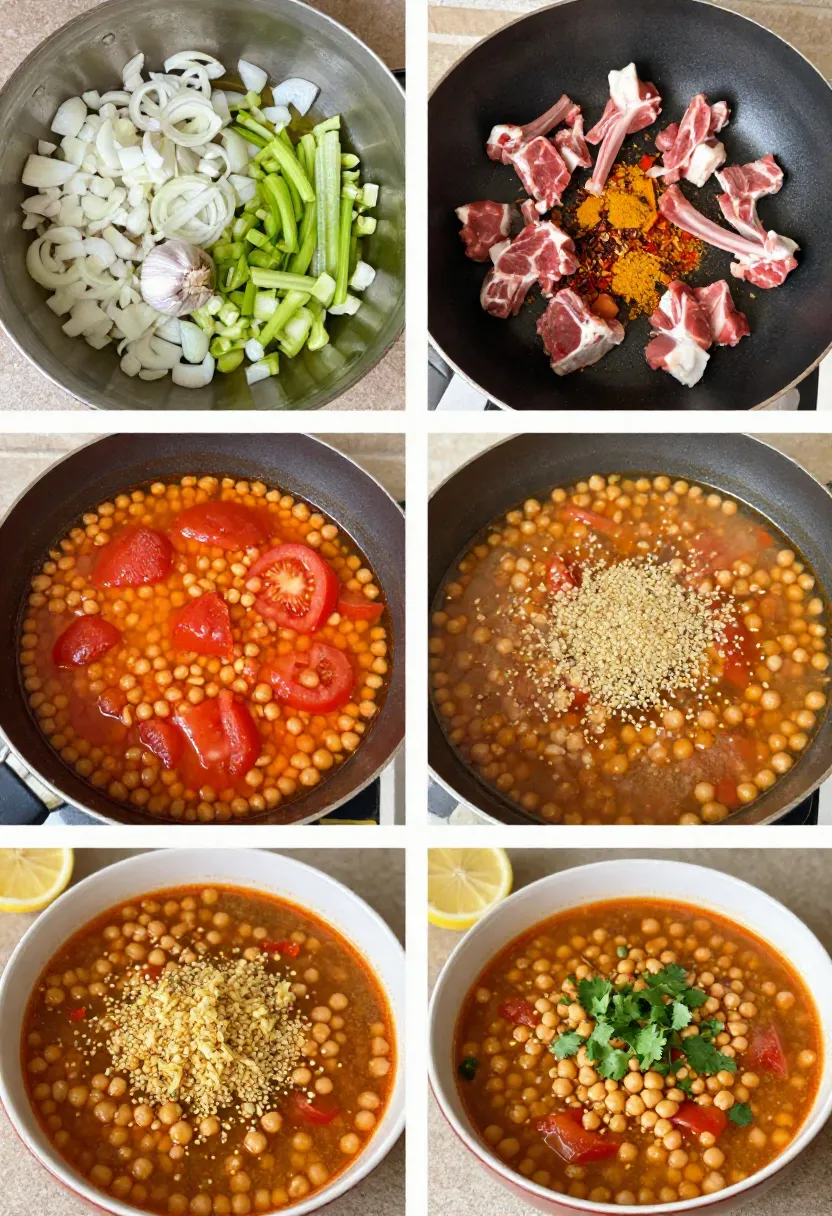
Cooking Instructions
- Heat the olive oil in a large pot over medium heat. Add the cubes of meat and cook them for several minutes, turning occasionally, until they start to brown lightly. This step helps build flavor for the broth.
- Add the chopped onion, celery, and garlic to the pot. Stir everything together and cook for about 4–5 minutes, until the vegetables soften and begin releasing their aroma.
- Stir in the chopped tomatoes and tomato paste. Let them cook with the meat and vegetables for a few minutes so the mixture starts forming the base of the soup.
- Sprinkle in the paprika, cinnamon, turmeric, and black pepper. Stir well so the spices coat the ingredients evenly and begin releasing their fragrance.
- Add the soaked chickpeas to the pot and pour in the water or broth. Bring everything to a gentle boil.
- Once the soup reaches a boil, reduce the heat to low and let it simmer for about 30 minutes. During this time the meat will begin to soften and the broth will develop deeper flavor.
- Add the rinsed freekeh and the chili pepper if you want a bit of heat. Stir well so the grain is evenly distributed in the soup.
- Continue simmering for another 20 minutes, allowing the freekeh to cook through and slightly thicken the broth.
- Near the end of cooking, stir in the chopped cilantro and dried mint. Taste the soup and adjust the salt if necessary.
- Serve the soup hot in bowls with fresh lemon wedges on the side. A small squeeze of lemon just before eating really brightens the flavors.
Small Tips That Make the Soup Even Better 👨🍳
- Rinse the freekeh well before adding it to the pot. This removes excess dust and helps the grains cook evenly.
- Brown the meat properly at the beginning. That small step adds a lot of depth to the broth later.
- Don’t rush the simmering stage. The soup becomes much more flavorful when it cooks slowly.
- Add herbs near the end. Fresh cilantro keeps its aroma better this way.
- Serve with warm bread. It’s perfect for dipping into the broth and soaking up all the flavor.
The Joy of Sharing a Traditional Meal 🍽️
If there’s one thing people quickly notice about Chorba Frik, it’s that the soup almost naturally turns dinner into a shared moment. It’s not really the type of meal you cook for just one bowl and move on. Usually there’s a big pot involved, and sooner or later someone else appears in the kitchen asking what smells so good.
That’s kind of how soups like this work.
You ladle it into bowls, place some bread on the table, maybe cut a lemon into wedges, and suddenly everyone slows down a little. No rush. Just warm soup, conversation, and the quiet comfort of a meal that feels familiar.
In many homes, Chorba Frik is served exactly this way — simple, relaxed, nothing overly formal. Bread is almost always nearby, because honestly it’s hard to resist dipping it into the broth. The soup itself has enough body that each spoonful feels satisfying: pieces of meat, soft chickpeas, and the slightly chewy freekeh that gives the dish its personality.
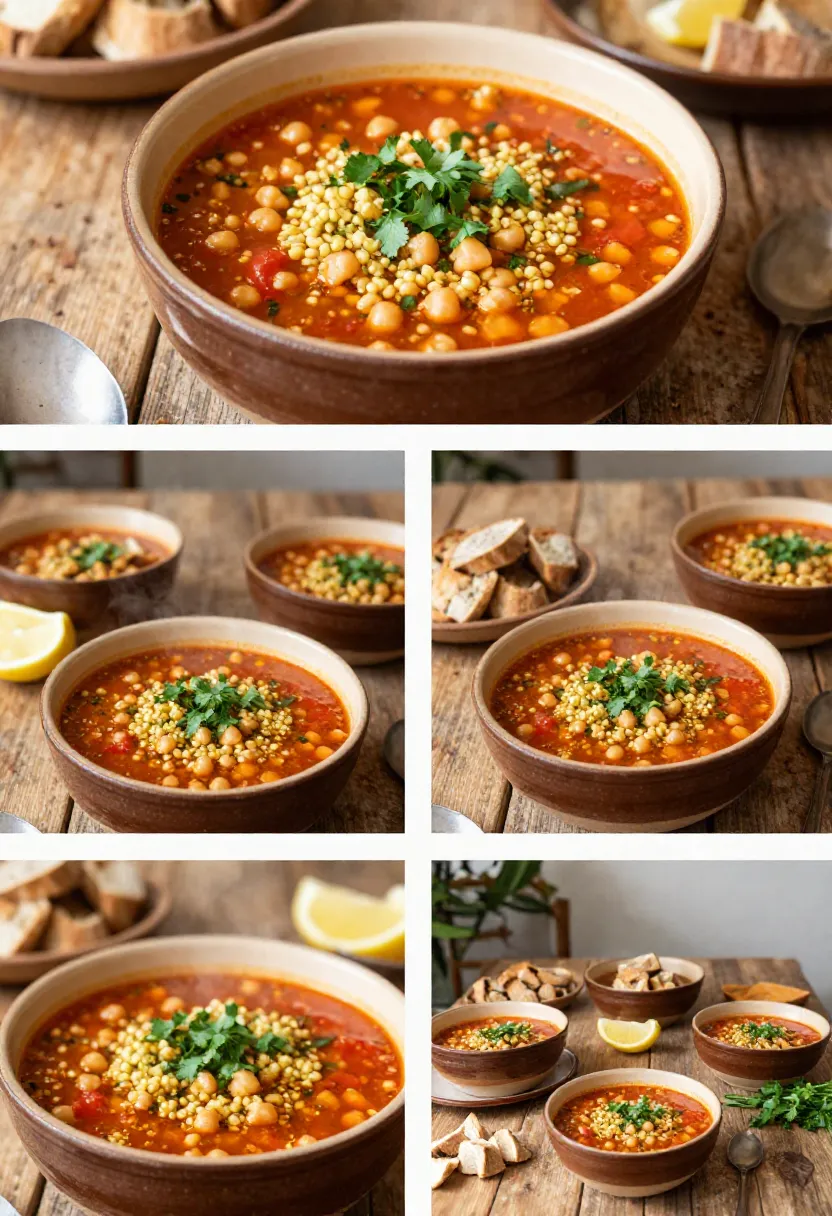
After a few bites, people usually start doing the same thing without thinking — alternating between spoonfuls of soup and pieces of bread soaked in the broth. It’s a small detail, but somehow it makes the whole meal feel even more comforting.
A typical table with Chorba Frik often ends up looking something like this:
- a large pot of soup placed in the center
- bowls slowly being refilled
- warm bread constantly disappearing
- someone squeezing lemon over their portion
Nothing complicated, but somehow those meals are often the ones people remember later.
And maybe that’s the real point of traditional dishes like this. They’re not just about flavor or nutrition. They’re about the small moments that happen around the table.