Corned beef has been showing up on dinner tables for a very long time. Some people associate it with holidays, others with Sunday dinners, and for many families it’s simply one of those meals that feels reliable. It’s filling, deeply savory, and honestly pretty forgiving to cook. Put the brisket in a pot, add some water and spices, give it time, and eventually you end up with something warm and comforting.
A lot of cooks follow the same routine every time they make it. The brisket goes into a large pot, maybe with onions or a spice packet, and it simmers quietly for hours. Eventually the meat softens enough to slice, and dinner is ready. Usually it lands on the table next to cabbage, potatoes, or carrots. Simple, hearty food. Nothing complicated about it.
But after making it that way for years, you might start to notice something. The result is always good, yet it rarely surprises anyone. Every slice is soft, the texture stays the same from beginning to end, and the overall experience becomes very predictable. It’s still comforting, of course, but brisket actually has the potential to offer a bit more character.
That’s where a small change can make a noticeable difference. Instead of stopping once the meat becomes tender enough to slice, the brisket can be gently pulled apart and finished with a short blast of heat. Nothing dramatic. Just a few minutes under a broiler or in a hot oven.
Suddenly the dish feels different.
The inside stays soft and juicy from hours of slow cooking, but the edges start to brown slightly. Those golden bits add a hint of crispness and deepen the flavor in a way that simmering alone simply can’t do.
A few simple things happen when you cook it this way:
- the meat remains tender from slow cooking
- some edges turn lightly crispy
- browned spots create richer flavor
It’s still the same comforting dish people know, but now the texture has contrast. And strangely enough, that small difference makes the whole meal feel more interesting.
Why Texture Can Change Everything
If you ask people why they like corned beef, many of them will mention memories. Maybe it reminds them of family dinners or a holiday meal when the kitchen smelled amazing all afternoon. That slow-cooking aroma has a way of filling the house and making people wander toward the stove just to see what’s going on.
Traditional recipes usually focus on tenderness above everything else. Brisket is a tough cut, so it needs time. A lot of time. As it cooks slowly in liquid, the connective tissue begins to break down and the meat gradually softens.
After several hours, the brisket reaches that point where a fork slides in easily and the knife cuts through without resistance. That’s usually when most cooks stop and start slicing.
The thing is, when meat spends that long simmering gently in liquid, the texture becomes very consistent. Every bite feels almost identical to the last one. Soft, flavorful, and comforting—but not very varied.
Adding a quick crisping step changes the balance quite a bit.
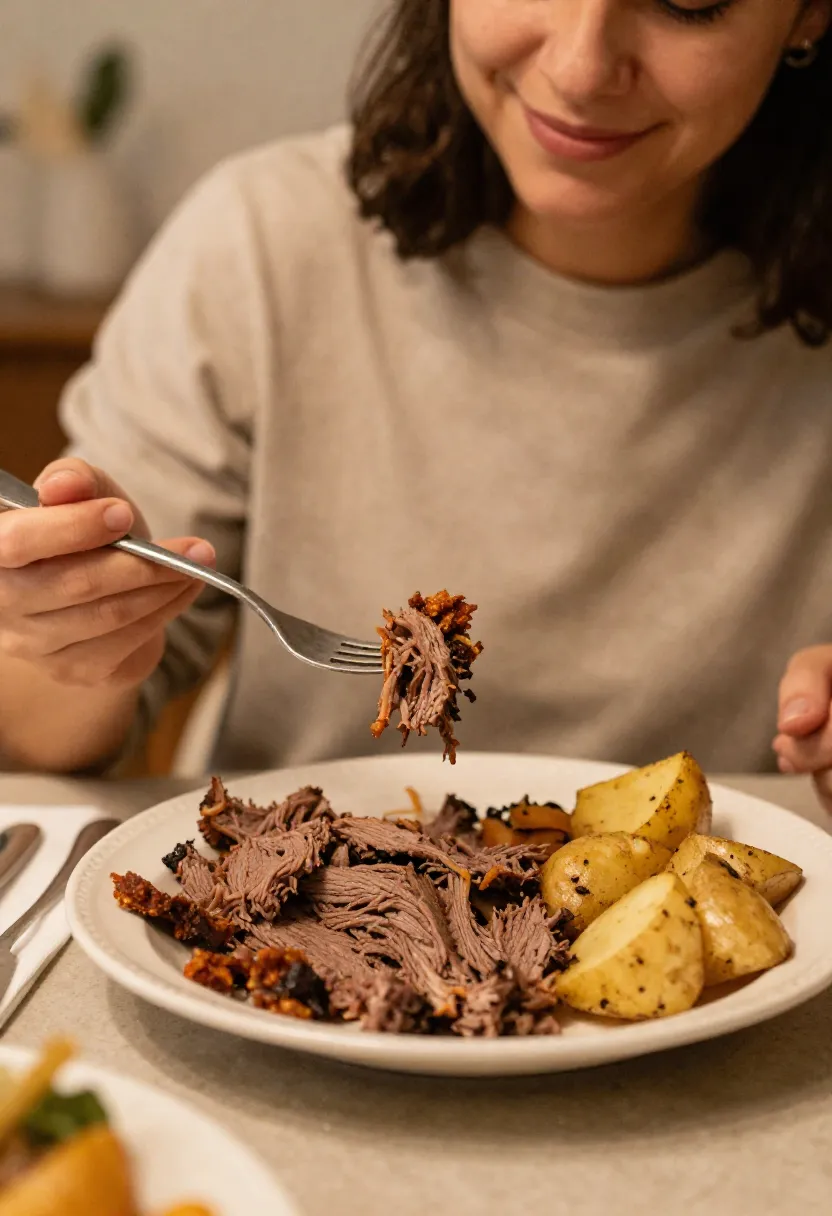
Instead of slicing the brisket into perfect pieces, the cooked meat can be pulled apart with a fork. The pieces look uneven and rustic, which might seem messy at first, but those rough edges are exactly what you want. When they hit high heat, those surfaces start to brown.
Not aggressively. Just enough.
Little caramelized edges begin to form while the inside of the meat stays juicy. That contrast between crispy and tender changes the experience more than you might expect. Suddenly each bite has a little variation. Some pieces are soft and rich, others have that slightly crisp edge that adds extra flavor.
It’s still the same dish at heart, but it no longer feels routine. Sometimes the smallest adjustments are the ones that make people pause and think, wait… this tastes better than usual.
How Slow Cooking Builds Flavor 🔥
Corned beef already begins with a lot of flavor before the cooking even starts. Unlike fresh beef, the brisket is cured in a seasoned brine that includes salt and spices. Over time that brine works its way deep into the meat, which is why corned beef has such a recognizable taste.
Most briskets also come packaged with a small spice mix. If you’ve ever opened one, you’ve probably seen a handful of seeds and crushed spices inside the packet. When the brisket cooks, those spices slowly release their aroma into the liquid surrounding the meat.
That cooking liquid gradually becomes richer as the hours pass. Many cooks like to add a few extra ingredients at this stage—not anything fancy, just simple aromatics that make the broth smell even better. Onion slices, a few garlic cloves, maybe a splash of broth or beer. Little additions like that help round out the flavor.
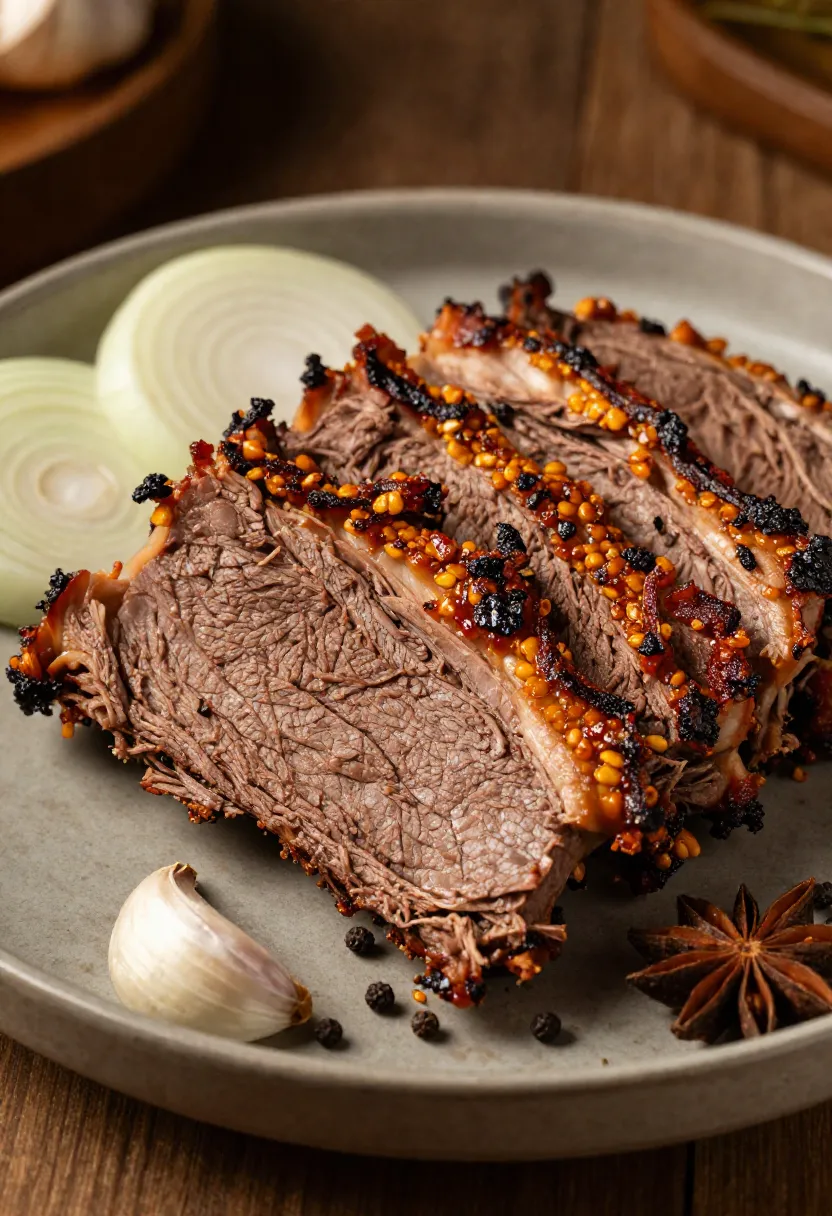
As everything simmers together, the brisket absorbs some of that aromatic liquid while releasing its own juices into the pot. By the time the meat becomes tender, the broth has transformed into something deeply savory.
Then comes the final step, which brings an entirely new flavor layer.
When the shredded beef is exposed to high heat, the surface begins to brown. This happens because of something called the Maillard reaction, although most people know it simply as the process that makes food taste better when it browns.
You see it happen all the time in cooking:
- a steak sizzling in a hot pan
- chicken skin turning golden in the oven
- bread becoming toasted
When proteins and natural sugars heat up, they create new flavor compounds. Those compounds are what give browned food its deeper, richer taste.
The same thing happens with shredded corned beef. Once those rough edges start browning, small crispy spots appear along the surface of the meat. They add a slightly roasted flavor that pairs beautifully with the tenderness created by slow cooking.
It’s a subtle change, but it’s usually the moment when people realize this isn’t quite the same corned beef they’re used to.
Carnitas-Style Corned Beef Recipe 🍽️
If you’ve only ever eaten corned beef sliced straight from the pot, this version might surprise you a little—in a good way. Instead of stopping once the brisket becomes tender, this method adds one small step that completely changes the texture of the dish.
The meat is first cooked slowly until it becomes incredibly soft and easy to pull apart. Then, rather than slicing it neatly, the brisket is gently shredded into chunky pieces and finished under high heat for a few minutes.
That final step is where things get interesting.
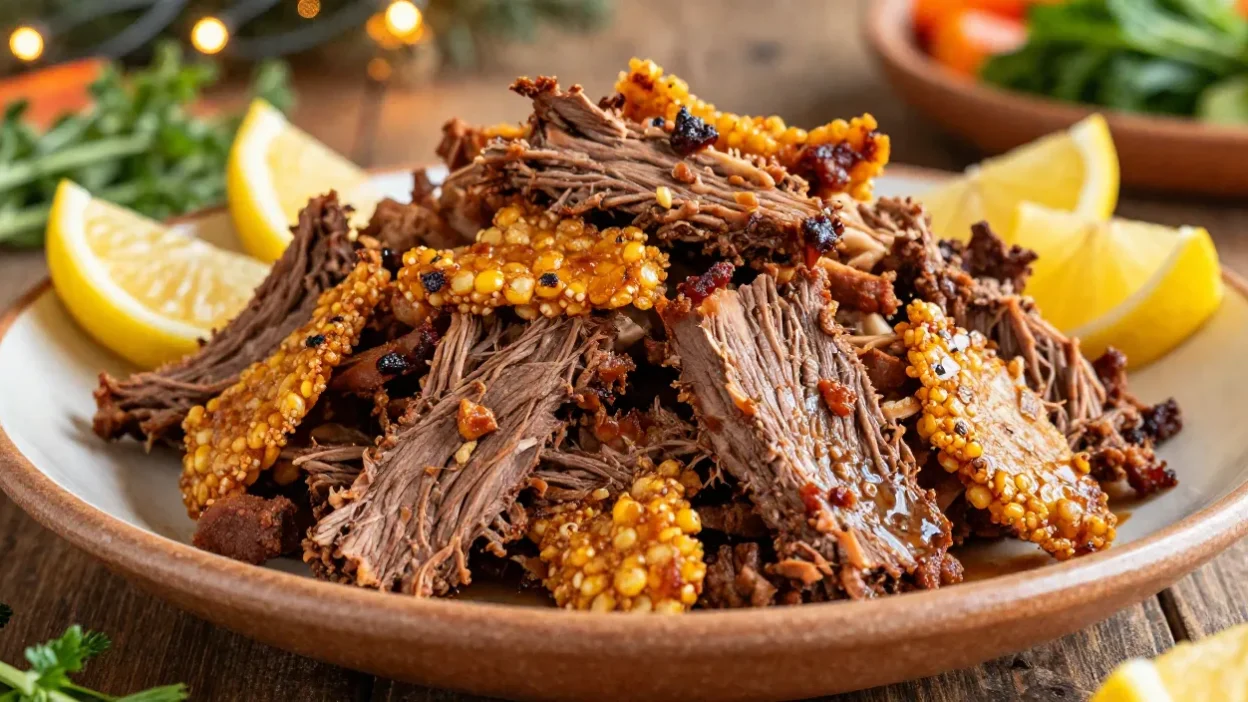
As the meat sits under the broiler, the edges begin to brown and lightly crisp. The inside stays juicy and tender, but the outside develops little caramelized bits that add deeper flavor and texture. It’s still the same comforting corned beef people know, just with an extra layer of richness.
The combination works surprisingly well. You get soft strands of beef mixed with slightly crispy edges, which makes every bite feel a little different from the last. It’s a simple trick, but it gives the dish a more rustic and satisfying feel.
Another thing people tend to like about this recipe is how flexible it is. The finished beef can be served in a lot of different ways depending on what you’re in the mood for. Some people pile it onto toasted bread for hearty sandwiches, while others serve it with potatoes and vegetables for a classic dinner. It even works nicely in tacos or grain bowls if you want something a little less traditional.
However you serve it, the balance between tender meat and crispy edges is what makes this version stand out.
Ingredients
- 1 corned beef brisket (about 3–4 pounds)
- 1 large onion, sliced
- 4 cloves garlic, crushed
- 1 cup beef broth or dark beer
- 1 cup water
- 1 bay leaf
- 1 teaspoon black peppercorns
- spice packet included with the brisket
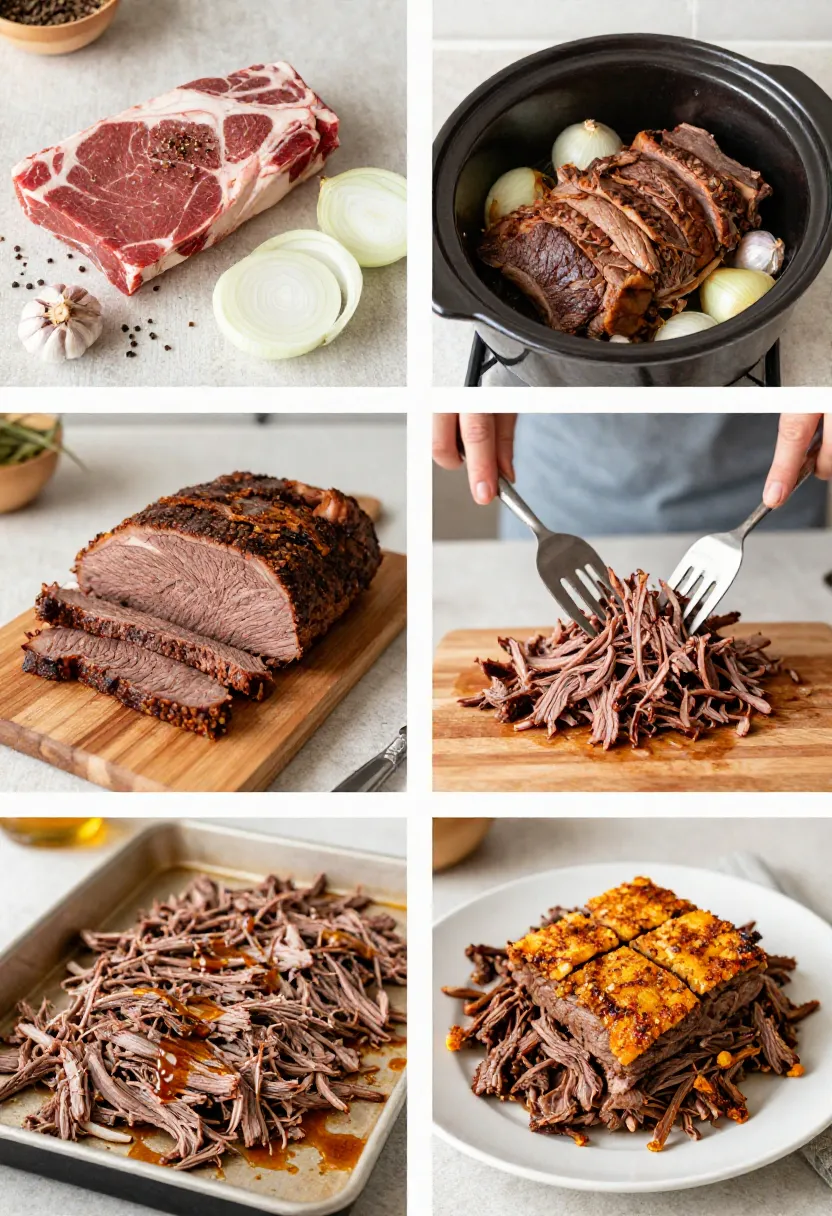
Optional finishing ingredients
- 2–3 tablespoons cooking liquid or melted butter
- freshly ground black pepper
Cooking Instructions
- Rinse the corned beef briefly under cold water to remove excess surface brine. Pat it dry with paper towels.
- Place the sliced onion and crushed garlic in the bottom of a slow cooker, pressure cooker, or large pot.
- Set the corned beef on top of the aromatics and sprinkle the spice packet evenly over the meat.
- Pour in the beef broth and water, then add the bay leaf and peppercorns.
- Cook the meat slowly until it becomes very tender. In a slow cooker this usually takes about 8 hours on low, while a pressure cooker takes roughly 90 minutes.
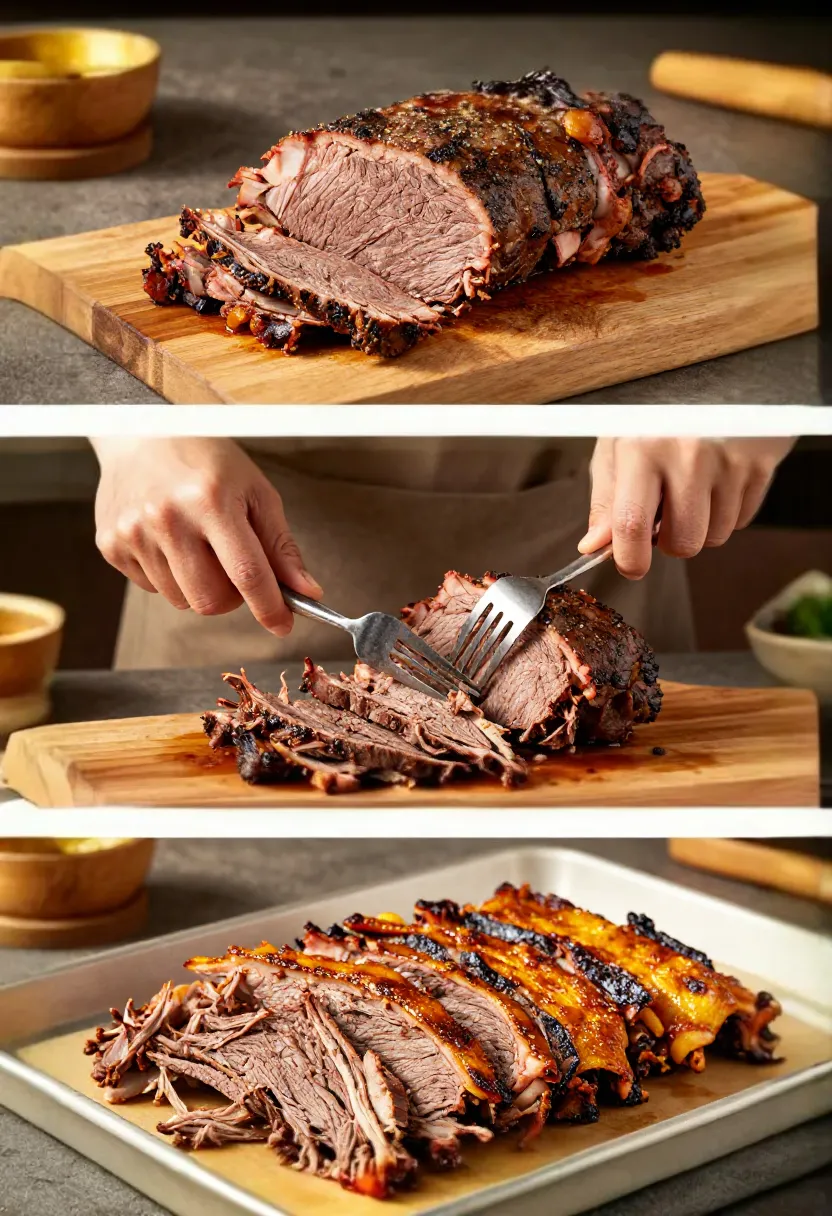
- Once the brisket is tender, carefully remove it from the cooking liquid and place it on a cutting board.
- Using two forks, gently pull the meat apart into large chunks instead of slicing it.
- Spread the shredded pieces across a baking sheet in an even layer.
- Drizzle a small amount of the cooking liquid over the meat to keep it moist.
- Place the baking sheet under a broiler for several minutes until the edges begin to brown and crisp slightly.
- Remove from the oven and serve immediately while the meat is hot.
Small Cooking Tips That Help a Lot ✨
- Don’t shred the meat too finely. Bigger pieces crisp much better in the oven.
- Save some of the cooking liquid. A quick drizzle keeps the meat juicy while the edges brown.
- Watch the broiler closely. The difference between nicely crispy and overcooked can happen quickly.
- If the meat tastes a little salty, serve it with potatoes, rice, or bread to balance the flavor.
Ways to Serve This Dish So It Really Shines 🍽️
One of the nicest things about this recipe is how easy it is to adapt. Once the corned beef is cooked and crisped, it doesn’t really lock you into one specific type of meal. In fact, many people end up using it in several different dishes over the next few days. The texture makes it especially versatile — tender inside, a little crispy around the edges — which works surprisingly well in both classic comfort food and more casual meals.
If you’re in the mood for something traditional, serving the beef as part of a warm dinner plate is always a safe bet. Creamy mashed potatoes, roasted cabbage, or even simple boiled vegetables complement the rich flavor of the meat really well. The potatoes soak up the juices, while the cabbage adds a bit of freshness that balances the heaviness of the brisket.
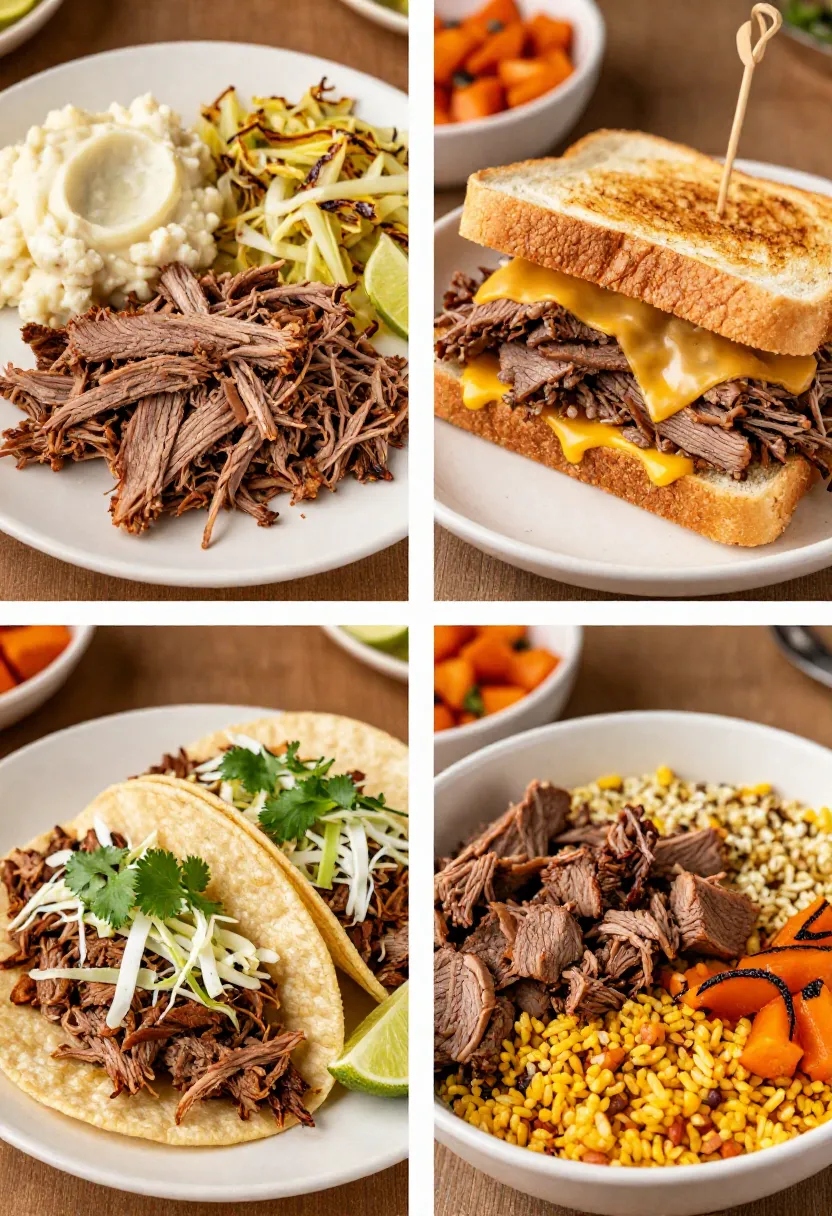
For something more relaxed, the crispy beef can easily turn into a fantastic sandwich filling. Pile it onto toasted bread or soft sandwich rolls, add a little mustard or horseradish sauce, and maybe a slice of melted cheese. The combination of crunchy bread and juicy meat creates a really satisfying bite. It’s the kind of sandwich that feels rustic and hearty rather than fancy.
Another surprisingly good option is tacos. The slightly crisp edges of the beef make it work beautifully in warm tortillas. Add shredded cabbage, fresh cilantro, and a squeeze of lime and you suddenly have a dish that feels completely different from the traditional corned beef dinner.
Here are a few simple serving ideas people tend to enjoy:
- classic dinner plate with mashed potatoes and cabbage
- toasted sandwiches with mustard or melted cheese
- tacos with cilantro, lime, and shredded vegetables
- rice or grain bowls with roasted vegetables
The nice part is that none of these require extra complicated cooking. Once the beef is ready, it can easily fit into whatever kind of meal you feel like making that day.
Small Tips That Make a Big Difference ✨
The recipe itself is fairly simple, but there are a few little tricks that can help the final result turn out even better. Most of them are small details that experienced home cooks tend to pick up over time.
One thing to keep in mind is how the meat is shredded. It’s tempting to pull it apart into very thin strands, especially when it’s extremely tender. However, larger chunks actually work better for this method. They hold moisture inside while allowing the edges to crisp slightly in the oven.
Another helpful habit is saving some of the cooking liquid before discarding it. That broth is full of flavor, and just a small drizzle over the meat before broiling helps keep everything juicy while the edges brown. Without it, the surface might crisp too quickly and dry out.
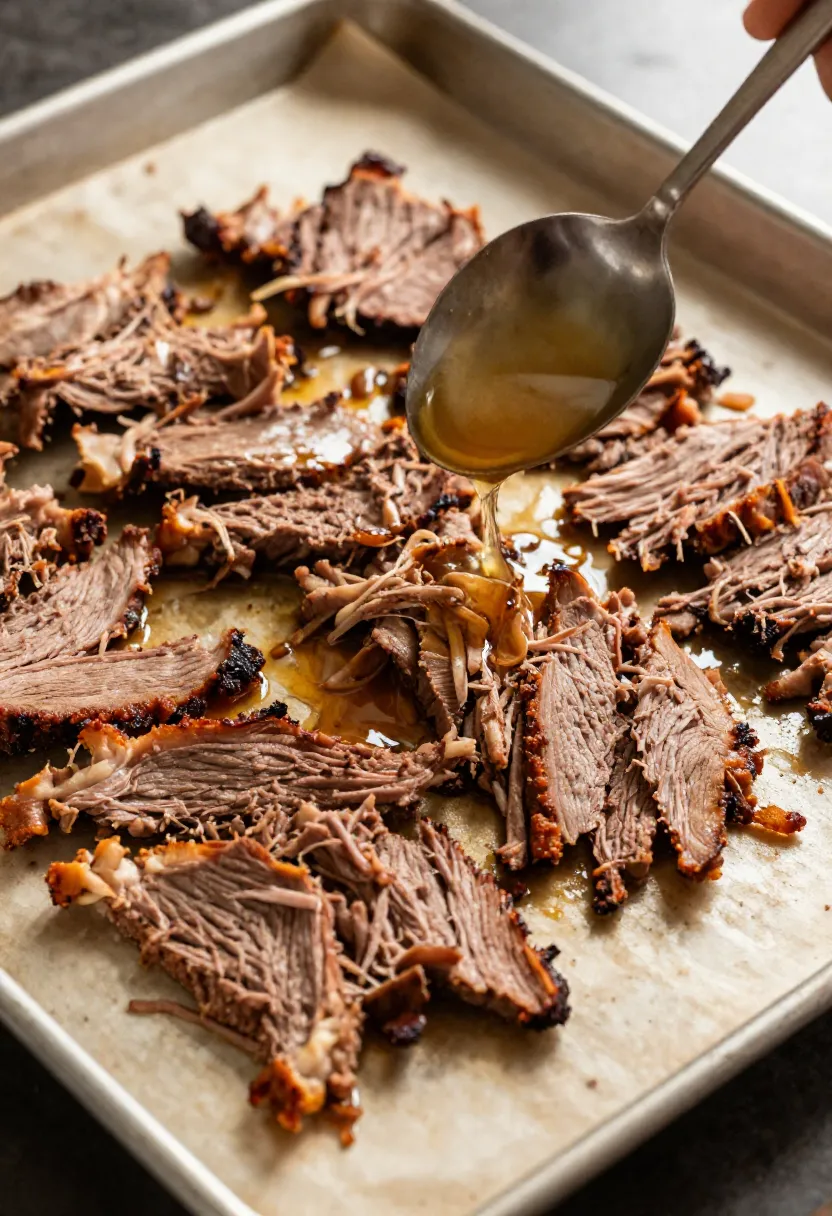
The way the meat is arranged on the baking sheet also matters more than people expect. If the pieces are crowded together, they tend to steam rather than brown. Spreading them in a loose single layer gives the heat space to circulate and helps those caramelized edges form.
A few simple reminders can really help the process go smoothly:
- keep the shredded pieces fairly large
- drizzle a little cooking liquid over the meat before broiling
- spread the meat in a single layer on the baking sheet
- watch the broiler carefully so the edges don’t burn
None of these steps are difficult, but they make the difference between meat that’s simply warm and meat that develops those slightly crispy, flavorful edges.
What to Do With Leftovers
If you happen to end up with extra corned beef, that’s actually a good thing. This dish stores quite well, and many people find the leftovers just as enjoyable the next day. Sometimes the flavors even seem a bit deeper after the meat has rested in the refrigerator overnight.
Once the beef has cooled, it can be placed in an airtight container and stored in the refrigerator for several days. When you’re ready to reheat it, spreading the meat on a baking sheet and warming it in the oven works best. That method helps restore a bit of crispness instead of simply steaming the meat in a microwave.
For longer storage, freezing is also an option. Portions of shredded beef can be placed into freezer-safe containers along with a spoonful of the cooking liquid. That small amount of broth helps keep the meat from drying out while frozen.
Leftover corned beef can easily turn into several new meals:
- breakfast hash with potatoes and eggs
- quick sandwiches or wraps
- skillet meals with vegetables
It’s the kind of ingredient that can quietly stretch across a few days of cooking without feeling repetitive. And honestly, having a container of flavorful cooked beef in the fridge tends to make quick meals much easier.