Contents
There’s something slightly deceptive about a Caesar salad. On the surface, it looks almost too simple to be impressive. Lettuce. Cheese. Croutons. Dressing. Four ordinary components most of us have seen countless times. Nothing rare, nothing theatrical, nothing that demands applause.
And yet, when it’s done properly, it changes the atmosphere at the table. Conversations slow. Someone takes a second bite before commenting. Another person leans back and says, “Okay… this is actually really good.” 🥗
The magic doesn’t come from complexity. It comes from alignment. Cold, crisp romaine meeting a silky dressing that coats instead of drowns. The sharp nuttiness of real Parmesan balanced by bright lemon. The anchovy quietly doing its job in the background — never loud, just deepening everything around it.
A well-made Caesar salad feels balanced in a way that’s hard to explain but easy to notice. It’s not heavy. It’s not flat. It doesn’t compete with itself.
What often goes wrong is surprisingly simple. The “average” Caesar usually suffers from small missteps like:
- Too much dressing, added all at once
- Lettuce that’s slightly wet or room temperature
- Pre-grated cheese that tastes muted
- Croutons that lack real crunch
None of these seem dramatic on their own. But together, they slowly drain the life out of the dish.
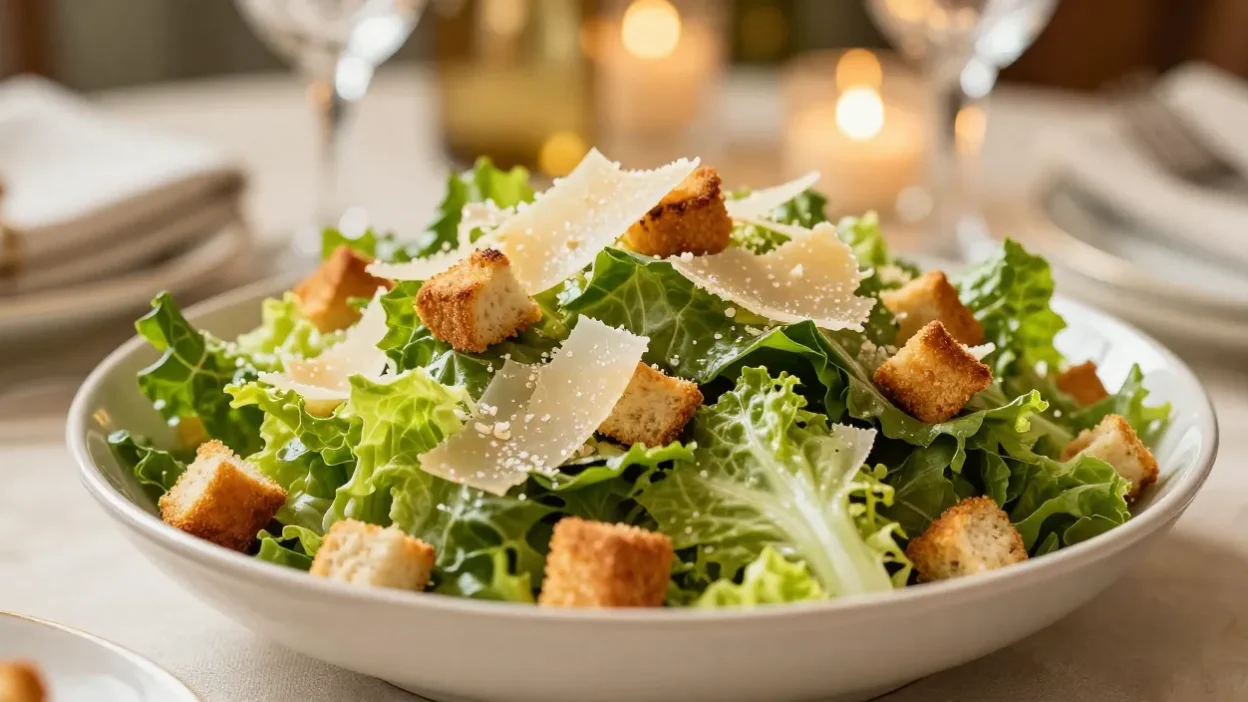
A real Caesar feels alive. The leaves snap when you bite into them. The dressing clings lightly. The croutons crack just enough. It’s fresh and indulgent at the same time — a combination that sounds contradictory, but works beautifully when handled with care. When made intentionally, it doesn’t feel like “just a side.” It feels finished. Complete. Like someone thought about every bite.
A Dish Born from Instinct, Not Perfection 🍋
The story most people associate with this salad goes back to the 1920s and restaurateur Caesar Cardini. During a particularly hectic holiday weekend in Tijuana, he reportedly found himself short on supplies. Instead of complicating things, he worked with what he had — romaine lettuce, olive oil, egg, garlic, Parmesan, Worcestershire sauce, and toasted bread.
Tossed tableside in a large wooden bowl, the salad became more than food. It became an experience.
What makes that origin story so compelling isn’t glamour. It’s instinct. The understanding that flavor doesn’t require excess — it requires harmony. The original combination worked because each element supported the others. No one ingredient tried to dominate.
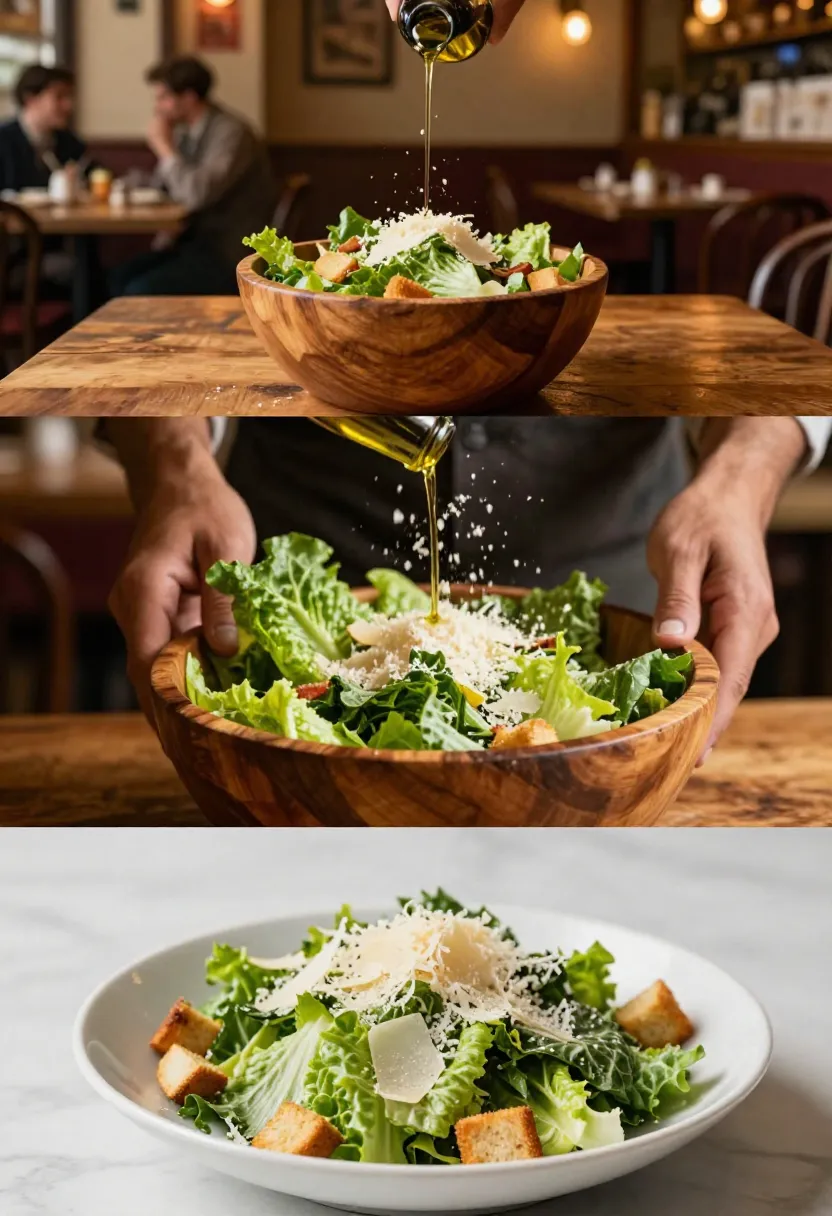
Over time, the salad traveled far beyond its birthplace. It adapted to different kitchens, cultures, and expectations. Some versions added grilled chicken or bacon. Others simplified the dressing. Bottled sauces appeared. Shortcuts became normal.
But the foundation stayed remarkably steady. At its core, a true Caesar salad relies on a few essential ideas:
- Crisp greens with structure
- A properly emulsified dressing
- Freshly grated aged cheese
- Toasted bread that adds contrast
Strip it down to those principles, and it still works — nearly a century later. That’s not trend-driven cooking. That’s balance that stands the test of time. ✨
Why Technique Matters More Than Fancy Ingredients 🧄
Caesar salad is surprisingly unforgiving. Because there are so few components, every detail shows. There’s no complex sauce to mask mistakes. No bold spices to distract from imbalance. If something is off, you taste it immediately.
Take the lettuce. If it isn’t completely dry, the dressing won’t cling properly. Even a little water can thin the emulsion and soften the flavor. Temperature matters too. Cold romaine creates contrast against the creamy dressing, which makes the whole experience more dynamic.
The dressing demands patience. Pour the oil too quickly and it separates. Rush the whisking and it stays thin. Skip freshly grated Parmesan and you lose depth. Add too much dressing at once and the leaves collapse within minutes. These are small details — almost invisible while you’re cooking — but very obvious once the salad hits the plate.
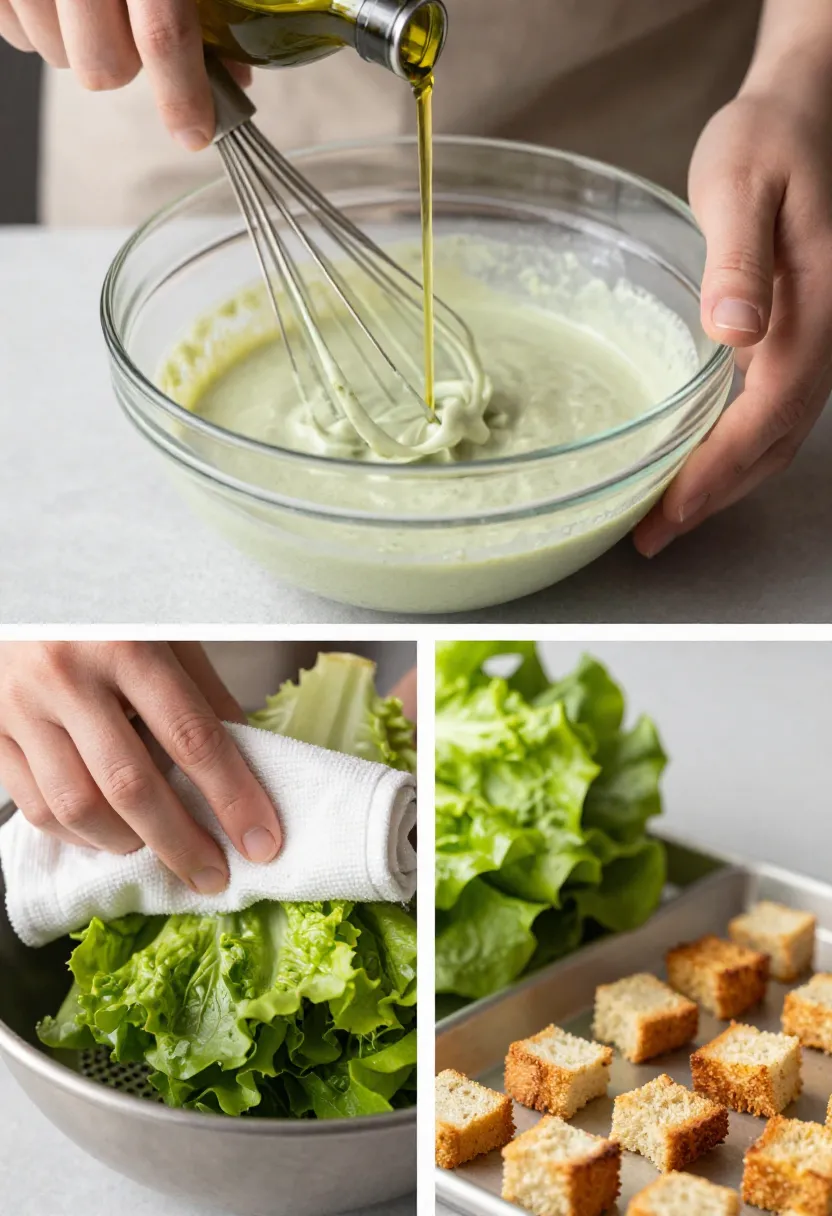
The most common technical mistakes usually come down to rushing:
- Adding oil too fast during emulsification
- Skipping proper drying time for lettuce
- Dressing the salad too early before serving
- Using warm croutons that steam the greens
When you slow down — even slightly — the difference becomes noticeable. Whisking steadily instead of hurriedly. Tasting before adding more salt. Letting the croutons cool fully. These steps aren’t complicated, but they require attention.
And attention is what transforms simple cooking into something memorable.
The real beauty of a Caesar salad isn’t in innovation. It’s in restraint. In respecting a short ingredient list and allowing each component to shine without overcomplicating it. Sometimes, doing fewer things — but doing them well — is exactly what makes a dish unforgettable. 🥗✨
Caesar Salad Recipe 🍋
A Classic Done the Right Way
This recipe generously serves four as a side dish or two as a satisfying main course. It follows traditional technique closely, but still leaves room for small personal touches — because cooking, at its best, is never rigid.
A truly good Caesar salad doesn’t taste like “salad” in the boring sense of the word. It tastes layered. The first thing you notice is the crunch — that clean, cold snap of romaine. Then comes the dressing: creamy but not heavy, bright with lemon, savory in a way that makes you pause for half a second. The Parmesan melts slightly into the dressing, adding sharpness and depth. The croutons? They’re not just there for decoration — they bring texture, warmth, and a hint of garlic that ties everything together.
What makes this version special isn’t that it’s complicated. It’s that every element has a clear role. Nothing feels random. Nothing feels excessive. The anchovy doesn’t scream “I’m here!” — it simply deepens the flavor in a way that’s hard to describe but impossible to ignore. The lemon keeps the richness from becoming overwhelming. The olive oil rounds everything out.
When you toss it properly, the leaves glisten instead of drip. The dressing clings instead of pooling. Every bite carries a bit of crunch, a bit of creaminess, a bit of salt. It feels light enough to start a meal, but satisfying enough to stand on its own if you add grilled chicken or shrimp.
And maybe that’s the real beauty of it. This is comfort food in a crisp white shirt — relaxed, but polished. Simple ingredients handled with care. No shortcuts. No bottled substitutes. Just balance, texture, and flavor working together the way they’re supposed to. 🥗✨
Ingredients
For the Salad
- 1 large head romaine lettuce
- ½ cup freshly grated Parmesan cheese
- Freshly cracked black pepper
For the Croutons
- 3 cups rustic bread, cut into cubes
- 3 tablespoons extra virgin olive oil
- 1 garlic clove, finely minced
- Pinch of sea salt
For the Dressing
- 1 large egg yolk (pasteurized if preferred)
- 1 tablespoon fresh lemon juice
- 1 teaspoon Dijon mustard
- 2 garlic cloves, mashed into a paste
- 2 anchovy fillets, finely mashed
- ½ teaspoon Worcestershire sauce
- ½ cup extra virgin olive oil
- ¼ cup finely grated Parmesan
- Salt to taste
Preparation Steps
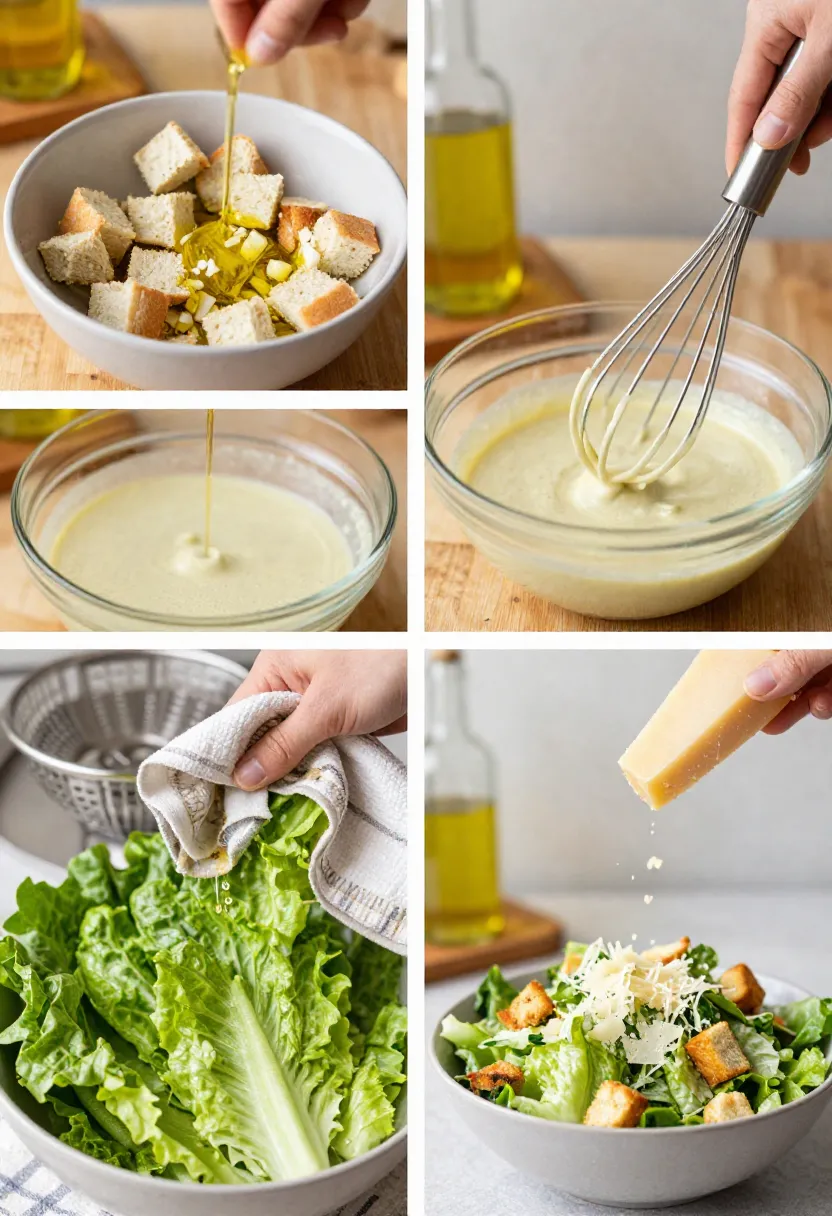
- Preheat the oven to 375°F (190°C). In a bowl, toss the bread cubes with olive oil, minced garlic, and a pinch of salt until evenly coated. Spread them in a single layer on a baking sheet. Bake for 12–15 minutes, turning halfway through, until they are deeply golden and crisp on the outside. Let them cool completely — this keeps them crunchy once added to the salad.
- Wash the romaine thoroughly, paying attention to the inner leaves. Dry it very well using a salad spinner or clean kitchen towels. Any leftover moisture will dilute the dressing. Tear the leaves into bite-sized pieces rather than cutting them — it keeps the edges natural and prevents bruising. Refrigerate until ready to assemble.
- In a medium bowl, whisk together the egg yolk, fresh lemon juice, and Dijon mustard. The mixture should begin to look slightly creamy and unified.
- Add the garlic paste, mashed anchovies, and Worcestershire sauce. Whisk again until smooth. At this stage, the aroma should already smell savory and slightly sharp from the lemon.
- Begin incorporating the olive oil very slowly while whisking constantly. Start with a few drops at a time. Once the mixture thickens slightly, you can pour the oil in a thin, steady stream. Keep whisking until the dressing becomes creamy, glossy, and cohesive. Don’t rush this part — it’s what gives the dressing its signature texture.
- Stir in the grated Parmesan. Taste the dressing carefully. Adjust with salt or an extra squeeze of lemon if needed. It should taste bold on its own, since it will mellow once mixed with the lettuce.
- Place the chilled romaine in a large mixing bowl. Add a few spoonfuls of dressing and toss gently with your hands or salad tongs. The leaves should look lightly coated and glossy, not drenched. Add more dressing only if necessary.
- Top with the cooled croutons and an extra handful of shaved Parmesan. Finish with freshly cracked black pepper. Serve immediately, while the lettuce is cold and the croutons are crisp. ✨
Quick Tips & Little Kitchen Hacks 🧄
- Chill your serving bowl in the refrigerator for 10 minutes before assembling — it keeps the salad crisp longer.
- If the dressing feels too thick, whisk in a teaspoon of warm water to loosen it slightly.
- Rub the inside of your salad bowl with a cut garlic clove for an extra subtle layer of flavor.
- Add the croutons at the very last second to preserve their crunch.
- Taste the dressing before adding salt — anchovies and Parmesan are already salty.
Sometimes the smallest adjustments make the biggest difference. And with a salad this simple, those small details really do matter.
The Importance of Texture and Temperature 🥬
One of the most underestimated elements of a truly good Caesar salad is temperature. It sounds minor — almost technical — але на практиці це змінює все.
Cold lettuce isn’t just refreshing; it gives structure. When romaine is properly chilled, it snaps cleanly instead of bending. That crispness becomes the foundation of the entire dish. On the other hand, slightly warm croutons (not hot, just freshly cooled from the oven) create a subtle contrast that makes each bite more interesting. And dressing at room temperature blends more smoothly, coating the leaves evenly rather than clumping or stiffening.
These small shifts in temperature create movement in the mouth. Without them, everything feels flat.
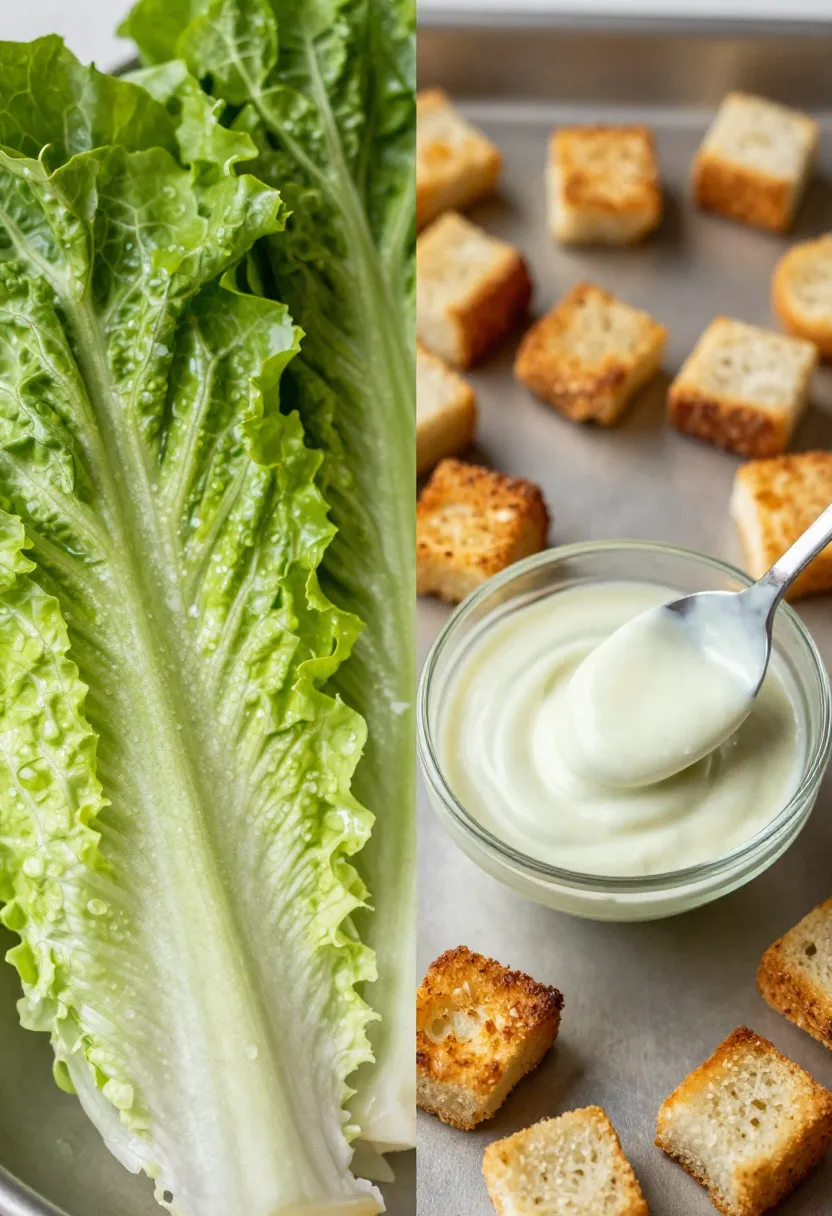
Texture matters just as much. A Caesar salad should never feel one-dimensional. In a perfect forkful, you get:
- the crunch of romaine
- the creamy silkiness of dressing
- the firm bite of toasted bread
- the delicate crumble of aged cheese
If one element overpowers the others — too much dressing, too few croutons, limp greens — the harmony disappears. And once that balance is gone, it’s almost impossible to recover.
Restraint is key. The dressing should coat the leaves lightly, almost whispering over them. You want gloss, not saturation. A Caesar salad should feel lively and structured — never soggy, never weighed down.
If it sits too long and loses that crisp edge, it stops being Caesar and starts being… just salad. And those are not the same thing. 🥗
Elevating the Experience ✨
The beauty of Caesar salad is that it allows for variation without losing its identity. You can build on it carefully, thoughtfully, without turning it into something unrecognizable.
Grilled chicken, for example, adds substance and makes the dish feel like a complete meal. Garlic shrimp introduces a slightly sweet, delicate contrast. Even a small handful of baby kale can deepen the flavor and add a hint of earthiness. And if you lightly char the romaine — just a quick kiss from a grill pan — you introduce subtle smokiness that feels unexpectedly sophisticated.
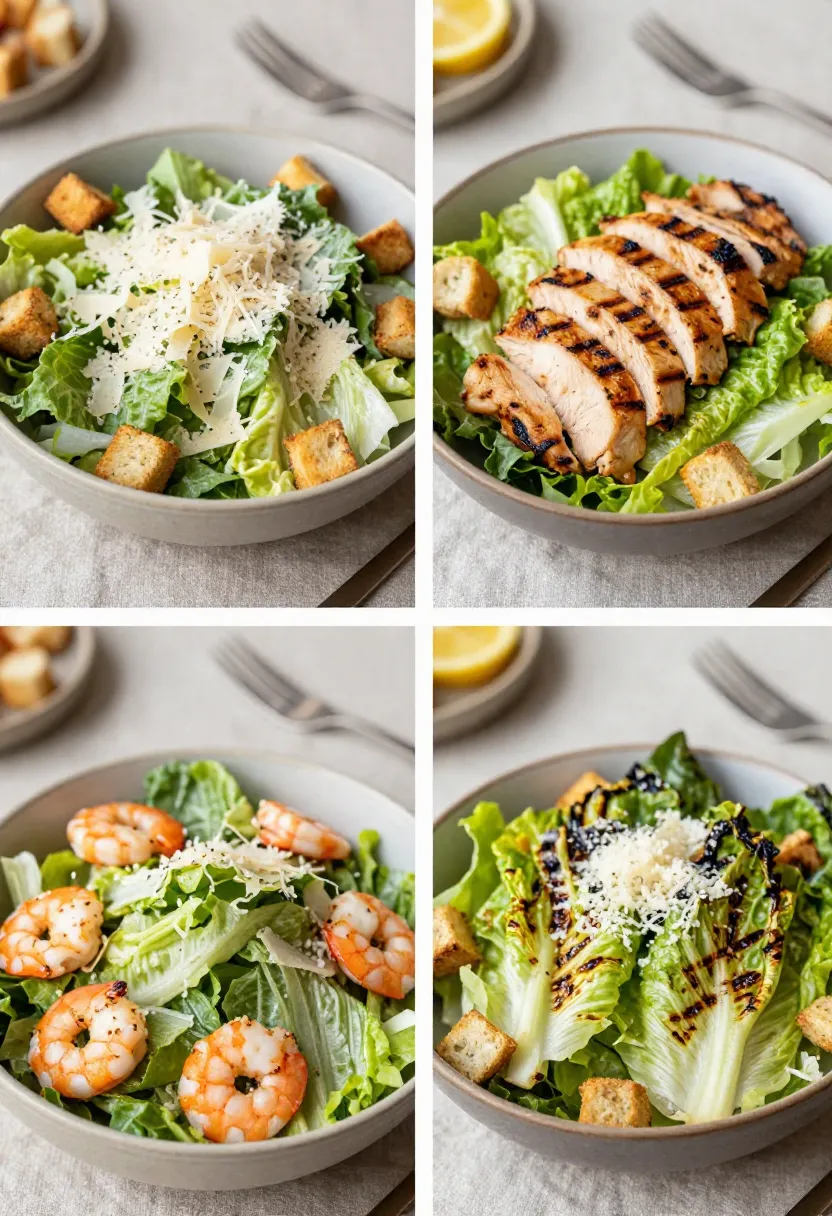
Presentation also plays a quiet but important role. A few small adjustments can elevate the entire experience:
- Chill your plates before serving to preserve crispness.
- Add freshly shaved Parmesan at the very last moment for aroma.
- Finish with a light squeeze of lemon right before bringing it to the table.
If you’re hosting guests, timing becomes everything. Toss the salad only once everyone is ready to sit down. That freshness — the smell of garlic, lemon, olive oil — sets the tone for the meal before anyone takes a bite.
These aren’t dramatic changes. They’re subtle upgrades. But subtle upgrades are often what separate “good” from “memorable.”
Why This Classic Endures 🧄
Food trends move quickly. Ingredients cycle in and out of fashion. One year it’s all about fermentation; the next, it’s minimalism or plant-based reinterpretations of everything. Techniques evolve. Menus shift.
And yet, Caesar salad remains.
It doesn’t rely on novelty. It doesn’t depend on being reinvented every season. It endures because it understands balance — and balance doesn’t go out of style.
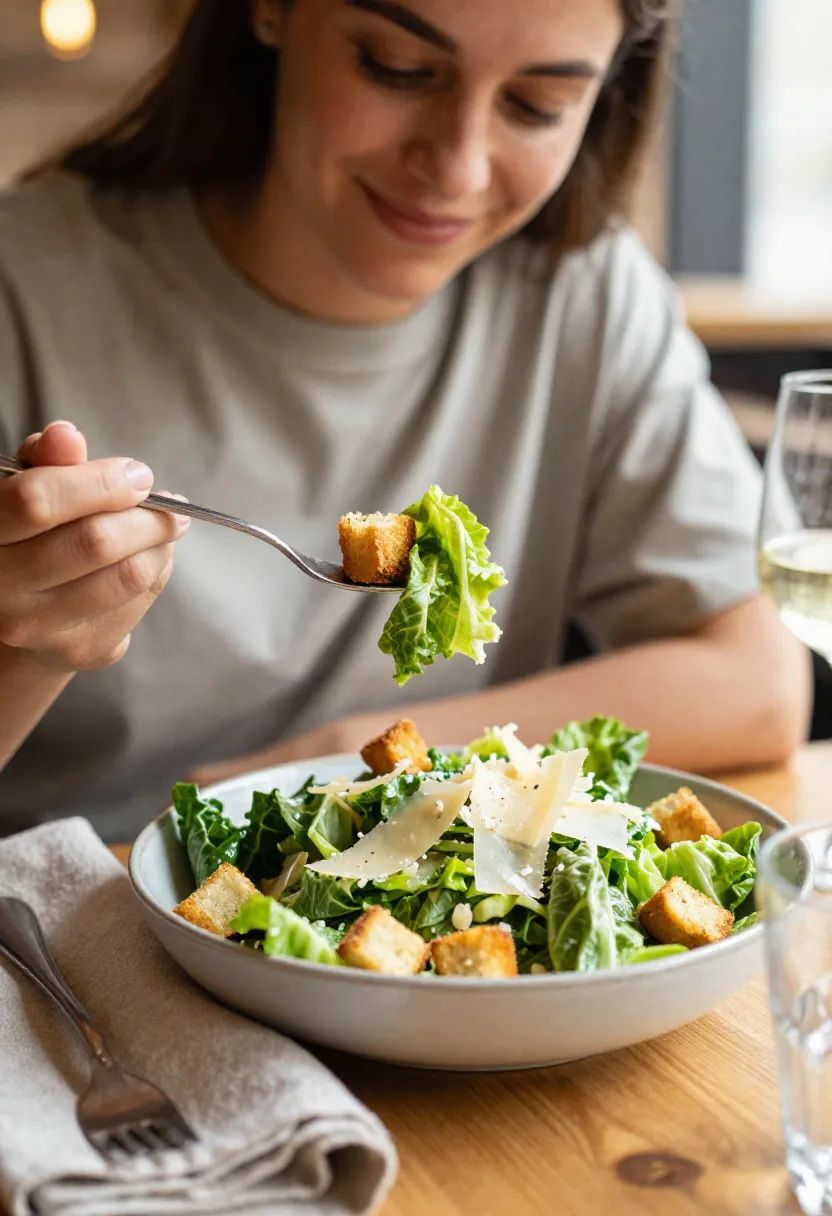
At its core, this dish is about contrasts that make sense together: acid and fat, crunch and creaminess, salt and freshness. It satisfies something instinctive. You don’t have to analyze it to enjoy it.
When prepared from scratch, it also communicates something else — care. Whisking the dressing slowly. Grating the cheese fresh. Drying the lettuce properly instead of rushing. These details are invisible to most guests, but they’re felt. People might not articulate it, but they notice.
A well-made Caesar salad doesn’t try to impress anyone. It doesn’t need theatrics. It simply delivers clarity of flavor and confidence in execution. Clean, sharp, textured, balanced.
And honestly, sometimes that’s exactly what a table needs. Not spectacle. Not experimentation. Just something timeless done well.
A bowl of crisp greens, dressed with intention, shared while the croutons are still perfectly crunchy.
Simple. Classic. Still unbeatable. 🥗✨

Hi! I'm Olya. Here you'll find recipes, tips, and stories to inspire you to cook with heart and create culinary masterpieces full of joy.