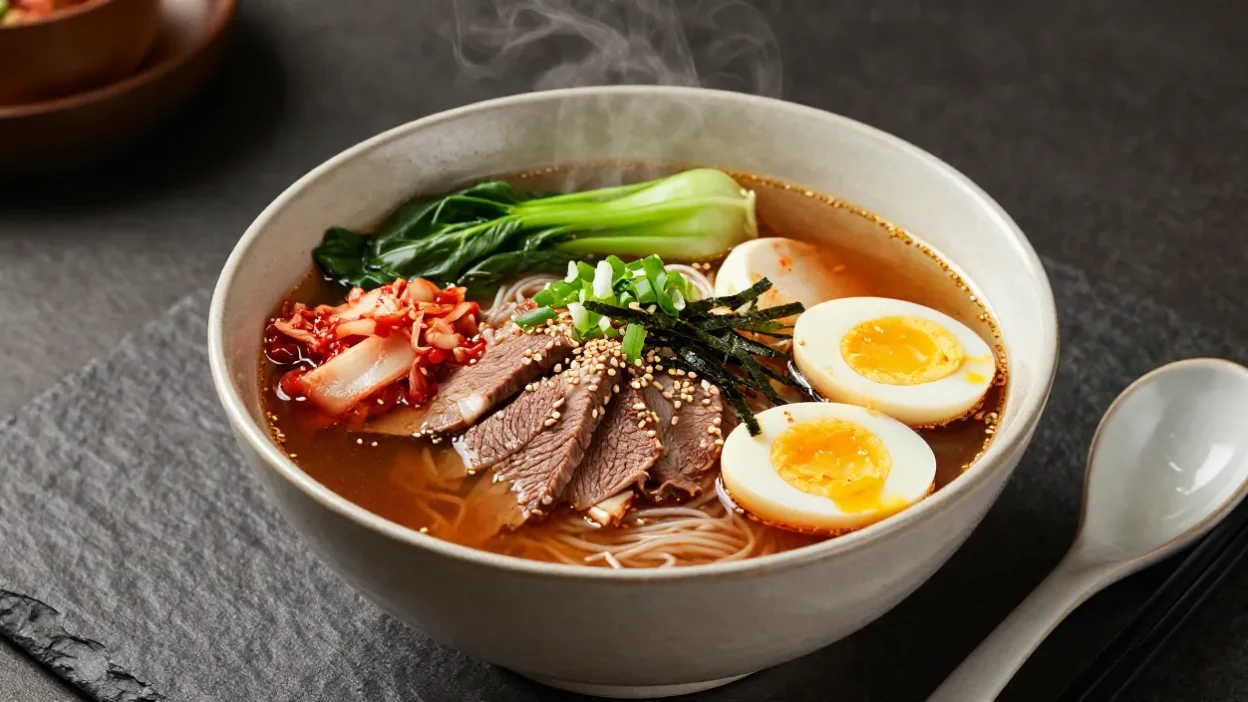
There are meals that simply satisfy your hunger.
And then there are meals that seem to slow the entire day down.
Kimchi beef noodle soup belongs firmly in the second category.
The moment the broth begins to simmer, the kitchen starts filling with an aroma that’s impossible to ignore. Garlic softens in the pot, fresh ginger releases its warmth, and the rich scent of beef mingles with the unmistakable tang of kimchi. Before the noodles have even gone in, the whole house already smells like dinner.
I’ve always believed that a really good soup has a way of changing your mood before you even take the first bite.
There’s something comforting about wrapping both hands around a steaming bowl while the windows fog slightly from the warmth rising off the broth. You naturally slow down. The first spoonful is almost always too hot, the noodles need a little twirl around your chopsticks, and somehow none of it feels rushed.
Maybe that’s why noodle soups are so universally loved.
They invite you to sit down, stay awhile, and actually enjoy the meal instead of hurrying through it.
Kimchi beef noodle soup does all of that while bringing an incredible amount of flavor to the table.
The broth is rich without feeling heavy. Thin slices of beef stay wonderfully tender. The noodles soak up every bit of savory goodness, while the kimchi adds a bright, tangy kick that keeps the entire bowl lively from beginning to end.
Every spoonful feels slightly different.
Sometimes you catch a perfectly cooked noodle coated in broth.
Sometimes it’s a bite of tender beef.
Then comes the kimchi, adding just enough acidity and gentle heat to wake everything up again.
That constant contrast is what keeps the soup so interesting.
One thing I appreciate most is that it manages to feel both comforting and exciting at the same time.
Many comfort foods lean almost entirely on richness. This soup takes a different approach. Every rich element is balanced by something bright. Every hearty bite is followed by a little freshness. The result is a meal that fills you up without ever feeling overly heavy.
It’s exactly the kind of dinner I find myself craving after long workdays, rainy afternoons, or weekends when cooking becomes less about necessity and more about slowing down for an hour.
A few reasons this soup deserves a place in your regular dinner rotation:
- deeply flavorful broth 🍜
- tender beef in every bowl
- satisfying noodles that make it a complete meal
- bold Korean-inspired flavors
- surprisingly simple to prepare at home
And perhaps my favorite part?
By the time everyone sits down at the table, the hardest part of the recipe is already over.
All that’s left is enjoying the bowl while it’s still steaming.
🌶️ The ingredient that gives this soup its personality
If you’ve never cooked with kimchi before, this recipe is a wonderful place to start.
Most people notice the spice first.
Others immediately recognize its tangy aroma.
But neither of those qualities fully explains why kimchi has become such an essential ingredient in Korean cooking.
Its greatest strength is the depth it brings to a dish.
Unlike fresh vegetables, kimchi has already spent time fermenting, developing layers of flavor that simply can’t be rushed. It’s savory, slightly sour, gently spicy, and wonderfully complex all at once. As it simmers in the broth, those flavors slowly spread through the entire pot, transforming what begins as a simple beef broth into something much richer and more memorable.
It’s difficult to recreate that effect with any single seasoning.
The kimchi isn’t just another ingredient.
In many ways, it becomes part of the broth itself.
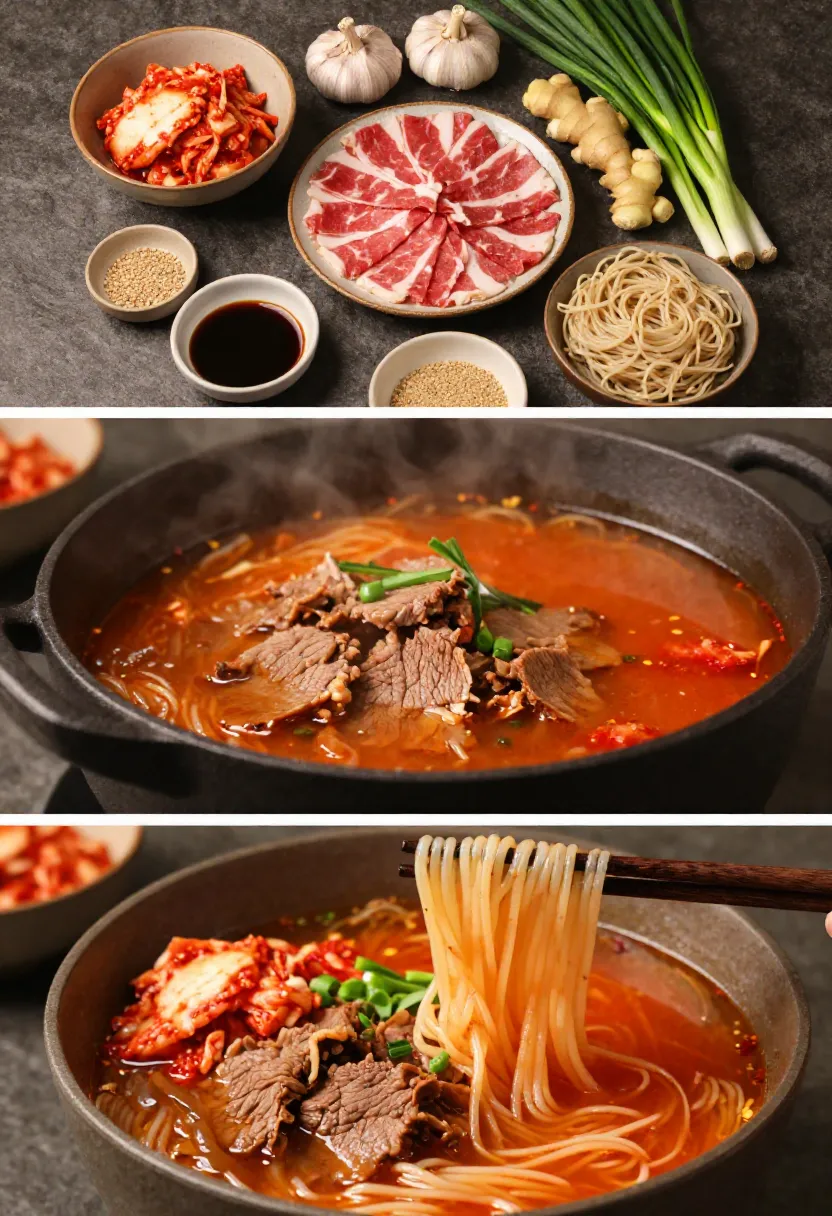
The beef plays an equally important role.
Rather than overpowering the soup, it adds richness and body while allowing the brighter flavors to remain front and center. Thin slices cook quickly, staying tender enough to almost melt into each spoonful.
The noodles bring everything together.
They’re more than just something to fill the bowl. As they sit in the broth, they absorb its savory flavor while adding enough substance to make the soup feel like a complete meal rather than a light starter.
Here’s how each ingredient contributes:
| Ingredient | What It Adds | Texture | Flavor Impact |
|---|---|---|---|
| Kimchi | Bright acidity | Tender with slight crunch | Bold fermented depth |
| Beef | Rich protein | Tender slices | Deep savory flavor |
| Noodles | Hearty foundation | Soft and chewy | Comforting balance |
| Broth | The base | Smooth and silky | Rich umami |
| Garlic & Ginger | Fresh aroma | Blended into the broth | Warm, fragrant finish |
One thing that surprises many people is how balanced the finished soup tastes.
Looking at the ingredient list, you might expect something overwhelmingly spicy.
Instead, the heat stays gentle enough that the richness of the beef and the savory broth remain just as noticeable. Every ingredient supports the others instead of competing for attention.
That’s often the sign of a great soup.
Nothing feels unnecessary.
Nothing feels overpowering.
Every spoonful delivers a little of everything.
🍲 Building layers of flavor, one step at a time
One thing I’ve learned after making noodle soups for years is that the best bowls rarely come from rushing.
None of the individual steps are particularly difficult.
They’re simply small moments that build flavor little by little.
It begins with the aromatics.
Garlic and ginger spend a minute or two in the pot, just long enough to become fragrant without browning too much. That simple step creates the first layer of flavor before anything else is added.
Next comes the beef.
Rather than boiling it immediately, giving the meat a chance to lightly brown creates deeper savory notes that carry through the entire broth. Those little caramelized bits left on the bottom of the pot eventually dissolve into the liquid, adding richness you might not even notice consciously—but you’d certainly miss if they weren’t there.
Then the kimchi joins the pot.
As it cooks, something interesting happens.
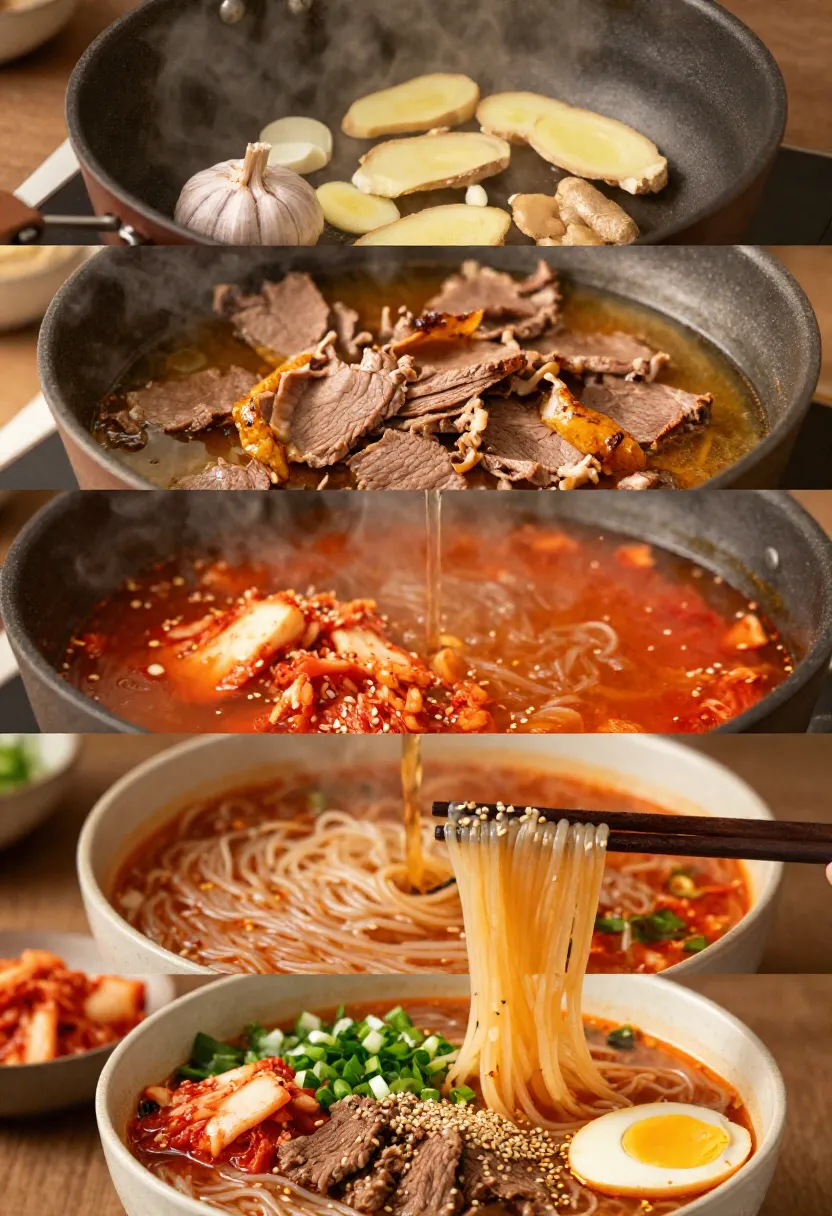
Its sharpness begins to mellow, while its savory, fermented character becomes even more pronounced. Instead of standing apart from the broth, the kimchi gradually melts into it, creating a soup that’s both richer and brighter at the same time.
The noodles are usually the final major addition.
Some people like cooking them directly in the broth, while others prefer preparing them separately before adding them to each bowl. I’ve tried both methods over the years, and each has its advantages. Cooking them separately keeps the broth perfectly clear and prevents the noodles from becoming overly soft, especially if you expect leftovers the next day.
A few small habits make a noticeable difference:
- brown the beef before adding the broth
- don’t overcook the noodles
- let the kimchi simmer to deepen its flavor 🌶️
- taste the broth before serving
- finish with fresh herbs and green onions
Then comes my favorite moment.
The bowls are filled, the noodles disappear beneath the steaming broth, slices of beef settle on top, and the final garnishes bring everything to life. Green onions add freshness, sesame seeds provide a little texture, and the steam carries every aroma straight to the table.
It’s the kind of meal that naturally encourages everyone to slow down.
Not because they have to.
Because they genuinely want to savor every last spoonful.
🍜 Kimchi Beef Noodle Soup Recipe
There are plenty of soups that promise comfort, but very few deliver the kind of bold, satisfying flavor that keeps you thinking about the next bowl before you’ve even finished the first. Kimchi beef noodle soup is one of those rare recipes that feels deeply nourishing while still tasting vibrant and exciting.
At first glance, it might seem like a dish reserved for restaurants. The rich broth, tender slices of beef, springy noodles, and perfectly balanced spicy, tangy flavors give it an impressive appearance. But once you make it at home, you quickly realize that the magic comes from a handful of simple ingredients working together rather than complicated techniques.
One of the things I appreciate most about this soup is how every ingredient has its own purpose. The beef creates a rich, savory foundation, while garlic and ginger build layers of aroma from the very beginning. Kimchi transforms the broth with its signature fermented flavor, adding brightness and just enough heat to keep every spoonful interesting. Finally, the noodles soak up all that incredible broth, turning the soup into a complete meal that’s both hearty and comforting.
Another advantage is how adaptable the recipe can be.
You can make it a little spicier, load it with extra vegetables, or finish each bowl with your favorite toppings. Some evenings I add mushrooms or bok choy, while other times I keep everything simple and let the broth shine on its own.
No matter which direction you take, the result is always the same.
A steaming bowl of homemade soup that’s every bit as satisfying as something you’d order at your favorite Korean restaurant.
And once the aroma starts filling the kitchen, waiting for dinner becomes the hardest part.
🛒 Ingredients
For the soup
- 1 tablespoon neutral cooking oil
- 12 ounces (340 g) thinly sliced beef (sirloin, ribeye, or flank steak)
- 3 cloves garlic, minced
- 1 tablespoon fresh ginger, grated
- 2 cups chopped kimchi
- 6 cups beef broth
- 2 tablespoons soy sauce
- 1 tablespoon gochujang (optional, for extra heat)
- 1 teaspoon toasted sesame oil
- 8 ounces (225 g) fresh ramen noodles, udon noodles, or rice noodles
- 2 green onions, thinly sliced
Optional toppings
- soft-boiled eggs
- toasted sesame seeds
- fresh cilantro
- extra kimchi
- chili crisp
- nori strips
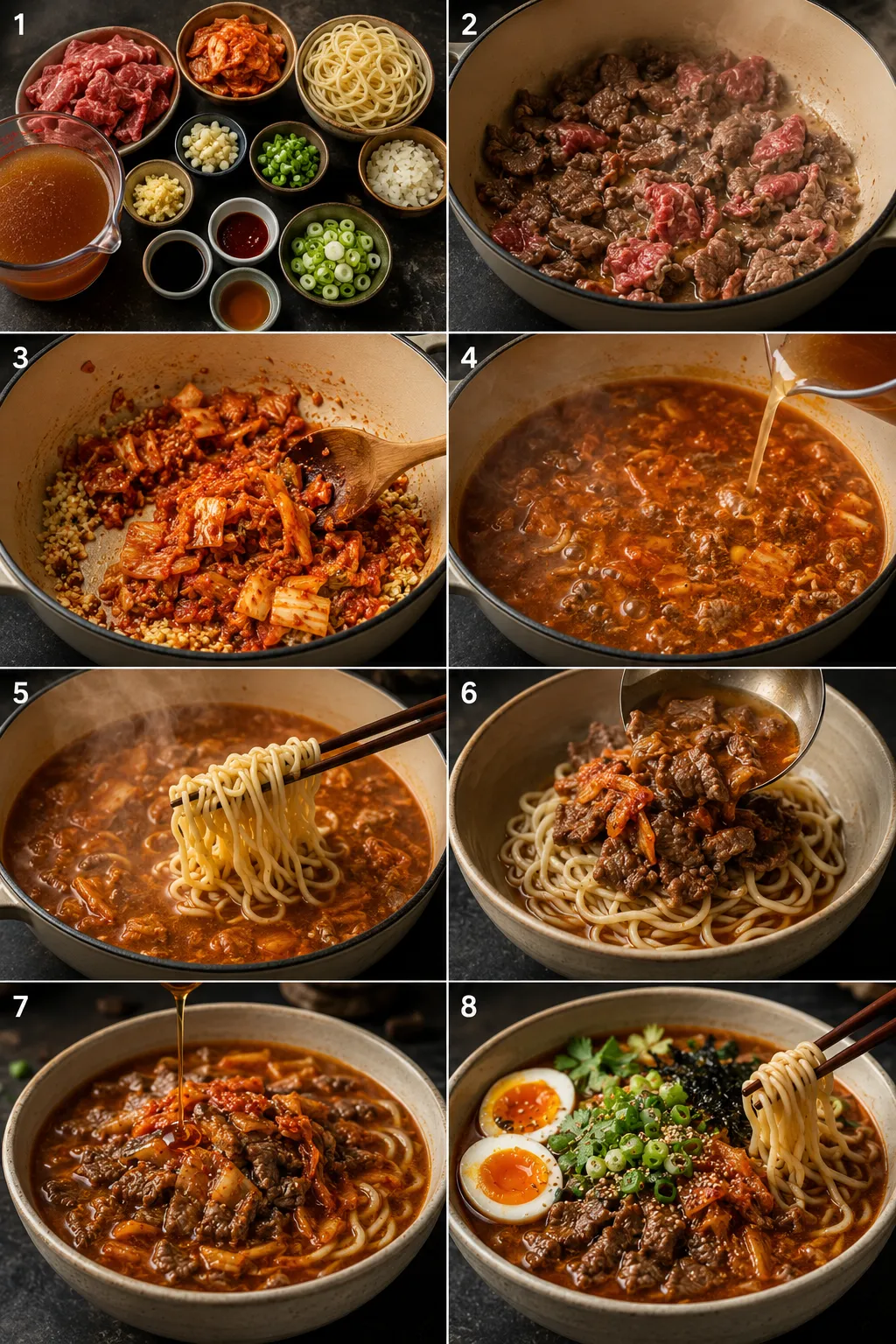
👩🍳 Instructions
- Prepare all of the ingredients.
Slice the beef into thin, bite-sized strips if it isn’t already prepared. Mince the garlic, grate the ginger, chop the kimchi into smaller pieces if necessary, and slice the green onions. If you’re planning to add optional toppings like soft-boiled eggs or fresh herbs, prepare those first so everything is ready when the soup is finished. - Brown the beef.
Heat the cooking oil in a large soup pot or Dutch oven over medium-high heat. Once the pot is hot, add the beef in a single layer. Let it cook undisturbed for a minute or two before stirring so it develops lightly browned edges. Continue cooking for about 3 to 5 minutes until the beef is mostly cooked through. Transfer it to a plate and set aside. - Cook the aromatics.
Reduce the heat slightly and add the garlic and grated ginger to the same pot. Stir continuously for about 30 to 60 seconds until fragrant. Be careful not to let the garlic brown too much, as it can become bitter. - Sauté the kimchi.
Add the chopped kimchi to the pot and cook for 3 to 4 minutes, stirring occasionally. This step softens the kimchi and allows its fermented flavor to mellow while becoming even deeper and more complex. You’ll notice the aroma becoming richer as it cooks. - Build the broth.
Pour in the beef broth and stir in the soy sauce. If you’d like a spicier soup, whisk in the gochujang until completely dissolved. Bring everything to a gentle boil, then reduce the heat and let the broth simmer for about 15 to 20 minutes. During this time, all of the flavors begin blending into one rich, savory broth. - Cook the noodles.
While the broth simmers, cook the noodles according to the package instructions. If possible, cook them in a separate pot rather than directly in the soup. This keeps the broth clear and prevents the noodles from absorbing too much liquid, especially if you plan to enjoy leftovers later. - Return the beef.
Add the cooked beef back into the simmering broth and allow it to warm through for another 2 to 3 minutes. The meat should remain tender and juicy without becoming overcooked. - Finish with sesame oil.
Turn off the heat and stir in the toasted sesame oil. This final addition gives the soup its signature nutty aroma without losing flavor from prolonged cooking. - Assemble each bowl.
Divide the cooked noodles between serving bowls, then ladle the hot broth, beef, and kimchi over the top. This method keeps the noodles from becoming overly soft while ensuring every bowl has the perfect balance of ingredients. - Add the toppings and serve.
Finish each bowl with sliced green onions, toasted sesame seeds, extra kimchi, soft-boiled eggs, fresh cilantro, or a spoonful of chili crisp if desired. Serve immediately while the broth is piping hot and the noodles are perfectly tender.
💡 Helpful Kitchen Tips
- Thinly sliced beef cooks quickly and stays much more tender than thicker cuts.
- Simmering the kimchi before adding the broth creates a noticeably deeper flavor.
- Cook the noodles separately if you expect leftovers—they’ll keep a much better texture.
- Taste the broth before serving and adjust with extra soy sauce or gochujang if needed.
- Toasted sesame oil should always be added at the very end for the freshest aroma.
- Bok choy, mushrooms, spinach, or bean sprouts make excellent additions if you’d like extra vegetables.
- Leftover soup keeps well in the refrigerator for up to 3 days. Store the noodles separately whenever possible for the best texture.
🍳 Simple toppings that make every bowl even better
One of the things I enjoy most about serving kimchi beef noodle soup is that the cooking doesn’t really end when the broth is finished.
The toppings are what bring every bowl to life.
The soup already has plenty of flavor on its own, but a few carefully chosen additions can completely change the experience. Some toppings add freshness, others contribute texture, and a few simply make the bowl look even more inviting before you take the first bite.
That’s one of the reasons noodle soups are so much fun to serve.
Everyone can customize their own bowl.
Some people want extra spice. Others pile on green onions. Someone almost always reaches for another spoonful of kimchi before sitting down. There isn’t really a wrong combination, and that’s part of the appeal.
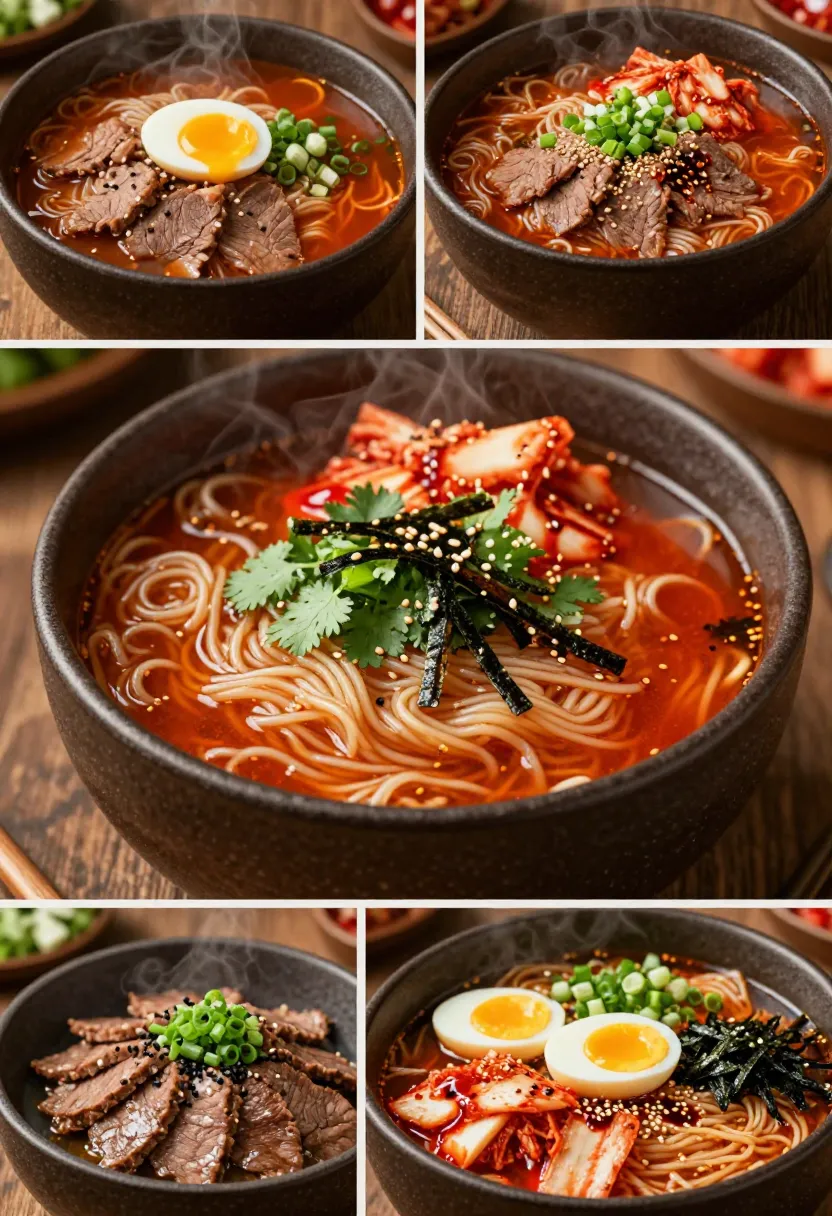
Some of my favorite finishing touches include:
- soft-boiled eggs with jammy yolks 🥚
- sliced green onions
- toasted sesame seeds
- extra chopped kimchi 🌶️
- chili crisp for extra heat
- fresh cilantro or cilantro leaves
- thin strips of roasted nori
If I had to choose just one topping, it would probably be the soft-boiled egg.
As the yolk mixes into the broth, it creates an even silkier texture while adding richness that complements the spicy kimchi beautifully. It’s a simple addition, but it somehow makes the soup feel even more comforting.
Fresh herbs also deserve more attention than they usually get.
A handful of sliced green onions or cilantro added just before serving introduces a bright freshness that balances the deep, savory broth remarkably well. It’s a small detail, but one you’ll definitely notice after the first spoonful.
And then there’s the extra kimchi.
If you’re already a fan, adding another spoonful directly to your bowl creates little bursts of bright, tangy flavor that contrast beautifully with the rich broth. Every bite becomes slightly different, keeping the soup interesting from beginning to end.
Sometimes the smallest finishing touches make the biggest difference.
🌿 Easy ways to customize the recipe
One reason this soup never gets old is that it’s incredibly easy to adapt.
The basic combination of beef, kimchi, broth, and noodles creates a fantastic foundation, but it’s also the perfect starting point for experimenting with new ingredients. Small changes can completely transform the personality of the soup while keeping everything that makes it comforting in the first place.
Some evenings I keep the recipe exactly as written.
Other times I start opening the refrigerator to see what else might work.
A handful of mushrooms.
A few leaves of bok choy.
Some tofu waiting to be used.
More often than not, those little additions end up becoming permanent favorites.
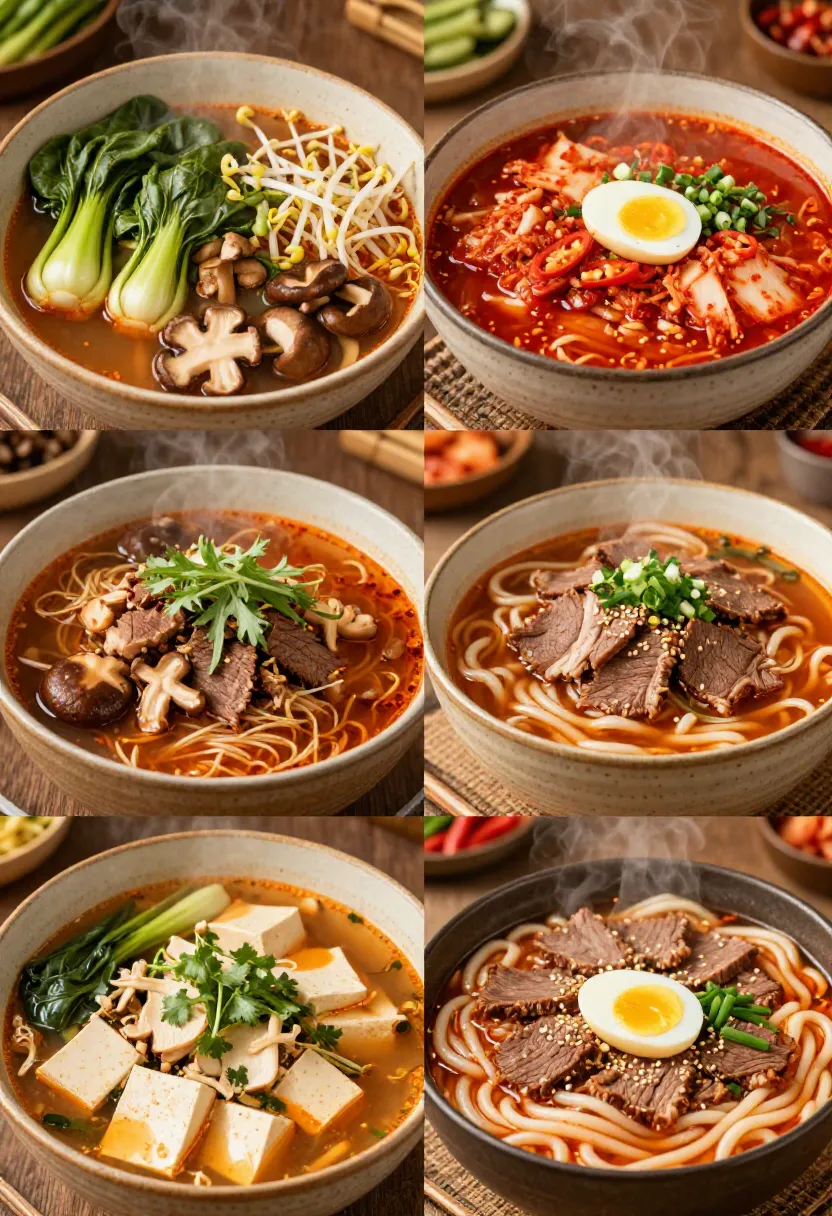
Here are a few easy variations worth trying:
| If you like… | Try adding… | Flavor Result | Best For |
|---|---|---|---|
| More vegetables | Bok choy or spinach | Fresh and hearty | Everyday dinners |
| Extra heat | More gochujang or chili crisp | Bold and spicy | Spice lovers |
| Richer broth | Shiitake mushrooms | Deep earthy umami | Cozy evenings |
| Different protein | Chicken or tofu | Lighter but satisfying | Weeknight meals |
| Chewier noodles | Thick udon noodles | Extra comforting | Cold-weather dinners |
Mushrooms are probably my favorite variation.
As they simmer in the broth, they absorb all those savory flavors while contributing an earthy richness of their own. Shiitake mushrooms are especially wonderful here because they naturally boost the soup’s umami character without overpowering the kimchi.
Bok choy is another ingredient I add regularly.
The leaves become silky within a minute or two, while the stems keep just enough crunch to add another layer of texture. It also makes the finished bowl look incredibly vibrant.
If you’re looking for something a little heartier, thick udon noodles completely change the character of the soup. The broth clings to every bite, making the meal feel even more comforting on chilly evenings.
That’s the beauty of recipes like this.
Once you understand the balance between rich broth, tangy kimchi, tender beef, and chewy noodles, it’s easy to make the soup your own without losing its comforting character.
❤️ The kind of soup you’ll crave long after winter ends
It’s easy to think of noodle soup as something reserved for cold weather.
And yes, there’s nothing quite like wrapping your hands around a steaming bowl on a rainy evening or after spending hours outside in the cold.
But I’ve learned that kimchi beef noodle soup doesn’t really belong to just one season.
I’ve made it on crisp autumn weekends, during the middle of winter, and even on cool spring evenings when I wanted something nourishing without feeling overly heavy. Somehow it always feels appropriate.
Maybe that’s because the soup has so much balance.
The broth is rich, yet brightened by the tanginess of the kimchi. The beef makes it satisfying, while the noodles turn it into a complete meal. Fresh herbs and green onions lighten every spoonful, making the bowl feel lively instead of overly rich.
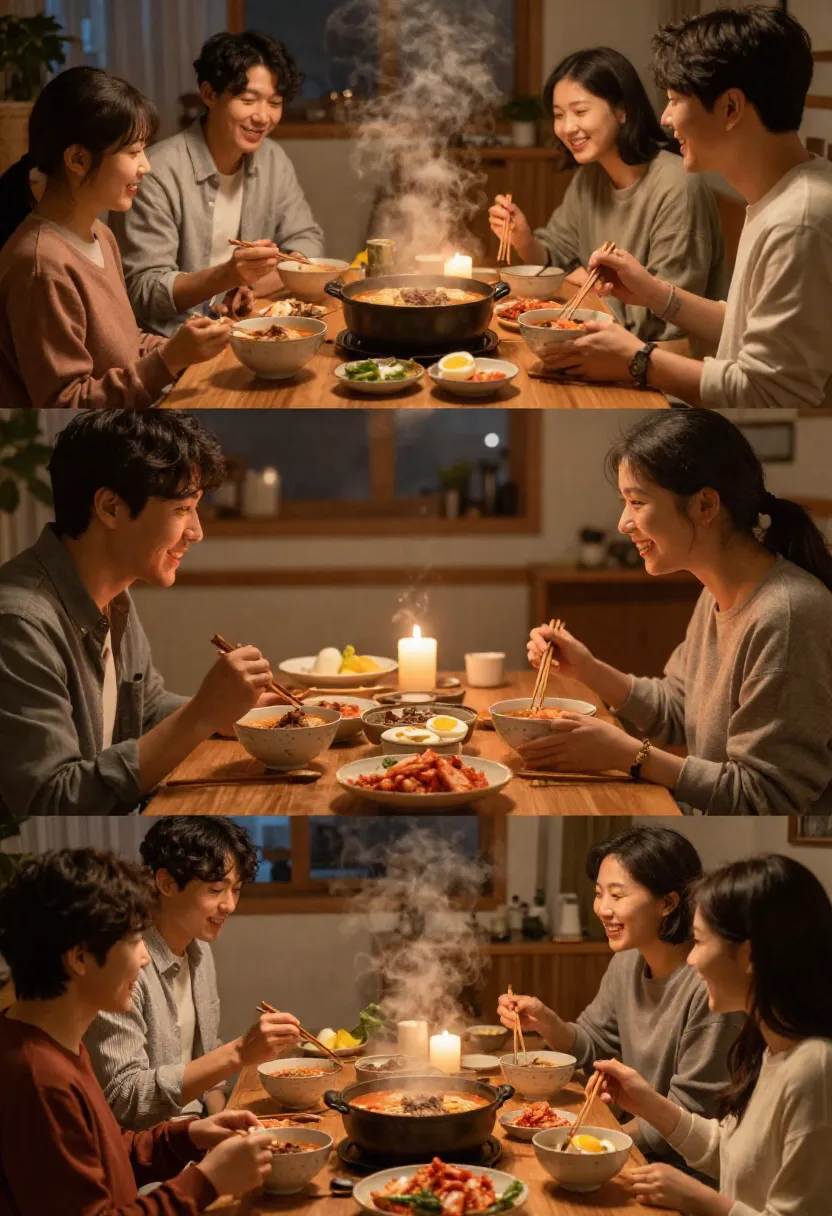
That’s a combination I never seem to get tired of.
Over the years, I’ve noticed that the recipes people ask for again and again are rarely the most complicated ones. They’re the dishes that make an ordinary evening feel a little more special. The meals that fill the kitchen with incredible aromas long before dinner is ready. The recipes that quietly become part of your routine because everyone is happy whenever they appear on the table.
This soup has exactly that kind of staying power.
It doesn’t rely on expensive ingredients or difficult techniques to impress. Instead, it lets simple ingredients do what they do best. A flavorful broth. Tender slices of beef. Springy noodles. Bright, tangy kimchi. Fresh herbs scattered over the top just before serving.
Together, they create something that’s far greater than the sum of its parts.
So the next time you’re craving a meal that’s both comforting and full of bold flavor, pull out your favorite soup pot and give this recipe a try. Let the broth simmer, take your time layering the flavors, and don’t skip those final toppings—they’re worth it.
Then settle into your favorite chair with a steaming bowl, a pair of chopsticks, and a spoon close by.
There’s a very good chance you’ll finish every last drop of the broth before realizing just how quickly the bowl became empty. 🍜🥩🌶️✨