Contents
There’s a certain moment in the kitchen that doesn’t happen every time you cook — but when it does, you notice it. The air feels just a little warmer, the sound of something gently simmering fills the background, and there’s this smell that’s hard to describe properly. Slightly sweet, a little sharp, fresh but also cozy at the same time.
It’s not strong or overwhelming. It doesn’t demand attention. But it kind of pulls you in anyway.
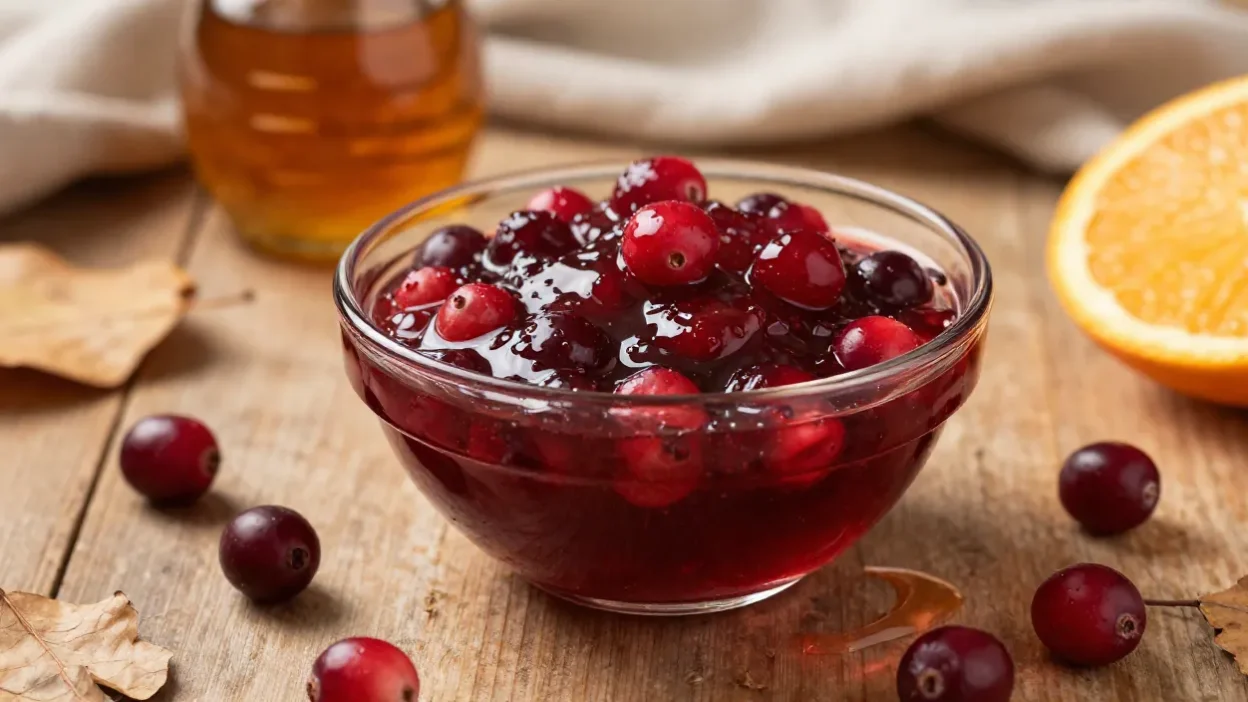
That’s exactly the kind of moment homemade cranberry sauce creates 🍁
And maybe that’s part of the reason it feels different from the version most people are used to. Because for a lot of us, cranberry sauce wasn’t really something we thought about growing up. It was just… there. On the table, next to everything else, doing its job.
You’d take a spoonful out of habit more than anything.
If we’re being honest, it often wasn’t great. Sometimes too sweet in a way that felt flat, sometimes too sharp without enough balance. And very often — that canned version, perfectly shaped, slightly glossy, and a bit too uniform to feel homemade.
It worked, sure. But it didn’t really stand out.
Making it from scratch changes that in a way that’s actually noticeable 🍂
Not in some dramatic, overhyped way — but in small, real ways. You hear the cranberries start popping (which is oddly satisfying every single time), you smell the citrus as it warms up, and suddenly the whole process feels more involved. More personal.
You’re not just serving something. You’re making it.
And then there’s the maple syrup — which seems like a small change at first, but really isn’t.
Switching from refined sugar to maple syrup doesn’t just adjust the sweetness. It changes the entire feel of the sauce. The sweetness becomes softer, less straightforward, more rounded. There’s a depth to it, a kind of gentle warmth that sits underneath everything else.
It’s subtle, but it matters.
Instead of a basic sweet-and-sour contrast, you start to notice layers:
- a softer, more natural sweetness that doesn’t overwhelm
- a slight richness that gives the sauce more body
- and that cranberry tartness, still present but no longer too aggressive
The result feels more balanced, but also more interesting. Like there’s a bit more going on than you expected.
At some point, without really planning it, cranberry sauce stops being just another side on the table. It becomes something people actually notice. The kind of thing someone tastes and then goes back for again, just to be sure.
🫐 The Balance of Flavors: Why This Combination Actually Works
Cranberries are not subtle. That’s probably the easiest way to put it.
On their own, they’re very tart — sometimes even a bit too intense to enjoy without anything else. And that’s exactly why they need the right kind of balance around them.
This is where maple syrup really earns its place.
It doesn’t try to overpower the cranberries or turn them into something overly sweet. Instead, it softens the sharp edges. It makes the tartness feel smoother, less harsh, but still very much present. You still get that signature cranberry bite — it’s just easier to enjoy.
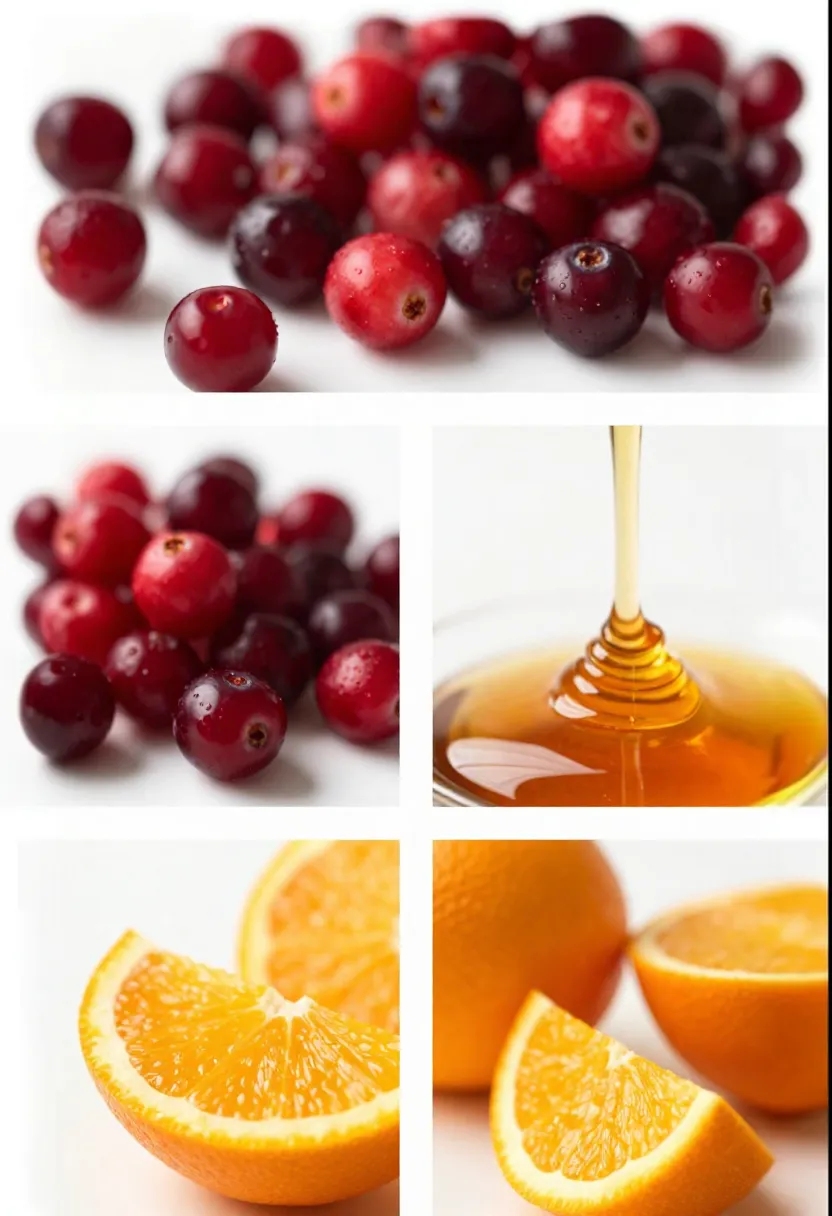
Then citrus steps in, and this is where everything opens up a bit.
Orange juice and zest don’t just add flavor — they change how the whole sauce feels. Without citrus, the taste can lean slightly heavy or one-dimensional, even if the sweetness is right. With it, everything becomes lighter, brighter, more balanced.
There’s also something about the aroma that shifts. The mix of warm maple and fresh orange creates a smell that feels both cozy and fresh at the same time — which is not that easy to pull off.
What makes this combination work so well is that nothing feels out of place. Each ingredient has a role, and they don’t compete with each other.
- cranberries bring that bold, tart foundation that defines the sauce
- maple syrup adds depth and a softer, more rounded sweetness
- orange introduces freshness and lifts the overall flavor
Together, they create something that feels complete without being complicated. You don’t need extra ingredients or tricks — the balance is already there.
🍳 Why This Recipe Fits Real Life (Not Just Holidays)
There’s this idea that cranberry sauce belongs strictly to holidays — something you make once or twice a year and then forget about.
But honestly, that doesn’t really hold up once you’ve made this version a couple of times.
Because it’s just… easy.
Not in a “too good to be true” way, but in a very practical, everyday sense. You don’t need a lot of time, you don’t need special equipment, and you definitely don’t need to plan ahead too much. It’s the kind of thing you can decide to make on a random evening and still have it ready before dinner.
Another thing that makes a big difference — it doesn’t demand precision.
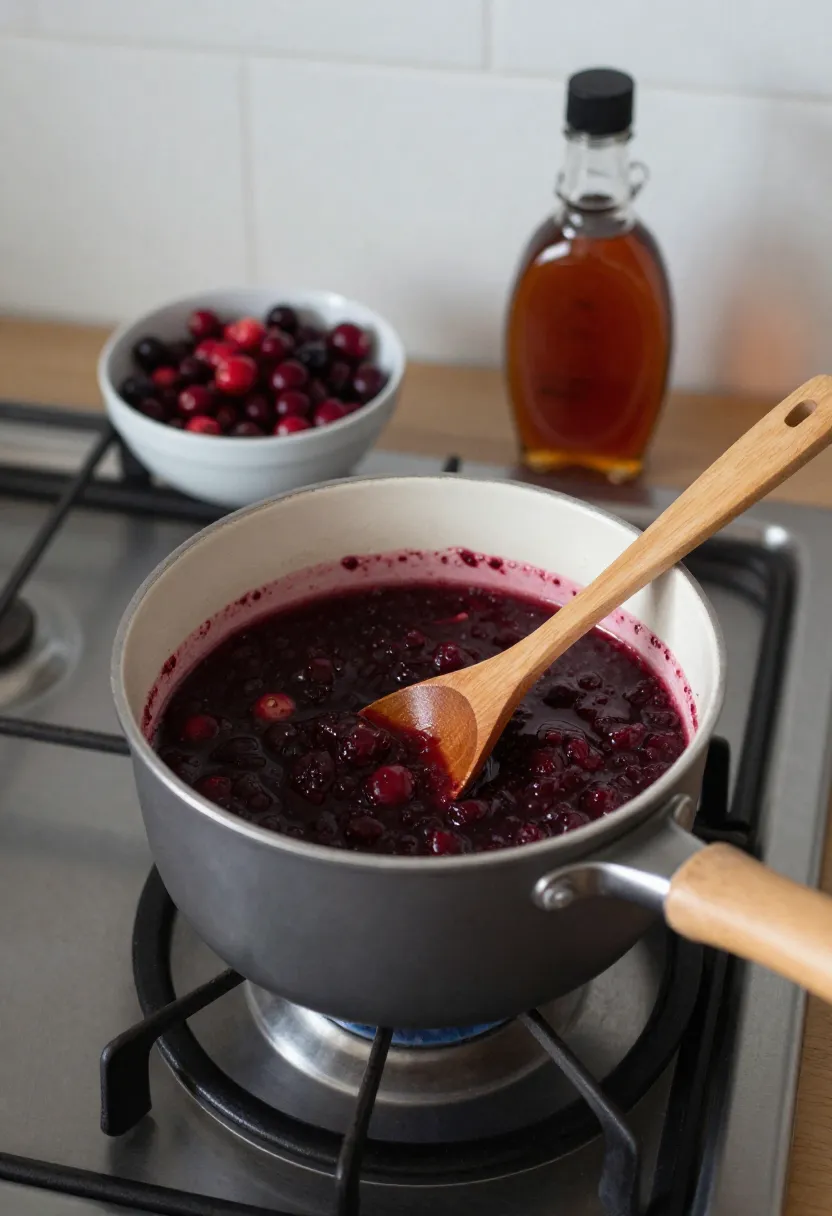
You don’t have to measure everything perfectly or stress about getting it exactly right. If you like it a bit sweeter, you add more maple syrup. If you want more brightness, a splash of orange juice fixes that instantly. It’s flexible in a way that feels natural, not risky.
Even the texture is forgiving. Some people prefer it smoother, others like a bit of chunkiness — and both work. You can adjust that just by cooking it a little longer or shorter.
There are a few simple reasons why people keep coming back to this recipe:
- it comes together quickly, usually in under 15 minutes from start to finish
- the ingredients are basic and easy to find in almost any store
- you can adjust the flavor as you go, without worrying about ruining it
And over time, it becomes one of those recipes you don’t even think twice about. You just make it.
Not because it’s fancy or impressive, but because it fits into real life — and consistently turns out good 👍
🍁 Maple Cranberry Sauce Recipe
This version of cranberry sauce is one of those recipes that feels simple at first — until you actually try it and realize how much better it is than anything store-bought.
It leans into natural sweetness without going overboard, which makes a big difference. The maple syrup doesn’t just sweeten the sauce — it gives it a softer, deeper flavor that feels a bit more “rounded” compared to regular sugar. Then the orange comes in and brightens everything up, so the sauce doesn’t feel heavy or too rich.
What you end up with is a really nice balance: slightly tart, gently sweet, with a fresh citrus note that keeps it from feeling too dense.
Texture-wise, it’s exactly what you’d hope for in a homemade cranberry sauce. Not too smooth, not too chunky — somewhere in between. The berries break down just enough to create a glossy, thick sauce, but you still get a bit of structure, which makes it feel more natural and less processed.
It’s the kind of thing that works just as well on a holiday table as it does on a random weekday dinner. And once you’ve made it once, it’s very likely you’ll come back to it again.
Ingredients
- 340 g (12 oz) fresh or frozen cranberries
- 80–120 ml (⅓ to ½ cup) pure maple syrup
- 80 ml (⅓ cup) water
- 60 ml (¼ cup) fresh orange juice
- zest of one orange
- small pinch of salt
Instructions
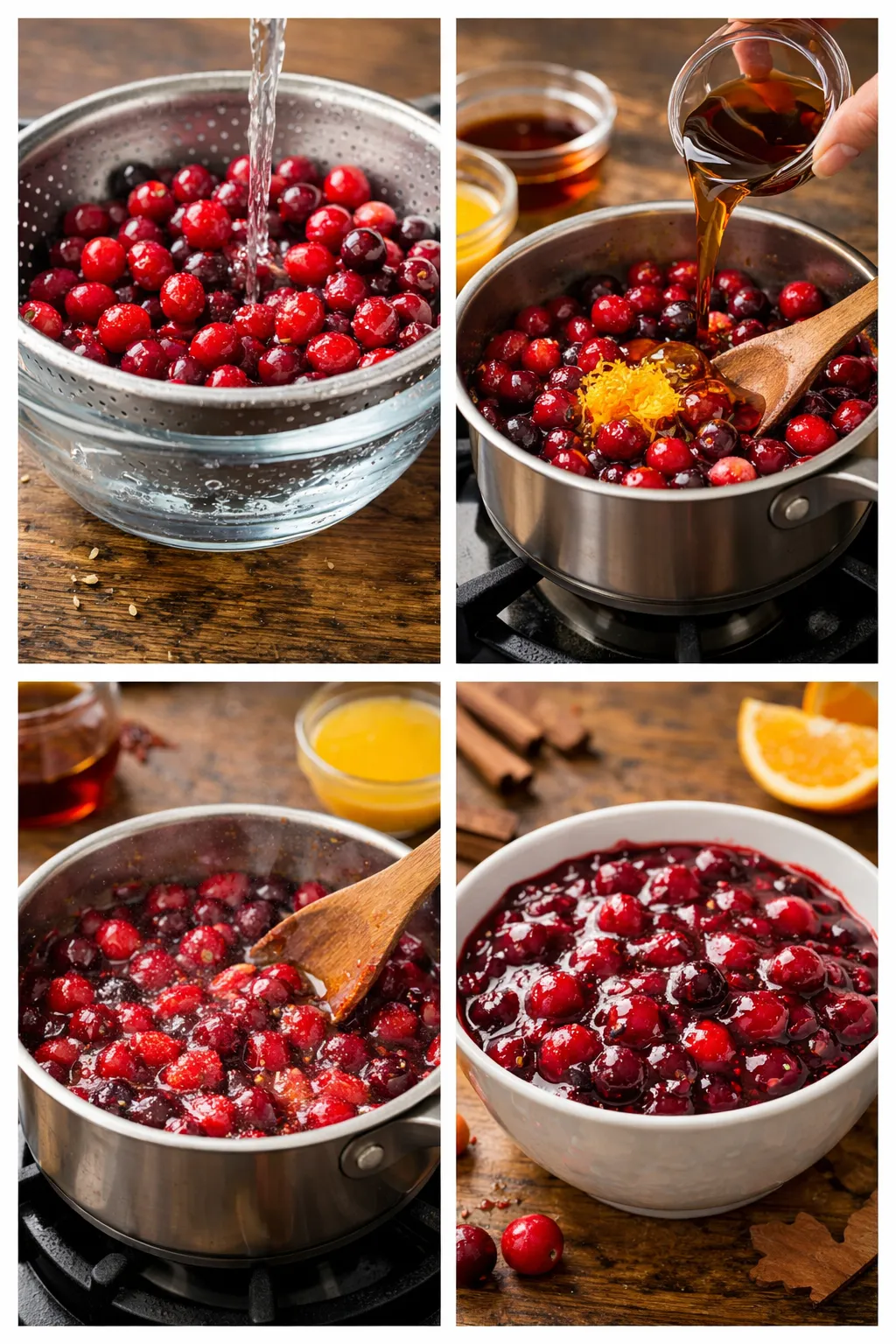
- Rinse the cranberries well and remove any that look soft or damaged.
- Add the cranberries to a medium saucepan along with maple syrup, water, orange juice, and zest.
- Place the pan over medium heat and bring everything to a gentle simmer.
- After a few minutes, the cranberries will begin to pop — stir occasionally so nothing sticks to the bottom.
- Let the sauce cook for about 8–12 minutes, until most of the berries have burst and the mixture starts to thicken.
- Taste the sauce and adjust the sweetness if needed by adding a bit more maple syrup.
- Remove from heat while it still looks slightly loose — it will thicken naturally as it cools.
- Let it cool before serving, or refrigerate if you prefer a thicker texture.
✨ A Few Helpful Tips (That Actually Make a Difference)
- don’t overcook it — it thickens more than you expect once it cools
- if it tastes too tart at the end, add maple syrup gradually, not all at once
- fresh orange zest makes a noticeable difference, so it’s worth including
- if the sauce gets too thick, just add a splash of water and stir gently
🍽️ Unexpected Ways to Use It
Once this sauce makes its way into your fridge, it rarely stays “just a side dish” for long. At first, you might use it the traditional way — next to roasted meat, maybe as part of a bigger meal. But then, almost without noticing, you start reaching for it in completely different situations.
It’s one of those things that quietly expands its role in your kitchen.
At some point, you stop thinking of it as something tied to a specific occasion. It just becomes… useful. You open the fridge, see it there, and think, “this could actually work here.”
And most of the time, it does.
What makes that possible is the balance. It’s not too sweet, not too tart, not too heavy. It sits somewhere in the middle, which gives you a lot of freedom. You can pair it with something rich to cut through it, or with something mild to add a bit more character.
It doesn’t overpower. It supports.
Over time, people usually end up using it in ways they didn’t plan at all:
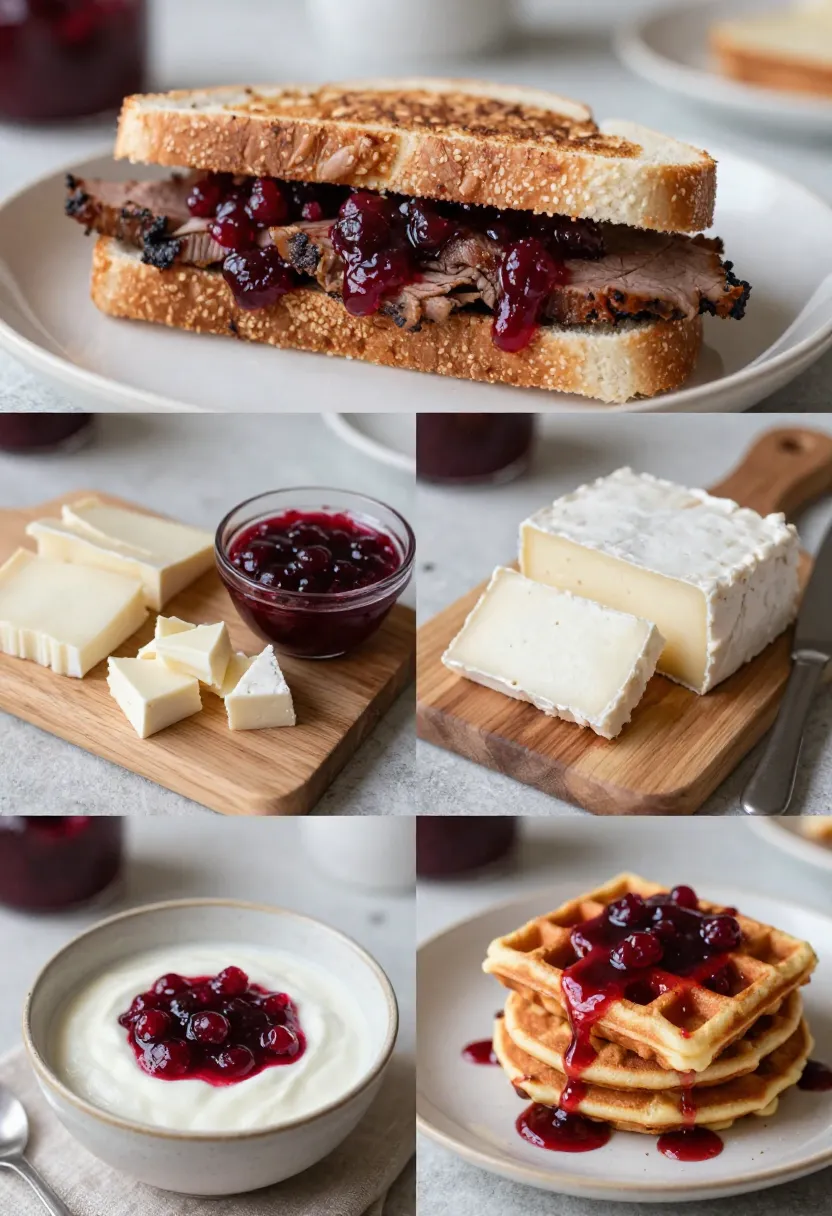
- adding it to sandwiches with roasted meat or even simple leftovers, where it brings a bit of contrast and keeps things from feeling too heavy
- serving it with cheese, especially softer varieties, where the sweetness and acidity balance out the creaminess
- mixing a spoonful into breakfast like yogurt or oatmeal, just to break the usual taste and make it a bit more interesting
- using it as a topping for pancakes, waffles, or even plain desserts when you want something slightly different from syrup
And the more you use it, the more natural it feels. You don’t really follow rules — you just start trusting that it will probably work.
That’s usually the moment when it becomes a regular thing in your kitchen, not just a seasonal extra.
🧊 Storing and Planning Ahead
One of the most practical things about this sauce — and something people don’t always expect — is how well it keeps over time.
You can make it in advance without worrying that it will lose its flavor or texture. In fact, the opposite often happens. After a day in the fridge, it tends to taste a bit more balanced. The sharpness softens slightly, the citrus blends in more smoothly, and everything feels more “settled.”
It’s not a dramatic change, but it’s noticeable.
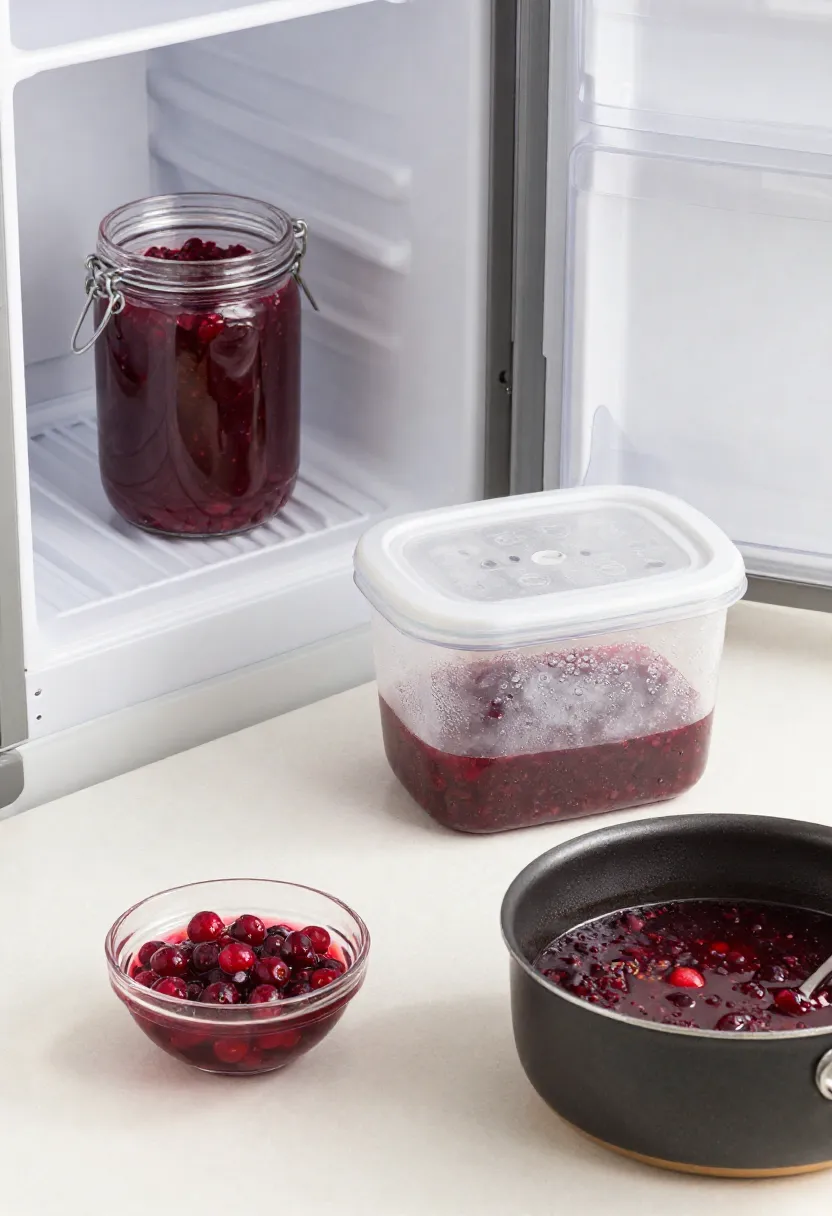
The texture also shifts a little. When freshly cooked, the sauce is usually a bit looser. After chilling, it thickens and becomes more cohesive. Some people actually prefer it this way.
If you’re someone who likes to prepare things ahead of time, this works in your favor. You can make it once and not think about it again until you need it.
Here’s a more detailed look at how to store it and what to expect:
| Storage Method | Duration | Container Type | Texture Changes | Flavor Changes | Practical Notes |
|---|---|---|---|---|---|
| Refrigerator | 4–5 days | Airtight container (glass works best) | Thickens slightly over time | Becomes more balanced and less sharp | Stir before serving to loosen it up |
| Freezer | Up to 3 months | Freezer-safe container (leave space) | May soften slightly after thawing | Flavor stays very similar | Best thawed slowly overnight in fridge |
| Room Temperature | 2–4 hours | Covered serving dish | No major change | No major change | Only safe for short serving periods |
| Reheated | Same as stored | Small saucepan or microwave | Loosens when warmed | Flavor remains stable | Add a splash of water if too thick |
A small but useful detail — if the sauce feels too thick after being in the fridge, you don’t need to fix it in a complicated way. Just add a little water and stir it gently over low heat. It comes back to the right consistency pretty quickly.
Overall, it’s one of those recipes that actually helps you stay organized. You make it ahead, and it’s just there when you need it — no last-minute stress, no extra steps.
💭 Why Homemade Always Feels Better
There’s something about making even a very simple dish yourself that changes how you experience it.
It’s not about showing off or doing something complicated. In fact, this is probably one of the easiest things you can make. But the result still feels different — more personal, somehow.
Maybe it’s because you’re involved in small decisions along the way. You taste it, adjust it, decide if it needs a bit more sweetness or a bit more citrus. You don’t follow it blindly — you interact with it.
And that creates a different kind of connection to the food.
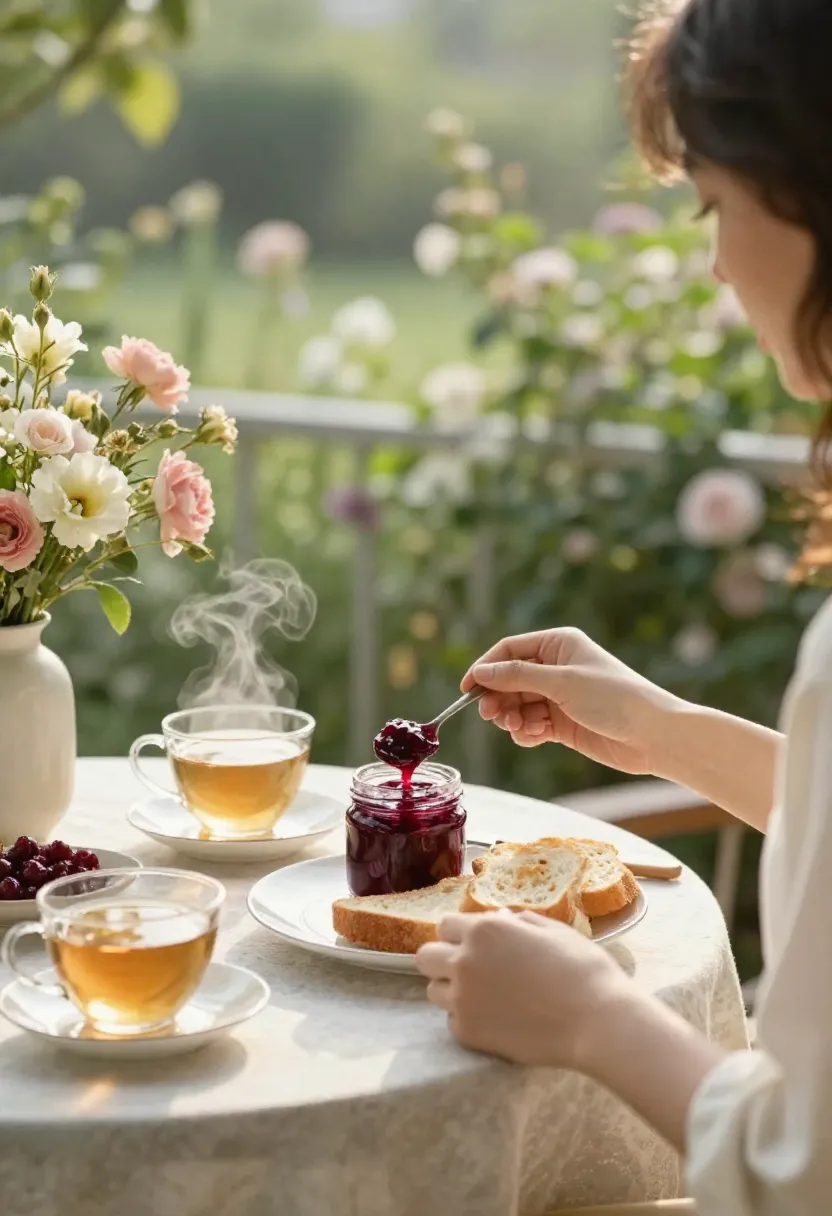
Homemade cranberry sauce isn’t perfectly identical every time. The texture might be slightly different. The balance might shift depending on your taste that day. But instead of being a downside, that’s actually part of the appeal.
It feels less standardized and more real.
There are also those small moments during cooking that stick with you more than you’d expect:
- the sound of cranberries popping, one after another
- the smell that slowly fills the kitchen and lingers a bit afterward
- that quick taste test where you pause and think, “maybe just a little more…”
None of this is complicated. It’s all very simple. But together, it creates a completely different experience compared to just opening a jar.
And once you’ve done it yourself — even once — it shifts your expectations a bit.
You start noticing the difference. And more often than not, you come back to the homemade version.
Not because you have to.
Just because it feels better 👍