
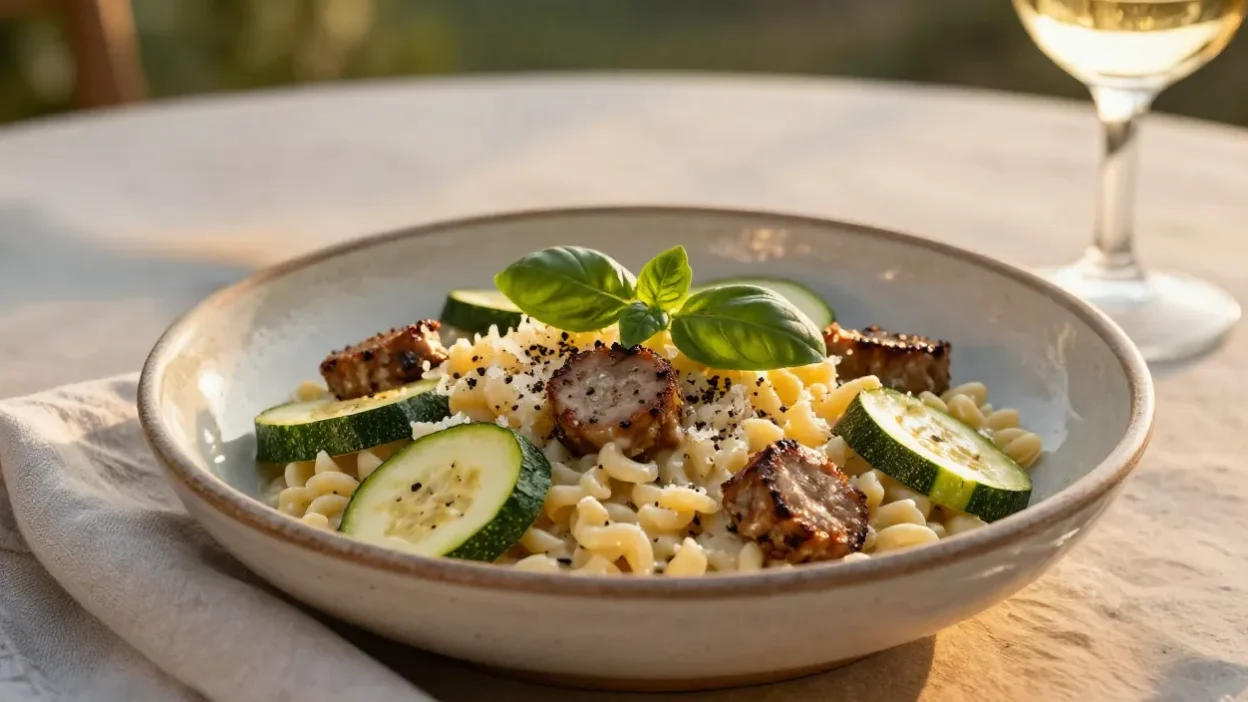
Some dinners exist purely to solve a problem. You’re hungry, tired, maybe standing in front of the fridge hoping ingredients magically organize themselves into something decent. Those meals happen. Everyone has them. But every once in a while, a recipe surprises you by feeling far more comforting than the amount of work required to make it.
This creamy Italian sausage zucchini orzo is exactly that kind of dinner.
It’s rich without becoming too heavy, creamy without relying on a full carton of cream, and built from ingredients most people already recognize immediately. Italian sausage. Garlic. Parmesan. Zucchini. Broth. A box of orzo that’s probably been sitting in the pantry longer than expected. 🍝
The magic happens once everything cooks together in the same pan. The sausage releases its fat and spices into the broth. The orzo absorbs all of it while slowly thickening the liquid into a glossy sauce. The zucchini softens just enough to melt into the texture without disappearing entirely.
And somehow the entire thing starts tasting like something you’d order at a small neighborhood restaurant on a cold evening.
The first time I made it, I wasn’t trying to create anything memorable. I just had zucchini that needed to be used quickly and sausage left over from another recipe. But halfway through cooking, once the garlic hit the pan and the broth started simmering into the orzo, the kitchen smelled ridiculous in the best possible way.
That’s usually when you know dinner is going to work.
What I like most about this recipe is that it feels comforting without demanding a huge amount of effort. No complicated sauce. No endless prep work. No second pan sitting in the sink afterward covered in burnt cheese residue. Just one skillet, a wooden spoon, and ingredients that slowly turn into something much better together than they ever were separately.
And honestly, those are usually the recipes people keep making long after trendy internet dishes disappear.
There’s also something oddly calming about stirring orzo while it cooks. The broth slowly thickens, the sausage scent fills the kitchen, and the Parmesan melts into the sauce little by little. It feels slower than most weeknight dinners even though the entire recipe takes around half an hour.
That balance matters during busy weeks.
Some comfort foods feel too heavy to make regularly. Others feel healthy but disappointing. This one somehow lands in the middle. Rich enough to feel satisfying, light enough that you don’t immediately regret eating a large bowl of it afterward.
🧄 Why orzo and sausage work so well together
Orzo is one of those ingredients that quietly does a lot of work without demanding attention. Technically it’s pasta, but it behaves more like rice in recipes like this. Instead of staying separate from the sauce, it absorbs liquid directly while cooking, which changes the texture completely.
That’s why this dish feels creamy even though there’s very little dairy involved.
The starch released from the orzo thickens the broth naturally. Once the Parmesan melts in, the whole skillet turns silky and glossy without needing flour or heavy cream. It lands somewhere between pasta and risotto, which honestly might be why it feels so comforting.
Italian sausage helps because it already carries a built-in flavor base. Garlic, fennel, herbs, salt, chili flakes, rendered fat — all of that starts developing the moment the sausage browns in the skillet.
You don’t need complicated layering after that.
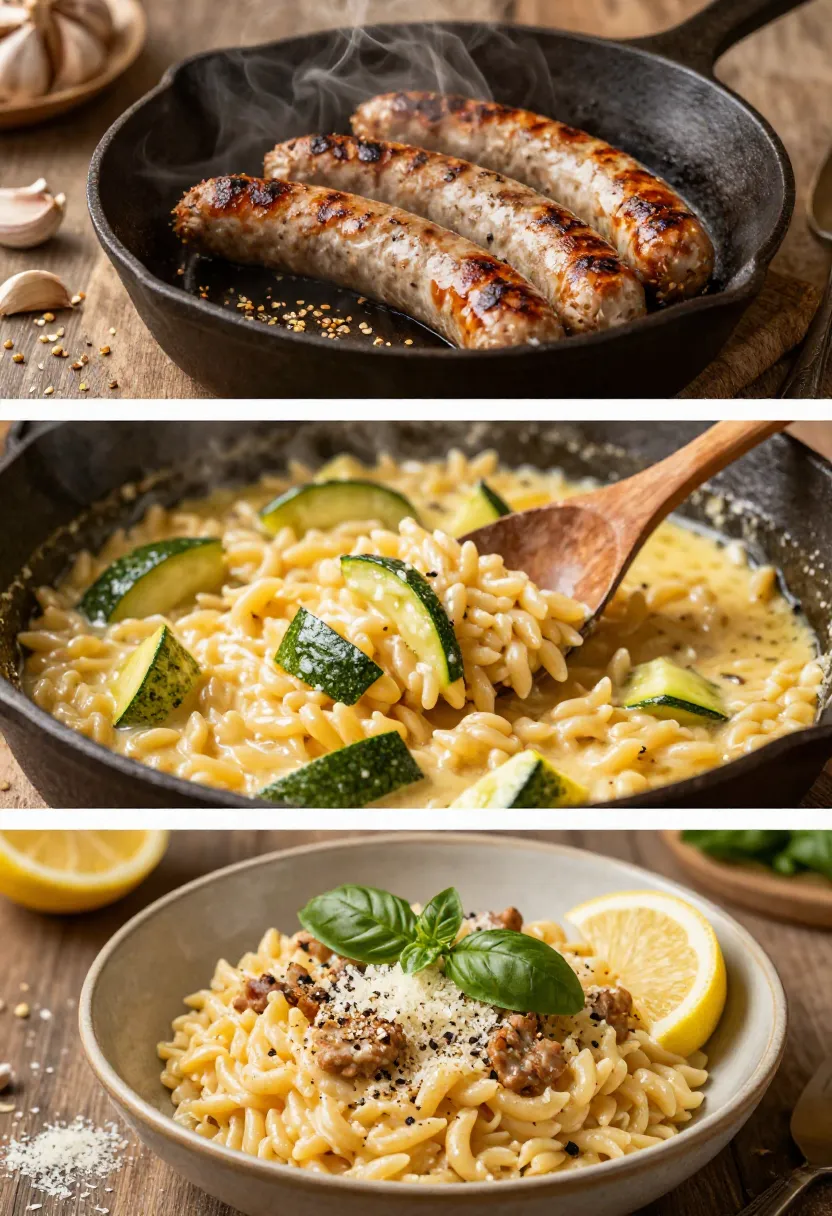
The browned bits left behind at the bottom of the pan matter too. Once broth gets added, those caramelized pieces dissolve directly into the sauce and deepen everything. A lot of the flavor comes from that stage alone.
I’ve tried versions with chicken sausage before, and they were good, but traditional Italian sausage gives the dish more richness and warmth. Especially spicy sausage. Not enough to overwhelm the meal, just enough heat to balance the creamy texture.
There’s also something about fennel mixed with Parmesan that makes the entire dish smell like proper comfort food the second it hits the table. Warm, savory, slightly spicy, deeply garlicky. The kind of smell that pulls people into the kitchen before dinner is even finished.
And orzo itself changes texture in a really satisfying way while cooking. At first the broth feels thin and almost soupy. Then suddenly the pasta starts releasing starch and everything tightens into a creamy skillet sauce. It happens quickly too. One minute it looks loose, the next it feels silky and rich.
That transition is probably my favorite part of making the recipe.
A few details that make the texture better
- Let the sausage brown properly before stirring too much
- Don’t overcook the orzo or it turns heavy fast
- Add Parmesan slowly so it melts smoothly
- Finish with lemon juice at the end for balance
- Let the skillet rest for 2 minutes before serving
That short resting time changes everything, actually. The sauce thickens naturally while the pasta finishes absorbing the broth.
Another thing worth mentioning: freshly grated Parmesan behaves completely differently from packaged shredded cheese. It melts directly into the broth instead of clumping together. Small difference, big payoff.
And if the skillet ever looks too thick while reheating leftovers, just add a splash of broth or water. The sauce loosens right back into a creamy texture without much effort.
🥒 Zucchini keeps the dish lighter than you expect
Creamy pasta dishes can become exhausting halfway through the bowl if they’re too rich. That’s where zucchini quietly saves this recipe.
It softens into the sauce while adding moisture and freshness at the same time. Some pieces almost melt into the orzo, while others keep a little bite around the edges if they brown properly in the skillet.
That texture contrast matters.
Without zucchini, the dish would probably feel heavier and flatter. The vegetable breaks up the richness from the sausage and Parmesan without making the meal feel overly healthy or “diet-like.” It still tastes cozy. Just less overwhelming.
Smaller zucchini work best because they contain less water and slightly more flavor. Large zucchini can turn mushy too quickly, especially in one-pan recipes where everything cooks together.
And honestly, don’t peel them.
The green skin adds color, texture, and keeps the skillet from becoming one giant beige situation.
One thing I noticed after making this recipe repeatedly is that zucchini behaves differently depending on how crowded the skillet gets. If the pan is overloaded, the zucchini steams instead of browning. But when it has enough room, the edges caramelize slightly and add a sweeter flavor that works beautifully with spicy sausage.
That tiny bit of browning changes more than people realize.
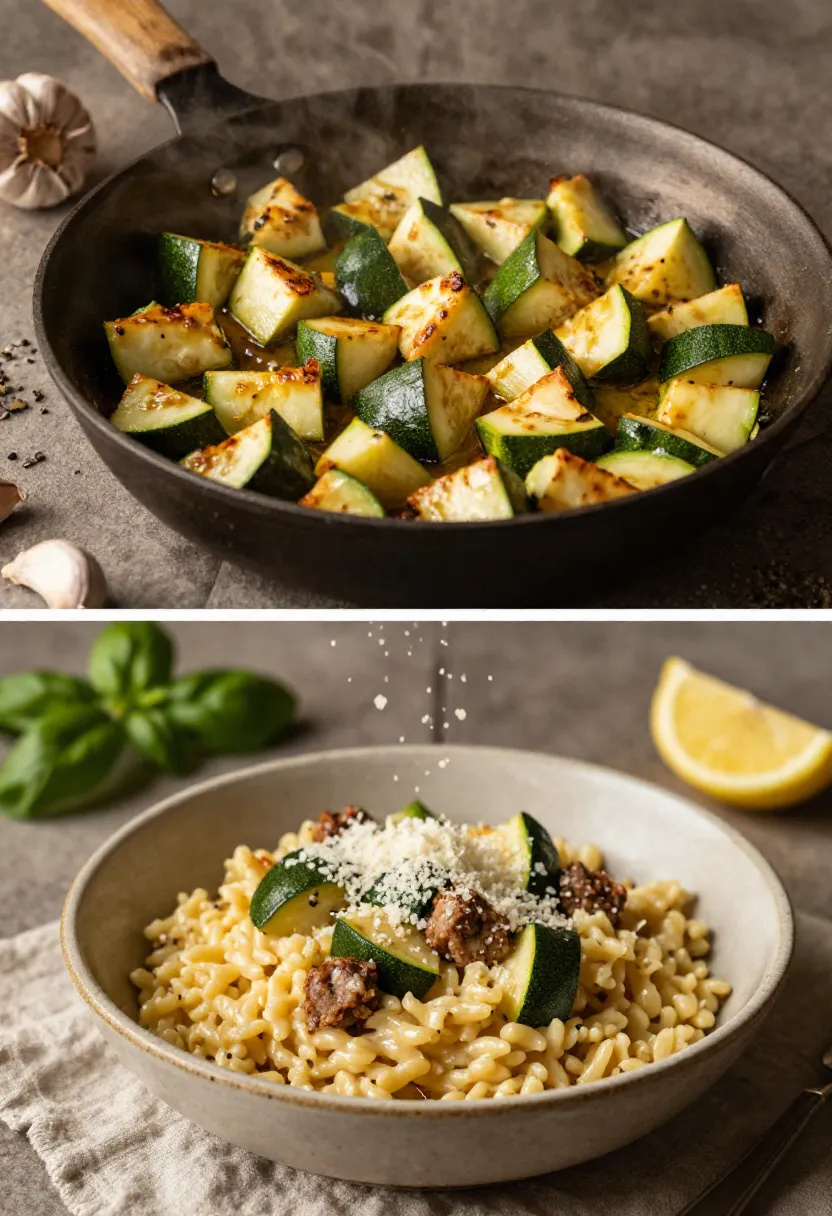
Zucchini also helps the skillet feel more balanced the next day. Some creamy pasta recipes turn heavy and dense once refrigerated, but this one stays softer because the vegetables continue releasing a little moisture into the sauce.
I’ve eaten leftovers cold straight from the fridge before. Not glamorous. Still good.
The mild flavor of zucchini also gives the stronger ingredients more room to stand out. Garlic tastes sharper. Parmesan tastes nuttier. The sausage spice feels warmer instead of overwhelming. It’s less about zucchini becoming the main flavor and more about it helping everything else work better together.
That’s probably why recipes built around zucchini tend to age well. They don’t scream for attention. They quietly make dishes better.
🧀 Ingredient breakdown and flavor balance
This recipe works because every ingredient handles a specific job. Nothing feels random once the skillet comes together.
| Ingredient | Role in the recipe | Texture contribution | Flavor impact | Notes |
|---|---|---|---|---|
| Italian sausage | Main protein and fat source | Crispy edges and richness | Garlic, fennel, spice | Spicy sausage gives better balance |
| Orzo | Base of the dish | Creamy and soft | Mild pasta flavor | Absorbs broth while thickening sauce |
| Zucchini | Moisture and texture | Tender with slight bite | Mild sweetness | Smaller zucchini work best |
| Onion | Flavor foundation | Softens into sauce | Sweet savory depth | Yellow onion cooks down nicely |
| Garlic | Aromatic backbone | Melts into sauce | Sharp savory flavor | Add near the end to avoid burning |
| Chicken broth | Cooking liquid | Creates sauce consistency | Adds depth | Warm broth cooks faster |
| Parmesan cheese | Thickens and seasons | Silky finish | Salty nuttiness | Freshly grated melts best |
| Spinach or basil | Freshness | Light softness | Bright herbal contrast | Added at the end |
| Lemon juice | Balances richness | Keeps sauce lighter | Fresh acidity | Essential before serving |
| Red pepper flakes | Gentle heat | No texture effect | Warmer finish | Optional but helpful |
Freshly grated Parmesan really does make a difference here. Pre-shredded cheese doesn’t melt as smoothly and sometimes leaves the sauce grainy instead of creamy.
Worth the extra minute with a grater.
The lemon juice matters more than people expect too. Without acidity, creamy skillet pasta can start tasting flat halfway through the bowl. A squeeze of lemon right before serving sharpens everything back up immediately.
And the broth matters more than water ever would. Since the orzo absorbs liquid directly while cooking, the flavor of the broth ends up inside the pasta itself instead of just coating the outside.
That’s why the entire skillet tastes deeper than the ingredient list would suggest.
🍳 Recipe: creamy Italian sausage zucchini orzo
This one-pan orzo recipe comes together in about 30 minutes, but it tastes like something that spent far longer on the stove. The sausage creates most of the flavor base right from the beginning, while the orzo slowly absorbs the broth and turns creamy as it cooks. By the time the Parmesan melts into the skillet, the texture lands somewhere between a cozy pasta dinner and a simple risotto.
What makes this dish especially good for weeknights is the balance. It feels rich and comforting without becoming overly heavy. The zucchini softens into the sauce and adds moisture that keeps the pasta creamy even after resting for a few minutes. A squeeze of lemon at the end cuts through the richness and keeps everything tasting fresh instead of overly dense.
Orzo is actually a type of pasta, even though a lot of people assume it’s rice the first time they see it. The name comes from the Italian word for “barley” because of the shape. That tiny pasta shape is part of the reason this recipe works so well. Since the pieces are small, they cook quickly and absorb flavor directly from the broth, sausage, garlic, and Parmesan while simmering in the skillet.
Another reason this recipe stays in regular rotation is because it reheats surprisingly well. Some creamy pasta dishes turn stiff or oily the next day, but the starch from the orzo helps the sauce stay smooth when reheated with a small splash of broth or water. Honestly, leftovers might taste even better after the flavors settle overnight.
The sausage also does more work here than people expect. Italian sausage already contains fennel, garlic, herbs, salt, and spices, which means the recipe builds flavor fast without needing a long ingredient list. Once it browns properly in the skillet, the rendered fat mixes directly into the broth and coats the orzo while it cooks.
This is also one of those meals that feels flexible without becoming complicated. Spinach, kale, basil, mushrooms, or cherry tomatoes all work naturally in the skillet depending on the season or whatever needs to be used from the refrigerator. The base recipe stays reliable even with small changes.
And maybe that’s why dishes like this stick around for years. They don’t require perfect technique or expensive ingredients. They just consistently make dinner feel easier, warmer, and a little more satisfying at the end of a long day.
Ingredients
- 1 pound Italian sausage, casings removed
- 2 medium zucchini, diced
- 1 small yellow onion, finely chopped
- 4 garlic cloves, minced
- 1 1/2 cups dry orzo
- 3 cups chicken broth
- 3/4 cup freshly grated Parmesan cheese
- 2 large handfuls spinach or chopped basil
- Juice from half a lemon
- 1/2 teaspoon black pepper
- 1/2 teaspoon red pepper flakes
- Olive oil if needed
- Extra Parmesan for serving
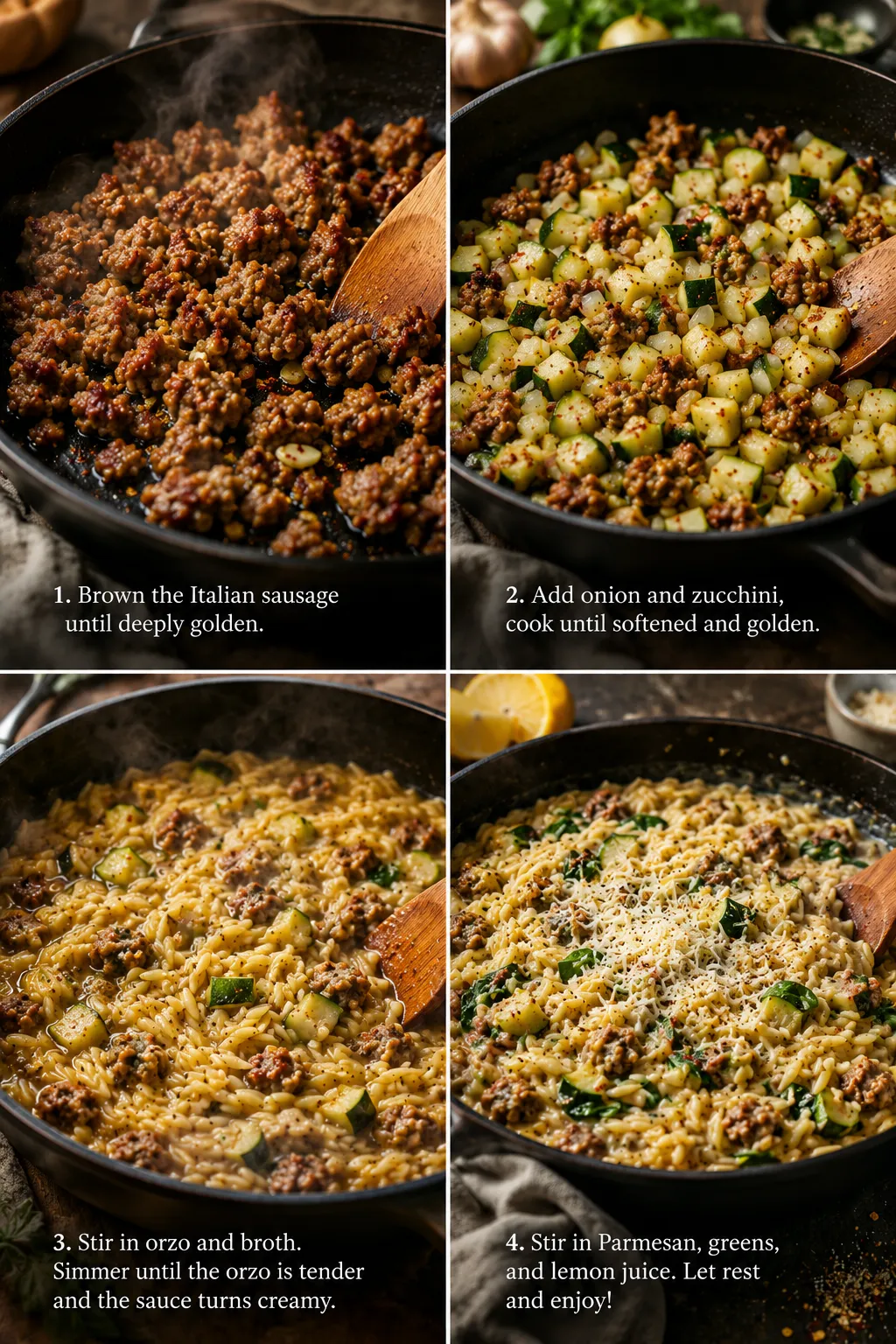
Instructions
- Heat a large skillet or shallow Dutch oven over medium heat. Add the sausage and break it apart with a spoon while cooking. Let it brown properly instead of stirring nonstop.
- Once the sausage cooks through, transfer some of it to a plate if the skillet feels crowded or overly greasy. Leave a little fat behind in the pan.
- Add the diced onion and zucchini. Cook for about 6–8 minutes until the onions soften and the zucchini develops golden edges.
- Stir in the garlic, black pepper, and red pepper flakes. Cook briefly until fragrant.
- Add the dry orzo directly into the skillet and stir so it gets coated in the sausage fat and vegetables.
- Pour in the chicken broth and scrape the bottom of the skillet to loosen the browned bits.
- Bring everything to a gentle simmer. Cook uncovered for about 10 minutes, stirring occasionally so the orzo doesn’t stick.
- Once the orzo becomes tender and creamy, return the sausage if you removed some earlier.
- Stir in the Parmesan cheese slowly until melted and glossy.
- Add spinach or basil and let it wilt into the hot orzo.
- Finish with lemon juice and taste before adding extra salt.
- Let the skillet rest for two minutes before serving so the sauce thickens naturally.
👨🍳 Cooking tips
- Keep the heat around medium so the broth reduces gradually instead of evaporating too fast
- Add extra broth in small splashes if the orzo absorbs liquid too quickly
- Fresh Parmesan melts smoother than packaged shredded cheese
- Lemon juice added at the end keeps the dish brighter
- Don’t overcrowd the skillet or the zucchini will steam instead of brown
- Leftovers reheat best with a splash of broth or water
🍋 Why the leftovers stay surprisingly good
A lot of creamy pasta dishes lose their appeal the next day. The sauce thickens too much, the pasta absorbs every drop of moisture, and reheating turns everything either dry or oddly oily. Some meals are clearly meant to be eaten immediately and forgotten afterward.
This recipe behaves differently.
Because the sauce is built mostly from broth, Parmesan, and starch released by the orzo itself, the texture stays surprisingly stable after refrigeration. The pasta continues absorbing flavor overnight instead of separating from the sauce, which actually makes the skillet taste deeper the next day.
The garlic softens slightly. The fennel and spices from the sausage spread more evenly through the orzo. Even the lemon changes a little. Right after cooking, the citrus feels bright and sharp. The next day it becomes softer and more blended into the background.
Honestly, leftovers sometimes taste even more balanced than the fresh version.
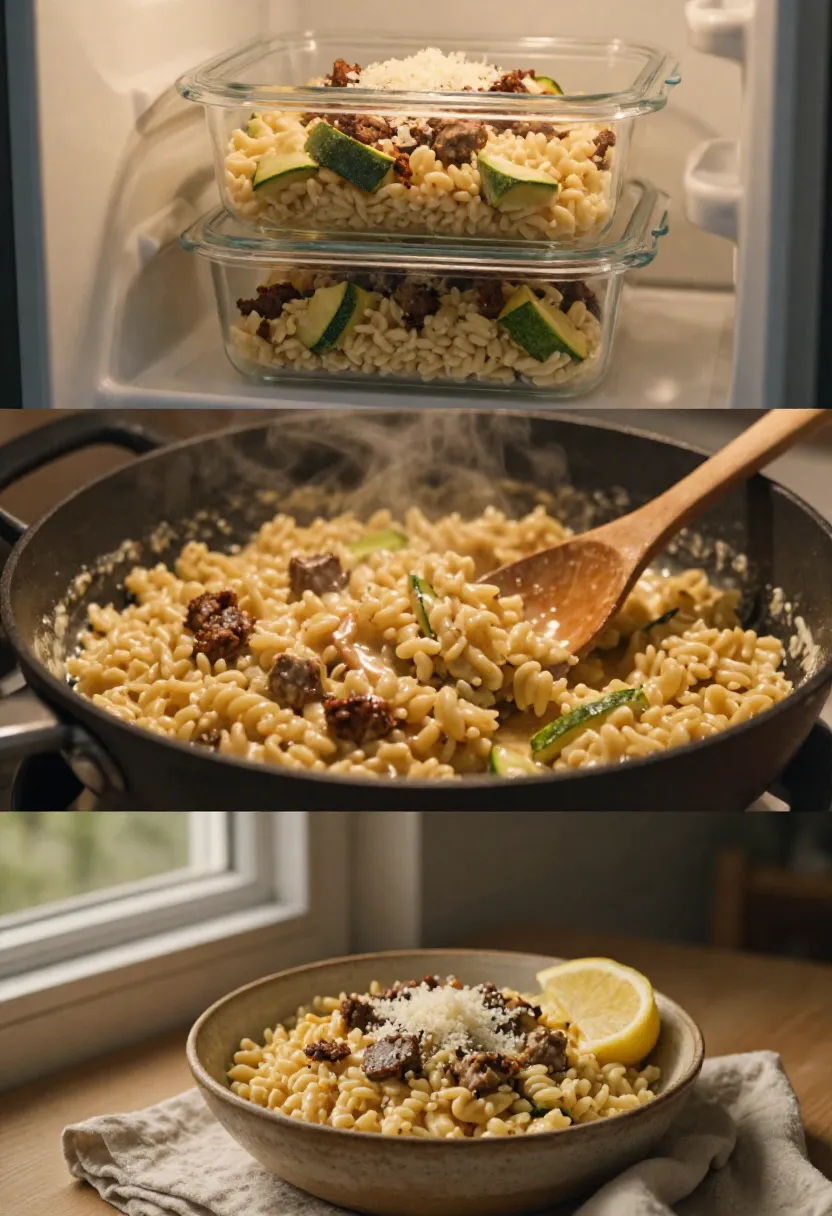
The key is reheating it correctly. High heat tends to tighten the sauce too quickly, especially if the skillet goes straight from refrigerator to stove. A small splash of broth or water fixes most of that immediately. As the liquid warms, the Parmesan loosens again and the orzo becomes creamy instead of stiff.
Microwaving works too, although stovetop reheating keeps the texture smoother overall.
One thing I really like about this recipe is that it doesn’t feel like “sad leftovers.” Some pasta dishes lose all contrast overnight and become heavy blocks of starch by the next afternoon. This one stays lighter because the zucchini continues releasing a little moisture back into the sauce.
That makes it especially useful for meal prep.
You can make a large skillet on Sunday evening and still enjoy it a couple days later without feeling like you’re forcing yourself through repetitive lunches. The flavors stay interesting enough that the meal doesn’t become tiring immediately.
A few things that help leftovers taste better
- Reheat slowly over medium-low heat
- Add broth or water before warming, not after
- Finish leftovers with fresh Parmesan if possible
- A squeeze of fresh lemon helps revive the flavor
- Store in shallow containers so it cools evenly
Another thing worth mentioning: the orzo thickens more than expected while sitting overnight. That’s normal. It doesn’t mean the recipe failed. Tiny pasta shapes continue absorbing liquid long after cooking stops, which is why the extra broth during reheating matters so much.
And honestly, there’s something comforting about opening the fridge after a long day and realizing dinner is already handled.
🍅 Easy ways to adapt the recipe during different seasons
One reason this recipe stays useful year-round is because the base works with small seasonal adjustments without losing its identity. The creamy orzo, sausage, and Parmesan stay consistent, but a few ingredient swaps can completely shift the mood of the skillet depending on the weather or whatever vegetables happen to look good that week.
During colder months, I usually lean toward deeper savory additions. Mushrooms work especially well because they absorb the sausage flavor while adding a meatier texture to the skillet. Kale also fits naturally in winter versions because it holds its texture better than spinach and makes the dish feel slightly heartier.
In spring and summer, though, the recipe changes character completely. Cherry tomatoes soften into the sauce and add bursts of acidity that lighten the richness. Fresh basil gives the skillet a brighter, more herbal flavor that feels less heavy on warmer evenings.
That flexibility matters more than people think.
Recipes that survive long term usually adapt well to real kitchens and changing seasons. Otherwise they end up feeling repetitive after two or three rounds.
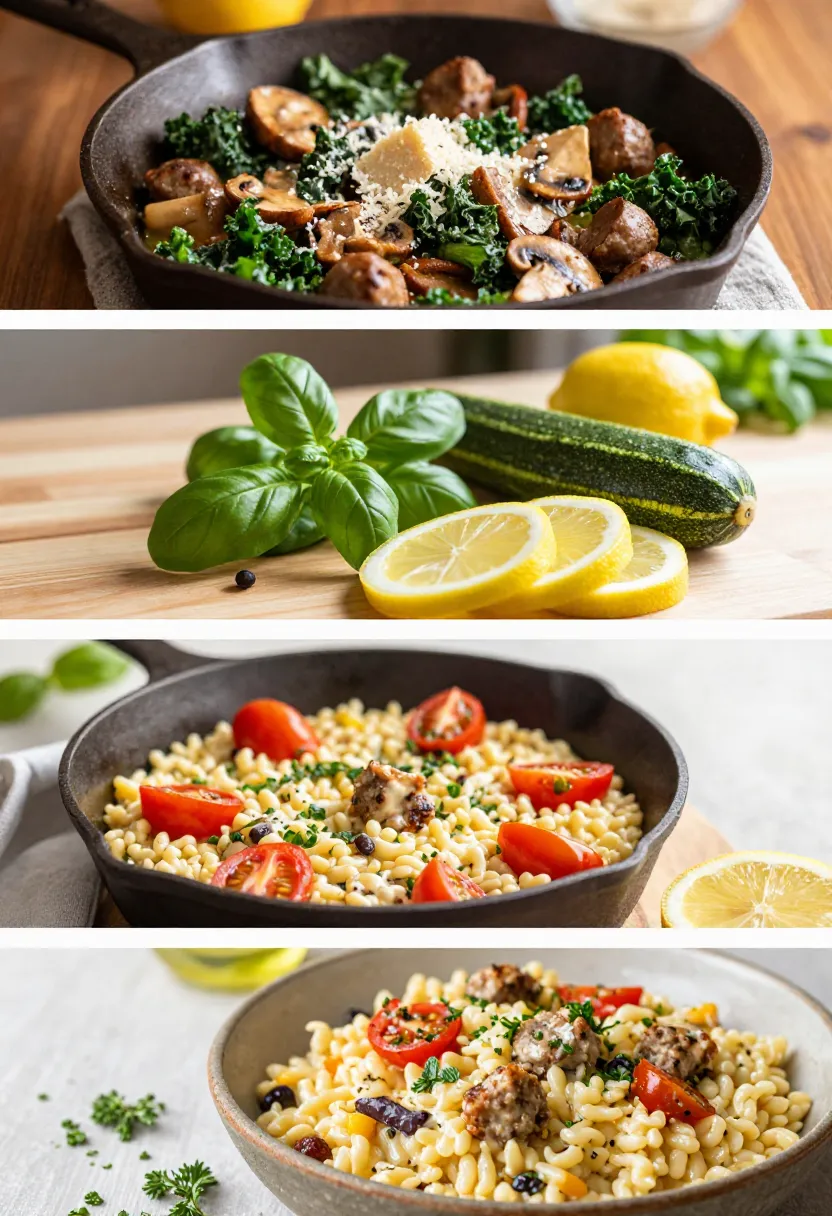
A few additions that work naturally in this skillet:
- Mushrooms for deeper savory flavor
- Kale instead of spinach for extra texture
- Cherry tomatoes for brightness and acidity
- White beans for more protein and body
- Fresh basil for a lighter summer version
- Crushed fennel seeds for stronger sausage flavor
I’ve also experimented with different cheeses over time. Pecorino Romano creates a sharper and saltier sauce, while mascarpone makes the skillet noticeably richer and softer. Parmesan still works best overall because it melts smoothly without overpowering the sausage or zucchini.
Heavy cream, surprisingly, made the recipe worse when I tested it. The sauce became too heavy and lost the contrast that makes the dish interesting. The lemon disappeared almost entirely, and the zucchini stopped feeling fresh.
The starch from the orzo plus the Parmesan already creates enough creaminess on its own.
That balance is probably the biggest reason the recipe stays appealing after repeated meals. It feels comforting without crossing into exhausting territory.
The vegetables can shift depending on the season too. Spinach melts quietly into the sauce. Kale stays firmer and slightly earthy. Even zucchini changes depending on the time of year. Summer zucchini tends to taste sweeter and softer, while colder-season zucchini usually stays a bit firmer during cooking.
Small differences, but noticeable ones.
And honestly, adapting recipes over time is part of what makes home cooking feel personal instead of repetitive. Eventually you stop following measurements exactly and start cooking based on mood, weather, and whatever ingredients need to be used first.
That’s usually when recipes become permanent.
🏡 Why this recipe keeps ending up back in rotation
Some recipes are exciting the first time you make them but quietly disappear afterward because they require too much effort for normal life. The flavors might be great, but the process becomes annoying enough that you never really want to repeat it on an average Wednesday evening.
This creamy Italian sausage zucchini orzo survives because it feels practical in ways that actually matter.
Everything cooks in one skillet. The ingredient list is manageable. Most grocery stores carry everything needed without requiring a special trip. And the leftovers hold up well enough that making extra portions feels useful instead of wasteful.
That combination keeps recipes alive long term.
I’ve made versions of this dish during stressful workweeks, lazy Sundays, rainy evenings, and nights when nobody had planned dinner until the very last second. Every time, it still felt reliable. Not dramatic. Not complicated. Just consistently good.

And honestly, reliability becomes underrated once cooking turns into part of daily life instead of a hobby project.
Another reason the recipe stays in rotation is because it doesn’t demand perfect attention the entire time. You can pause to answer a text, clean the counter, unload dishes, or help someone with homework while the orzo simmers. It’s forgiving enough that a minute or two rarely ruins anything.
That flexibility matters in real kitchens.
The skillet also scales easily depending on the situation. Smaller portion for two people? Fine. Larger skillet for friends visiting on the weekend? Also fine. The structure stays stable because the recipe itself is straightforward.
And despite being simple, it still feels like actual comfort food instead of rushed survival cooking.
There’s a difference between meals that merely solve hunger and meals that make the evening feel calmer once everyone sits down to eat. This recipe falls into that second category. The creamy texture, warm sausage, garlic, Parmesan, and lemon create something that feels cozy without becoming overly rich or sleepy.
A few reasons this recipe keeps surviving busy weeks:
- Everything cooks in one pan
- Ingredients are affordable and easy to find
- Leftovers reheat well
- The recipe adapts easily to seasons
- It feels comforting without becoming too heavy
I think that’s ultimately why recipes like this last for years while trendier dishes disappear after a season or two. They fit into normal life naturally.
Not every dinner needs to impress people or look perfect in photos.
Sometimes the best recipes are just the ones that make exhausting days feel a little easier once the skillet hits the table.




Wow, incredible blog layout! How long have you been blogging for?
you made blogging look easy. The overall look of your web site is wonderful, as well as the content!