Contents
- Why Spicy Tuna Salad Actually Works in Everyday Life 🤷♀️
- Ingredients, Explained Like a Normal Human Would 🧂
- The Actual Recipe I Keep Coming Back To: Simple Spicy Tuna Salad 🌶️🐟
- How This Salad Actually Gets Eaten (And Why It’s Never the Same Twice) 🥪🥗
- The Small Changes That Happen Without You Noticing 🔄
- Why This Salad Quietly Earns Its Place 💛
I didn’t plan to like spicy tuna salad this much.
At first, it was just one of those meals you throw together when you don’t feel like cooking but also don’t want to eat something boring. A couple of cans of tuna, something creamy, something spicy — nothing dramatic. The kind of food you make standing at the counter, not even bothering to sit down properly.
And yet, somehow, it stuck.
Weeks later, I was still making it. Tweaking it slightly. Eating it in different ways. Sometimes on toast, sometimes straight from the bowl, sometimes pretending it was a “proper lunch” just because I put it on a plate. That’s when I realized this wasn’t just a lazy meal anymore. It had quietly turned into a habit.
There’s something about spicy tuna salad that feels incredibly natural once you get into it. It doesn’t ask for much, doesn’t demand precision, and doesn’t punish you for improvising. You can make it half-asleep and it still turns out good. Honestly, that alone makes it worth keeping around.
Why Spicy Tuna Salad Actually Works in Everyday Life 🤷♀️
A lot of quick recipes promise convenience but forget about satisfaction. You eat them, and twenty minutes later you’re hungry again or vaguely disappointed. Spicy tuna salad avoids that trap.
It’s filling without being heavy. It has protein, fat, and enough flavor to keep your brain interested. The spice wakes you up a little. The creaminess makes it comforting. The acidity stops it from feeling flat.
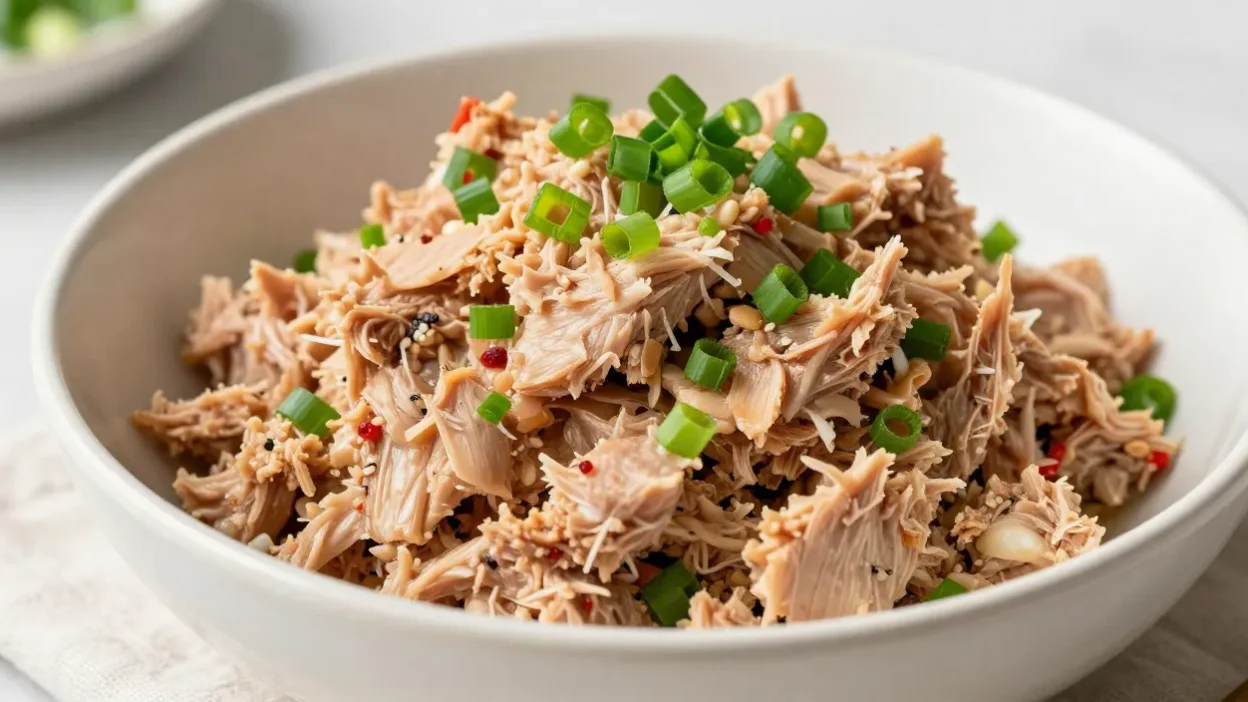
What I appreciate most is that it doesn’t pretend to be anything else. It’s not trying to replace sushi. It’s not a “healthy hack” pretending to be indulgent. It’s just a good, honest combination of flavors that happens to come together very quickly.
Also, canned tuna doesn’t get enough credit. When treated well — meaning drained properly and not drowned in bland mayo — it’s actually a great base for bold flavors. It absorbs seasoning beautifully, which is exactly what this salad takes advantage of.
Ingredients, Explained Like a Normal Human Would 🧂
Let’s talk about what actually goes into this salad, without turning it into a lecture or pretending this is a cooking class. This recipe isn’t about precision or fancy products. It’s about understanding where it’s worth paying attention — and where you really don’t need to.
About the Tuna (Yes, This Part Matters)
Tuna is the obvious starting point, and thankfully, it’s also the least complicated part. Use whatever canned tuna you normally buy. The one you grab automatically at the store. Fancy tuna is fine, but it doesn’t suddenly transform the salad into something magical.
What does matter is draining it properly. And by properly, I mean really properly. If you rush this step, the salad ends up watery and slightly disappointing, no matter how good the sauce is. Dry tuna absorbs flavor. Wet tuna just sits there and dilutes everything. It’s a boring detail, but it’s the detail that decides whether the salad feels creamy or sloppy.
The Creamy Part (Where People Overthink Everything)
This is usually where people pause and start wondering if they’re doing it “right.” The truth is, there is no single correct choice here — just different textures and moods.
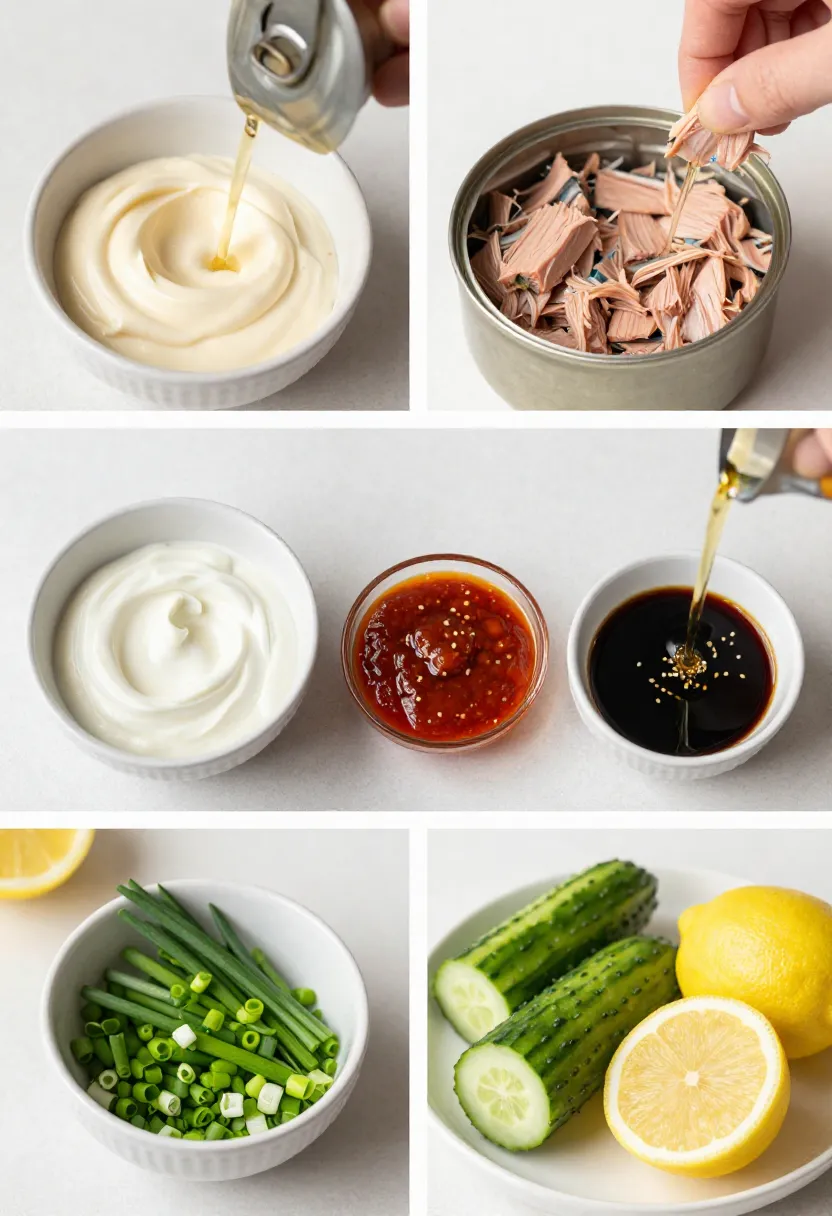
Mayonnaise gives you the classic, familiar version. Greek yogurt makes things lighter and a bit tangier. Mashed avocado adds richness and a softer, almost buttery feel. None of these options are better than the others. They just change how the salad feels that day. Pick based on what you’re in the mood for, not what you think you’re supposed to use 🥑
Why Spice Isn’t Optional 🌶️
This salad needs some kind of heat. Not because everything has to be spicy, but because without it, the whole thing feels flat. Sriracha is common and convenient, but it’s not the only answer. Any chili-based sauce you actually enjoy will work.
The goal isn’t to make your mouth burn. It’s to add warmth and personality — something that keeps each bite interesting instead of blending into the background.
The Quiet Ingredients That Do the Heavy Lifting
Soy sauce or tamari might seem like a small detail, but it plays a bigger role than you’d expect. That little bit of saltiness and umami makes the tuna taste fuller and more savory instead of just… canned. You don’t really notice it when it’s there, but you definitely notice when it’s missing.
Sesame oil works the same way. It’s subtle, almost background-level, but if you skip it, something feels incomplete. Just don’t overdo it — a little goes a long way. And finally, a touch of acidity, whether from vinegar or lemon juice, keeps the creaminess in check and stops the salad from feeling heavy halfway through the bowl 🍋
Everything beyond that — green onions, cucumber, seeds, or anything else you feel like adding — is optional. Nice to have, but not essential. The core of the salad stands on its own, and that’s what makes it such an easy recipe to come back to.
The Actual Recipe I Keep Coming Back To: Simple Spicy Tuna Salad 🌶️🐟
This is not a “special occasion” recipe. It’s the version I make when I’m hungry, slightly impatient, and not interested in measuring things too carefully. It’s creamy, gently spicy, and balanced enough that you can eat it on its own or build a full meal around it without thinking too much.
The quantities below are a guideline, not a rule. Once you make it once or twice, you’ll probably start adjusting it automatically.
Ingredients (about 2–3 servings)
- 2 cans of tuna (5 oz / 140 g each), very well drained
- 3 tablespoons mayonnaise
(or Greek yogurt if you prefer something lighter) - 1–2 tablespoons sriracha or another chili sauce you like
- 1 teaspoon soy sauce or tamari
- 1 teaspoon sesame oil
- 1 teaspoon rice vinegar or fresh lemon juice
- 2 tablespoons finely sliced green onions (optional)
- 2 tablespoons finely diced cucumber or celery (optional)
- Salt or black pepper, only if needed
How to Make It
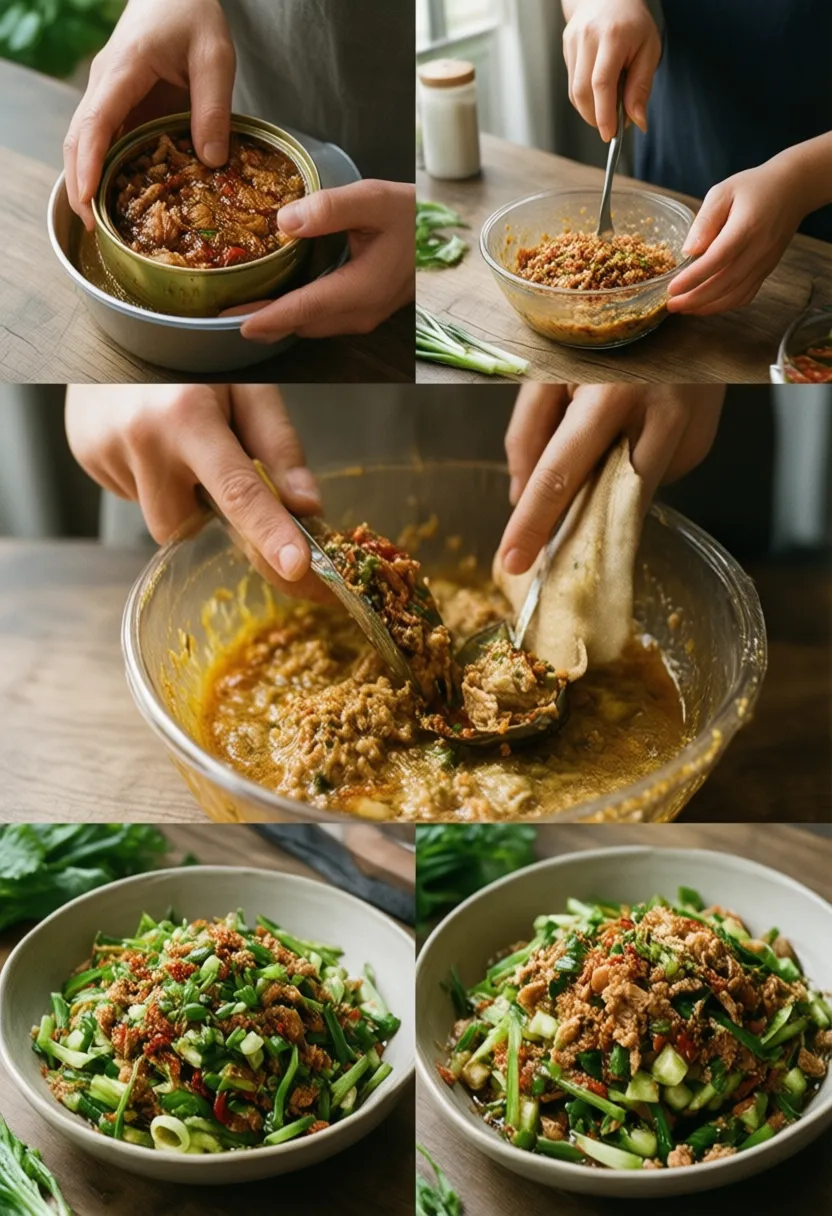
- Drain the tuna properly.
Open the cans and drain off as much liquid as possible. I usually press the tuna gently with a fork or even a paper towel. This step matters more than it sounds — dry tuna holds onto flavor much better. - Mix the sauce first.
In a bowl, combine the mayonnaise, chili sauce, soy sauce, sesame oil, and vinegar or lemon juice. Stir until smooth and taste it. At this point, it should already taste good on its own. Adjust the heat or acidity if something feels off. - Add the tuna.
Add the drained tuna to the bowl and gently fold it into the sauce. Break up large chunks, but don’t overmix. The texture should stay slightly chunky, not mashed. - Fold in extras if using.
If you’re adding green onions, cucumber, or celery, mix them in gently. They should feel like a bonus, not the main event. - Taste one last time.
This is where you decide if it needs a little more spice, a squeeze of lemon, or a tiny pinch of salt. Small adjustments make a big difference here. - Serve or rest briefly.
You can eat it immediately, but letting it sit in the fridge for about 10 minutes helps the flavors settle and come together.
Small Tips That Actually Help 🧠
- Don’t skip draining the tuna. If the salad feels “off,” this is usually the reason.
- Always taste the sauce before adding the tuna — fixing it later is harder.
- If you accidentally make it too spicy, adding a bit more mayo or yogurt calms everything down.
- Sesame oil is strong; a little really is enough.
- The salad often tastes even better the next day, so it’s great for quick lunches.
How This Salad Actually Gets Eaten (And Why It’s Never the Same Twice) 🥪🥗
What happens to this salad after it’s made really depends on the day — and on your energy level, if we’re being honest. There’s no set plan, no “proper” way it’s supposed to be served. Most of the time, the decision is made in about five seconds, based on what’s nearby and how hungry you are.
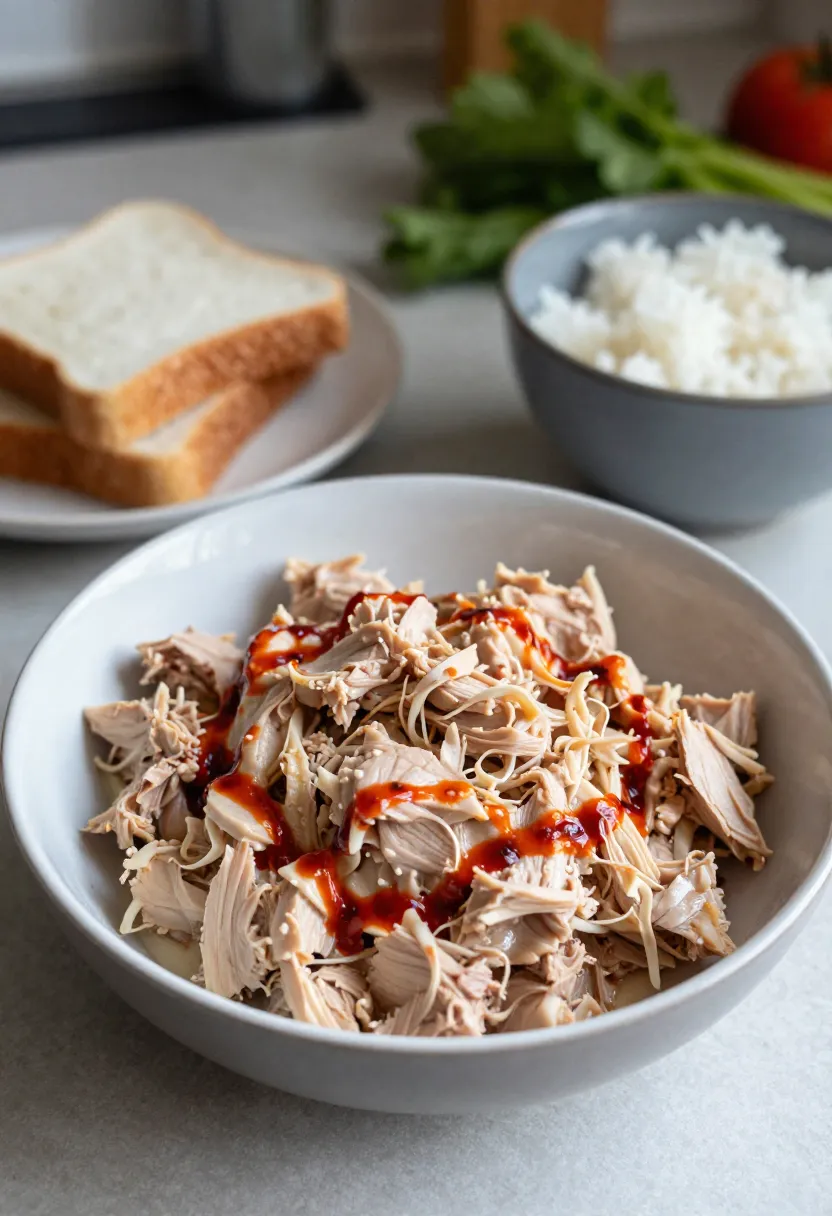
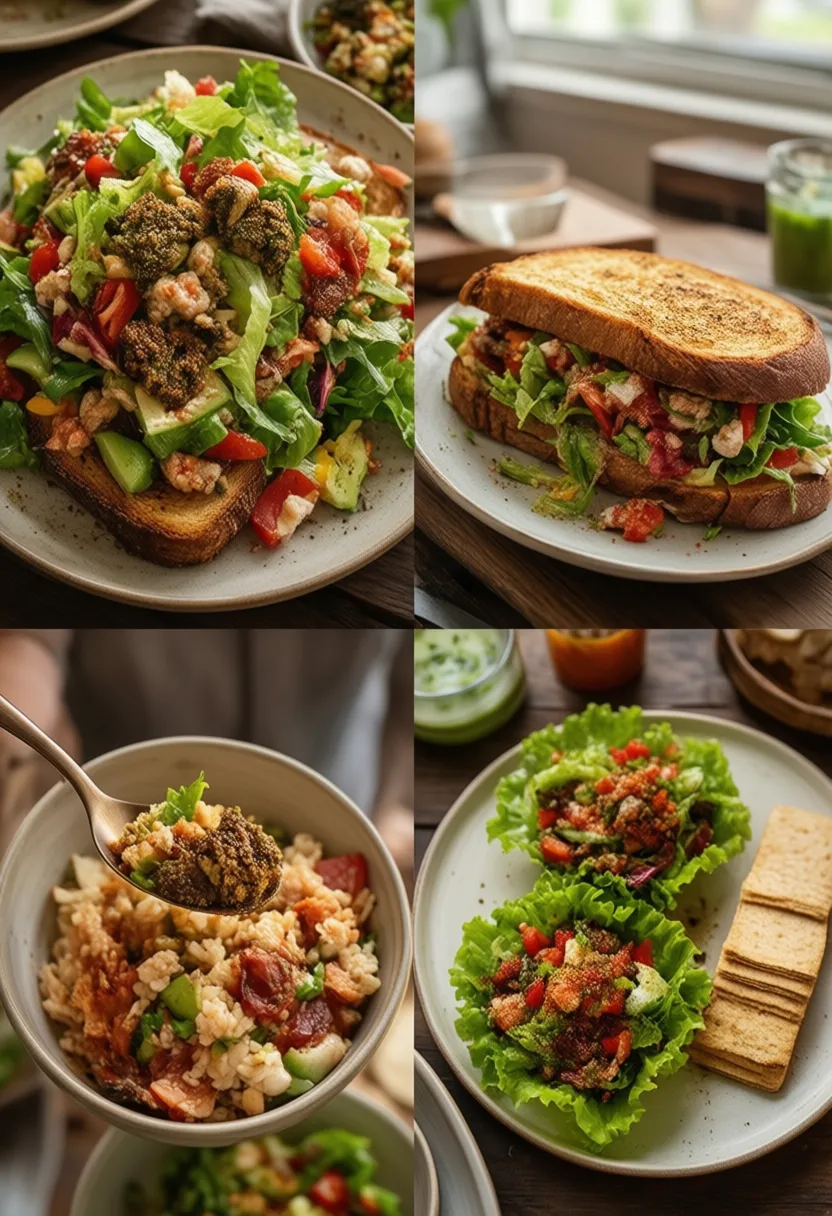
Some days, it ends up on toast or tucked into a sandwich because that’s easy and familiar. Other days, especially when there’s leftover rice in the fridge, it gets spooned over a bowl with whatever vegetables happen to be around. When you’re in a lighter mood, it might go into lettuce leaves or get eaten with sliced cucumbers. And then there are days when it’s just tuna salad and a handful of crackers, eaten straight from the bowl without much ceremony.
If you really think about it, that’s kind of the appeal. This salad doesn’t ask you to plan your meal around it. It fits into whatever situation you’re already in.
Some of the ways it usually shows up look like this:
- spread on toast or used as a sandwich filling
- piled onto rice or grains for a quick bowl
- scooped into lettuce cups or eaten with fresh vegetables
- paired with crackers when you want something snacky
- eaten straight from the container because… life happens
There’s no “wrong” version here. The salad adapts to what you have, not the other way around, and that flexibility is what makes it so easy to keep in rotation.
The Small Changes That Happen Without You Noticing 🔄
What’s interesting about this recipe is how it naturally changes over time, without ever feeling like you’re making a different dish. You don’t sit down and decide to create a new variation — it just sort of happens depending on what’s in the fridge and what you’re in the mood for.
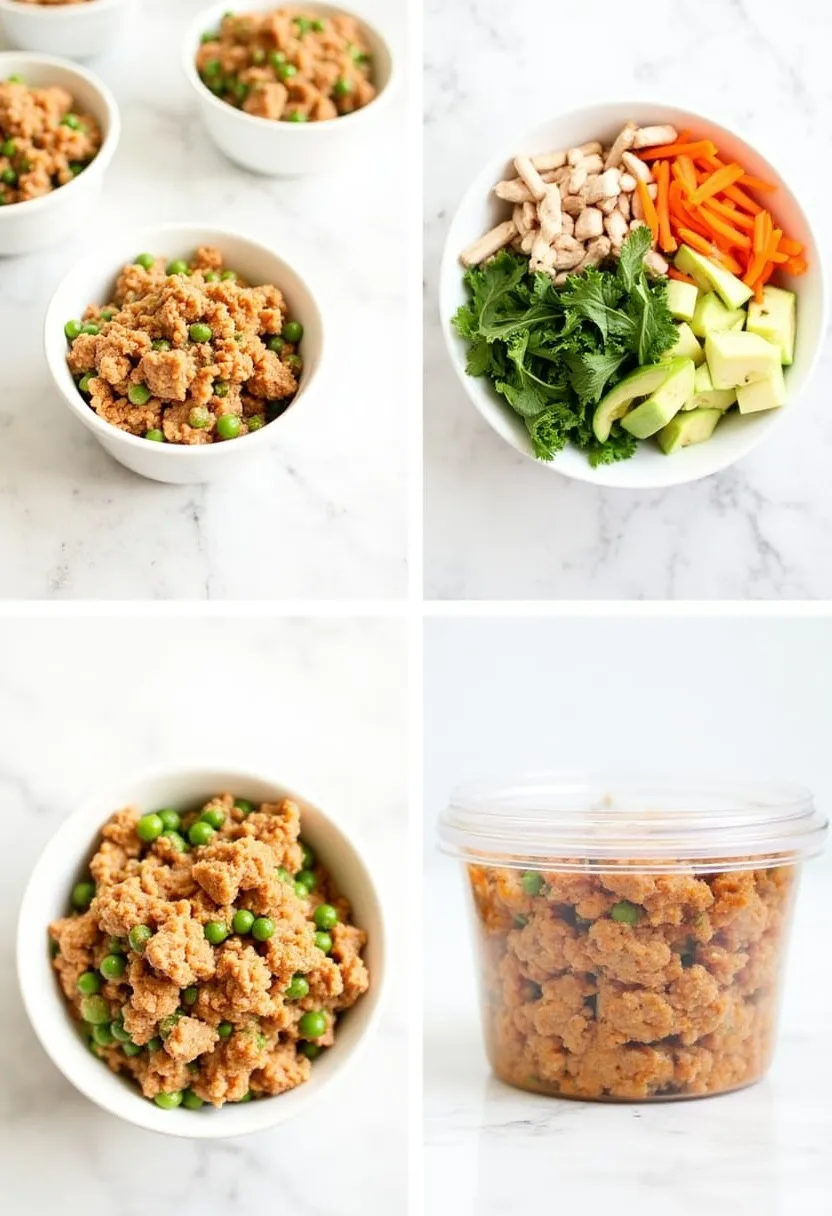
Some days it ends up spicier because you add a little extra chili sauce without thinking. Other days it’s creamier because you were heavy-handed with the mayo or yogurt. Sometimes avocado makes its way in, sometimes it doesn’t. Chili crisp, when it shows up, adds a deeper, more layered heat. Extra vegetables make it feel heartier and more like a full meal.
None of these tweaks feel like work. There’s no need to rewrite the recipe or measure anything differently. The base is solid enough that it can handle these changes without falling apart — which is exactly what you want from an everyday dish.
As for storage, it behaves nicely. Kept in an airtight container, the salad lasts two to three days in the refrigerator and often tastes even better after it’s had some time to rest. It’s not something you’d want to freeze, but it doesn’t really need to be. This is the kind of food meant to be simple, accessible, and ready when you are.
Why This Salad Quietly Earns Its Place 💛
This spicy tuna salad isn’t impressive in a flashy way. It’s not something you build a dinner party around or photograph for an hour before eating. It’s the kind of dish you rely on when you don’t want to think too much, measure too carefully, or prove anything to anyone.

It works when you’re tired. It works when the fridge is half-empty. And after you’ve made it a few times, you stop needing instructions altogether — which is usually a sign that a recipe has earned its place.
Those are the dishes that tend to last. Not because they’re perfect, but because they quietly fit into real life and make it a little easier.