Contents
There are days when cooking feels like just another obligation layered onto an already crowded schedule. It gets done somewhere between meetings, errands, half-read messages, and that constant background noise that never really switches off. On days like that, food becomes functional. You cook because you need to eat, not because you’re especially interested in the process.
Most people know that feeling.
But every now and then, there are other days, and they tend to announce themselves quietly. Cooking feels different almost from the start. The pace shifts. You’re not counting minutes or looking for shortcuts. You’re not trying to get something on the table as fast as possible. Instead, you ease into the process. The kitchen feels warmer, more present, maybe even a little calmer than usual. Roasting a whole chicken fits naturally into this slower rhythm. 🍗✨
Choosing to cook a whole bird is not a dramatic decision, but it does change how you approach the meal. You accept that it will take time, and that not everything needs to happen at once. You start paying attention to small details instead of cutting corners. As the chicken roasts, the scent of butter, herbs, and citrus spreads through the house gradually, not all at once. It’s the kind of smell that makes people wander into the kitchen without really knowing why. You might notice yourself checking the oven more often than necessary — not out of worry, but out of quiet curiosity and anticipation.
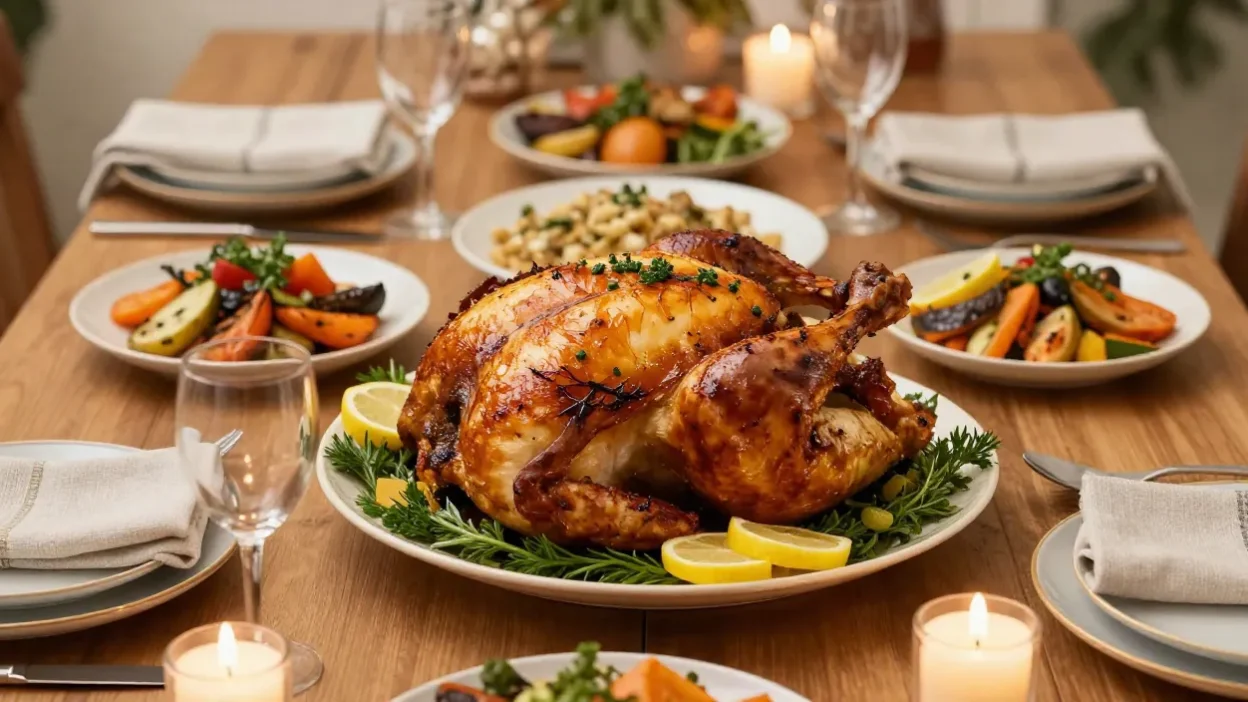
A festive herb-roasted chicken doesn’t need to announce itself or compete for attention. It doesn’t rely on elaborate techniques or dramatic presentation. Its appeal comes from something simpler and more familiar: the way it creates a sense of comfort and expectation. It makes a home feel occupied, warm, and ready for company, even if that company is simply the people who already live there. 🕯️
Why a Simple Dish Often Feels the Most Special
When people look back on meals they genuinely enjoyed, they rarely describe the most complicated dishes in detail. More often, they talk about how relaxed everyone felt, how long the conversation lasted, or how the food seemed to match the moment without trying too hard.
A whole roasted chicken tends to have that effect. It doesn’t dominate the table or demand attention, yet it naturally becomes the center of the meal. It feels generous without being excessive and festive without crossing into formality. You don’t need professional skills to prepare it well. What matters more is a willingness to slow down and give the process a bit of care.
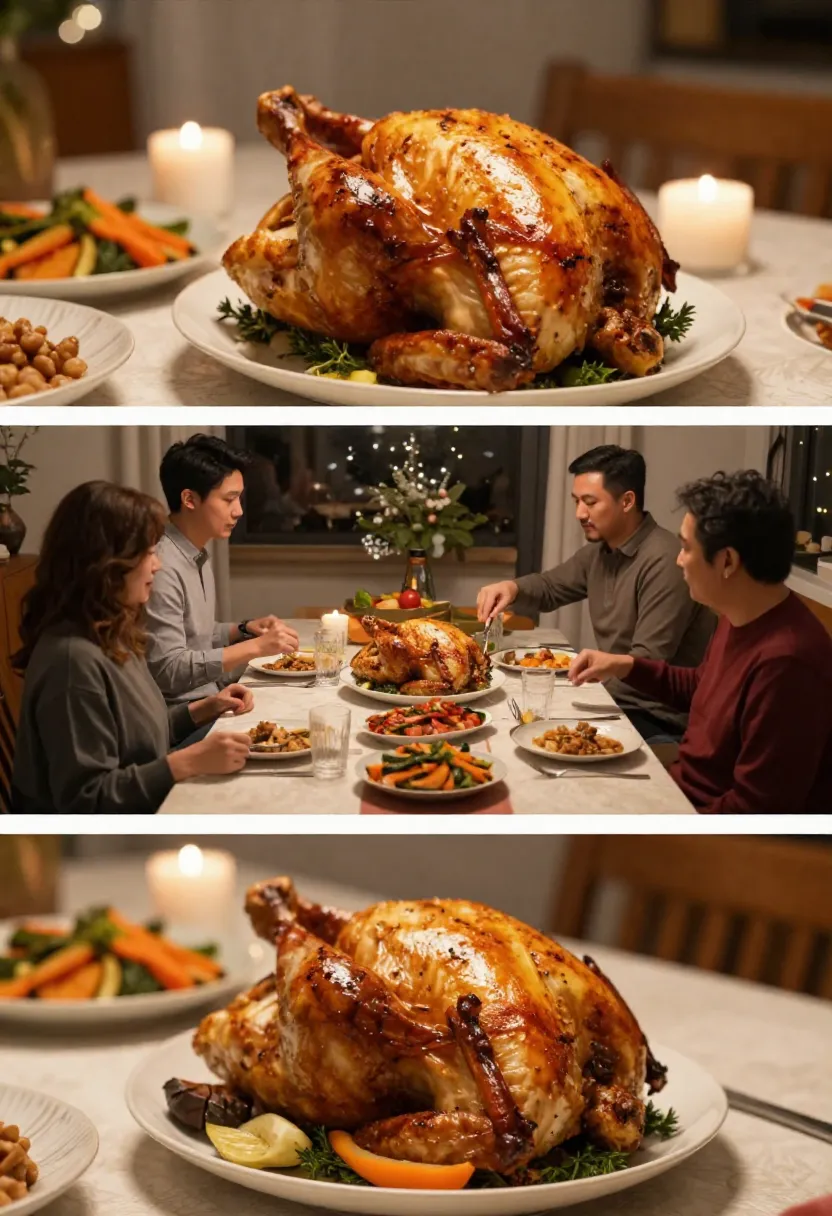
Part of the reason this dish has stayed relevant for so long is its flexibility. It fits into many different situations without needing much adjustment. A roasted chicken can be:
- the centerpiece of a holiday meal
- a relaxed weekend dinner with family
- something shared with guests without much planning
- or a simple way to make an ordinary evening feel slightly more intentional
It adapts easily, forgives small mistakes, and still delivers a satisfying result. Even when things aren’t perfect — maybe the skin browns unevenly, or the vegetables cook a bit faster than expected — the dish still works. When prepared thoughtfully, it feels impressive in a quiet, natural way. That balance isn’t easy to achieve, which is exactly why roasted chicken continues to earn its place on festive tables year after year. 🤍
The Quiet Role of Herbs, Butter, and Time 🌿
At its core, this style of roasted chicken is about trusting the basics. There’s no need to overwhelm the dish with complicated seasoning blends or too many competing flavors. Instead, the focus stays on a few carefully chosen ingredients and enough time for them to work together in their own way.
Fresh herbs play an important role here. As the chicken roasts, they release their aroma slowly, infusing the meat rather than overpowering it. Butter melts gradually, carrying flavor into the chicken and helping it stay juicy throughout the cooking process. A touch of citrus adds balance, cutting through richness and keeping the final result from feeling too heavy.
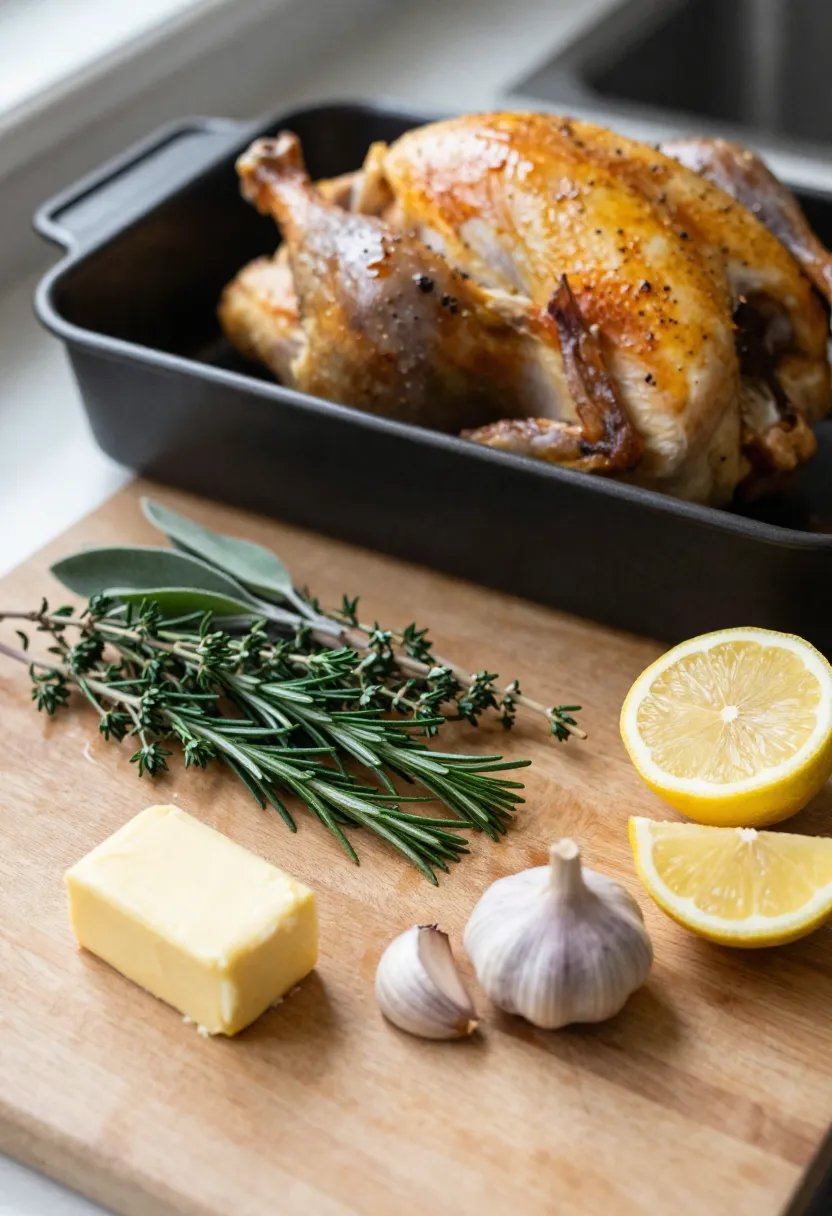
What makes this process especially satisfying is that it doesn’t require constant attention. Once the chicken is in the oven, most of the work is already done. The waiting becomes part of the experience rather than something to endure. During that time, you might:
- prepare a few simple side dishes
- set the table without rushing
- notice how the aroma changes as the chicken cooks
- or simply step away and let the oven do its job
That pause, unhurried and uncomplicated, is often what makes the finished dish feel so rewarding. The flavor develops not because of complexity, but because it was given time and attention — two things that are often in short supply in everyday cooking.
Festive Herb-Roasted Chicken Recipe 🍽️
A comforting centerpiece with crisp skin, juicy meat, and deep herbal flavor
This recipe was written with real home kitchens in mind. You don’t need years of experience, special tools, or perfect timing to make it work. What you do need is a bit of preparation, a calm approach, and the willingness to let the oven do most of the heavy lifting.
The goal here isn’t perfection. It’s balance. Crisp skin without dryness, meat that stays juicy, and flavors that feel full and rounded rather than overwhelming. This is the kind of dish that quietly anchors a meal — familiar enough to feel comforting, but special enough to feel intentional.
Ingredients
For the chicken itself:
1 whole chicken, about 3–4 lb (1.5–2 kg)
½ cup unsalted butter, softened
Fresh rosemary, thyme, and sage, finely chopped
4–5 garlic cloves, finely minced
Zest of 1 lemon
Salt and freshly ground black pepper
For the aromatics and roasting base:
1 lemon, cut in half
1 large onion, quartered
2–3 carrots, roughly chopped
2–3 celery stalks, roughly chopped
Optional: potatoes or other root vegetables for roasting
These ingredients are simple on purpose. Each one plays a clear role, and none of them are there just for decoration.
Cooking Instructions
Prepare the chicken and the oven
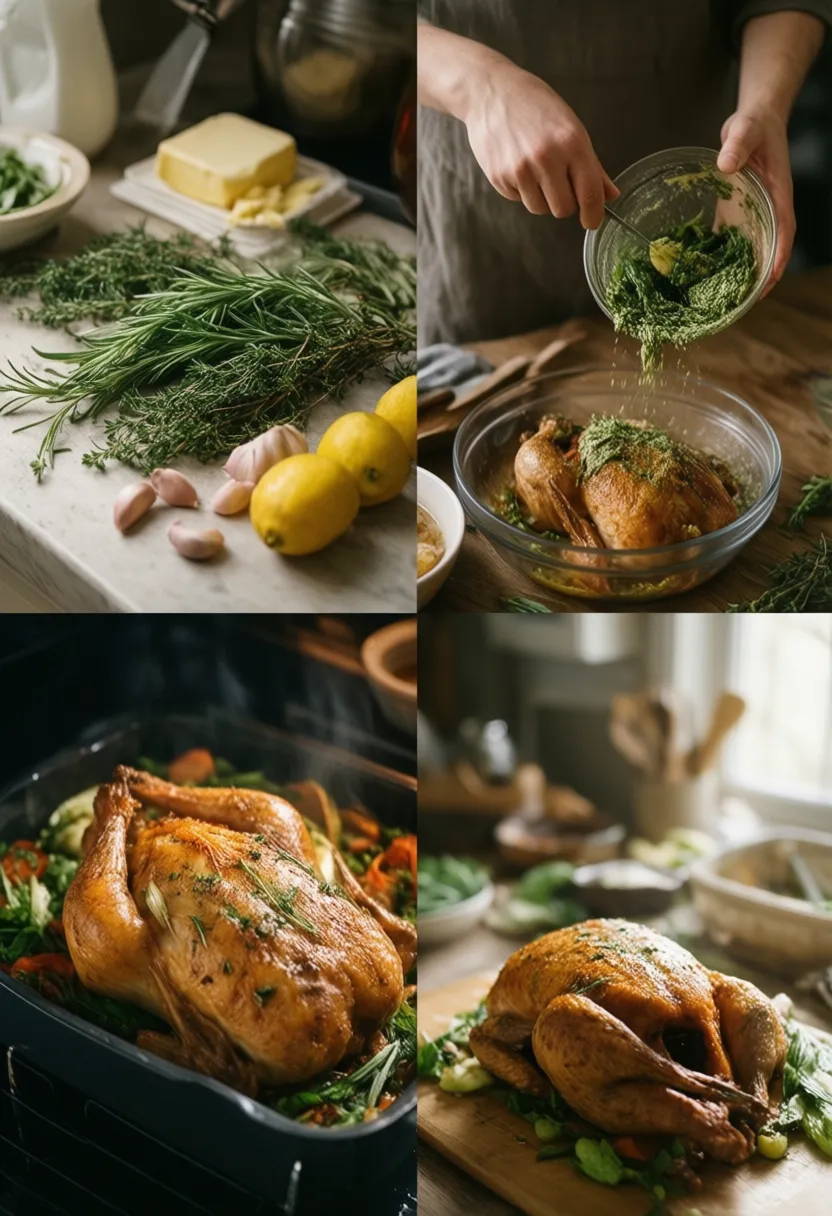
Start by preheating your oven to a high temperature. While it heats, take the chicken out of the refrigerator and pat it completely dry with paper towels, inside and out. This step matters more than it seems — dry skin is one of the biggest factors in achieving a nicely roasted, golden exterior.Make the herb butter
In a medium bowl, combine the softened butter with the chopped herbs, minced garlic, lemon zest, salt, and black pepper. Mix until everything is evenly distributed and fragrant. Don’t rush this step; you should be able to smell the herbs clearly once it’s ready.Season under and over the skin
Using your fingers, gently loosen the skin over the chicken breast and thighs, being careful not to tear it. Spread most of the herb butter directly onto the meat under the skin. This helps season the chicken from the inside as it cooks. Rub the remaining butter over the outside of the bird for added flavor and color.Fill the cavity with aromatics
Place the lemon halves, onion, carrots, and celery inside the cavity of the chicken. These ingredients aren’t meant to be eaten from the inside; instead, they release steam and aroma as the chicken roasts, subtly flavoring the meat from within.Prepare for roasting
Drizzle the outside of the chicken lightly with olive oil and season with a bit more salt and pepper. Place the chicken breast-side up in a roasting pan. If you’re using additional vegetables, scatter them around the chicken so they can roast in the pan juices.Roast with temperature control
Roast the chicken at high heat at first to encourage browning and crisp skin. After that initial stage, reduce the oven temperature and continue roasting until the chicken is fully cooked. The most reliable way to check doneness is with a thermometer inserted into the thickest part of the thigh; it should read 165°F (74°C).Let the chicken rest
Once the chicken is done, remove it from the oven and transfer it to a cutting board. Loosely cover it with foil and let it rest for 15–20 minutes. This resting time allows the juices to redistribute, which makes a noticeable difference in texture and moisture.Carve and serve
Carve the chicken and serve it with the roasted vegetables. Spoon the pan juices over the top just before serving — they carry a lot of flavor and bring everything together.
💡 Small but helpful notes:
- If the skin browns too quickly, loosely tent the chicken with foil.
- Don’t overcrowd the pan; vegetables need space to roast properly.
- Leftovers keep well and are excellent for salads, sandwiches, or soups the next day.
How to Serve It So It Truly Feels Festive ✨
When it comes to serving a roasted chicken, it’s easy to overthink things. Plates, garnishes, symmetry, timing — all of that can quickly turn what should feel celebratory into something slightly stressful. In reality, this is one of those dishes where doing less usually works better.
A properly roasted chicken already brings a lot to the table on its own. The golden skin, the crisp edges, the smell of herbs and butter — these are not details you need to “fix” or decorate around. They are the point.
In most cases, a large serving platter is more than enough. Let the chicken sit in the center, surrounded by whatever vegetables it roasted with. If you want to add a little extra visual interest, keep it casual rather than styled. Small, simple touches tend to feel more natural, such as:
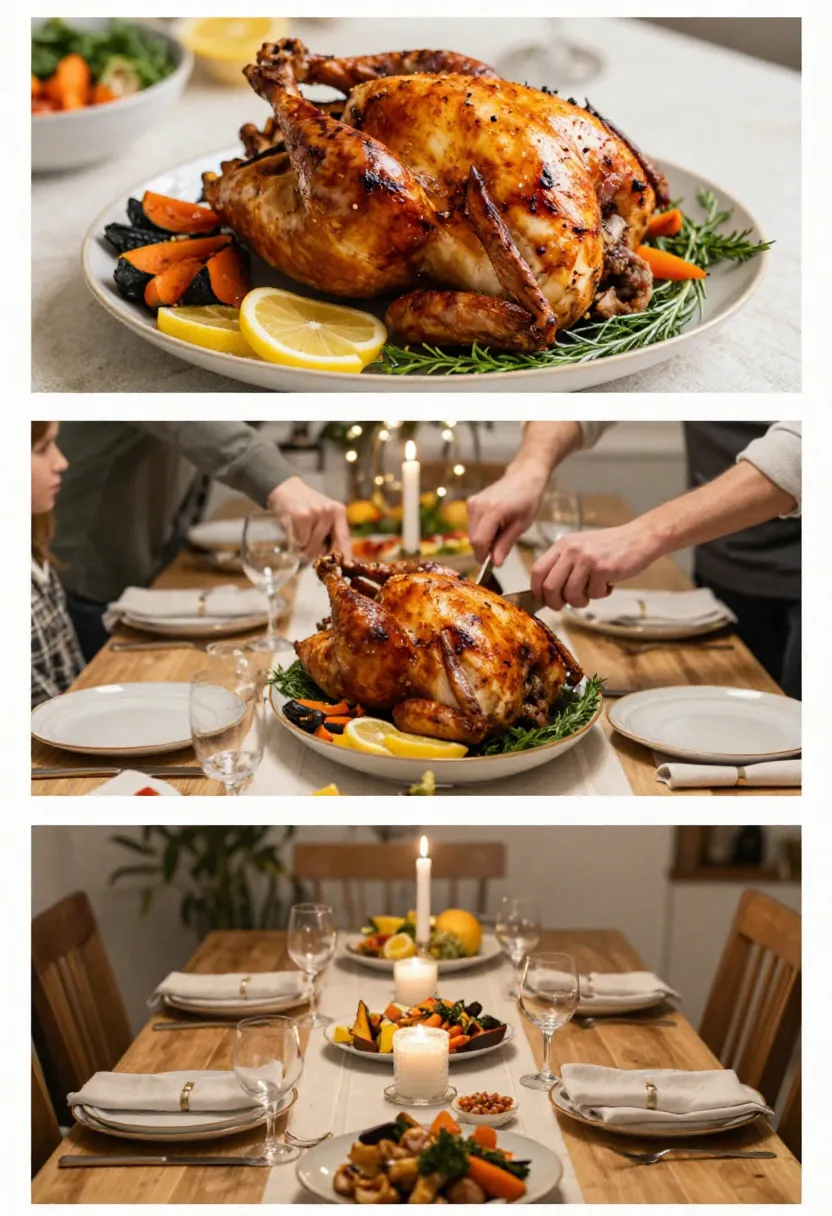
- a few lemon slices placed around the chicken, not perfectly spaced
- fresh herb sprigs added almost as an afterthought
- vegetables left slightly uneven, with browned edges and different shapes
That slight lack of perfection matters more than it seems. It signals that this is food meant to be eaten and shared, not adjusted for a camera. In my experience, people respond to that kind of honesty more than to anything overly polished.
If you’re setting the table for a festive meal, it often helps to think in terms of atmosphere rather than appearance. Soft lighting, candles, and real napkins usually make a bigger impact than matching plates or carefully arranged place settings. Serving the chicken family-style — carving it at the table or letting people help themselves — tends to relax everyone a little. The table feels lived-in, not staged, and that changes the mood of the entire meal. 🌿
Practical Tips That Quietly Improve Everything
Most improvements to roasted chicken don’t come from dramatic changes. They come from small habits that you might not even notice at first, especially if you don’t roast whole birds very often.
A few details that consistently make a difference:
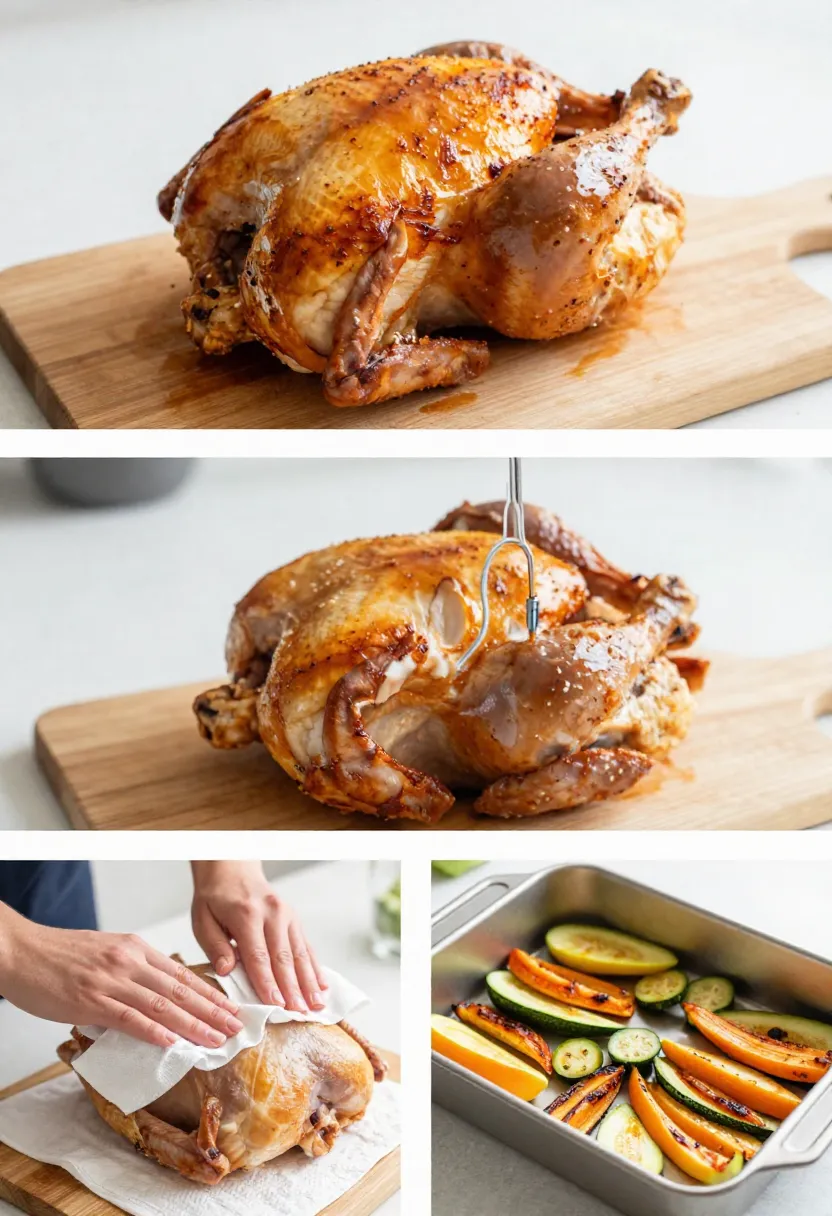
- Letting the chicken rest before carving really does keep the meat juicier, even if it’s tempting to skip that step.
- Using a thermometer takes away the guessing and the second-guessing, which is often where overcooking happens.
- Drying the skin thoroughly before seasoning improves both browning and texture more than any spice ever could.
- Giving vegetables enough space in the pan allows them to roast properly instead of turning soft and pale.
Seasoning deserves its own mention here. Salt has a bad reputation in some kitchens, but with a whole chicken, it’s not something to shy away from. Used properly, it doesn’t make the dish heavy or aggressive. It simply allows the flavor of the meat and herbs to come through. Under-seasoning is far more common, especially when cooking something large and shared.
Over time, paying attention to these small things changes how cooking feels. It becomes calmer, more predictable, and less stressful. You stop trying to “fix” things at the last minute and start trusting the process, which makes the entire experience more enjoyable — not just the food itself.
Why This Dish Always Feels Like a Good Idea 🤍
Some recipes feel tied to a moment. A season. A trend. Others quietly stay in rotation because they continue to make sense, no matter the context. A festive herb-roasted chicken belongs firmly in that second group.
It works when there’s something to celebrate, and it works just as well when there isn’t. It feels appropriate on a holiday table, but it doesn’t feel out of place on a quiet weekend evening. You can dress it up, keep it simple, or adapt it slightly depending on what you have on hand.
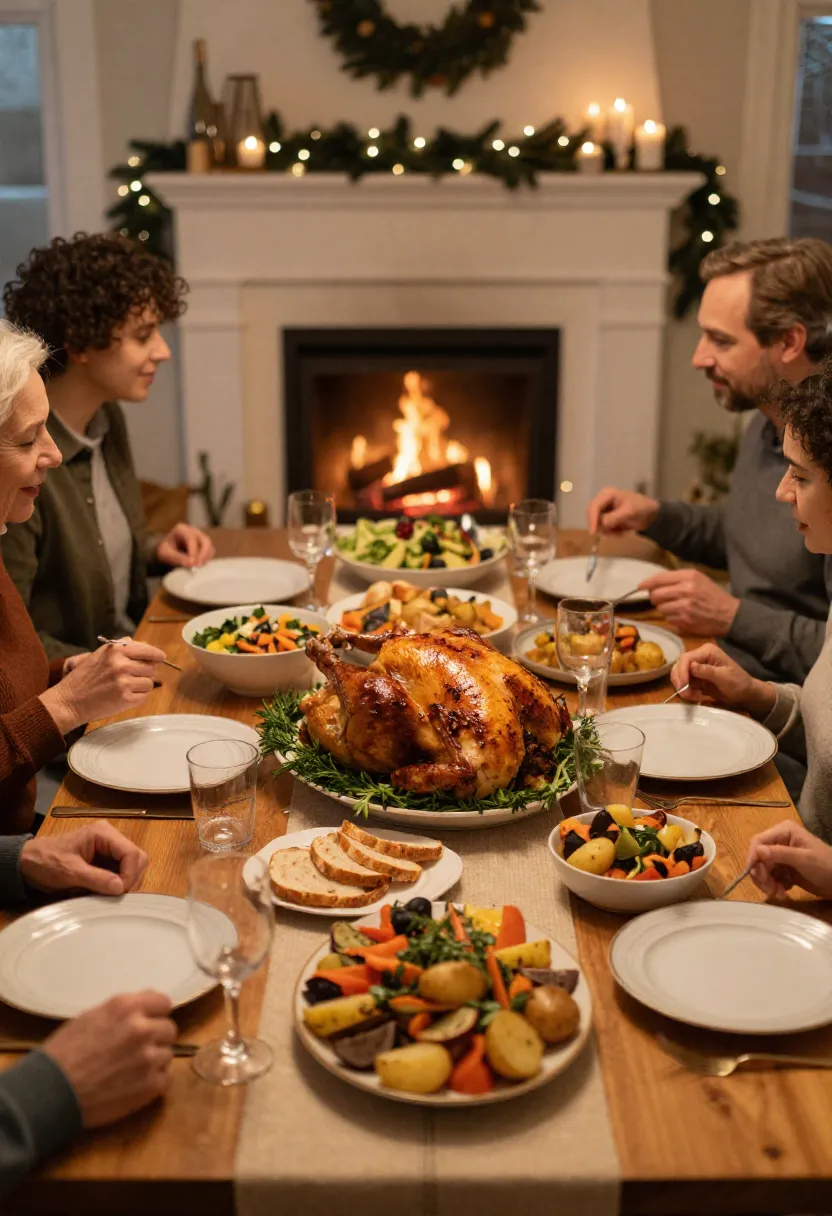
It also feeds people generously, which matters more than we sometimes admit. And almost inevitably, it leaves behind leftovers that turn into something useful the next day — soup, sandwiches, salads — extending the value of the meal beyond a single sitting.
More than anything, this dish creates breathing room. A little space to slow down. A little space for conversation that isn’t rushed. A little space to enjoy the very ordinary, very real pleasure of sharing good food with others.
In the end, that’s what makes a meal feel festive. Not how elaborate it is, but how it fits into the moment and the people around the table.