There are salads that quietly accompany the main course.
Then there are salads that become the meal everyone remembers long after dinner is over.
This is very much the second kind.
The first time I made it, I wasn’t trying to recreate anything elaborate or restaurant-inspired. In fact, the idea came together almost by accident. There was a beautiful piece of pork belly waiting in the refrigerator, a few ripe pears that were only a day or two away from becoming too soft, and an open bottle of red wine left from the night before. Rather than preparing each ingredient separately, I decided to let them share the same plate.
Looking back, I’m glad I did.
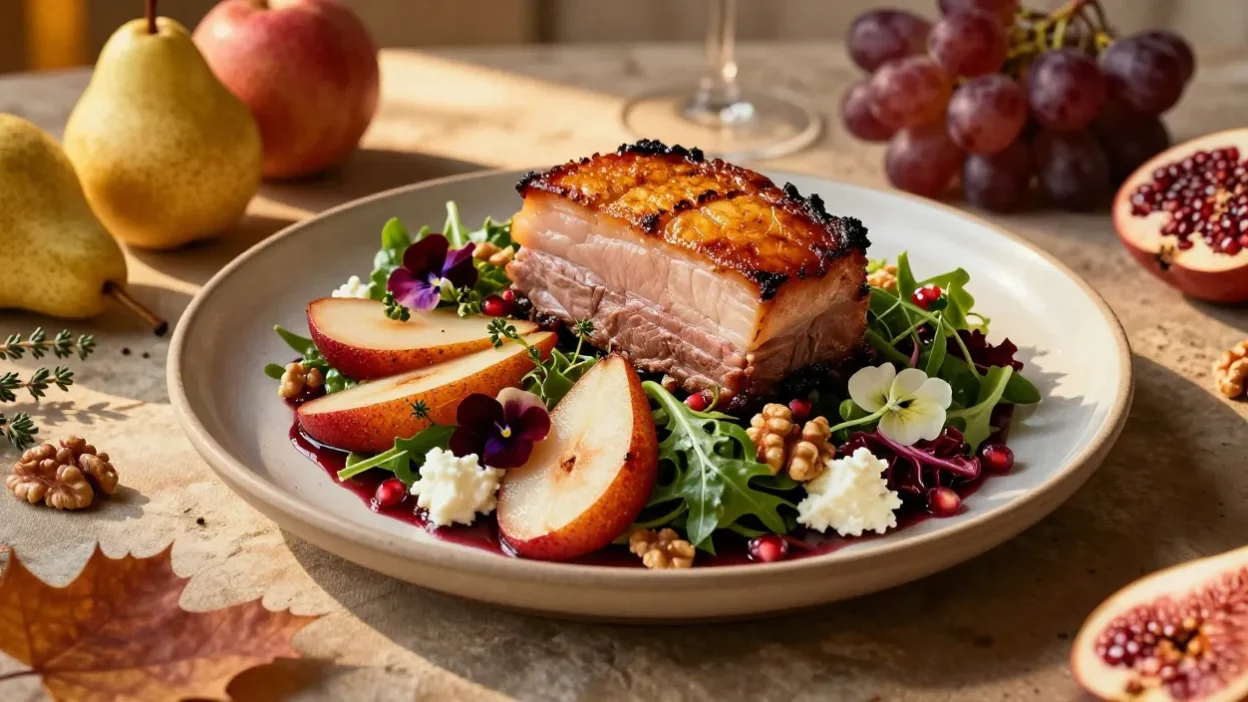
The combination surprised me far more than I expected. Every bite offered something different. The pork belly was deeply savory with crisp crackling that shattered delicately beneath the fork before giving way to unbelievably tender meat. The pears had transformed during their slow bath in red wine, becoming silky, jewel-toned, and lightly scented with spices. Crisp greens, creamy cheese, toasted walnuts, and a bright vinaigrette completed the picture, creating a salad that felt both rustic and surprisingly refined.
What I enjoy most is the balance.
Rich dishes often need something fresh to stop them from feeling overwhelming, while lighter salads sometimes leave you wanting a little more. Somehow this recipe finds the middle ground. It has all the comfort of slow-roasted meat without becoming heavy, while the fruit, herbs, and greens keep every bite feeling bright and full of life. Nothing dominates the plate for very long. Instead, every ingredient quietly takes its turn.
It’s also the kind of recipe that changes the atmosphere around the table.
The pork roasts slowly, filling the house with that unmistakable aroma that makes everyone wander into the kitchen asking when dinner will be ready. Nearby, the pears gently simmer in red wine, cinnamon, star anise, and citrus, gradually turning a beautiful deep burgundy. By the time everything comes together, the meal already feels like an occasion before anyone has even picked up a fork.
I’ve served this salad for relaxed Sunday lunches, small dinner parties, autumn birthdays, and evenings when I simply wanted to cook something a little more special than usual. It has never felt out of place. Sometimes it becomes the centerpiece of the table, while other times it sits alongside fresh bread and a bottle of wine, creating one of those dinners that somehow lasts much longer than anyone expected.
One thing I’ve learned over the years is that recipes like this don’t depend on complicated techniques.
They simply reward patience.
Allow the pork enough time to roast slowly. Let the pears absorb every bit of color and flavor from the wine. Toast the walnuts until they’re fragrant. Taste the dressing before pouring it over the greens. None of those moments take much effort, but together they transform a collection of simple ingredients into something that genuinely feels restaurant-worthy.
🥗 I usually make this salad when:
- autumn pears are perfectly ripe;
- guests are coming over for dinner;
- I want a restaurant-quality meal at home;
- slow weekends leave plenty of time for roasting;
- dinner deserves something both elegant and comforting.
By the time the platter reaches the table, it rarely looks like a salad in the traditional sense.
It feels more like the kind of dish you’d happily order at a beautiful countryside restaurant—warm, generous, colorful, and memorable from the very first bite.
🍐 Why sweet pears and crispy pork belly work so beautifully together
Some flavor combinations make perfect sense the moment you hear them.
Others sound slightly unexpected until you taste that very first bite.
Pork belly and pears definitely belong in the second group.
On paper, they couldn’t be more different. One is rich, deeply savory, and wonderfully indulgent, with layers of meltingly tender meat tucked beneath crisp crackling. The other is naturally sweet, juicy, and delicate. Yet once they meet on the same plate, each ingredient somehow softens the other’s strongest qualities, creating a balance that’s surprisingly effortless.
The pork is where the depth begins.
As it roasts slowly, the fat renders little by little, basting the meat from within while the skin gradually transforms into crisp golden crackling. That slow process creates incredible flavor, but it also produces richness that benefits from something bright alongside it.
That’s exactly where the pears come in.
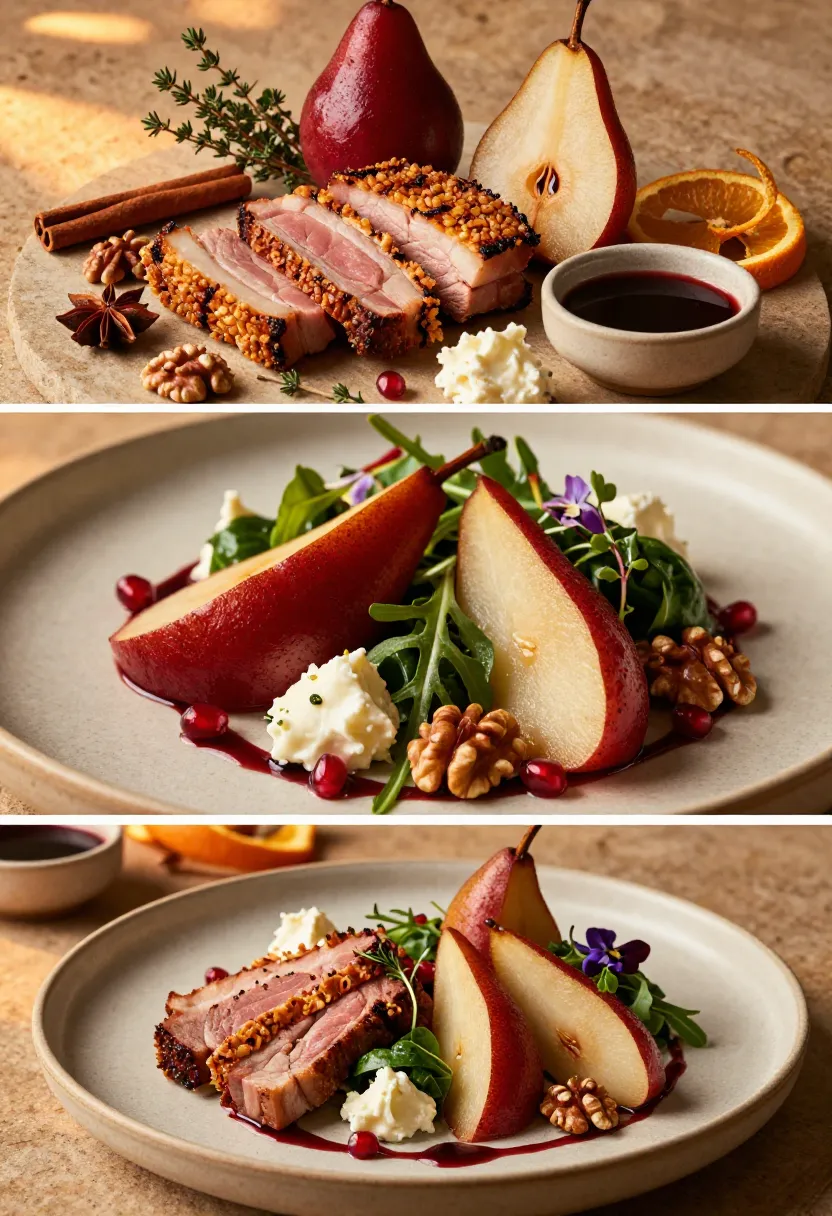
Poaching them gently in red wine completely changes their character. Instead of tasting simply sweet, they absorb subtle notes of berries, citrus, cinnamon, cloves, and warm spice while maintaining their delicate fruit flavor. Their deep ruby color makes the finished salad look almost festive, especially against vibrant green leaves and creamy white cheese.
Texture plays an equally important role.
The crisp crackling gives way to succulent pork. The pears are soft enough to cut with the side of a fork while still holding their elegant shape. Toasted walnuts add buttery crunch, creamy goat cheese melts gently into the warm meat, and crisp peppery greens refresh the palate between every bite. It’s a salad that never feels repetitive because every forkful is slightly different from the one before.
Even the vinaigrette deserves a little attention.
A simple dressing made with Dijon mustard, red wine vinegar, olive oil, and a touch of honey quietly connects every ingredient on the plate. It brightens the richness of the pork, echoes the wine-poached pears, and lightly coats the greens without hiding their freshness. It isn’t trying to become the star of the dish.
It simply makes everything else taste a little better.
| Ingredient | Why It’s Here | Texture | Flavor Contribution |
|---|---|---|---|
| Pork belly | Rich centerpiece | Crispy outside, tender inside | Savory, buttery |
| Red wine pears | Sweet contrast | Soft and juicy | Fruity, gently spiced |
| Mixed greens | Fresh balance | Crisp | Clean, peppery |
| Goat cheese or blue cheese | Creamy richness | Soft | Tangy, creamy |
| Toasted walnuts | Crunch | Crisp | Buttery, nutty |
| Dijon vinaigrette | Bright finish | Light | Tangy, balanced |
| Fresh herbs | Aromatic freshness | Tender | Earthy and vibrant |
Looking at the finished plate, every ingredient seems completely different from the next.
Yet together they create a salad that feels remarkably balanced, elegant, and satisfying from the first bite to the last.
🍂 The salad that turns an ordinary dinner into something memorable
Some meals are simply there to satisfy your appetite.
Others quietly become part of the evening itself.
This salad has always belonged to the second group.
It’s not the kind of recipe I throw together on a busy Tuesday after work, and honestly, I don’t think it should be. Part of its charm comes from slowing down. The pork roasts gently for hours, the pears quietly absorb the flavors of the wine, and by the time everything is ready, the pace of the evening seems to have changed along with it.
That’s probably why I associate this salad with autumn more than any other season.
The first cool evenings always seem to call for food that’s comforting without being overly heavy. While stews and casseroles certainly have their place, this dish offers something different. It delivers all the warmth of slow cooking while still feeling fresh enough to celebrate the best produce of the season.
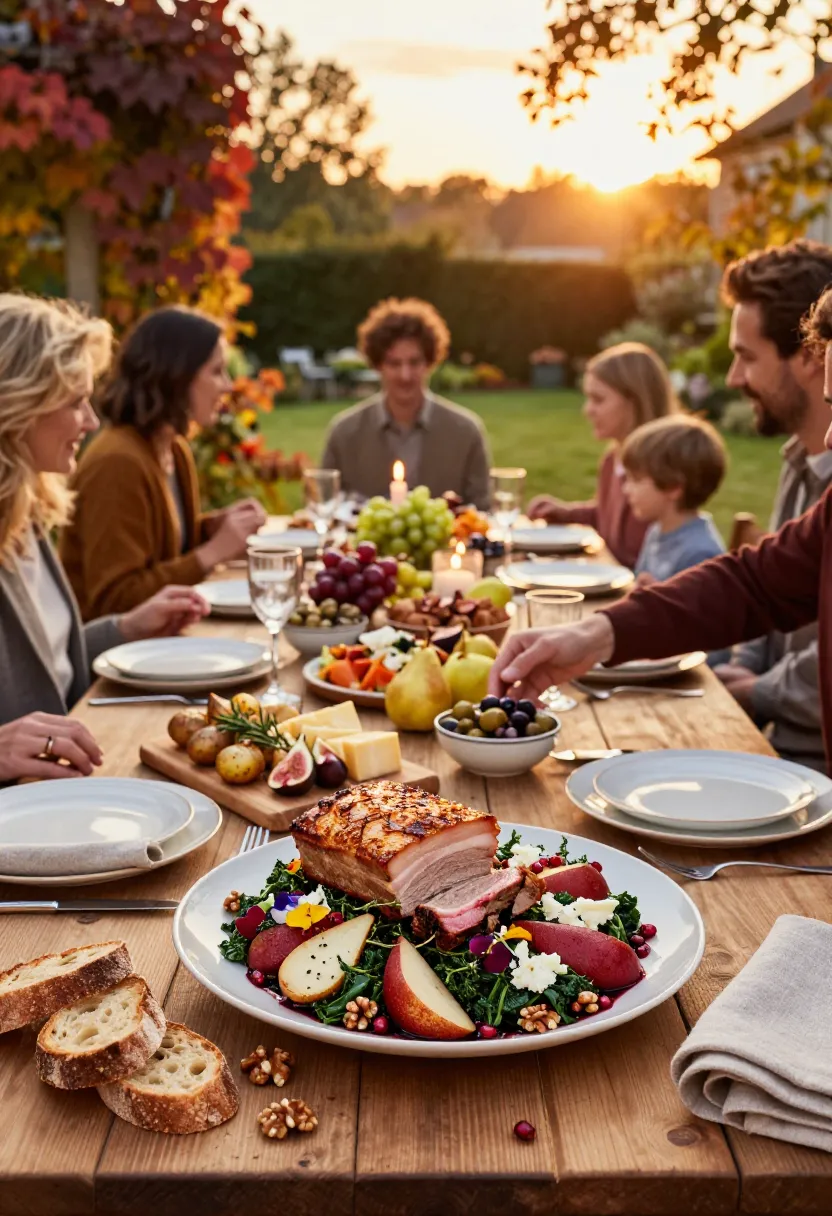
I’ve noticed something else over the years.
Whenever this salad appears on the table, dinner somehow lasts longer.
People slow down between bites, conversations become a little livelier, and someone inevitably asks how the pears became that incredible shade of ruby. By dessert, the serving platter is usually empty, but the discussion about the recipe continues for quite a while.
That’s one of my favorite things about cooking.
Sometimes the meal itself becomes part of the memory.
🍷 This salad usually earns a place on my table when:
- crisp autumn evenings invite slower dinners;
- pears are at their sweetest;
- friends gather for a relaxed weekend meal;
- I want restaurant-quality food without leaving home;
- the occasion deserves something elegant but genuinely comforting.
Some recipes impress because they’re complicated.
Others simply let beautiful ingredients shine.
This slow-roasted pork belly and red wine poached pear salad has become one of those recipes I look forward to making every autumn—a dish that feels refined enough for guests, comforting enough for family, and memorable enough that someone almost always asks for the recipe before the evening is over.
🥩 Slow-Roasted Pork Belly and Red Wine Poached Pear Salad Recipe
Some salads are meant to be light side dishes, quietly sitting beside the main course without asking for much attention. This isn’t one of them. Slow-roasted pork belly and red wine poached pear salad is a meal in its own right—a beautiful combination of crispy crackling, succulent pork, tender wine-infused pears, fresh greens, creamy cheese, crunchy walnuts, and a bright vinaigrette that ties everything together.
What I love most about this recipe is the contrast. Every bite offers something different. The pork is rich and deeply savory, while the pears bring gentle sweetness with subtle hints of berries and warm spices from the red wine. Peppery greens keep everything feeling fresh, toasted walnuts add satisfying crunch, and creamy goat cheese softens the richness without overpowering the other flavors.
One thing I’ve learned over the years is that patience makes all the difference. Pork belly simply can’t be rushed if you want beautifully crisp crackling and meltingly tender meat. The pears also benefit from gentle cooking, slowly absorbing the wine without losing their shape. While both components take time, neither requires constant attention, making this a surprisingly relaxed recipe to prepare.
The final assembly is my favorite part.
Watching the warm pork meet the jewel-colored pears, crisp greens, creamy cheese, and glossy vinaigrette always feels a little special. It’s one of those dishes that looks as though it came straight from a restaurant kitchen, yet it’s made entirely with simple ingredients and a little patience.
🧀 Ingredients
For the pork belly
- 2 pounds (900 g) pork belly, skin on
- 2 teaspoons flaky sea salt
- 1 teaspoon freshly cracked black pepper
- 1 teaspoon garlic powder
- 1 teaspoon fresh thyme leaves
- 1 tablespoon olive oil
For the red wine poached pears
- 2 ripe but firm pears, peeled
- 2 cups (480 ml) dry red wine
- ¼ cup (60 ml) water
- ¼ cup (60 ml) maple syrup or honey
- 1 cinnamon stick
- 2 star anise
- 3 strips orange peel
- 2 cloves
For the salad
- 5 cups mixed salad leaves (rocket, baby spinach, radicchio, or mixed greens)
- 4 ounces (120 g) soft goat cheese or blue cheese
- ½ cup toasted walnuts
- Fresh thyme leaves
- Freshly cracked black pepper
For the red wine vinaigrette
- 3 tablespoons extra-virgin olive oil
- 1 tablespoon red wine vinegar
- 1 teaspoon Dijon mustard
- 1 teaspoon honey
- Salt and freshly cracked black pepper
👩🍳 Instructions
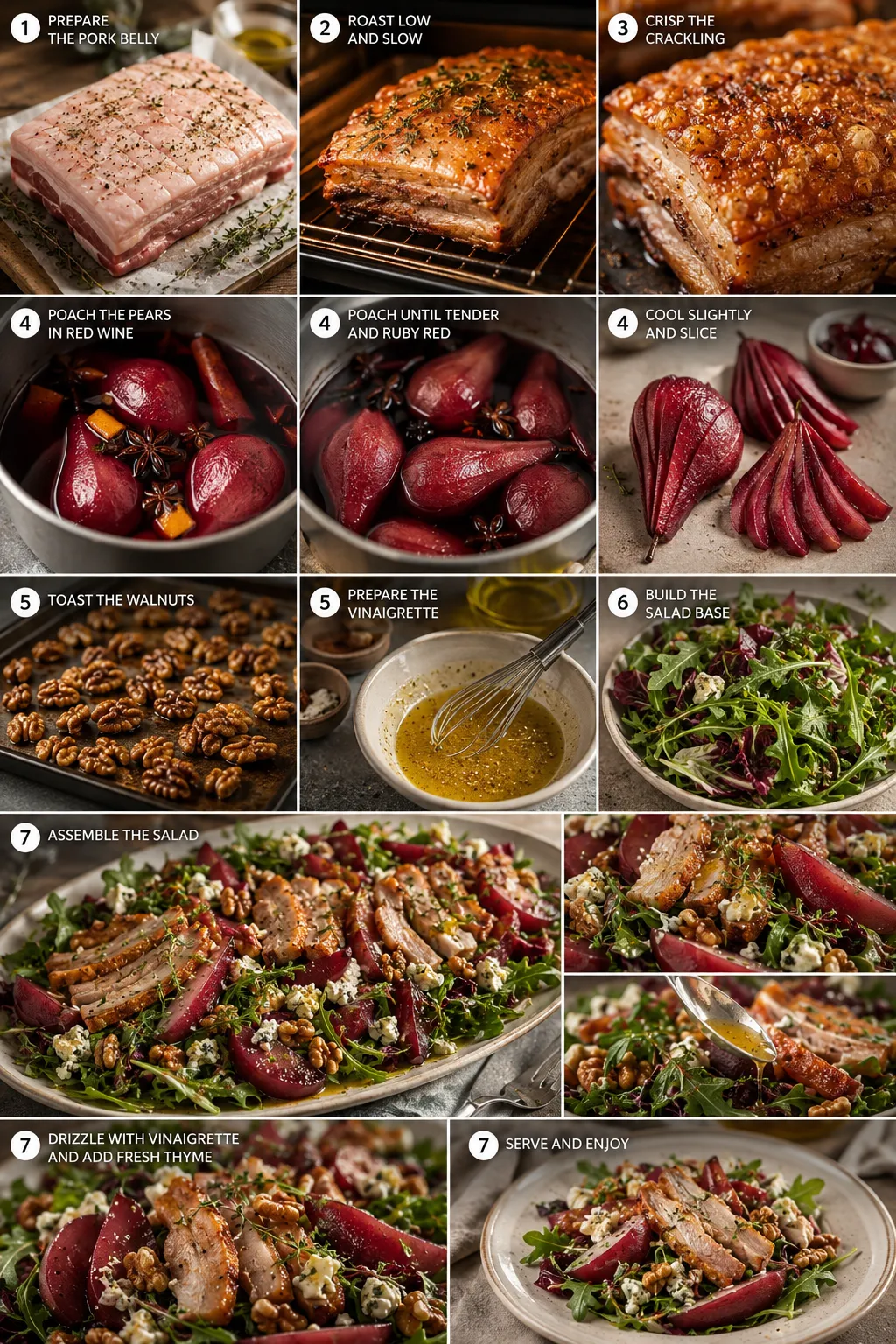
- Prepare and season the pork belly. Pat the pork belly completely dry, especially the skin, then score it lightly if needed. Rub the meat with olive oil, flaky sea salt, black pepper, garlic powder, and fresh thyme, making sure the seasoning is evenly distributed.
- Roast the pork slowly. Place the pork skin-side up on a rack over a roasting tray and roast in a preheated 300°F (150°C) oven for 2½–3 hours, allowing the fat to render slowly and the meat to become incredibly tender.
- Crisp the crackling. Increase the oven temperature to 450°F (230°C) and continue roasting for 20–25 minutes, or until the skin is deeply golden, blistered, and wonderfully crisp. Remove from the oven and let the pork rest for at least 15 minutes before slicing.
- Poach the pears. While the pork is roasting, combine the red wine, water, maple syrup, cinnamon stick, star anise, orange peel, and cloves in a saucepan. Bring to a gentle simmer, then carefully add the peeled pears. Cook for 20–25 minutes, turning occasionally, until the pears are tender and beautifully stained a deep ruby red. Remove them from the poaching liquid and allow them to cool slightly before slicing into wedges.
- Toast the walnuts and prepare the vinaigrette. Spread the walnuts on a baking tray and toast for 6–8 minutes until fragrant. Meanwhile, whisk together the olive oil, red wine vinegar, Dijon mustard, honey, salt, and freshly cracked black pepper until smooth and emulsified. Taste and adjust the seasoning if needed.
- Build the salad base. Arrange the mixed salad greens on a large serving platter. Scatter the toasted walnuts over the leaves, then crumble the goat cheese or blue cheese evenly across the salad for creamy pockets of flavor.
- Assemble and finish the salad. Slice the rested pork belly into thick pieces, making sure each slice includes both crisp crackling and tender meat. Arrange the warm pork and the red wine poached pear wedges over the greens. Drizzle with the vinaigrette, sprinkle with fresh thyme leaves and freshly cracked black pepper, and, if desired, finish with a spoonful of the reduced poaching syrup over the pears. Serve immediately while the pork is still warm and the greens remain crisp.
✨ Helpful Tips
- Pat the pork skin completely dry before roasting for the crispiest crackling.
- Roast the pork slowly before increasing the heat at the end.
- Choose pears that are ripe but still firm enough to hold their shape.
- Turn the pears occasionally while poaching for an even ruby-red color.
- Toast the walnuts just before assembling the salad for maximum flavor.
- Dress the salad immediately before serving to keep the greens crisp.
- Let the pork rest before slicing so the juices stay inside the meat.
🍷 What to serve with slow-roasted pork belly and red wine poached pear salad
One of the reasons I enjoy serving this salad for dinner is that it already feels complete the moment it reaches the table. The combination of crispy pork belly, tender wine-poached pears, fresh greens, creamy cheese, and toasted walnuts creates a meal that’s satisfying enough to stand on its own. Still, a few carefully chosen side dishes can turn it into something that feels worthy of a long weekend lunch or a special gathering with friends.
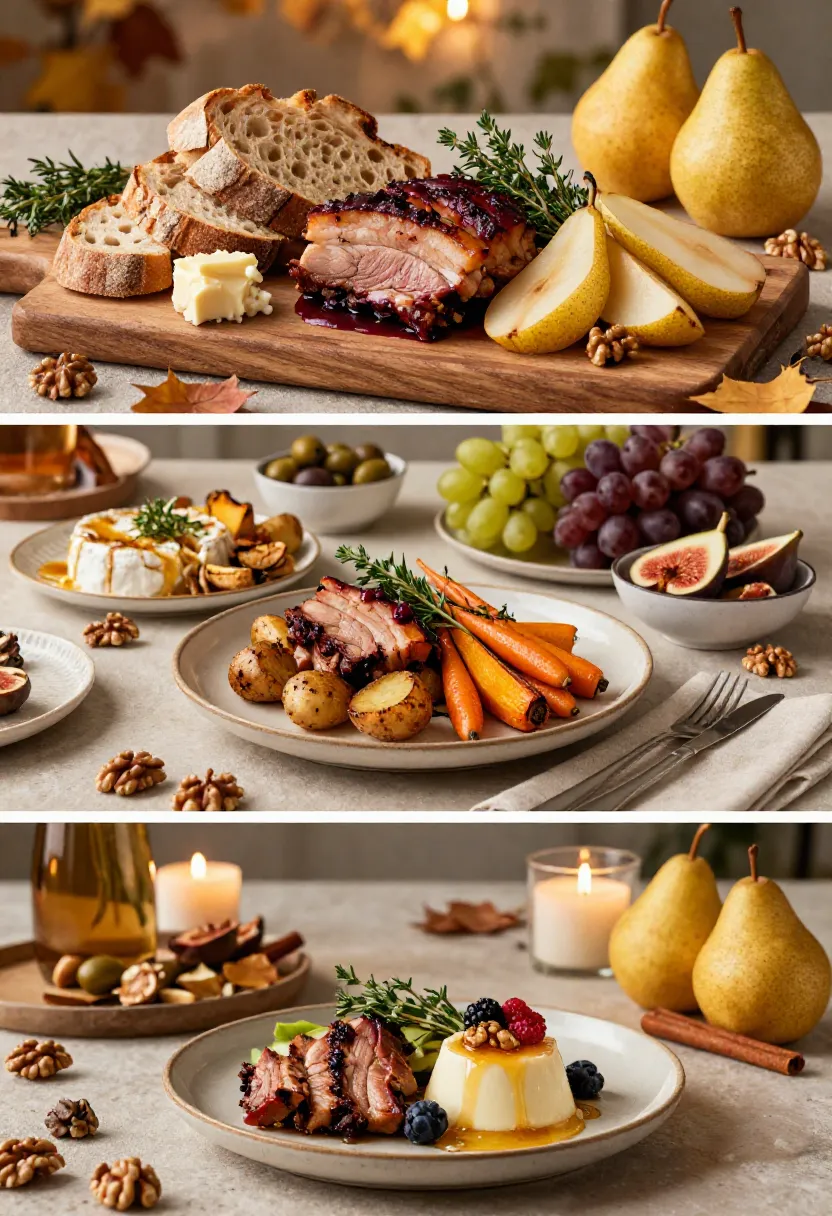
Fresh bread is usually the first thing I add. A warm loaf of crusty sourdough or rustic country bread is perfect for soaking up every last drop of the vinaigrette and the flavorful juices from the pork. Sometimes I’ll serve slices of walnut bread or a lightly toasted fruit-and-nut loaf, both of which pair beautifully with the sweetness of the pears and the richness of the pork belly.
If I want the meal to feel even more substantial, roasted vegetables are always a natural choice. Caramelized baby carrots, roasted parsnips, honey-glazed pumpkin, or crispy baby potatoes echo the warm flavors already on the plate without making the meal feel too heavy. They simply extend the comforting, autumn-inspired feeling of the salad.
For entertaining, I often begin with something simple like a baked Camembert, a small charcuterie board, or a bowl of marinated olives before bringing the salad to the table. It creates the kind of relaxed meal where everyone helps themselves, conversations unfold naturally, and dinner stretches well into the evening.
Wine, unsurprisingly, deserves a little thought here too.
Since the pears are gently poached in red wine, I like serving the same style of wine alongside the meal. A smooth Pinot Noir or Shiraz complements both the pork and the fruit beautifully without overpowering either one. If wine isn’t on the menu, sparkling apple cider or a lightly sparkling pear drink feels equally fitting.
🥂 Some of my favorite pairings include:
- warm sourdough or rustic walnut bread;
- roasted baby potatoes or honey-glazed carrots;
- baked Camembert or a simple cheese board;
- roasted pumpkin or caramelized parsnips;
- Pinot Noir, Shiraz, or sparkling apple cider;
- marinated olives and toasted nuts;
- a simple vanilla panna cotta or baked apple for dessert.
The nicest part is that none of these dishes compete with the salad.
They simply help create the kind of meal that encourages everyone to pour another glass, stay at the table a little longer, and enjoy the evening at an unhurried pace.
🍐 Easy ways to make it your own
One of the things I appreciate most about this salad is that it’s surprisingly adaptable. Once you’ve made it once, you’ll quickly realize that the overall balance is more important than following every ingredient exactly. Rich meat, sweet fruit, something creamy, something crunchy, and a bright dressing—that simple formula leaves plenty of room for creativity.
The fruit is probably the easiest place to experiment. While red wine poached pears remain my favorite, crisp apples work beautifully, especially varieties like Honeycrisp or Pink Lady. During cooler months I’ve even roasted figs or wedges of quince, both of which add another layer of sweetness that pairs naturally with the pork.
Cheese offers another easy way to change the personality of the salad. Creamy goat cheese gives the dish a fresh tang, blue cheese adds bold richness, while shaved Parmesan creates a slightly nuttier finish. Even burrata works surprisingly well if you’re looking for a softer, more luxurious presentation.
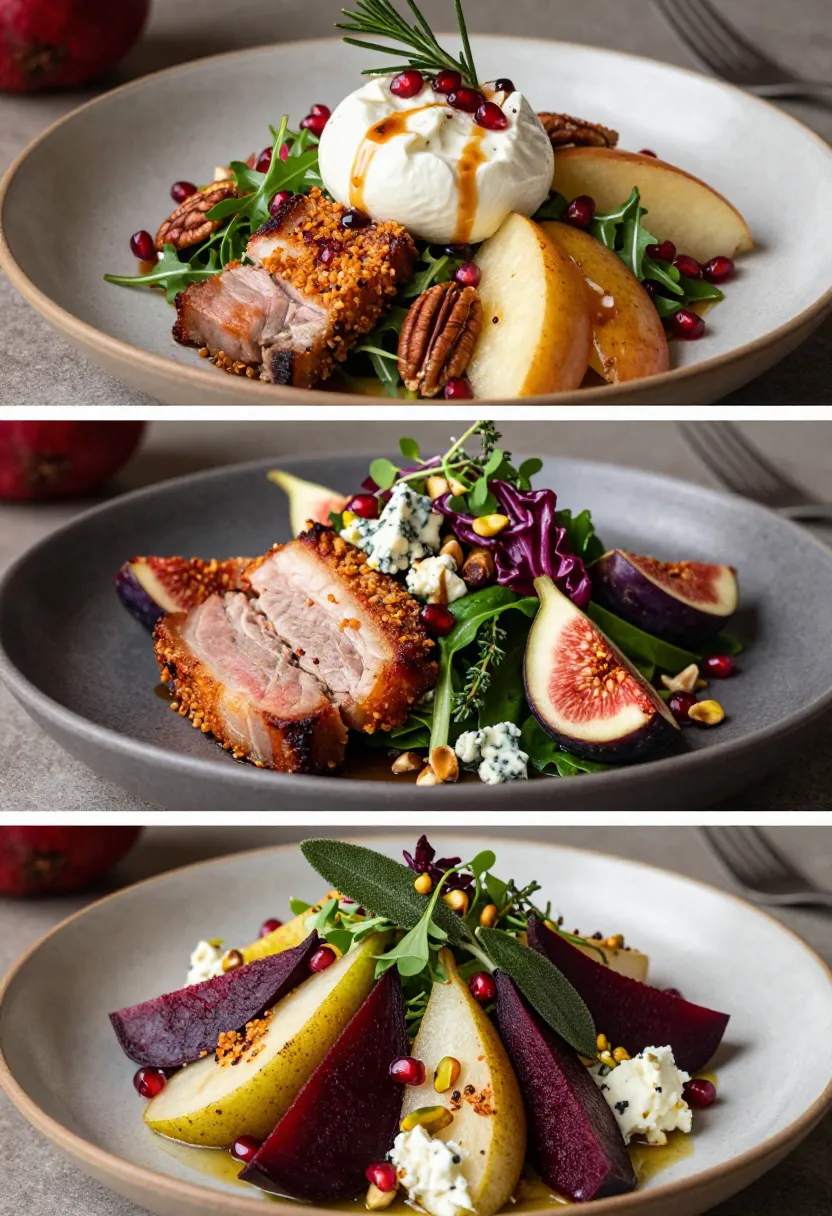
Nuts are just as flexible. Toasted walnuts are wonderfully traditional, but pecans add buttery sweetness, hazelnuts bring a deeper roasted flavor, and pistachios create a brighter, more colorful finish. Every version keeps the same satisfying crunch while giving the salad its own unique character.
One variation I’ve come back to several times happened after I had a few roasted beets left from another meal. I sliced them into the salad almost as an afterthought, expecting them to blend quietly into the background.
Instead, they added an earthy sweetness that paired beautifully with the pears and made the entire platter even more vibrant.
Since then, I never hesitate to include them whenever they’re already in the kitchen.
🍂 A few easy ways to customize this salad:
- replace the pears with roasted apples, figs, or quince;
- swap goat cheese for blue cheese, Parmesan, or burrata;
- use toasted pecans, hazelnuts, or pistachios instead of walnuts;
- add roasted beetroot for extra color and sweetness;
- finish with pomegranate seeds for a bright burst of freshness;
- drizzle with balsamic glaze for extra depth;
- add fresh rosemary or sage alongside the thyme.
Some of the best recipe variations begin with simple leftovers rather than careful planning.
And honestly, that’s often when cooking feels the most enjoyable.
❤️ The salad that makes every autumn dinner feel special
Every season seems to have one recipe that quietly announces its arrival.
Not because it’s fashionable.
Not because everyone is talking about it.
Simply because it captures everything you love about that time of year on a single plate.
For me, this salad has slowly become exactly that.
The first time cool evenings return and pears begin filling the market stalls, I immediately start thinking about slow-roasted pork belly. Before long, this salad finds its way back onto the menu, and somehow it feels just as exciting as the first time I made it.
What keeps me coming back is the balance.
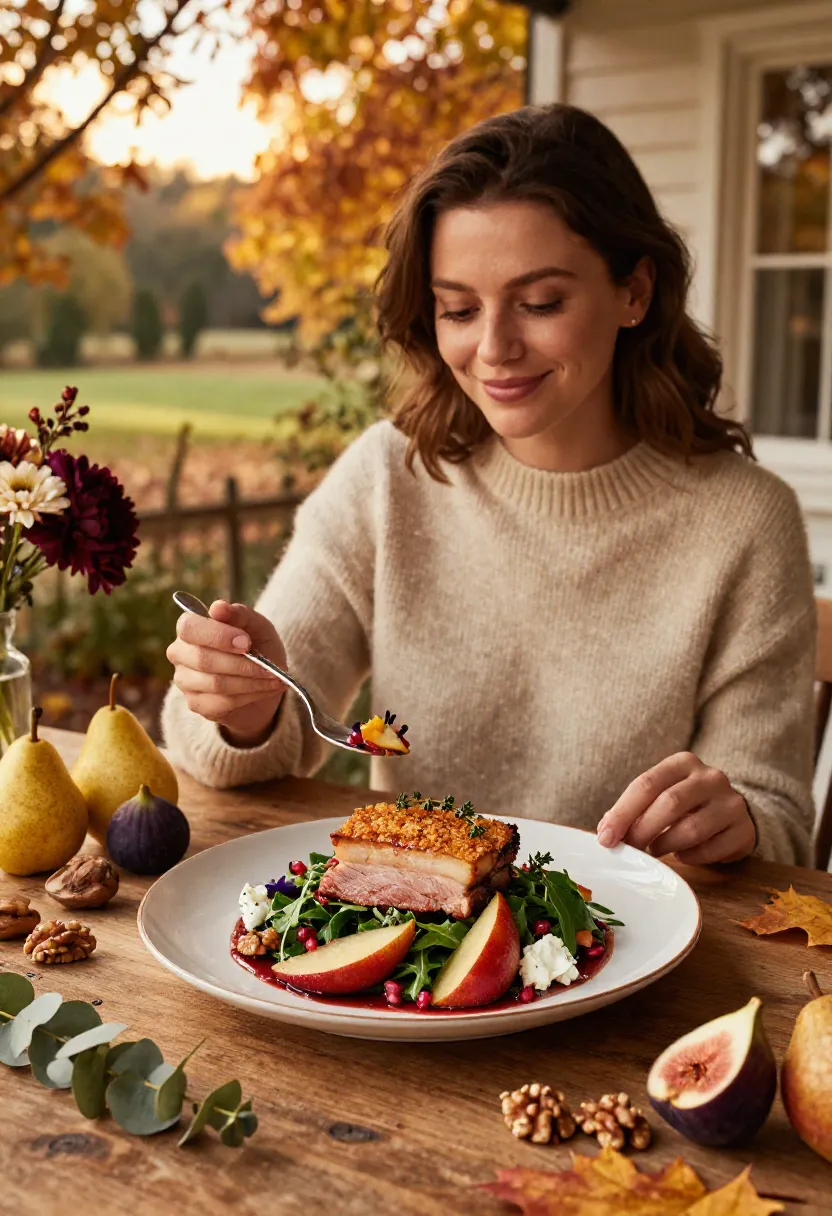
It delivers all the richness and comfort you’d expect from slow-roasted pork while still feeling fresh enough to leave you wanting another bite. The sweet pears, crisp greens, creamy cheese, crunchy walnuts, and bright vinaigrette prevent the dish from ever becoming too heavy. Every forkful feels carefully balanced without seeming overly complicated.
I’ve also noticed that this is one of those recipes people remember.
Someone usually asks how the pears became such a beautiful ruby color. Another person wants to know how the pork skin turned so perfectly crisp. By the end of the meal, someone inevitably asks if there’s another slice of pork left or whether they can take a little salad home for lunch the next day.
That’s always a good sign.
It means the recipe has become more than just dinner.
🍽️ If I had to explain why this salad returns to my table every autumn, I’d probably say it’s because:
- it transforms simple seasonal ingredients into something truly memorable;
- the contrast between rich pork and sweet pears is beautifully balanced;
- it feels elegant enough for entertaining but comfortable enough for family dinners;
- every component can be prepared ahead, making hosting much easier;
- and every colorful platter looks as impressive as it tastes.
Some salads are simply healthy meals.
Others become the reason everyone gathers around the table.
For me, this slow-roasted pork belly and red wine poached pear salad has become exactly that kind of recipe. It’s warm, generous, full of seasonal character, and somehow manages to make an ordinary autumn evening feel just a little more special.