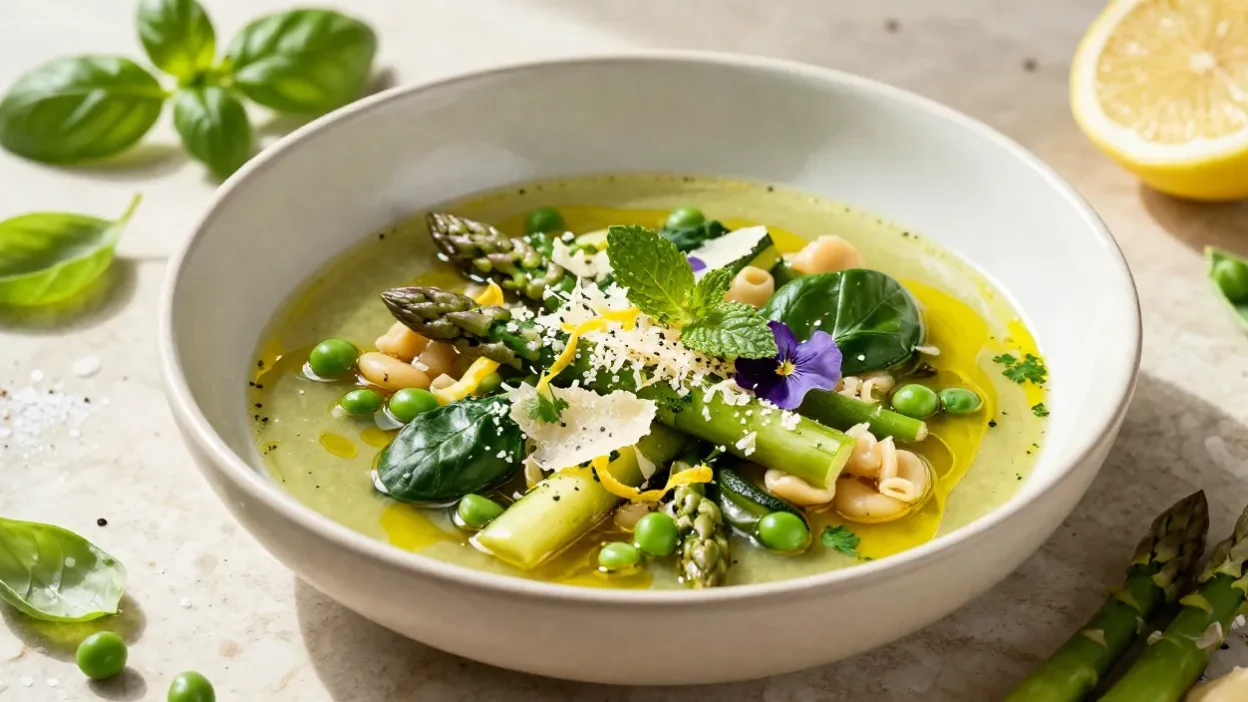
Every year there comes a moment when winter simply begins to lose its grip.
It isn’t dramatic, and it certainly doesn’t happen overnight. One day you’re still reaching for thick stews and slow-simmered soups, and the next you notice the afternoons stretching a little longer, birds returning outside the kitchen window, and the market slowly filling with vegetables that haven’t been around for months. Suddenly there are baskets of asparagus, tender peas, bunches of parsley, fresh spinach, and bright lemons sitting where squash and root vegetables used to be.
Without really planning it, dinner starts changing too.
That’s almost always when this green minestrone finds its way back into my kitchen.
I never seem to crave it in the middle of winter. January is still reserved for hearty soups that bubble away on the stove for hours, and February usually isn’t much different. But somewhere between the last chilly mornings and the first afternoons warm enough to leave the back door open, this soup begins sounding exactly right. It still offers the comfort of a steaming bowl, yet every spoonful feels lighter, brighter, and somehow full of new energy.
I think that’s what I love most about it.
Unlike traditional minestrone loaded with beans, tomatoes, and pasta, this version lets spring vegetables do almost all of the talking. Sweet peas, zucchini, asparagus, green beans, spinach, fragrant herbs, and a squeeze of fresh lemon create a broth that feels delicate without ever being boring. It tastes fresh in the truest sense of the word—not because it’s trying to be healthy, but because every ingredient still tastes unmistakably like itself.
One of my favorite parts happens before the soup is even finished.
Garlic begins softening gently in olive oil while onions slowly become sweet and translucent. Soon the vegetable broth starts simmering, filling the kitchen with the scent of fresh herbs and young vegetables instead of the deep roasted aromas that define winter cooking. Right before serving, a handful of chopped parsley, basil, and freshly grated Parmesan disappear into the pot, followed by a squeeze of lemon that somehow wakes up every other ingredient at once.
It’s difficult to describe until you smell it for yourself.
I’ve made this soup on rainy spring evenings when everyone wanted something warm after spending the day outside, on quiet Sundays with nothing more than fresh sourdough on the table, and even as the first course for Easter lunch when I wanted something elegant but completely unfussy. Somehow it always feels appropriate, no matter the occasion.
🌿 I usually make this soup when:
- spring vegetables begin filling the farmers market;
- I want something lighter after months of hearty winter meals;
- fresh herbs are growing faster than I can use them;
- dinner needs to feel comforting without being heavy;
- there’s a loaf of warm crusty bread waiting to be sliced.
Some recipes quietly announce that a new season has arrived.
This has become one of those recipes in my kitchen.
🍋 Why simple green vegetables create so much flavor
For the longest time, I believed the best soups needed time more than anything else.
The recipes I trusted most usually simmered for hours, gradually building layer after layer of flavor until the whole house smelled like dinner. I couldn’t imagine a soup filled with delicate green vegetables ever feeling quite as satisfying.
Then this recipe quietly proved me wrong.
The first surprise is how quickly everything comes together. There isn’t a complicated technique hiding behind the ingredient list, nor does the soup depend on heavy cream or rich stock to create depth. Instead, every vegetable contributes something completely different. Sweet peas bring little bursts of sweetness, asparagus adds freshness, green beans stay pleasantly crisp, zucchini melts gently into the broth, and spinach softens just enough to become silky without disappearing altogether.
Nothing has to work very hard because every ingredient has its own role.
Timing, though, makes all the difference.

One mistake I made the first time was adding every vegetable to the pot at once. By the time the green beans were ready, the spinach had almost vanished and the peas had lost some of their sweetness. Now I cook everything in stages, letting each vegetable spend exactly as much time in the broth as it needs. The result looks brighter, tastes fresher, and somehow feels much more alive.
The herbs deserve just as much attention.
Parsley brings freshness, basil adds gentle sweetness, and every now and then I’ll toss in a few mint leaves as well. It might sound unusual at first, but mint never overpowers the soup. Instead, it quietly lifts everything else, making the vegetables taste even fresher than they already do.
The final squeeze of lemon works the same way.
It doesn’t make the soup taste citrusy. Instead, it sharpens the sweetness of the peas, brightens the herbs, and brings the broth into perfect balance. It’s one of those tiny finishing touches that seems almost insignificant until you forget it once. After that, you never leave it out again.
| Ingredient | Why It’s Here | Texture | Flavor Contribution |
|---|---|---|---|
| Peas | Natural sweetness | Tender | Fresh, sweet |
| Zucchini | Soft body | Creamy | Mild, delicate |
| Green beans | Fresh contrast | Crisp-tender | Clean, earthy |
| Spinach | Color and freshness | Silky | Mild, leafy |
| Fresh herbs | Bright finish | Tender | Aromatic |
| Lemon | Final lift | Light | Fresh acidity |
| Parmesan | Savory richness | Creamy | Nutty depth |
| Vegetable broth | Brings everything together | Light | Gentle, comforting |
Looking into the pot, the ingredients seem almost too simple to create anything memorable.
Then you taste the first spoonful, and suddenly every little detail makes perfect sense.
🌼 The soup that makes rainy spring days feel cozy
Spring has never been particularly good at making up its mind.
One afternoon you’re eating lunch outside in the sunshine, convinced winter is finally behind you. The next morning you’re pulling on a sweater again while rain taps against the windows and the kettle quietly begins to boil. Those in-between days are exactly when this soup tastes its best.
It somehow manages to feel both cozy and refreshing at the same time.
That’s probably why I come back to it every year. The vegetables stay vibrant, the broth remains wonderfully light, and the fresh herbs keep every spoonful feeling bright, even while the bowl warms your hands. It gives you everything you’d want from comfort food without the heaviness that often comes with it.
I’ve also grown to appreciate how forgiving the recipe is. Some soups seem to lose their magic the moment they’re reheated, but this one settles in beautifully overnight. The vegetables absorb a little more of the broth, the herbs become even more fragrant, and the flavors seem to blend together without losing their freshness. Opening the refrigerator the next day and finding another bowl waiting for lunch always feels like a small reward.
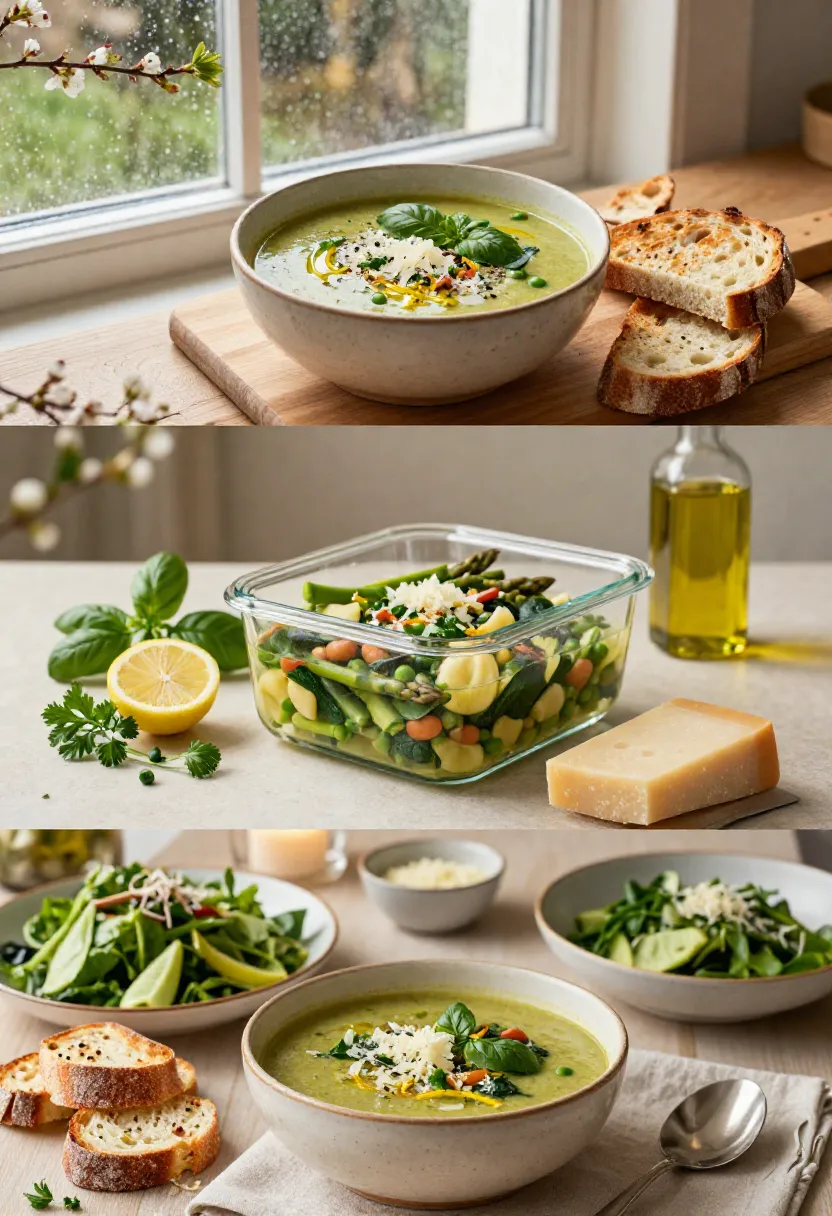
It’s also incredibly easy to adapt depending on what dinner calls for.
Sometimes I stir in a handful of tiny pasta or white beans when everyone is especially hungry. Other evenings I leave it exactly as it is, serving thick slices of toasted sourdough with plenty of butter on the side. If friends happen to stop by, a little grated Parmesan, cracked black pepper, and extra herbs scattered over the top somehow make the soup look as though I’d planned the meal all along.
🥣 This soup usually finds its way into my kitchen when:
- spring rain calls for something warm but fresh;
- asparagus, peas, and herbs are finally back in season;
- I need a simple dinner that comes together without much effort;
- tomorrow’s lunch is already part of the plan;
- I want comfort food that still feels light enough for spring.
Some soups belong to the coldest days of winter.
Others quietly remind you that brighter, greener days are finally on their way. This green minestrone has become exactly that kind of recipe for me. It marks the beginning of a new season every bit as much as the first flowers or the first warm afternoon, and somehow every bowl makes the whole house feel a little brighter.
🥣 Green Minestrone Soup Recipe
Some soups ask you to spend the entire afternoon in the kitchen, slowly building layer after layer of flavor until the pot has barely enough room left to stir. This isn’t one of them. Green minestrone proves that fresh, seasonal ingredients can create a soup that’s every bit as comforting as a long-simmered winter stew—just with a little more brightness and a lot more color.
I think that’s what keeps bringing me back to this recipe every spring. It has everything I love about homemade soup: a fragrant broth, tender vegetables, plenty of herbs, and enough substance to leave everyone satisfied. At the same time, it never feels overly rich or heavy. Instead, every spoonful tastes fresh, clean, and full of the season’s best produce.
One thing I’ve learned over the years is not to rush the vegetables. It can be tempting to let everything simmer together until it’s completely soft, but that’s not what this soup is about. The asparagus should still have a little bite, the peas should stay sweet, and the green beans should keep their fresh snap. Those different textures are part of what makes every spoonful interesting.
The herbs deserve a little patience, too.
I always wait until the very end before stirring them into the pot. Fresh parsley and basil lose some of their brightness if they cook for too long, while a final squeeze of lemon wakes up every ingredient almost instantly. It’s a simple finishing touch, but it makes the soup taste as though it was made from vegetables picked that very morning.
🧀 Ingredients
For the soup
- 2 tablespoons extra-virgin olive oil
- 1 medium yellow onion, finely diced
- 2 celery stalks, diced
- 2 cloves garlic, finely minced
- 1 medium zucchini, diced
- 1 bunch asparagus, trimmed and cut into bite-sized pieces
- 1½ cups green beans, trimmed and cut into 1-inch pieces
- 1 cup fresh or frozen peas
- 6 cups vegetable broth
- 1 can (15 ounces / 425 g) cannellini beans, drained and rinsed
- 2 cups baby spinach
- ½ cup small pasta (ditalini, orzo, or tiny shells)
- ¼ cup chopped fresh parsley
- ¼ cup chopped fresh basil
- 2 tablespoons chopped fresh mint (optional)
- 1 lemon
- Salt and freshly ground black pepper
For serving
- Freshly grated Parmesan cheese
- Extra basil leaves
- Extra-virgin olive oil
- Freshly cracked black pepper
- Crusty artisan bread
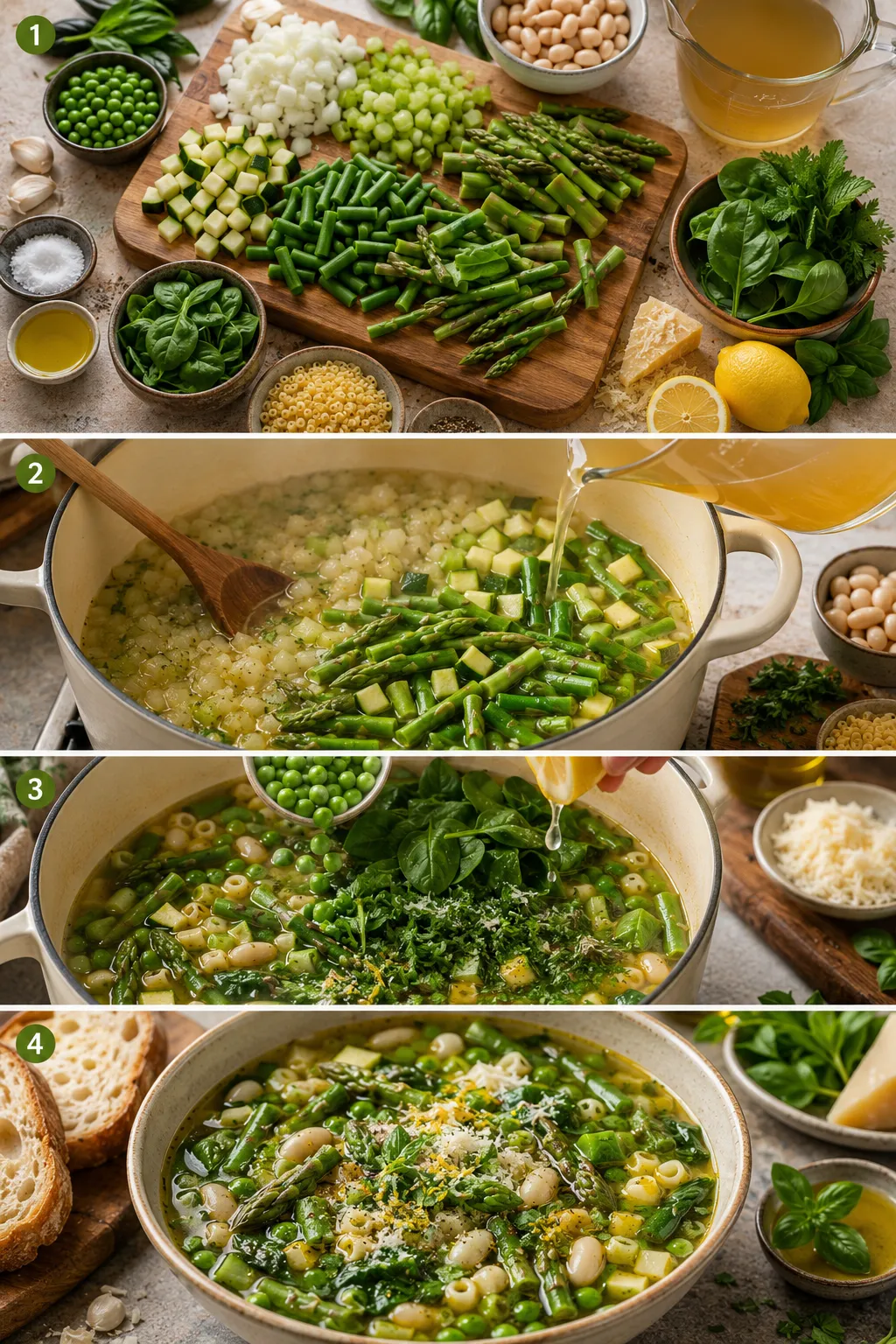
👩🍳 Instructions
✨ Helpful Tips
- Add the vegetables in stages so each one keeps its ideal texture.
- Don’t overcook the asparagus or green beans—they should remain slightly crisp.
- Stir the fresh herbs in only after removing the soup from the heat.
- Finish with fresh lemon juice just before serving for the brightest flavor.
- Cook the pasta separately if you expect leftovers, then add it to individual bowls before serving.
- Freshly grated Parmesan melts much better than pre-shredded cheese.
- Leftovers keep well for up to three days and often taste even better after the flavors have had time to mingle overnight.
🥖 What to serve with green minestrone soup
One of the things I appreciate most about this soup is how effortlessly it fits into almost any meal. It’s light enough to enjoy as a simple lunch, yet satisfying enough to become the centerpiece of dinner with just a few thoughtful additions. Because the broth is delicate and packed with fresh vegetables, I usually pair it with foods that add a little richness or texture without overwhelming those bright spring flavors.
Warm crusty bread is always the first thing that comes to mind. Whether it’s rustic sourdough, a chewy baguette, or slices of rosemary focaccia, there’s something incredibly satisfying about dipping fresh bread into the fragrant broth and catching every last pea and herb with the final bite. Some evenings I’ll spread the bread with whipped butter or rub it lightly with garlic before toasting, turning a simple loaf into something that feels a little more special.

When I want a heartier dinner, grilled chicken or roasted salmon are my favorite companions. Both are mild enough to let the soup remain the star while adding enough protein to round out the meal. A simple Parmesan toast or grilled cheese sandwich also works beautifully, especially on cool, rainy spring evenings when comfort food still sounds appealing but winter finally feels like it’s behind us.
If friends happen to stop by, I’ll often serve the soup as part of a relaxed spring lunch with a small cheese board, marinated olives, fresh fruit, and a crisp green salad dressed with lemon vinaigrette. It isn’t a complicated spread, but it creates the kind of meal that encourages everyone to stay at the table a little longer than planned.
🥂 Some of my favorite pairings include:
- warm sourdough, focaccia, or a crusty baguette;
- grilled chicken breast or roasted salmon;
- Parmesan toast or a classic grilled cheese sandwich;
- a crisp green salad with lemon vinaigrette;
- a simple cheese board with olives and fresh fruit;
- chilled Sauvignon Blanc, sparkling water with lemon, or homemade iced tea.
The nicest part is that none of these dishes compete with the soup. They simply make the meal feel a little more complete while letting those fresh spring vegetables remain the center of attention.
🌿 Easy ways to make it your own
One reason I never get tired of this soup is that it’s almost impossible to make exactly the same way twice. The recipe naturally changes with whatever looks best at the market, and that’s part of its charm. Some weeks asparagus steals the spotlight, while other times peas are so sweet that I find myself adding an extra handful without even thinking about it.
The vegetables are the easiest place to experiment. Tender broccoli florets, baby spinach, Swiss chard, or even shredded cabbage blend beautifully into the broth without changing its fresh personality. If spring vegetables aren’t quite available yet, frozen peas and green beans work surprisingly well and keep the soup tasting bright all year long.
Beans are another easy way to customize it. Cannellini beans are wonderfully creamy, but butter beans or chickpeas make equally delicious substitutes. Sometimes I’ll stir in cooked quinoa or pearl barley instead of pasta when I want something a little different, especially if I’m planning to enjoy leftovers throughout the week.

Fresh herbs completely change the character of the soup too. Basil keeps everything soft and slightly sweet, parsley adds brightness, while dill creates a fresher, almost garden-like flavor. Every now and then I’ll finish the bowls with a spoonful of homemade pesto instead of grated Parmesan. It melts gently into the broth and gives the soup an entirely new personality.
🌱 A few easy ways to customize this soup:
- add asparagus, broccoli, or shredded kale;
- swap cannellini beans for chickpeas or butter beans;
- use quinoa or pearl barley instead of pasta;
- stir in homemade pesto before serving;
- finish with crumbled goat cheese instead of Parmesan;
- add zucchini blossoms or fresh peas during late spring;
- sprinkle toasted pine nuts over the top for extra crunch.
Some of my favorite versions have happened without much planning. One afternoon I found a handful of sugar snap peas left in the refrigerator after another recipe, sliced them into the soup at the last minute, and immediately wondered why I hadn’t been doing it all along.
That’s usually how the best recipes evolve.
Not because you’re trying to reinvent them, but because you’re simply cooking with whatever the season has given you.
💚 The spring soup I look forward to every year
Every season has a recipe that quietly announces its arrival.
For some people it’s the first strawberry shortcake of the year or a big bowl of pasta with fresh tomatoes. For me, it’s usually this soup.
The moment I see baskets of asparagus, sweet peas, and fresh herbs filling the market stalls, I already know what one of the first meals of the season will be. It’s become less of a recipe and more of a small tradition that marks the shift from slow winter cooking to brighter, lighter dinners.
I also love how this soup changes the atmosphere around the table. Winter meals often encourage everyone to settle in and stay warm, while this one somehow makes the whole room feel lighter. The vibrant greens, fresh herbs, and bright lemon bring a little energy back after months of earthy, comforting dishes, reminding everyone that longer days are finally here.

What surprises me most is how often people ask for another bowl. At first glance, it looks like a simple vegetable soup, but somewhere between the fragrant broth, tender vegetables, fresh herbs, and generous shower of Parmesan, it becomes something people genuinely remember. More than once I’ve had friends ask for the recipe before dinner was even over.
💚 If I had to explain why this soup returns to my kitchen every spring, I’d probably say it’s because:
- it’s comforting without ever feeling heavy;
- full of fresh seasonal vegetables and herbs;
- easy enough for busy weeknights but beautiful enough for guests;
- perfect for meal prep and leftovers;
- and one of the simplest ways to celebrate the arrival of spring.
Some recipes quietly disappear with the season.
Others become the meals you look forward to making year after year.
This green minestrone has become one of those recipes for me. It reminds me that the best spring cooking doesn’t need complicated techniques or long ingredient lists. Sometimes all it takes is a pot full of fresh vegetables, a handful of herbs, and enough time to gather everyone around the table before the soup has a chance to cool.