Sweet potato casserole has always carried a bit of a reputation.
For a lot of people, it’s the dish that appears once or twice a year, usually somewhere between the turkey and the stuffing, topped with marshmallows and brown sugar before quietly disappearing until the next holiday season. I grew up thinking that was simply how sweet potatoes were meant to be served.
Turns out, they had a lot more to offer.
The first time I tried a savory version, I remember wondering why it had taken me so long to make the switch. The potatoes were still naturally sweet, but instead of competing with even more sweetness, they were balanced by buttery herbs, melted cheese, roasted garlic, and just enough seasoning to let their earthy flavor shine through. It felt comforting without tasting like dessert pretending to be dinner.
That’s exactly what keeps bringing me back to this casserole.
It works just as well beside a roast chicken on a quiet Sunday as it does on a Thanksgiving table filled with family favorites. Somehow it manages to feel a little special without asking for expensive ingredients or complicated techniques. Most of what goes into the baking dish is probably already sitting in the pantry or refrigerator.
I appreciate recipes like that.
Life has a funny way of filling the calendar when you least expect it. Some evenings you have plenty of time to cook. Other days you’re peeling sweet potatoes while answering a text message and wondering if you remembered to buy butter. This casserole doesn’t mind either version of you. It isn’t fussy, and it doesn’t punish small shortcuts.
One thing I learned after making it a few times is that sweet potatoes don’t need much help. Roast them until they’re completely tender, mash them while they’re still warm, add a little butter, garlic, herbs, and cheese, and suddenly the whole kitchen smells like autumn settling in for the evening. Rich, cozy, and just a little irresistible.
The aroma is what usually gives it away first.
Butter starts to brown around the edges of the baking dish. Garlic softens into something mellow and almost sweet. Fresh thyme becomes earthy and fragrant, and the cheese begins bubbling on top until little golden patches appear across the surface. By then, someone has almost always wandered into the kitchen asking how much longer dinner will be.
Not long.
That’s usually when I know the casserole is exactly where it should be.
🤎 A few reasons this recipe has earned a permanent place in my kitchen:
- It feels comforting without being overly heavy.
- The ingredients are simple and easy to find all year.
- It works for both holiday gatherings and ordinary weeknight dinners.
- Leftovers taste just as good the next day.
- It somehow convinces people who “don’t really like sweet potatoes” to ask for another spoonful.
Some recipes belong to a season.
This one belongs wherever good food brings people together.
🧀 Why this savory casserole works so beautifully
The first spoonful tells you almost everything you need to know.
You get the creamy sweet potatoes first. Then comes the buttery richness, followed by a little garlic, a hint of fresh herbs, and finally that golden layer of bubbling cheese across the top. Nothing jumps out trying to steal the spotlight. Instead, every ingredient quietly settles into place, making the next bite taste just a little better than the last.
That’s what I enjoy most about savory sweet potato casserole.
It doesn’t try to disguise the natural sweetness of the potatoes. It simply gives them some balance.
For years, I thought sweet potatoes always needed maple syrup, cinnamon, or marshmallows to taste complete. Then I started cooking them with garlic instead. It sounds like a small change, but it completely shifts the personality of the dish. Suddenly the sweetness feels more subtle, almost earthy, while herbs and cheese bring enough savory flavor to keep everything from becoming one-note.
I’ve even made the mistake of adding too much cheese once.
It wasn’t bad.
It just tasted more like a cheese bake than a sweet potato casserole. Ever since then I’ve been a little more restrained, letting the potatoes stay the star instead of covering them up. Sometimes less really does taste like more.
Texture plays an equally important role.
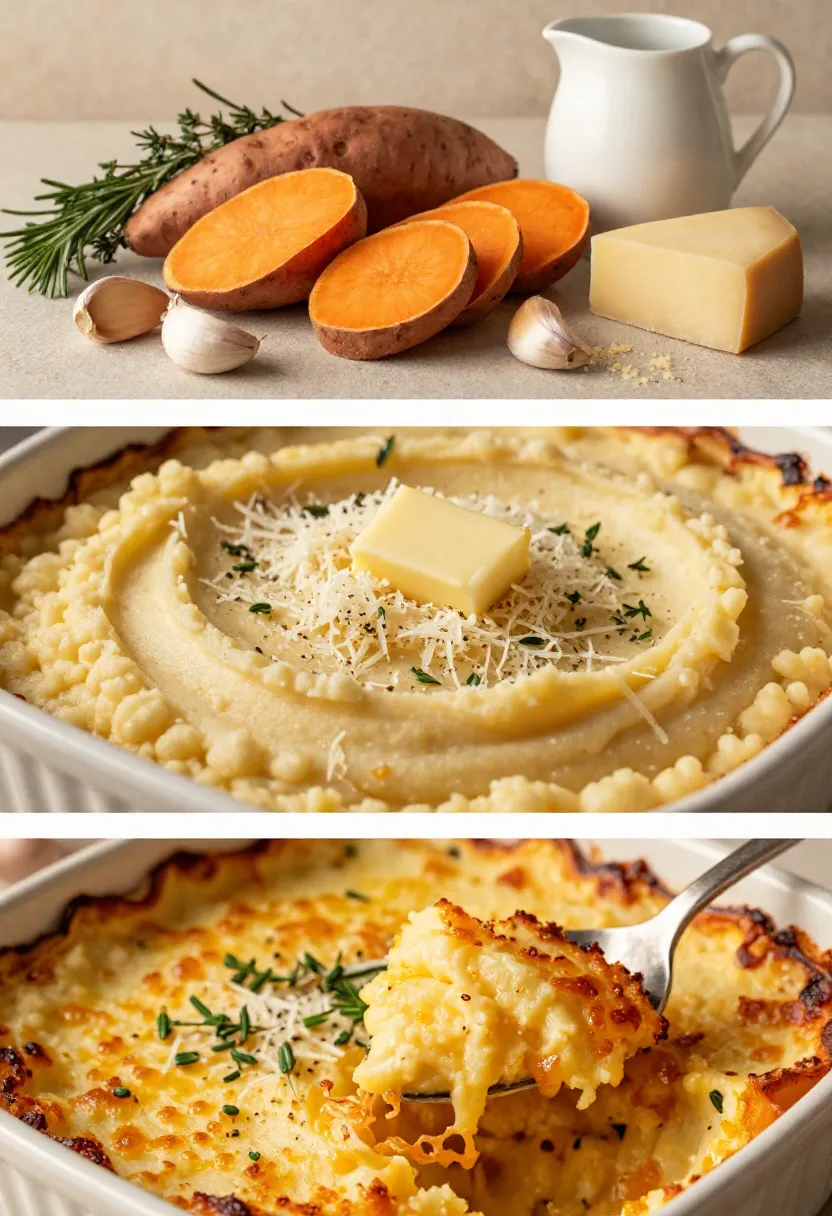
Nobody wants a casserole that’s completely smooth like baby food, but it shouldn’t be chunky either. I usually mash the potatoes until they’re mostly creamy, leaving a few small pieces behind. Those little pockets of texture make every spoonful feel more homemade. You notice them without really thinking about it.
The topping deserves its own moment too.
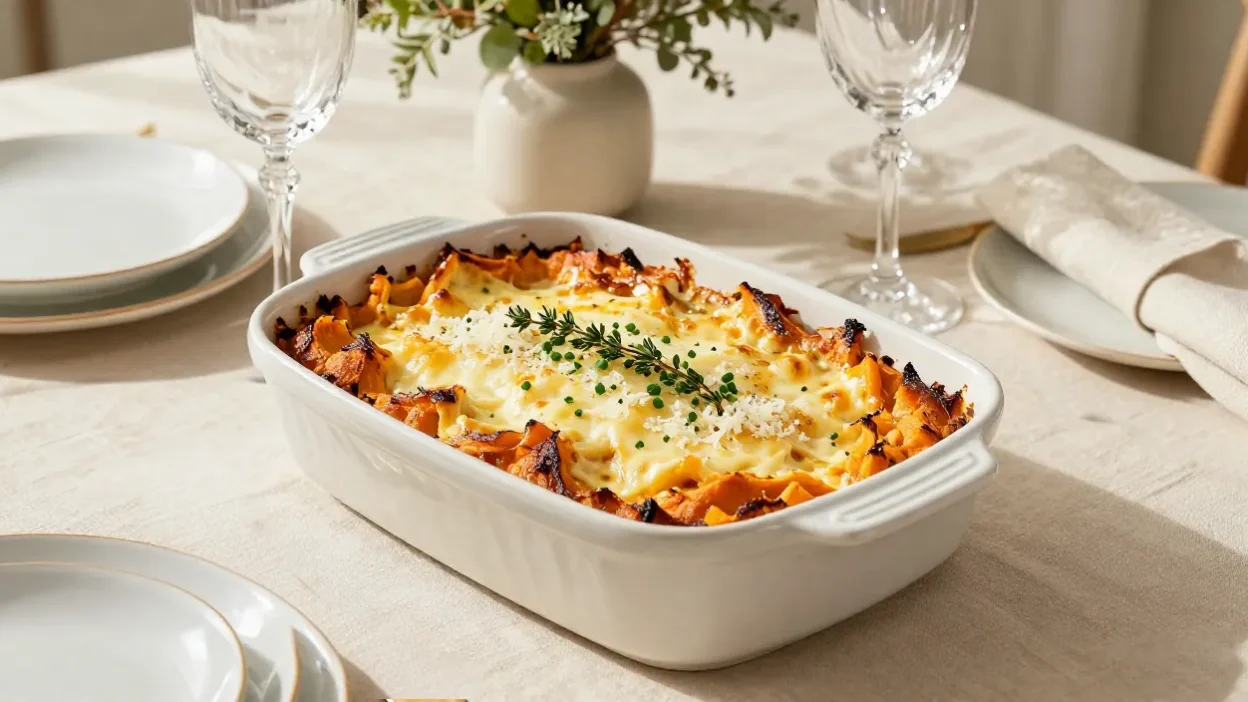
As the casserole bakes, the cheese browns around the edges while the center stays soft and bubbling. The corners become slightly crisp where the butter meets the baking dish, and I’ll admit those crispy edges disappear from the serving spoon surprisingly fast in my house. Everyone seems to aim for the corners first.
Fresh herbs make more difference than you’d expect.
A little thyme adds warmth without overpowering the potatoes, while rosemary creates a deeper, woodsy flavor that’s especially nice during cooler months. Chives scattered over the top just before serving brighten everything again, almost like adding a squeeze of lemon to soup.
It’s a small finishing touch.
But you’ll notice if it’s missing.
| Ingredient | Why it’s here | What happens while baking | Flavor contribution |
|---|---|---|---|
| Sweet potatoes | The heart of the casserole | Become creamy and naturally smooth | Sweet, earthy, buttery |
| Butter | Richness and moisture | Melts throughout the casserole | Warm, creamy flavor |
| Garlic | Savory depth | Softens and sweetens | Gentle aromatic warmth |
| Gruyère or sharp cheddar | Golden topping | Melts and caramelizes | Nutty, savory richness |
| Parmesan | Finishing depth | Creates crisp golden edges | Salty, slightly nutty |
| Fresh thyme | Herbal balance | Releases fragrant oils | Earthy, lightly floral |
| Chives | Fresh finish | Added after baking | Mild onion freshness |
| Heavy cream or milk | Creamy texture | Keeps the mash silky | Smooth, rich consistency |
Looking at the ingredient list, there’s nothing complicated hiding there.
That’s exactly why this casserole works.
Every ingredient has a purpose. Every flavor supports the next. And when they all come together in the oven, the result feels far more comforting than the simplicity of the recipe might suggest.
🍂 The kind of comfort food that fits any table
Some recipes ask for your full attention.
This one somehow creates it.
I’ve noticed something funny whenever this casserole is in the oven. People start wandering into the dining room long before dinner is actually ready. Someone comes to refill a glass of water. Someone else suddenly remembers they were supposed to set the table. Nobody admits they’re following the smell, but they are.
Butter has a way of doing that.
So does roasted garlic.
By the time the cheese begins bubbling around the edges of the baking dish, the whole house smells warm enough to make everyone just… linger for a while.
Maybe that’s why I don’t think of this as a holiday recipe anymore.
Holiday dishes often carry a little pressure. Everything has to be perfect because everyone remembers how Grandma used to make it. Ordinary dinners don’t come with those expectations. They leave room to relax, experiment, and enjoy the food instead of worrying whether it’s traditional enough.
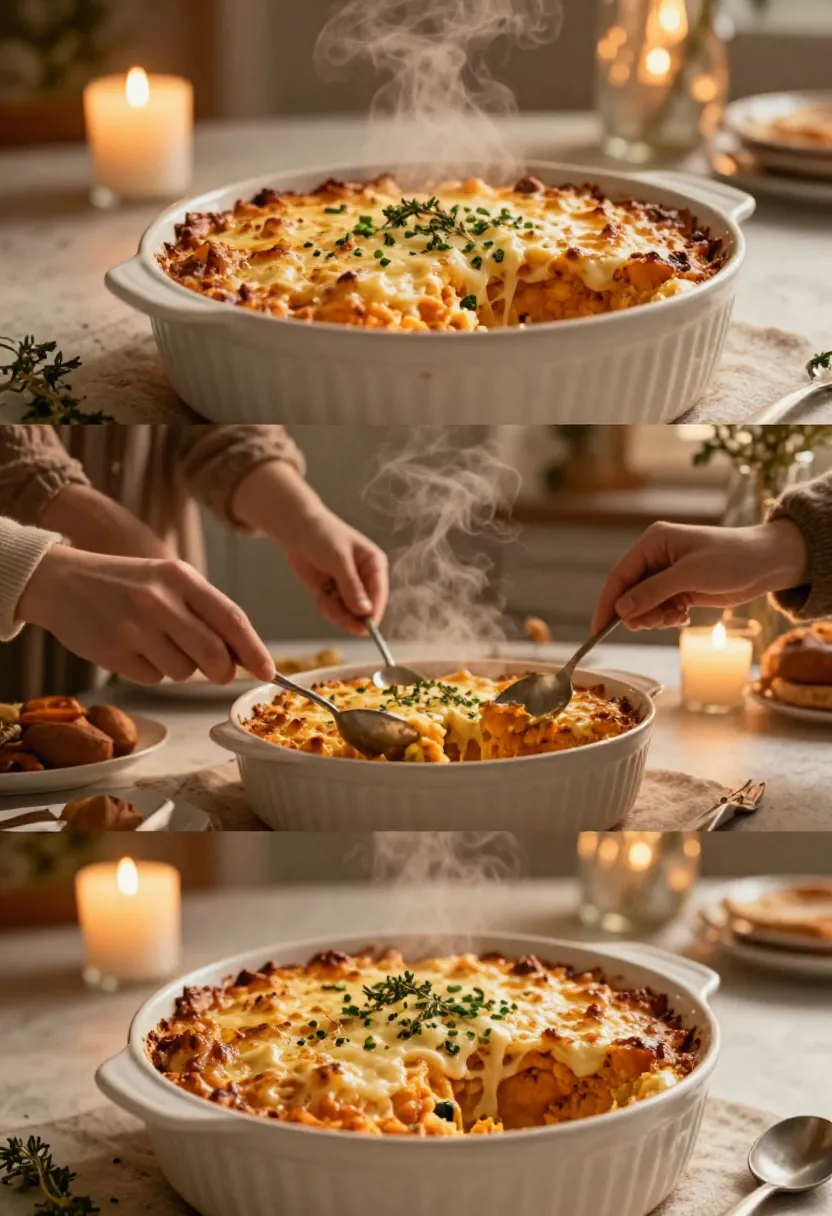
This casserole fits that kind of evening perfectly.
Sometimes it sits beside roast chicken.
Sometimes grilled pork chops.
And every now and then it’s the main event, served with nothing more than a peppery salad and a loaf of warm crusty bread still wrapped in a linen towel.
Honestly, nobody complains.
One thing I appreciate is how forgiving it is once dinner starts running behind. If someone is twenty minutes late, the casserole doesn’t fall apart. It stays warm. The flavors actually settle a little more, and those browned edges become even better after a short rest.
I wish more recipes behaved like that.
🍽️ This casserole usually finds its way onto my table when:
- Sunday dinner turns into an afternoon that stretches well into the evening.
- Friends decide to stay “just a little longer.”
- I need one dish that feeds everyone without keeping me in the kitchen all night.
- The weather cools down enough that turning on the oven suddenly feels like a good idea.
- I want something that feels comforting without being overly rich.
The funny part is that leftovers rarely stay in the refrigerator for very long.
Someone always sneaks a spoonful while deciding what to have for lunch the next day. I’ve done exactly the same thing more than once.
And honestly…
I think every recipe deserves to be the kind people keep coming back for, even after dinner is over.
🥘 Savory Sweet Potato Casserole Recipe
There are some recipes that only make sense once the weather starts cooling down. The first chilly evening arrives, you reach for a sweater without thinking about it, and suddenly roasted vegetables and bubbling casseroles sound a whole lot more appealing than anything coming off the grill. That’s usually when this savory sweet potato casserole makes its first appearance on my table.
I love that it feels comforting without being overly rich. Sweet potatoes already bring so much natural flavor that they don’t need much convincing. A little butter, roasted garlic, fresh herbs, and a generous handful of cheese are enough to turn them into something that feels worthy of both a holiday gathering and an ordinary Wednesday night.
One thing I’ve learned over the years is not to rush the sweet potatoes. Let them become completely tender before mashing. It might take an extra ten minutes in the oven, but you’ll notice the difference immediately. The texture becomes smoother, the natural sweetness develops even more, and you won’t find yourself fighting stubborn little lumps later.
It’s also one of those dishes that seems to improve after a few quiet minutes on the counter. Straight from the oven it’s wonderfully bubbly, but give it five or ten minutes before serving and everything settles into place. The cheese firms up slightly, the flavors mingle together, and every spoonful holds its shape just a little better.
🧀 Ingredients
- 3 pounds (1.4 kg) sweet potatoes, peeled and cut into large chunks
- 3 tablespoons unsalted butter
- 3 cloves garlic, finely minced
- ½ cup whole milk or heavy cream
- 1 cup shredded Gruyère or sharp white cheddar cheese
- ¼ cup freshly grated Parmesan cheese
- 1 tablespoon fresh thyme leaves
- 2 tablespoons chopped fresh chives, plus extra for serving
- 1 teaspoon kosher salt
- ½ teaspoon freshly ground black pepper
- Pinch of smoked paprika (optional)
- Extra Parmesan for topping
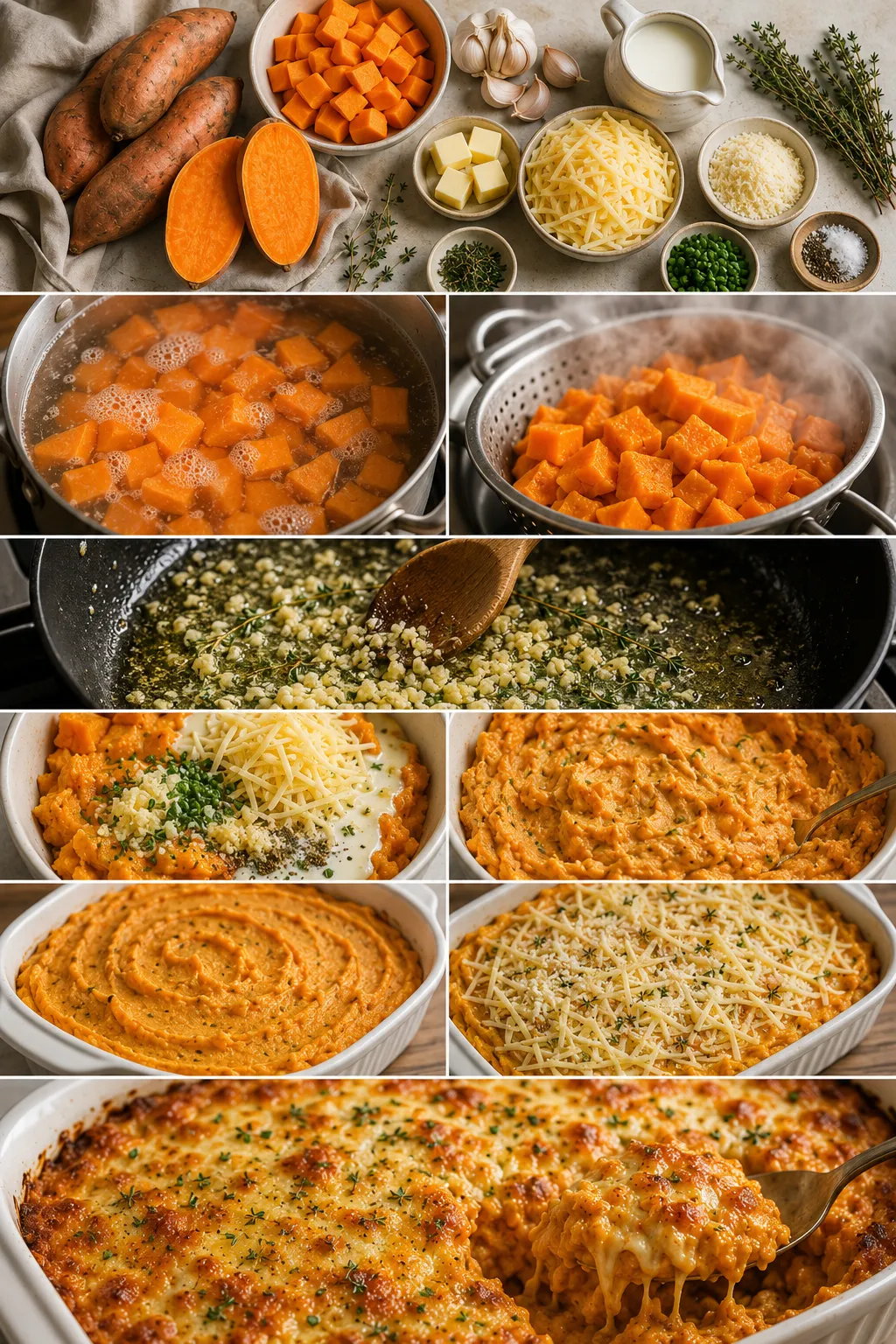
👩🍳 Instructions
1. Cook the sweet potatoes until they’re completely tender.
Bring a large pot of generously salted water to a boil and add the sweet potato chunks. Cook for about 15 to 20 minutes, depending on their size, until a knife slides through with almost no resistance. Don’t stop when they’re simply “fork tender.” Give them another minute or two if needed. The softer they are now, the creamier your casserole will be later. Drain well and let the potatoes sit in the colander for a minute so excess moisture can evaporate.
2. Build the savory base while the potatoes are still hot.
Melt the butter in a small skillet over medium-low heat. Add the minced garlic and cook gently for about a minute, just until fragrant. You aren’t trying to brown the garlic here. It should soften and become mellow rather than sharp. Stir in the thyme leaves and let them warm in the butter for another thirty seconds. The smell at this point is usually enough to convince everyone that dinner is going to be worth the wait.
3. Mash everything together.
Transfer the drained sweet potatoes to a large mixing bowl. Pour the warm garlic butter over the top, then add the milk, salt, pepper, and about three-quarters of the Gruyère. Mash until mostly smooth, leaving a few small pieces behind for texture. I actually prefer it this way. Perfectly silky mashed sweet potatoes can feel a little too uniform, while a few tiny chunks make the casserole taste more homemade.
4. Fill the baking dish.
Lightly butter a 9 x 13-inch baking dish and spoon the sweet potato mixture inside. Spread it into an even layer with the back of a spoon, then gently create a few swirls across the surface. Those little ridges brown beautifully in the oven and catch extra bits of melted cheese. Sprinkle the remaining Gruyère and all of the Parmesan evenly across the top.
5. Bake until golden and bubbling.
Place the casserole in a 375°F (190°C) oven and bake for 25 to 30 minutes. The cheese should be fully melted with deep golden spots beginning to form around the edges. If you like an extra crisp topping—and I usually do—switch on the broiler for the final minute or two. Just don’t wander away. Cheese has a habit of going from beautifully golden to a little too enthusiastic surprisingly fast.
6. Let it rest before serving.
Resist the temptation to dig in immediately. Let the casserole rest for about 10 minutes after it comes out of the oven. It stays wonderfully warm, but the filling settles enough that every spoonful comes out creamy instead of runny. Scatter fresh chives over the top along with another light sprinkle of Parmesan while everything is still warm.
7. Serve family-style and enjoy every last spoonful.
Carry the baking dish straight to the table and let everyone serve themselves. This casserole pairs beautifully with roast chicken, turkey, grilled pork chops, baked ham, or simply a crisp green salad and warm bread if you’re keeping dinner simple. Don’t be surprised if people go back for seconds before the main dish has even made it around the table. That seems to happen every single time I make it.
✨ Helpful Tips
- Roast the sweet potatoes instead of boiling them if you want an even deeper, more concentrated flavor.
- Drain the cooked potatoes well before mashing so the casserole stays creamy instead of watery.
- Grate your own cheese whenever possible—it melts more smoothly and browns much better.
- Fresh thyme gives the casserole a softer, more aromatic flavor than dried herbs.
- Assemble the casserole a day ahead, cover it tightly, and bake just before serving.
- Let the casserole rest for 10 minutes before serving so it holds together beautifully.
- Leftovers reheat wonderfully in the oven, and a fried egg on top turns them into an unexpectedly great lunch the next day.
🥗 What to serve with savory sweet potato casserole
One of the nicest things about this casserole is that it never tries to compete with the rest of the meal. Instead, it quietly makes everything else on the table taste even better. The creamy sweet potatoes bring richness, the herbs add freshness, and the golden cheese ties everything together, which means you don’t need a dozen side dishes to create a satisfying dinner.
When I’m planning a meal around it, I usually think about balance instead of quantity. Since the casserole is soft and creamy, I like pairing it with something that has a little texture or a brighter flavor. A crisp salad with peppery greens instantly lightens the plate, while roasted vegetables add color without making the meal feel too heavy. It’s a simple combination, but one I come back to over and over again.
This casserole also fits surprisingly well beside almost any main course. Roast chicken is probably the combination I make most often because both dishes are comforting without feeling overly rich. Baked ham turns it into an effortless holiday dinner, while grilled pork chops add just enough smoky flavor to balance the sweetness of the potatoes. Even roasted salmon works beautifully if you’re looking for something a little lighter.
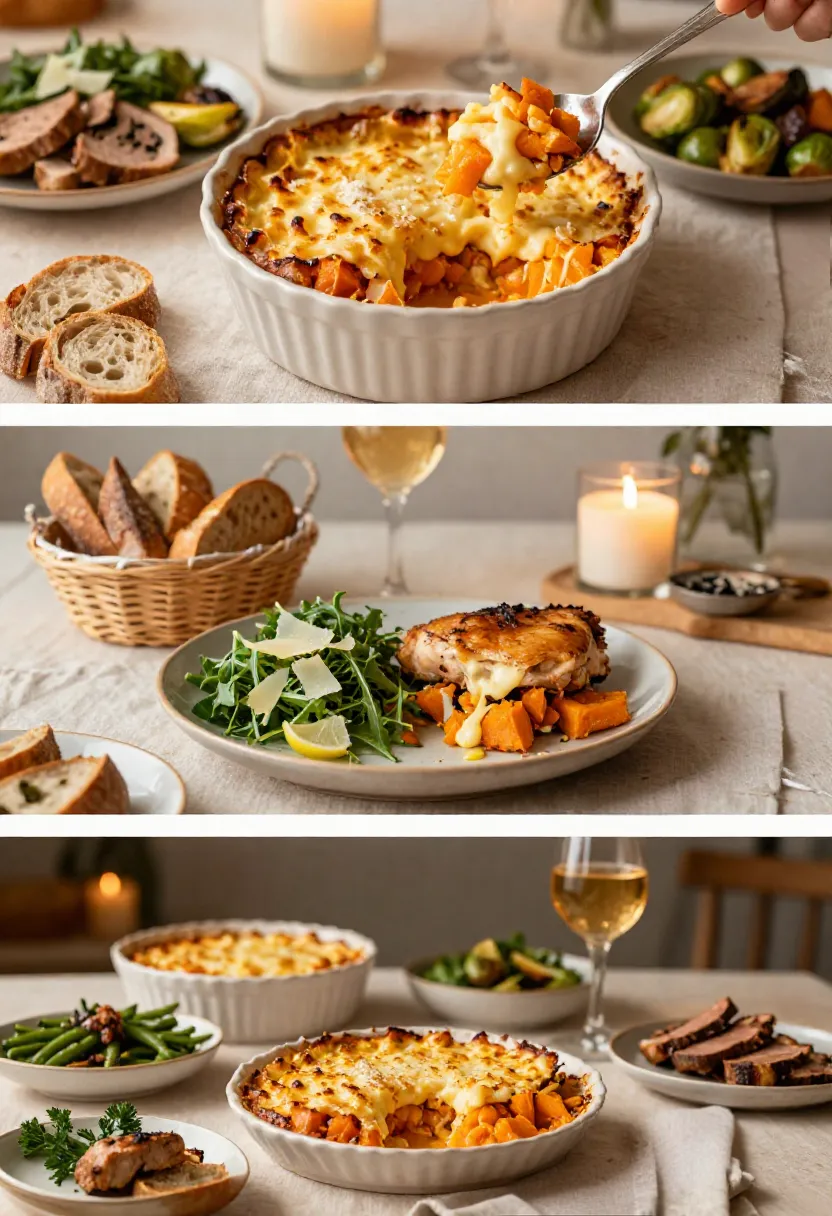
If we’re having friends over, I usually set everything in the middle of the table and let people serve themselves. There’s something relaxed about family-style dinners that makes everyone stay a little longer. Someone reaches for another spoonful of casserole, someone else tears off another piece of warm bread, and before long the conversation becomes just as memorable as the meal itself.
🥂 Some of my favorite pairings include:
- herb-roasted chicken or turkey;
- baked ham with a light honey glaze;
- grilled pork chops or pork tenderloin;
- roasted Brussels sprouts or green beans;
- a peppery arugula salad with lemon vinaigrette;
- warm artisan bread with whipped butter;
- a glass of Chardonnay, dry Riesling, sparkling cider, or homemade iced tea.
Sometimes that’s all a good dinner needs. A warm casserole in the center of the table, a few simple sides, and enough time for everyone to slow down for a while. Those are usually the evenings I remember most.
✨ Easy ways to make it your own
One reason this casserole never gets old is that it leaves plenty of room to experiment. The basic recipe is dependable, but once you’ve made it once or twice, you’ll probably start adjusting little things without even thinking about it. I certainly do.
Some years I use sharp white cheddar because I want a bolder flavor. Other times I reach for Gruyère, especially around the holidays, because it melts beautifully and develops those irresistible golden spots on top. Neither choice is wrong. They simply create two slightly different versions of the same comforting dish.
The herbs are easy to change, too. Fresh thyme gives the casserole a cozy, earthy flavor that feels perfect during autumn, while rosemary makes it a little deeper and more rustic. If spring rolls around and sweet potatoes are still on the menu, chopped parsley or fresh chives brighten everything without changing the character of the dish.

I also like playing with the topping depending on the occasion. A little extra Parmesan creates a crisp, savory crust, while toasted pecans or walnuts add welcome crunch. Every now and then I’ll sprinkle a handful of crispy fried onions over the casserole during the last few minutes of baking. They’re unexpected, but they disappear surprisingly fast.
🌿 A few simple ways to customize this casserole:
- swap Gruyère for sharp cheddar, Fontina, or smoked Gouda;
- add crispy cooked bacon for extra smoky flavor;
- mix sautéed mushrooms into the filling;
- top with toasted pecans or walnuts;
- sprinkle crispy fried onions over the casserole before serving;
- add a pinch of smoked paprika or cayenne for gentle warmth;
- finish with extra fresh herbs just before bringing it to the table.
One of my favorite versions actually happened by accident. I had a small wedge of Parmesan left in the refrigerator that wasn’t quite enough for another recipe, so I grated every last bit over the top before baking. The edges turned wonderfully crisp, almost like little cheese crackers baked right into the casserole.
Now I do it on purpose.
That’s usually how the best recipe variations begin.
❤️ The casserole everyone asks for every holiday… and plenty of ordinary Sundays
Every family seems to have one dish that quietly becomes part of the tradition.
Not because anyone planned it that way.
Simply because someone asks, “Are you making that sweet potato casserole again?” before the menu is even finished.
This savory version has slowly become exactly that in my house.
At first it only appeared during Thanksgiving and Christmas dinners. Then someone requested it for Easter. A few months later it showed up beside roast chicken on an ordinary Sunday because we happened to have sweet potatoes in the pantry. Somewhere along the way it stopped being a holiday recipe and simply became one of our favorite side dishes.
I think that’s the biggest compliment a recipe can receive.

It’s easy enough to make on a weeknight, yet special enough that nobody minds seeing it on a holiday table. It never feels out of place. Whether there are two people eating dinner or twelve gathered around a long table, the casserole somehow fits the occasion without changing a thing.
I also love watching people take their first bite.
Anyone expecting the classic marshmallow version usually pauses for a second. Then they notice the roasted garlic, the herbs, the bubbling cheese, and those crispy golden edges. More often than not, they’re already reaching for another spoonful before they’ve finished the first one.
🤎 If I had to sum up why this recipe has earned a permanent place in my kitchen, it would be this:
- it’s comforting without feeling overly heavy;
- simple enough for everyday dinners;
- elegant enough for holiday celebrations;
- easy to prepare ahead of time;
- and always one of the first dishes to disappear from the table.
Some recipes are exciting for a season.
Others quietly become traditions.
This savory sweet potato casserole has done exactly that for me. It shows up when the weather cools down, when family gathers, when friends stay for dinner a little longer than planned, or simply when comfort food sounds like the right answer.
And somehow, no matter how many times I make it, there’s never quite as much left over as I expected. That’s usually all the proof I need.