Some ingredients feel completely expected in eggs.
Cheese makes sense. Spinach makes sense. Mushrooms, onions, herbs — nobody looks at those ingredients and thinks twice about it. They’ve been appearing in omelets, quiches, and frittatas for years.
Pumpkin usually gets a different reaction.
For a lot of people, it’s still an ingredient associated with soups, roasted vegetable trays, or seasonal desserts. Breakfast isn’t necessarily the first place most minds go. That’s what makes pumpkin frittata so interesting. Once you’ve tried it, the combination feels so natural that it’s hard to understand why it doesn’t appear more often.
Part of that comes down to what happens when pumpkin cooks.
Raw pumpkin is fairly mild. Pleasant, but not especially memorable. Roasting changes everything. The moisture reduces slightly, the edges begin caramelizing, and the natural sugars become more concentrated. What started as a fairly neutral vegetable suddenly develops depth, sweetness, and a richness that works surprisingly well alongside eggs.
The transformation is subtle, but it’s important.
Instead of competing with the other ingredients, the pumpkin creates a foundation underneath them. The sweetness softens the richness of the eggs, while the roasted flavor adds complexity without making the dish feel heavy. Every ingredient still tastes like itself, but somehow the entire frittata feels more balanced once the pumpkin is involved.
The texture plays an equally important role.
One of the reasons people enjoy frittatas is that they sit somewhere between light and substantial. A good frittata shouldn’t feel dense like a casserole, but it should still leave you satisfied long after breakfast is over. Pumpkin helps achieve that balance naturally. As it bakes, it becomes soft and almost creamy in places, creating little pockets of texture throughout the eggs.
That’s especially noticeable once the frittata cools slightly.
Straight from the oven, everything feels warm and fluffy. Ten minutes later, the flavors settle and the texture becomes even more cohesive. The pumpkin almost melts into certain bites while remaining visible in others, which keeps the dish interesting from the first slice to the last.
And honestly, it makes the whole thing look beautiful too.
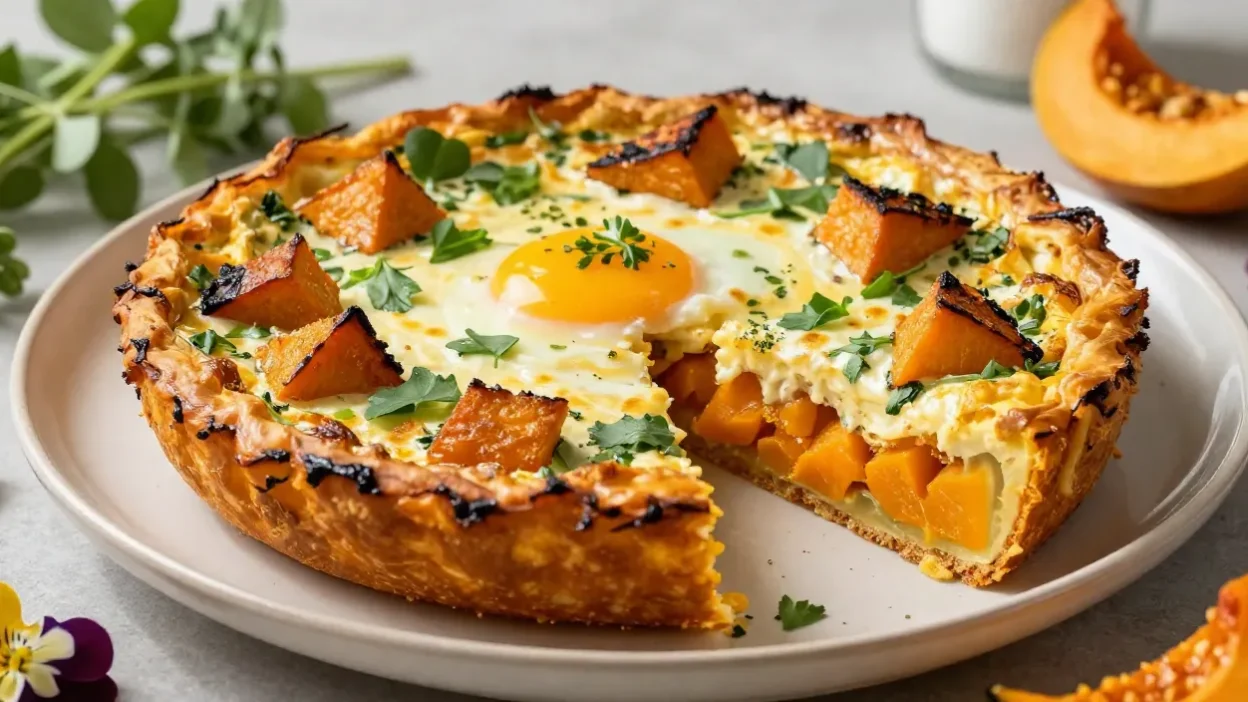
The deep golden-orange pieces scattered through the eggs immediately make the frittata feel warmer and more inviting. Even before it reaches the table, it already looks like the kind of meal that belongs on a slow weekend morning. The colors alone create that feeling. Add a handful of fresh herbs on top and suddenly the entire dish looks far more impressive than the effort required to make it.
I think that’s another reason recipes like this stay popular.
They feel comforting without being boring.
There are plenty of breakfast dishes that fill you up. There are plenty that look good in photographs. Pumpkin frittata manages to do both at the same time. It’s simple enough for an ordinary morning but attractive enough that nobody would hesitate to serve it for brunch when friends or family happen to stop by.
And once the smell of roasted pumpkin, herbs, and baked eggs starts drifting through the kitchen, people usually stop questioning whether pumpkin belongs in breakfast at all. It becomes pretty obvious that it does.
☀️ A dish that feels equally at home at breakfast or lunch
One of the reasons frittatas have remained popular for so long is that nobody seems entirely sure which meal they belong to.
They show up at breakfast tables. They appear at brunches. They work for lunch. Sometimes they’re dinner. Somehow all of those answers are correct, and pumpkin frittata might be one of the best examples of that flexibility.
Some dishes feel tied to a specific moment of the day. Pancakes belong to mornings. A roast chicken feels like dinner. Frittata seems to ignore those rules completely. A slice alongside coffee works beautifully at breakfast, but the exact same slice served with a salad a few hours later suddenly feels like a perfectly reasonable lunch.
That versatility is probably one of the reasons people keep coming back to recipes like this.
Life doesn’t always run on perfect schedules. Weekend mornings turn into afternoons surprisingly quickly. Guests arrive later than expected. Someone decides they aren’t hungry yet, while somebody else is already asking when food will be ready. A pumpkin frittata handles all of those situations without much fuss.
Unlike many breakfast dishes, it doesn’t demand immediate attention.
Pancakes cool quickly. Toast loses its charm within minutes. Fried eggs have a fairly short window where they’re at their absolute best. A frittata is much more relaxed about the whole thing. It can sit on the table while coffee is poured, conversations drift from one topic to another, and people slowly make their way into the kitchen.
The dish simply waits.
And honestly, I think that changes the atmosphere around the meal more than people realize.
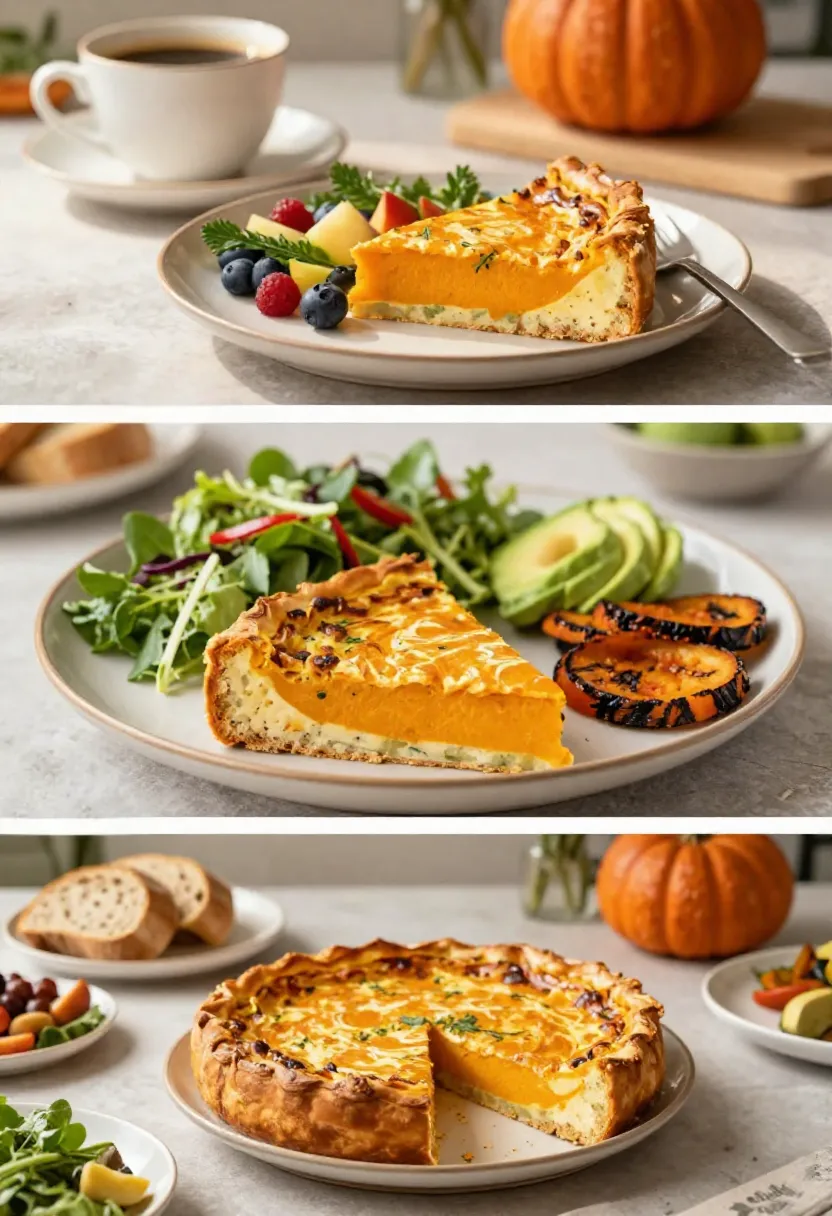
Meals tend to feel different when nobody is rushing. A pumpkin frittata naturally encourages that slower pace because there’s no pressure to serve everything at exactly the right second. People cut slices when they’re ready. Someone goes back for another piece. Somebody else starts picking at the crispy edges while pretending they’re just helping tidy up.
The same thing happens at brunches all the time.
A large frittata arrives at the table, surrounded by a few simple extras, and suddenly nobody is in a hurry anymore. Fresh fruit appears. Coffee gets refilled. Somebody starts telling a story that takes much longer than expected. Before long, the meal becomes less about eating and more about spending time together.
That’s probably why frittatas show up so often during gatherings.
They’re practical, but they don’t feel practical.
They feel generous.
A few reasons pumpkin frittata works especially well for shared meals:
- It can be served warm, room temperature, or even slightly chilled.
- It pairs naturally with salads, roasted vegetables, and fresh bread.
- Large portions are easy to slice and share.
- The flavors continue developing as it rests.
- Most of the work happens in the oven rather than at the stove.
Another thing that helps is the flavor itself.
Pumpkin has a way of making a dish feel seasonal without limiting when it can be served. During autumn, the roasted sweetness feels perfectly suited to cooler weather. In spring, paired with fresh herbs and greens, the same frittata feels surprisingly light. Few ingredients adapt quite so easily.
And maybe that’s the real secret behind dishes like this.
They fit into real life.
Not every meal needs to be impressive. Not every recipe needs to become the centerpiece of the day. Sometimes the best dishes are the ones that quietly make everything easier while still feeling special enough that people look forward to eating them.
Pumpkin frittata has always felt like that kind of meal to me. The sort of thing that starts as breakfast and somehow ends up being talked about long after the plates have been cleared away.
🧀 The ingredients quietly doing most of the work
People often focus on the eggs because they’re the most visible part of a frittata.
That’s understandable. Eggs are literally holding everything together. They’re what give the dish its structure, its texture, and that golden surface that makes a frittata look so inviting when it comes out of the oven.
But the truth is that the supporting ingredients are doing just as much work behind the scenes.
Pumpkin brings sweetness and softness. Cheese adds richness and depth. Herbs introduce freshness. Even small ingredients that barely get mentioned in the recipe often play an important role in balancing everything else. A good frittata rarely depends on a single ingredient. It works because several simple ingredients quietly support one another.
That’s something I appreciate more as I get older.
When I was younger, I probably paid attention mostly to the cheese. These days I’m much more interested in how ingredients interact with each other. The best recipes usually aren’t the ones with the longest ingredient lists. They’re the ones where every ingredient has a clear purpose.
Pumpkin is a perfect example.
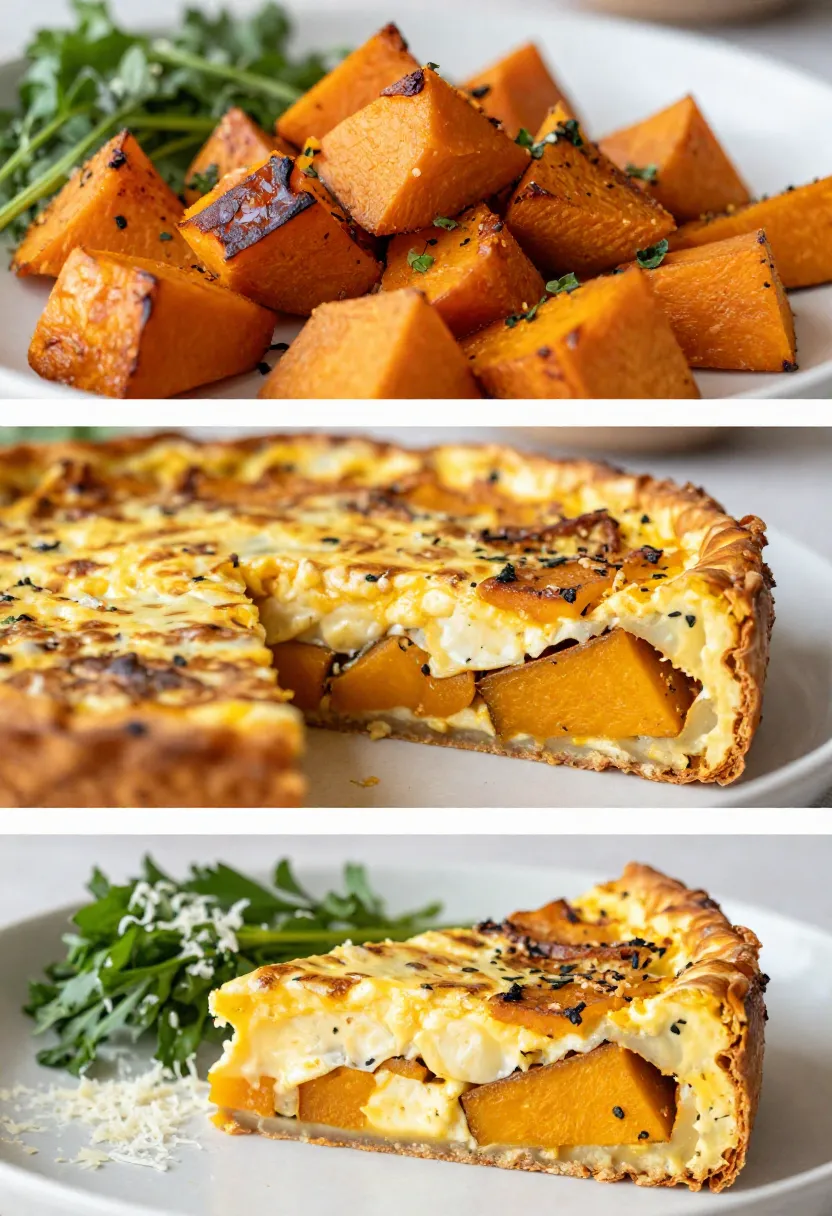
Without it, the frittata would still be good. Eggs and cheese are hard to dislike. But it would lose a lot of its character. The roasted pumpkin brings a gentle sweetness that softens the savory flavors and prevents the dish from feeling too rich. It also introduces a creamier texture that makes each bite feel more interesting.
The cheese plays a slightly different role.
Most people notice the flavor first, but texture might actually be just as important. As the cheese melts into the eggs, it creates little pockets of richness throughout the frittata. Not enough to overwhelm the vegetables, but enough to make the whole dish feel more satisfying.
Fresh herbs deserve more credit than they usually get as well.
It’s easy to think of herbs as decoration, especially when they’re sprinkled on at the very end. In reality, they’re often the ingredient that prevents a dish from feeling flat. The brightness they add cuts through the richness of the eggs and cheese, making the entire frittata feel lighter and fresher.
Here’s how the main ingredients contribute to the final dish:
| Ingredient | What it contributes | Why it matters | Final result |
|---|---|---|---|
| Roasted pumpkin | Sweetness and creaminess | Balances rich eggs and cheese | Softer, more rounded flavor |
| Eggs | Structure and protein | Forms the foundation of the dish | Light but satisfying texture |
| Cheese | Saltiness and richness | Adds depth and creaminess | More flavorful, comforting finish |
| Fresh herbs | Brightness and freshness | Prevents the dish from feeling heavy | Balanced flavor in every bite |
One thing I find interesting about frittatas is how forgiving they are compared to many other egg dishes.
An omelet can go from perfect to overcooked in what feels like thirty seconds. Scrambled eggs demand constant attention. Even poached eggs have a habit of making people nervous.
A frittata is much more relaxed.
Once everything is combined and placed in the oven, the ingredients have time to settle into one another. The flavors slowly blend together instead of competing for attention. That’s one reason baked egg dishes often taste more cohesive than stovetop versions.
It’s particularly noticeable with pumpkin.
As the frittata cooks, some pieces stay visible and distinct while others soften so much they almost disappear into the surrounding eggs. The result feels layered without becoming complicated. Every bite contains slightly different proportions of pumpkin, cheese, herbs, and eggs, which keeps the dish interesting all the way through.
And honestly, that’s usually a sign of a recipe worth keeping around.
Simple ingredients.
Simple techniques.
But enough contrast in flavor and texture that people are still happy to go back for another slice.
The best comfort foods often work exactly that way. They don’t rely on novelty. They simply make ordinary ingredients taste better than expected. Pumpkin frittata may not look especially complicated, but once all those ingredients start working together, it becomes a lot more memorable than its short ingredient list would suggest.
🍳 Pumpkin Frittata Recipe
Pumpkin frittata is one of those dishes that manages to feel both wholesome and comforting at the same time. It has the kind of simplicity that makes it suitable for an ordinary weekday breakfast, but it also looks impressive enough to serve when friends come over for brunch. That’s probably one of the reasons recipes like this stick around for years. They fit naturally into real life.
The roasted pumpkin is what gives this version its personality. As it cooks, it becomes softer, sweeter, and slightly caramelized around the edges, creating little pockets of flavor throughout the eggs. Combined with melted cheese and fresh herbs, the result feels much richer than the ingredient list would suggest.
What I particularly like about pumpkin frittata is that it doesn’t depend on perfect timing. Unlike scrambled eggs or omelets, which can go from perfect to overcooked surprisingly quickly, a frittata feels much more forgiving. You can place it in the oven, let the ingredients do their thing, and spend the next half hour enjoying a coffee instead of hovering nervously over the stove.
It’s also one of those dishes that somehow tastes just as good later in the day. Warm from the oven, room temperature at lunch, or even cold from the refrigerator the next morning — it works in all three situations. Few breakfast recipes can claim that.
🛒 Ingredients
- 500 g pumpkin, peeled and cut into small cubes
- 8 large eggs
- ½ cup milk
- 1 cup grated feta, goat cheese, or your preferred cheese
- 1 small red onion, thinly sliced
- 2 tablespoons olive oil
- 2 tablespoons fresh parsley, chopped
- 1 tablespoon fresh chives, chopped
- Salt, to taste
- Freshly ground black pepper, to taste
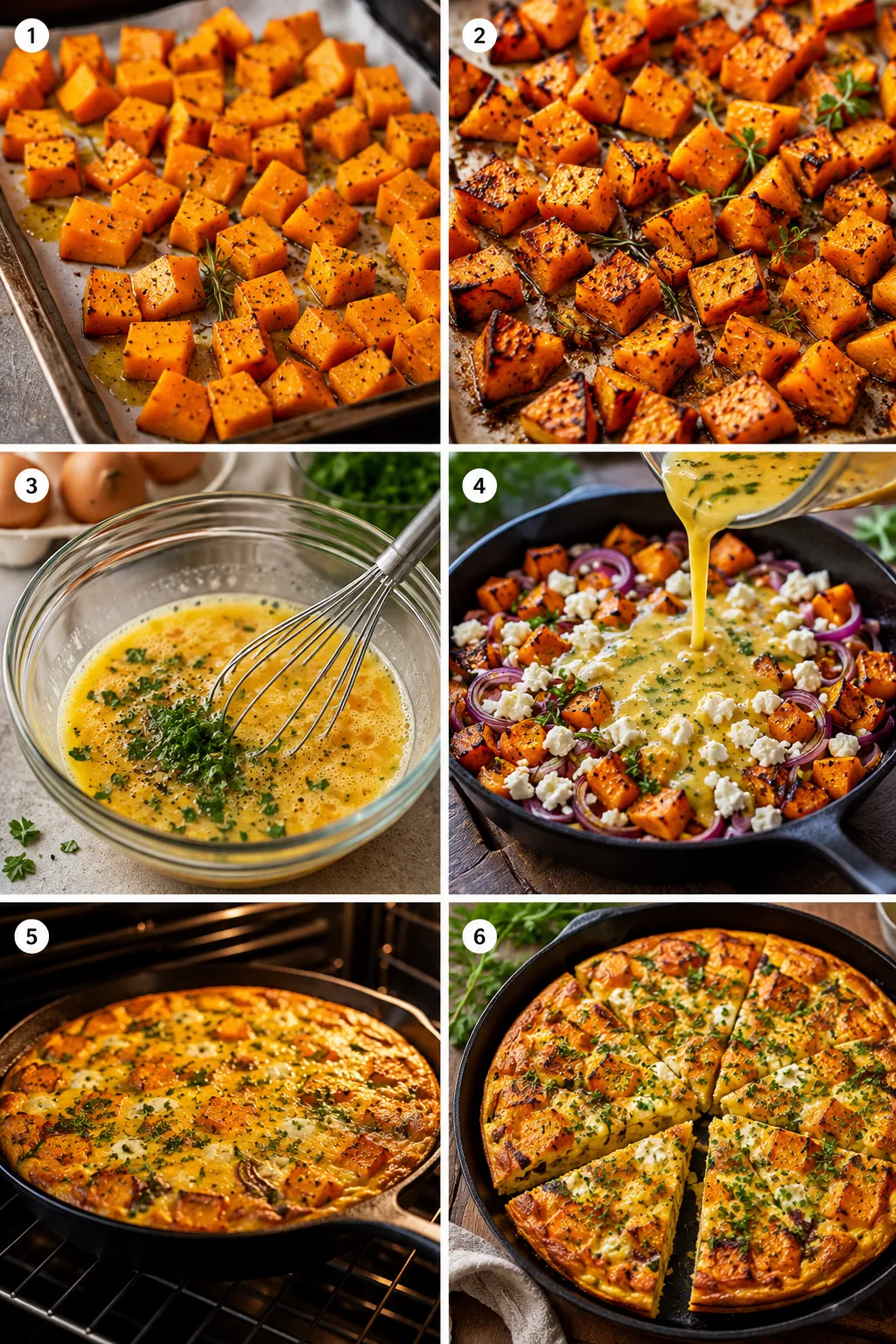
👨🍳 Step-by-step instructions
- Roast the pumpkin until tender and lightly caramelized
Preheat your oven to 200°C (400°F). Place the pumpkin cubes on a large baking tray and drizzle them with one tablespoon of olive oil. Season lightly with salt and freshly ground black pepper, then toss everything together until each piece is evenly coated. Spread the pumpkin into a single layer, making sure the cubes aren’t crowded together. Roast for 25–30 minutes, turning them once halfway through cooking. The pumpkin should become fork-tender with lightly golden edges that have started to caramelize. Those darker edges add extra sweetness and depth to the finished frittata. Remove the tray from the oven and allow the pumpkin to cool slightly while you prepare the remaining ingredients. - Prepare the egg base
Crack the eggs into a large mixing bowl and add the milk. Whisk thoroughly for about a minute until the mixture becomes smooth, uniform, and slightly frothy on top. Stir in most of the chopped parsley and chives, saving a small handful for garnish later. Season with black pepper and a small amount of salt, remembering that the cheese will add additional saltiness. The finished mixture should look light and airy rather than dense. - Cook the onions slowly
Heat the remaining tablespoon of olive oil in a large oven-safe skillet over medium heat. Add the sliced onion and cook for 6–8 minutes, stirring occasionally. You’re not trying to deeply caramelize them here. Instead, the goal is to soften the onions until they become slightly sweet and lose their sharp raw flavor. Once they’re tender and lightly golden around the edges, remove the skillet from the heat. - Combine the vegetables and cheese
Add the roasted pumpkin to the skillet with the onions and gently distribute everything evenly across the pan. Sprinkle the grated cheese over the vegetables, making sure it reaches all areas of the skillet rather than sitting in one large pile. This helps create a more even flavor and texture throughout the finished frittata. - Add the egg mixture
Slowly pour the prepared egg mixture over the pumpkin, onions, and cheese. Gently shake or tilt the skillet so the eggs settle evenly around the vegetables. If some pumpkin pieces are stacked too closely together, use a spoon to spread them out slightly. The ingredients should be evenly distributed throughout the pan so every slice contains a good balance of pumpkin, cheese, herbs, and eggs. - Start cooking on the stovetop
Place the skillet over medium-low heat and cook for 3–4 minutes without stirring. During this stage, the edges will begin setting while the center remains mostly liquid. This initial cooking step helps create structure and prevents the vegetables from sinking completely to the bottom once the skillet goes into the oven. - Bake until perfectly set
Transfer the skillet to the oven and bake for 12–18 minutes, depending on the size and depth of your pan. The frittata is ready when the surface looks lightly golden and the center is just set. A slight wobble in the very middle is completely normal because the residual heat will continue cooking the eggs after the skillet comes out of the oven. Avoid overbaking, as this can make the texture dry rather than tender. - Allow the frittata to rest
Remove the skillet from the oven and let the frittata rest for 5–10 minutes before slicing. This short resting period allows the eggs to finish setting and helps the slices hold together more neatly. It also gives the flavors time to settle and blend together. - Garnish and serve
Sprinkle the reserved herbs over the top just before serving. Slice the frittata into wedges and serve warm. It pairs beautifully with a simple green salad, toasted sourdough, avocado, roasted tomatoes, or fresh seasonal fruit. For brunch gatherings, place the entire skillet in the center of the table and let everyone help themselves. It’s exactly the kind of dish that encourages people to linger over a second cup of coffee.
🔥 Small cooking tricks that make a noticeable difference
- Roast the pumpkin until the edges are lightly caramelized rather than simply soft.
- Let the eggs come closer to room temperature before whisking for a lighter texture.
- Use freshly grated cheese whenever possible for better melting and flavor.
- Avoid overbaking; slightly soft eggs create a much creamier frittata.
- Fresh herbs added at the end taste brighter than herbs cooked the entire time.
- Allow the frittata to rest before slicing so it holds together more neatly.
- Leftovers can be reheated gently or enjoyed cold the next day.
🥗 Simple additions that turn it into a complete meal
One of the reasons pumpkin frittata earns a permanent place in so many kitchens is that it rarely needs much help, but it responds beautifully when you decide to build a meal around it.
A slice on its own is already satisfying. The eggs provide protein, the pumpkin adds substance, and the cheese brings enough richness to make the dish feel complete. But the right accompaniments can change the entire experience and make the same frittata feel suitable for different occasions.
For a lighter breakfast, I like serving it alongside a simple salad dressed with lemon and olive oil. The freshness cuts through the richness of the eggs and makes the meal feel surprisingly balanced. For brunch, crusty sourdough is hard to beat. There’s something about warm bread and baked eggs that has worked for generations and probably always will.
The beauty of a frittata is that it doesn’t compete with other flavors. It happily shares the plate.
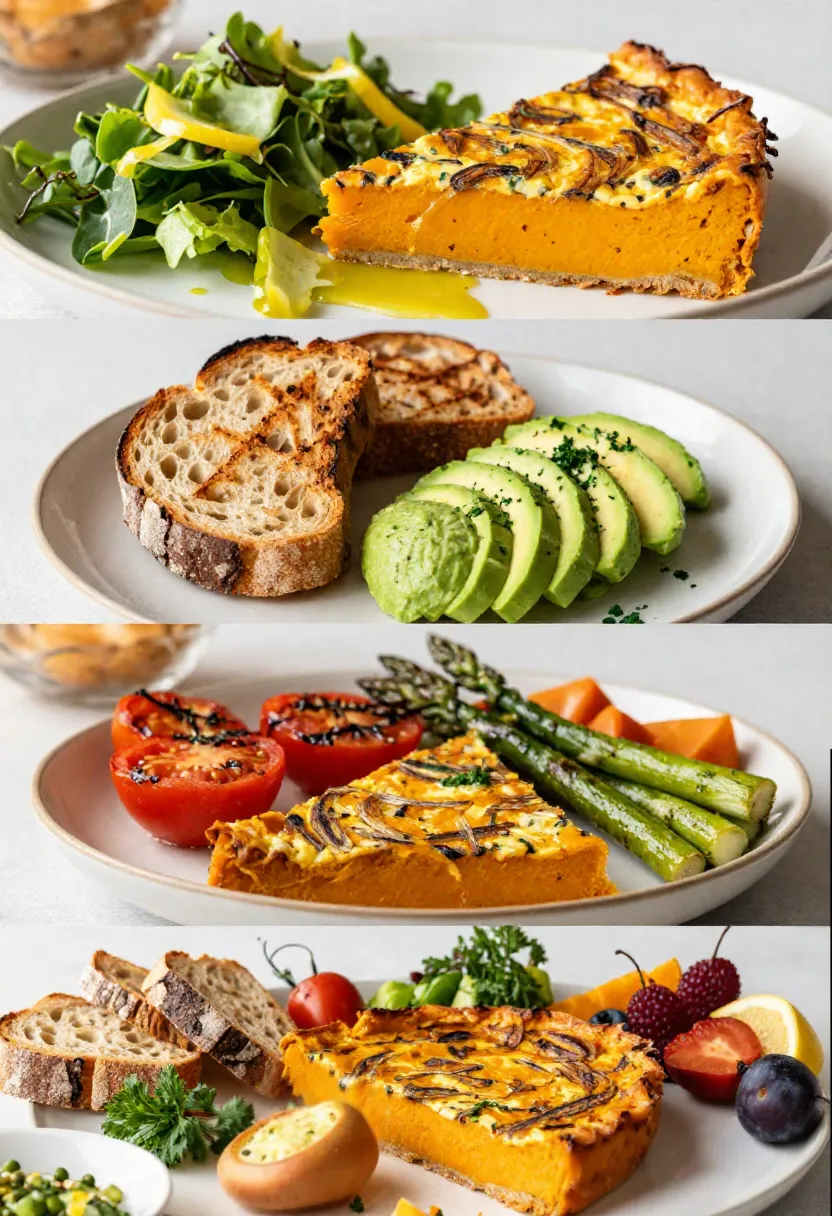
Some of the best pairings include:
- Fresh green salad with lemon vinaigrette
- Toasted sourdough or seeded bread
- Sliced avocado
- Roasted tomatoes
- Grilled asparagus
- Fresh fruit during warmer months
What I find interesting is that these additions don’t necessarily make the meal better. They simply make it different. Some mornings call for something light and fresh. Other days, especially when the weather cools down, a thicker slice of frittata with warm bread feels exactly right.
That’s part of the recipe’s appeal. It adapts easily without losing its identity.
🌿 Small variations that keep the recipe interesting
Pumpkin frittata is one of those recipes that quietly encourages experimentation.
Not because the original version needs improvement, but because the basic structure is so flexible. Once you understand how the ingredients work together, it becomes easy to make small adjustments depending on what’s already in the refrigerator.
Spinach is one of the easiest additions. It adds color, freshness, and blends naturally into the eggs without changing the overall character of the dish. Roasted mushrooms bring a deeper, earthier flavor that works particularly well during cooler months. Crumbled goat cheese creates a slightly tangier finish, while feta introduces a saltier, more Mediterranean feel.
Sometimes the smallest changes make the biggest difference.
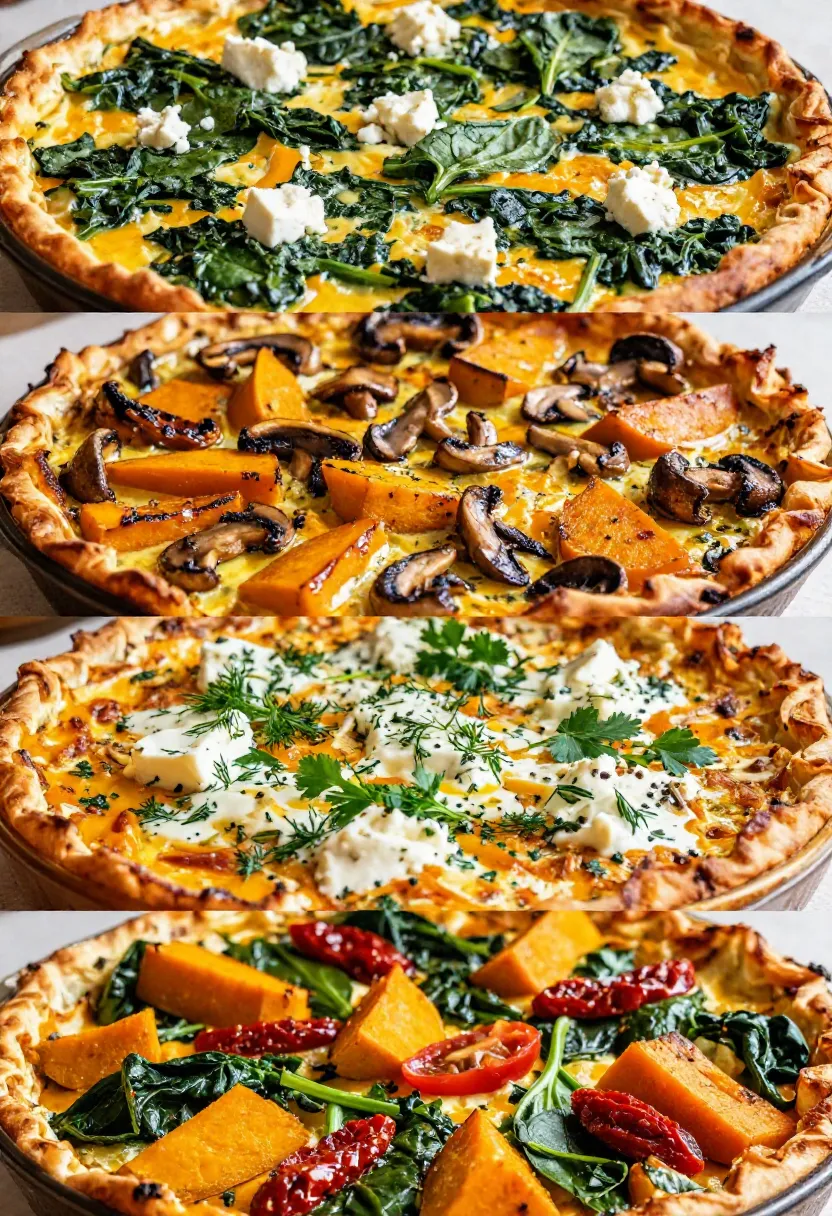
A handful of fresh dill can completely alter the flavor profile. A pinch of smoked paprika adds warmth. Even switching from parsley to basil creates a noticeably different result.
A few variations that work especially well:
- Spinach and feta pumpkin frittata
- Roasted mushroom and pumpkin frittata
- Goat cheese and herb pumpkin frittata
- Pumpkin, spinach, and sun-dried tomato frittata
- Pumpkin and caramelized onion frittata
- Pumpkin frittata with smoked paprika and chives
The key is avoiding the temptation to add too much.
One of the reasons this recipe works is because the pumpkin still gets room to shine. It’s easy to overload a frittata with ingredients until every bite tastes the same. Keeping things relatively simple usually produces the best result.
The pumpkin should still be the ingredient people remember.
☀️ Why dishes like this become part of weekend routines
Years from now, most people won’t remember exactly how long the pumpkin roasted.
They won’t remember whether they used parsley or chives, or whether the cheese measured exactly one cup. That’s rarely the part of cooking that sticks.
What people remember is everything happening around the meal.
They remember the smell of roasted pumpkin filling the kitchen while coffee brewed nearby. They remember somebody wandering in to ask when breakfast would be ready. They remember sitting at the table longer than planned because nobody felt particularly motivated to rush into the rest of the day.
I’ve always thought recipes like this are less about the ingredients and more about the pace they create.
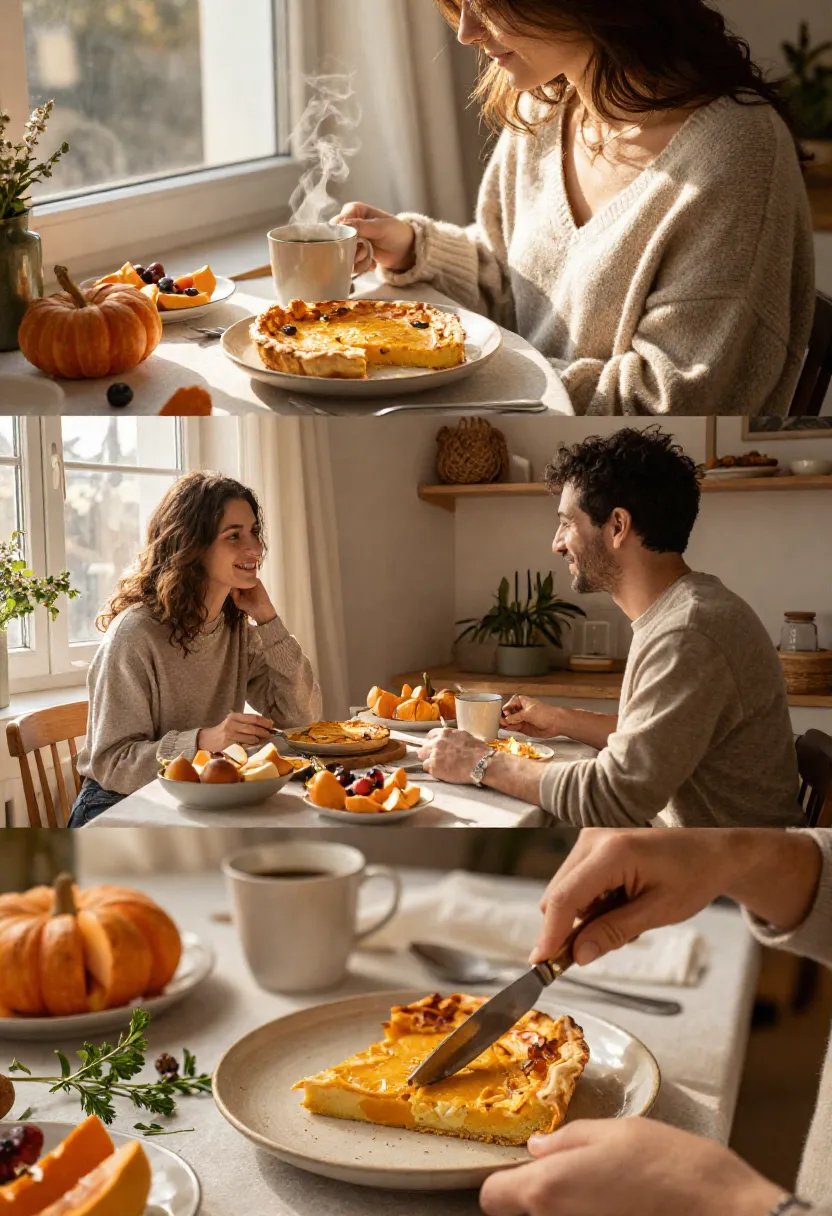
A pumpkin frittata doesn’t feel rushed. The roasting alone requires a little patience. The baking encourages you to slow down. Even serving it feels relaxed compared to many breakfast dishes that need immediate attention.
Maybe that’s why it fits weekends so well.
It arrives during the part of the week when people are finally willing to linger over breakfast. Coffee gets refilled. Conversations drift from one topic to another. Somebody takes a second slice despite insisting they were already full.
The same scene repeats itself in countless kitchens.
A warm skillet in the middle of the table. A few empty plates. Sunlight coming through the window. Nobody paying much attention to the clock.
And honestly, that’s usually a sign of a recipe worth keeping.
Not because it’s complicated.
Not because it’s trendy.
Because it quietly turns an ordinary morning into a better one.