Contents
- 🔥 Chicken chili feels lighter than beef chili — but not less satisfying
- ⏳ Chili changes completely while it cooks
- High-protein chicken chili recipe
- 🥣 Leftovers are somehow even better the next day
- 🌙 This recipe fits real life surprisingly well
- ✨ The atmosphere around chili matters almost as much as the food
That’s what chili does better than most dinners. It changes the atmosphere around it almost by accident. 🍲
The smell alone shifts the mood of the house. Onion softening slowly in olive oil, garlic hitting the heat, cumin warming in the pot, tomatoes simmering in the background — the kitchen starts feeling comfortable long before anyone actually sits down to eat. Even people who weren’t hungry ten minutes earlier suddenly start wandering into the kitchen pretending they’re looking for water or checking the fridge for something unrelated.
And honestly, some meals only solve hunger. Chili feels bigger than that.
Part of the reason this high-protein chicken chili became one of my repeat recipes is because it quietly handles several things at once without feeling overly calculated. It’s filling enough to count as real comfort food, the leftovers somehow taste even better the next day, and it reheats without turning weird or dry. More importantly though, it still feels like actual dinner instead of one of those aggressively healthy meals that seem designed entirely around protein numbers.
That happens with a lot of high-protein recipes now. They focus so hard on nutrition that they forget food is supposed to feel enjoyable too. You can usually tell immediately when a recipe was built around macros first and flavor second. Dry chicken, flat sauce, strange texture, no warmth anywhere in the experience. Everything technically “healthy,” but exhausting to eat more than twice.
This chili avoids that problem because the ingredients naturally support each other instead of fighting for attention. The chicken stays tender while simmering, the beans slowly thicken the broth, and the spices soften into something deeper and warmer after a while on the stove. Nothing tastes forced.
The toppings help too. Greek yogurt cools the heat and makes the broth creamier without becoming heavy. Jalapeños push the spice further if the batch tastes too mild. Crushed tortilla chips add crunch that completely changes the texture of the bowl. Sometimes I add avocado and cilantro when I want the chili to feel fresher. Other times I dump shredded cheddar directly into the bowl because it’s cold outside and subtlety suddenly feels unnecessary.
That flexibility matters more than people realize. Recipes survive long term when they adapt easily to different moods, different schedules, and whatever happens to already be sitting in the fridge.
🔥 Chicken chili feels lighter than beef chili — but not less satisfying
Traditional beef chili has a certain heaviness to it. Richness, fat, deep slow-cooked flavor that sits heavily in the bowl and honestly sometimes leaves you wanting a nap afterward. Chicken chili works differently.
The broth tastes brighter. The spices stay sharper and more noticeable. Ingredients don’t completely disappear into one dense flavor the way they sometimes do with beef chili. You actually notice the lime juice at the end. The beans still taste distinct. Cilantro matters more here too because fresher ingredients have room to stand out.
Texture becomes surprisingly important in chicken chili for exactly that reason. Good versions usually balance soft shredded chicken, creamy beans, little tomato pieces, silky onions, crunchy toppings, and cool yogurt melting into hot broth at the same time. Without contrast, chili can become oddly flat — thick but forgettable.
One thing I realized after making this recipe several times is that chicken thighs work dramatically better than chicken breast if leftovers matter to you. Chicken breast dries out quickly after reheating, especially by the second day. Thighs stay softer because the extra fat protects them while the chili continues absorbing flavor overnight.

And leftover chili absolutely matters.
Some foods feel disappointing the second they hit the fridge. Fries die immediately. Salads collapse into sadness overnight. Chili somehow moves in the opposite direction. The flavors settle, the beans absorb more broth, and the spices mellow into something smoother and more balanced. Day-two chili usually tastes more complete than it did straight from the stove.
That’s also why this recipe works well for normal life instead of fantasy cooking routines where everybody apparently has endless energy and spotless kitchens all the time.
You can adjust the spice level depending on the evening. Add extra beans if more people show up unexpectedly. Throw in roasted corn because it’s sitting in the fridge already. I once added cream cheese near the end because the chili tasted sharper than I wanted, and honestly it worked suspiciously well. Another time I poured in extra broth because I got distracted and reduced the pot too much while answering messages.
The recipe survived both situations without much drama.
That’s usually the sign of a recipe worth keeping. It bends without falling apart.
🥄 Ingredient breakdown and flavor roles
| Ingredient | What it adds | Texture contribution | Flavor impact | Extra notes |
|---|---|---|---|---|
| Chicken thighs 🍗 | Protein and richness | Tender, juicy pieces | Savory and deep | Better for leftovers than breast meat |
| White beans 🫘 | Creaminess and body | Soft and velvety | Mild and comforting | Some break down naturally while simmering |
| Black beans 🖤 | Extra protein and structure | Firmer texture | Earthier flavor | Help make the chili feel hearty |
| Crushed tomatoes 🍅 | Main broth base | Thickens slowly | Sweet and acidic | Simmering softens the sharpness |
| Tomato paste 🍷 | Concentrated depth | Thickens slightly | Richer tomato flavor | Cooking it first matters a lot |
| Onion 🧅 | Flavor foundation | Almost melts away | Sweetness after cooking | Undercooked onion ruins chili surprisingly fast |
| Garlic 🧄 | Warm savory notes | Blends into broth | Sharp then mellow | Add after onions soften |
| Jalapeño 🌶️ | Gentle heat | Small soft pieces | Bright spice | Remove seeds for milder chili |
| Cumin ✨ | Warm chili flavor | Dissolves into broth | Smoky earthiness | Smells intense at first, softer later |
| Smoked paprika 🔥 | Smoky depth | Smooth flavor layer | Slight barbecue note | Helps chicken feel richer |
| Lime juice 🍋 | Fresh contrast | No texture change | Bright acidity | Add only at the end |
| Greek yogurt 🥣 | Cooling balance | Creamy topping | Tangy freshness | Makes spicy chili feel smoother |
| Tortilla chips 🌽 | Crunch | Crispy topping | Salty corn flavor | Best added right before eating |
⏳ Chili changes completely while it cooks
The first fifteen minutes are honestly misleading.
At the beginning, nothing smells connected yet. The cumin feels aggressive, the garlic is sharp, the tomato paste almost too intense. It smells like separate ingredients competing with each other instead of actual chili.
Then time slowly fixes everything.
The broth softens the harshness from the tomatoes, the chicken absorbs spice while releasing flavor back into the pot, and the beans gradually start thickening the liquid naturally. After forty-five minutes, the entire thing tastes calmer, deeper, and more balanced than it did earlier. The sharp edges disappear.
That’s why chili rewards patience more than technical cooking skill. You don’t need perfect knife cuts or complicated timing here. Most of the work comes from letting the pot simmer long enough for everything to settle into itself properly.
And honestly, that slower pace changes the feeling of cooking too.
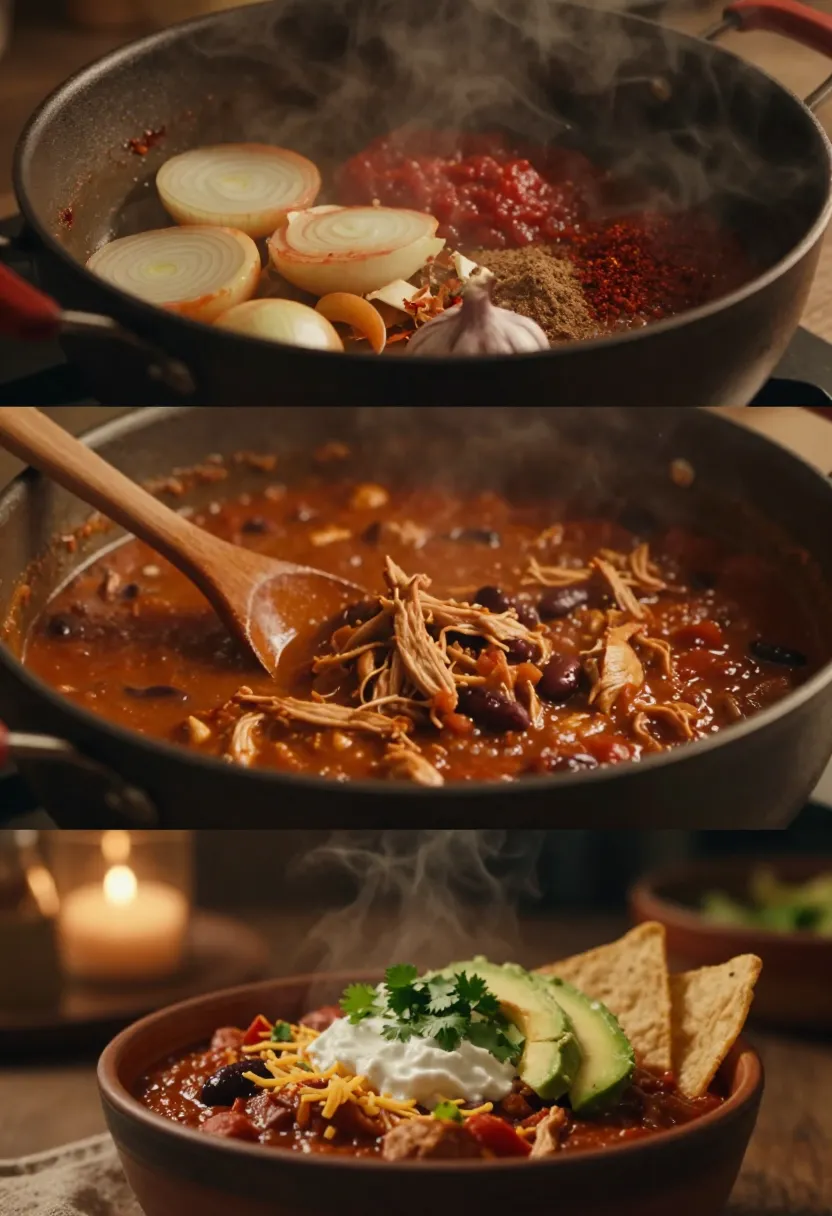
Some dinners demand constant attention. Chili doesn’t. You can stir it occasionally while cleaning the kitchen, answering messages, or standing nearby holding tea while the windows fog slightly from the steam. The recipe leaves room for normal life happening around it instead of forcing complete focus every second.
One trick that helps a lot is mashing a small spoonful of beans against the side of the pot near the end of cooking. Not enough to turn the chili into paste, just enough to thicken the broth naturally without adding flour or cream. The texture becomes smoother almost immediately, but nobody can quite tell why.
I also think chili tastes better slightly over-reduced. Not dry obviously, but thick enough that the spoon leaves a visible trail through the broth for a second before the liquid settles again. Thin chili always feels unfinished to me, like soup trying very hard to pretend it belongs in the chili category.
And the longer it simmers, the more the flavors stop competing and start working together instead. The garlic softens, the tomato becomes sweeter, and even the jalapeño heat changes from sharp spice into slower warmth that lingers gently after each bite.
That’s usually the point where people start hovering around the kitchen asking when dinner will actually be ready.
First someone walks in “just looking for a snack.” Then somebody lifts the lid to smell the chili again. A few minutes later people start checking whether there’s shredded cheese or extra tortilla chips somewhere in the cabinet.
By then, dinner already feels successful before the bowls even hit the table. 🍲✨
High-protein chicken chili recipe
This chicken chili is thick, hearty, slightly smoky, and packed with protein from both chicken and beans, but the biggest reason I keep making it honestly has nothing to do with protein at all. It’s the kind of meal that immediately makes the kitchen feel warmer while it cooks. The broth slowly thickens as the tomatoes simmer down, the spices soften into something deeper and richer, and the chicken becomes tender enough to fall apart into the pot without much effort.
What I like about this version is that it still feels comforting without becoming overly heavy. Beef chili can sometimes sit like a brick afterward, especially if it’s loaded with grease or too much meat. Chicken chili keeps more brightness. You notice the lime juice at the end. The beans still have texture instead of disappearing completely, and toppings actually matter because the broth leaves room for fresher flavors to stand out.
The texture is probably my favorite part though. Some of the white beans break down slightly while simmering, which naturally thickens the chili and gives it a creamier consistency without adding cream. Meanwhile the black beans stay firmer, the shredded chicken stays juicy, and the onions almost melt into the broth after enough time on the stove. Add crunchy tortilla chips, avocado, or cold Greek yogurt on top and suddenly every bite feels a little different.
It also happens to be one of those meals that works in almost any situation. A quick weeknight dinner after work, lazy Sunday meal prep, casual game nights where people keep refilling bowls without thinking about it, cold rainy evenings when nobody wants to cook anything complicated — this recipe fits all of them surprisingly well.
And honestly, the leftovers might be even better.
The flavors settle overnight, the spices mellow slightly, and the broth thickens just enough in the fridge that reheated bowls taste deeper and more balanced the next day. Sometimes I make the entire pot knowing full well dinner on day two is the part I’m actually looking forward to most. 🍲✨
Ingredients
- 2 pounds boneless skinless chicken thighs
- 1 tablespoon olive oil
- 1 large onion, diced
- 1 jalapeño, finely chopped
- 4 garlic cloves, minced
- 2 tablespoons tomato paste
- 2 teaspoons cumin
- 1 teaspoon smoked paprika
- 1 teaspoon dried oregano
- 1/2 teaspoon chili flakes
- 1 can black beans, drained
- 1 can white beans, drained
- 1 large can crushed tomatoes
- 3 cups chicken broth
- Juice of 1 lime
- Salt and black pepper
Optional toppings:
- Greek yogurt or sour cream
- Avocado slices
- Fresh cilantro
- Tortilla chips
- Shredded cheddar
- Pickled onions

Steps
- Heat olive oil in a large heavy pot over medium heat. Add onion and jalapeño with a pinch of salt. Cook for about 7–8 minutes until soft.
- Add garlic and cook for another minute until fragrant.
- Stir in tomato paste, cumin, paprika, oregano, and chili flakes. Cook for about 1 minute while stirring constantly.
- Add crushed tomatoes, chicken broth, beans, and chicken thighs.
- Season with salt and black pepper. Bring everything to a gentle simmer.
- Cook uncovered for 35–45 minutes until the chicken becomes tender enough to shred easily.
- Remove the chicken briefly, shred it with forks, then return it to the pot.
- Simmer another 5–10 minutes if the chili needs to thicken more.
- Stir in fresh lime juice right before serving.
- Add toppings while the chili is still hot.
Small kitchen tips that help a lot
- Mash a spoonful of beans against the side of the pot if you want thicker chili naturally.
- Add lime only at the end so the flavor stays bright.
- Chicken thighs stay juicier than breast meat after reheating.
- Chili almost always tastes better the next day.
- If leftovers become too thick, add a splash of broth while reheating.
🥣 Leftovers are somehow even better the next day
This happens with almost every good chili recipe, but chicken chili especially benefits from sitting overnight in the fridge. Freshly cooked chili already tastes rich and comforting, but the next day the entire pot somehow feels more balanced. The spices calm down, the broth thickens naturally, and the beans absorb more flavor from the liquid around them.
Day-one chili usually has sharper edges. You notice the acidity from the tomatoes more clearly, the cumin sits closer to the surface, and the heat from the jalapeños feels brighter. After a night in the fridge, everything softens together. The flavor becomes deeper and more cohesive without losing the smoky warmth that makes chili satisfying in the first place.
The texture changes too. Some of the beans continue soaking up liquid overnight, which naturally thickens the broth by the next day. Sometimes reheated chili becomes almost stew-like, especially if you used white beans that break down slightly while simmering. A small splash of broth fixes that easily, but honestly, I usually prefer thicker leftover chili anyway. It feels heartier and somehow more comforting on colder evenings.
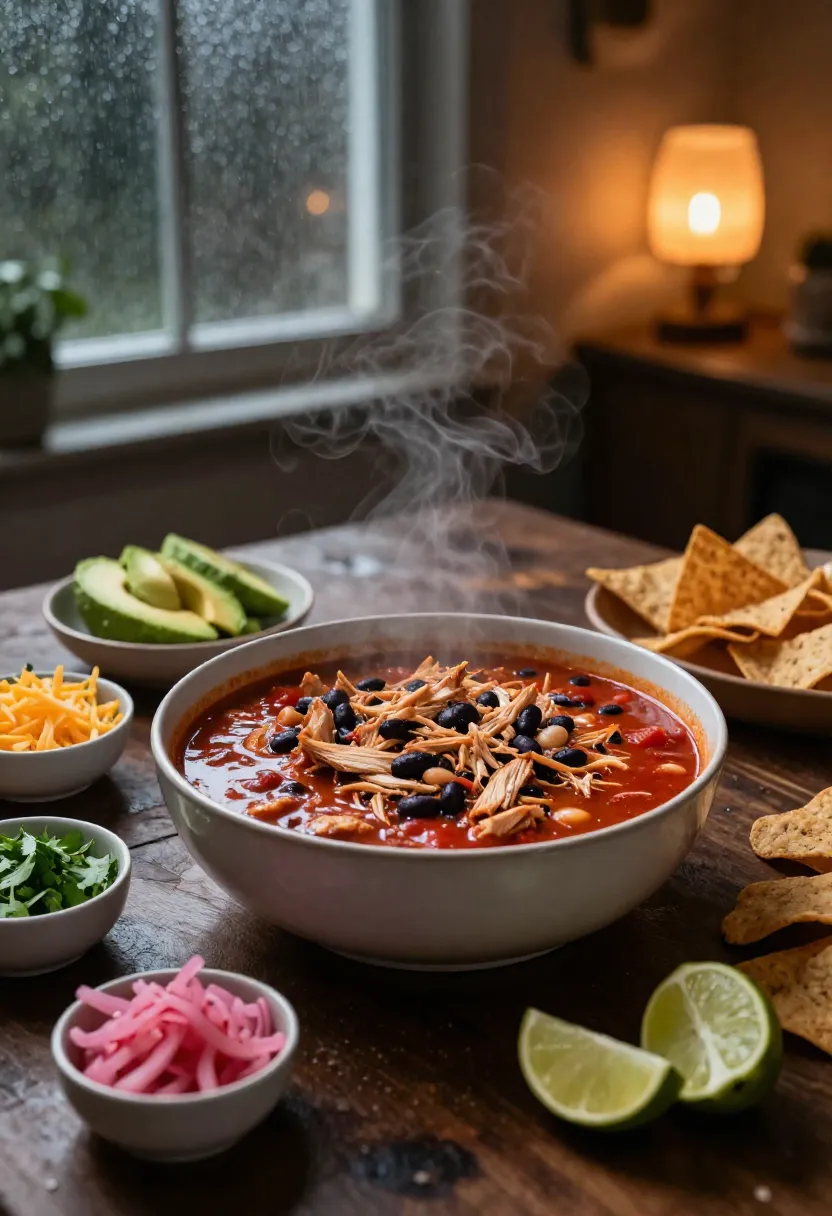
That’s one reason this recipe works so well for meal prep. A lot of high-protein meals become disappointing after reheating. Chicken dries out, rice hardens, vegetables turn soft and lifeless. Chili avoids most of those problems because the broth protects everything while reheating. The chicken stays tender, especially if you use thighs instead of breast meat, and the flavor actually improves after another few minutes on the stove.
There’s also something psychologically comforting about opening the fridge after a long day and already knowing dinner is handled. You don’t need to chop vegetables, wash extra dishes, or think too hard about what sounds good. You just reheat a bowl slowly while the kitchen warms up around you.
And reheated chili always smells stronger somehow. The second it starts bubbling again, the garlic, tomato, and smoky spices immediately fill the room like the meal never really left.
One thing that absolutely helps leftovers feel fresher is adding toppings at the last second instead of storing them directly in the chili. Fresh cilantro, crunchy tortilla chips, sliced avocado, shredded cheese, or Greek yogurt completely wake the bowl back up after reheating.
A few toppings that work especially well:
- crushed tortilla chips for crunch
- avocado for creaminess
- pickled onions for brightness
- shredded cheddar for extra richness
- cilantro and lime for freshness
Those little additions keep leftover chili from tasting repetitive, even if you eat it several days in a row.
🌙 This recipe fits real life surprisingly well
Some recipes sound great in theory but become exhausting once normal life gets involved. They require too much prep, too much attention, or ingredients nobody realistically keeps around every week. This chicken chili works differently because it fits naturally into busy evenings instead of demanding perfect conditions.
You can make it while doing other things around the house without constantly worrying that something will burn or collapse if you step away for five minutes. Once the chili starts simmering, most of the hard work is already done. The pot can quietly bubble in the background while you answer emails, clean the kitchen, help kids with homework, or just stand there tired for a minute staring into the fridge wondering why you suddenly have no snacks left.
That flexibility matters more than people think when choosing recipes they’ll actually repeat long term.
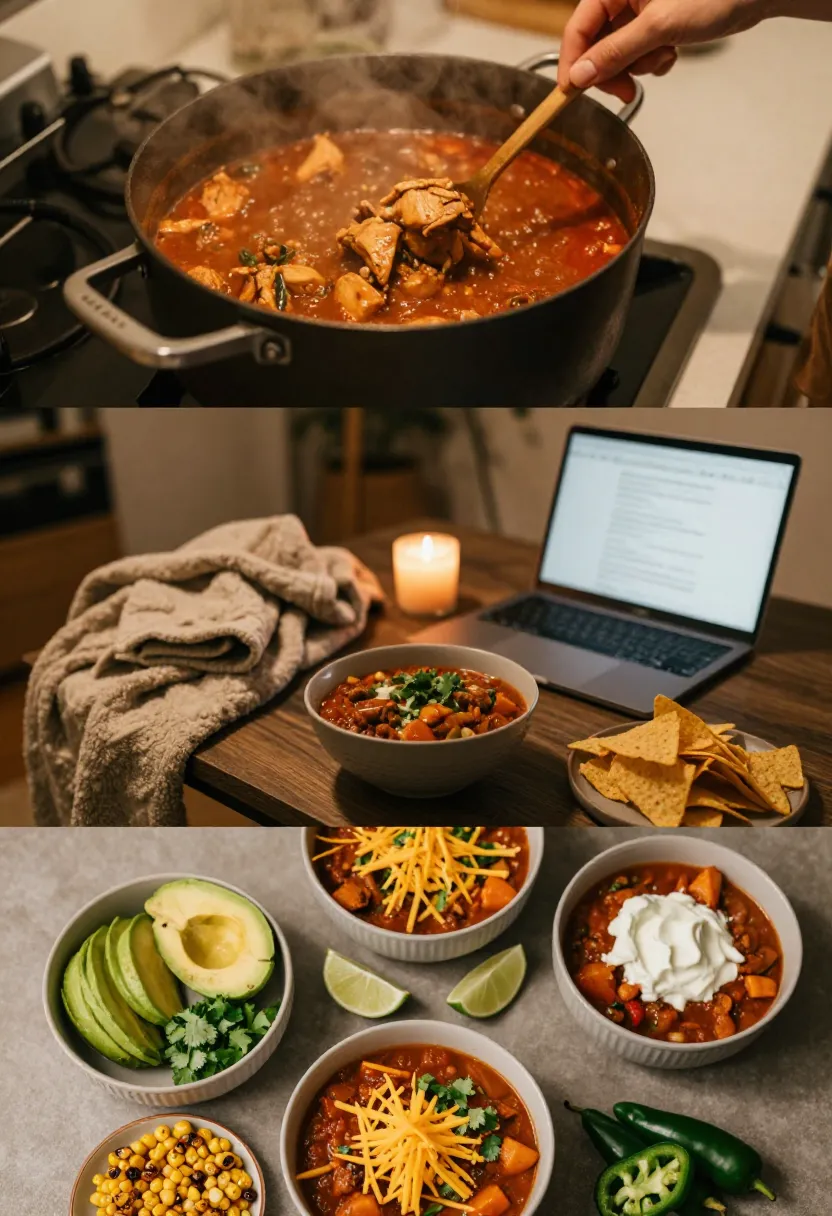
A lot of cooking content online feels disconnected from real kitchens. Everything looks spotless, ingredients appear magically prepared in tiny bowls, and dinner somehow happens without interruptions. Actual weeknight cooking usually looks very different. Someone forgets to thaw something. The sink is already full before dinner starts. Halfway through cooking you realize you’re missing one ingredient and have to improvise anyway.
Chili handles that kind of chaos surprisingly well.
You can add extra beans if more people show up unexpectedly. You can increase the spice level depending on your mood. If the chili thickens too much because you forgot about it for an extra ten minutes, more broth fixes the problem immediately. The recipe bends easily instead of punishing small mistakes.
That’s also why people tend to keep recipes like this around for years. They adapt naturally over time. Eventually everybody changes something slightly depending on personal preference, what’s already sitting in the pantry, or how much effort feels realistic that evening.
Some versions become smokier with chipotle peppers. Others lean creamier with melted cheese or Greek yogurt stirred into the bowl. Sometimes I add roasted corn because it balances the spices nicely with a little sweetness. Other times I serve the chili with warm cornbread and call it dinner without bothering to make anything else.
The base recipe keeps working either way.
And honestly, meals that survive tired weeknights without becoming stressful are usually the ones people end up cooking most often.
✨ The atmosphere around chili matters almost as much as the food
Certain foods naturally belong to specific moods, and chicken chili definitely falls into that category. It feels connected to colder evenings, rainy weekends, oversized hoodies, and nights when nobody wants to leave the house again after getting home.
Part of that comes from the cooking process itself. Chili fills the kitchen with smell gradually instead of all at once. First the onion and garlic soften in the pot. Then the cumin and smoked paprika warm up. Later the tomatoes and broth start simmering together, and eventually the whole kitchen smells rich, smoky, and warm before dinner even reaches the table.
That slow build changes the atmosphere around the meal.

People start wandering into the kitchen earlier. Someone lifts the lid just to smell the chili again. Somebody else starts searching for tortilla chips or shredded cheese before you’ve even called dinner ready yet.
And unlike more delicate meals, chili encourages relaxed eating. Nobody worries too much about presentation. Bowls end up overloaded with toppings. Tortilla chips crack into the broth. Somebody always goes back for extra cheese halfway through dinner.
That casual feeling is part of why comfort food matters emotionally, even if people rarely explain it directly.
Meals like this slow things down a little. People stay at the table longer. Conversations stretch out naturally because nobody’s rushing through dinner. The pot stays warm on the stove, so second servings happen without much thought.
Honestly, some of the best versions of this recipe happened during completely ordinary evenings. Rain outside, dishes drying near the sink, a movie playing in the background, and a giant pot of chili keeping the kitchen warm while everybody quietly settled in for the night.
Nothing fancy. Nothing especially dramatic.
Just food that makes the evening feel calmer and a little softer around the edges. 🍲✨

Hi! I'm Olya. Here you'll find recipes, tips, and stories to inspire you to cook with heart and create culinary masterpieces full of joy.