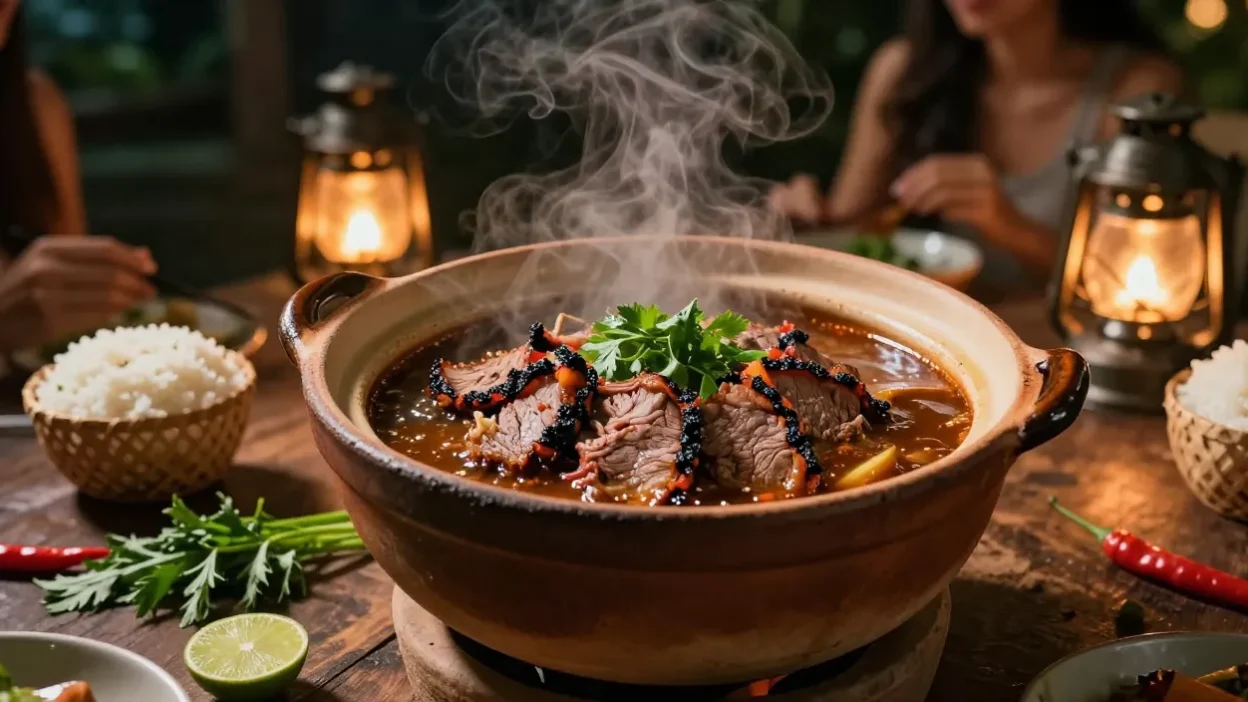
Some dishes feel loud before anyone even takes the first bite. Crying Tiger clay pot beef definitely belongs in that category.
You hear the bubbling sauce before the pot reaches the table. Steam rises immediately when the lid comes off. The smell hits first: grilled beef fat, fish sauce, lime, smoke, garlic, chili 🌶️. Then somebody tears off sticky rice with their fingers while pretending the clay pot is not dangerously hot yet.
That atmosphere is part of the recipe whether people realize it or not. 🥩
Regular Crying Tiger beef already carries a lot of personality. It is salty, spicy, smoky, acidic, slightly sweet, and aggressively herb-heavy all at the same time. But once the beef goes into a clay pot with simmering sauce underneath, the whole dish changes direction slightly. The edges soften. The flavor deepens. Instead of tasting like grilled steak with dipping sauce, it starts feeling more like comfort food built around smoke and spice.
That surprised me the first time I tried making it.
I expected something sharp and fiery from beginning to end because most restaurant versions lean hard into heat and acidity. But the clay pot mellows everything just enough. The sauce becomes richer because beef juices drip directly into it while the pot stays hot at the table 🍲. Garlic sweetens. Chili rounds out. The herbs soften slightly from steam while still staying bright enough to cut through the richness.
The dish slows down in a good way.
And honestly, clay pots change the emotional feeling of food more than people give them credit for. Food stays hot longer. Sauces continue reducing quietly while everyone eats. Aromas linger around the table instead of disappearing after plating. Even simple ingredients start tasting heavier, darker, and more layered once they spend time inside heated clay.
This recipe especially benefits from that.
Because Crying Tiger beef depends on contrast. Smoke against acid. Richness against herbs. Charred meat beside cool sticky rice 🍚. If one part becomes too dominant, the balance disappears fast. The clay pot helps connect everything together so the dish feels unified instead of aggressive.
Still, this is not delicate food.
It should feel a little messy. Sauce splashes onto the rice. Chili catches in your throat slightly. Fresh herbs fall across the table. The clay pot keeps bubbling longer than expected. Somebody reaches for another bite even though they already claimed they were full five minutes earlier.
That is usually how you know the recipe worked.
The thing I love most about this dish is how physical it feels while eating. You do not quietly cut perfect bites with a knife and fork. You scoop sticky rice with your fingers. You drag pieces of beef through the sauce. Herbs end up everywhere. Lime juice drips onto the table at least once. It feels lively in a way that polished restaurant food sometimes doesn’t.
And the smell lingers forever.
Hours later the kitchen still smells faintly smoky and garlicky, especially if the beef was grilled properly before hitting the clay pot. Honestly, that lingering smell might be part of why people crave dishes like this during colder months. The whole room changes once the pot hits the table.
Even the sound matters.
The quiet bubbling underneath the beef keeps reminding everyone the pot is still alive somehow. Still cooking. Still concentrating flavor while people eat and talk around it.
That slow simmer is part of the experience too.
🌶️ The story behind Crying Tiger beef
Nobody agrees completely on where the name “Crying Tiger” originally came from, which honestly makes the dish even more interesting.
Some people say the name refers to the spicy dipping sauce being intense enough to make a tiger cry 🐅. Others claim it comes from the texture of grilled beef brisket, particularly a tougher cut once nicknamed “tiger meat” in certain regions. Another explanation connects the name to dripping juices falling from grilled meat over open fire, supposedly resembling tears.
Most likely, several stories blended together over time.
That happens constantly with traditional food.
What matters more is the style itself. Crying Tiger beef comes from northeastern Thai cooking, especially Isaan cuisine, where grilled meats, sticky rice, herbs, fermented flavors, and spicy dipping sauces play a huge role in everyday meals. Food from that region tends to feel direct and unapologetic. Strong acidity. Heavy herbs. Smoke. Chili heat that builds slowly instead of politely staying in the background.
Western steak culture usually treats beef as the center of attention while sauces stay secondary. Thai cooking flips that balance around sometimes. The meat matters, obviously, but the surrounding flavors matter just as much.
Maybe more.
The dipping sauce — nam jim jaew — is one of the biggest reasons the dish became internationally popular. It tastes smoky, sour, spicy, salty, and earthy at once. Toasted rice powder gives it warmth underneath the sharper flavors. Tamarind adds dark acidity instead of clean citrus brightness 🍋. Fish sauce brings depth that soy sauce alone cannot recreate.
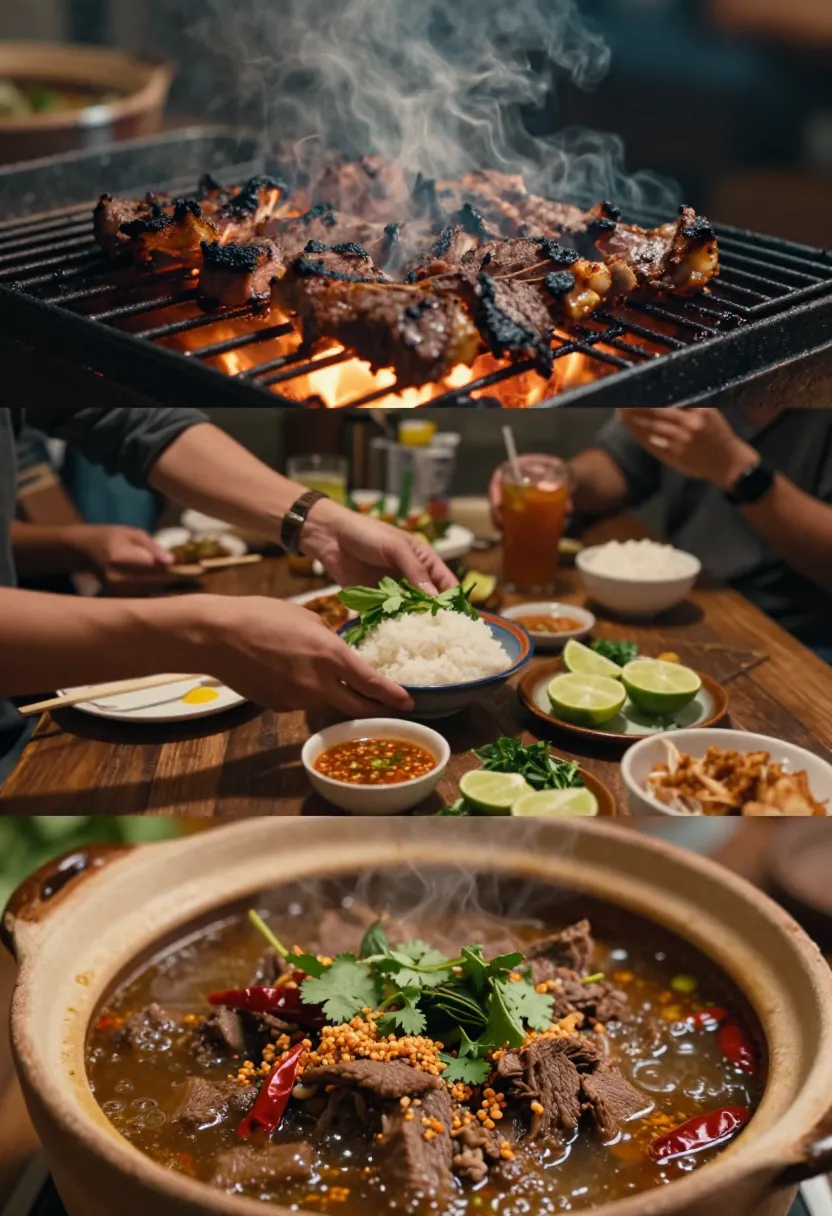
And then the herbs hit afterward and reset your palate completely.
One thing that makes Isaan food so addictive is the way it balances intensity without becoming exhausting. A dish can be aggressively spicy and still feel refreshing because herbs, lime, and fresh vegetables constantly interrupt the richness.
That balance shows up clearly in Crying Tiger beef.
The grilled meat feels heavy and smoky at first. Then tamarind cuts through it. Chili follows afterward. Sticky rice softens everything again. Fresh herbs cool the palate. Then the cycle starts over with the next bite.
Nothing stays dominant for very long.
That constant movement is probably why the dish spread far beyond Thailand so easily. Even people unfamiliar with Thai cooking immediately understand the contrast happening on the plate. Smoke against freshness. Heat against sweetness. Richness against acid.
And honestly, Crying Tiger beef also feels very social by design.
This is not really food meant for eating alone in silence. It belongs in the middle of the table with people reaching across for extra rice and herbs while somebody complains that the sauce turned out hotter than expected.
That slightly chaotic energy fits the dish perfectly.
🌿 Flavors that define Crying Tiger beef
- Smoky grilled beef
- Tangy tamarind acidity
- Sharp lime brightness
- Deep savory fish sauce
- Toasted rice nuttiness
- Fresh herbal contrast
- Slow chili heat that builds gradually
🍲 Why clay pots change the flavor so much
Cooking with clay feels different from cooking with metal. Slower somehow, even when the heat is high.
Clay distributes heat more gently, but it also holds onto that heat much longer once fully warmed. That means the sauce keeps bubbling long after the pot leaves the stove. Ingredients continue interacting while the dish sits at the table.
For Crying Tiger beef, that matters enormously.
The beef slices soften slightly inside the steam without losing their charred edges. Garlic sweetens instead of burning. Fish sauce settles into the broth. The toasted rice powder thickens everything naturally without turning the sauce heavy or sticky.
A regular skillet cools too quickly for that effect.
Clay pots also create a different kind of moisture. Steam circulates inside the pot instead of escaping immediately, which keeps the beef juicy while still allowing concentrated flavor around the edges.
That slower heat changes the emotional feel of dinner too. Food stays warmer longer, so people naturally eat slower. The sauce thickens gradually while the herbs soften slightly into the broth. By the final few bites, the flavor tastes deeper than it did at the beginning.
Not many steak dishes improve while sitting on the table.
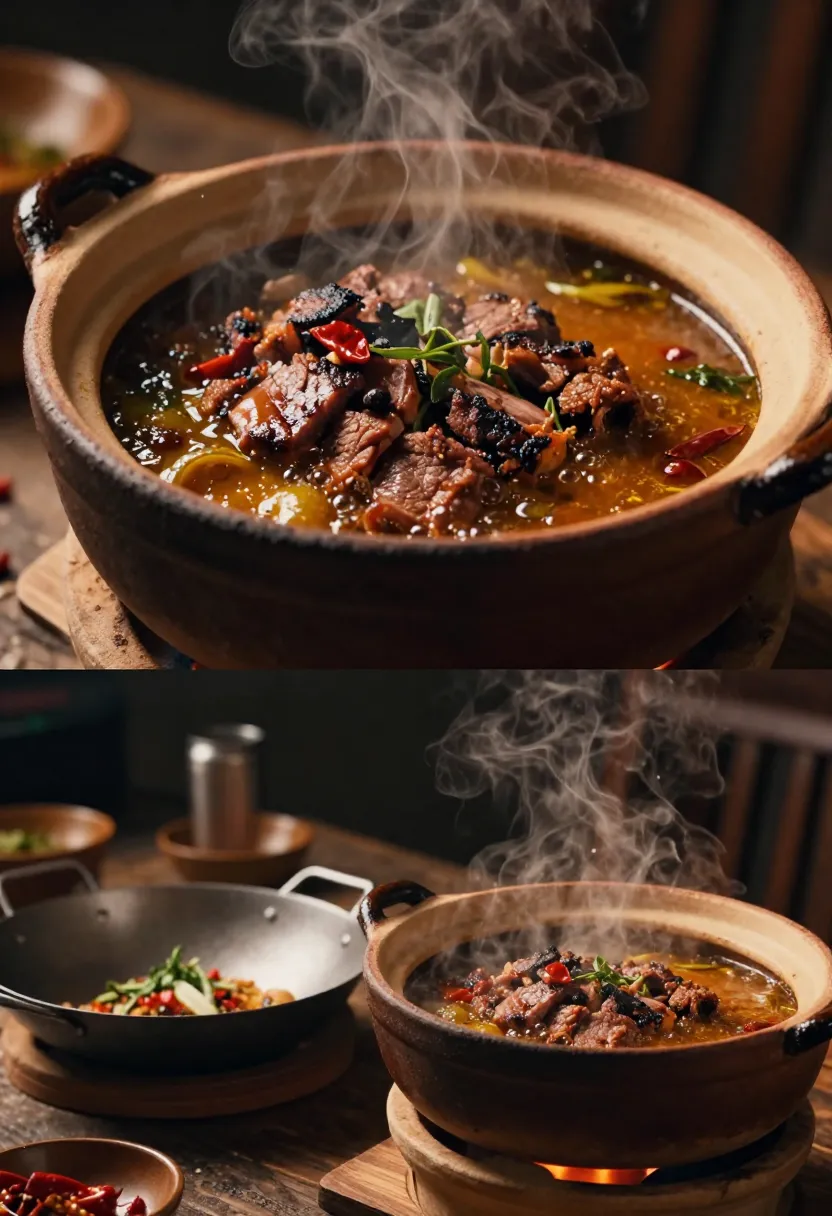
This one does.
Another thing people underestimate is how clay affects aroma. Because the pot stays hot for so long, steam continues carrying garlic, chili, beef fat, and tamarind upward during the entire meal. You keep smelling the dish while eating it, which somehow makes the flavors feel even bigger.
It turns dinner into more of an event than a regular plated steak.
There is also something visually satisfying about clay pots that metal pans cannot really match. The dark surface. The bubbling sauce around the edges. The steam escaping whenever somebody lifts the lid. Even the slight crackling sound underneath the beef makes the whole meal feel alive.
And honestly, clay pots reward patience.
Rush the heat and garlic burns instantly. Overcrowd the pot and the sauce cools too fast. But once you learn how the heat behaves, the cooking process starts feeling almost relaxed. Controlled. The pot does part of the work for you by holding steady heat naturally.
That is probably why clay pot dishes feel so comforting across different cuisines around the world.
🍲 Clay pot vs regular skillet cooking
| Cooking element | Clay pot | Regular skillet |
|---|---|---|
| Heat retention | Very high and long-lasting | Moderate and drops quickly |
| Sauce texture | Thickens slowly and evenly | Reduces faster and more aggressively |
| Steam circulation | Traps moisture inside the pot | Steam escapes immediately |
| Beef texture | Softer and juicier over time | Firmer with stronger direct sear |
| Flavor development | Gradual and layered | Faster but less rounded |
| Garlic behavior | Sweetens slowly | Burns more easily over high heat |
| Herb interaction | Softens gently into sauce | Stays mostly raw |
| Table presentation | Continues bubbling dramatically | Starts cooling after serving |
| Aroma release | Ongoing steam during eating | Aroma fades faster |
| Heat stability | Holds steady temperature longer | Temperature changes rapidly |
| Risk factor | Can scorch if rushed | Easier to adjust quickly |
| Dining atmosphere | Feels communal and slow | Feels more direct and individual |
| Sauce absorption | Beef absorbs flavor gradually | Sauce stays more separate |
| Best serving style | Shared table centerpiece | Individual plated portions |
And honestly, part of the appeal is visual too.
A bubbling clay pot placed directly in the middle of the table just feels more dramatic than a plated steak ✨.
🥩 Choosing the right cut of beef
One mistake people make immediately is buying beef that is too lean.
Lean steak sounds good in theory because the sauce already contains strong flavors, but the clay pot environment really benefits from marbling. Fat melts into the broth and gives the sauce body. Without enough fat, the beef can taste dry once sliced thinly.
Ribeye works beautifully because of that. The fat softens gradually inside the hot sauce and almost creates its own secondary seasoning. But ribeye is not the only option. Actually, some cheaper cuts work extremely well because the smoky sauce covers imperfections naturally.
Skirt steak gives stronger beef flavor and deeper char. Sirloin feels slightly cleaner and firmer. Flank steak works beautifully too, though slicing becomes much more important because of the grain structure. No matter which cut you choose, always slice against the grain or the texture becomes unnecessarily chewy.
Short rib slices create a completely different version altogether — richer, heavier, and closer to slow comfort food than grilled steak.
🍳 Crying tiger clay pot beef recipe
This Crying Tiger clay pot beef is smoky, spicy, rich, and deeply comforting all at once. Charred slices of beef simmer gently inside a bubbling tamarind sauce filled with garlic, chili, fish sauce, lime, and toasted rice powder, while fresh herbs and sticky rice keep the whole meal balanced and vibrant. The clay pot slowly concentrates the flavor as everyone eats, making the final bites even deeper, darker, and more intense than the first ones.
What makes this version different from regular grilled steak dishes is the atmosphere surrounding it. The sauce keeps bubbling long after the pot reaches the table. Steam carries the smell of garlic, beef fat, chili, and herbs through the room while the meat slowly absorbs even more flavor underneath. The beef stays juicy, the herbs soften slightly into the broth, and the sticky rice catches every drop of the smoky tamarind sauce.
It’s not delicate food either.
The sauce splashes a little. Herbs fall into the clay pot naturally. Somebody always reaches for extra sticky rice because the broth somehow tastes even better halfway through dinner. That slightly messy, relaxed energy is part of why the dish feels so satisfying.
The balance matters most here. Rich beef against sharp lime. Smoky char beside cool herbs. Spicy sauce softened by sticky rice. Every bite shifts slightly depending on how much sauce, chili, or herbs end up together.
And honestly, that constant contrast is what makes Crying Tiger clay pot beef feel unforgettable instead of just heavy.
Ingredients
🥩 For the beef marinade
- 700 g ribeye, sirloin, skirt steak, or flank steak
- 1 tablespoon oyster sauce
- 1 tablespoon fish sauce
- 1 teaspoon soy sauce
- 1 teaspoon palm sugar or brown sugar
- 3 garlic cloves, grated
- 1 teaspoon neutral oil
- Freshly cracked black pepper
🌶️ For the clay pot sauce
- 2 tablespoons tamarind paste
- 1 tablespoon fish sauce
- 1 tablespoon lime juice
- 1 teaspoon soy sauce
- 1 teaspoon palm sugar
- 1 tablespoon toasted rice powder
- 1–2 teaspoons chili flakes
- 2 tablespoons warm water
🌿 Fresh toppings
- Cilantro
- Thai basil
- Green onions
- Fresh chili slices
- Lime wedges
🍚 For serving
- Sticky rice
- Cucumber slices
- Pickled vegetables
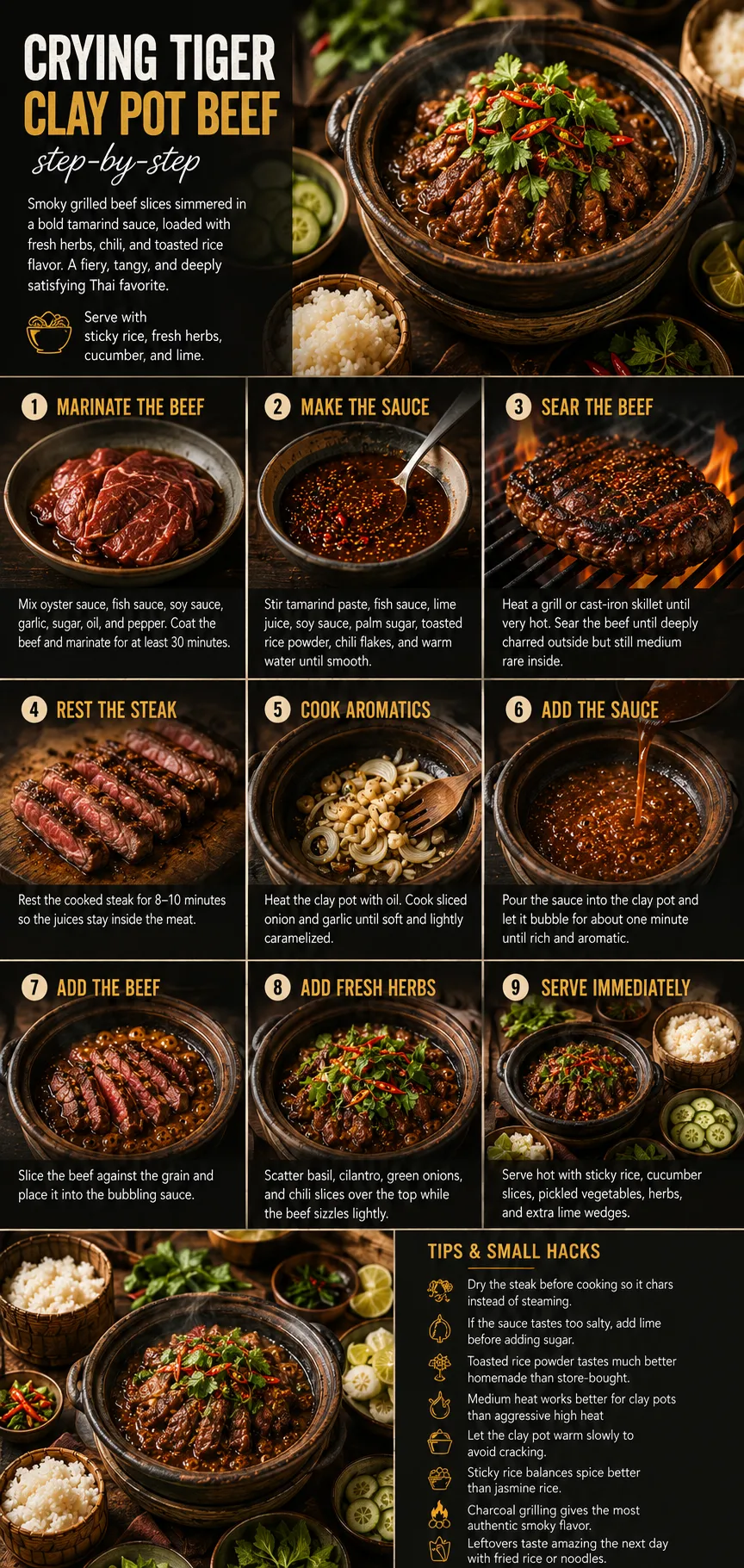
👨🍳 Instructions
- 🥩 Mix oyster sauce, fish sauce, soy sauce, garlic, sugar, oil, and pepper, then coat the beef evenly and marinate for at least 30 minutes.
- 🌶️ Stir tamarind paste, fish sauce, lime juice, toasted rice powder, chili flakes, sugar, and warm water together until smooth.
- 🔥 Heat a grill or cast-iron skillet until extremely hot and sear the beef until deeply charred outside but still medium rare inside.
- ⏳ Rest the cooked steak for 8–10 minutes so the juices stay inside the meat instead of flooding the sauce.
- 🍲 Heat the clay pot gently with oil, then cook sliced onion and garlic until soft and lightly caramelized.
- 🥄 Pour the sauce into the clay pot and let it bubble for about one minute until the aroma becomes darker and richer.
- 🔪 Slice the beef against the grain and place it directly into the bubbling sauce.
- 🌿 Scatter basil, cilantro, green onions, and chili slices over the top while the beef continues sizzling lightly.
- 🍚 Serve immediately with sticky rice, cucumber slices, herbs, and extra lime wedges.
💡 Cooking tips and small hacks
- Dry the steak before cooking so it chars instead of steaming
- If the sauce tastes too salty, add lime before adding sugar
- Toasted rice powder tastes much better homemade than store-bought
- Medium heat works better for clay pots than aggressive high heat
- Let the clay pot warm slowly to avoid cracking
- Sticky rice balances spice better than jasmine rice
- Add herbs at the end so they stay fresh and aromatic 🌿
- If the sauce thickens too much, loosen it with a splash of warm water
- Charcoal grilling gives the most authentic smoky flavor 🔥
- Leftovers taste surprisingly good the next day with fried rice or noodles
🍚 Sticky rice changes the whole experience
You can technically serve this dish with jasmine rice. Plenty of restaurants do. Some even prefer it because jasmine rice feels softer and lighter beside heavily seasoned beef.
But honestly, sticky rice changes the entire personality of the meal.
Not just the texture. The rhythm too.
Sticky rice absorbs sauce without collapsing into mush. The chewy texture stands up against the rich beef and spicy tamarind broth better than soft jasmine rice ever could. You tear off pieces with your fingers, drag them through the sauce, grab herbs, then build bites slowly instead of eating everything mechanically with a fork.
Dinner becomes slower because of that.
People start sharing more naturally. Somebody passes lime wedges. Someone else grabs extra herbs from the center of the table. The clay pot keeps bubbling quietly while the sauce thickens little by little underneath the beef.
It feels communal in a way plated steak rarely does.
Good sticky rice should feel glossy and slightly elastic instead of fluffy. The soaking stage matters more than people expect. Quick methods technically work, but overnight soaking gives the rice a much better texture beside rich dishes like this.
And texture matters enormously here.
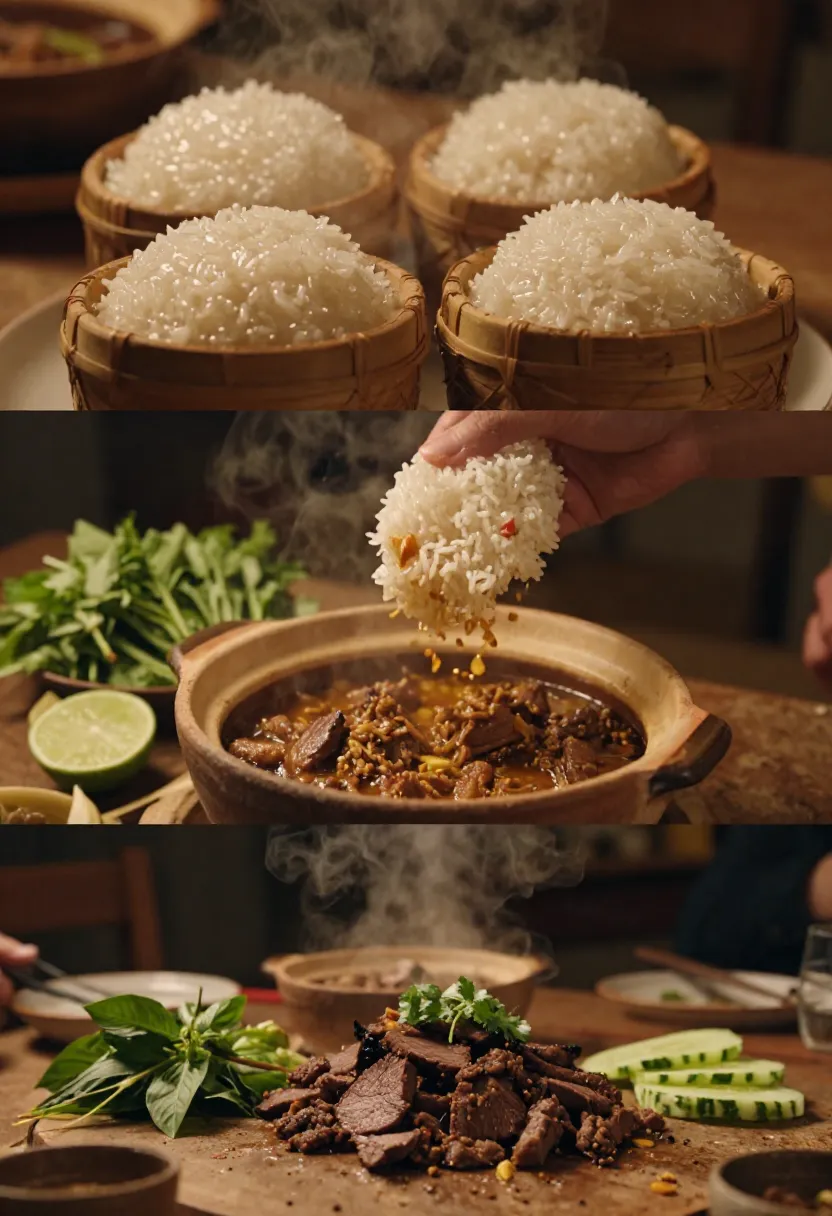
Crying Tiger clay pot beef already carries a lot of intensity. Smoke, salt, fish sauce, chili heat, charred meat, garlic, tamarind. Without something neutral and chewy beside it, the whole meal can become exhausting halfway through.
Sticky rice softens all those edges without muting them.
That’s the important difference.
Jasmine rice tends to absorb flavor quickly and disappear into the sauce. Sticky rice keeps its own identity. You still feel the chewiness even after dragging it through the broth. That resistance changes the eating experience completely because every bite keeps some contrast.
I think that’s one reason Thai grilled meat dishes work so well socially. Sticky rice forces people to slow down slightly. You cannot really rush through the meal the same way you can with a fork and knife dinner.
You pull pieces apart gradually. You build bites with herbs and sauce. You eat in smaller motions.
And somehow the food tastes better because of that.
The smell changes too once sticky rice enters the table. Warm rice steam mixing with grilled beef and herbs creates this heavier, comforting atmosphere that makes the entire dinner feel calmer and more relaxed. Especially during colder evenings.
I’ve tried serving this dish with noodles once or twice out of curiosity. Not terrible. Still flavorful. But it lost something important emotionally. The meal suddenly felt faster and less grounded.
Sticky rice gives the dinner weight without making it heavy.
That balance matters.
🍚 Small details that improve sticky rice
- Soak the rice overnight whenever possible
- Steam instead of boiling for better chewiness
- Keep the rice covered so it stays soft longer
- Serve it warm, not piping hot
- Use small portions at a time so it does not dry out on the table
- Sticky rice works best when slightly glossy, not wet or mushy
🌿 Fresh herbs and side dishes keep the beef balanced
Without herbs, this recipe can feel exhausting after a few bites.
The beef is rich. The sauce is salty and smoky. The clay pot keeps intensifying everything while the dish sits at the table. Fresh herbs reset your palate constantly so the meal stays balanced instead of overwhelming.
Thai basil brings sweetness and subtle licorice flavor. Cilantro cools things down. Green onions sharpen the edges again after the sauce settles heavily into the beef.
Mint works beautifully too.
Actually, mint might secretly be my favorite addition even though it is not always traditional. Something about cold mint against hot tamarind sauce completely changes the atmosphere of the meal. Suddenly the beef tastes brighter and lighter without losing richness.
The herbs should never look too neat here either. Scatter them naturally over the bubbling beef and let some fall directly into the sauce.
That slightly messy look fits the dish perfectly.
And honestly, the herbs do more work than most people realize. They are not decoration. They actively change the way your palate experiences the beef. A bite without herbs feels darker and heavier. Add basil or cilantro and suddenly the smoke tastes cleaner, the lime sharper, the sauce less dense.
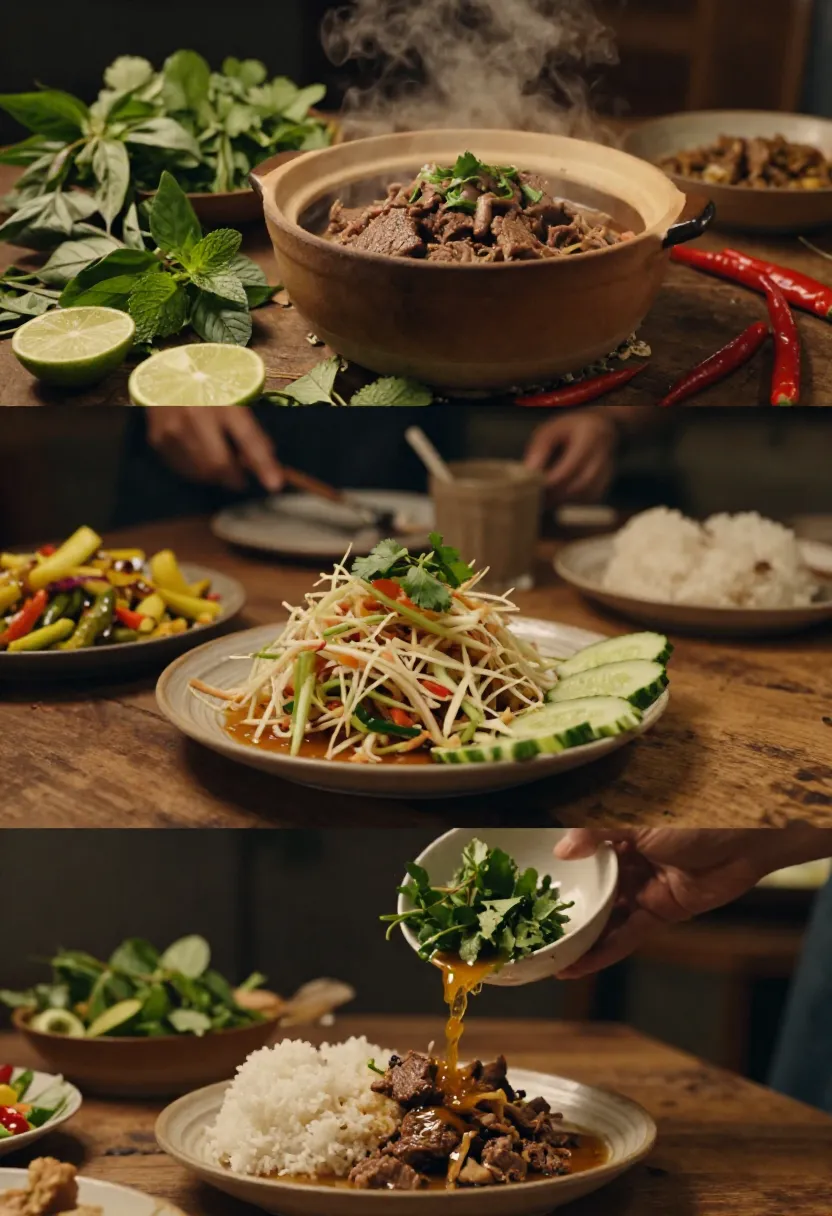
That contrast keeps the meal alive from beginning to end.
Temperature plays a huge role too.
Cold herbs against hot beef create tension in every bite. Warm sticky rice beside crisp cucumber does the same thing. Thai cooking constantly balances hot against cool, soft against crunchy, rich against acidic.
That movement is what keeps the food addictive.
The side dishes matter for the same reason. Crying Tiger clay pot beef already dominates the table pretty aggressively, so anything beside it should stay lighter and fresher.
Green papaya salad works beautifully because the crunch cuts through the richness immediately. Pickled cucumbers cool the palate. Even plain lettuce leaves become useful once the chili heat starts building.
Cold drinks matter too 🍺.
Beer works naturally because smoke and grilled meat already lean in that direction. But sparkling water with lots of ice and lime honestly works even better than people expect, especially if the sauce turns out extra spicy.
I usually avoid serving rich coconut curries beside this dish though. Too much heaviness together. The clay pot beef already carries enough intensity on its own.
One thing I love about meals like this is how informal they become once everyone starts eating. The table gets messy quickly. Herbs scatter everywhere. Lime wedges pile up near empty bowls. Somebody inevitably asks for more sticky rice halfway through dinner because the sauce keeps getting better as it reduces.
And the final bites usually taste strongest.
By then the herbs have softened slightly into the broth. The beef has absorbed more sauce. Garlic becomes sweeter. Chili settles deeper into everything.
The meal almost cooks itself further while people eat.
That slow transformation is part of what makes clay pot dinners feel different from regular grilled meat dishes.
🌿 Ingredients that balance the richness
- Thai basil for sweetness and aroma
- Cilantro for brightness and freshness
- Mint for cooling contrast
- Pickled vegetables for acidity
- Green papaya salad for crunch
- Cucumber for freshness and texture
- Lime wedges for sharpness at the table
🔥 Small mistakes that quietly ruin the recipe
This is not a difficult dish technically, but a few small mistakes change the final result immediately.
Weak heat causes the biggest problems. Without aggressive searing, the beef tastes flat because the smoky bitterness never develops properly. The sauce alone cannot carry the entire recipe.
Too much sugar creates another issue. Some restaurant versions lean extremely sweet because it feels crowd-friendly, but sweetness dulls the smoke and acidity fast. Palm sugar should stay subtle.
Overcrowding the clay pot cools the sauce too quickly and kills the bubbling effect that makes the dish exciting at the table.
And honestly, rushing the meal itself might be the biggest mistake of all.
Crying Tiger clay pot beef tastes better when dinner feels relaxed. When people keep pulling herbs apart with their hands. When sticky rice gets passed around casually. When the sauce slowly thickens while everyone keeps talking and eating long after the first serving.
Perfect presentation almost feels wrong here.
The sauce should splash a little. The herbs should fall into the broth unevenly. Somebody should probably burn their fingertips touching the clay rim too early 😅.
That kind of dinner usually ends up being the memorable one anyway.
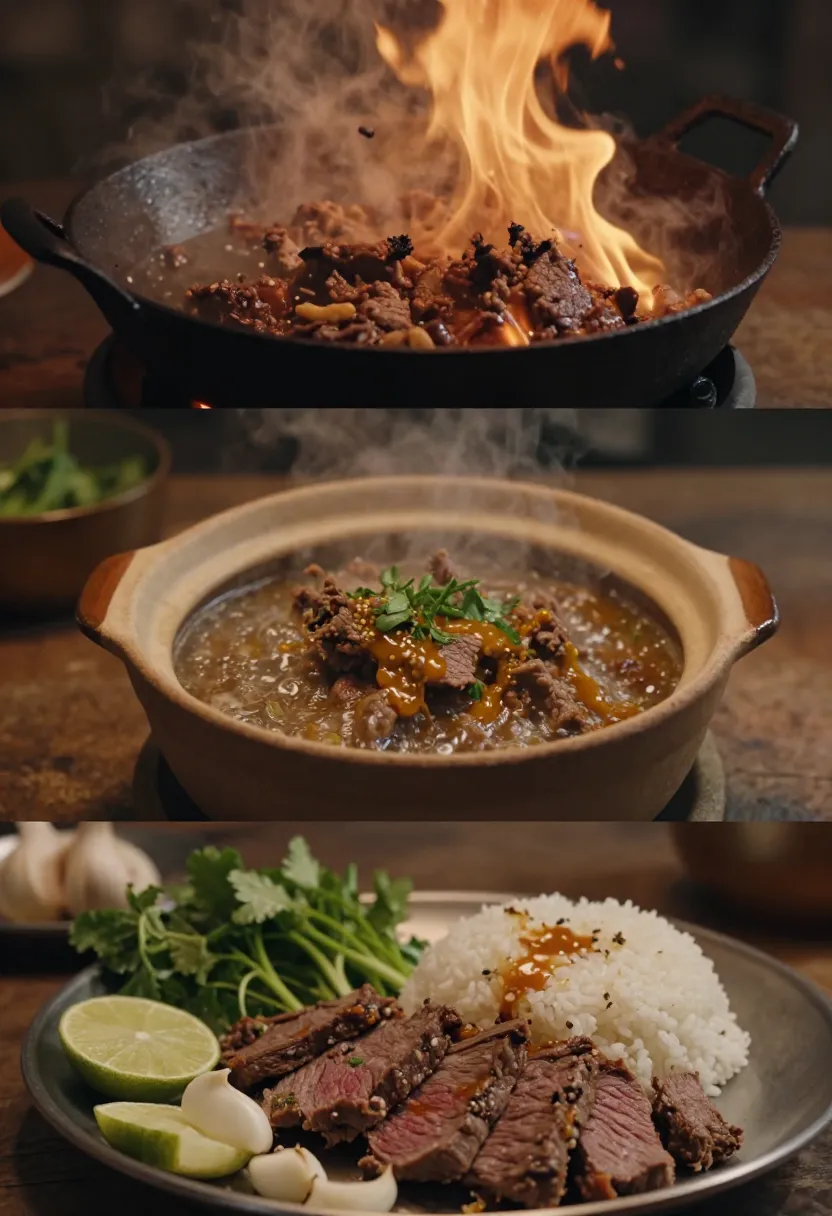
Another common mistake is slicing the beef too early. People get impatient because the smell is incredible and the steak looks ready immediately off the grill. But cutting too soon releases all the juices into the board instead of keeping them inside the meat.
Then the beef dries out inside the clay pot later.
Resting the steak for even ten minutes changes everything.
The same goes for the garlic. Garlic burns fast inside clay pots because clay holds heat longer than metal. Once garlic burns, the bitterness spreads through the sauce immediately. Better to cook it slightly slower and let it soften naturally.
The sauce itself can go wrong surprisingly fast too.
Too much lime and it tastes sharp instead of balanced. Too much fish sauce and the salt overwhelms the herbs completely. Not enough toasted rice powder and the broth feels thin and unfinished.
The hardest part is that the dish changes while eating.
The sauce thickens gradually. Chili heat builds slowly over time. Herbs soften more and more as they sit in steam. The final bites taste stronger than the first ones, which means balance matters early on.
That’s why the dish works best when the flavors start slightly restrained instead of fully aggressive.
And honestly, this recipe rewards confidence more than perfection.
A little extra char usually helps. Slightly messy herb placement looks better. Even the bubbling sauce splashing against the sides of the clay pot adds atmosphere instead of ruining presentation.
Trying to make the dish look too polished almost removes the personality from it.
This food should feel alive.
🔥 Mistakes that weaken the flavor
- Using low heat instead of proper searing
- Adding too much sugar to the sauce
- Slicing beef immediately after cooking
- Burning garlic inside the clay pot
- Overcrowding the pot with too much meat
- Using bottled lime juice instead of fresh citrus
- Skipping herbs or adding too few
- Letting sticky rice dry out before serving
Based on the original source recipe inspiration.