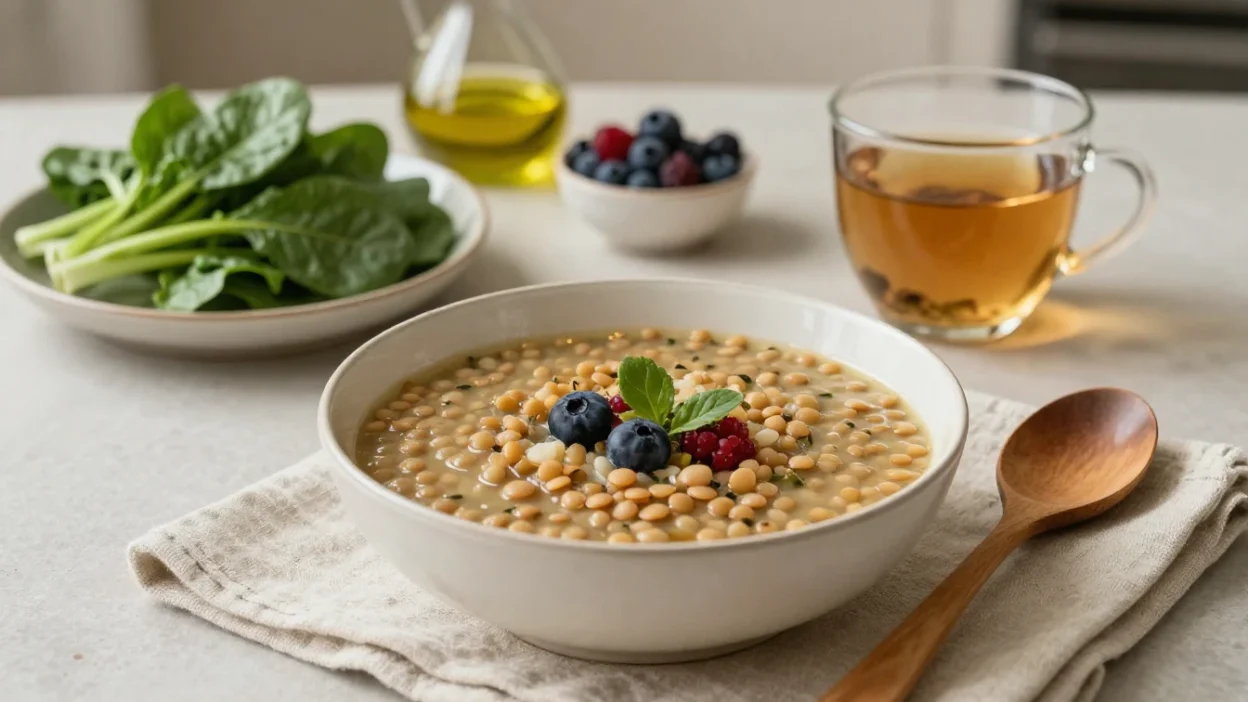
Some days with autoimmune disease can feel like your body is speaking a language you are still trying to understand. One morning, you may wake up with heavy joints. Another day, your stomach feels off, your energy drops by lunch, or your skin reacts to something you ate three days ago. It can be frustrating, especially when you are doing your best.
Natural ways to support autoimmune disease are not about replacing your doctor, stopping medication, or chasing a perfect “healing” routine. Autoimmune diseases happen when the immune system mistakenly targets the body’s own healthy tissues, and many of these conditions need long-term medical care. (niams.nih.gov)
But your daily habits still matter.
The food you put on your plate, the way you rest, how gently you move, and how you handle stress can all shape how supported your body feels. Not in a magical overnight way. More like a quiet, steady rhythm: a warm bowl of lentil soup instead of skipping lunch, an earlier bedtime, a slow walk after dinner, a few minutes of breathing before the day starts asking too much from you.
This guide is about realistic support. We will look at anti-inflammatory meals, gut-friendly foods, sleep, stress, gentle movement, and small routines that feel doable even when your energy is low. No harsh cleanses. No shame. No “one perfect autoimmune diet” that works for everyone.
Just practical, caring steps you can build into your real life.
What autoimmune disease means in simple words

Your immune system is supposed to protect you. It watches for things that do not belong, like viruses, bacteria, and other threats, then reacts so your body can defend itself.
With autoimmune disease, that protective system gets confused. Instead of only going after outside invaders, it mistakenly targets healthy cells, tissues, or organs. That is why autoimmune conditions can affect so many different parts of the body, including joints, skin, digestion, thyroid, nerves, and more. (NIEHS)
That also explains why autoimmune symptoms can feel so scattered.
You might have fatigue that does not feel like normal tiredness. You might have stiffness, digestive trouble, skin changes, swelling, pain, brain fog, or symptoms that come and go without a clear pattern. One person’s autoimmune disease may look completely different from another person’s, even when both are doing “everything right.”
And that part matters.
If you live with autoimmune disease, you are not failing because your body has unpredictable days. You are dealing with a condition where the immune system is not behaving normally. Food and lifestyle habits can support your body, but they are not a test of your discipline.
Your immune system is trying to protect you
I think this is one of the gentlest ways to look at it: your immune system is not “bad.” It is overreacting, misfiring, or aiming at the wrong target.
That does not make the symptoms less real. A flare can still ruin your plans. A swollen joint can still make opening a jar feel ridiculous. Fatigue can still hit in the middle of a normal day, right when you thought you were fine.
But it can help you stop fighting your body in your head.
Instead of asking, “Why can’t I just push through?” a better question is, “What would support my body today?” Sometimes the answer is a warm meal with protein and vegetables. Sometimes it is a nap. Sometimes it is calling your doctor because something feels different.
Why natural support needs to be gentle
When you search for natural ways to support autoimmune disease, you will find a lot of loud advice. Cut this. Detox that. Take this supplement. Never eat this food again.
That kind of pressure can make you feel like healing is one missed green juice away from falling apart.
In real life, autoimmune support is usually quieter. It looks like building meals that keep your energy steadier. Going to bed before you crash on the couch. Choosing a slow walk instead of a punishing workout. Keeping notes when a food seems to bother you, instead of cutting out half your kitchen overnight.
Gentle does not mean weak.
Gentle means you are working with a body that already has enough stress on it.
Start with an anti-inflammatory plate
Food will not “cure” autoimmune disease, and I would be careful with anyone who promises that. But food can still be one of the kindest places to start, because you meet it every day. Breakfast, lunch, dinner, snacks, tea, water, the little bites you take while standing in the kitchen.
An anti-inflammatory way of eating usually looks a lot like simple, colorful home food: vegetables, fruit, beans, lentils, whole grains, olive oil, nuts, seeds, herbs, and fatty fish like salmon or sardines. Harvard Health lists foods like leafy greens, olive oil, nuts, berries, tomatoes, and fatty fish among common anti-inflammatory choices. (Harvard Health)
Nothing about that has to feel clinical. Think roasted carrots with olive oil. Lentil soup with garlic and herbs. A bowl of oatmeal with berries and walnuts. Salmon with warm potatoes and greens. Food that feels steady.
Foods that usually support a calmer routine
A good autoimmune-friendly plate does not need to be perfect. I would build it around four things:
- Something colorful: spinach, carrots, tomatoes, berries, peppers, zucchini, greens
- Something filling: beans, lentils, oats, brown rice, quinoa, potatoes, eggs, fish, chicken
- Something with healthy fat: olive oil, avocado, walnuts, chia seeds, pumpkin seeds
- Something bright: lemon juice, herbs, ginger, turmeric, garlic, vinegar
That last part matters more than people think. A little lemon or vinegar can make a “healthy” meal taste alive instead of bland. And when food tastes good, you are much more likely to repeat it.
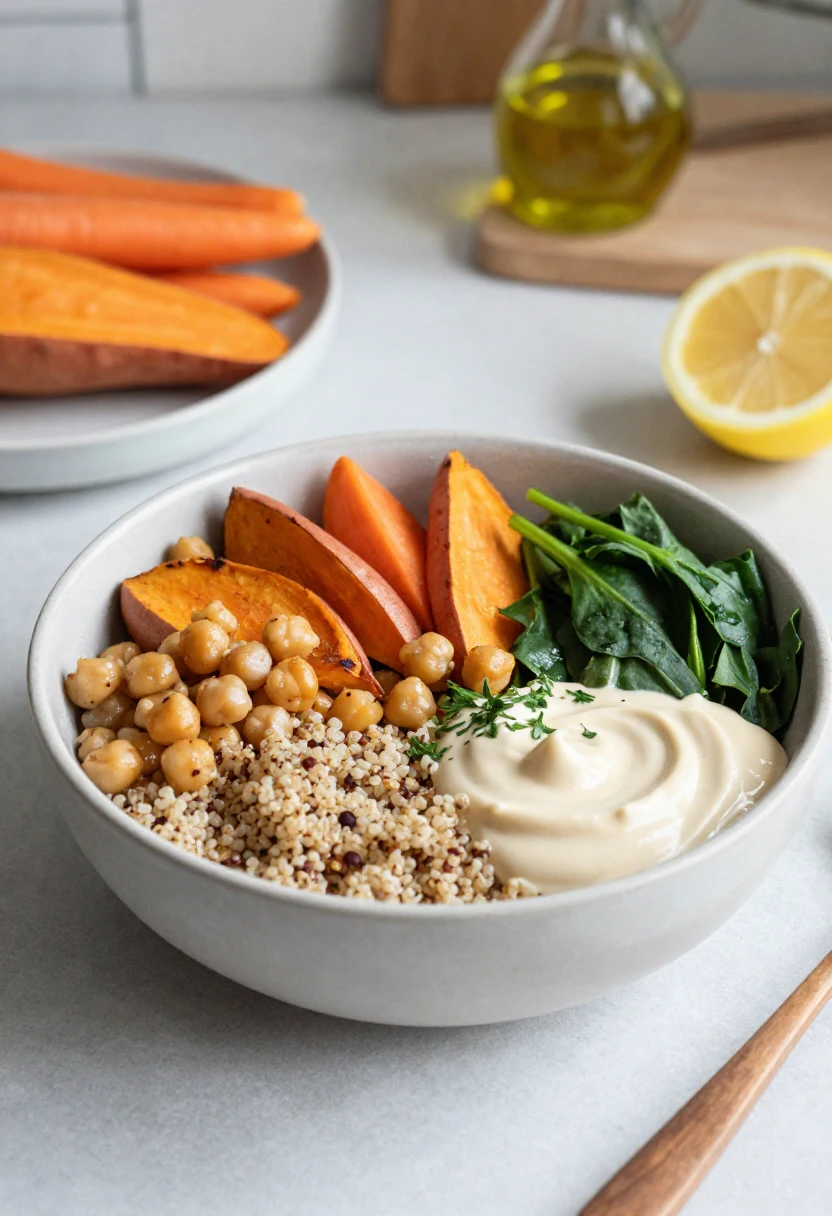
One easy meal: warm quinoa, roasted sweet potato, chickpeas, spinach, olive oil, lemon, parsley, and a spoonful of tahini sauce. It is soft, filling, a little nutty, and bright enough that it does not feel like punishment food.
Foods that may make symptoms worse for some people
This is where it gets personal.
Some people notice more symptoms after lots of added sugar, fried foods, alcohol, or heavily processed snacks. That does not mean one cookie causes a flare. It means your overall pattern may matter, especially if your body already feels inflamed or worn down.
Gluten and dairy are trickier. They are not universal enemies. Some people feel better without them. Some people notice no difference at all. And some people cut out too much too quickly, then end up stressed, hungry, and afraid of food.
A food journal can help more than guessing. Keep it simple:
- What you ate
- How you slept
- Your stress level
- Any symptoms
- Medication changes
- Your cycle, if relevant
Look for patterns over a few weeks, not after one meal. One rough afternoon does not always mean lunch was the problem.
A cozy autoimmune-friendly meal idea
Try this kind of bowl on a low-energy day:
Roast carrots, zucchini, and red onion with olive oil, salt, and a little turmeric or paprika. Add chickpeas near the end so they get warm and slightly crisp. Spoon everything over brown rice or quinoa. Finish with lemon juice, parsley, and a drizzle of olive oil.
If you tolerate yogurt, mix plain yogurt with garlic, lemon, and a pinch of salt for a quick sauce. If not, tahini with lemon and warm water works beautifully.
It is not fancy. But it gives you fiber, protein, color, fat, and comfort in one bowl. Some days, that is exactly enough.
Support your gut without chasing every trend
Gut health gets mentioned so often in autoimmune conversations that it can start to sound like a magic switch. Fix your gut, fix everything. I wish it were that simple.
Your gut microbiome is the community of bacteria and other microbes living mostly in your intestines. These microbes help break down fiber, produce helpful compounds, and interact with your immune system. Cleveland Clinic describes the gut microbiome as an ecosystem that is shaped by diet, infections, bowel habits, and other daily factors. (Cleveland Clinic)
So yes, your gut matters.
But you do not need to buy every powder, capsule, and “gut reset” plan on the internet.
Why gut health gets so much attention
A large part of your immune activity is connected to the gut. That does not mean every autoimmune symptom starts in your stomach, but it does mean digestion, food tolerance, and gut bacteria can be part of the bigger picture.
The most useful gut support usually looks boring at first: more fiber, more plant variety, steady meals, enough water, and fewer ultra-processed foods. Not glamorous. Very helpful.
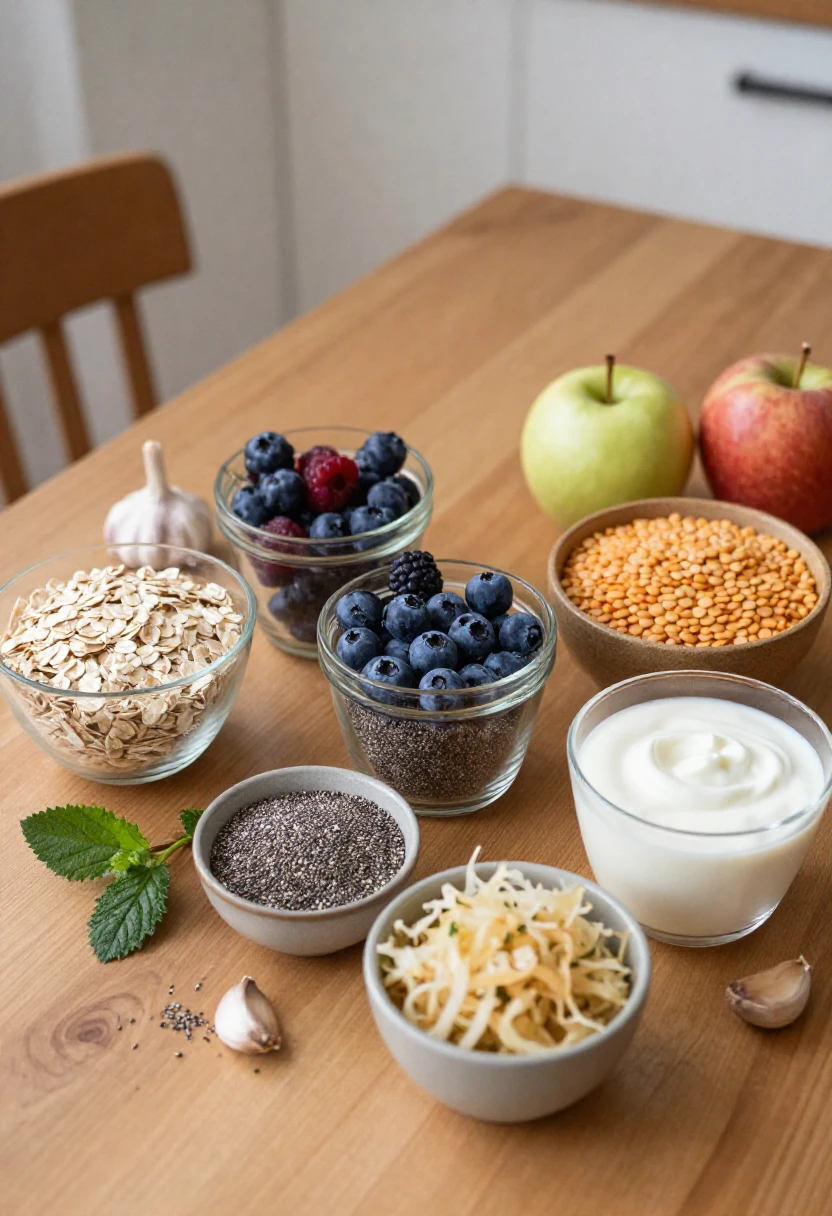
Fiber-rich foods feed beneficial gut bacteria. Different plant foods feed different microbes, which is one reason variety matters. Beans, lentils, oats, berries, greens, apples, onions, garlic, sweet potatoes, and seeds all bring something useful to the table.
A bowl of oatmeal with berries and chia seeds may not look like “gut healing” content. Still, it gives your gut bacteria something to work with.
Gentle gut-supportive foods
Start with foods, not supplements, unless your doctor or dietitian suggests otherwise.
Good options include:
- Oats with berries and ground flaxseed
- Lentil soup with carrots, onion, garlic, and herbs
- Brown rice or quinoa bowls with roasted vegetables
- Beans added to salads, soups, or wraps
- Apples, bananas, asparagus, onions, and garlic for prebiotic fiber
- Yogurt or kefir with live cultures, if you tolerate dairy
- Sauerkraut, kimchi, or fermented vegetables in small amounts, if they agree with you
Fermented foods are interesting because some research has found that diets higher in fermented foods can increase microbiome diversity and affect markers of immune activity. A Stanford-led study, for example, reported that a 10-week fermented-food diet increased microbiome diversity and decreased some inflammatory proteins. (Stanford Medicine)
Still, go slowly. A big forkful of sauerkraut at every meal is not gentle if your stomach is already sensitive. Try a tablespoon. See how you feel.
When supplements need professional guidance
Probiotics can be useful for some people, but they are not all the same. The strain matters, the condition matters, and your medications matter. Cleveland Clinic notes that a probiotic needs to be a proven variety, safe for use, alive in the product, and able to survive digestion to be useful. (Cleveland Clinic)
With autoimmune disease, I would be extra careful. Some people take immune-suppressing medications. Some have gut conditions where certain supplements can backfire. And some supplements interact with prescriptions.
That does not mean probiotics, digestive enzymes, collagen, or other gut products are always bad. It means they deserve the same respect as anything else you put into a body that is already dealing with immune confusion.
Food first. Notes second. Professional guidance when needed.
That is a much calmer way to support your gut.
Be careful with detox claims

“Detox” is one of those wellness words that sounds clean and reassuring. A glass bottle of green juice. A tidy label. A promise that your body will feel lighter, clearer, better.
But with autoimmune disease, harsh detox plans can be a rough place to experiment.
Your body already has detox systems. Your liver, kidneys, digestive tract, lungs, and skin all help process and remove waste in different ways. You do not need a three-day juice cleanse to make those systems “wake up.” The National Center for Complementary and Integrative Health notes that many detox and cleansing programs have little supporting evidence and some can be unsafe or falsely advertised. (NCCIH)
Your body already has detox systems
If you have ever felt tempted by a cleanse, I understand it. When your body feels inflamed, heavy, swollen, or exhausted, the idea of “resetting” everything is appealing.
The problem is that many cleanses are too low in protein, too low in calories, or too heavy on supplements and laxative-style teas. That can leave you shaky, hungry, irritable, and more stressed. And stress is not exactly what an autoimmune body needs more of.
There is also the supplement issue. Detox products are not always well regulated, and some liver-focused cleanses may contain ingredients that can harm the liver instead of helping it. Johns Hopkins Medicine advises caution with liver cleanses because they lack strong clinical evidence, are not FDA-regulated, and some supplements can cause liver injury. (Johns Hopkins Medicine)
So instead of asking, “How do I detox?” I would ask something gentler: “How can I reduce the load on my body today?”
Better daily “detox” habits
The boring habits are usually the ones that help most.
Drink water. Eat enough fiber. Add vegetables to meals you already like. Keep protein on your plate so your blood sugar does not swing all over the place. Go easy on alcohol. Take a walk if your energy allows. Sleep instead of scrolling for one more hour.
That may not look dramatic on Instagram, but it is real support.
A simple day might look like this:
- Oatmeal with berries and ground flaxseed
- Lentil soup with carrots, greens, and olive oil
- A full glass of water between meals
- A short walk after dinner
- Herbal tea before bed
No cleanse. No punishment. Just steady food, fluids, digestion, and rest.
A better drink than a cleanse
If you like the ritual of a “wellness drink,” keep the ritual and lose the pressure.
Try ginger tea with lemon. Or cucumber water with mint. Or a smoothie made with berries, spinach, plain yogurt or protein powder, chia seeds, and enough fat or protein to make it satisfying.
The difference is simple: you are adding nourishment, not replacing meals with liquid hunger.
And honestly, that matters. Your body is already working hard. It does not need a harsh reset. It needs support it can trust.
Do not ignore infections or new symptoms

Natural support is useful, but it has limits. This is especially true when you notice signs of infection or symptoms that feel new, stronger, or just different from your usual pattern.
Autoimmune disease already involves an immune system that is not behaving normally. Some treatments, including immunosuppressants and corticosteroids, can also lower immune response and increase infection risk. Cleveland Clinic notes that immunosuppressants are used for certain autoimmune diseases and can raise infection risk because the immune system is not working as strongly as usual. (Cleveland Clinic)
That is not something to panic about. It is just something to respect.
A cup of ginger tea may feel comforting when you have a scratchy throat. But it should not replace medical advice if you have a fever, worsening pain, a strange rash, shortness of breath, or symptoms that come on fast.
Why infections matter with autoimmune disease
Infections can be harder to read when you live with autoimmune disease. Fatigue, body aches, swelling, and low-grade fever can sometimes overlap with flare symptoms. That makes it tempting to wait and see.
Sometimes waiting is fine. Sometimes it is not.
If you are taking medication that affects your immune system, your body may not react in the usual loud way. A serious infection may not always start with dramatic symptoms. That is why it helps to know your personal “normal” and pay attention when something feels off.
A simple example: if your joints are usually stiff in the morning but suddenly one joint becomes hot, red, very swollen, and painful, that deserves a call. If your usual fatigue turns into fever, chills, dizziness, or a deep “something is wrong” feeling, do not try to smoothie your way through it.
When to call a doctor
Call your healthcare provider, urgent care, or emergency services depending on severity if you notice:
- Fever that is high, persistent, or unusual for you
- Shortness of breath or chest pain
- Sudden weakness, confusion, fainting, or severe dizziness
- A rash that spreads quickly or looks infected
- A joint that becomes hot, red, very swollen, or intensely painful
- Severe abdominal pain, persistent vomiting, or signs of dehydration
- New neurological symptoms, like vision changes, numbness, or trouble speaking
- Symptoms that start after a new medication, supplement, or herbal product
Johns Hopkins lists fatigue, joint pain and swelling, skin problems, digestive symptoms, recurring fever, and swollen glands among common autoimmune symptoms, so the key is not to panic over every symptom. The key is to notice when symptoms are new, intense, fast-changing, or different from your usual autoimmune pattern. (Johns Hopkins Medicine)
Be careful with herbs and supplements
This part is easy to overlook because herbs feel gentle. Turmeric capsules, echinacea, high-dose garlic, green tea extracts, “immune boosting” blends, liver cleanses, mushroom powders. The labels sound natural, but they can still interact with medications or affect immune activity.
With autoimmune disease, I would be especially careful with anything marketed as immune boosting. Your goal is not to push the immune system harder. Your goal is steadier support.
Keep a list of supplements, teas, powders, and tinctures you use. Bring it to appointments. It may feel like a small thing, but it can save your doctor from guessing if symptoms change.
Food can be comforting. Rest can help. Gentle habits matter.
But when your body is sending a warning signal, it is not the time to prove how “natural” you can be. It is the time to get help.
Stress support that does not feel like another chore
Stress is a strange thing with autoimmune disease. You can know it affects you, and still feel annoyed when someone says, “Just relax.”
Because really, what does that even mean when your joints hurt, your stomach is unsettled, your inbox is full, and dinner still has to happen?
Stress management should not become one more wellness assignment you are failing. It should feel like lowering the volume a little. Not fixing your whole life. Just giving your nervous system a few moments where it does not have to brace.
Chronic stress can affect immune function and may contribute to inflammation in the body, according to the American Psychological Association. (apa.org) Research also suggests that stress can be involved in autoimmune disease onset and flare patterns, though autoimmune disease is never caused by one simple factor. (PubMed)
Why stress can make flare days feel harder
A flare is already tiring. Add poor sleep, a tense workday, skipped meals, and a brain that will not stop planning tomorrow, and everything can feel sharper.
Pain feels louder.
Fatigue feels heavier.
Even deciding what to eat can feel like too much.
That does not mean stress is “your fault.” It means your body has fewer reserves when stress stays high for too long. The goal is not to become perfectly calm. Nobody is perfectly calm. The goal is to build tiny pauses into your day before your body has to force one.
Small calming habits that fit real life
Start embarrassingly small. That is usually what works.
Try one of these:
- Sit for five quiet minutes before opening your phone in the morning
- Breathe slowly while the kettle boils
- Step outside after lunch, even if it is just for fresh air
- Stretch your neck and shoulders before bed
- Keep a small notebook for symptoms, meals, and stress levels
- Say no to one unnecessary thing this week
I like habits that attach to something you already do. Tea, brushing your teeth, waiting for food to warm, sitting in the car before going inside. You do not need a perfect meditation corner. You need a repeatable pause.
Even five minutes of rest during a flare can help you stop pushing past your limit. Arthritis Research Canada notes that rest and breaks can be important during flares, even something as simple as sitting quietly and breathing for a few minutes. (Arthritis Research Canada)
Food rituals that help you slow down
Food can be part of stress support too, not because dinner solves everything, but because eating is one of the few times your body asks you to stop.
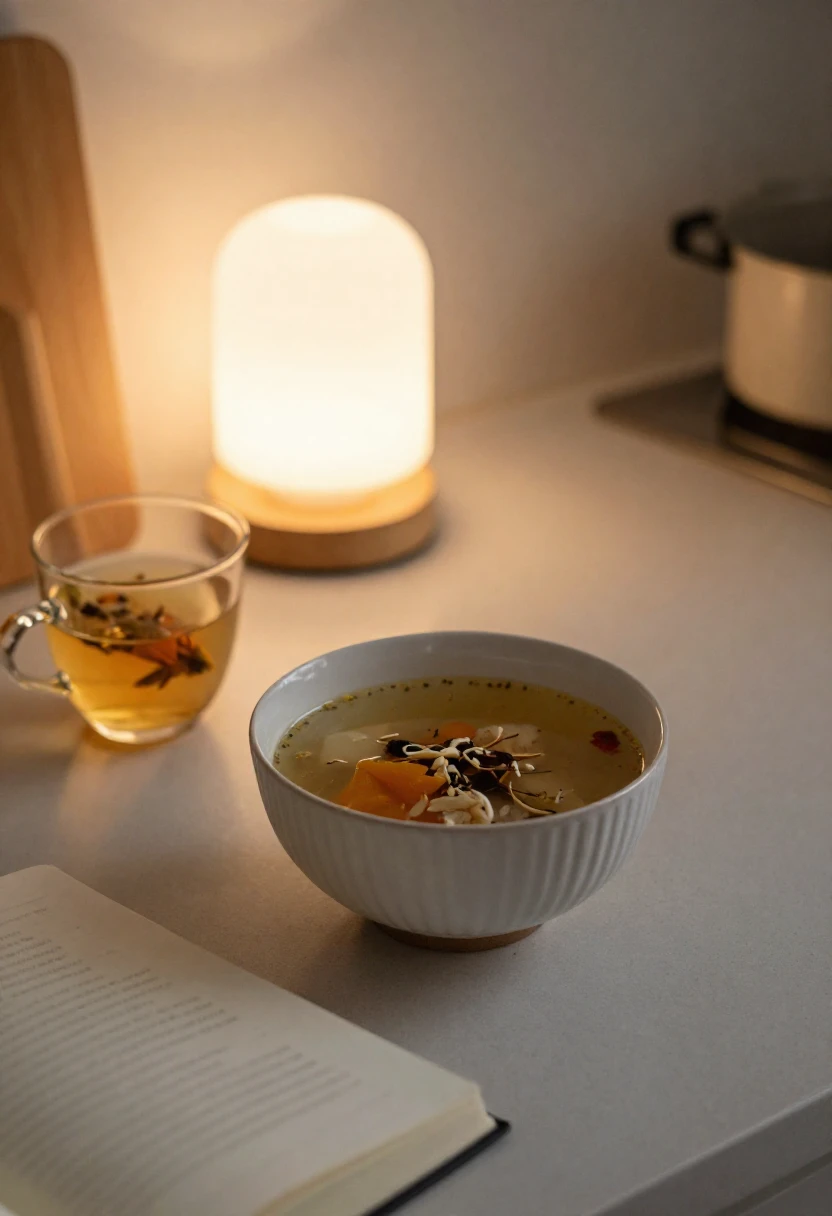
A bowl of soup does this better than almost anything. The steam rises, the spoon slows you down, and you cannot really rush hot broth unless you enjoy burning your tongue. Lentil soup, chicken and rice soup, miso-style broth with vegetables, or a simple potato soup with herbs can all feel grounding.
Other small rituals help too:
- Making herbal tea after dinner
- Preparing overnight oats so breakfast does not start with a decision
- Keeping a gentle snack ready, like yogurt with berries or apple slices with nut butter
- Eating lunch away from your laptop when you can
- Lighting the kitchen softly in the evening instead of blasting bright overhead lights
None of this is dramatic. That is the point.
Stress support works best when it feels ordinary enough to repeat.
Move your body gently

Exercise advice can sound almost insulting when you are exhausted. Move more? Right now? When your knees feel stiff, your hands ache, and walking to the kitchen already counts as a small event?
Still, gentle movement can be useful for many people with autoimmune conditions. Not because you need to “push through,” but because the right kind of movement can help with stiffness, circulation, mood, strength, and the heavy feeling that comes from being still for too long. Reviews on physical activity and autoimmune disease suggest that exercise is generally safe for many autoimmune conditions when it is adapted to the person and done sensibly. (PubMed)
The key word is adapted.
A flare day and a good-energy day should not have the same plan.
Why movement helps, but intensity matters
Your body does not need punishment workouts to benefit from movement. In fact, pushing too hard can backfire if you are already inflamed, sleep-deprived, or recovering from a flare.
A better goal is simple: move enough to keep your body from feeling locked up, but not so much that you crash afterward.
That might mean ten minutes of walking. It might mean slow stretching on the floor. It might mean moving your ankles and wrists while sitting on the couch. On some days, it might mean choosing rest and calling that the right decision.
Gentle movement during flare-ups may help reduce stiffness and keep joints mobile, while high-impact activity can be too much for painful joints. (arthritis.org.au)
Autoimmune-friendly movement ideas
Think low-impact first. You want movement that supports your body without making it feel attacked.
Good options may include:
- Walking on flat ground
- Swimming or water walking
- Gentle yoga
- Tai chi
- Light cycling
- Stretching
- Resistance bands
- Chair exercises
- Light strength training with slow, controlled movements
If you feel intimidated by exercise, start smaller than you think you need to. Five minutes counts. A walk to the end of the street counts. Stretching your shoulders while waiting for soup to warm counts.
I like the idea of “minimum movement” on low-energy days. Not a workout. Just enough to remind your body that it can soften a little.
How to listen to your body
There is a difference between effort and warning signs.
A little muscle warmth, mild breathlessness, or feeling pleasantly tired afterward can be normal. Sharp pain, dizziness, chest pain, swelling that gets worse, or fatigue that knocks you out for the rest of the day is not something to ignore.
Try this simple check-in:
- How do I feel before moving?
- How do I feel right after?
- How do I feel later tonight?
- How do I feel tomorrow morning?
That last one is often the most honest. If a workout seems fine in the moment but leaves you wiped out for two days, your body is giving you information.
Build slowly. Warm up gently. Rest without guilt.
Movement should feel like support, not a test you have to pass.
Sleep is part of autoimmune support

Sleep is not glamorous wellness advice. It is not a pretty smoothie or a new supplement bottle. But if you live with autoimmune disease, poor sleep can make everything feel louder.
Pain feels sharper. Cravings get messier. Stress feels harder to shake. Your patience gets thinner. Even simple food choices can feel like work when your body is running on broken sleep.
Sleep and the immune system are closely connected, and research suggests sleep loss can affect inflammatory signaling and immune balance. (PMC) That does not mean one bad night ruins everything. It means your body deserves sleep as part of the plan, not as an afterthought.
Why poor sleep can make everything feel louder
Bad sleep has a way of making the next day smaller.
You wake up already behind. Breakfast becomes coffee and whatever is easiest. Movement feels impossible. A small stressor feels personal. By evening, you are too tired to cook but too wired to rest.
I would not treat sleep like a moral achievement. Some autoimmune symptoms can make sleep harder. Pain, itching, digestive discomfort, medication timing, night sweats, anxiety, and fatigue that flips into wired restlessness can all get in the way.
So the goal is not perfect sleep.
The goal is to give your body better conditions for rest, most nights, as much as real life allows.
A simple night routine
Start with the basics before making it complicated.
The CDC recommends steady sleep and wake times, a quiet and cool bedroom, turning off electronic devices at least 30 minutes before bed, avoiding large meals and alcohol close to bedtime, and skipping caffeine in the afternoon or evening. (CDC)
A simple autoimmune-friendly evening routine could look like this:
- Make dinner filling enough that you are not hunting for snacks all night
- Stop caffeine earlier, especially if you are sensitive to it
- Dim the lights after dinner
- Take a warm shower or wash your face slowly
- Put your phone away from the bed
- Keep the room cool, dark, and quiet
- Do the same tiny routine most nights, even if bedtime shifts a little
Caffeine is worth watching. Some guidance suggests avoiding it at least six hours before bedtime, and some people need a longer gap. (PMC) If sleep is a mess, try moving coffee earlier for two weeks and see what changes.
Not forever. Just test it.
Foods and drinks that may help evening calm
Food cannot force sleep, but it can make the evening gentler.
A balanced dinner with protein, fiber, and enough carbs can help you feel settled instead of snacky and restless. Think rice with salmon and vegetables, potato soup with beans, lentils with olive oil and greens, or eggs with toast and avocado if dinner needs to stay easy.
Some evening-friendly options:
- Chamomile or lemon balm tea
- Greek yogurt with berries, if tolerated
- Oatmeal with cinnamon
- Banana with almond butter
- Pumpkin seeds or a small handful of walnuts
- Warm soup, especially when chewing feels like too much effort
Magnesium-rich foods like pumpkin seeds, spinach, almonds, and beans can fit nicely into an autoimmune-supportive diet. I would get them from food first unless your doctor suggests a supplement.
And if you wake up at 3 a.m. sometimes, you are not broken. Keep the lights low. Do not start negotiating your entire life in your head. Breathe, sip water if you need it, and give your body a boring path back to sleep.
Boring is underrated at bedtime.
Build your personal autoimmune support plan
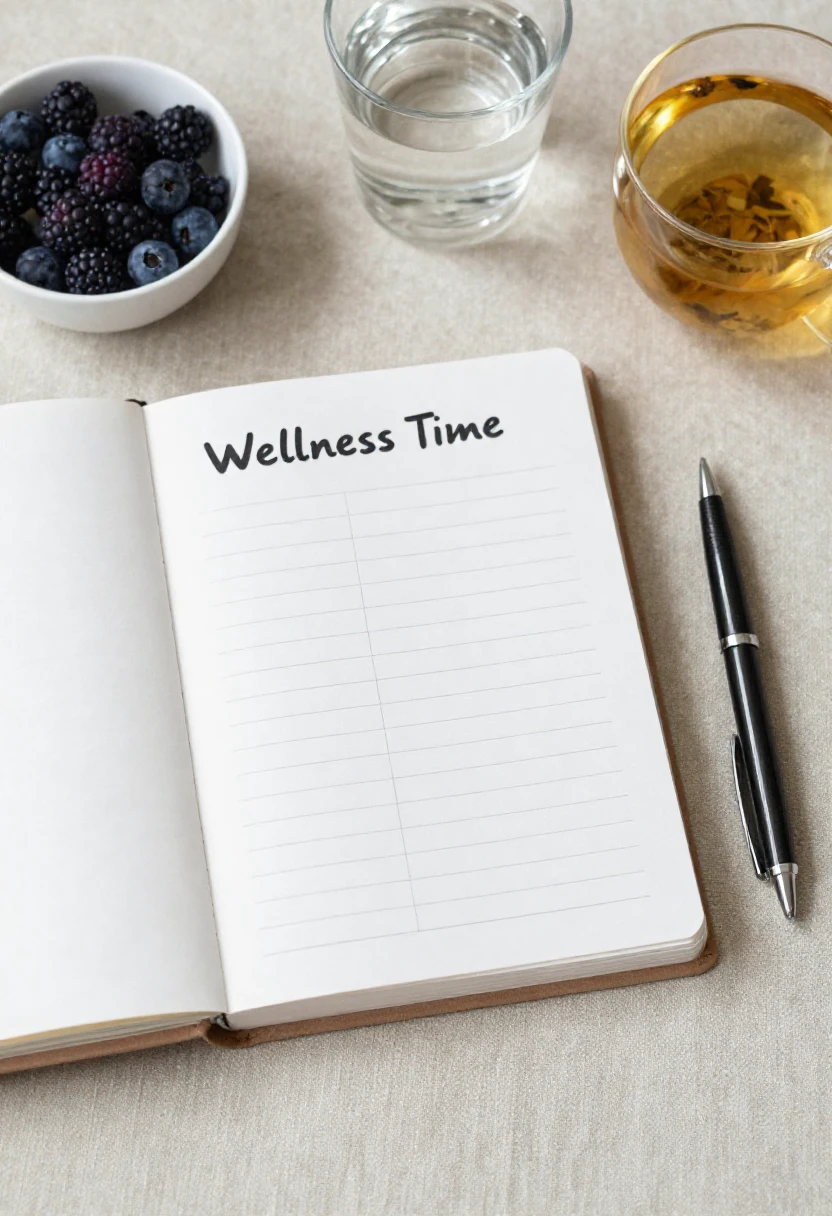
A good autoimmune support plan should feel like something you can actually live with. Not a strict chart taped to the fridge that makes you feel guilty by Wednesday.
Your body is not a project to “fix” in 30 days. It is a body that needs care, patience, medical support, and some daily rhythm. Autoimmune diseases can affect different tissues and organs, and symptoms vary widely, so the plan that helps one person may not fit another person at all. (NIAMS)
That is why the best starting point is not a huge lifestyle makeover.
Start smaller.
Start with one change, not ten
Pick one food habit, one rest habit, or one movement habit. Just one.
For example:
- Add protein to breakfast
- Make soup once a week
- Walk for 10 minutes after lunch
- Move coffee earlier in the day
- Keep a bottle of water nearby
- Go to bed 20 minutes earlier
- Prep one easy lunch before the week starts
Small changes are easier to repeat, and repeatable habits are the ones that start to matter.
If your mornings are rough, do not begin with a complicated smoothie that needs seven ingredients and a blender you hate washing. Try overnight oats. Or boiled eggs with toast. Or Greek yogurt with berries, if you tolerate dairy. Something that keeps you fed without asking too much from you.
If evenings are hard, make dinner simpler. Soup, baked potatoes, rice bowls, eggs, roasted vegetables, canned beans, frozen fish, rotisserie chicken. Real food does not have to be elaborate to support you.
Track patterns without becoming obsessed
A symptom journal can help, but it should not turn your whole day into detective work.
Write down the basics:
- Meals
- Sleep
- Stress
- Movement
- Symptoms
- Medication changes
- Menstrual cycle, if relevant
- New supplements or herbs
Then look for patterns over time. Not after one meal. Not after one bad night. Over a few weeks.
This is especially useful if you are thinking about removing foods from your diet. Elimination diets are meant to help identify possible food triggers, but they are usually short-term tools, not forever diets. The Academy of Nutrition and Dietetics notes that elimination diets are commonly used for symptoms like bloating, diarrhea, and gas, and they are typically followed for a limited period before foods are reintroduced. (EatRight)
That reintroduction part matters. Otherwise you can end up with a smaller and smaller list of “safe” foods, and that can become stressful fast.
Work with your care team
Natural support works best when it sits next to medical care, not in place of it.
Talk to your doctor, rheumatologist, gastroenterologist, endocrinologist, dermatologist, or dietitian, depending on your condition. This is especially important before you try a restrictive diet, start supplements, change your exercise routine, or stop any medication.
Bring your notes. Bring your questions. Bring the bottle of whatever supplement you are unsure about.
You do not need to apologize for wanting to feel better. You also do not need to carry the whole plan alone.
A simple starting plan might look like this:
- Food: add one colorful vegetable to lunch or dinner
- Rest: move bedtime 15 minutes earlier
- Movement: take a short walk on good-energy days
- Tracking: write symptoms in two sentences at night
- Support: ask your doctor which changes are safest for your condition
That is enough to begin.
Autoimmune support does not need to be dramatic to be useful. Sometimes it looks like soup in the fridge, softer evenings, earlier sleep, and learning to stop before your body has to shout.
Conclusion
Supporting autoimmune disease naturally does not mean chasing a perfect routine or replacing medical care with kitchen experiments. It means paying attention to the small things that can make your body feel a little more supported: steady meals, enough protein, colorful plants, gentle movement, better sleep, calmer evenings, and fewer harsh wellness rules.
Some days will still be hard. That does not mean you did anything wrong.
Start with one habit that feels realistic. Make soup once a week. Add berries to breakfast. Walk for ten minutes when your body allows it. Move bedtime a little earlier. Keep notes, but do not let tracking take over your life.
Your body needs care, not pressure. And sometimes the most helpful natural support is not dramatic at all. It is a warm meal, a slower night, a doctor who listens, and a routine soft enough to keep.
FAQ
Can natural remedies cure autoimmune disease?
No. Natural remedies should not be treated as a cure for autoimmune disease. Food, rest, stress support, and gentle movement may help you feel more stable, but autoimmune conditions often need medical care, testing, and sometimes long-term treatment.
The safest approach is to use natural habits as support, not as a replacement for your healthcare plan.
What is the best diet for autoimmune disease?
There is no single best autoimmune diet for everyone. Many people do well with an anti-inflammatory eating pattern built around vegetables, fruit, beans, lentils, whole grains, olive oil, nuts, seeds, herbs, and quality protein.
Some people may also need to identify personal food triggers. A food journal can help, but restrictive diets are best done with guidance from a doctor or dietitian.
Should everyone with autoimmune disease avoid gluten or dairy?
No. Gluten and dairy are not automatic problems for everyone with autoimmune disease. Some people feel better without one or both, while others tolerate them well.
If you suspect a trigger, track your symptoms and talk with a healthcare professional before cutting out major food groups long term.
What is the safest first step to support autoimmune health naturally?
Start with one simple habit. Add protein to breakfast, drink more water, make one anti-inflammatory meal each week, take a short walk, or improve your sleep routine.
Small steps are easier to repeat. And with autoimmune disease, repeatable support usually matters more than dramatic changes.
Say “давай” and I’ll prepare the SEO block: SEO title, meta description, and 10 internal linking keywords.