There are meals you make almost automatically — something quick, something practical, just to deal with being hungry. You don’t expect much from them, and usually they don’t give you much either. And then, every now and then, there’s a dish that sticks a bit longer than it should. You make it once, don’t think too much about it, and later you realize you keep coming back to it in your head. Not because it was complicated or impressive, but because it just felt… right.
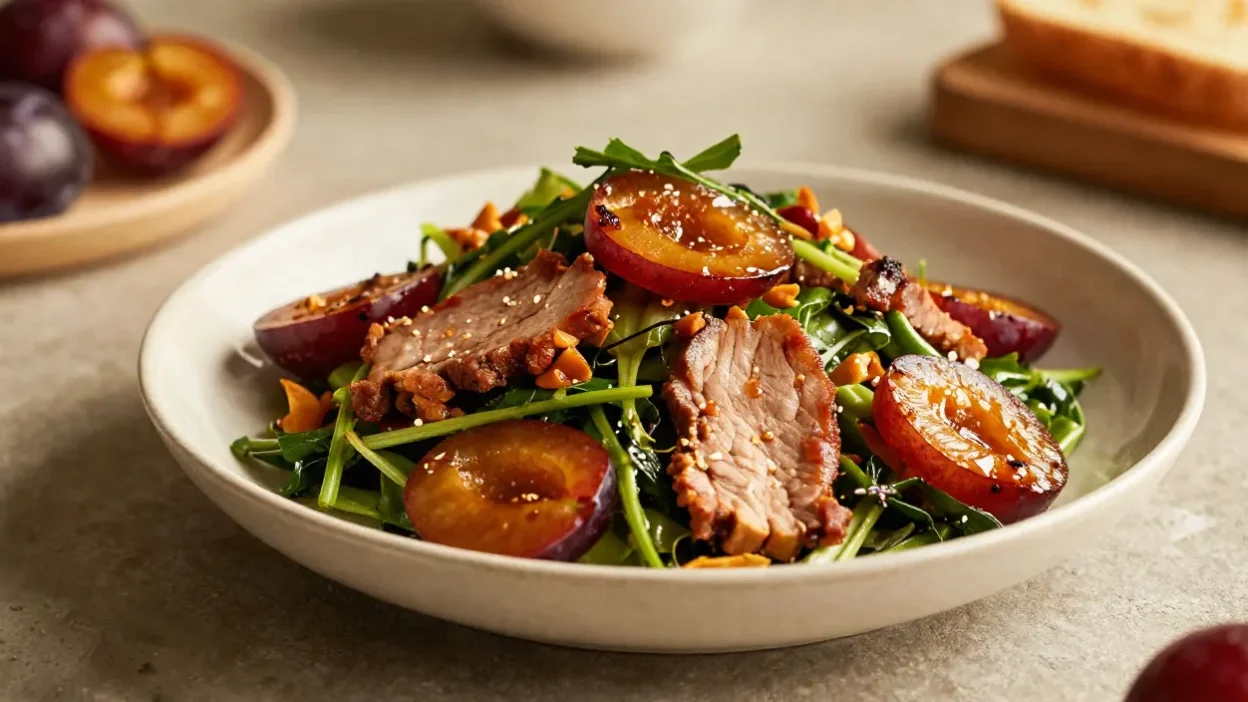
This warm pork and plum salad is one of those.
On paper, it doesn’t immediately sell itself. Pork and fruit in a salad can sound like it might lean too far — too sweet, too heavy, or just slightly off. It’s the kind of combination that makes you pause for a second. But once you actually try it, that hesitation disappears pretty quickly.
The pork brings that familiar, savory depth — something solid to build around. It’s not overly rich, but it has enough weight to anchor everything else. The plums go in the opposite direction: juicy, a bit sharp, naturally sweet without feeling forced. And the maple vinaigrette kind of sits in between. It doesn’t stand out on its own, but it smooths everything out so the transitions between flavors don’t feel abrupt.
What makes it work isn’t anything complicated — it’s how naturally everything fits together. Nothing is trying too hard to take over the plate. Instead, the ingredients sort of meet in the middle and settle there.
If you break it down, it’s really just a few simple contrasts doing most of the work:
- warm pork against fresh greens
- soft, slightly caramelized fruit with something crisp
- sweetness, salt, and acidity sitting next to each other without clashing
You don’t really think about any of this while you’re eating it.
At some point you just notice you’ve slowed down a bit. Not because you’re trying to — it just happens.
🌿 A Salad That Breaks the Rules (In a Good Way)
The word “salad” still comes with a certain expectation. Something cold, something light, something that sits off to the side rather than taking up space in the center of the table. For a lot of people, it still quietly suggests that it won’t be the most satisfying part of the meal.
This dish shifts that idea — without really announcing it.
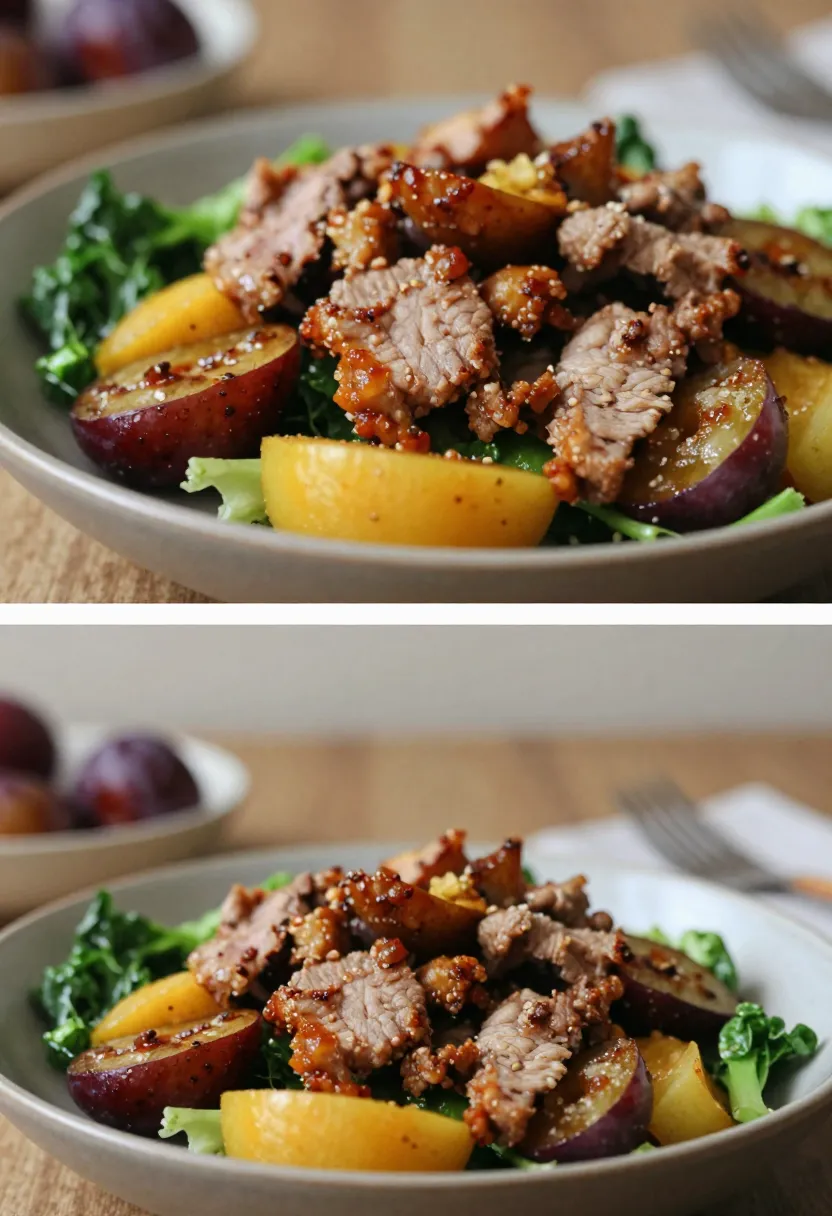
The first thing you notice is the temperature. It’s not fully warm, but it’s definitely not cold either. The pork and plums bring heat into the bowl, and that warmth changes how everything else behaves. The greens soften slightly — not enough to lose their structure, just enough to stop feeling separate. They become part of the dish instead of something sitting underneath it.
Texture does a lot of the work here too. The pork picks up a bit of crispness on the outside while staying tender inside. The plums soften and lose that raw edge, turning smoother, almost jammy. At the same time, the radishes and carrots keep their crunch, which stops everything from tipping too far into softness.
What’s interesting is that you don’t really think about any of this while eating.
You just notice that it works. Some bites feel warmer and a bit more comforting, others fresher and lighter. It keeps shifting slightly, which is exactly what stops it from getting boring.
A few things quietly set it apart from what people usually expect from a salad:
- warmth is part of the structure, not just a contrast
- texture carries as much weight as the ingredients themselves
- it feels complete on its own, without needing anything on the side
It also fits a very specific kind of mood. Those in-between days when you don’t want something heavy, but a standard salad feels a bit underwhelming. You’re looking for something balanced — something that feels like a real meal without slowing you down.
And this just lands there, without trying too hard.
🍽️ The Ingredients That Make It Shine
At first glance, the ingredient list looks pretty straightforward. Nothing unusual, nothing hard to find. But once you actually start putting it together, you notice that each component behaves a bit differently than you’d expect — and that’s where the dish starts to come together.
The pork is what anchors everything. If you give it a bit of attention while cooking, it develops a deeper flavor and a light crust that adds more than you’d think. It’s not just there as protein — it gives the whole salad structure and makes it feel like a real meal, not just something on the side.
The plums are where things shift.
Raw, they’re bright and slightly sharp. But once they hit the pan, that changes pretty quickly. The sweetness softens, the acidity drops back a bit, and the texture turns smoother, almost jammy. They stop standing out as a separate element and start blending into everything else.
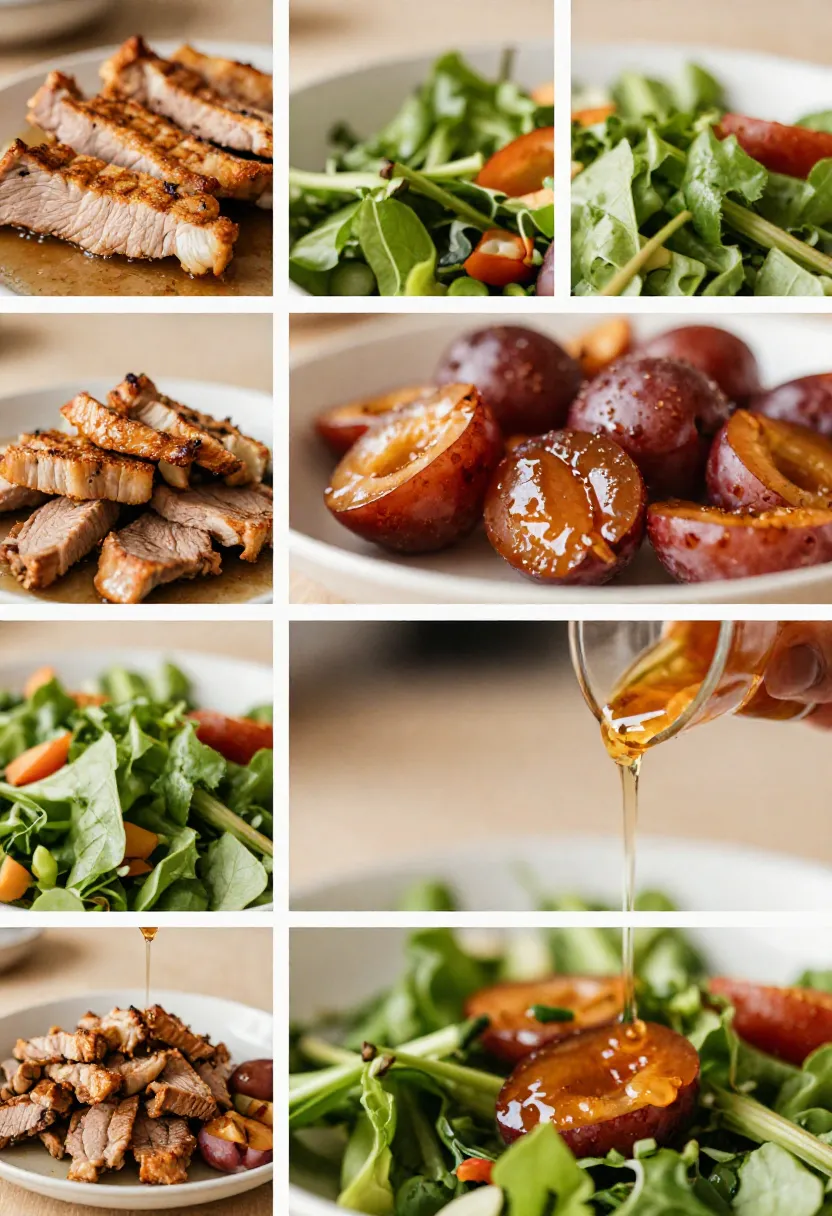
The vegetables don’t try to take attention, but they’re doing more than it seems. They bring freshness, sure, but more importantly, they keep the dish from becoming too soft or too uniform. Without that crunch, everything would start to feel the same after a few bites.
The dressing is easy to underestimate.
It doesn’t jump out at you, but it’s what holds everything together. The maple adds a soft sweetness, the vinegar keeps things bright, and the olive oil smooths everything out so nothing feels disconnected.
If you look a bit closer, each part is doing its own job:
| Element | First Impression | After a Few Bites | Texture Contribution | Role in the Dish | Without It | Subtle Detail You Notice Later |
|---|---|---|---|---|---|---|
| Pork | Savory, slightly rich | Deeper, more rounded flavor | Juicy with crisp edges | Provides structure and satisfaction | Feels too light and less filling | The browned edges add unexpected depth |
| Plums | Bright, slightly tangy | Softer, more mellow sweetness | Soft, almost silky | Balances richness and adds contrast | Dish feels flatter, less dynamic | Their flavor lingers more than expected |
| Leafy greens | Fresh, slightly sharp | Gently softened, more neutral | Light, slightly wilted | Holds everything together | Ingredients feel disconnected | They absorb just enough dressing to carry flavor |
| Crunchy vegetables | Crisp, clean | Stay consistent | Firm, crunchy | Adds contrast and variation | Too much softness overall | They reset the palate between bites |
| Maple syrup | Mild sweetness | Blends quietly into background | Smooth | Softens sharper edges | Flavors feel slightly harsh | You notice it more when it’s missing |
| Vinegar | Noticeable acidity | Integrates into overall flavor | Light | Adds brightness and balance | Dish feels dull or heavy | Keeps the dish from becoming too rich |
| Olive oil | Subtle richness | Helps carry flavors evenly | Silky | Connects all elements | Texture feels less cohesive | Gives the dressing a more rounded finish |
Looking at it this way, nothing is really random. Every ingredient has a role, even if you don’t notice it right away. And that’s what makes the dish feel complete — not because it’s complicated, but because everything is doing just enough.
If you strip it down, it comes back to a few simple things:
- ingredients that shift as they cook instead of staying the same
- a mix of soft and crisp so it doesn’t get repetitive
- a dressing that supports instead of taking over
It’s not trying to impress you.
It just makes sense — and that’s usually what makes you want to make it again.
🍳 Warm Pork and Plum Salad Recipe
This is one of those recipes that looks simple on paper — and it actually is — but the result feels more put together than you’d expect from the amount of effort.
It lands somewhere in between a quick home meal and something you might see on a menu, without really trying to be either.
What makes it work isn’t technique, it’s how everything lines up. You’ve got warm pork with a bit of crisp on the outside, plums that soften and almost melt into the dish, fresh vegetables that keep it from getting too heavy, and a light dressing that just pulls everything together without standing out.
Nothing feels overdone, but nothing feels like it’s missing either.
It’s also pretty forgiving. You don’t have to measure everything exactly or hit every step perfectly. As long as the pork gets a proper sear and you don’t push the plums too far, the rest tends to sort itself out.
That’s part of why it’s easy to come back to.
It fits into more situations than you’d expect. It’s simple enough for a weeknight when you don’t want to think too much about dinner, but it also looks good enough to put on the table when people are over. It has that “put together without trying too hard” kind of feel.
And probably the best part — it doesn’t leave you feeling weighed down.
You still get something warm and satisfying, but it stays light enough that you don’t feel it afterward.
🧾 Ingredients
For the pork:
- 500 g ground pork
- 2 teaspoons ground cumin
- 1 teaspoon smoked paprika
- 1 teaspoon ground coriander
- Salt and black pepper to taste
For the salad:
- 4–5 ripe plums, halved and pitted
- 120–150 g fresh greens (spinach or mixed salad leaves)
- 4 radishes, thinly sliced
- 2 medium carrots, shaved into ribbons
For cooking:
- 2 tablespoons olive oil
For the maple vinaigrette:
- 1 tablespoon olive oil
- 2 teaspoons maple syrup
- 1 tablespoon white wine vinegar
- A pinch of salt
👩🍳 Instructions
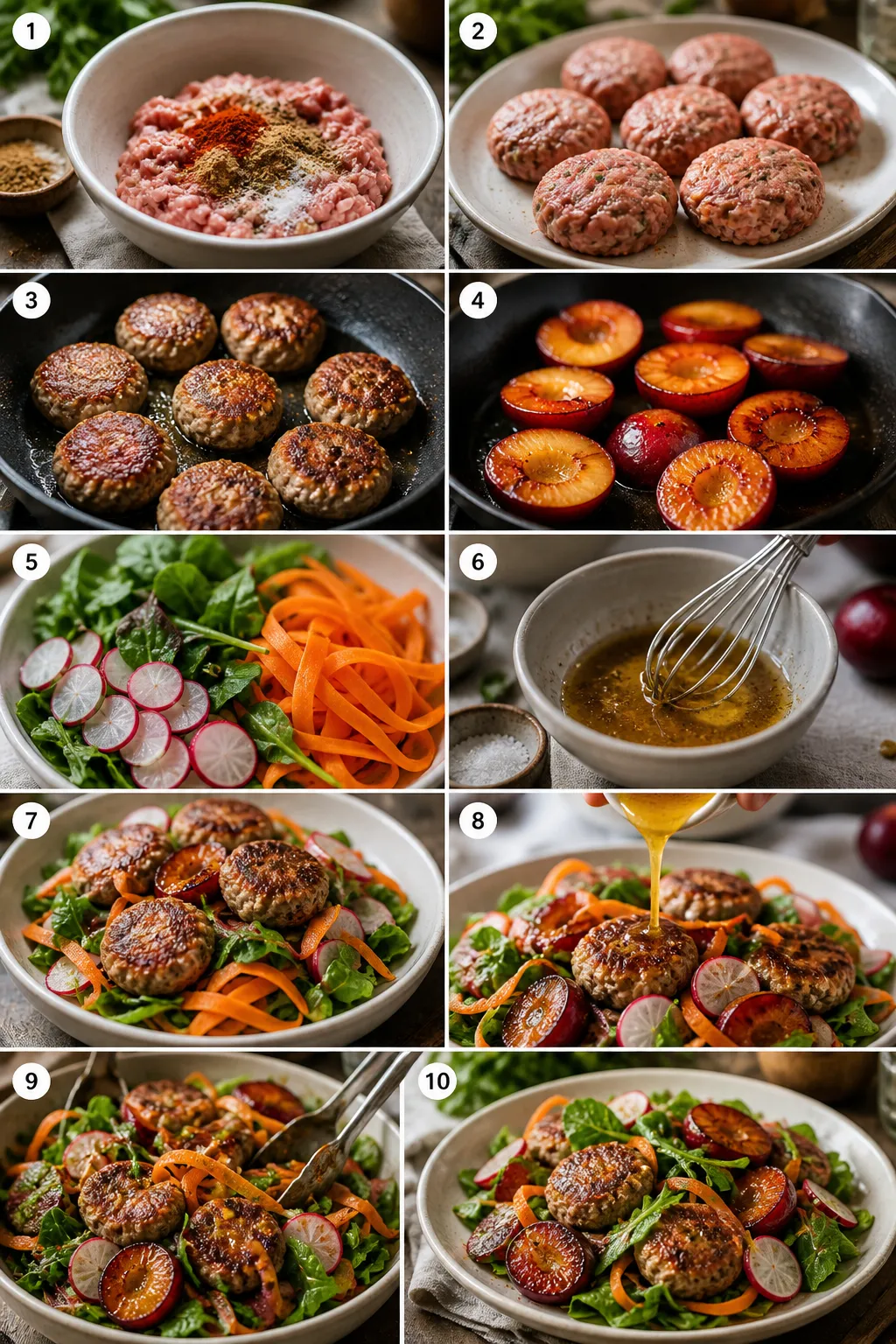
- In a mixing bowl, combine the ground pork with cumin, paprika, coriander, salt, and pepper. Mix gently until just combined — avoid overmixing to keep the texture tender.
- Shape the mixture into small patties, roughly the size of a walnut. This helps them cook evenly and makes the salad easier to eat.
- Heat a large pan over medium heat and add a bit of olive oil. Once hot, place the pork patties in the pan and cook for about 4 minutes on one side. Flip and cook for another 3–4 minutes until golden and fully cooked through. Remove from the pan and let them rest.
- In the same pan, place the plums cut-side down. Cook for 2–3 minutes until they begin to caramelize slightly and soften. Remove carefully.
- In a large bowl, combine the greens, sliced radishes, and carrot ribbons. Toss lightly to distribute the ingredients evenly.
- In a small bowl, whisk together olive oil, maple syrup, vinegar, and a pinch of salt until smooth and slightly thickened.
- Add the warm pork patties and plums to the salad. Drizzle with the dressing and gently toss everything together.
- Serve immediately while the pork and plums are still warm for the best flavor and texture.
💡 Small Tips & Kitchen Tricks
- Don’t rush the browning step — that golden crust on the pork adds more flavor than the spices alone
- If your plums are very ripe, cook them slightly less so they don’t fall apart
- Taste the dressing before adding it — sometimes it needs just a tiny extra splash of vinegar
- If the salad feels a bit dry, a drizzle of olive oil at the end fixes it instantly
- Let the pork rest for a minute before adding it to the salad — it keeps the juices inside instead of on the plate
🔥 Small Details That Actually Change the Result
It’s easy to think a dish like this comes down mostly to ingredients. And sure, that matters — good products do a lot of the work for you. But the difference between something that’s just “fine” and something you actually remember usually comes from smaller decisions along the way.
Not techniques. Not anything complicated. Just those moments where you either pay attention… or you don’t.
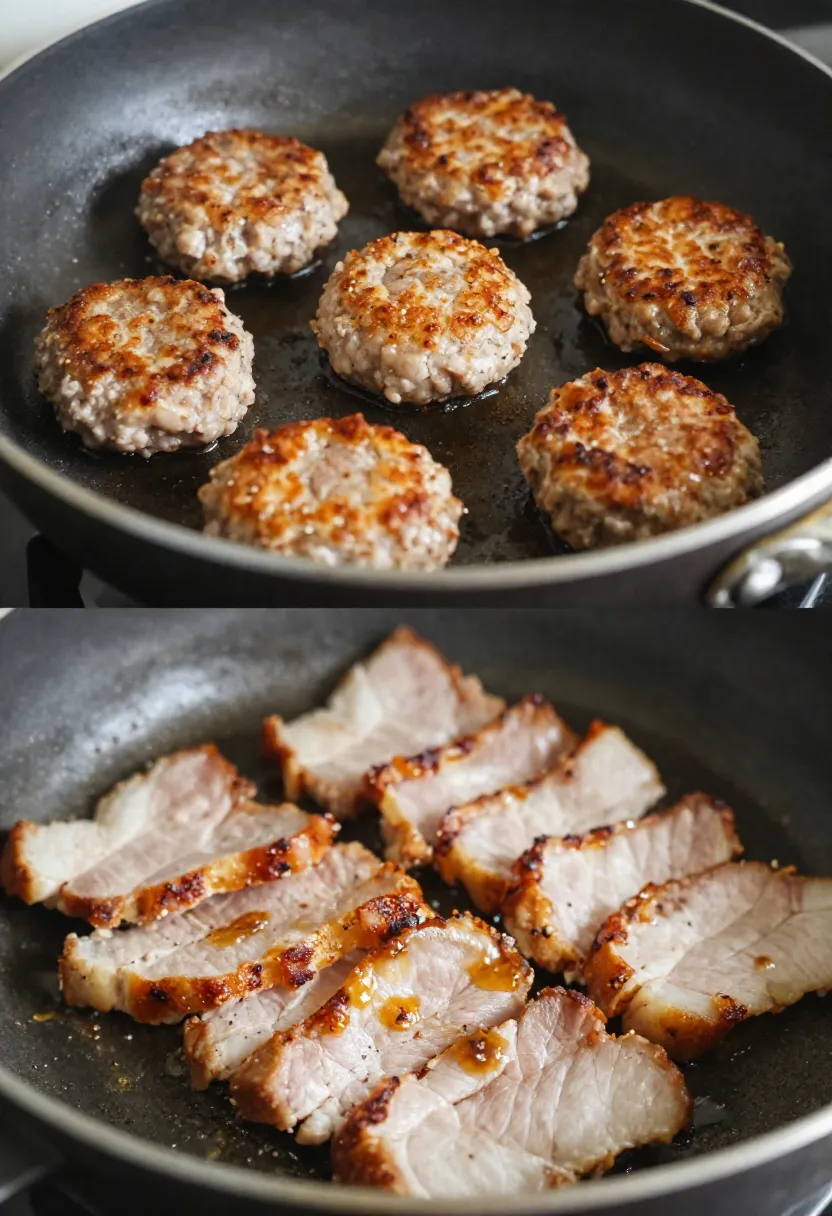
Take the pork. It’s really tempting to keep moving it around, especially if you’re in a hurry. But if you leave it alone for a bit, let it sit in the pan without touching it, that’s when it develops that golden crust. And that changes more than you’d expect. The flavor gets deeper, a bit richer. If you skip that, it’s still good — just flatter.
Same story with the dressing.
It’s simple enough that you can treat it like an afterthought, but it’s one of those things that’s worth tasting before you use it. Sometimes it needs a little more acidity, sometimes just a touch more sweetness. You won’t notice those changes individually, but together they’re what make the whole dish feel balanced.
Even the pan makes a difference.
If everything is crowded, it starts to steam instead of brown. It might look fine, but you lose texture, you lose that bit of depth. Give things space, and they cook differently — you get color, you get structure, everything holds together better.
None of this takes extra effort. It’s just a bit more awareness while you’re cooking. And once you notice it, it’s hard to ignore it the next time.
A few small things that consistently make a difference:
- let the pork sit long enough to actually brown
- taste the dressing before adding it
- keep the heat steady instead of rushing
- don’t overcrowd the pan — give things space
- add the dressing at the end, not too early
On their own, these are tiny details.
Put together, they’re what turn the dish from something decent into something that actually feels finished.
🍷 Serving It in a Way That Feels Effortless
One of the best things about this salad is how flexible it is when it comes to serving. It doesn’t need much help — it already works on its own — but small changes in how you present it can shift the whole feel of it.
If you’re keeping things simple, it’s completely fine straight out of the bowl. It already has enough going on, so there’s no real need to build anything around it. Honestly, that’s often the best version — just the dish as it is, nothing extra.
But when you’re serving it to other people, even small tweaks make a difference. Putting everything on a wide platter instead of portioning it out changes the atmosphere right away. It feels more relaxed, more shared. You see more of the colors, the textures stand out, and people naturally interact with it instead of just eating what’s in front of them.
What you serve alongside it matters too, but only a little. It doesn’t need a full spread — just something simple. A piece of crusty bread works really well here. Not as a main part of the meal, just something to add a bit of texture and catch whatever dressing is left on the plate.
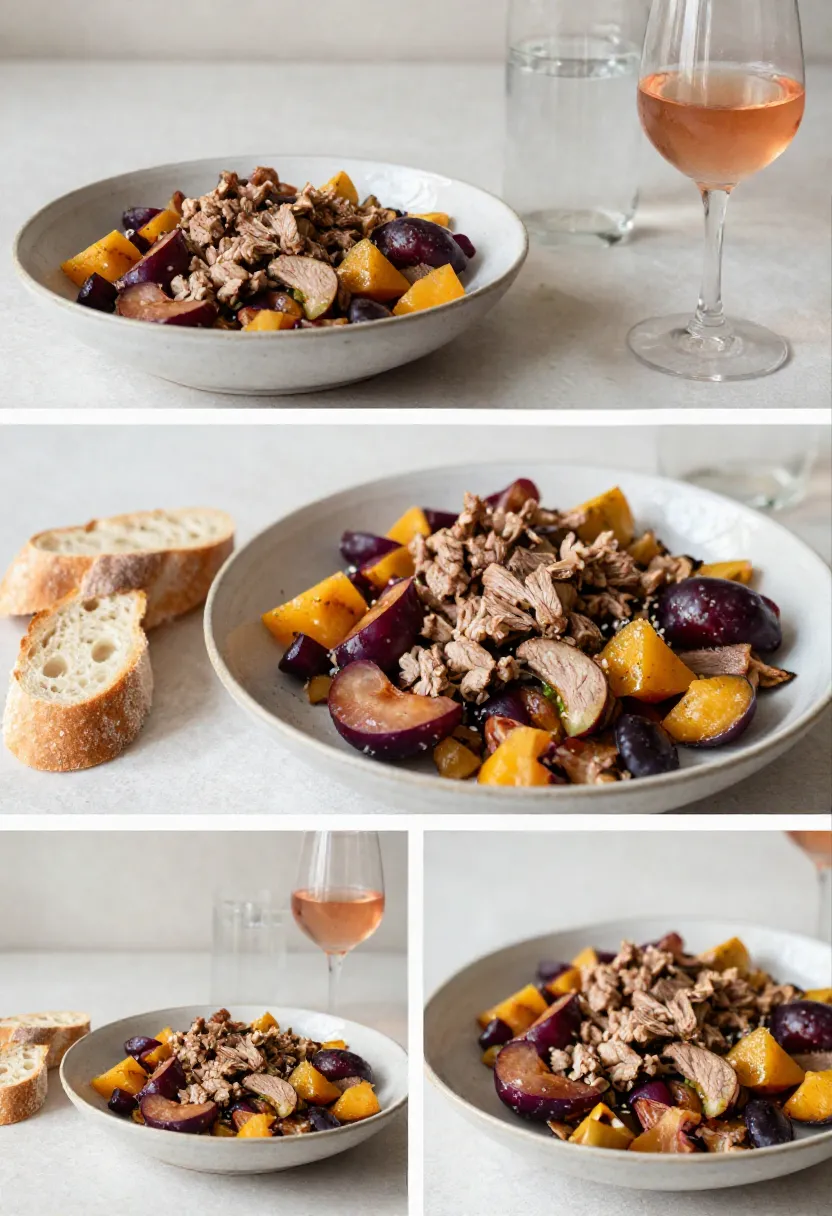
Drinks play a role as well, even if you don’t think about it at first. The salad already balances savory, a bit of sweetness, and some acidity, so something light works best alongside it. Nothing too heavy — something that doesn’t compete.
If you want to keep things simple but still make it feel a bit more thought-through, a few small choices help:
- serve it on a wide platter instead of a deep bowl
- add some crusty bread on the side
- finish with a small squeeze of citrus right before serving
- pair it with something light, like rosé or even just sparkling water
- let it sit for a minute before eating so the flavors settle slightly
None of this is necessary.
But it’s the kind of thing that shifts the dish from something casual into something that feels just a bit more intentional — without really adding any extra work.
💛 Making It Yours (and Why You Probably Will)
What makes a recipe like this stick isn’t just how it tastes the first time. It’s how easy it is to come back to it and change it without everything falling apart.
After a couple of times, you stop following it exactly. You just start adjusting things without thinking too much about it. Maybe you want something lighter, so you swap the pork for chicken. Maybe you push the sweetness a bit more — or pull it back. Maybe you add something for crunch, or skip something because you don’t have it.
And it still works.
That’s kind of the point. It’s not fragile. You don’t feel like one small change is going to throw everything off. The structure is loose enough to handle it, which is what keeps it from getting boring.
At some point, you stop thinking in terms of steps.
You just remember the idea: warm protein, something sweet, fresh vegetables, a light dressing. And from there, you build depending on what you’ve got or what you feel like eating.
That’s usually when it turns into something you actually use, not just something you tried once.

Most of the changes people make are pretty simple:
- swapping pork for chicken, turkey, or even something plant-based
- using whatever fruit is in season instead of sticking to plums
- adjusting the dressing depending on mood — sharper, sweeter, or more neutral
- adding nuts or seeds for extra texture
- changing the greens based on what’s available
None of these feel like compromises. They just nudge the dish in a slightly different direction.
And that’s why it holds up over time.
It doesn’t ask for precision. It doesn’t depend on getting everything exactly right. It gives you enough structure to start with, and enough freedom to make it your own.
At some point, you stop thinking of it as a recipe.
It’s just something you know how to make.