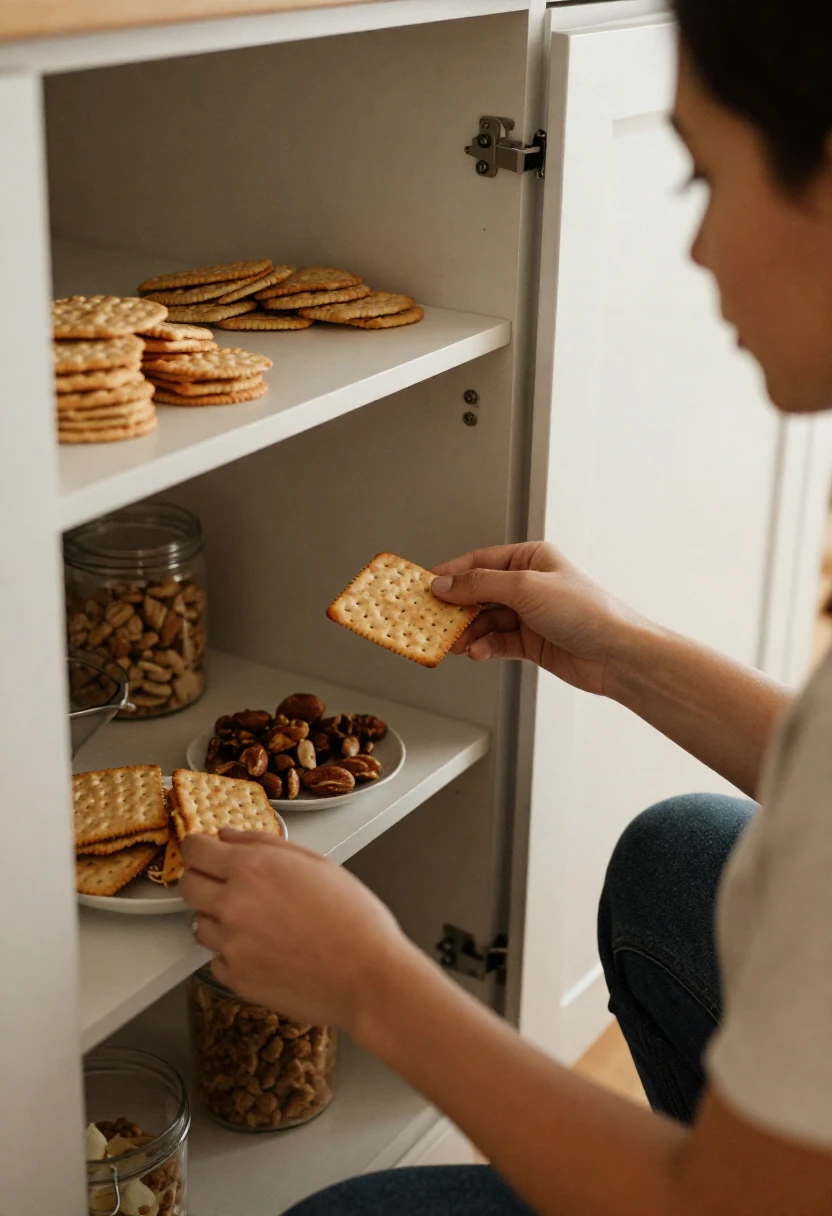
You know that odd little moment when you open the pantry for “just something small,” and suddenly you’re standing there with a handful of crackers, a square of chocolate, maybe a spoonful of peanut butter, wondering how you even got there?
It happens to a lot of people. And no, it does not always mean you have no self-control.
Overeating is usually more complicated than that. Sometimes you eat too much because you are truly hungry. Sometimes you are tired, stressed, bored, rushed, or looking for a small comfort after a long day. Sometimes the food in front of you is simply very easy to keep eating, especially if it is salty, sweet, crunchy, creamy, or sitting right there on the counter.
Your body is not a calculator. It does not make food choices based only on calories and logic. Appetite is shaped by sleep, hormones, emotions, habits, your kitchen setup, your schedule, and even the way you ate earlier in the day.
The good news is that you do not have to fix everything at once. You do not need a strict diet, a dramatic “reset,” or a rule that makes every snack feel like a mistake. Most of the time, feeling more in control around food starts with understanding what is actually pushing you to eat when you are not fully hungry.
And once you see the pattern, it gets easier to change it. Not perfectly. Just enough to feel calmer, more satisfied, and less trapped in that cycle of craving, eating, guilt, and trying to “be better” tomorrow.
Why overeating is not always about willpower
It is easy to blame yourself after overeating.
You finish the chips, go back for another slice, or keep picking at leftovers even though you are already full. Then comes that familiar voice: Why did I do that again?
But overeating is not always a simple decision. A lot of the time, it is your body and brain trying to solve a problem quickly.
Maybe you skipped lunch and arrived at dinner starving. Maybe you slept badly and spent the whole day craving sugar. Maybe you had a stressful conversation, and food became the easiest way to soften the edge. Or maybe you were just eating something very snackable while watching a show, and your hand kept moving before your brain caught up.
That is not a character flaw. It is a pattern.
Your body is louder than your intentions sometimes
You can have the best plan in the morning and still feel out of control by evening.
That usually happens because appetite is not controlled by one thing. Your hunger can be affected by:
- how much you slept
- how much protein or fiber you ate earlier
- your stress level
- your blood sugar
- your emotions
- what foods are sitting nearby
- how long you have gone without a proper meal
This is why “just eat less” is such unhelpful advice. If your body feels underfed, overtired, or overwhelmed, it will push back. And it usually pushes back with cravings, grazing, or that urgent feeling that you need something right now.
The shame cycle makes overeating worse
The hardest part is not always the overeating itself. Sometimes it is what happens after.
You eat more than you planned, feel guilty, and decide tomorrow will be different. So you make stricter rules. No snacks. No sweets. Smaller meals. More discipline.
Then tomorrow comes, and by afternoon or evening, you are hungry again. Not normal hungry. Restless hungry. The kind where everything in the kitchen looks interesting.
That is the shame cycle:
- You overeat.
- You feel guilty.
- You restrict.
- You get too hungry or feel deprived.
- You overeat again.
I have never seen this cycle improve because someone hated themselves harder. It usually improves when the plan becomes kinder and more realistic.
A better starting point is asking, “What was my body trying to get?”
Was it food? Rest? Comfort? A break? A real lunch instead of coffee and a few bites of something random?
That question gives you somewhere useful to begin.
Lack of sleep can make you hungrier
Bad sleep does something sneaky to appetite.
You wake up already a little behind. Your body feels heavy, your patience is thinner, and food starts looking different. A plain breakfast may not sound good. A pastry does. By mid-afternoon, the idea of something sweet or salty can feel less like a choice and more like a small rescue mission.
That is not random.
When you do not sleep enough, your body has a harder time reading hunger and fullness clearly. You may feel hungrier than usual, crave faster energy, and have less patience for balanced meals. I notice this most on days after a rough night: I do not want to cook eggs or make oatmeal. I want toast, coffee, and something sweet next to it.
How poor sleep affects hunger hormones
Two hormones often come up when people talk about sleep and appetite: ghrelin and leptin.
Ghrelin is sometimes called the hunger hormone because it helps signal that your body wants food. Leptin helps signal fullness and satisfaction. When sleep is short or broken, these signals can get messy.
In real life, that may look like this:
- you feel hungry sooner after eating
- snacks seem more tempting than usual
- it takes more food to feel satisfied
- you keep wanting “just one more bite”
- cravings feel louder in the evening
You do not need to memorize hormone names to understand the pattern. Poor sleep often makes your body ask for quick energy, and quick energy usually means sweet, salty, or high-fat foods.
Why tired people crave quick comfort food
A tired brain does not want a complicated meal.
It wants the easy thing. The thing in the wrapper. The leftover pizza. The cereal eaten straight from the box while standing in the kitchen.
And honestly, that makes sense. Cooking takes effort. Planning takes effort. Even deciding what to eat takes effort. When you are tired, your brain looks for the shortest path to feeling better.
The problem is that quick comfort food often gives fast pleasure but not long satisfaction. You eat it, feel good for a few minutes, then feel hungry or snacky again later.
That is why overeating often shows up at night after a bad sleep day. Your body has been dragging itself around for hours, and by evening it starts asking for payback.
Small sleep-friendly habits that help appetite
You do not have to become a perfect sleeper to make this easier. Start small.
Try one of these:
- keep caffeine earlier in the day if it affects your sleep
- eat a real dinner instead of grazing all evening
- dim the lights a little before bed
- stop scrolling in bed, or at least move the phone away from your pillow
- prepare an easy breakfast before a busy morning
- keep one filling snack ready for tired afternoons
A good snack can help more than willpower here. Think Greek yogurt with fruit, boiled eggs, cottage cheese, hummus with vegetables, peanut butter on toast, or a handful of nuts with an apple.
Nothing fancy. Just something that gives your tired body actual fuel before it starts hunting for sugar.
Stress eating is your body looking for relief
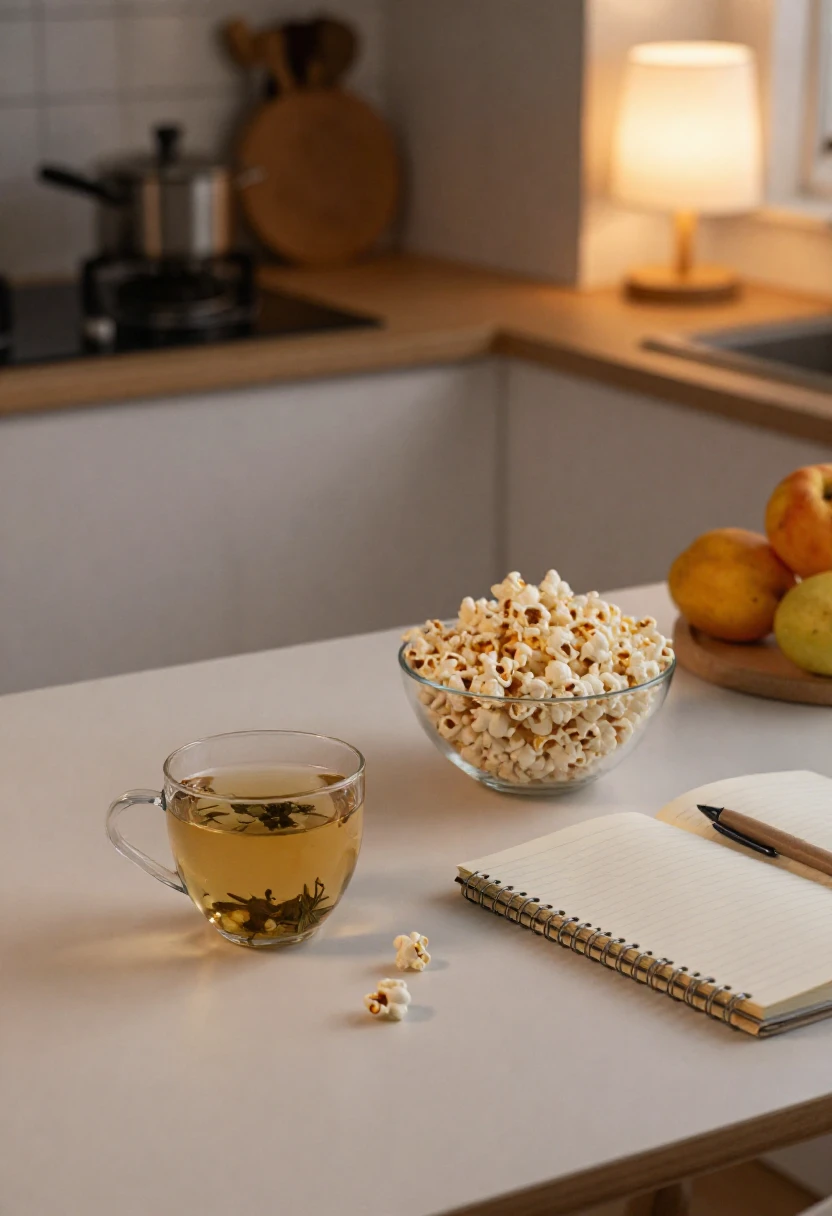
Stress eating can feel confusing because it does not always start with hunger.
Sometimes your stomach is not empty at all. You are just tense. Annoyed. Overloaded. You close the laptop, walk into the kitchen, and suddenly the idea of something crunchy or sweet feels very reasonable.
Food is reliable in a way many other things are not. It is quick. It is available. It gives your brain something pleasant to focus on for a few minutes. No awkward conversation, no complicated solution, no waiting.
That is why stress eating makes sense, even when it does not make you feel good afterward.
Why stress changes what you crave
When you are stressed, your body is not thinking about long-term balance. It is trying to get through the moment.
Stress can make rich, salty, sweet, and fatty foods more appealing because they feel comforting and rewarding. A bowl of salad may be good for you, but it usually does not give the same quick emotional relief as warm bread, chips, chocolate, fries, or ice cream.
And this is where people often get stuck. They think, I should have wanted something healthy. But stressed people usually do not crave steamed broccoli. They crave food that feels like a pause button.
There is nothing strange about that.
The goal is not to shame yourself for wanting comfort. The goal is to notice when food is being asked to do a job it cannot fully do.
Emotional hunger vs physical hunger
Physical hunger usually builds gradually. You may feel your stomach growl, your energy dip, or your mood get a little flat. A proper meal sounds good, not just one specific snack.
Emotional hunger often feels sharper and more urgent. It may show up suddenly after an argument, a stressful email, a lonely evening, or a day where everyone needed something from you.
A few signs it may be emotional hunger:
- you want one specific food, not food in general
- the craving appears quickly
- you keep eating even when your stomach feels full
- the food feels calming at first, then guilt shows up
- you are eating to avoid a feeling, not to satisfy hunger
This does not mean you are “bad” for eating. Sometimes you will still choose the cookie, and that is fine. But it helps to know what kind of hunger you are dealing with.
Because physical hunger needs food.
Emotional hunger may need food too, but it may also need quiet, sleep, a walk, a shower, a text to someone safe, or ten minutes where nobody asks you for anything.
Better pause habits before eating
You do not need a dramatic ritual before every snack. That would get annoying fast.
A small pause is enough.
Before eating from stress, try asking:
“What would help me feel 10% better right now?”
Not 100%. Just 10%.
Maybe the answer is still food. If so, put it on a plate, sit down, and eat it like it counts. Food eaten with a little attention usually feels more satisfying than food eaten over the sink while your brain is somewhere else.
But sometimes the answer is different:
- drink water first if you have been running on coffee
- step outside for a few minutes
- make tea and let your hands hold something warm
- eat a real meal if you have been grazing all day
- take five slow breaths before opening the snack drawer
- write down the thing you are actually upset about
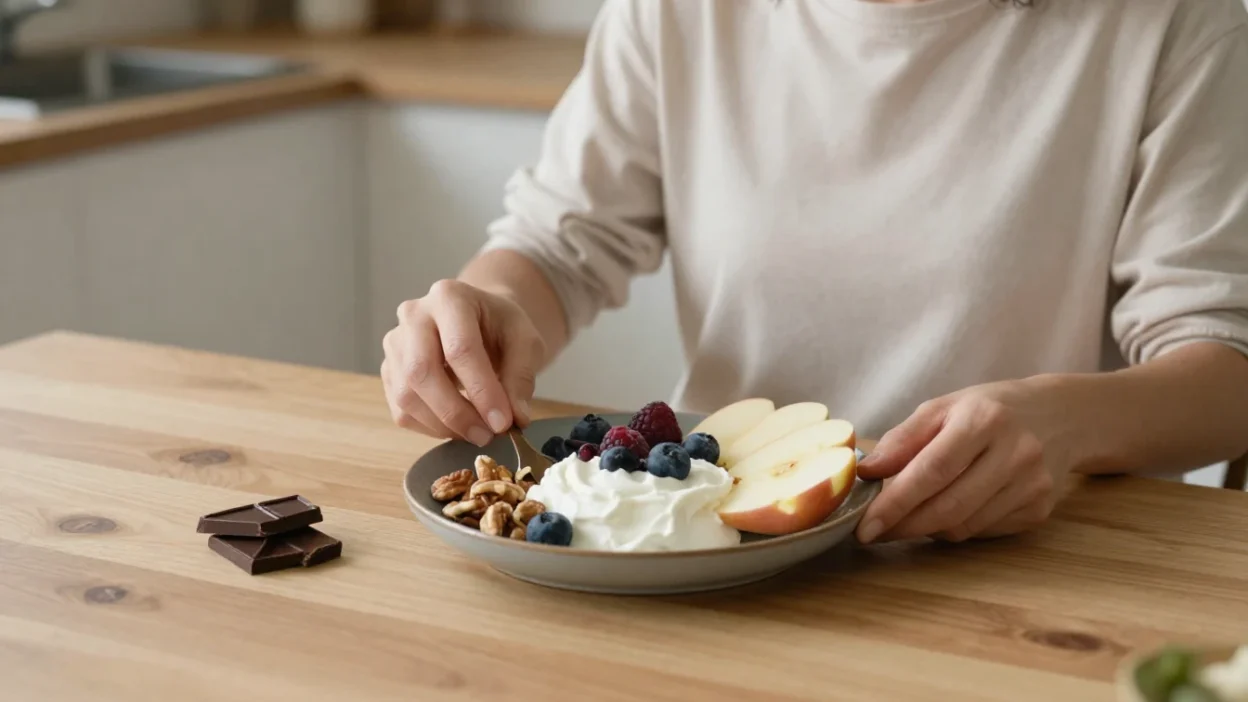
One thing I like is the “add, don’t punish” approach. If you want chocolate, have some chocolate. But add something that steadies you too, like Greek yogurt, fruit, nuts, or a slice of toast with peanut butter.
That way you are not turning comfort food into a forbidden thing. You are just giving your body a better chance to feel satisfied.
Highly tasty foods are designed to be hard to stop eating
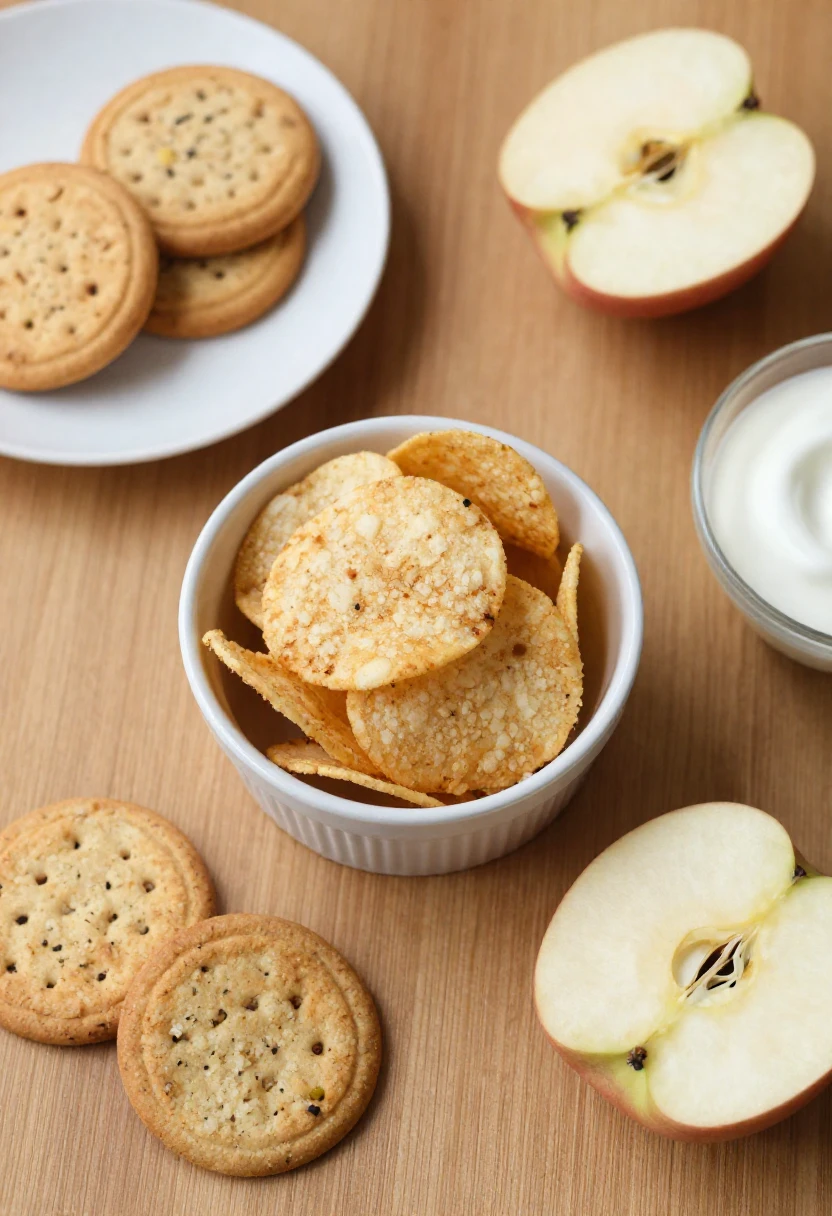
Some foods are just easier to overeat than others.
Not because you are weak. Because they are built that way.
A bowl of plain boiled potatoes has a natural stopping point. So does grilled chicken or a bowl of lentil soup. At some point your body says, Okay, enough.
But chips? Cookies? Sweet cereal? Ice cream? Cheese crackers? Those can feel different. They are salty, sweet, fatty, crunchy, creamy, or all of those things at once. They do not ask much from you. You can keep eating them while watching a show, answering messages, or standing in the kitchen with the cabinet door still open.
And before you know it, the “small snack” is gone.
Why sweet, salty, and fatty foods feel so rewarding
Your brain likes easy reward.
Sweet foods give quick energy. Salty foods wake up your taste buds. Fatty foods feel rich and satisfying. Crunch gives you something to do. Creamy textures feel comforting.
Put those together, and food can become very hard to stop eating, especially when you are tired or distracted.
This is why a handful of candy can turn into half a bag. Or why one chip almost never feels like enough. The flavor keeps asking you to come back.
Whole foods usually have more built-in brakes. They take more chewing. They contain water, fiber, protein, or a texture that slows you down. An apple takes longer to eat than a few cookies. A bowl of soup fills space in your stomach. Greek yogurt with berries feels different from eating frosting with a spoon.
No judgment, by the way. Most of us have had some version of that frosting moment.
The problem with eating straight from the package
Eating from the package removes the pause.
There is no portion in front of you. No clear “this is my snack.” Just an open bag, box, tub, or container. Your brain keeps getting tiny permission slips: one more, one more, one more.
This happens even more when your attention is somewhere else. Watching TV, scrolling, driving, cooking dinner while hungry. You are eating, but you are not really registering it.
Then the food is almost gone, and it feels weirdly unsatisfying. Not because it was not tasty, but because you were barely there for it.
A simple plate or bowl changes the experience. It gives the snack a beginning and an end.
Easy ways to create natural boundaries
You do not have to ban snack foods from your life. Most strict bans only make cravings louder.
Try making the stopping point easier to see:
- put chips, crackers, cookies, or nuts into a bowl
- keep the package in the cupboard instead of beside you
- sit down for the snack instead of eating while walking around
- pair sweets with something filling, like yogurt, fruit, or nuts
- buy single portions if large packages are hard for you
- keep your favorite treat, but do not keep three backup bags at home
One small trick that works surprisingly well: serve the snack, then close the kitchen.
Not literally with a lock. Just turn off the kitchen light, leave the room, and eat somewhere else. It breaks that quiet loop of going back for more because the food is still open and waiting.
You are not trying to become perfect around food. You are making the easier choice a little less automatic.
Your food environment shapes your appetite
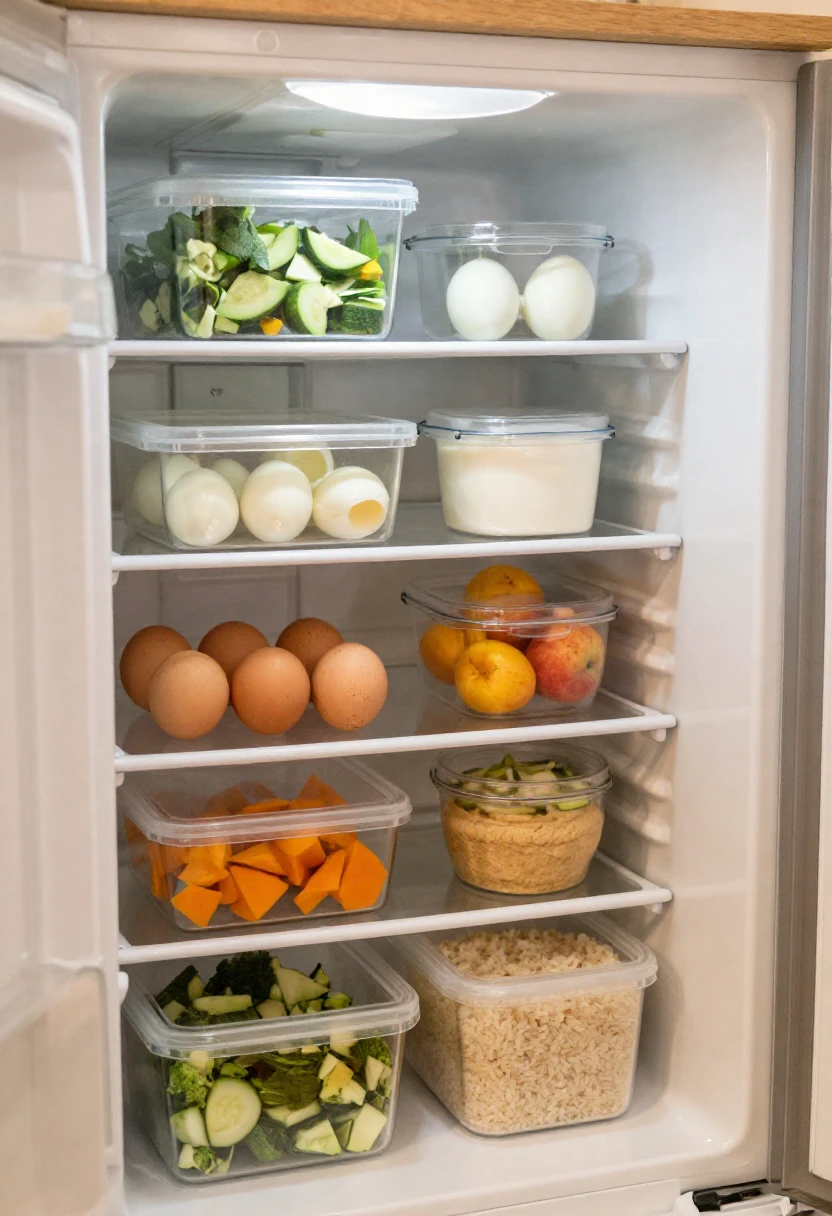
Most people eat what is easiest to reach.
That sounds almost too simple, but it explains a lot. If the cookies are on the counter and the apples are hidden in the bottom drawer, the cookies will probably win. Not because cookies are “bad” and apples are “good,” but because your tired brain notices what is visible, quick, and ready.
This matters most during messy parts of the day. After work. Late at night. Between errands. When you are cooking dinner while hungry. When you open the fridge and hope a complete meal will somehow appear.
Food environment does not control you completely, of course. But it does nudge you. Quietly. All day.
Convenience often wins when you are tired
When you are rested and calm, you may happily chop vegetables, cook rice, and make a balanced plate.
When you are tired, the rules change.
You want food that requires no thinking. A handful of crackers. A spoonful of peanut butter. Leftovers eaten cold. Cereal. Cheese. Whatever is already open.
I do this too, especially if dinner is still half an hour away. I start with “just a bite” while cooking, then somehow I am full before the meal is even ready. Annoying, but predictable.
That is why your kitchen setup matters. If the only easy options are snack foods, snack foods become dinner before dinner.
Make the better choice the easier choice
You do not need a perfect fridge. You need a few foods that are ready before hunger gets loud.
Good “easy reach” options:
- washed fruit
- Greek yogurt
- boiled eggs
- cottage cheese
- hummus
- chopped cucumbers, carrots, or bell peppers
- roasted vegetables
- cooked rice or potatoes
- leftover chicken, beans, tuna, or tofu
- soup you can reheat in five minutes
The trick is making these foods visible. Put fruit where you can see it. Keep yogurt near the front of the fridge. Store chopped vegetables in clear containers. Move the snack foods somewhere slightly less convenient.
Not hidden like forbidden treasure. Just not sitting at eye level, quietly asking for attention.
Don’t rely on motivation every day
Motivation is nice, but it is unreliable.
Some days you will feel organized and make a beautiful lunch. Other days you will be tired, irritated, and one small inconvenience away from ordering fries. That is normal.
A better plan is to build small defaults.
For example:
- keep one protein ready most weeks
- always have a quick breakfast option
- make extra dinner so lunch is easier tomorrow
- portion snack foods before sitting down
- keep a backup meal in the freezer
- decide your evening snack before the evening starts
These little defaults reduce the number of food decisions you have to make when you are already drained.
And that is the point. Feeling more in control around food is not about winning a daily argument with yourself. It is about setting things up so the argument happens less often.
How to eat more mindfully without making food stressful
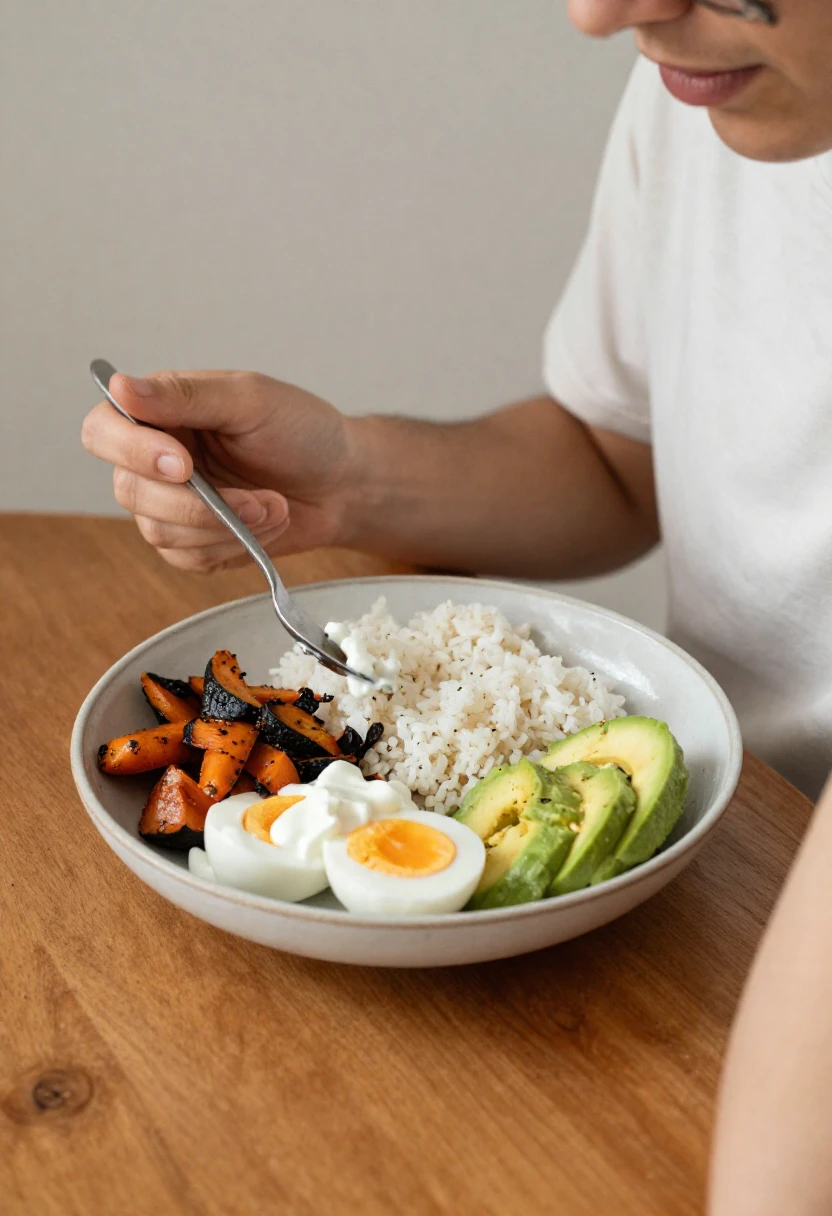
Mindful eating sounds peaceful, but it can get annoying if people turn it into another rule.
You do not need to chew every bite thirty times or stare deeply at your oatmeal. That is not realistic for most mornings. Sometimes you eat while packing lunch, answering a message, or trying to get out the door with matching socks.
The goal is smaller than that.
Mindful eating is really about noticing your food a little more before, during, and after eating. That small bit of attention can help you catch fullness sooner, enjoy your meals more, and stop treating every craving like an emergency.
Slow down the first few bites
You do not have to eat slowly for the whole meal. Start with the first three bites.
Notice simple things:
- Is the food warm or cold?
- Is it crunchy, creamy, chewy, soft?
- Does it taste as good as you expected?
- Are you actually hungry, or just restless?
- Do you feel yourself rushing?
This works because the first few bites are often the most satisfying. After that, many people keep eating out of habit, distraction, or because the food is still there.
I like to think of it as checking in, not policing yourself. You are not asking, Should I be allowed to eat this? You are asking, Am I here for this, or am I eating on autopilot?
That difference matters.
Build meals that actually satisfy
A lot of overeating starts earlier than people realize.
You may blame the evening snacks, but the real problem began with a tiny breakfast, a rushed lunch, or a meal that had almost no protein. By night, your body is not being dramatic. It is catching up.
A satisfying meal usually has a few steady parts:
- protein, like eggs, chicken, fish, beans, tofu, Greek yogurt, or cottage cheese
- fiber, from vegetables, fruit, oats, lentils, beans, or whole grains
- fat, like olive oil, avocado, nuts, seeds, cheese, or tahini
- enough volume, so the plate actually feels like a meal
This does not need to be perfect.
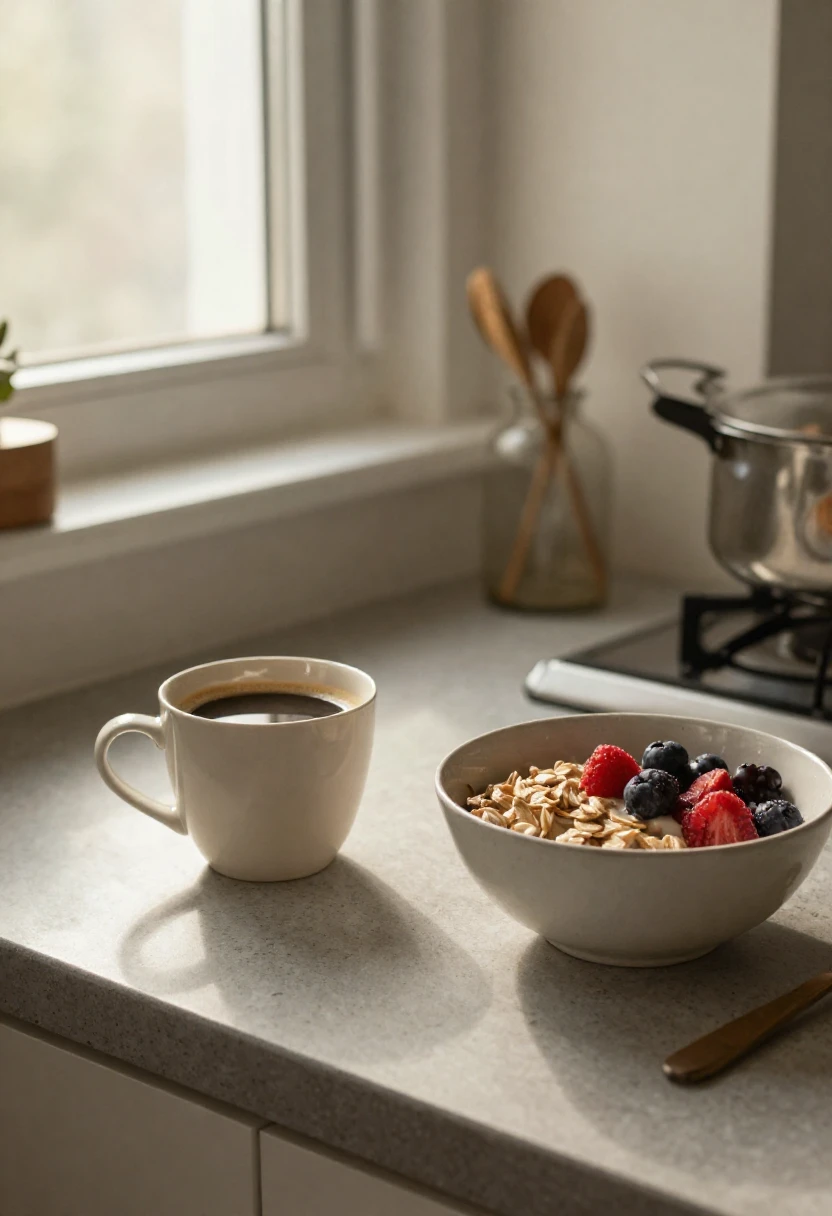
A rice bowl with chicken, roasted vegetables, and yogurt sauce counts. So does oatmeal with Greek yogurt and berries. Or toast with eggs and avocado. Or lentil soup with bread on the side.
The point is to give your body enough food that it does not keep searching for more all afternoon.
Leave room for pleasure
Here is where people often go too far: they try to remove every food they “cannot control.”
Sometimes that helps for a short time. But for many people, strict bans make certain foods feel louder. You think about them more. You wait for the moment you “break.” Then, once you start eating, it feels like you might as well keep going because tomorrow the food becomes forbidden again.
That is exhausting.
A calmer approach is to let pleasure stay in your eating, but give it structure.
Have dessert after a real meal instead of when you are starving. Put ice cream in a bowl instead of eating from the tub. Buy the good chocolate you actually enjoy instead of eating random sweets you do not even like that much.
This part is important: satisfaction is not the enemy.
When meals feel bland, tiny, or joyless, cravings usually come back stronger. But when you eat enough and include foods you genuinely like, food starts to feel less like something you have to control and more like something you can trust yourself around.
Practical steps to reduce overeating this week
Trying to fix everything at once usually backfires.
You decide you will sleep better, eat more protein, stop snacking at night, drink more water, avoid sweets, meal prep, slow down, journal your feelings, and suddenly food feels like a full-time job.
That is too much.
Start smaller. Pick one pattern that shows up often and work with that first. Not forever. Just this week.
Start with one trigger
Most overeating has a trigger, even if it does not feel obvious at first.
Maybe yours is:
- skipping breakfast, then feeling wild around lunch
- eating too little during the day and snacking all evening
- stress after work
- boredom at night
- eating straight from the package
- sleeping badly and craving sugar the next day
- keeping tempting foods in plain sight
- waiting too long between meals
Choose one.
For example, if you always overeat at night, do not start by blaming the night snack. Look earlier. Was dinner filling enough? Did you eat enough protein? Did you spend the whole day trying to be “good”? Did you actually need rest more than food?
Sometimes the fix is not removing the snack. Sometimes it is eating a better lunch.
Plan your “danger zone” time
Everyone has a danger zone.
For some people, it is 3 p.m., when energy drops and coffee no longer helps. For others, it is after dinner, when the house gets quiet and snacks start sounding better than they did all day.
Mine is usually the late-afternoon gap. Too early for dinner, too late to pretend lunch is still working. If I do not have something decent ready, I start picking at random things and then wonder why I am not hungry for the meal I actually planned.
The easiest way to handle your danger zone is to expect it.
If evenings are hard, plan a real evening snack instead of pretending you will not want one. Try yogurt with fruit, toast with peanut butter, popcorn in a bowl, cottage cheese, herbal tea with a small dessert, or a few squares of chocolate after dinner.
If afternoons are hard, build a snack that has some protein or fiber. Fruit alone may not be enough. Add nuts, cheese, yogurt, hummus, boiled eggs, or whole-grain toast.
The point is not to eliminate hunger. The point is to stop meeting every hunger cue with whatever happens to be closest.
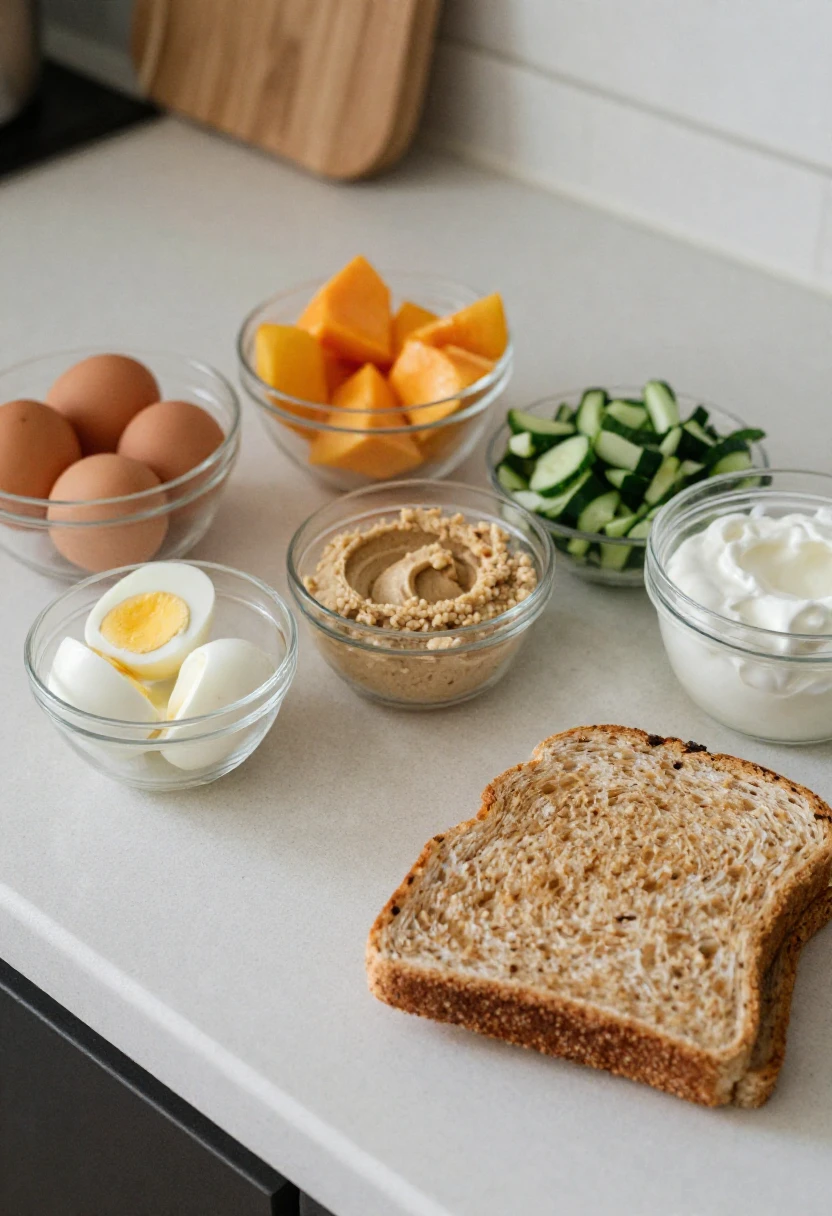
Keep emergency foods ready
Emergency foods are not fancy. They are the things you can eat when cooking feels impossible but you still want something better than grazing through the kitchen.
A few useful options:
- eggs
- Greek yogurt
- cottage cheese
- canned tuna or salmon
- canned beans
- frozen vegetables
- microwavable rice
- soup
- whole-grain bread
- hummus
- fruit
- nuts
- rotisserie chicken
- frozen leftovers
With those around, you can make something fast: eggs on toast, rice with beans and salsa, soup with extra vegetables, yogurt with fruit and nuts, tuna toast, hummus with vegetables and crackers.
Not every meal has to be beautiful. Sometimes a “good enough” meal prevents a long snack spiral later.
Make the next choice easier
After overeating, the next choice matters more than the overeating itself.
Do not skip the next meal to compensate. Do not punish yourself with a tiny salad if you are hungry. Do not turn one uncomfortable eating moment into a whole day of “I messed up.”
Just return to normal food.
Drink water. Eat your next meal. Add protein. Add something fresh if you can. Move on.
That sounds almost too simple, but it works better than the guilt routine. Your body does not need punishment after overeating. It needs steadiness.
Conclusion
Overeating feels personal, but it is rarely just about personal discipline.
Your appetite is shaped by sleep, stress, habits, emotions, and the food sitting within reach when you are tired. Once you understand that, food starts to feel less like a battle you keep losing and more like a pattern you can gently adjust.
Start with one thing. Eat a more filling lunch. Put snacks in a bowl. Sleep a little better. Keep real food ready for your hardest part of the day.
Small changes count here. They make eating feel calmer, and that calm is often what helps you feel more in control around food.
FAQ
Why do I eat too much even when I’m not hungry?
Sometimes you eat because your body needs food. Other times, you eat because you are stressed, bored, tired, lonely, distracted, or looking for comfort. Emotional hunger can feel urgent, especially when a specific food sounds good and nothing else will do.
Can lack of sleep really make me overeat?
Yes. Poor sleep can make hunger feel stronger and cravings harder to ignore. When you are tired, your body often wants quick energy, and your brain has less patience for planning balanced meals.
How do I stop overeating at night?
Start earlier in the day. Eat enough protein and fiber at breakfast, lunch, and dinner so you are not underfed by evening. Then plan a real night snack if you usually want one. Put it on a plate or in a bowl, sit down, and let it have a clear beginning and end.
Should I completely avoid foods that make me overeat?
Not always. For some people, keeping certain foods out of the house helps. For others, strict bans make cravings worse. A softer approach is to create structure: buy smaller portions, avoid eating from the package, pair treats with filling foods, and eat them when you are not starving.