Contents
Some recipes don’t look particularly exciting when you first come across them. You read through the ingredients, maybe scroll a bit, and think, that’s it? No unusual spices, no complicated techniques, nothing that feels new or impressive. It’s easy to overlook dishes like that, especially when there are so many “trendy” recipes out there competing for attention.
And yet, every now and then, one of those simple recipes ends up surprising you in a very quiet way.
Ham, zucchini, and ricotta fritters are exactly like that. They don’t try to stand out, but once you actually make them, they tend to stick. You cook them once, then again a few days later, and before long they become one of those meals you don’t even need to look up anymore.
At first glance, the ingredients feel almost too basic to be interesting. Zucchini is mild and slightly watery, ricotta is soft and delicate, and ham brings a familiar kind of saltiness that most people already know well. Nothing here feels bold or unexpected. If anything, it feels safe.
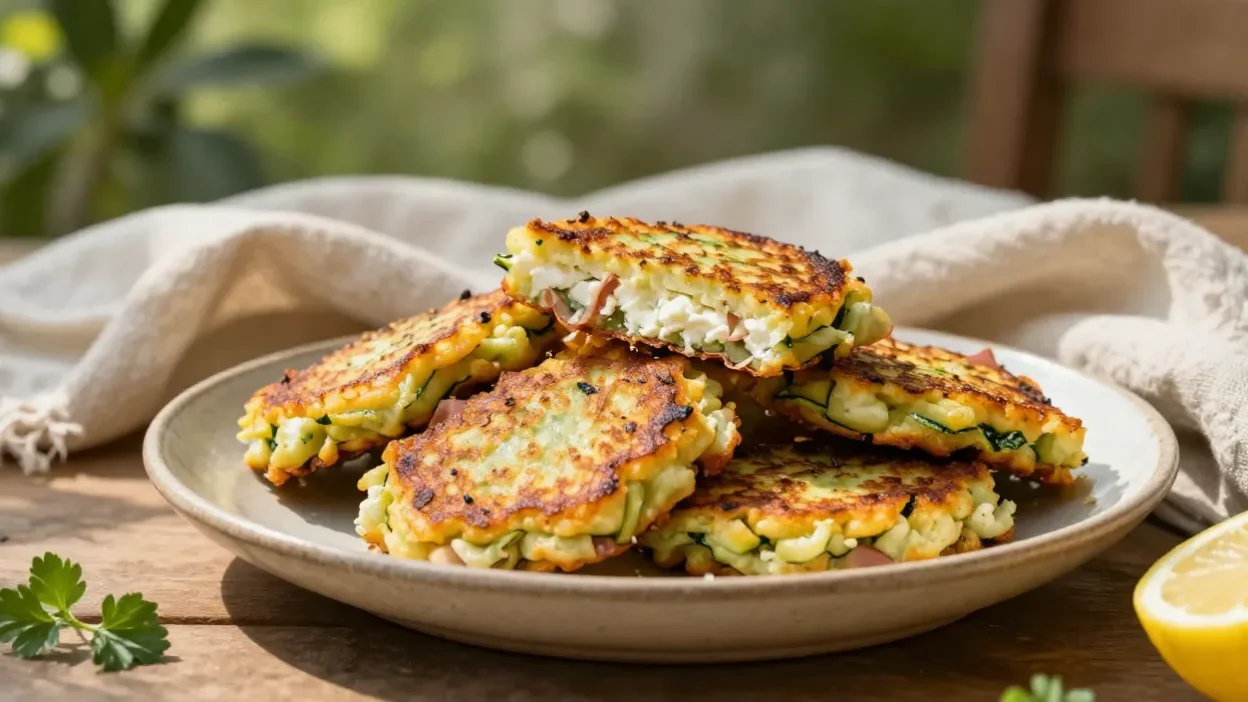
But the moment everything hits a hot pan, something shifts. The mixture starts to sizzle, and within a minute or two, you can already see the edges changing color. That slow transition—from pale and soft to golden and crisp—is where the magic really happens. 🥒✨
The outside develops that lightly crunchy layer, while the inside stays tender, almost creamy without being heavy. The flavors don’t suddenly become intense or dramatic—they just come together. You get a bit of freshness from the zucchini, a soft richness from the ricotta, and that gentle savory depth from the ham. Nothing dominates, and that’s probably why it works so well.
It’s not the kind of dish that surprises you with one big flavor. It’s more like everything quietly fits into place.
Here’s a simple way to understand what each ingredient actually does in the background:
| Ingredient | What it adds | Why it matters |
|---|---|---|
| Zucchini | Lightness, moisture | Keeps the fritters from feeling too dense |
| Ricotta | Creaminess | Softens the texture and balances dryness |
| Ham | Saltiness, depth | Adds character and a bit of richness |
| Eggs | Structure | Helps everything hold together |
| Flour | Stability | Gives the fritters shape and consistency |
When you look at it like this, it starts to make more sense. Nothing is there by accident, but nothing is overcomplicated either.
What really makes these fritters stand out isn’t creativity or complexity—it’s balance. They manage to feel satisfying without being heavy, flavorful without being overwhelming, and simple without being boring. And honestly, that combination is harder to achieve than it looks.
🍳 Why This Recipe Works in Real Life
There’s a big difference between recipes that look good online and recipes that actually work in everyday life. These fritters fall into the second category.
They don’t depend on perfect conditions. You don’t need to measure everything exactly or follow every step with precision. In fact, they tend to turn out better when you approach them a bit more casually.
This is the kind of dish that fits into a normal day, not an ideal one. Maybe you’re a bit tired, maybe your fridge isn’t perfectly stocked, maybe you just don’t feel like cooking something complicated. That’s exactly when recipes like this make the most sense.
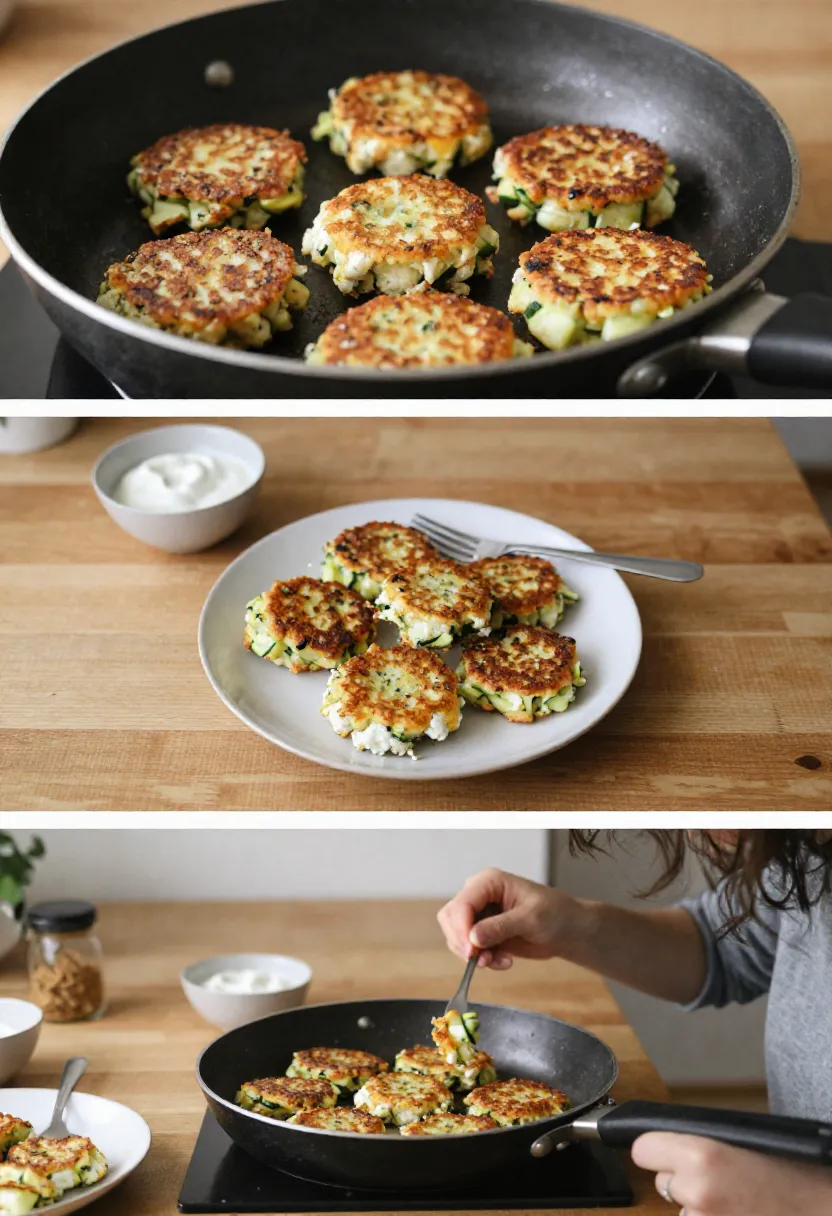
It’s also surprisingly practical when it comes to using what you already have. A small amount of leftover ham, a zucchini that’s been sitting in the fridge longer than planned, and an open container of ricotta suddenly become something useful instead of something you feel guilty about wasting.
Another reason it works so well is the flexibility. The texture isn’t fixed—you can adjust it without really thinking too much about it. If the mixture feels too soft, you add a bit more flour. If it feels too thick, you loosen it slightly. There’s no single “correct” version you have to aim for, which makes the whole process feel less stressful.
And then there’s the timing. These fritters don’t belong to just one type of meal. They’re one of those rare dishes that can move easily throughout the day.
You’ll notice they fit into different situations without much effort:
- in the morning, when you want something savory instead of sweet 🍳
- in the middle of the day, when you need something quick but still satisfying
- in the evening, when you don’t have the energy for a full, complicated dinner
- or even late at night, eaten straight from the pan without much thought
That kind of flexibility is part of what makes people come back to recipes like this. They don’t interrupt your routine—they fit into it.
🧑🍳 The Comfort of Cooking Without Overthinking
There’s something genuinely underrated about recipes that don’t require constant attention. No double-checking every step, no worrying about timing everything perfectly, no feeling like one small mistake will ruin the whole dish.
These fritters are simple in a way that feels natural, not limiting.
Once you’ve made them once or twice, the process becomes familiar. You don’t need to read instructions anymore—you just remember the flow. Grate the zucchini, squeeze out the excess moisture, mix everything together, and cook until golden. That’s really all there is to it.
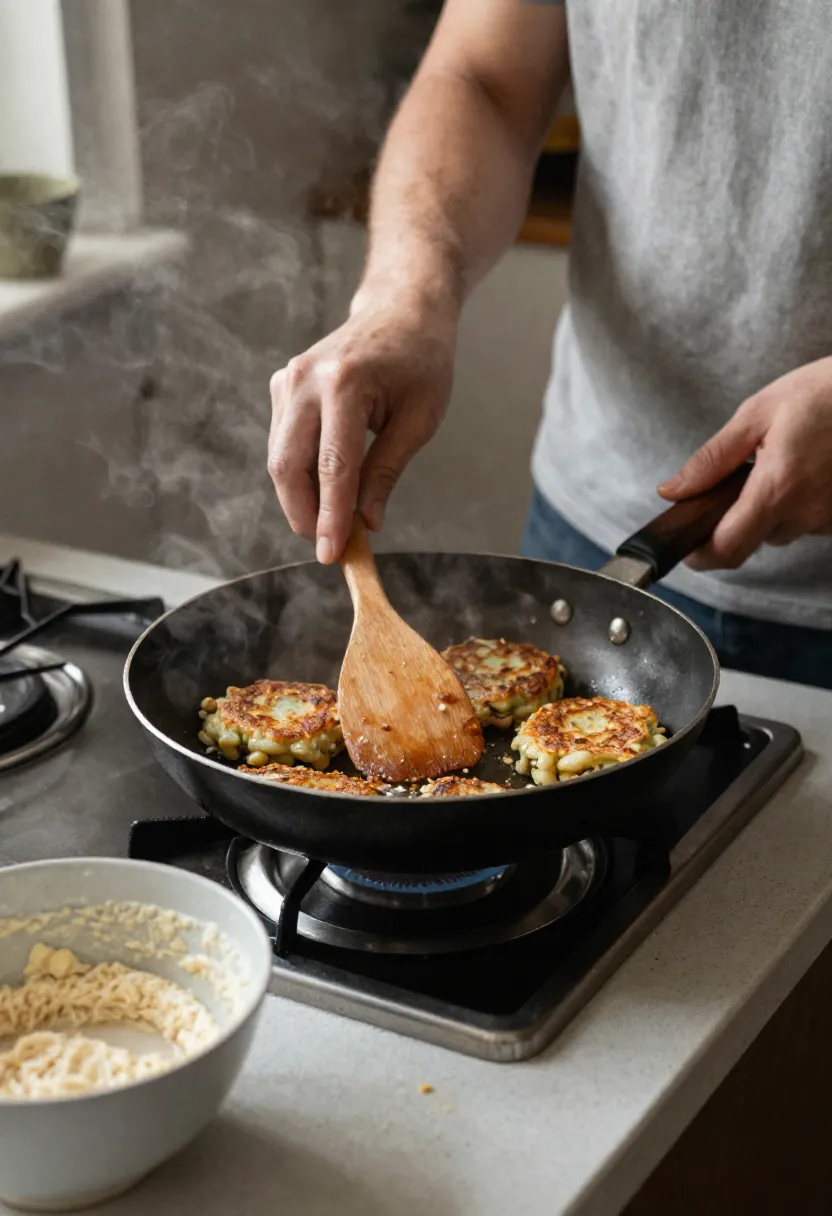
And maybe that’s why they’re so satisfying to make. Not because they’re impressive, but because they’re reliable. You know what you’re going to get, and you know it’s going to work.
There’s also something about the pace of it. It’s not rushed, but it’s not slow either. You stand by the stove, flip each fritter one by one, watch the surface turn golden. It’s repetitive in a calming way, not in a boring one.
The sensory part plays a role too, even if you don’t notice it right away. The soft sizzling sound, the slight smell of cheese warming up, that hint of savory richness from the ham—it all builds gradually. Nothing sharp or overwhelming, just a steady, familiar kind of comfort.
Over time, dishes like this stop feeling like recipes you follow. They turn into something more automatic, something you make without planning. You don’t think should I cook this?—you just start doing it.
And in a way, that’s what makes them valuable. Not because they stand out, but because they quietly become part of your routine.
Not perfect.
Not complicated.
Just consistently good. 💛
🍽️ Ham, Zucchini & Ricotta Fritters Recipe
There’s something really comforting about this kind of dish. Not in a heavy, overly rich way—but in that simple, this just works kind of way. These fritters come out crispy around the edges, lightly golden, with that soft, almost creamy center that makes you want to take another bite before you’ve even finished the first.
The flavor is pretty balanced, which is probably why they’re so easy to like. You get a bit of freshness from the zucchini, a smooth, slightly milky texture from the ricotta, and then that gentle salty depth from the ham. Nothing feels too strong or overwhelming. It’s the kind of food you can eat in the morning, then again later in the day, and it still feels right.
They’re also surprisingly versatile. You can serve them as a quick snack, make a full meal out of them with a salad on the side, or even stack a couple on a plate with something simple like yogurt or a squeeze of lemon. They don’t really need much—but they handle extras well if you feel like adding something.
And one more thing that people don’t always mention: they’re forgiving. The mixture doesn’t have to be perfect, the shapes don’t have to be identical, and even if they look a bit uneven in the pan, they still turn out good. Honestly, sometimes those slightly messy ones taste better. 🥒✨
🛒 Ingredients
- 2 medium zucchinis, grated
- 1 cup ricotta cheese
- 1 cup cooked ham, finely chopped
- 2 large eggs
- ½ cup flour (all-purpose or gluten-free)
- ¼ cup grated Parmesan cheese
- 2 green onions, finely sliced
- 1 teaspoon Dijon mustard (optional)
- Salt and black pepper to taste
- 2–3 tablespoons olive oil (for frying)
👨🍳 Instructions
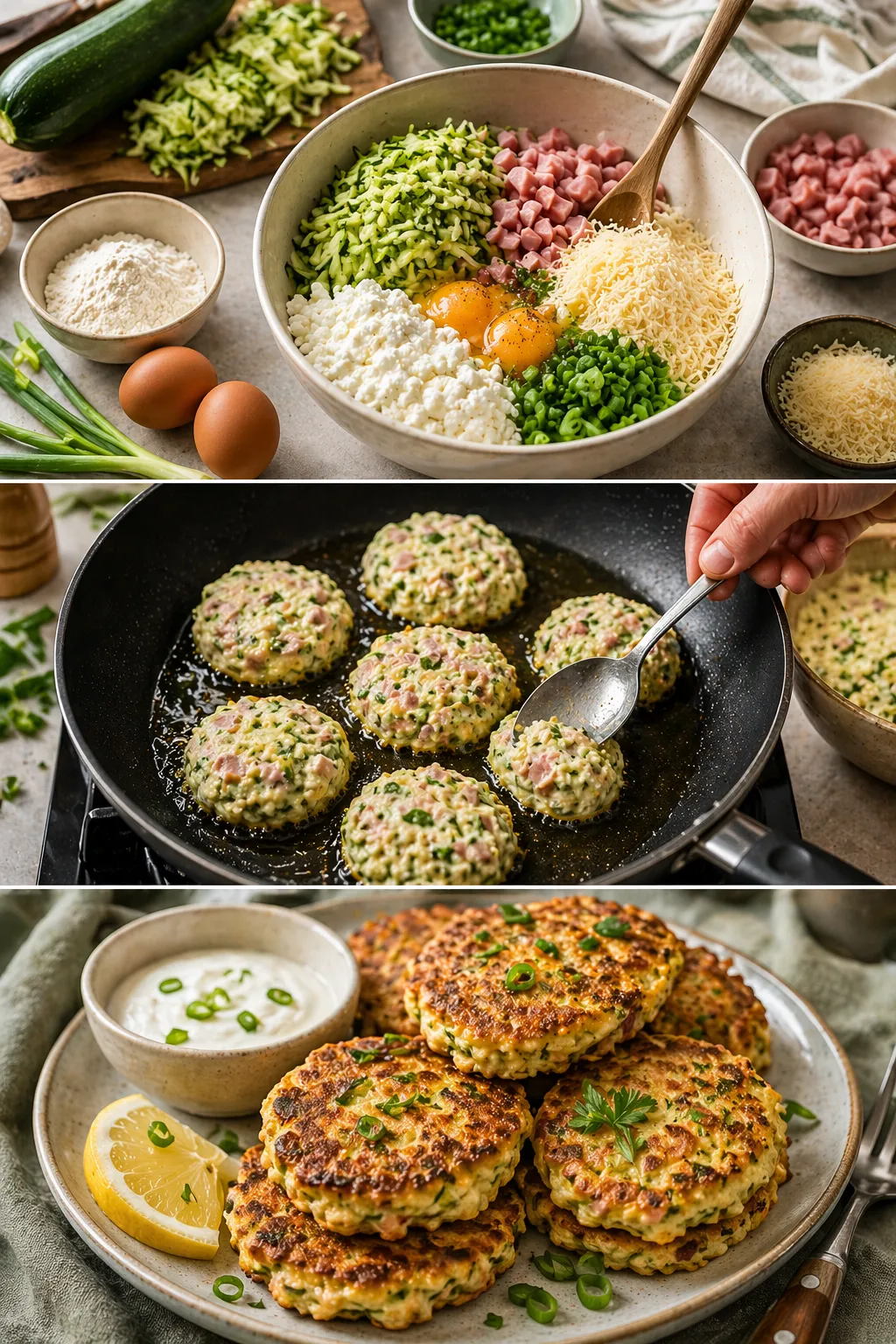
- Prepare the zucchini
Grate the zucchini and squeeze out as much liquid as possible using a clean kitchen towel or your hands. Don’t rush this step—it really affects the final texture. - Combine the base ingredients
In a large bowl, add the zucchini, chopped ham, ricotta, eggs, and Parmesan cheese. Mix gently until everything is evenly combined. - Add structure and flavor
Stir in the flour, green onions, mustard (if using), salt, and pepper. Mix until you get a thick batter. It should hold its shape when spooned, but still feel a bit soft. - Heat the pan
Place a frying pan over medium heat and add a small amount of olive oil. Let it warm up properly before adding the mixture. - Form the fritters
Spoon the mixture into the pan, forming small patties. Flatten them slightly with the back of the spoon—no need to make them perfect. - Cook until golden
Fry each fritter for about 3–4 minutes per side, or until golden brown and cooked through. Try not to flip them too early—they need a bit of time to hold together. - Drain and rest
Transfer the fritters to a plate lined with paper towels to remove excess oil. Let them sit for a minute or two. - Serve warm
Enjoy while they’re still warm, when the outside is crisp and the inside is soft and flavorful.
💡 A Few Small Tips That Help More Than You’d Expect
- Don’t skip squeezing the zucchini—it’s the difference between crispy and soggy
- If the mixture feels too wet, just add a little more flour (no need to overthink it)
- Cook one test fritter first to check seasoning
- Medium heat works best—too hot and they burn, too low and they don’t crisp up
- They taste even better with something fresh on top, like lemon juice or yogurt 🍋
🍋 Simple Serving Ideas That Actually Make a Difference
These fritters are already good on their own—you could honestly eat them straight from the pan and not feel like you’re missing anything. But at the same time, even a small addition can completely change how they feel on the plate.
It doesn’t have to be complicated. In fact, it works better when it isn’t.
A squeeze of fresh lemon is probably the easiest upgrade. It cuts through the richness just enough to make everything taste a bit lighter, a bit fresher. You don’t need much—just a quick squeeze right before serving, and it already feels like a different dish. 🍋
Something creamy on the side also works really well. Yogurt, sour cream, even a simple garlic sauce if you have a minute to mix one together. That cool, smooth texture balances out the crispiness of the fritters in a way that feels… complete. Not heavy, just balanced.
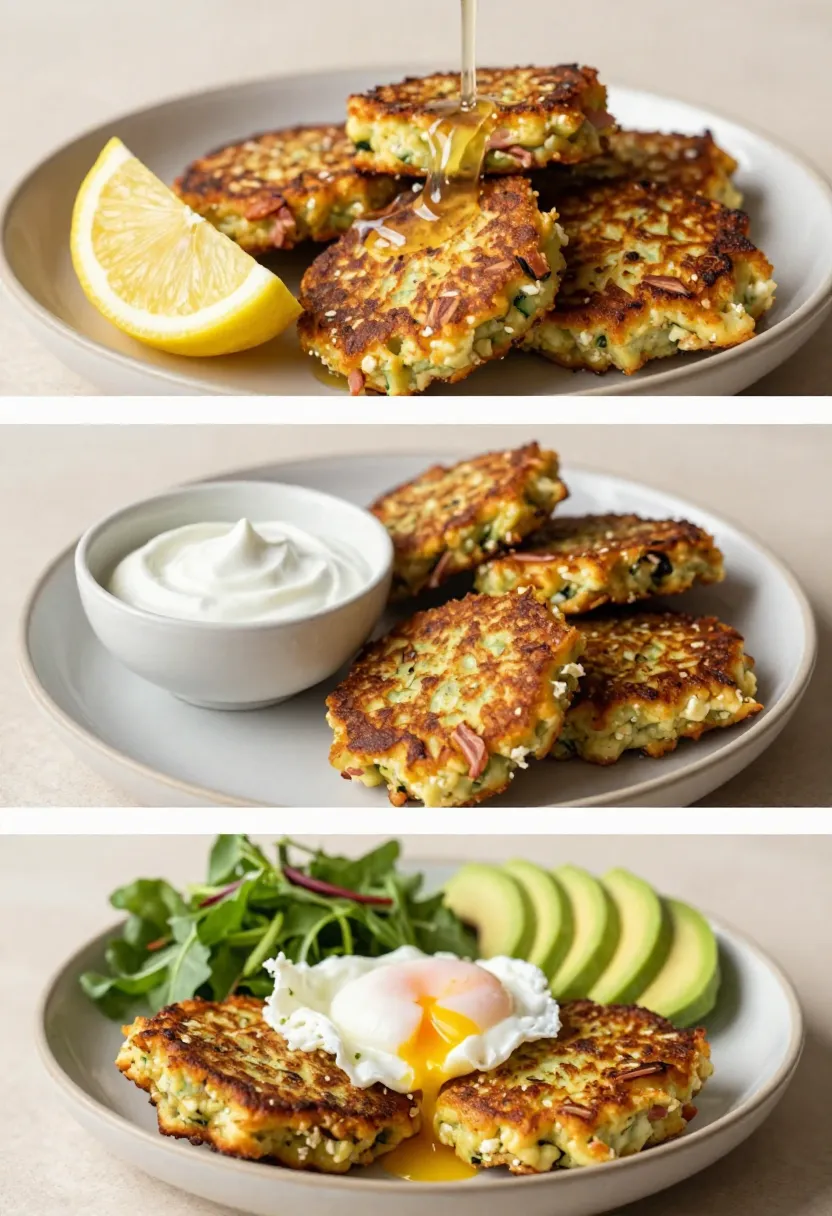
If you want to turn this into more of a proper meal, adding something fresh helps a lot. A light salad, a few slices of avocado, maybe some tomatoes with a bit of salt—nothing fancy, just something that brings a bit of contrast. Otherwise, it can feel a little one-note, especially if you’re eating more than a couple.
For a more brunch-style version (this one feels a bit indulgent, but worth it), adding a poached egg on top changes everything. Once the yolk breaks, it turns into this rich, almost sauce-like layer that soaks into the fritters. It’s simple, but it feels a bit more “put together” without actually requiring extra effort. 🥚
And honestly, you don’t need to do all of this at once. That’s kind of the point. Just pick one thing that sounds good in the moment.
A few easy combinations that tend to work without overthinking:
- lemon + yogurt (fresh and balanced)
- avocado + a pinch of salt (simple but filling)
- poached egg + black pepper (more brunch-like, a bit richer)
- salad on the side (keeps everything lighter overall)
The idea isn’t to build a complicated plate—it’s just to give the fritters something to bounce off of. Even a small addition can make them feel more interesting.
🔥 Small Tips That Make a Bigger Difference Than You’d Expect
This is one of those recipes where tiny details matter more than you’d think. Nothing complicated—but if you skip them, you’ll notice.
The biggest one is moisture. Zucchini holds a surprising amount of water, and if you don’t deal with it properly, the fritters won’t crisp up the way you want. They’ll still be edible, sure—but softer, a bit flat, not quite the same.
So yeah, squeezing out the liquid might feel like an extra step, but it’s probably the one that changes the result the most.
Heat is another thing that’s easy to underestimate. Too hot, and the outside browns too quickly while the inside stays undercooked. Too low, and instead of crisping, they just sort of sit there and absorb oil. Medium heat tends to be the sweet spot, even if it feels slower.
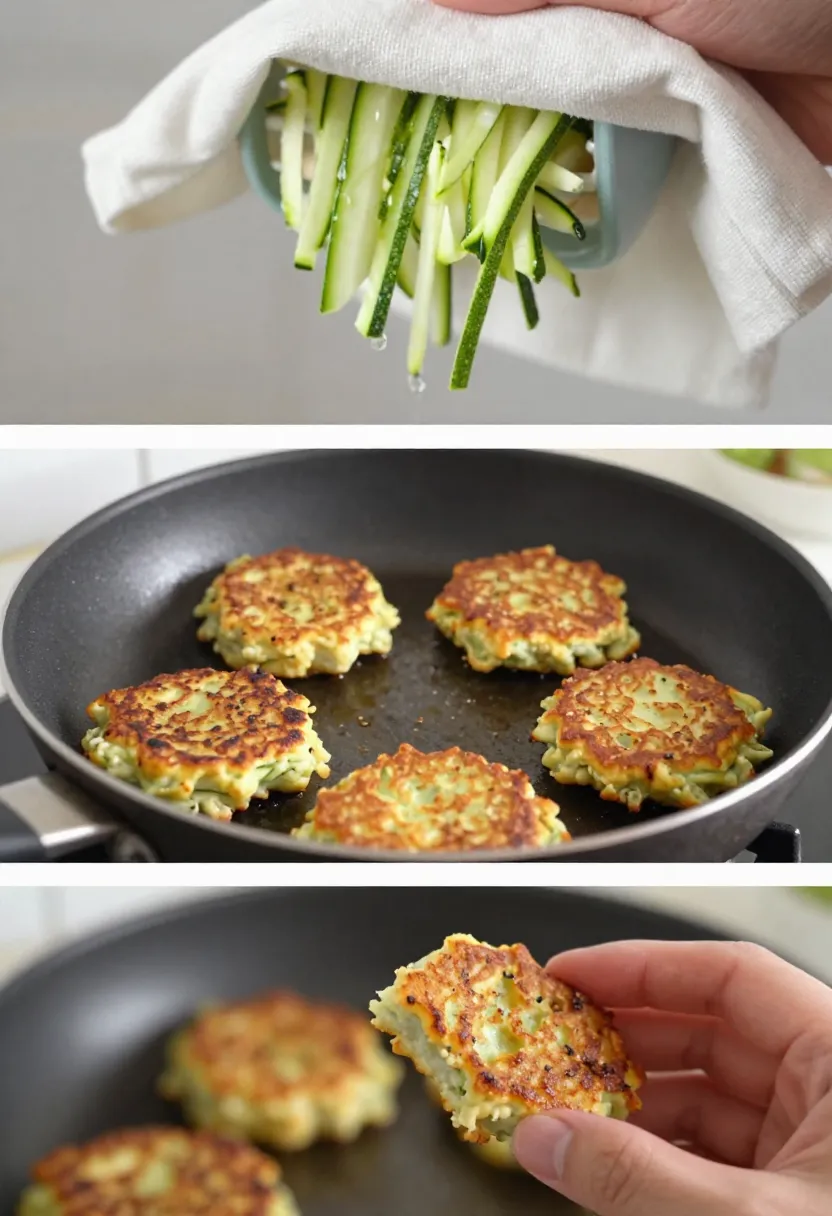
Timing also matters, but in a slightly different way. It’s more about not interfering too much. Once the fritters are in the pan, it’s tempting to move them around or flip them early just to check. But if you leave them alone for a few minutes, they hold their shape better and develop that proper golden crust.
And then there’s seasoning. This one’s easy to fix if you catch it early, but frustrating if you don’t. The simplest way around it is to cook one small test fritter first. Taste it, adjust if needed, and then continue. It takes a couple of extra minutes but saves the whole batch.
If you had to keep a few things in mind while cooking, it would probably come down to this:
- remove as much moisture from the zucchini as you can
- keep the heat steady, not too high
- give the fritters time before flipping
- test one first instead of guessing
None of this is complicated. It’s just the kind of small stuff that quietly makes everything better.
🧊 Storing, Reheating, and Keeping Them Actually Tasty
If you end up with leftovers (which doesn’t always happen, to be honest), these fritters hold up pretty well. They’re not one of those dishes that completely fall apart the next day.
In the fridge, they’ll stay good for about two to three days if you keep them in a sealed container. They might lose a bit of their crispiness, but the flavor stays pretty much the same—sometimes even better, since everything has had time to settle.
Reheating is where things can go in different directions depending on how you do it.
A pan is usually the best option if you want to bring back that crisp edge. Just a small amount of oil, medium heat, and a few minutes on each side—it doesn’t take long, and the texture comes back surprisingly well.

The oven works too, especially if you’re reheating several at once. Spread them out, give them a bit of space, and let them warm through. They won’t be exactly like fresh, but still very good.
The microwave… works, but it’s not ideal. It’s fine if you’re in a hurry, but the fritters tend to soften quite a bit. Still edible, just less texture.
Freezing is actually an option here, which makes them pretty practical. If you go that route, it helps to separate them with parchment paper so they don’t stick together. Then you can just take out a few at a time when you need them.
A couple of things that make storage easier:
- let them cool completely before storing
- keep layers separated so they don’t stick
- reheat in a pan if texture matters to you
One thing you might notice—the flavor doesn’t disappear overnight. If anything, it settles a bit more, which can make them feel slightly richer the next day.
Not always crisp, not exactly the same as fresh—but still very much worth eating.