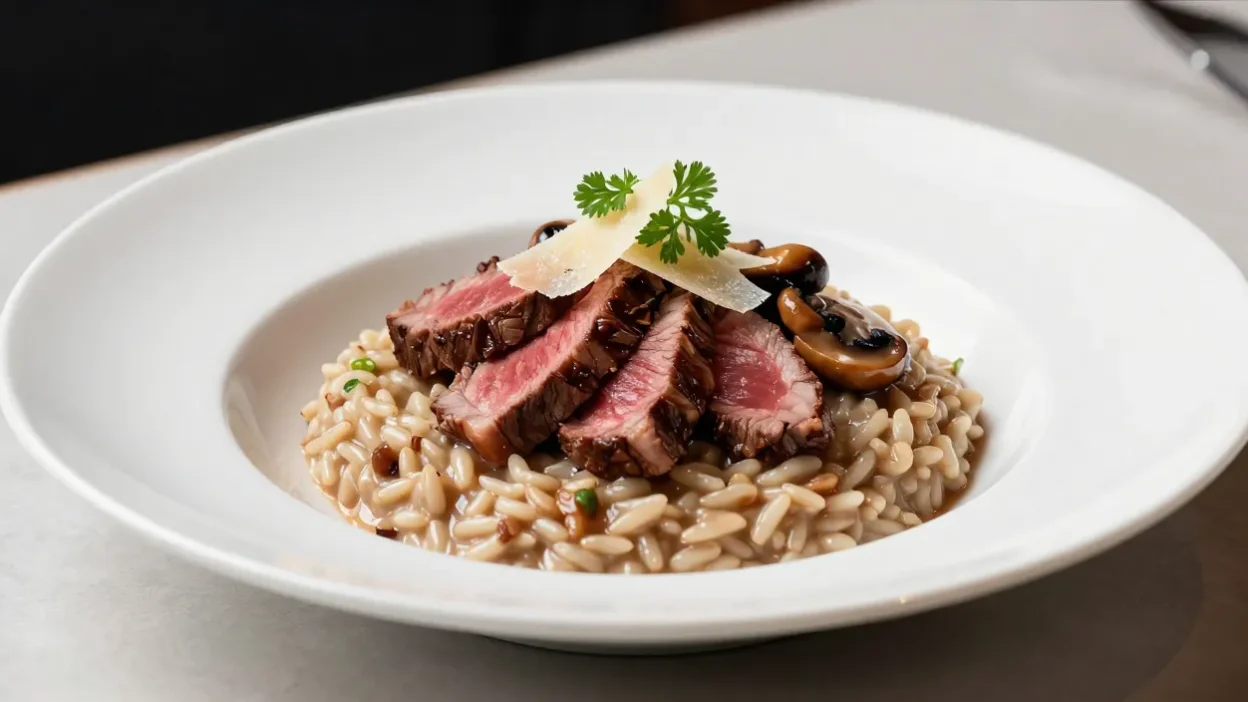
There are meals you cook simply because you need to eat, and then there are meals you cook because you actually want to spend time in the kitchen. Risotto clearly belongs to the second category. It’s not quick, and it doesn’t really allow shortcuts. But that’s exactly what makes it stand out 🍲
When you start making it, you kind of accept that you’ll be there for a while. You don’t just throw everything into a pan and wait. You stay involved. You add broth gradually, stir, check the texture, adjust the heat. It’s a slow process, but not in a frustrating way — more like a steady rhythm you fall into after a few minutes.
At some point, you stop thinking about “how long is this going to take?” and start noticing small details instead. The way garlic softens and releases its aroma before it even starts to brown. The moment when mushrooms go from releasing liquid to actually frying and gaining color. Even the rice itself changes gradually — not dramatically, just little by little, until it becomes something completely different from what you started with.
This version, made with beef, mushrooms, and brown rice, leans into that slow, comforting feeling even more. It’s not trying to be elegant or overly refined. If anything, it feels a bit more grounded and practical. The kind of dish that doesn’t need a special occasion but still feels like you made an effort.
It works especially well in those moments when you want something real and filling — not a quick snack, not takeout, but an actual meal that feels complete. Something warm, slightly rich, and satisfying without being too heavy.
🥩 Why Beef and Mushrooms Work So Well Together
Some ingredient combinations just naturally fit, and beef with mushrooms is one of those pairings that rarely fails. You don’t really have to force it or adjust much — they already complement each other in a very natural way.
Mushrooms bring a deep, earthy flavor that develops slowly as they cook. At first, they release moisture and seem quite mild, but if you give them time, they start to brown and concentrate in flavor. That’s when they become really interesting — richer, slightly caramelized, and much more complex than they first appear.
Beef works differently. It doesn’t build flavor slowly in the same way — it brings it almost immediately. It’s bold, savory, and satisfying. It gives the dish structure and makes it feel like a proper, complete meal rather than just a side.
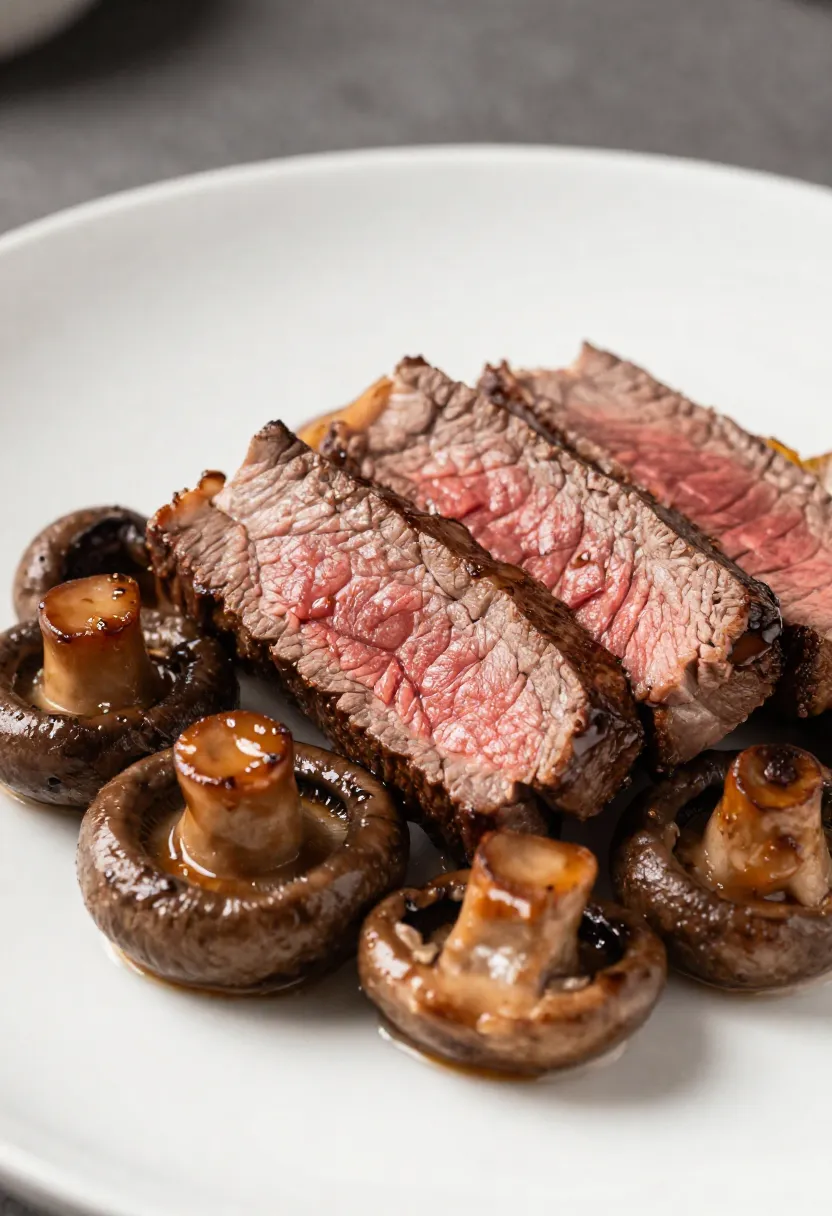
What makes this combination work so well is the balance. Neither ingredient feels out of place, and neither one dominates too much. Instead, they support each other in a way that feels quite natural once you taste it.
A simple way to understand how they interact in the dish:
- Mushrooms add depth and a slightly earthy, almost “background” richness
- Beef provides a strong, savory base and makes the dish more filling
- Together, they create a layered flavor that feels complete without needing too many extra ingredients
Once you add brown rice into this mix, everything starts to come together more clearly. The nuttiness of the rice connects the richness of the beef with the earthiness of the mushrooms. It fills in the gaps and makes the overall flavor feel more rounded.
🌾 The Comfort of Brown Rice (And Why It’s Worth the Wait)
Using brown rice instead of traditional risotto rice changes both the process and the final result more than most people expect. At first glance, it might seem like a small adjustment, but in reality, it shifts the entire feel of the dish.
The first thing you’ll notice is the cooking time. Brown rice simply takes longer. There’s no way around it. It also doesn’t release as much starch, so you won’t get that ultra-smooth, almost flowing creaminess that classic risotto is known for.
But after trying it, you start to see that it’s not really a disadvantage — it’s just a different style.
Brown rice has a firmer texture, which gives the dish more structure. Instead of everything blending into one soft consistency, you get a bit of contrast in each bite. That slight chewiness makes the risotto feel more substantial and, in a way, more satisfying.
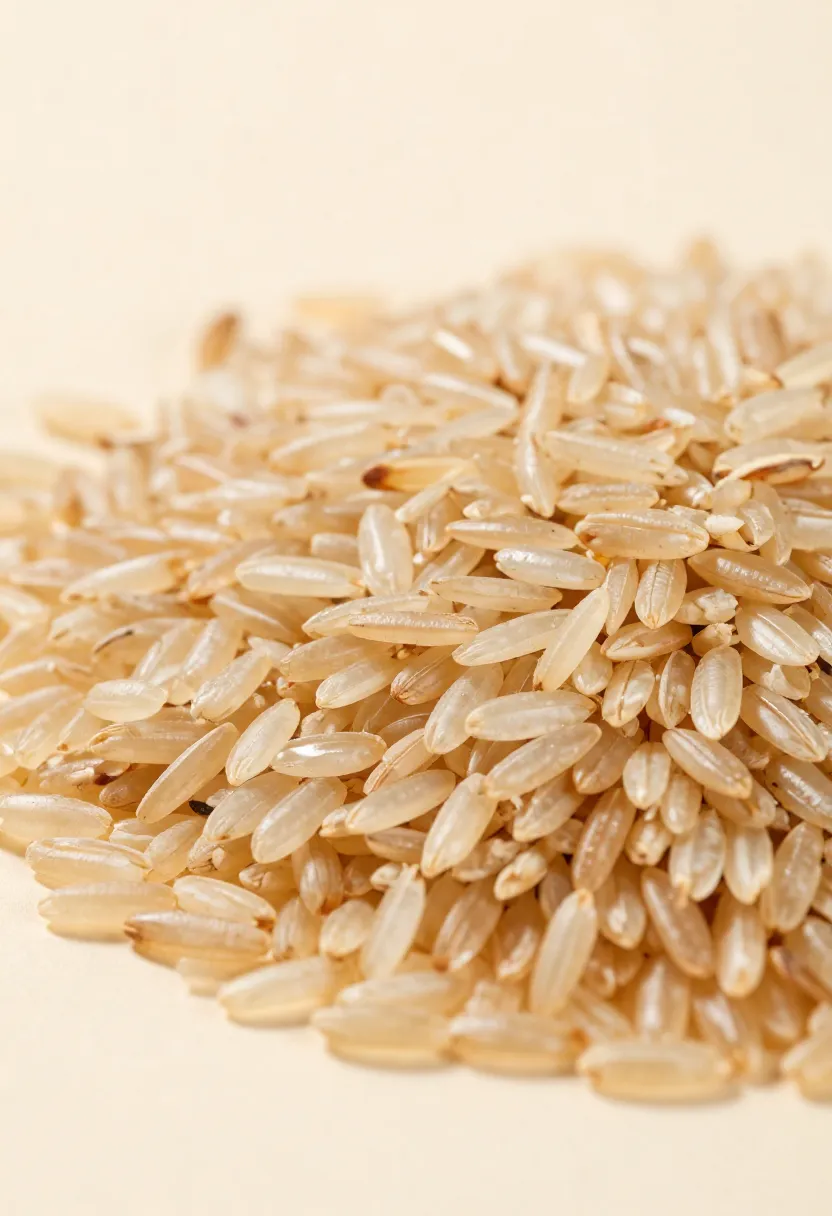
The flavor also changes slightly. Brown rice has a mild nutty taste that works particularly well with ingredients like mushrooms and beef. It doesn’t overpower anything, but it adds a subtle depth that you might miss if you go back to white rice afterward.
Here’s a simple comparison that highlights the difference:
| Feature | White Risotto Rice | Brown Rice |
|---|---|---|
| Cooking Time | Shorter | Noticeably longer |
| Texture | Very creamy | Slightly firm |
| Flavor | Neutral | Lightly nutty |
| Satiety | Lighter | More filling |
Another important detail is how the cooking process feels. Because brown rice takes longer, you spend more time repeating the same steps — adding broth, stirring, waiting. At first, it might seem repetitive, but after a while, it becomes almost automatic.
You stop rushing. You start adjusting things naturally — a bit more liquid, a slight change in heat, a quick taste to check the texture. It becomes less about following strict steps and more about paying attention.
And in the end, when the rice is finally cooked and everything comes together, the extra time doesn’t feel like a downside. It just feels like part of what made the dish turn out the way it did.
It’s not necessarily better than the classic version — just different in a way that’s worth experiencing at least once. And for many people, it ends up becoming the version they go back to more often than they expected.
🍽️ Beef and Mushroom Brown Rice Risotto Recipe
This is one of those dishes that feels a bit more special than your everyday meal, but without requiring anything complicated or hard to find. At its core, it’s still very simple — rice, broth, mushrooms, beef — but the way everything comes together makes it feel much richer than the ingredient list suggests.
What makes this version stand out is the balance. The brown rice adds a slightly nutty, deeper flavor and a bit more texture than traditional risotto. The mushrooms bring that earthy, slow-developed richness, while the beef adds substance and makes the dish feel complete rather than just a side.
It’s the kind of meal that works in different situations. You can make it on a quiet evening when you want something warm and filling, or you can serve it when you have people over and don’t want to rely on something too predictable. It looks impressive, smells even better while cooking, and doesn’t require perfect technique to turn out well.
Another nice thing about this recipe is that it’s flexible. You don’t have to follow everything exactly. If you have slightly different mushrooms, a different cut of beef, or even extra greens to use up — it will still work. That makes it a good option when you want to cook something solid without overthinking every detail.
🛒 Ingredients
- 1 cup brown rice
- 4 cups beef stock (kept warm)
- 200–300 g mushrooms (cremini, button, or mixed), sliced
- 2 tablespoons olive oil
- 1 garlic clove, finely chopped
- 1 small onion, finely diced
- 4 small beef steaks (sirloin or similar cut)
- A handful of fresh spinach or other leafy greens
- Salt and black pepper, to taste
- Freshly grated Parmesan cheese
- Optional: a small knob of butter for extra richness
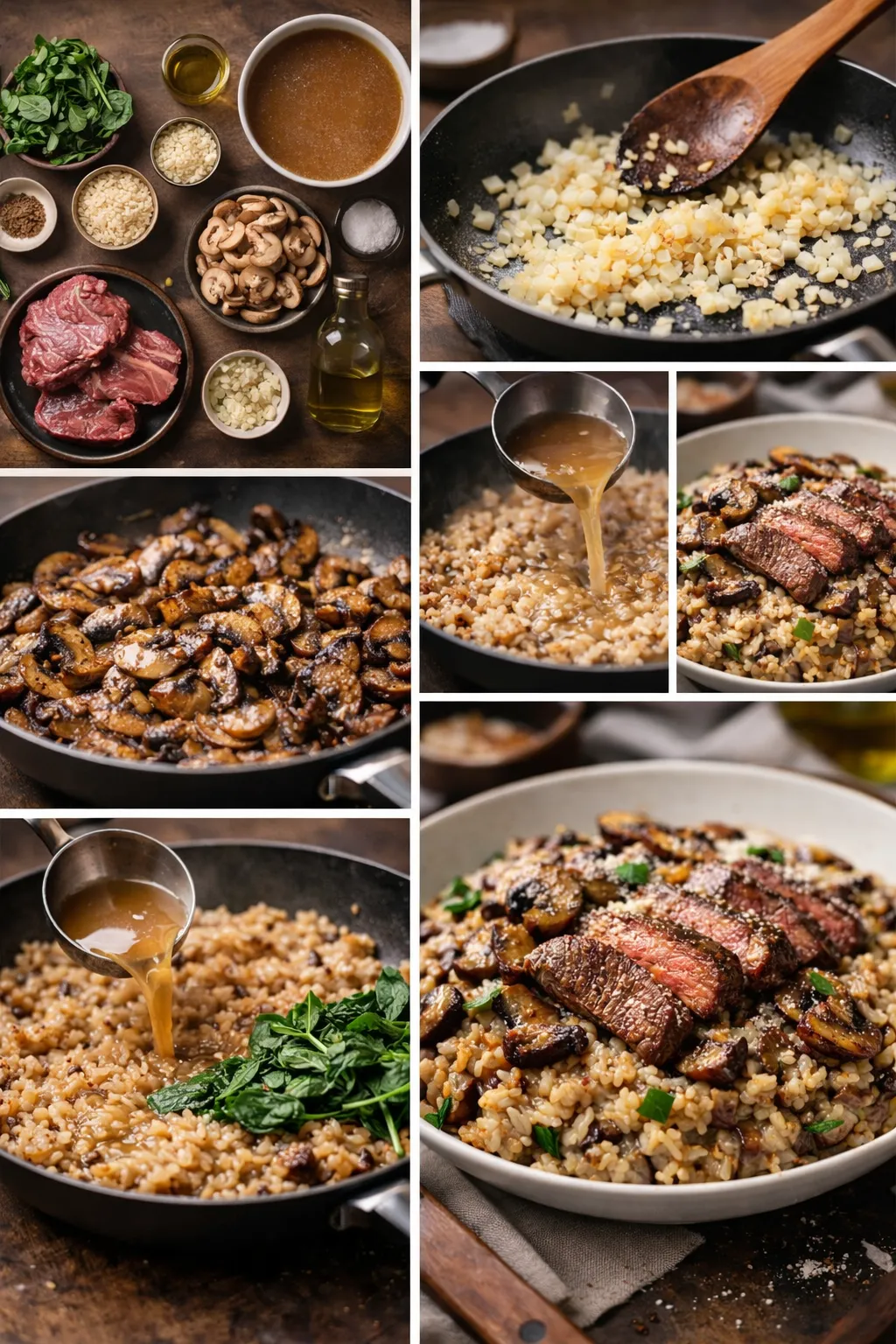
👨🍳 Step-by-Step Instructions
- Heat the beef stock in a saucepan and keep it warm over low heat. This helps the rice cook more evenly and keeps the process smooth.
- In a large pan, heat one tablespoon of olive oil over medium heat. Add the chopped onion and cook until soft and slightly translucent. Don’t rush this step — it builds the base flavor.
- Add the mushrooms and let them cook slowly. At first they will release moisture, but give them time to brown properly. Stir occasionally, but not constantly.
- Add the garlic and cook briefly, just until fragrant.
- Stir in the brown rice and mix well so it gets coated in oil. Let it toast lightly for a minute or two — this adds a subtle depth of flavor.
- Start adding the warm stock, one ladle at a time. Stir gently and wait until the liquid is mostly absorbed before adding more.
- Continue this process for about 35–45 minutes. Stir regularly, but don’t overdo it. Taste the rice from time to time — you’re aiming for tender with a slight bite.
- When the rice is nearly ready, add the spinach or greens and stir until they wilt into the risotto.
- In a separate pan, heat the remaining olive oil and cook the beef steaks to your preferred doneness. Season simply with salt and pepper.
- Let the beef rest for a few minutes after cooking, then slice it thinly.
- Stir part of the beef into the risotto, keeping some slices for serving.
- Add Parmesan cheese (and butter if using), then stir until everything comes together into a creamy consistency. Taste and adjust seasoning if needed.
- Serve immediately, topped with the remaining beef and an extra sprinkle of Parmesan.
💡 Quick Tips & Little Hacks
- Don’t rush the mushrooms — proper browning makes a huge difference in flavor
- Keep the stock warm the whole time to avoid slowing down the cooking process
- Let the beef rest before slicing so it stays juicy
- If the risotto gets too thick, just add a splash of warm stock or water
- Taste near the end — a small pinch of salt or extra cheese can completely change the final result
🌟 Bringing It All Together on the Plate
There’s a small moment right at the end of cooking that often goes unnoticed — when everything is ready, and you’re just about to serve. With this risotto, that moment feels a bit different. You’ve spent time on it, stayed near the stove, paid attention… and now you finally see the result in front of you.
The texture is the first thing you notice. The rice is creamy but not overly soft, the mushrooms are darker and slightly glossy from cooking, and the beef — sliced and still juicy — sits on top in a way that almost finishes the dish visually. Add a bit of green from the spinach, and suddenly it looks balanced without you really trying to “design” it.
What’s nice here is that plating doesn’t require precision. In fact, trying too hard can make it look less appealing. Risotto isn’t meant to be structured or overly neat — it should feel relaxed, a bit natural, even slightly imperfect.
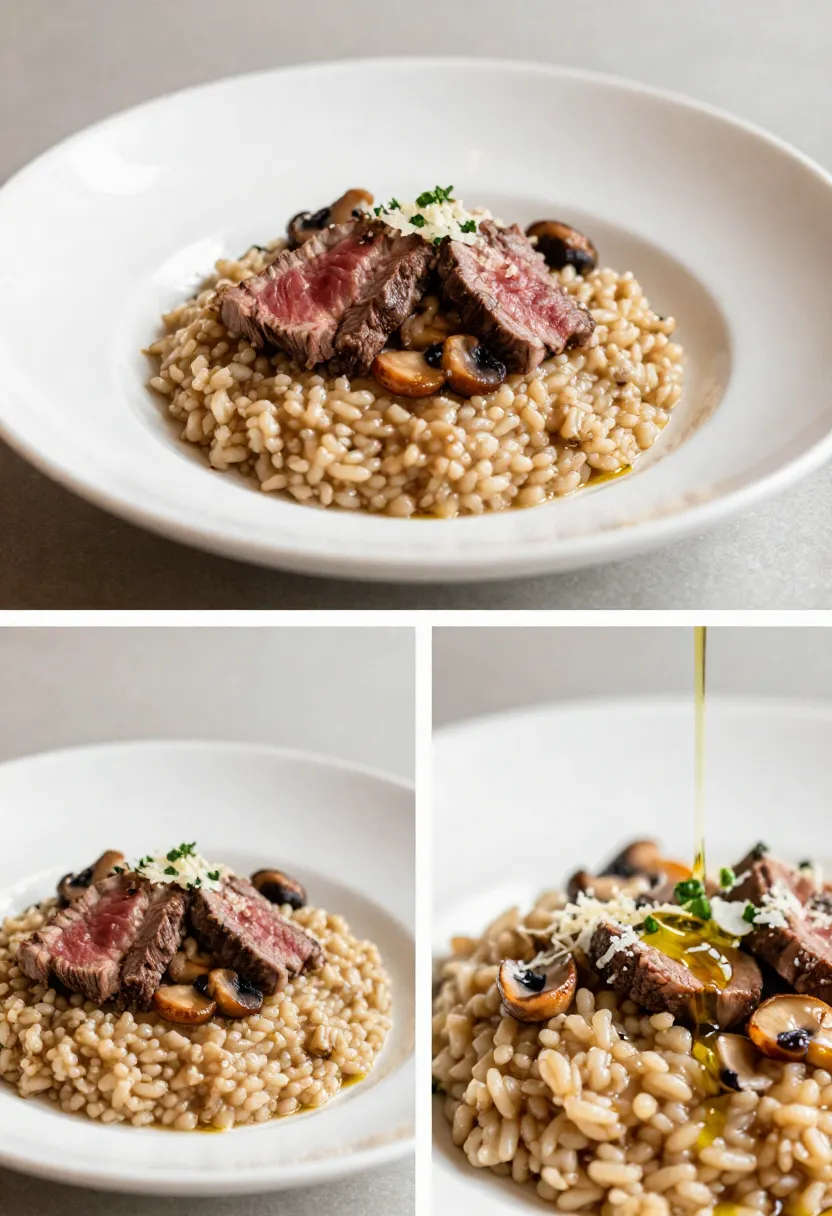
A few simple details can help bring everything together without overcomplicating it:
- Use a wide, shallow bowl so the risotto spreads out instead of forming a thick mound
- Spoon it gently into the dish rather than pressing it down
- Let the beef slices fall naturally instead of arranging them too carefully
- Add a light drizzle of olive oil right at the end — it gives a subtle shine and enhances the aroma
- Finish with Parmesan, but keep it light so it doesn’t overpower the rest
If you have fresh herbs like parsley or thyme, you can add a small pinch on top. It’s not essential, but it adds a bit of freshness and breaks up the color.
There’s also something worth mentioning here — how the dish looks when it’s not perfect. A slightly uneven surface, a bit of sauce pooling on one side, irregular beef slices… all of that actually makes it feel more real. Less like something staged, more like something you genuinely cooked and are about to enjoy.
🍷 Small Touches That Make the Meal Feel Special
Even though this risotto is simple at its core, it has that rare quality where a few small additions can completely change how the meal feels. Not in a dramatic way, just enough to make dinner feel a bit more intentional.
Because the dish itself is rich and quite filling, it helps to pair it with something lighter. A fresh side balances things out and prevents the meal from feeling too heavy. You don’t need anything complicated — actually, simpler works better here.
A light salad is usually the easiest option. Something crisp, with a bit of acidity, works especially well because it cuts through the creaminess of the risotto. Even a basic mix of greens with a simple dressing can make a noticeable difference.
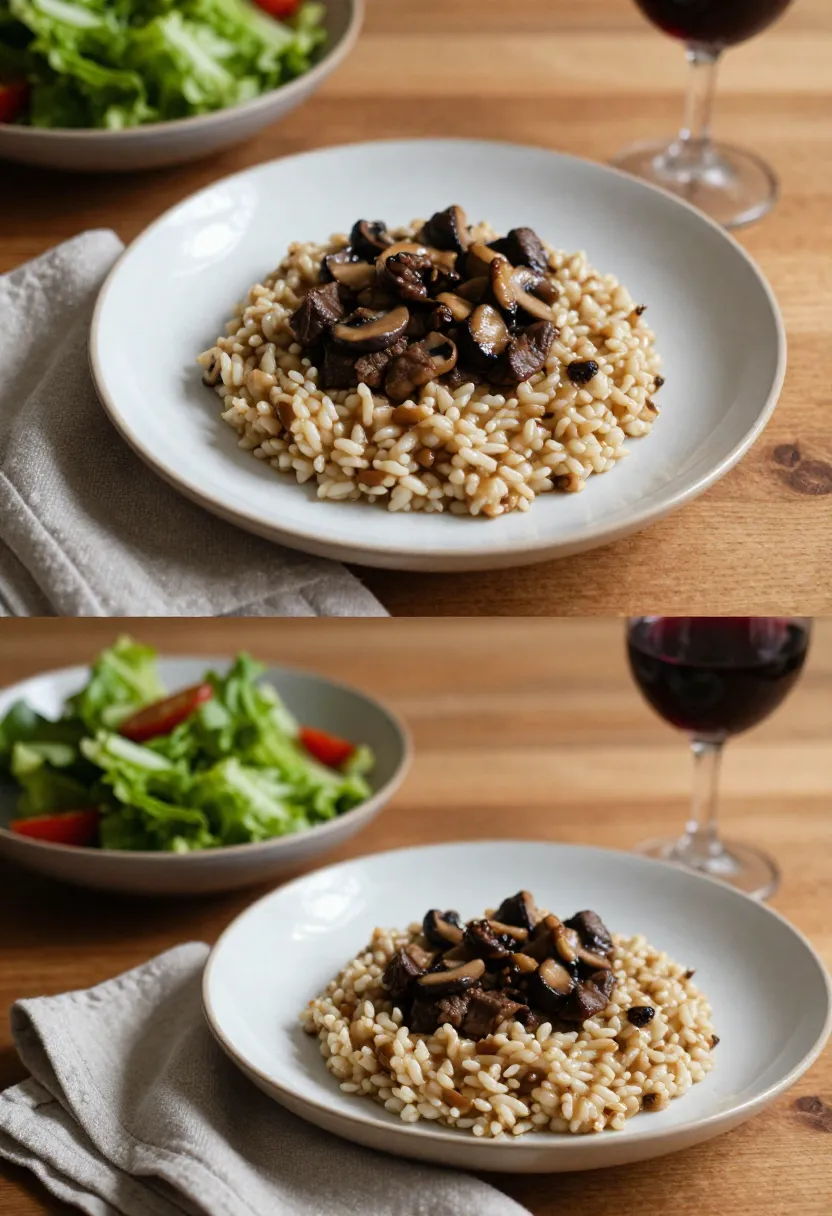
Wine is another optional touch, but one that people often enjoy. A medium-bodied red pairs naturally with beef and mushrooms, but it doesn’t have to be perfect. The goal isn’t to match flavors precisely — it’s more about creating a relaxed atmosphere where you can slow down and enjoy the meal properly.
And then there’s the part that’s easy to overlook — the setting. It might sound like a small thing, but it genuinely changes how the experience feels. You don’t need anything elaborate, just a few adjustments that shift the mood a little:
- softer lighting instead of bright overhead lights
- a bit of background music, something calm and not distracting
- sitting down properly at the table instead of eating on the go
- taking a few extra minutes instead of rushing through the meal
These details don’t take much effort, but they make the whole experience feel more complete. The same dish, the same ingredients — but a slightly different atmosphere, and suddenly it feels like more than just dinner.
💭 Final Thoughts: More Than Just a Recipe
In the end, this dish isn’t really about complexity or technique. It’s about the kind of cooking that asks for just a bit more attention than usual — not in a stressful way, just enough to slow things down.
There’s something refreshing about that, especially when most meals are built around speed and convenience. Here, the process matters just as much as the result. Stirring, tasting, adjusting along the way — it all becomes part of the experience rather than something you rush through.
And maybe the best part is that it doesn’t demand perfection. The texture might vary slightly each time. Sometimes it will be a bit creamier, sometimes a bit firmer. Maybe the seasoning changes depending on the stock you use or how long you cook the mushrooms. None of that really ruins the dish.
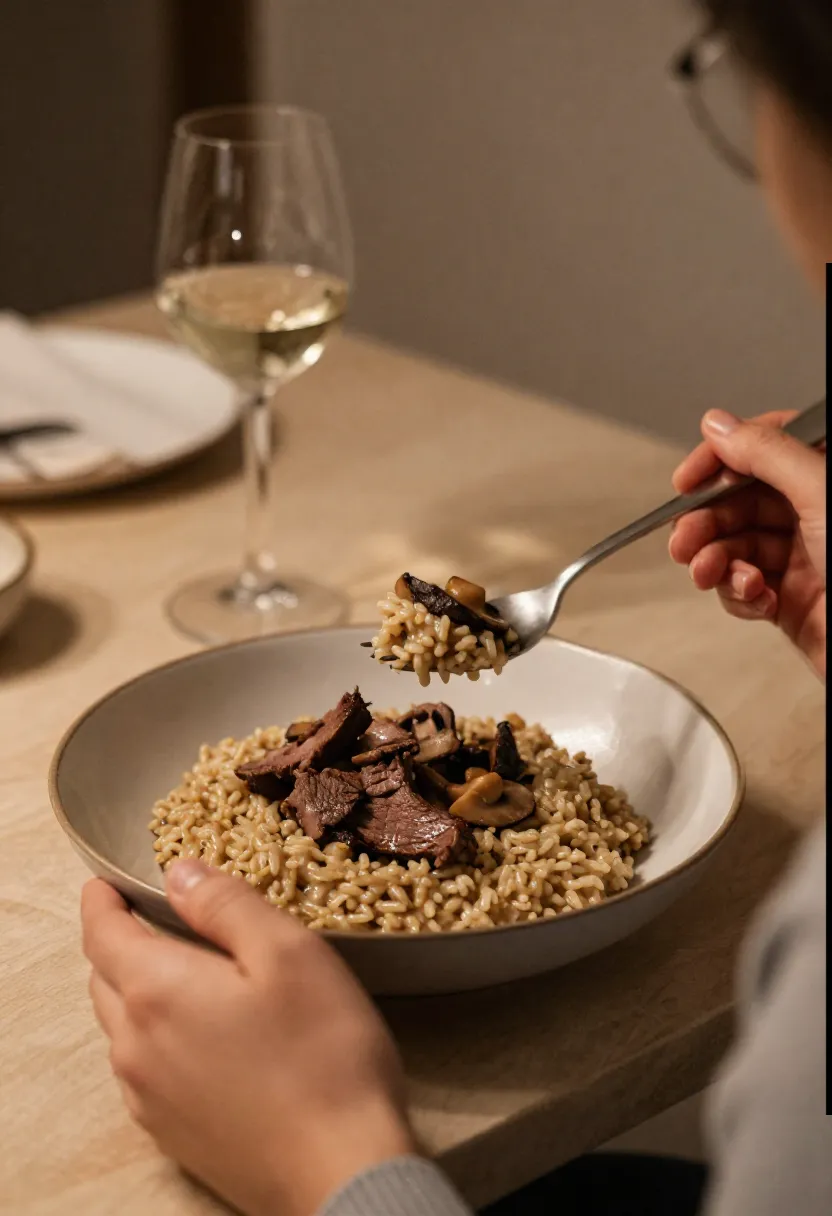
If anything, it makes it feel more personal.
Over time, you stop following the recipe exactly. You adjust things without thinking too much about it — a bit more broth here, slightly different timing there. It becomes less about instructions and more about instinct.
That’s usually when a recipe turns into something you come back to. Not because it’s impressive or complicated, but because it works. It fits into your routine without feeling repetitive.
So whether you’re making this on a quiet evening for yourself or cooking for someone else, it has a way of slowing things down just enough to make the moment stand out a little more.
And in a way, that’s what makes it memorable. Not just how it tastes, but how it feels while you’re making it — and even after you’re done.