There’s a certain kind of comfort that comes from food that doesn’t try too hard. You know the kind — nothing fancy, no complicated plating, no ingredients you have to Google first 😄 Just something honest and warm.
Not every meal needs to feel like something you’d order in a restaurant. Actually, most of the time, it shouldn’t. The dishes that really stay with you are often the simplest ones — the ones made from everyday ingredients, the kind that are probably already sitting in your fridge right now without you even noticing. 🥬
Spinach and feta fritters fall right into that category, and honestly, that’s a big part of their charm. They don’t ask much from you. You don’t need special skills, you don’t need perfect timing, and you definitely don’t need a long list of ingredients. But somehow, the result still feels complete — like everything just works together without effort.
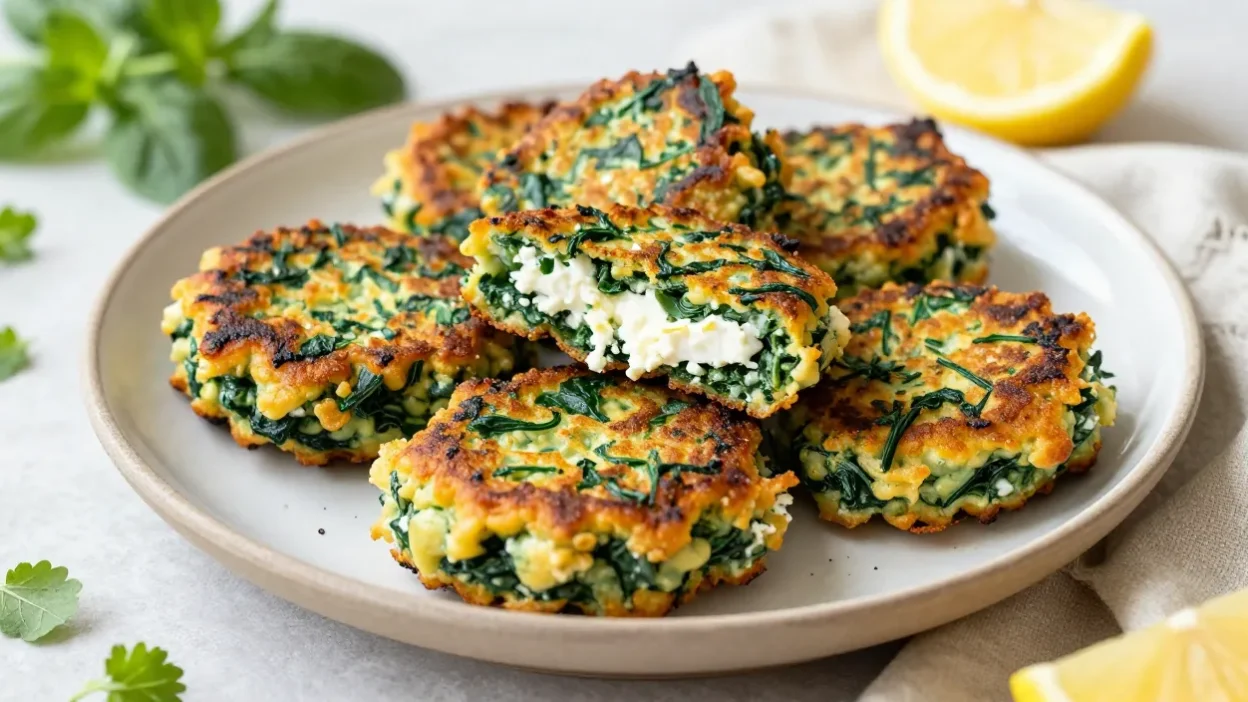
And then there’s the texture. That’s where things get really satisfying. The edges turn golden and slightly crisp, while the inside stays soft, almost creamy in places thanks to the feta. It’s that contrast that makes you pause for a second after the first bite. Not in a dramatic way — more like, “okay… yeah, this is really good.”
But honestly, it’s not just about taste. It’s everything around it.
It’s the small moments while cooking:
- the quiet sizzle when the batter hits the pan 🔥
- the smell that slowly fills the kitchen (and makes you hungrier than expected)
- flipping the fritter and seeing that perfect golden color — not too dark, not too pale
None of it is complicated, but it feels… real. And that kind of cooking experience is underrated.
A Flavor Pairing That Just Makes Sense
Some ingredient combinations feel like a coincidence. Others feel like they were always meant to exist together. Spinach and feta? Definitely the second one.
Spinach on its own is… well, let’s be honest, it’s not the most exciting ingredient in the world. It’s mild, slightly earthy, and very easy to overlook if it’s not treated right. But that’s also what makes it useful — it doesn’t overpower anything. It kind of sits in the background and lets other flavors come forward.
Feta does the exact opposite.
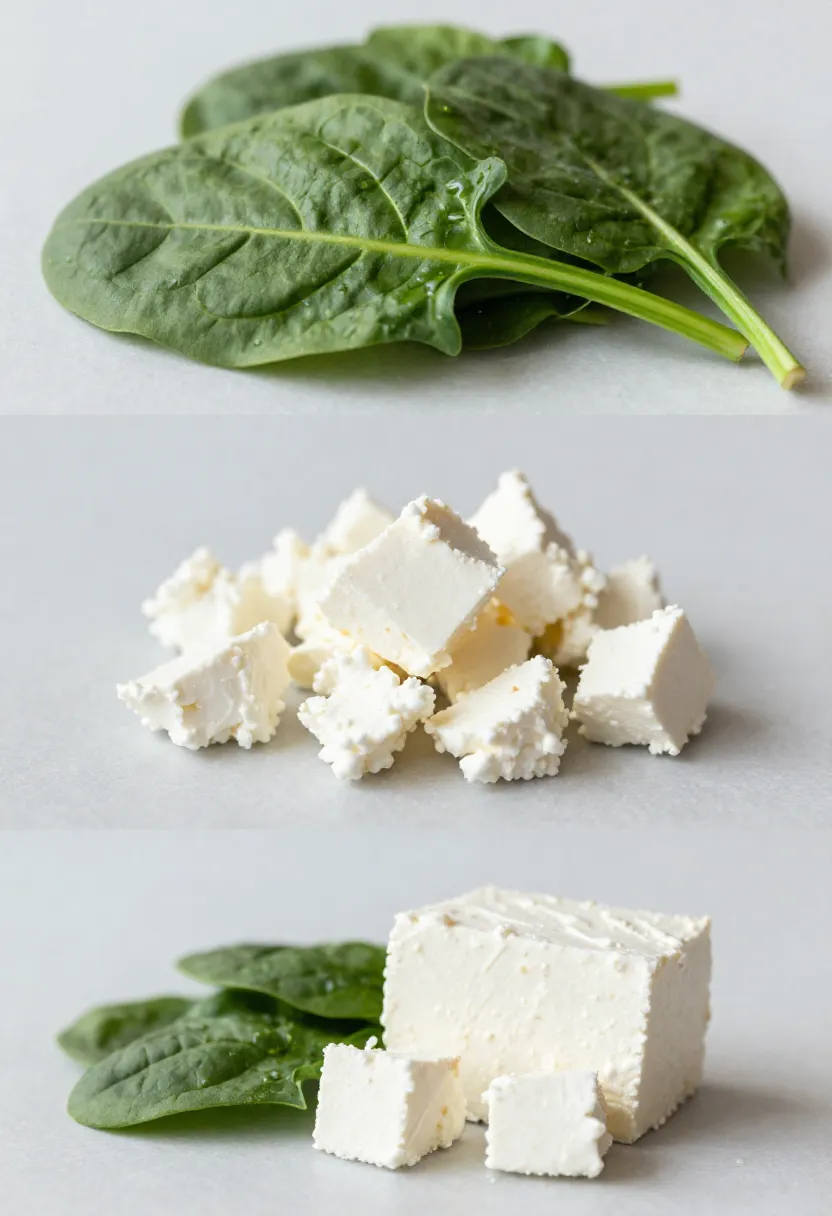
It’s salty, a little tangy, and has that soft, crumbly texture that melts just enough when heated. It doesn’t try to blend in — it stands out, but in a good way. Not aggressive, just noticeable.
When you combine the two, something clicks.
The spinach keeps things fresh and light, while the feta adds depth and those little bursts of flavor that you don’t always expect. You get contrast, but not conflict. It’s balanced in a very natural way, like the ingredients figured it out themselves without needing much help.
And the best part? This pairing is flexible. It doesn’t lock you into one version of the dish. You can keep things minimal or build around it — both approaches work.
Why This Recipe Slowly Becomes Part of Your Routine
There are recipes you try once, think “that was nice,” and then forget about. And then there are recipes that quietly sneak into your routine without you even planning it.
Spinach and feta fritters are very much in that second category.
At first, you might make them just to try something new. Then maybe again because you have leftover spinach. And then suddenly, a few weeks later, you realize you’re making them regularly — not because you have to, but because it just makes sense.
Part of it is convenience. They’re quick, they don’t require perfect measurements, and even if you mess something up slightly, they usually still turn out fine. That kind of flexibility takes a lot of pressure off cooking.
But there’s also something else going on. They fit into real life in a way not all recipes do.
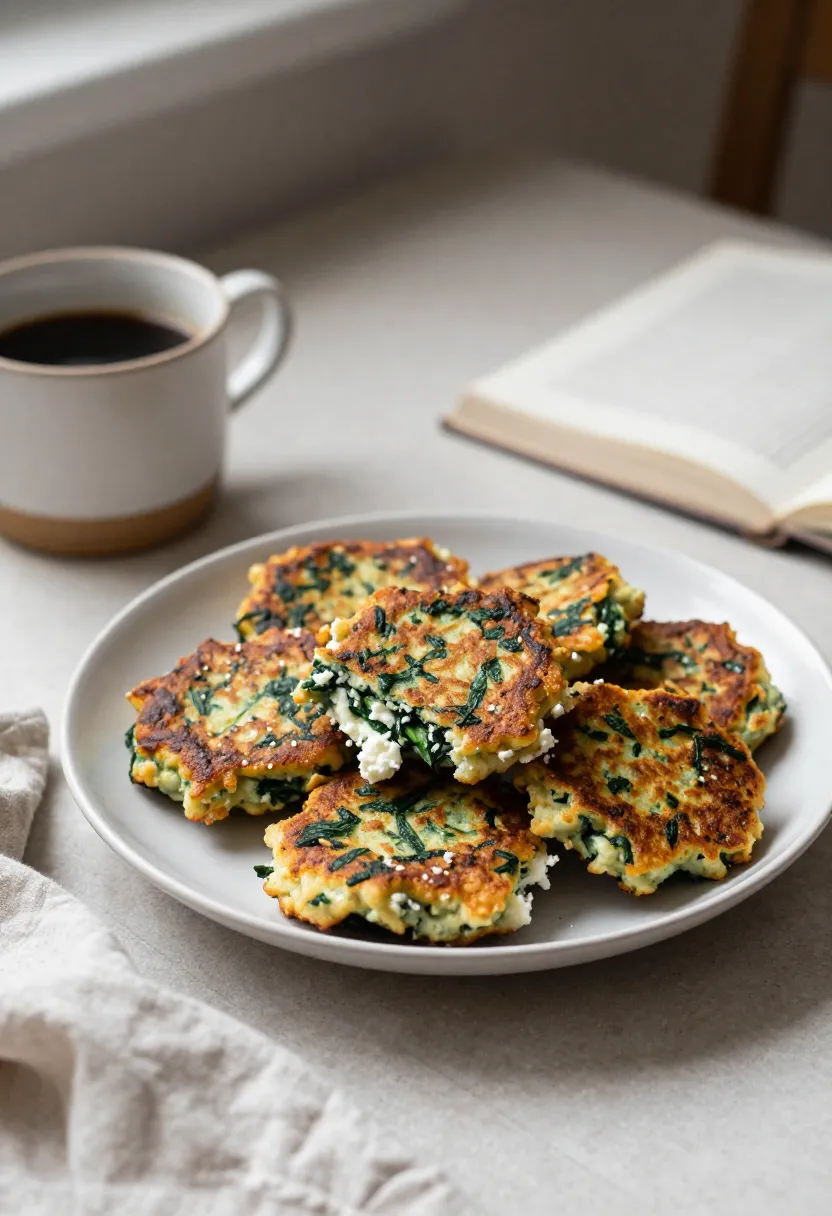
You don’t need to “plan” for them. They work in different situations without forcing you to adjust too much:
- when you want a quick savory breakfast without overthinking it 🍳
- when lunch needs to be light but still filling
- when dinner should be warm and homemade, but not heavy
- when you just need a snack that actually satisfies
And that’s probably why people keep coming back to them.
Over time, they stop feeling like a recipe you follow and start feeling like something you just know how to make. You adjust things without thinking, you tweak ingredients based on what’s in your kitchen, and it becomes your version of the dish.
That’s usually the point where you realize — yeah, this one’s a keeper.
🍳 Spinach and Feta Fritters Recipe
There’s something a bit unexpected about how good these fritters turn out, considering how basic the ingredients are. You’re not doing anything complicated here — no special techniques, no tricky timing — and yet the final result feels like something you actually chose to make, not just threw together.
What you’re aiming for is balance, but not in a strict, technical way. More like that moment when everything just comes together naturally. The outside should be lightly crisp, with that golden color that makes you want to grab one straight from the pan (even though it’s way too hot 😄). The inside stays soft, slightly fluffy, with little pockets of melted feta that give you bursts of flavor in between the spinach.
And the thing is — they don’t feel heavy. That’s important. A lot of fried food can leave you feeling like you overdid it, but these don’t really go in that direction if you cook them right. They’re warm, satisfying, but still light enough that you can eat a few without regret.
Before you even start, there’s one thing that’s honestly more important than people think: the batter. Not the exact measurements — those can vary a bit — but the texture.
If the batter is too wet, the fritters won’t hold properly. Too thick, and they turn dense. What you’re looking for is something in between — soft, slightly loose, but still able to keep its shape when it hits the pan. Once you get a feel for that, everything else becomes much easier.
Ingredients
- 250 g spinach (fresh or frozen, thoroughly drained)
- 2 large eggs
- 1 cup milk or buttermilk
- 1 ½ cups all-purpose flour
- 1 tsp baking powder
- 100–120 g feta cheese, crumbled
- 1 small garlic clove, finely chopped (optional)
- Salt and black pepper to taste
- 2–3 tbsp olive oil (for cooking)
Optional additions that can enhance flavor or texture:
- Fresh herbs like dill, parsley, or basil 🌿
- A pinch of chili flakes for mild heat
- Grated zucchini or carrot (well-drained)
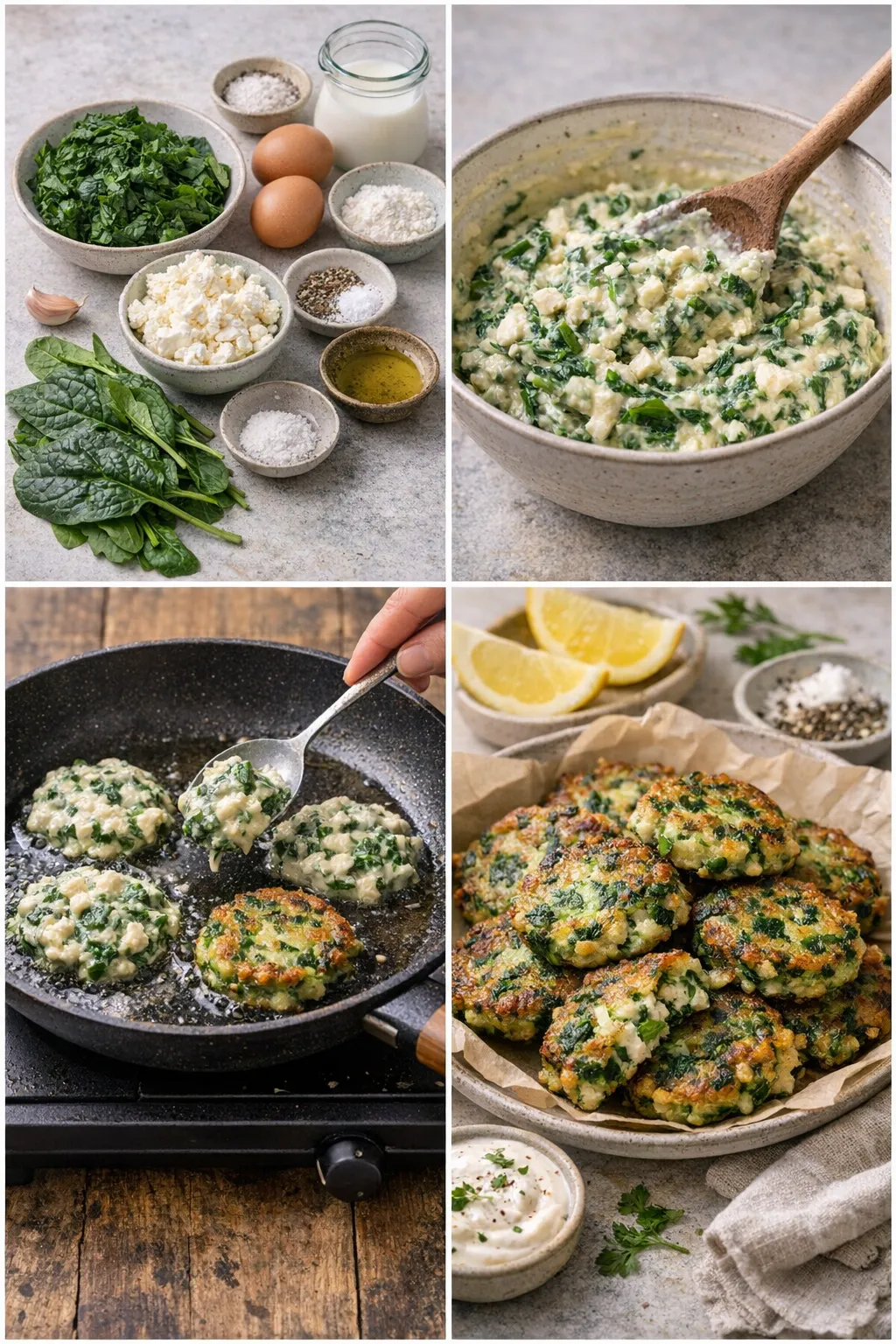
Cooking Instructions
- Start with the spinach. If it’s frozen, let it thaw completely, then squeeze out as much liquid as you can — really take your time here. If it’s fresh, cook it just until wilted, let it cool, and then drain it well.
- In a medium bowl, whisk together the eggs and milk. It doesn’t need to be perfect — just smooth enough so everything is combined.
- In another bowl, mix the flour, baking powder, salt, and pepper. Give it a quick stir so the baking powder is evenly spread.
- Pour the wet mixture into the dry ingredients. Stir slowly, and stop as soon as it comes together. If it looks a little uneven or lumpy — that’s actually what you want.
- Add the spinach, feta, and garlic. Fold everything in gently. Try not to mash the feta too much — those small chunks are what make the texture interesting later.
- Heat a non-stick pan over medium heat and add a bit of olive oil. Give it a minute — the pan should be properly warm before you start cooking.
- Spoon the batter into the pan, forming small fritters. Don’t overcrowd them — they need space to cook evenly.
- Let them cook for about 2–3 minutes. You’ll notice the edges starting to set and the bottom turning golden. Flip carefully and cook the other side until it matches.
- Move the fritters onto a plate with paper towels to absorb any extra oil.
- Serve them warm. Honestly, this is when they taste the best — slightly crispy, soft inside, and still full of flavor.
💡 Small Tips That Make a Big Difference
- Don’t rush the spinach — if it’s too wet, everything else gets harder
- Medium heat works better than high (it’s tempting, but trust me) 🔥
- If the batter feels too thick, add a splash of milk — no need to overthink it
- Taste one first and adjust salt if needed (feta can vary a lot)
- And yeah… the first batch is usually a “test round” — totally normal 😄
Small Details That Change the Whole Experience
Spinach and feta fritters are one of those dishes that feel complete on their own — you can literally eat them straight from the pan and be perfectly happy. And honestly, that’s how a lot of people end up eating them the first time 😄
But at the same time, a few small additions can completely shift how they feel. Not in a dramatic, restaurant-style way — more like subtle adjustments that make you go, “okay, this is even better than before.”
The contrast is what really matters here. You already have something warm, slightly crispy, and savory. So what works best is adding something that cuts through that texture a bit. Something fresh, maybe a little acidic, maybe creamy.
For example, a simple spoon of yogurt on the side can make everything feel lighter. A squeeze of lemon juice right before serving? It wakes up all the flavors instantly 🍋 Not in an aggressive way — just enough to make things feel brighter.
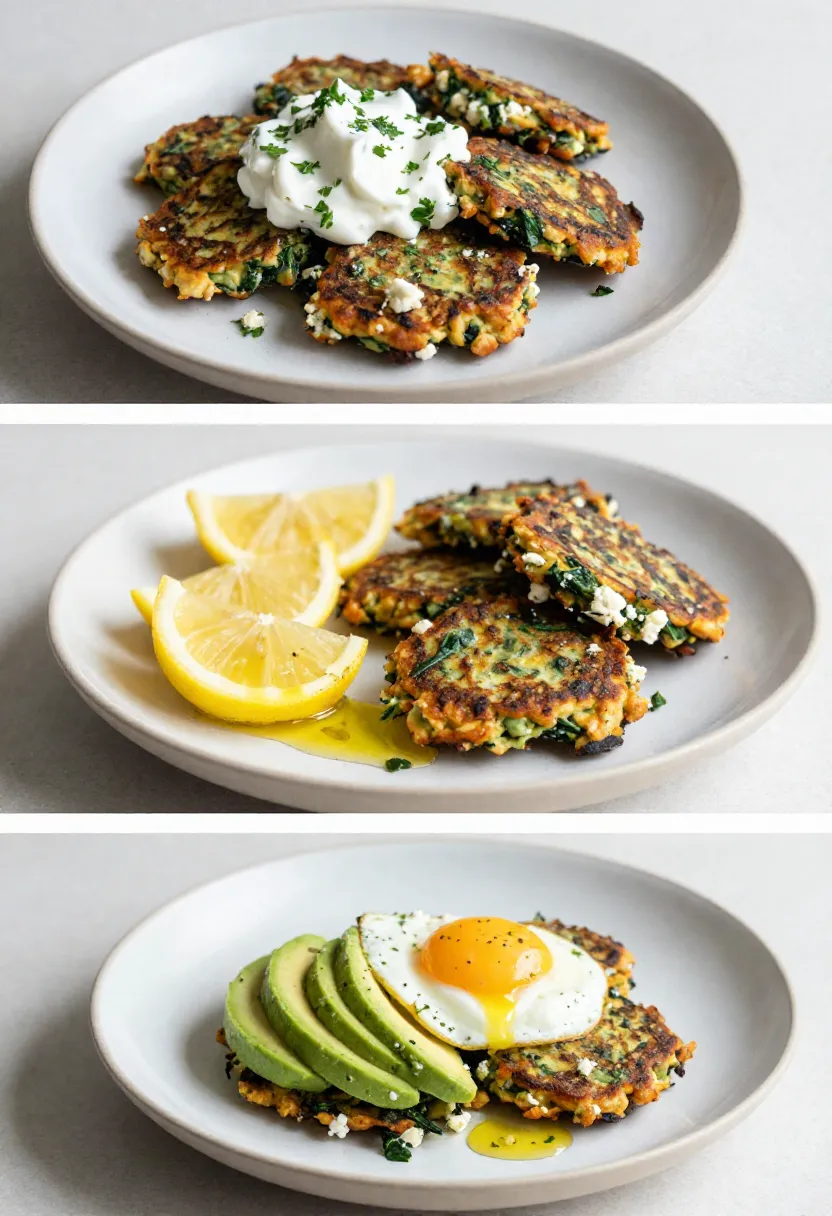
And if you’re a bit hungrier than expected (which happens more often than you’d think), you can easily turn these fritters into a more filling meal without much effort at all. Adding a soft egg on top or slicing some avocado next to them changes the whole vibe — suddenly it’s not just a snack, it’s a complete dish.
If you’re not sure where to start, here are a few easy additions that almost always work:
- yogurt or sour cream for a creamy contrast
- fresh herbs like dill or parsley for a bit of freshness 🌿
- lemon juice or even a light vinaigrette
- avocado slices for extra softness
- a soft-boiled or poached egg if you want something more filling
The main idea is simple: don’t overload the plate. These fritters already have a strong base. You’re just adding small things that support them, not trying to reinvent the dish.
What Can Go Wrong (And Why It’s Usually Easy to Fix)
Even though this recipe is pretty forgiving, there are a few small things that can throw off the result. Nothing dramatic, just those little details that make the difference between “yeah, that was okay” and “I’m definitely making this again.”
The good news is — once you notice them once, you usually don’t repeat them again.
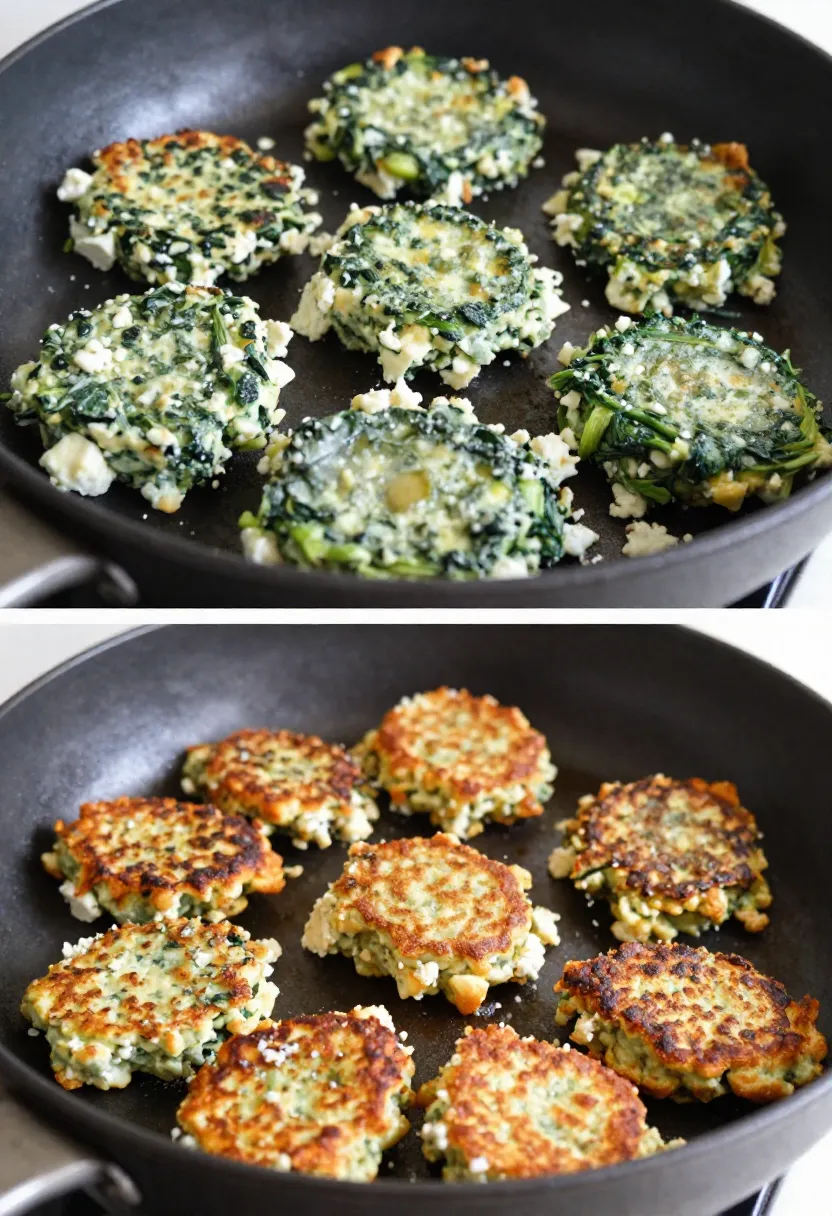
Here’s a quick breakdown of the most common issues and what to do about them:
| Issue | Result | Simple Fix |
|---|---|---|
| Too much moisture | Soft, falling-apart fritters | Drain spinach thoroughly |
| Overmixing the batter | Dense texture | Mix gently and briefly |
| High cooking temperature | Burnt outside, raw inside | Stick to medium heat |
| Too much oil | Greasy surface | Use minimal oil |
| Lack of seasoning | Flat flavor | Season before cooking |
A lot of this comes down to balance. Not too much heat, not too much mixing, not too much liquid.
One thing people often underestimate is just how important the spinach step is. It sounds minor, but if you skip properly draining it, everything else becomes harder. The batter gets loose, the fritters don’t hold shape, and suddenly the whole process feels messier than it should.
Another common thing — trying to rush the cooking. It’s tempting to turn the heat up to save time, but it almost always backfires. You end up with fritters that look ready on the outside but are still soft inside. Medium heat might feel slower, but it gives you a much better result.
And honestly, even if something goes slightly wrong… they’re still usually pretty good. That’s part of why this recipe works so well in real life.
Making It Part of Your Routine (Without Overthinking It)
One of the biggest advantages of spinach and feta fritters is how easily they fit into everyday cooking. They’re not one of those dishes you make once for a special occasion and then forget about. They’re more like something you return to when you don’t feel like figuring out what to cook.
They also store surprisingly well, which makes them even more practical. If you have leftovers (which is not always the case 😄), you can keep them in the fridge for a few days without any issues. Just make sure they’re in an airtight container so they don’t dry out.
When it comes to reheating, there’s a bit of a difference depending on how you do it. The microwave works, but it softens the texture quite a bit. If you have a few extra minutes, reheating them in a pan or oven brings back that slight crispness, which makes a noticeable difference.

Freezing is also an option, especially if you like preparing food in advance. It’s not something everyone does, but it can be useful. Just separate the fritters with baking paper so they don’t stick together — otherwise you’ll end up with one big frozen block, which is… not ideal.
Over time, something interesting happens with this recipe. You stop following it exactly. You adjust things without thinking — a bit more feta, less flour, maybe some extra herbs one day. It becomes less of a “recipe” and more of a habit.
And that’s probably the best way to describe it in the end.
Not every dish needs to be impressive or memorable in a big way. Some recipes earn their place quietly, just by being reliable. By working when you need them to work.
Spinach and feta fritters are exactly that kind of dish.
They don’t demand attention. They don’t require perfection. But they show up every time — warm, simple, and exactly what you needed.