
Some desserts try very hard to impress right away — bright colors, glossy finishes, layers stacked on top of each other, maybe even a bit of gold leaf if they’re feeling bold. They’re designed to catch your eye instantly. And to be fair, they often do. You notice them, you take a picture, you expect something memorable.
But sometimes, after that first bite, the excitement fades quicker than expected. It turns out to be mostly sugar, or mostly texture, without much depth behind it.
Rugelach takes a completely different approach.
It doesn’t try to stand out. It doesn’t rely on appearance to do the work for it. In fact, it’s easy to overlook at first. Small, slightly uneven, usually without any dramatic decoration — it doesn’t scream for attention. And yet, the moment you actually taste it, you start to understand why it has lasted for generations.
There’s something about it that feels… grounded.
The flavor isn’t loud, but it’s layered in a way that slowly builds. You notice the butter first, then a bit of sweetness, then something warm — maybe cinnamon — and then a slight crunch from the filling. It’s not a one-note experience. It unfolds gradually, and that’s part of the charm.
These small crescent-shaped pastries also carry a kind of warmth that goes beyond taste. Even if you’ve never grown up with them, they feel familiar in a way that’s hard to explain. Maybe it’s the smell that fills the kitchen while they bake — that mix of butter, sugar, and spice that instantly makes the space feel more alive. Or maybe it’s the process itself, which is calm and a bit repetitive in a good way.
You roll the dough. You spread the filling. You shape each piece by hand. Nothing complicated, but it pulls you in.
And if we’re being honest, rugelach doesn’t try to be anything more than what it is:
- simple ingredients
- a bit of patience
- and a process that rewards attention rather than speed
That’s it. No tricks, no shortcuts pretending to be something else.
And somehow, that simplicity turns into something that feels genuinely special. Not in a dramatic, over-the-top way — more in the kind of way that stays with you after you’ve finished eating.
🧈 The Magic Hidden in the Dough
If you spend enough time around people who bake rugelach regularly, you’ll notice that they almost always come back to the same point: the dough matters more than anything else.
It might not seem obvious at first. After all, the filling is what you see and taste immediately. But the dough is what holds everything together — literally and in terms of texture.
What makes rugelach dough interesting is that it doesn’t fit neatly into one category. It’s not laminated like puff pastry, so you don’t get those sharp, airy layers. But it’s also not dense or crumbly like a typical cookie dough. Instead, it sits somewhere in between, and that in-between quality is exactly what gives rugelach its identity.
When baked properly, the texture becomes:
- soft enough to bite through easily
- slightly flaky at the edges
- rich, but not heavy or greasy
There’s a balance there that’s easy to appreciate but surprisingly tricky to achieve if you don’t follow the basics.
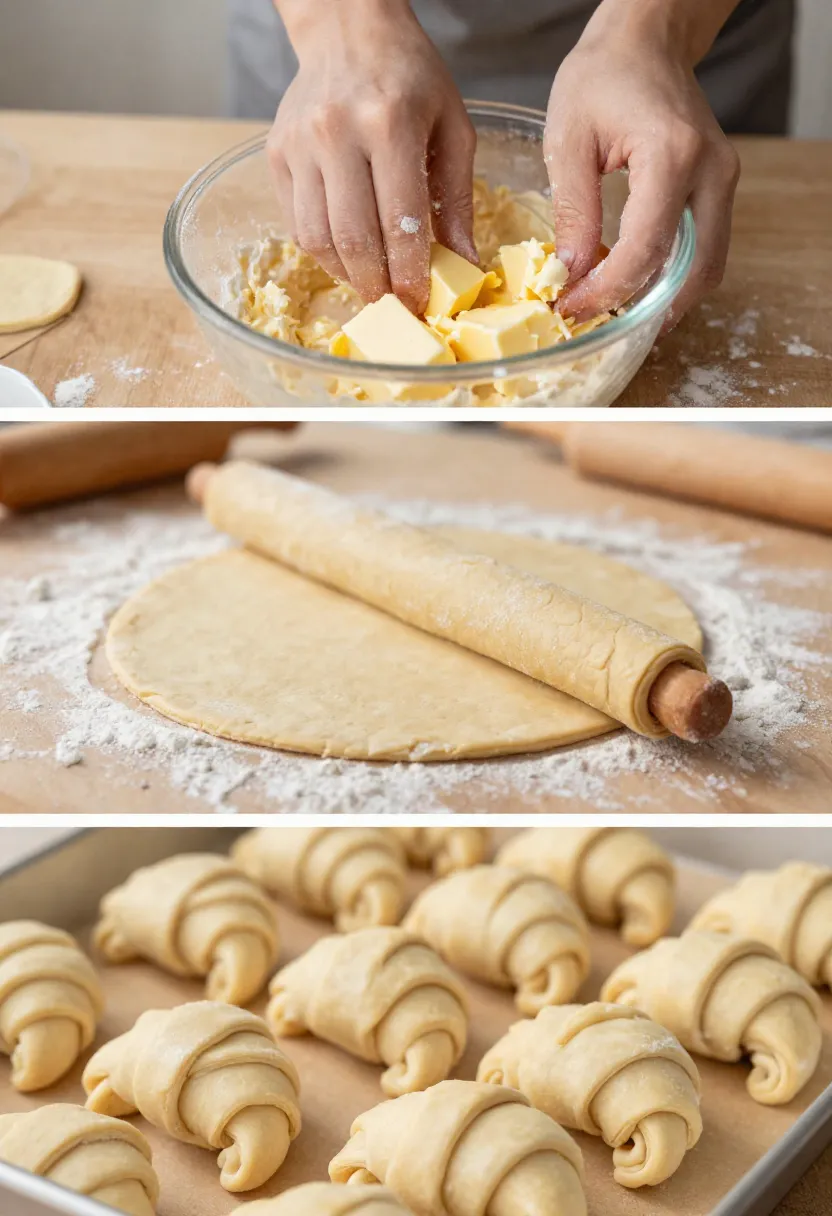
A big part of that balance comes from using both butter and cream cheese. Butter, of course, adds flavor and richness — that part is expected. But cream cheese is what changes the structure. It introduces a slight tang, which keeps the dough from tasting flat, and it also softens the texture in a way that makes the pastry feel almost tender.
And maybe just as important — it makes the dough easier to handle.
Anyone who has worked with stubborn dough knows how frustrating it can be. It sticks when it shouldn’t, tears when you stretch it, or shrinks back the moment you roll it out. Rugelach dough, when made correctly, doesn’t really do that. It’s surprisingly cooperative. You roll it, and it stays. You shape it, and it holds.
That said, it’s not completely effortless.
There’s one part of the process that really shouldn’t be rushed, even if you’re tempted to: the resting time. Chilling the dough in the fridge isn’t just a technical step — it’s what allows everything to come together properly. The butter firms up again, the dough becomes less sticky, and the texture improves once it hits the oven.
Skipping this step won’t ruin the recipe entirely, but the difference is noticeable. The dough becomes harder to work with, and the final result loses some of that delicate quality that makes rugelach stand out in the first place.
So yes, the dough is forgiving in many ways. But it still asks for a bit of patience. And in baking, that’s usually a fair trade.
🍯 Layers of Flavor in Every Bite
One of the reasons rugelach feels so satisfying — even after just one or two pieces — is that it doesn’t rely on a single dominant flavor. Instead, it builds its character through a combination of smaller elements that support each other.
At first, you might notice the sweetness. But it’s rarely overwhelming. Then comes the texture — a bit of crunch from nuts, maybe a slight stickiness from honey or fruit. After that, the spices start to come through, usually something warm and familiar like cinnamon.
In many traditional versions, the filling brings together a few key components:
- sweetness from sugar or honey
- texture from finely chopped nuts
- warmth from spices like cinnamon or nutmeg
- and occasionally a hint of freshness from citrus juice or zest
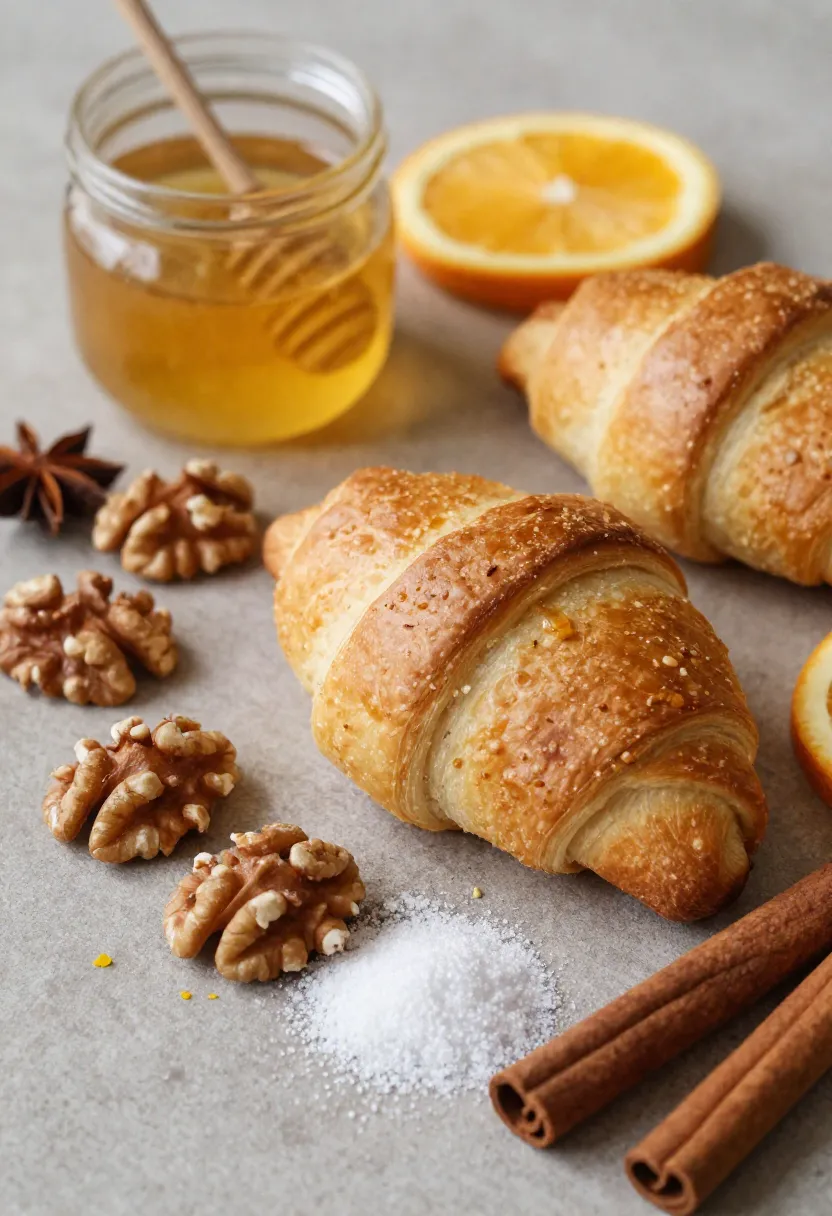
None of these ingredients are particularly unusual on their own. But together, they create something that feels balanced rather than predictable.
What’s interesting is how subtle the overall effect is. You’re not overwhelmed by sugar, and you’re not hit with one strong flavor. Instead, everything blends together in a way that feels natural. It’s the kind of flavor that doesn’t demand attention, but keeps you coming back for another bite.
There’s also a more practical side to the filling that often gets overlooked.
Getting the texture right is just as important as getting the flavor right. If the filling is too wet, it tends to leak out during baking, which can make the pastries look messy and affect the final texture. On the other hand, if it’s too dry, the rugelach can feel a bit dull and less enjoyable to eat.
This is where small adjustments make a big difference. Some bakers add a bit of fine crumbs — like breadcrumbs or crushed cookies — to absorb excess moisture. It’s not something you really notice when eating, but it helps everything stay in place and creates that clean, defined spiral inside each pastry.
And it’s interesting how often it’s these small, almost invisible details that shape the final result. Not the big, obvious steps — but the quiet adjustments that you only start paying attention to after making the recipe more than once.
That’s part of what makes rugelach so engaging. It’s simple enough to start, but the more you make it, the more you notice these little things. And each time, it gets just a bit better.
🍴 Rugelach Recipe: Classic Walnut Filling
There’s something very reassuring about a classic recipe — especially one that doesn’t rely on trends or complicated techniques to work. This version of rugelach leans into that idea. It’s built around a soft, slightly tangy dough and a filling that’s warm, nutty, and just sweet enough to feel indulgent without going overboard.
The walnuts bring a gentle crunch, the honey adds depth rather than just sweetness, and the hint of citrus quietly lifts everything so it doesn’t feel heavy. And when it all bakes together, the filling settles into the dough in a way that feels almost seamless.
It’s the kind of pastry that works in almost any setting. You can serve it with coffee in the morning, bring it out as a light dessert, or just grab one straight from the tray while it’s still slightly warm (which, honestly, happens more often than people admit).
What makes this recipe especially nice is that it doesn’t demand perfection. The shapes can be a little uneven, the filling might peek out slightly — and none of that really matters. In fact, that’s part of the charm.
🧾 Ingredients
For the dough:
- 1 cup (120 g) all-purpose flour
- 115 g cold unsalted butter, cut into small cubes
- 115 g cold cream cheese
- a pinch of salt
For the filling:
- ½ cup finely chopped walnuts
- 2–3 tablespoons sugar
- 1 tablespoon honey
- 1 tablespoon orange or lemon juice
- ¾ teaspoon cinnamon
- a pinch of nutmeg
- 2 tablespoons fine breadcrumbs
For finishing:
- 1 egg yolk
- 1 teaspoon water
- sugar for sprinkling
👩🍳 Instructions
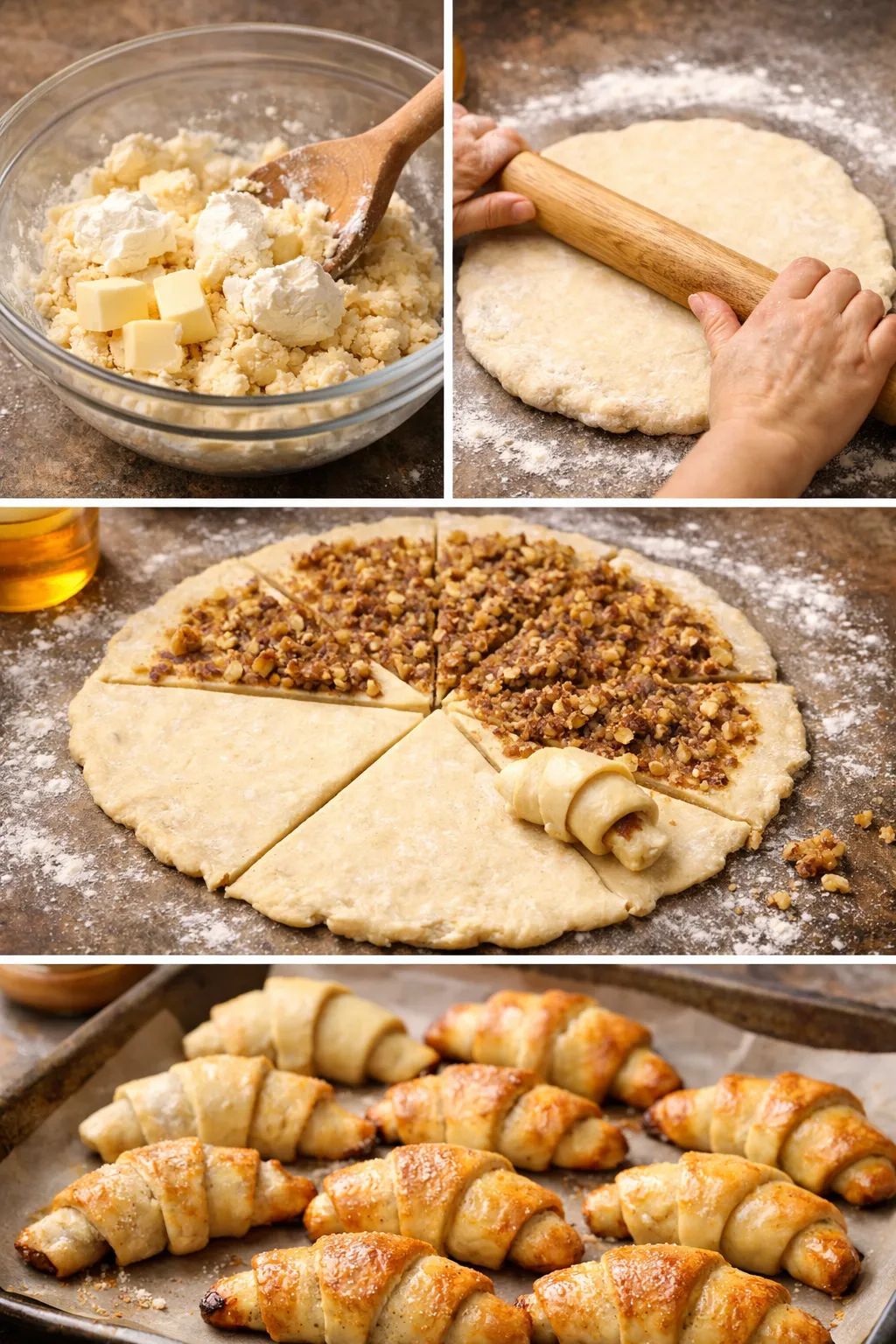
- In a bowl, combine the flour and salt. Add the cold butter and cream cheese, then mix everything together until a soft dough forms. It doesn’t need to look perfectly smooth — slightly uneven is completely fine here.
- Shape the dough into a flat disk, wrap it, and place it in the refrigerator for at least 2 hours. If you leave it longer, that’s even better. The dough becomes easier to handle and develops a better texture.
- While the dough is chilling, prepare the filling. Mix the chopped walnuts, sugar, honey, citrus juice, cinnamon, nutmeg, and breadcrumbs until you get a thick, slightly sticky mixture. It should hold together, but not feel wet.
- Take the chilled dough and roll it out on a lightly floured surface into a circle. Aim for an even thickness so everything bakes at the same rate.
- Spread the filling evenly over the surface, leaving a small border around the edges so it doesn’t spill out too much during baking.
- Cut the dough into wedges, like you would cut a pizza. Try to keep them roughly the same size, but don’t stress too much about it.
- Starting from the wide end, roll each wedge toward the tip to form a crescent shape. Place them on a baking tray lined with parchment paper, leaving a bit of space between each one.
- Mix the egg yolk with water and gently brush it over each pastry. This gives them that golden finish. Sprinkle a bit of sugar on top for a light crunch.
- Bake in a preheated oven at 175–180°C (350°F) for about 20–25 minutes. You’re looking for a deep golden color and a slightly crisp exterior.
- Let them cool for a few minutes before serving. They’re especially good while still a little warm, when the filling is soft and the dough is at its most tender.
✨ A Few Small Tips That Help More Than You’d Expect
- Keep your ingredients cold — especially the butter and cream cheese. It really affects the final texture.
- Don’t overfill the dough, even if it’s tempting. A thinner layer actually gives a better result.
- If the dough starts to feel too soft while working, just pop it back in the fridge for a bit. No need to struggle with it.
- Bake until properly golden, not pale. That deeper color brings out more flavor.
- And honestly — don’t worry about making them look perfect. Slightly uneven rugelach often looks (and feels) more authentic anyway.
☕ Serving Rugelach: Simple Moments That Feel Just Right
Rugelach doesn’t really belong to big, loud occasions. It’s not the kind of dessert that needs a centerpiece table or a long introduction before serving. In fact, it feels much more natural in quiet, everyday moments — the kind you almost don’t plan.
There’s something especially nice about having it in the morning. Not as a full breakfast, maybe, but alongside a cup of coffee when everything is still slow and a bit quiet. You take a sip, then a bite, and somehow that combination just works. The buttery dough, the slightly sweet filling, the warmth — it all fits into that early calm.
Afternoons are just as good. Maybe even better, depending on the mood. A cup of tea, a small plate of rugelach, and a short break that turns into a longer one without you really noticing. It’s not heavy, not overwhelming — just enough to feel satisfying.

When it comes to serving, there’s really no need to overthink it. Actually, the more you try to “dress it up,” the more you risk losing what makes it appealing in the first place. Rugelach looks best when it still feels homemade.
If you want a simple way to make the moment feel a bit more complete, here are a few easy ideas:
- serve them slightly warm rather than fully cooled
- pair with coffee, black tea, or even something like spiced chai
- use a simple plate instead of anything too decorative
- add a very light dusting of powdered sugar if you want a softer finish
And that’s really it. Nothing complicated — just small touches that make the experience feel a bit more intentional.
🧊 Storage, Make-Ahead Options, and a Few Practical Realities
One of the things people don’t always expect about rugelach is how flexible it is. It might look like something delicate, but in practice, it adapts quite well to real life — busy schedules, last-minute plans, or just not feeling like doing everything in one go.
The dough itself can be made ahead and kept in the fridge without any issues. In fact, it often works better that way. It firms up, becomes easier to handle, and gives you more control when rolling it out later.
If you want to go a step further, you can shape the rugelach completely and freeze them before baking. That way, you always have something ready to go. You just take them out, bake, and suddenly it feels like you planned everything perfectly — even if you didn’t.
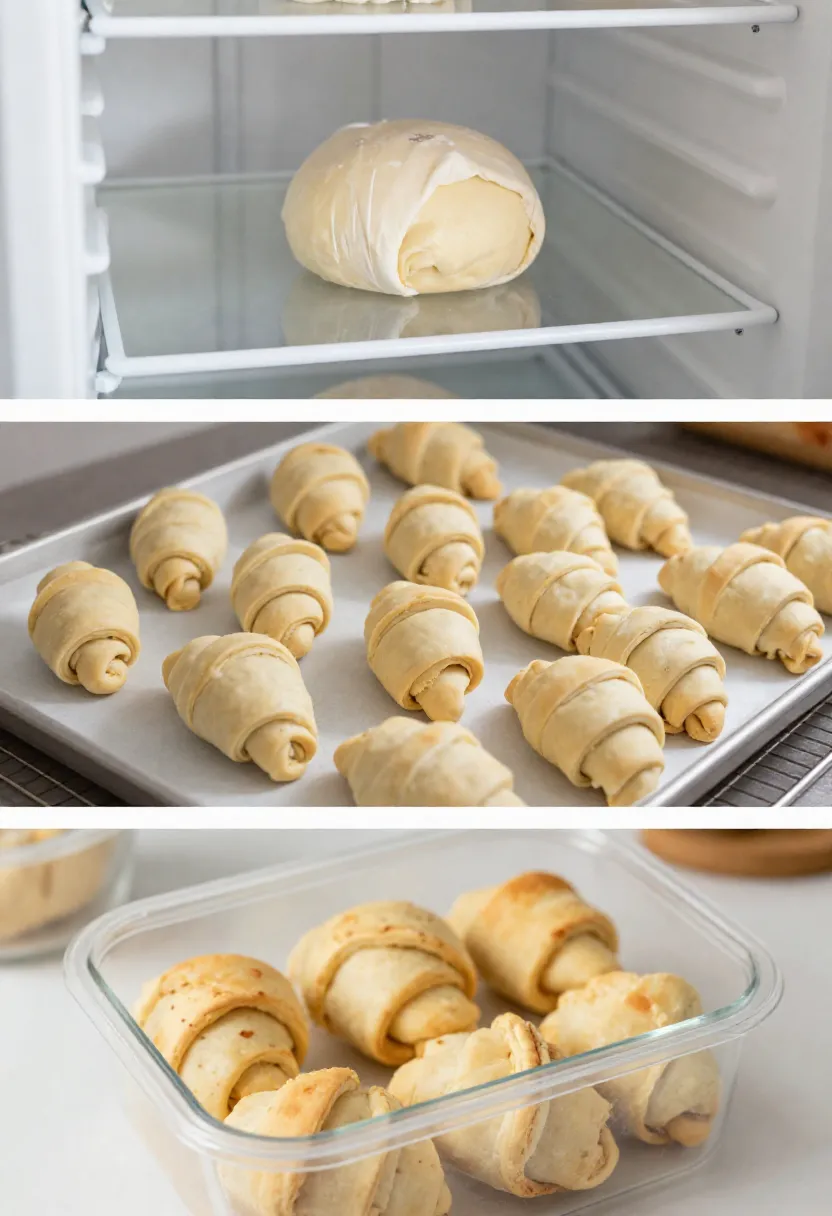
As for baked rugelach, they store surprisingly well. Just keep them in an airtight container, and they’ll stay good for several days. Though, realistically, they rarely last that long.
To make things easier in practice, here’s what usually works best:
- keep the dough in the fridge for up to a couple of days before using
- freeze shaped (unbaked) rugelach for longer storage
- reheat baked pastries in the oven for a few minutes to restore texture
- avoid storing them uncovered, as they dry out faster than expected
There’s also something comforting about having a recipe like this in your routine. It doesn’t demand everything at once. You can split it into stages, adjust it to your timing, and still end up with something that feels complete.
💛 The Small Details That Quietly Change Everything
It’s easy to think that baking is all about following the main steps correctly. And yes, those matter. But with something like rugelach, it’s often the smaller decisions that shape the final result.
Not in an obvious way — more in a subtle, cumulative way.
Things like temperature, for example. Keeping your ingredients cold might seem like a minor detail, but it has a noticeable effect on the texture. The dough becomes easier to work with, and the final pastry turns out more tender.
Or how evenly you roll the dough. It doesn’t have to be perfect, but large differences in thickness can affect how the rugelach bakes. Some pieces might brown faster, others stay softer — small inconsistencies that you only really notice once they’re out of the oven.
Filling is another one of those areas where restraint matters. It’s very tempting to add more, especially when it smells good and looks inviting. But too much filling often leads to leaks, uneven baking, and a slightly messy result. A thinner layer, spread evenly, usually works better.

If you had to narrow it down to a few key things that consistently make a difference, it would probably be these:
- keep the dough cold and don’t skip the resting time
- roll it out as evenly as you can, even if it’s not perfect
- use a moderate amount of filling rather than packing it in
- bake until properly golden, not pale
And then there’s timing.
Not just baking time, but the overall pace of the process. Rugelach isn’t something that responds well to being rushed. It doesn’t need complicated techniques, but it does benefit from a slower, more relaxed approach.
Letting the dough rest properly. Taking a moment to roll things evenly. Not trying to do everything as quickly as possible.
None of this is difficult. It just requires a bit of attention.
And maybe that’s part of what makes rugelach feel different from other desserts. It’s not about perfection or presentation. It’s about the process — and the small choices along the way that quietly shape the outcome.