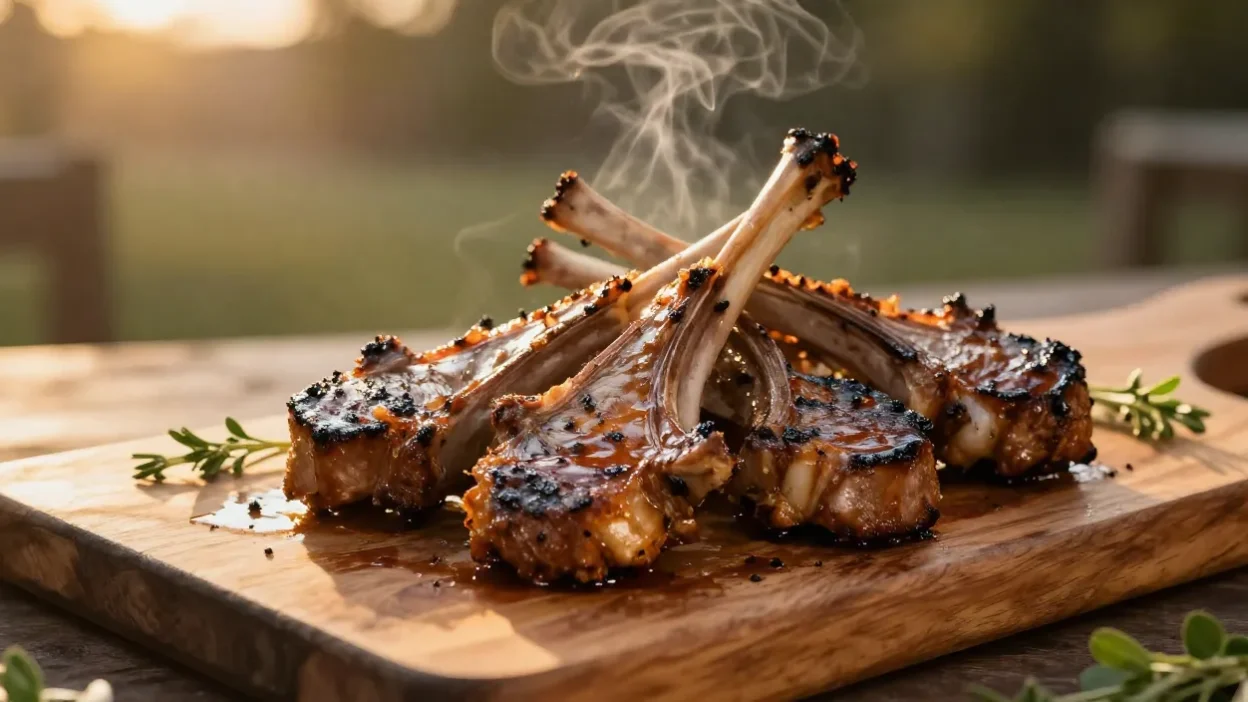
Some recipes begin with a list of ingredients. Others begin somewhere less structured — with a feeling, a smell, or even just a random thought like, “I want something warm and satisfying today.”
This one clearly belongs to the second type.
It doesn’t feel like a strict recipe you have to follow. It feels more like something you grow into while making it. At first, it might seem simple — just marinated lamb, nothing too complicated. But the longer you stay in the process, the more you start noticing small details that usually go unnoticed.
The smell of garlic as you chop it. The slightly sharp freshness of ginger. The way the marinade comes together — not instantly, but gradually, as everything blends into something deeper and more balanced.
And then there’s that moment when the meat finally hits the heat.
It’s not dramatic. There’s no big visual effect. Just a quiet, steady sizzle that immediately changes the atmosphere around you. It’s subtle, but it pulls your attention in without trying too hard 🔥
The aroma builds slowly. First you notice sweetness, then something savory, then something a bit brighter from the citrus and aromatics. It doesn’t hit all at once — it unfolds. And that’s probably why it feels so satisfying.
Lamb itself plays a big role in this experience. It’s not an “easy” meat in the sense that it doesn’t fade into the background. It has its own character, and sometimes that can feel a bit intimidating, especially if you’re not used to cooking it often.
It’s richer than chicken. Slightly more complex than beef. And if handled without much care, it can feel too strong or unbalanced.
But that’s exactly why it works so well in this kind of recipe.
When you give lamb a bit of attention — not even anything complicated, just time and a good marinade — it changes. It becomes softer in flavor, more rounded, less sharp. The richness stays, but it feels intentional rather than overwhelming.
This recipe leans into that idea. It doesn’t try to hide the nature of lamb, but it does guide it in the right direction.
There are no unnecessary techniques here. No steps that exist just to make things look impressive. At the same time, nothing important is skipped either. It’s more about doing a few simple things properly, without rushing them 🌿
And somewhere along the way, usually without you noticing exactly when, the whole process stops feeling like a task you need to finish.
It becomes something you’re actually present in.
Not in a deep or dramatic way — just in a quiet, focused way. You pay attention. You slow down a little. You stop multitasking for a few minutes.
And honestly, that’s part of what makes the final result taste better.
🍯 The Quiet Power of a Good Marinade
Marinades are one of those things people tend to underestimate, especially when they’re cooking at home.
It’s easy to think of them as optional. Something you do if you have extra time, or if you want to make the dish feel a bit more “special.” Otherwise, you just season the meat quickly and move on.
With lamb, that approach usually doesn’t work as well.
The reason is simple — lamb has a strong natural flavor. Not bad, just… noticeable. And if you don’t balance it properly, it can feel a bit too heavy or too intense.
That’s where the marinade becomes essential.
A well-made marinade doesn’t just sit on the surface of the meat. It slowly works its way in, affecting both taste and texture. Over time, it softens the structure slightly and distributes flavor more evenly throughout.
You don’t really see it happening, but you definitely notice the result.
In this case, the marinade is built around balance rather than intensity. It doesn’t rely on one strong flavor to carry the dish. Instead, it combines several elements that support each other in a way that feels natural.
There’s a mild sweetness that plays an important role during cooking. It helps create that slightly caramelized surface — the kind that gives you a bit of texture and depth in every bite.
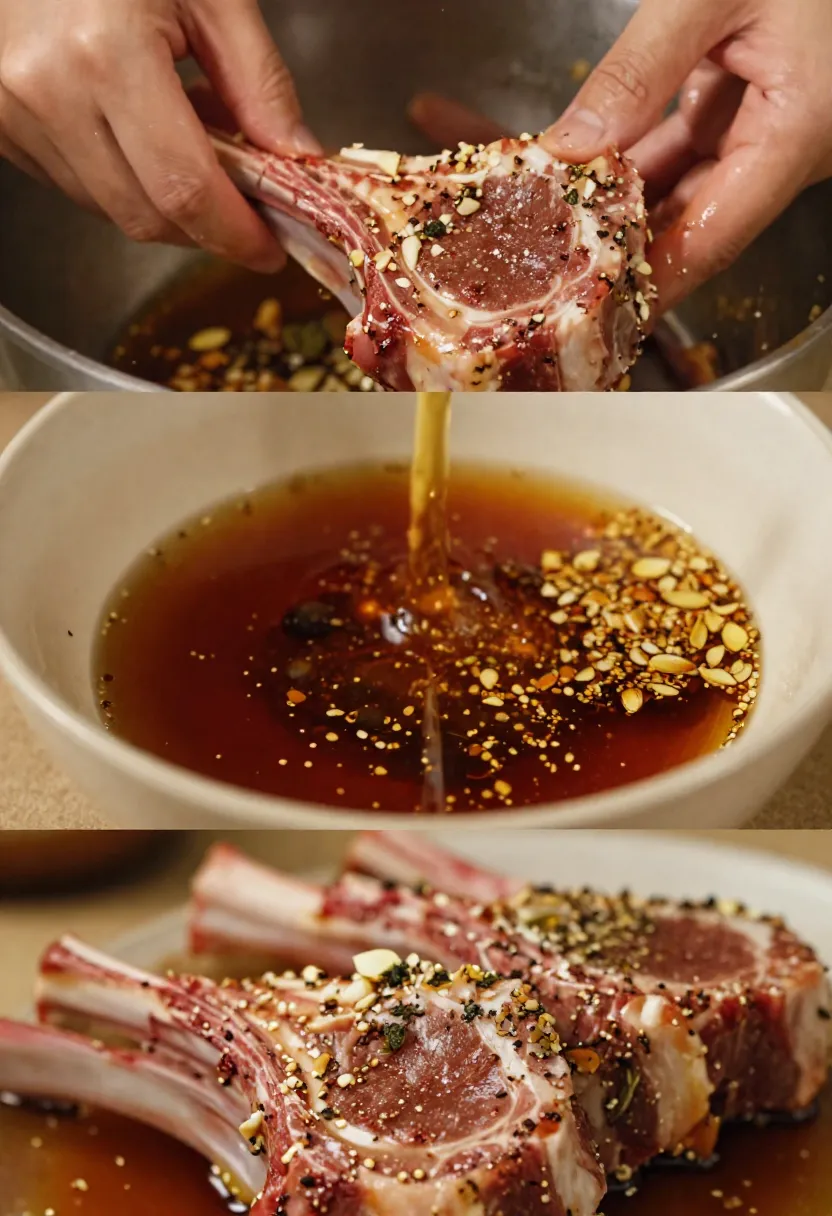
Then there’s saltiness, but not in an overwhelming way. It’s there to enhance the meat rather than dominate it. When it’s done right, you don’t think “this is salty,” you just notice that everything tastes more complete.
Umami adds another layer — a deeper, more savory quality that’s hard to describe but easy to recognize. It’s what makes the dish feel satisfying, even in small portions.
And then come the aromatics.
Garlic and ginger are familiar, but they behave differently here than they do in quick cooking. Because of the marinating time, their flavor becomes less sharp and more integrated. They don’t stand out individually — they become part of the overall profile.
Lemongrass is slightly different. It brings a light, almost refreshing note that keeps the marinade from feeling too heavy. Without it, the dish could lean too far into richness. With it, everything feels more balanced.
If you step back and look at it, the marinade works because each component plays a specific role:
- sweetness helps with caramelization and balance
- salt enhances and ties flavors together
- umami adds depth and satisfaction
- aromatics create complexity without heaviness
None of these elements dominate. And that’s exactly the point.
When you taste the final result, you’re not picking out individual ingredients. You’re experiencing a combination that feels cohesive, almost effortless — even though there’s actually quite a bit happening underneath.
🔥 Cooking as a Moment, Not a Task
By the time the lamb has finished marinating, most of the real work is already done. What’s left is cooking — and surprisingly, this is the quickest part of the whole process.
But quick doesn’t mean unimportant.
This stage requires a different kind of attention. Not technical skill, not precision — just awareness.
It’s very easy to treat cooking as something you need to get through as fast as possible. Especially if you’re hungry or distracted. But with this dish, rushing tends to take away from the final result.
When the lamb hits the heat, things begin to change almost immediately.
The sugars in the marinade start to caramelize, creating a deeper color on the surface. The outside begins to firm up slightly, while the inside stays tender. The edges pick up a bit of crispness, which adds texture.
At the same time, the aroma becomes noticeably richer. It’s no longer just the smell of raw marinade — it’s something more developed, more complex.
This is where timing and restraint come into play.
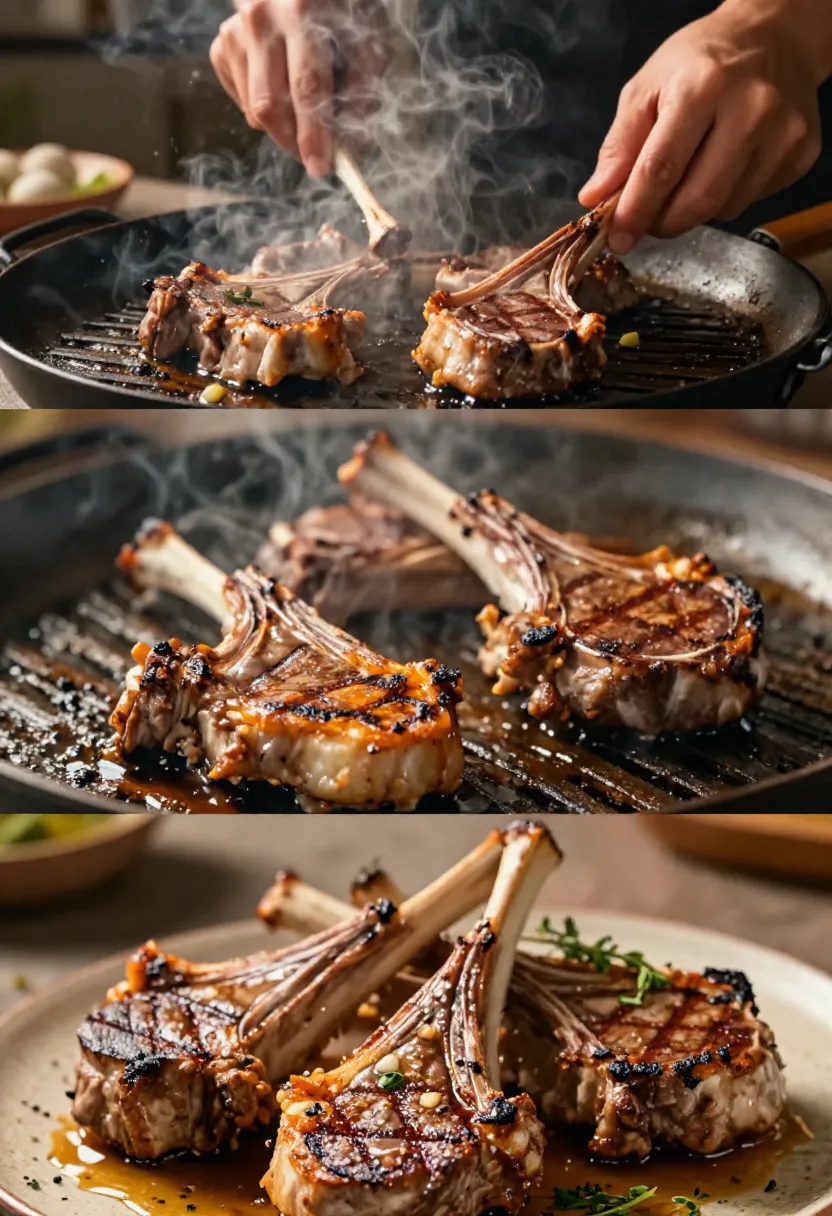
If you move the meat too often, it won’t develop that proper crust. If you flip it too early, you lose some of that depth. But if you leave it undisturbed just a little longer, the difference becomes obvious.
There’s a rhythm to it that’s easy to follow once you notice it.
You place the meat down. You wait. You flip it once. Then you let it finish.
That’s it.
It sounds simple, and it is — but only if you resist the urge to interfere too much.
A few small details tend to make the biggest difference here:
- keeping the heat high enough to allow proper browning
- giving each piece enough space instead of overcrowding
- letting the meat rest briefly before serving
These aren’t complicated steps, but they’re often overlooked. And when they are, the final dish loses some of its potential.
At a certain point, you stop thinking in terms of exact timing and start relying more on observation.
The color looks right. The smell changes. The texture feels correct when you press it lightly.
That’s usually the moment you’re aiming for.
And when you get there, it becomes clear why the earlier steps mattered. The marinade, the time, the attention — they all come together in a way that feels natural rather than forced.
It’s not about perfection.
It’s about getting it right in a way that feels intuitive.
🍽️ Recipe: Grilled Marinated Lamb Chops
This dish is a good example of how simple ingredients can turn into something surprisingly layered when you give them a bit of time. At first glance, it doesn’t look complicated — just lamb, a marinade, and heat. But once everything comes together, the result feels much deeper than expected.
What makes these lamb chops stand out is the balance. Nothing feels excessive or overpowering. The sweetness helps create a slightly caramelized crust, the savory elements bring depth, and the aromatics keep everything from becoming too heavy. It’s the kind of dish where you don’t immediately think about individual ingredients — you just notice that it tastes complete.
Another thing that’s worth mentioning: this recipe doesn’t rely on perfect technique. It’s quite forgiving, actually. As long as you give the meat enough time to marinate and avoid rushing the cooking process, you’ll end up with something juicy, flavorful, and just a little bit addictive.
It works just as well for a casual dinner as it does for something a bit more special. No complicated plating needed — the flavor does most of the work.
🛒 Ingredients
For the lamb:
- 8–12 lamb cutlets (rib chops preferred)
For the marinade:
- 1 tablespoon salt
- 2 tablespoons sugar
- 1 tablespoon oyster sauce
- 1 tablespoon seasoning sauce (such as Maggi)
- 1 tablespoon vegetable stock powder
- 1 tablespoon cooking wine
- 1 tablespoon honey
- 1 tablespoon dark soy sauce
- 1 tablespoon sesame oil
- 1 tablespoon neutral vegetable oil
- 1 stalk lemongrass, finely chopped
- A small piece of ginger, grated
- 2 cloves garlic, minced
- Juice of half a lemon
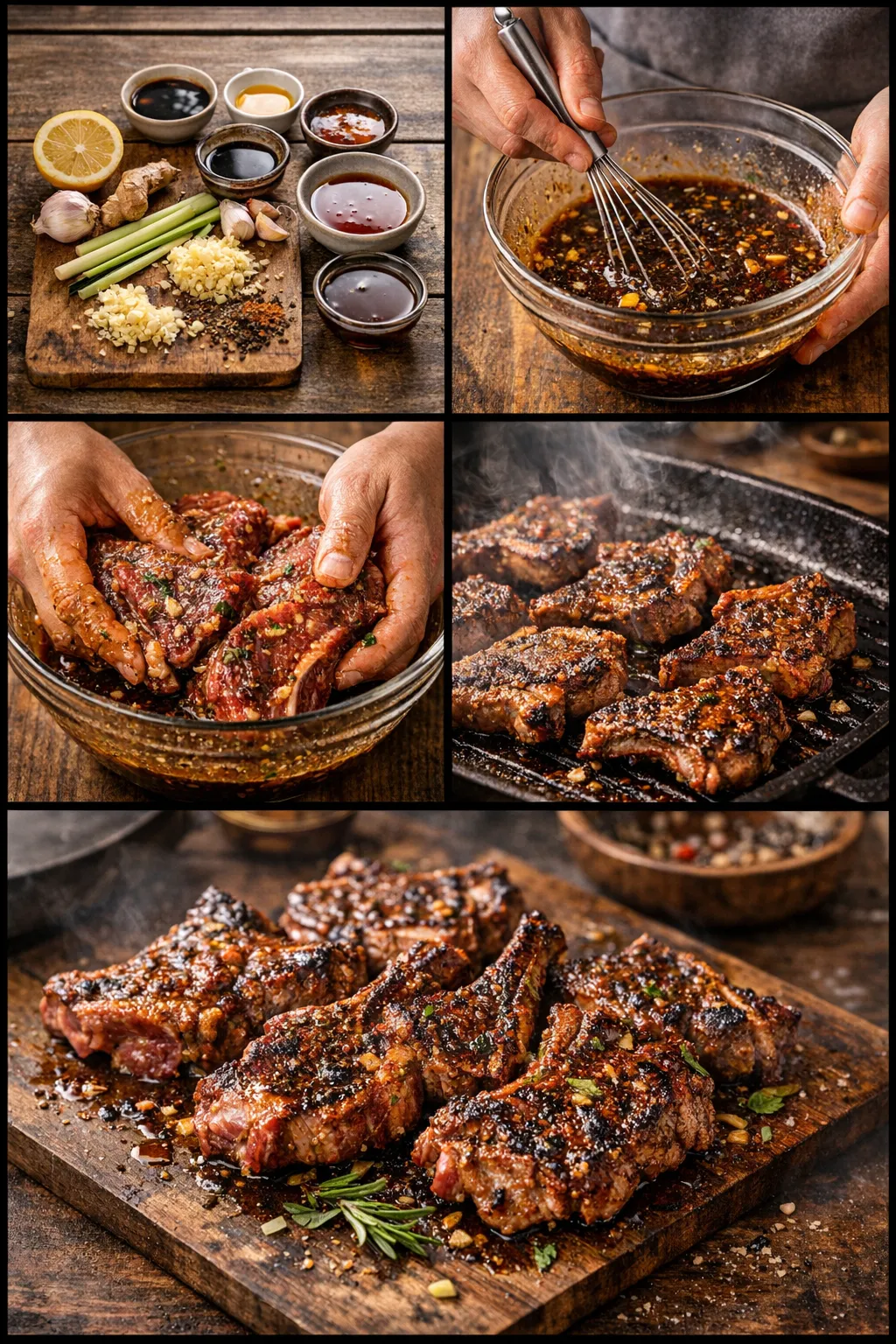
👨🍳 Instructions
- In a large bowl, combine all the marinade ingredients. Mix slowly at first, then more thoroughly, until everything blends into a smooth, slightly thick mixture. It should look glossy and smell quite strong — that’s a good sign.
- Add the lamb cutlets into the bowl. Using your hands, coat each piece carefully, making sure the marinade gets into all the edges and sides. Take an extra minute here — it really does make a difference.
- Cover the bowl and place it in the refrigerator. Let the lamb marinate for at least 4 hours. If you have more time, leave it overnight — the flavor will be noticeably deeper and more balanced.
- About 1 hour before cooking, take the lamb out of the fridge. Letting it come closer to room temperature helps it cook more evenly and prevents the outside from overcooking too quickly.
- Preheat your grill, barbecue, or a heavy pan over medium-high to high heat. The surface should be properly hot before the meat goes on — this helps create that nice caramelized crust.
- Place the lamb cutlets onto the hot surface. You should hear a gentle but clear sizzle. Let them cook undisturbed for about 2–3 minutes, depending on thickness.
- Turn the chops once and cook the other side for another 2–3 minutes. Try not to flip them too often — giving them time on each side helps build better texture and flavor.
- Remove the lamb from the heat and let it rest for a few minutes before serving. This step is easy to skip, but it helps keep the meat juicy.
✨ Quick Tips & Small Cooking Hacks
- Don’t rush the marinating time — it’s where most of the flavor develops
- If the pan feels crowded, cook in batches instead of stacking everything together
- A slightly charred edge is a good thing — it adds flavor, not bitterness
- Letting the meat rest for even 3–5 minutes makes a noticeable difference
- If unsure about doneness, it’s better to slightly undercook than overcook — lamb can become tough if left too long
🌶️ It’s All About Balance, Not Complexity
At first glance, it’s easy to assume that a dish like this works because of the number of ingredients or some hidden technique. But if you spend a bit of time with it, you realize that’s not really the case.
It’s much simpler than that. And at the same time — not simple at all.
What actually makes this dish stand out is balance. Not the kind you measure exactly, but the kind you feel when everything just… clicks.
Each element plays a role, even if it’s a small one. The sweetness, for example, isn’t there to make the dish taste sweet. In fact, if you notice it too much, something probably went wrong. Its real job is quieter — helping the surface caramelize, giving you that slightly sticky, golden edge when the meat cooks.
Salt works in a similar way. It’s present, but not obvious. It doesn’t try to stand out, it just makes everything else taste more like itself, if that makes sense.
Then you’ve got the deeper, savory notes — the ones that are harder to describe. They don’t hit immediately, but they stay with you. And the aromatics? They sit somewhere in the background, keeping everything from feeling too heavy or one-dimensional.
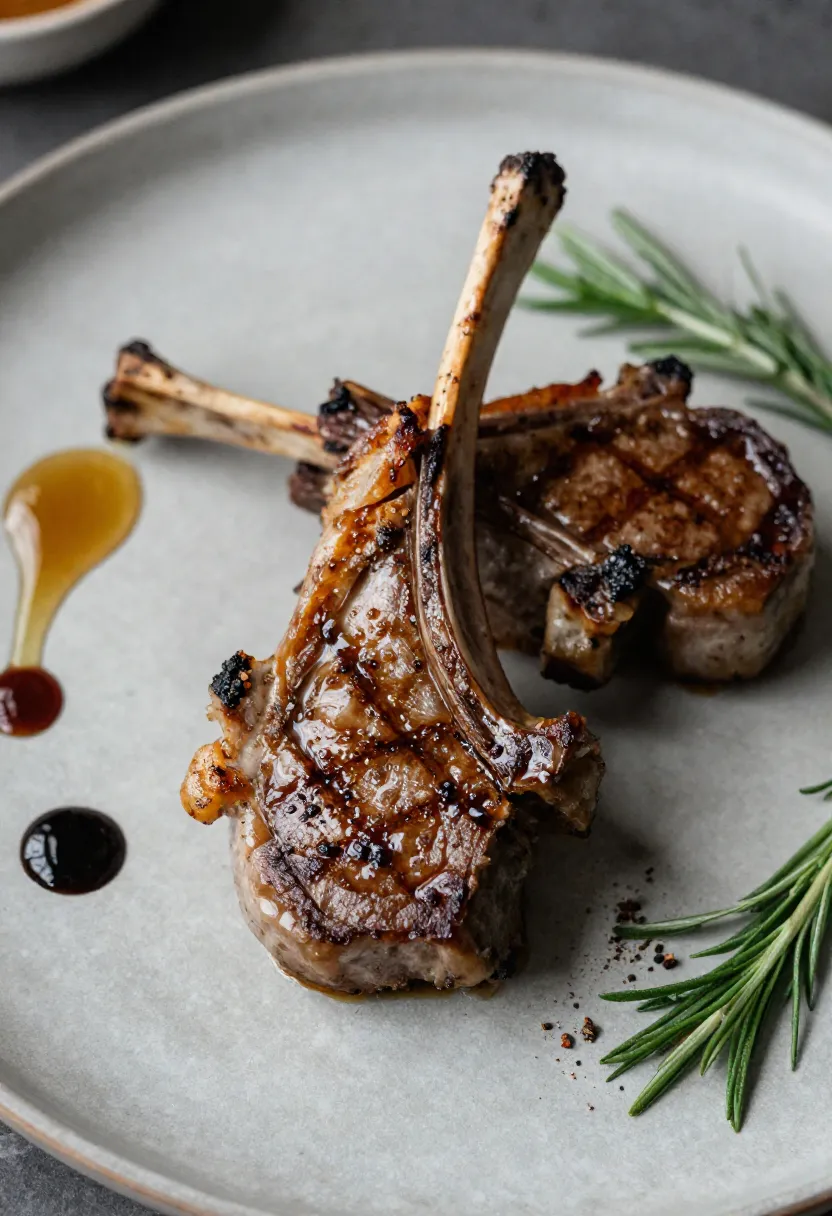
If you step back and look at it, the whole thing works because nothing is trying too hard.
- sweetness builds the surface and rounds the flavor
- salt enhances without taking over
- umami adds depth that you don’t need to think about
- aromatics keep the whole dish from feeling too dense
And when all of that comes together, you get that moment — usually after the first or second bite — where you pause for a second without really planning to.
Not in a dramatic way. Just a small pause, like, “Okay… this is actually really good.”
That’s usually how you know the balance is right.
And the interesting part is, once you start noticing this kind of balance, you begin to see it in other dishes too. You start adjusting things instinctively, without overthinking.
🥗 The Beauty of Keeping It Simple
There’s a point where it becomes tempting to add more to a dish like this.
Maybe a sauce. Maybe extra sides. Something to make it feel more “complete.” It’s a pretty natural reaction, especially when the main element tastes this good.
But honestly, this is one of those cases where adding too much can actually take something away.
These lamb chops don’t really need much around them. They already carry enough flavor on their own. If anything, they benefit from contrast rather than complexity.
A simple bowl of rice does the job perfectly. It doesn’t compete, it just balances things out. The juices from the meat soak into it, and suddenly something very basic starts tasting a lot better than expected.
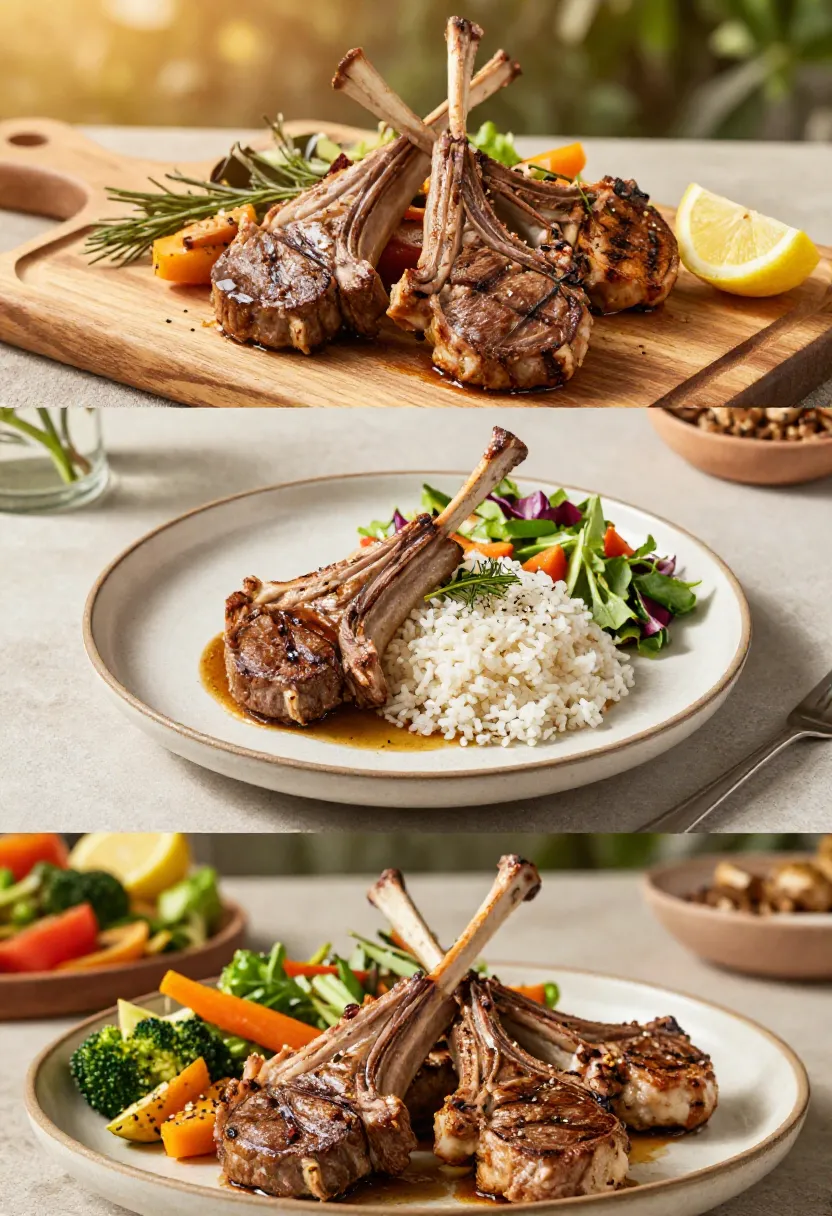
Fresh vegetables work in a similar way. Nothing complicated — just something crisp, clean, maybe even a little cold. It cuts through the richness and resets your palate between bites.
You could build a whole table around this dish, of course. But you don’t have to.
In most cases, something like this is more than enough:
- a neutral base like rice or plain noodles
- a light, fresh side (cucumber, herbs, simple salad)
- maybe a squeeze of extra citrus right before serving
That’s it.
The simplicity here isn’t about doing less out of convenience. It’s about knowing when something doesn’t need to be improved.
Sometimes the best meals are the ones that feel effortless — even if a bit of thought went into them behind the scenes.
❤️ A Dish You’ll Come Back To
Not every recipe becomes something you return to. Some dishes are interesting for a moment — you try them once, maybe twice, and then they quietly disappear from your routine. There’s nothing wrong with them, they just don’t stick.
This one feels different, and it’s not always obvious why at first.
Part of it is how approachable it is. You don’t need special skills or complicated techniques to make it work. At the same time, it doesn’t feel boring or basic. The flavors are bold enough to be satisfying, but still familiar enough that you don’t get tired of them.

Another reason is flexibility. This dish fits into real life without much effort. You can cook it on a regular evening when you want something better than your usual quick meal, but don’t feel like spending hours in the kitchen. It also works well on weekends, when you have more time and can actually enjoy the process a bit. And if you’re cooking for other people, it holds up there too — it looks good, smells great, and usually gives the impression that you put in more effort than you actually did.
Over time, the process becomes more natural. You stop following the recipe step by step and start relying on memory instead. You remember how the marinade should look and smell, how long the meat needs to cook, and when it’s ready without checking a timer every minute.
It becomes less about instructions and more about familiarity.
That’s usually the point where a recipe turns into something you genuinely keep. Not because you decided it should be part of your routine, but because it slowly became one without you really noticing.