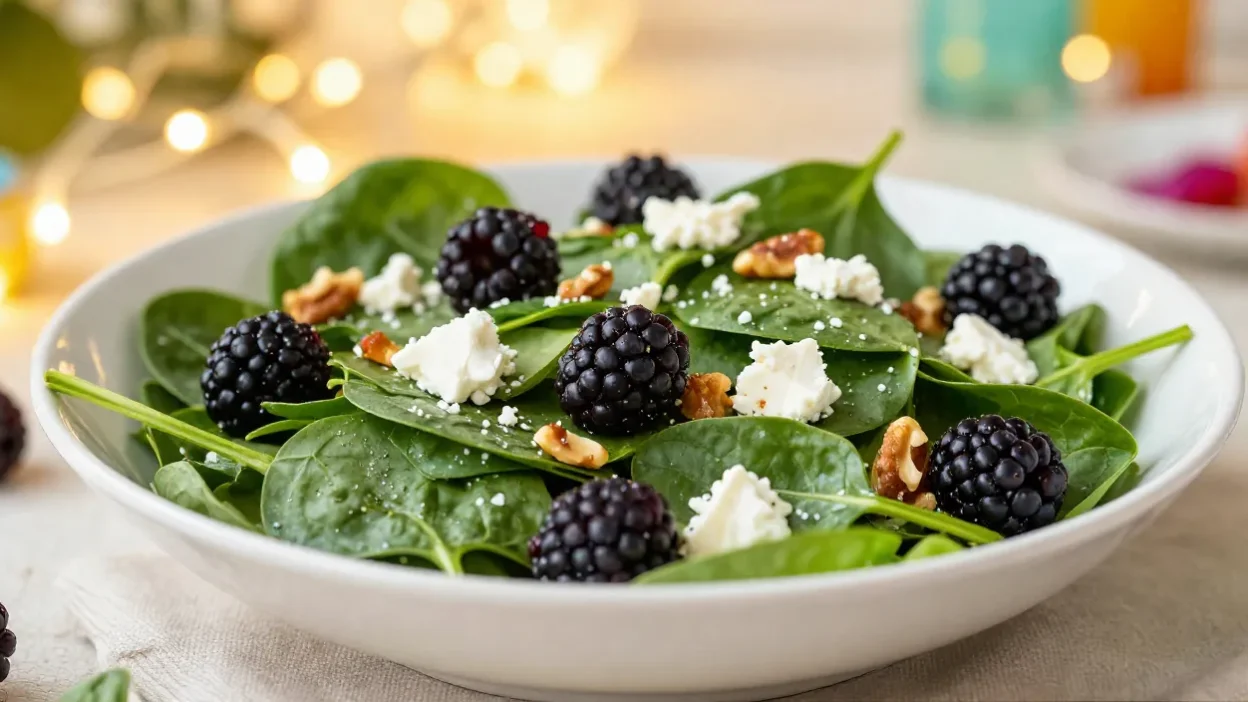
There’s a certain kind of meal that doesn’t try too hard, and somehow ends up being exactly what you needed 🍓
You don’t plan it in advance or build your day around it. It just comes together — maybe because you had a few ingredients that needed to be used, or maybe because you didn’t feel like cooking anything complicated. And then, somewhere between the first and second bite, you notice something. Not in a dramatic way, just a quiet thought that catches you a little off guard: this is actually really good.
This salad gives exactly that kind of feeling. It’s not built around anything complicated or overly precise. There’s no pressure to follow strict steps or get every detail perfect, which is honestly part of the appeal. It works because of simple things done well — fresh textures, natural sweetness, and a balance that feels intuitive rather than carefully engineered.
What makes it even better is how easily it fits into different situations. On a regular weekday, it feels like a reset — something light, fresh, and easy to put together when you don’t want to think too much about food. It doesn’t slow you down or make you feel heavy afterward, which is exactly what you want when you’re in the middle of a busy day.
But if you serve the same salad in a slightly different setting, maybe alongside a glass of wine 🍷 or as part of a dinner table with a few extra dishes, it suddenly feels more thoughtful. Not fancy in an over-the-top way, but quietly put together. The kind of dish that looks like you made an effort, even if it only took you a few minutes.
A big part of why it works comes down to contrast. Not in a technical or “chef explanation” kind of way — just in a very natural, almost instinctive way. You get a mix of soft, juicy, creamy, and slightly sharp elements in each bite, and that keeps things from feeling flat or repetitive. It’s the kind of balance you don’t always notice right away, but you feel it.
Nothing dominates, but nothing disappears either. Every ingredient has its moment, even if it’s a small one. And that’s usually what makes a simple dish feel complete rather than forgettable.
🍇 When Simple Ingredients Actually Make Sense Together
It’s surprisingly easy to overcomplicate things in the kitchen. You start with a simple idea, and then it slowly turns into something bigger — more ingredients, more flavors, more “just one extra thing” additions. Sometimes that works, but more often it just makes everything feel a bit scattered.
This salad goes in the opposite direction. It keeps things simple, but in a way that feels intentional rather than minimal or lacking.
Each ingredient has a clear role, and you can actually notice that when you eat it. Nothing feels random or unnecessary.
Spinach, for example, isn’t there to stand out. It’s mild, slightly earthy, and acts as a base that lets everything else come forward. It’s the kind of ingredient you might overlook on its own, but here it’s essential because it holds everything together without competing for attention.
Blackberries shift the entire flavor profile. They’re sweet, but not in a flat or overly sugary way. There’s a bit of tartness, and even a slight depth that makes them feel more complex than you’d expect in a salad. When you bite into one, it almost feels like it belongs in a sauce — and that’s exactly what makes the contrast interesting.
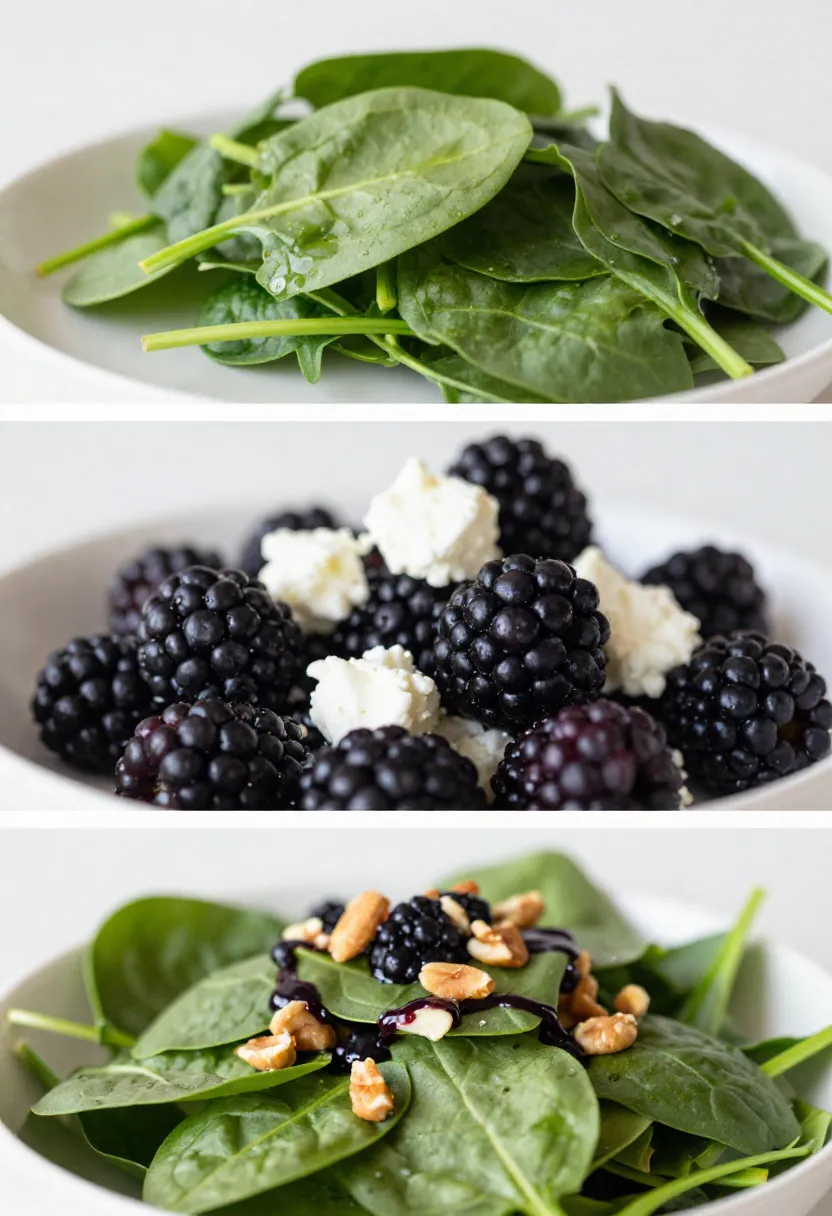
The cheese adds another layer, but in a softer way. It smooths everything out, balances the sharper notes, and makes the salad feel more rounded. Without it, the flavors would still work, but they’d feel a bit more separate.
And then there are the nuts, which might seem like a small detail but actually change the texture quite a bit. Without that crunch, the salad leans too soft and loses some of its structure. With it, every bite feels more complete and a little more satisfying.
If you step back and look at it, the ingredients are very straightforward:
- fresh greens
- ripe berries
- soft cheese
- toasted nuts
- a light vinaigrette
Nothing complicated, nothing unusual.
But the way they come together is what matters. The dressing, in particular, plays a quiet but important role. It doesn’t take over the salad or overpower the ingredients, but it connects everything. It brings in acidity, a bit of depth, and just enough sweetness to echo the berries.
Without it, everything would still be there — but it wouldn’t feel as cohesive.
And that’s really the difference. It’s not about adding more, it’s about making what you already have work better.
🥗 Why This Salad Actually Feels Satisfying
A lot of salads look good on paper but don’t really leave you satisfied. You finish them, and not long after, you’re already thinking about what else you could eat. This one doesn’t have that problem, and the reason is a combination of small details that add up.
Part of it comes down to texture. When a dish includes a mix of soft, crunchy, juicy, and creamy elements, it naturally feels more complete. You’re not just eating one thing over and over again, and that variety keeps it interesting without requiring anything complicated.
Here, every bite feels slightly different. Sometimes you get more crunch, sometimes more creaminess, sometimes a burst of sweetness from the berries. That variation makes the salad feel more like a full dish rather than just a side.
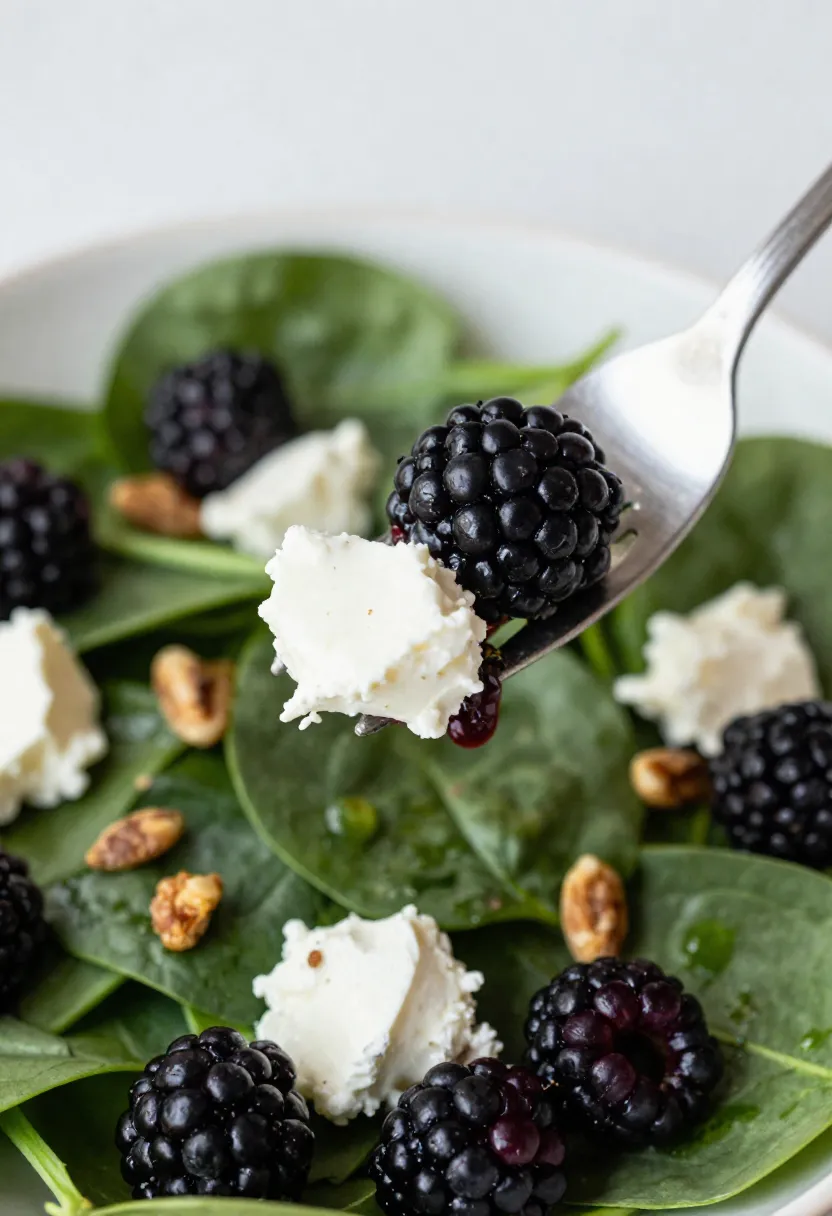
There’s also a balance in flavor that works in a very natural way. The sweetness from the berries adds a sense of comfort, something familiar and easy to enjoy. At the same time, the acidity in the dressing keeps everything fresh and prevents the salad from feeling too heavy or overly rich.
Another detail that often goes unnoticed is how you feel after eating it. It doesn’t leave you overly full or sluggish, but it also doesn’t feel like you’re missing something. You can eat a proper portion and still feel light, which isn’t always easy to achieve with dishes that include creamy elements.
A lot of that comes down to proportion and restraint:
- nothing is overloaded
- the dressing enhances rather than covers
- each ingredient keeps its own texture and identity
So instead of feeling like you’ve eaten “just a salad,” it feels like you’ve had something complete. Something that makes sense as a meal, not just an addition to one.
And that’s usually the reason people come back to it — not because it’s complicated or impressive, but because it quietly does everything right.
🍽️ Recipe: Spinach Berry Salad with Blackberry Balsamic Dressing
🍇 A Fresh, Balanced Dish with Natural Sweetness and Depth
This salad is one of those dishes that feels simple at first glance, but ends up being much more interesting once you actually try it.
It’s built around contrast, but in a very natural, easy way. You get the softness of the spinach, the juiciness of fresh berries, the creaminess of the cheese, and that subtle crunch from the nuts. Nothing feels forced or overly thought-out — it just comes together in a way that makes sense.
What really brings everything together is the blackberry balsamic dressing. It has that slightly deep, almost velvety flavor from the berries, balanced by the sharpness of the vinegar and the smoothness of olive oil. It’s not too sweet, not too acidic — just enough to make the salad feel complete without overpowering it.
Another thing that makes this dish stand out is how flexible it is. You can keep it light and minimal, or slightly adjust it depending on what you have in your kitchen. It works just as well as a quick everyday meal as it does as something you’d serve when you want the table to look a bit more put together.
🛒 Ingredients
For the salad:
- 6–8 cups fresh baby spinach 🥬
- 1 cup fresh blackberries 🍇
- 80–100 g goat cheese, crumbled 🧀
- ½ cup walnuts or pecans 🌰
For the dressing:
- ½ cup fresh blackberries (for juice)
- 3 tablespoons olive oil
- 2 tablespoons balsamic vinegar
- 1 teaspoon honey (optional) 🍯
- A pinch of dried thyme 🌿
- Salt and black pepper to taste
👩🍳 Instructions
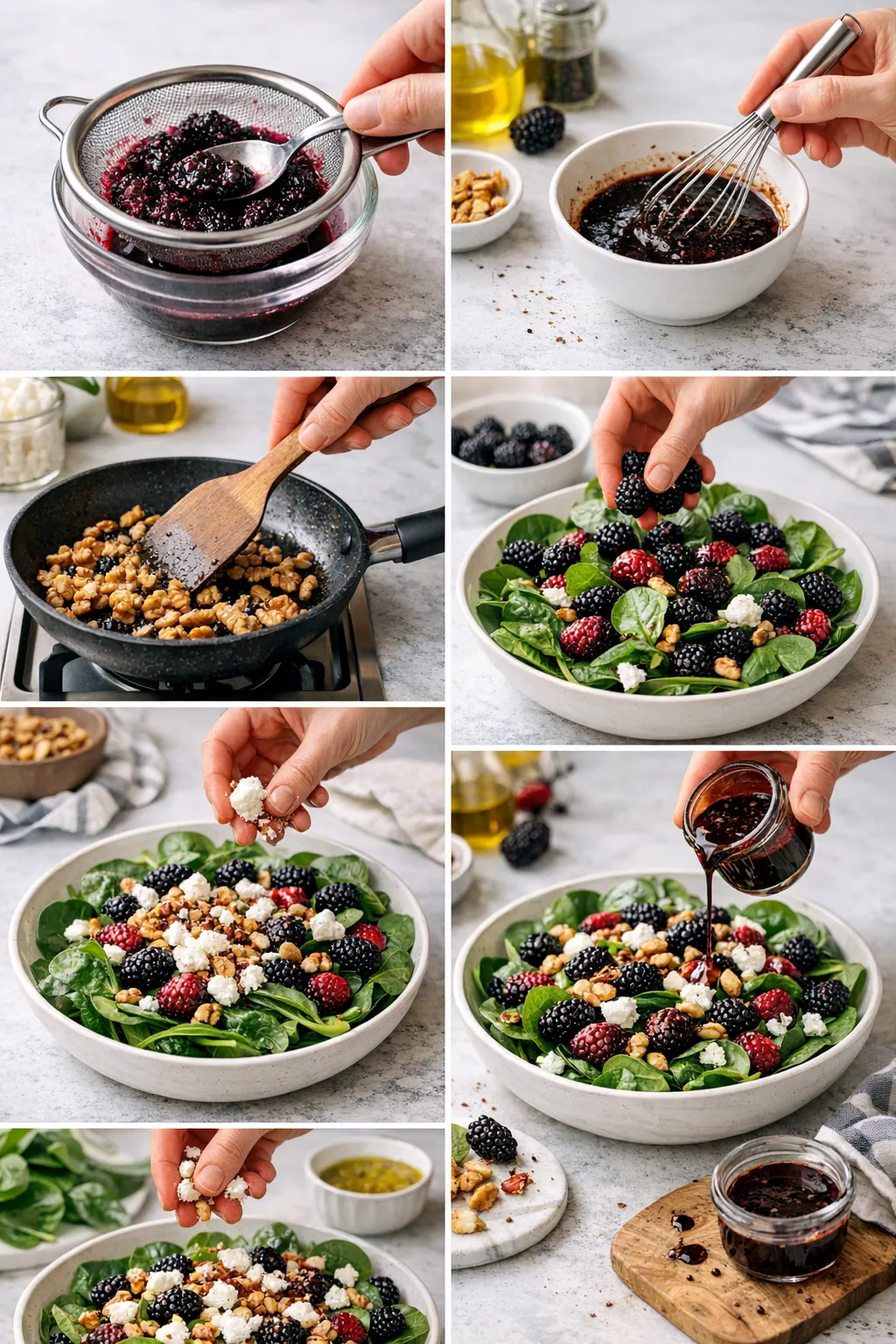
- Prepare the blackberry juice
Mash the blackberries using a fork or spoon until they form a thick pulp. Take your time here — the more you break them down, the more flavor you’ll get. Strain the mixture through a fine sieve to extract the juice, leaving the seeds behind. - Make the dressing
In a small bowl, combine the blackberry juice, olive oil, and balsamic vinegar. Whisk until the mixture becomes smooth and slightly thicker. Add honey if you want a softer, rounder flavor, then season with thyme, salt, and pepper. Taste it — and adjust if needed. This step is small, but it really matters. - Toast the nuts
Place the walnuts or pecans in a dry pan over medium heat. Let them warm up slowly, stirring occasionally, until they smell slightly nutty and toasted. It usually takes around 3–5 minutes. Don’t rush it — this step adds more depth than you’d expect. - Assemble the salad
Add the spinach to a large bowl, keeping it light and not too packed. Scatter the blackberries over the top — some whole, some slightly softer, depending on what you have. - Add toppings
Sprinkle the toasted nuts evenly and crumble the goat cheese over everything. Try not to overmix at this stage — it’s nice when the ingredients stay a bit distinct. - Dress and toss
Drizzle the dressing over the salad just before serving. Start with a small amount — you can always add more. Toss gently until everything is lightly coated, but still fresh and airy.
💡 Small Tips That Make a Big Difference
- Use really ripe blackberries — it changes the flavor more than you’d expect
- Don’t skip toasting the nuts, even if you’re in a hurry
- Add dressing gradually instead of all at once
- If the dressing tastes too sharp, a tiny bit of honey helps balance it
- Let the salad sit for a minute after tossing — just a minute — it helps the flavors come together slightly
🍽️ How to Serve It Beautifully
Presentation might seem like a small detail, but with a salad like this, it can completely change how it’s perceived — and even how it tastes.
If you just toss everything together quickly in one bowl, it will still be good. There’s nothing wrong with that, especially on a busy day. But if you slow down for a minute and think about how it comes together visually, the whole dish starts to feel more intentional. Not in a complicated or “restaurant-style” way — just more put together.
Instead of mixing everything immediately, try building it in soft layers. Start with the spinach as a base, but don’t press it down too much — letting it stay light and airy makes a difference. Then add the berries so they sit naturally on top rather than getting hidden. After that, scatter the cheese and nuts in a slightly uneven way. It shouldn’t look perfect — actually, it’s better if it doesn’t. A bit of randomness makes it feel more natural and less staged.
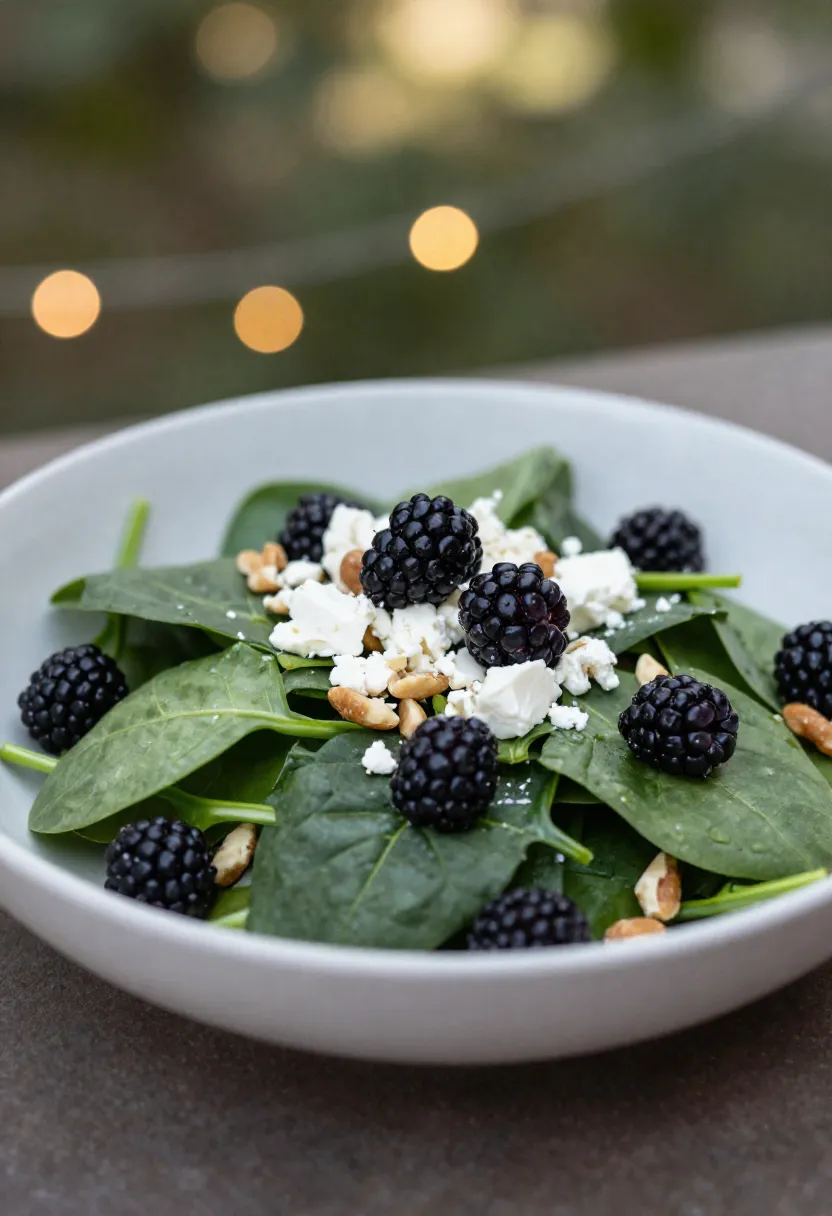
The dressing is something you want to handle with a bit of care. Adding it too early can make the greens lose their freshness, especially if the salad sits for even a short time. It’s best to drizzle it right before serving, and even then, start lightly. You can always add more, but you can’t take it away.
If you’re serving this for guests, the bowl you choose really does matter. A wide, shallow bowl works much better than a deep one. It spreads everything out, lets the colors show, and makes the salad feel more generous without actually increasing the amount.
And if you want to add one small finishing touch, place a few whole berries on top right before serving. It takes maybe ten seconds, but it changes how the salad looks. It feels more complete, like you paid attention to the final step instead of just stopping when it was “done.”
🔄 Easy Ways to Adapt the Recipe
One of the reasons this salad works so well is that it doesn’t feel fixed. You’re not locked into exact ingredients or proportions, which makes it much easier to come back to it again and again without getting bored.
If you want to turn it into something more filling, adding protein is probably the easiest adjustment. Grilled chicken keeps things light and neutral, while salmon adds a bit more richness and makes the salad feel closer to a full dinner. Even something simple like roasted chickpeas can work surprisingly well — they add both texture and a slightly deeper, almost nutty flavor.
Cheese is another element you can easily change depending on what you feel like. Goat cheese is soft and slightly tangy, which keeps the salad balanced, but feta brings more saltiness and a bit more structure. Blue cheese, on the other hand, shifts the entire flavor profile — it becomes stronger, more intense, and definitely more noticeable. It’s one of those options that you either really enjoy or skip entirely.
The berries don’t have to stay the same either. Blackberries give the salad a deeper, slightly richer sweetness, but raspberries will make it brighter and a bit sharper. Strawberries, especially when they’re very ripe, bring a softer and more familiar sweetness. Each option changes the tone slightly, but the overall idea of the salad still holds together.
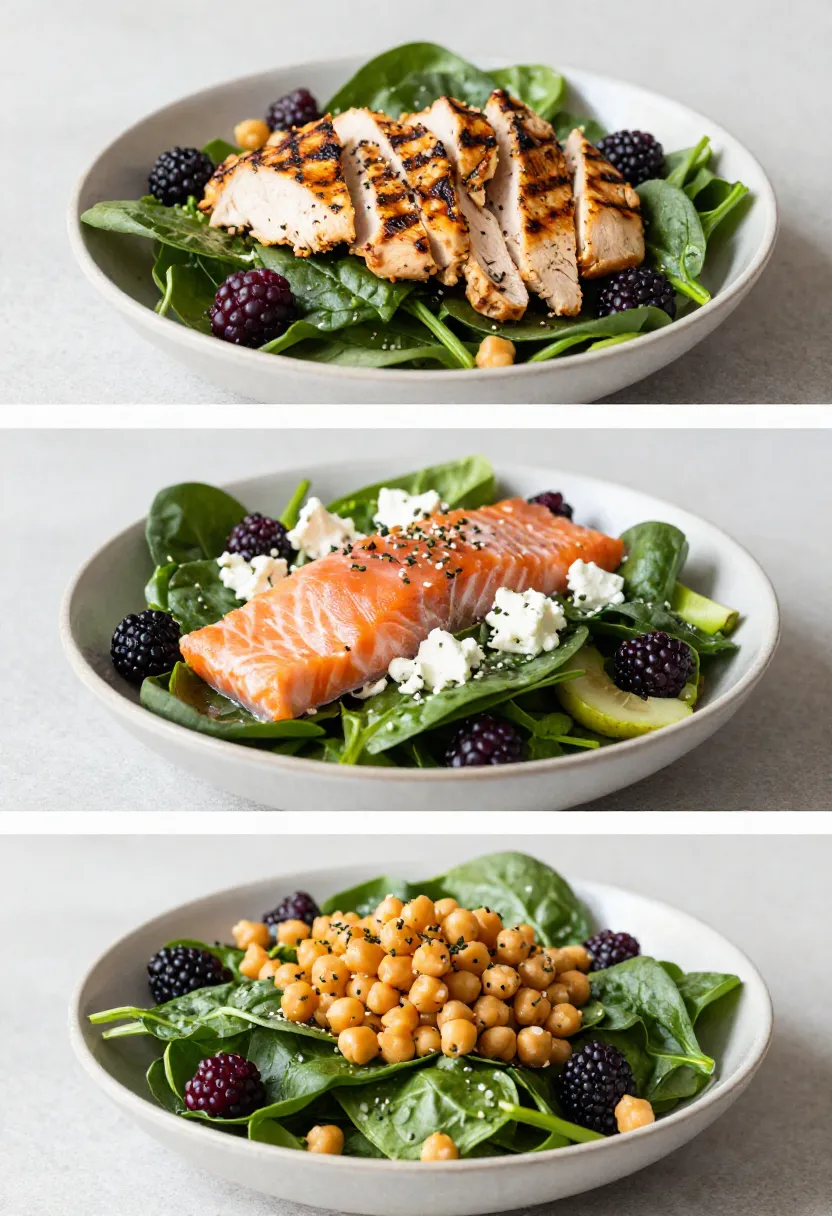
Even the greens can be adjusted depending on your mood. Spinach is gentle and easy, but if you want something with more bite, arugula adds a peppery note that makes the whole dish feel a bit more bold. Mixed greens can also work if you want more variety without overthinking it.
If you look at it overall, this is the kind of recipe that welcomes small changes:
- you can add protein to make it more filling
- switch cheeses depending on how strong you want the flavor
- use different berries based on what’s in season
- adjust the greens to shift the overall taste
Nothing feels strict, and that’s part of why it’s so easy to keep using it without getting tired of it.
💡 Small Details That Make a Big Difference
Sometimes it’s not the main ingredients that define a dish, but the small decisions you make while putting it together.
Using ripe, in-season berries is one of those details that has a bigger impact than expected. When the berries are soft, slightly sweet, and full of flavor, the whole salad feels balanced. If they’re underripe or too firm, the acidity becomes sharper, and the dish can feel slightly off without you immediately realizing why.
Toasting the nuts is another small step that’s easy to skip, especially when you’re in a hurry. But once you’ve tried it both ways, the difference is obvious. Toasted nuts have a deeper, warmer flavor and a better texture. They add something that raw nuts just don’t quite bring.
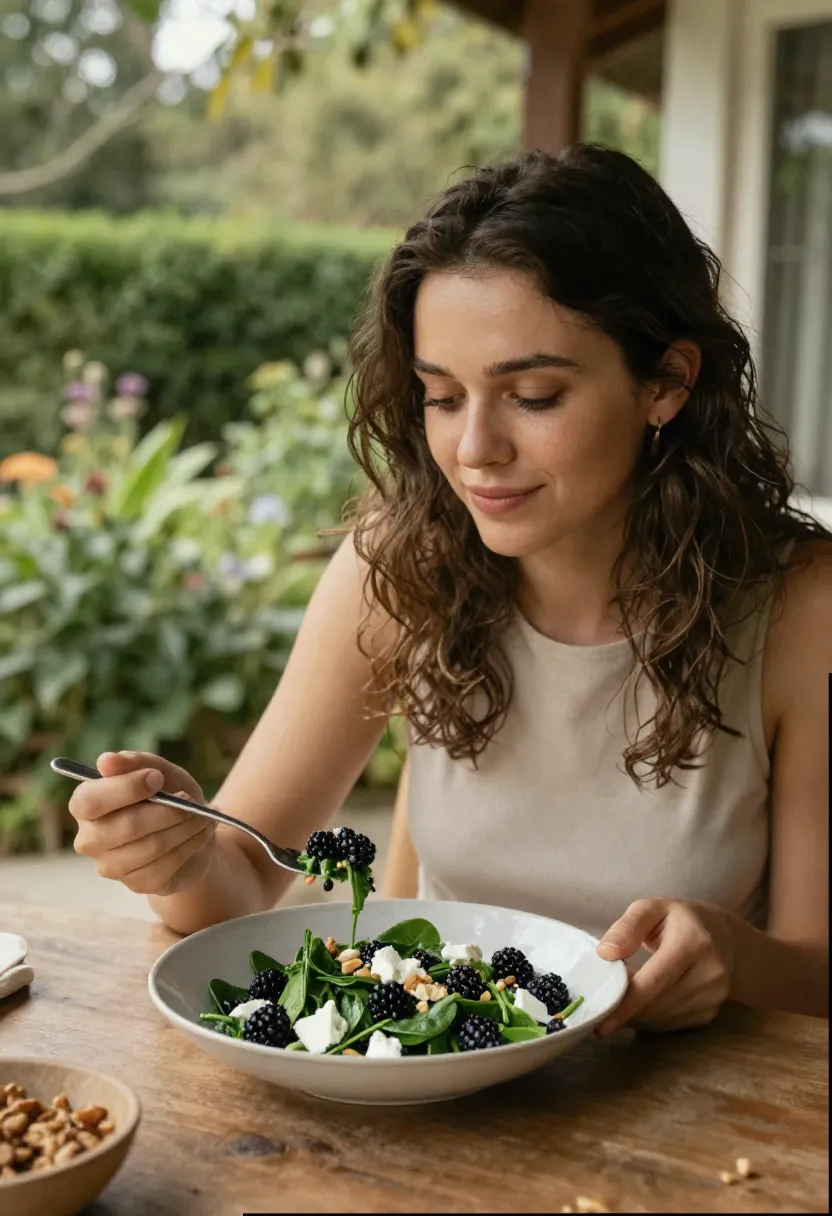
The dressing is where a lot of people unintentionally go too far. It’s tempting to add a generous amount right away, thinking it will make everything more flavorful. But with a salad like this, too much dressing can quickly take over and mask the freshness of the ingredients. It’s better to start with less, toss gently, and then decide if you actually need more.
Another small but important habit is tasting as you go. It sounds simple, but it’s often skipped. A tiny adjustment — a pinch of salt, a drop more vinegar, or even a bit of honey — can shift the balance in a noticeable way.
A few small things that are easy to keep in mind:
- use berries that are fully ripe and slightly soft
- toast the nuts for a deeper flavor
- add dressing gradually instead of all at once
- taste the dressing before serving and adjust if needed
- toss the salad gently so the ingredients keep their texture
None of these steps take much time, but together they make the difference between something that’s just “fine” and something that actually feels well put together.
And in a dish this simple, those small details matter more than anything else.