
Most people don’t spend much time thinking about ice cream. Usually it’s a simple routine: you open the freezer, grab a spoon, scoop a little into a bowl, maybe add chocolate syrup, fruit, or some crushed cookies, and enjoy a few cold bites. The dessert feels smooth, creamy, and satisfying — exactly what ice cream is supposed to be.
But if you slow down for a moment and actually think about what makes that texture possible, things get a little more interesting. Ice cream isn’t just frozen milk and sugar. It’s a surprisingly delicate mixture of fat, water, air, and dissolved ingredients that all behave differently when temperatures drop. When the mixture freezes, those components form a structure that determines whether the dessert feels silky and rich… or unpleasantly icy.
And here’s the part many people don’t expect.
One of the ingredients that helps maintain that smooth texture doesn’t come from a dairy farm or a sugar factory. It comes from the ocean. 🌊
Seaweed might sound like an odd addition to a frozen dessert, especially if you associate it with sushi, coastal dishes, or seaweed snacks. Yet for decades the food industry has relied on seaweed-derived ingredients to improve the texture and stability of ice cream. These compounds don’t change the flavor of the dessert at all. Instead, they quietly help the mixture stay smooth, soft, and consistent even after weeks in the freezer.
Scientists became interested in seaweed once they realized it contained natural substances capable of binding water and thickening liquids. These compounds can create gentle gel-like structures inside food, helping ingredients stay evenly distributed and preventing certain textures from breaking down during storage. For frozen desserts, those properties turned out to be incredibly useful.
Today, small amounts of seaweed extract appear in many commercial ice creams around the world. Most people never notice them, and honestly that’s the whole point — the ingredient works behind the scenes, helping your favorite dessert stay creamy from the first spoonful to the last.🍦🌊
Why Ice Cream Texture Is Harder to Perfect Than It Looks
At first glance, making ice cream sounds simple. Mix milk, cream, sugar, and flavorings together, freeze everything, and the job is done. In practice, though, creating a dessert with the right texture requires careful control of several physical processes that happen during freezing.
The biggest challenge is water. Milk and cream contain quite a lot of it, and water naturally forms crystals when it freezes. If those crystals grow too large, the texture of the ice cream becomes rough and crunchy instead of smooth. Anyone who has tried poorly made ice cream knows that unpleasant icy feeling — it’s the kind of thing that instantly makes a dessert feel low quality.
Professional ice cream makers spend a lot of effort preventing that from happening. Their goal is to keep ice crystals extremely small so they’re barely noticeable when you take a bite. Tiny crystals create the creamy, velvety mouthfeel that people expect from good ice cream.

Several factors influence whether ice cream turns out silky or icy:
- fat from cream, which adds richness and helps coat ice crystals
- sugar, which lowers the freezing point and keeps the mixture softer
- air incorporated during churning, which creates a lighter texture
- stabilizers that help control how water behaves while freezing
Without stabilizers, the mixture would be far less stable during storage. Over time, water molecules slowly move inside the frozen dessert, merging into larger crystals. When that happens, the ice cream gradually becomes grainy and loses its creamy texture. Stabilizers slow that process down by limiting how freely water can move inside the mixture.
This is exactly where seaweed-derived ingredients become useful. Their natural ability to interact with water makes them very effective at maintaining the delicate structure that keeps ice cream smooth.
Seaweed: A Marine Plant with Remarkable Properties 🌿
Seaweed has been part of human diets for centuries, especially in coastal regions where it grows naturally. In many parts of East Asia, for example, seaweed is used in soups, salads, broths, and snacks. People originally valued it mostly for its flavor and nutritional benefits, since it contains minerals, vitamins, and other useful nutrients.
Over time, however, scientists noticed something particularly interesting about this ocean plant. When certain types of seaweed were processed or boiled, they produced thick liquids that behaved differently from most plant extracts. Instead of simply dissolving in water, they could actually change the texture of the liquid itself.
Researchers eventually discovered that seaweed contains special compounds known as hydrocolloids. These substances interact strongly with water, allowing them to thicken mixtures, stabilize ingredients, and create gel-like structures inside food. In the world of food science, hydrocolloids are incredibly valuable because they help control how liquids behave during cooking, freezing, and storage.
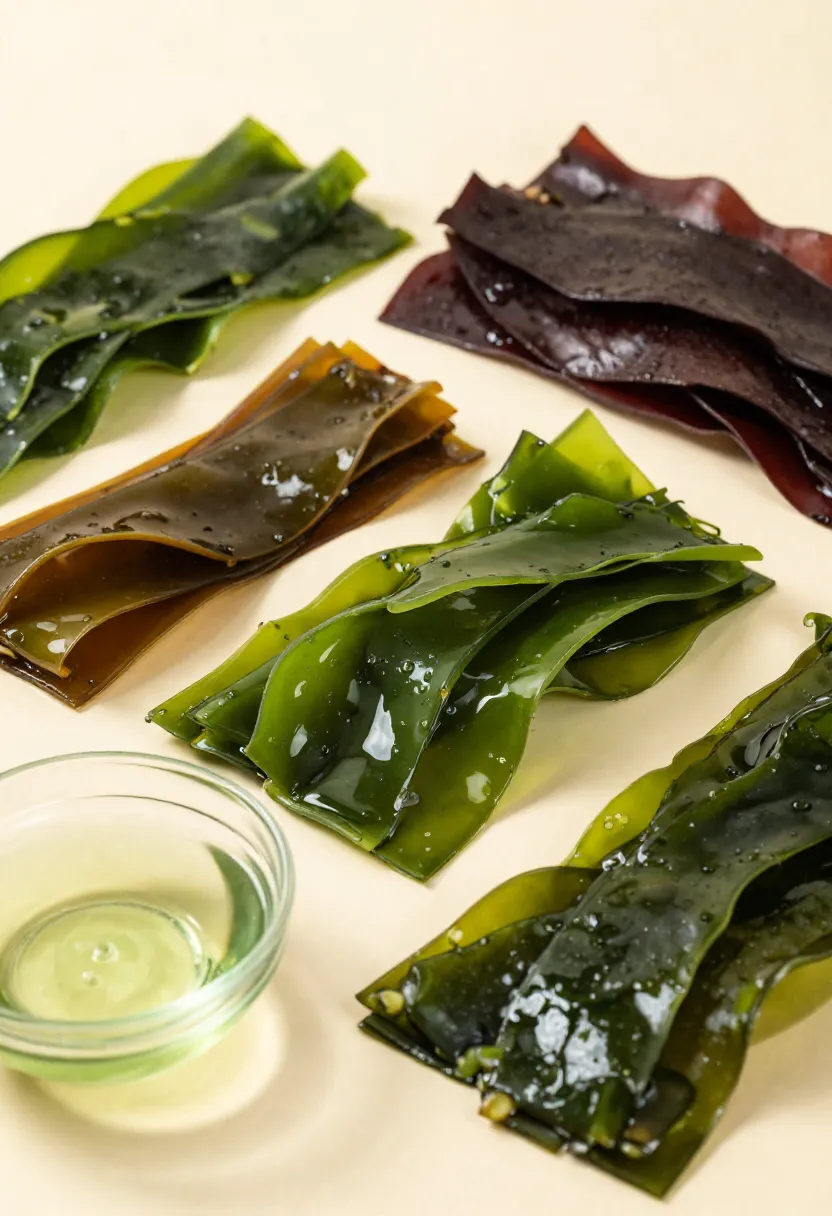
Seaweed extracts quickly became popular for several practical reasons:
- they work effectively even in very small quantities
- they have little to no noticeable flavor
- they remain stable at low temperatures
- they come from renewable marine plants 🌊
When food scientists began experimenting with these compounds, they found that frozen desserts benefited significantly from them. Even tiny amounts could improve texture, prevent large ice crystals from forming, and help the dessert maintain a smooth consistency over time.
Because of these advantages, seaweed-derived ingredients gradually became common in commercial ice cream production. Most consumers never realize they’re there, but their role is important. Without them, many frozen desserts simply wouldn’t stay as creamy or stable during long periods in the freezer.
The Seaweed Compounds That Improve Ice Cream 🌊
When people hear that seaweed is used in ice cream, they sometimes imagine tiny pieces of ocean plants floating somewhere inside the dessert. Thankfully, that’s not how it works. In reality, ice cream makers don’t add whole seaweed to the mixture. Instead, scientists extract specific natural compounds from marine algae and process them into refined ingredients that can easily dissolve in liquid recipes.
These substances usually appear as fine powders or concentrated extracts. Once mixed into an ice cream base, they blend in completely and become almost invisible. You won’t taste them, and you definitely won’t notice them in the texture directly. Yet behind the scenes, they help stabilize the mixture and make sure everything behaves properly during freezing.
Several seaweed compounds exist, but only a few are commonly used in frozen desserts. Each one has slightly different properties, which means food scientists can choose the one that best fits the texture they want to achieve. Some help control moisture, others improve thickness, and some work especially well with dairy proteins.
Carrageenan is probably the best-known of these ingredients. It is extracted from certain types of red seaweed and has been used in food production for many decades. One of its most useful qualities is the way it interacts with proteins found in milk. When carrageenan is added to a dairy mixture, it forms a subtle network that helps keep fat droplets, water, and other ingredients evenly distributed throughout the ice cream base.
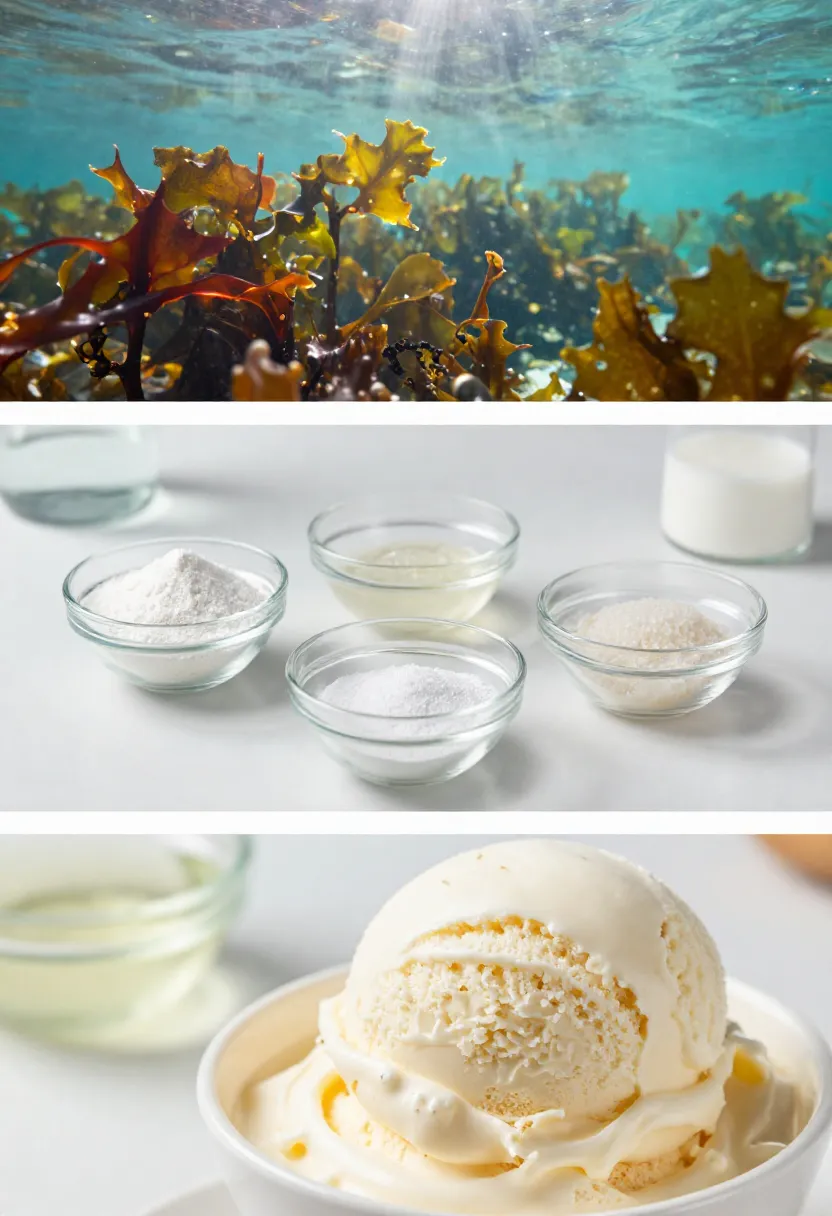
Without that kind of stabilization, the mixture could slowly start separating. Fat might gather in one place while water forms larger crystals somewhere else, and the final texture would feel uneven. Carrageenan helps prevent that problem by gently holding the mixture together while the ice cream freezes.
Another seaweed extract often used in desserts is agar. If you’ve ever seen those clear fruit jellies in Asian bakeries or dessert shops, there’s a good chance agar was involved. It comes from red algae as well and has been used in cooking for centuries, long before modern food science started studying it.
Agar is especially good at forming firm gels, even at relatively high temperatures. In ice cream production, it contributes body and thickness to the mixture. That might sound like a small detail, but it has a noticeable effect on how the dessert feels in your mouth. Ice cream with the right structure tends to feel richer and smoother, even if the recipe itself hasn’t changed very much.
Alginate, which is extracted from brown seaweed, works a little differently. Instead of mainly interacting with proteins, alginate is particularly good at binding water. That ability makes it valuable in foods where controlling moisture is important. In ice cream mixtures, alginate increases viscosity slightly, which slows down how quickly water molecules can move around while the dessert freezes.
Together, these ingredients help maintain the delicate balance that makes ice cream enjoyable. Even though they are added in very small amounts, their influence on the final product can be surprisingly significant. A tiny adjustment in stabilizers can completely change how creamy, soft, or smooth a frozen dessert feels.
How Seaweed Stabilizers Transform Frozen Desserts 🍦
The real impact of seaweed-based stabilizers becomes obvious during the freezing process. When the ice cream mixture starts cooling down, water molecules naturally begin forming ice crystals. That process is unavoidable, but what matters is how large those crystals become over time.
If nothing slows the process down, the crystals can grow quite large — especially during long storage in a freezer. Large crystals are exactly what create that icy, crunchy texture people sometimes notice in lower-quality frozen desserts.
Seaweed stabilizers help keep that from happening. They bind part of the water inside the mixture and limit how freely it can move. When water molecules are partially trapped within this stabilizing network, they have a much harder time gathering into big crystal clusters. Instead, many tiny crystals form throughout the dessert, which gives ice cream its smooth, creamy feel.
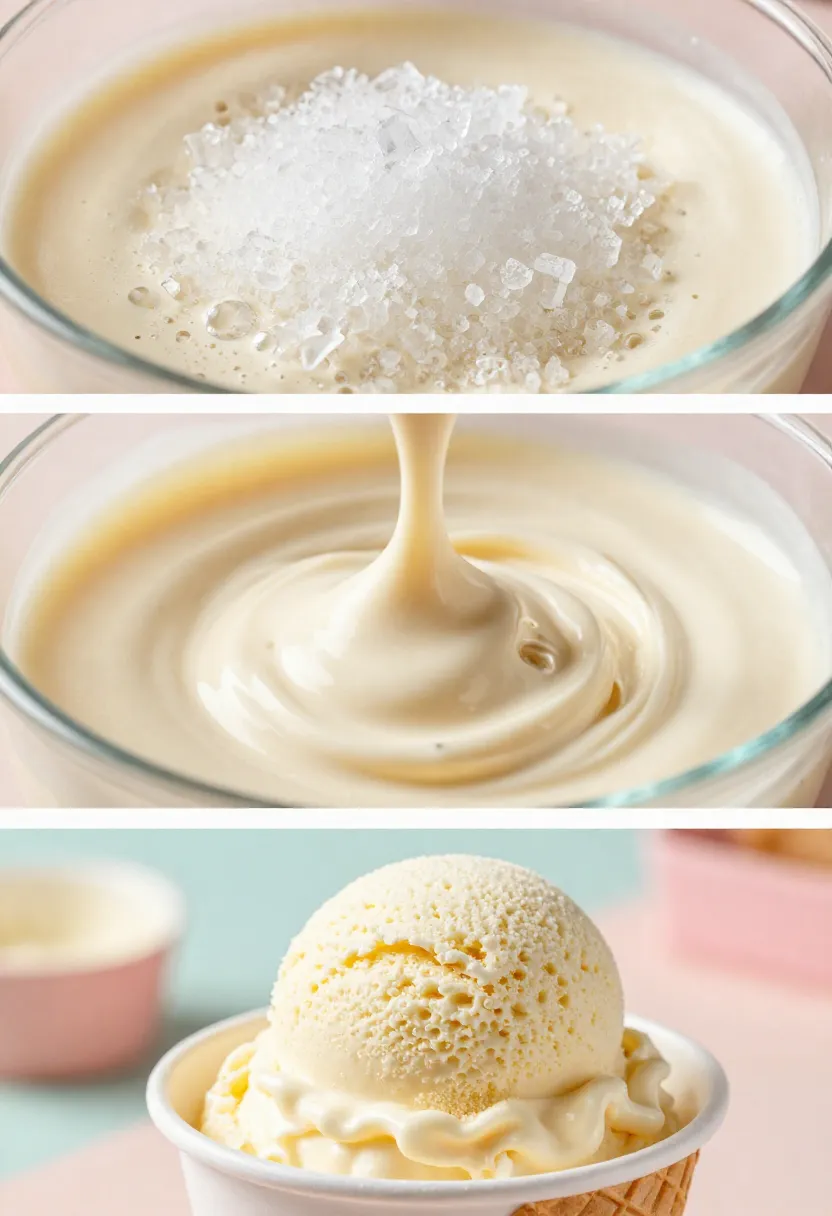
Another important moment in ice cream production happens during churning. While the mixture freezes, machines constantly stir it and incorporate air into the liquid. These tiny air bubbles are actually essential for the texture of ice cream. They make the dessert lighter and softer instead of dense and heavy.
Stabilizers help protect those bubbles by thickening the surrounding liquid slightly. That extra thickness keeps the bubbles from collapsing too quickly, which helps maintain the soft structure of the ice cream.
You can usually notice the effects of stabilizers in several ways once the dessert is finished:
- smoother mouthfeel without icy grains
- slower, more even melting 🍨
- easier scooping straight from the freezer
- longer shelf life without texture breaking down
These benefits are especially important for commercial ice cream. Many products spend weeks — sometimes even months — inside freezers before reaching the customer. Stabilizers help make sure that when someone finally opens the container, the dessert still tastes fresh and creamy instead of icy.
Seaweed in Other Everyday Foods 🌿
Ice cream might be one of the most interesting examples, but it’s far from the only place where seaweed-derived ingredients show up. In fact, these compounds appear in a surprising number of foods people consume every day. Because they work so well as stabilizers and thickeners, food manufacturers rely on them in many different products.
Chocolate milk is a classic example. Without stabilizers, cocoa particles would slowly sink to the bottom of the bottle, leaving the drink uneven and slightly gritty. Seaweed extracts help keep everything suspended evenly, so the drink stays smooth from the first sip to the last.
Dairy desserts like puddings, custards, and flavored creams often benefit from these ingredients too. They help create that thick, creamy consistency people expect while also preventing the mixture from separating during storage. Even after sitting in the refrigerator for several days, the texture remains stable.
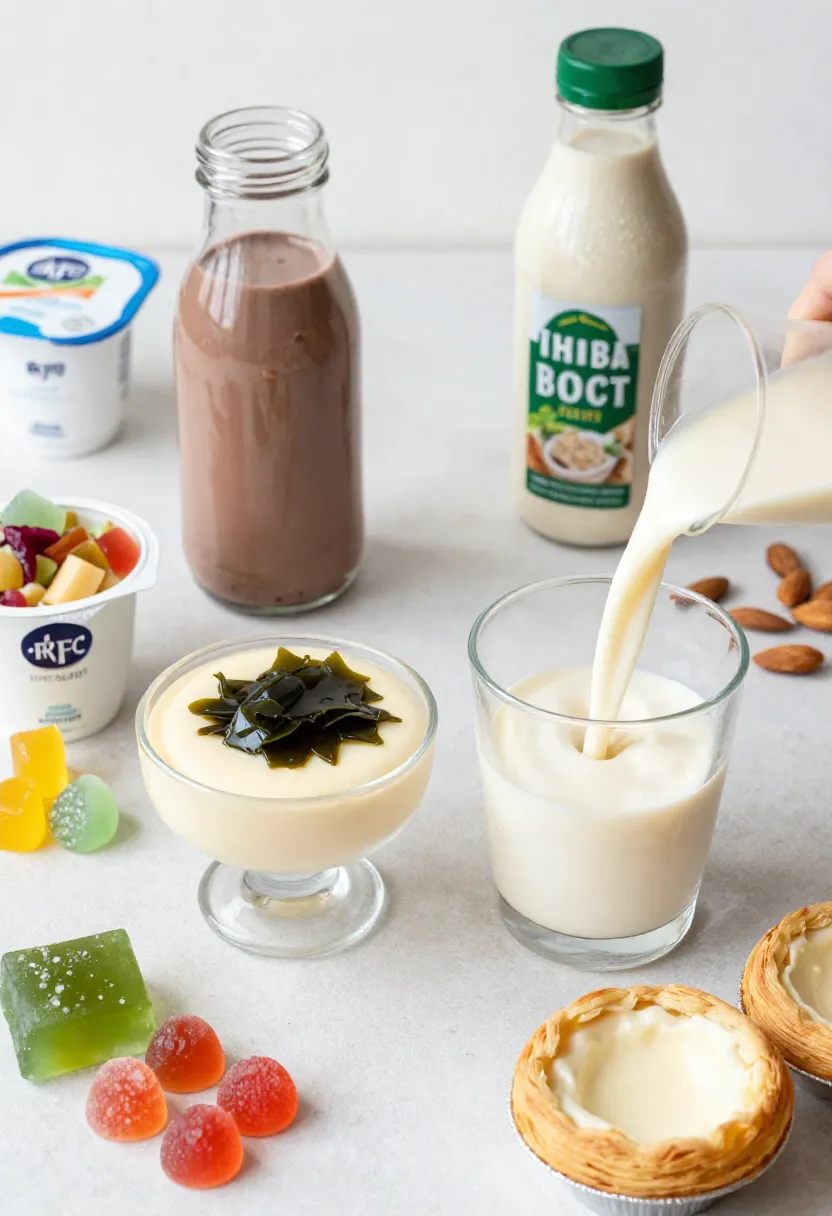
Plant-based milk alternatives depend on stabilizers even more. Drinks like almond milk, soy milk, and oat milk contain ingredients that naturally separate over time. Without stabilizers, you would have to shake the container constantly to keep everything mixed properly.
Seaweed extracts also appear in many other foods, including:
- yogurt and dairy-based drinks
- fruit jellies and gummy candies 🍬
- sauces and salad dressings
- bakery fillings and dessert toppings
In most of these products, the amount used is extremely small. Sometimes the stabilizer makes up less than half a percent of the recipe. Yet that tiny addition can dramatically improve texture and consistency.
Because of that, seaweed compounds have quietly become one of the most useful tools in modern food production. Most people never think about them, but they help many everyday foods stay smooth, stable, and enjoyable to eat.
The Environmental Appeal of Seaweed Ingredients 🌍
Over the past few years, seaweed has been getting attention for reasons that go far beyond sushi or coastal cuisine. Researchers, environmental scientists, and even food companies have started looking at it in a completely different way — as a surprisingly sustainable resource. And once you look at how seaweed actually grows, it’s easy to see why so many people are interested.
Unlike most crops grown on land, seaweed doesn’t need soil, irrigation systems, or fertilizers. It grows naturally in the ocean, absorbing nutrients directly from seawater and using sunlight just like other plants. Farmers simply anchor seaweed lines in coastal waters and allow the plants to grow, which makes the whole process much simpler than traditional agriculture. 🌊
Another interesting detail is how quickly seaweed grows. Some species can double in size within just a few days under the right conditions. That rapid growth means farmers can harvest it multiple times a year without exhausting the resource. Compared to crops that require months of careful cultivation, seaweed farming can be surprisingly efficient.
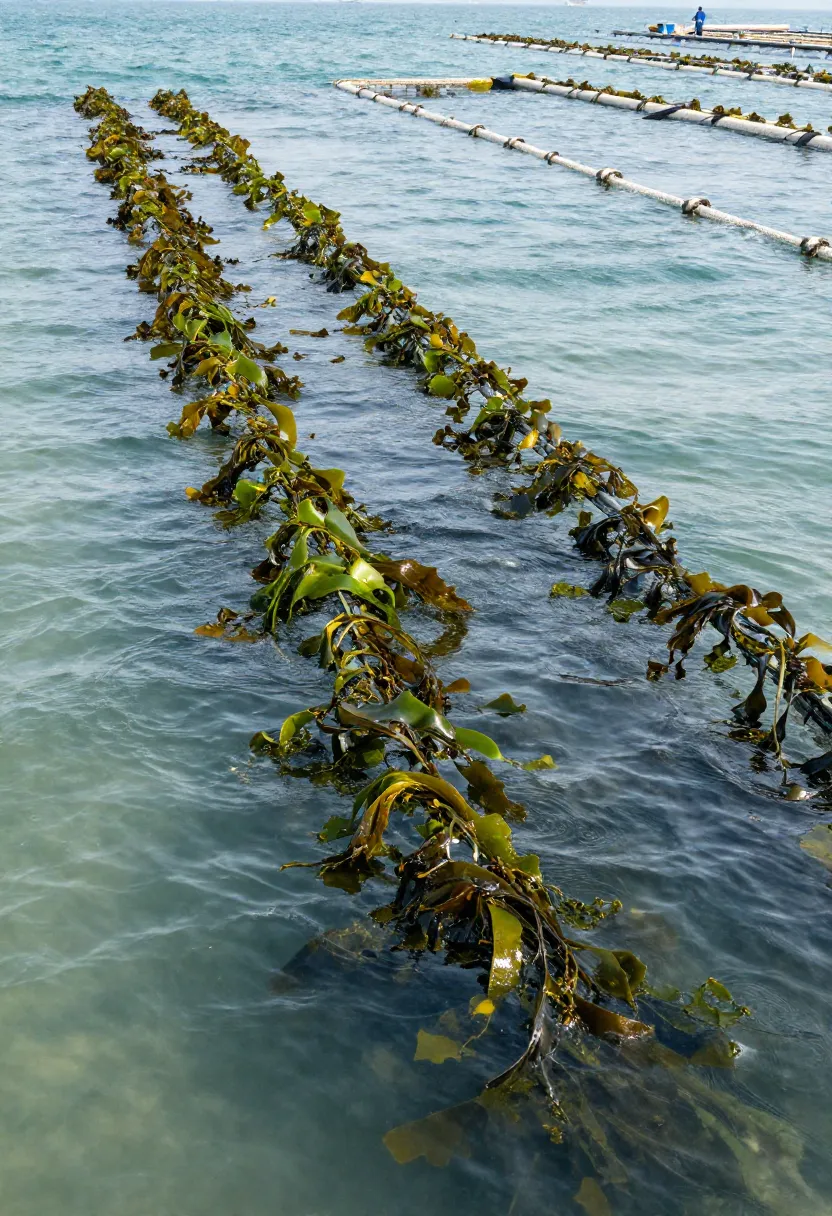
Because seaweed grows directly in the ocean, its environmental footprint tends to be much smaller than many land-based farming systems. It doesn’t require large areas of farmland, and it doesn’t rely on freshwater — something that’s becoming increasingly important as global water resources are stretched thinner every year. In some cases, seaweed farms may even improve surrounding ecosystems by absorbing excess nutrients from the water.
People studying sustainable food production often point out several environmental advantages of seaweed cultivation:
- it grows without fertilizers or chemical inputs
- it requires no freshwater irrigation
- it can be harvested repeatedly without damaging the environment
- it may help absorb excess nutrients from coastal waters 🌿
For the food industry, these qualities make seaweed particularly appealing. Companies are constantly looking for ingredients that not only perform well in recipes but also align with the growing demand for environmentally responsible sourcing. Seaweed-derived stabilizers fit that description quite well. They improve the texture of products like ice cream while also coming from a resource that can be farmed sustainably.
In other words, seaweed isn’t just useful in the kitchen — it’s also becoming part of a much larger conversation about how food might be produced in the future.
A Hidden Hero of Your Favorite Dessert 🍦
By the time someone sits down with a bowl of ice cream, very few people are thinking about stabilizers or food science. Most of us are simply enjoying the experience: the creamy texture, the cold sweetness, and that familiar comfort that comes with a favorite dessert. Yet hidden behind that simple moment is a surprising amount of science working quietly in the background.
Seaweed-derived ingredients are one of those small details that make a bigger difference than people realize. Their main job is to help control ice crystal formation and stabilize the mixture while it freezes. Without that kind of support, the delicate balance between fat, water, and air inside the dessert could easily fall apart during storage.

What makes these ingredients interesting is how invisible they are. They don’t change the flavor of the ice cream, they don’t add color, and most people never notice them on an ingredient list unless they’re specifically looking for them. That quiet presence is actually part of their success — they improve the texture of the dessert without interfering with the taste people already love.
Over time, what started as a simple discovery about marine plants has become an important tool in modern food science. Seaweed extracts are now used around the world in countless products, helping stabilize everything from frozen desserts to dairy drinks and sauces. The average person might never think about it, but these ingredients play a small role in making many everyday foods more enjoyable.
The next time you scoop a spoonful of ice cream and notice how smooth and creamy it feels, there’s a good chance the ocean contributed something to that experience. Somewhere in that mixture, in an amount so small you’d probably never see it, a seaweed-derived ingredient is helping keep the texture just right.
It may not be the ingredient people talk about when discussing their favorite flavor, but in many ways this humble ocean plant has become a quiet hero of the dessert world. And honestly, the best ingredients are often the ones that do their job so well that nobody even notices they’re there. 🌊🍨