For a long time, I honestly believed that taking care of immunity had to look serious. Almost impressive. The kind of thing you could list out neatly and feel proud of. Special supplements lined up on a shelf. Strict routines. Exact timing. Morning habits, evening habits, rules for weekdays, rules for weekends.
You probably know this mindset. It sounds disciplined, even responsible. But in real life, it’s exhausting.
Most of those plans didn’t fail because they were wrong. They failed because they asked too much, too consistently, without leaving any space for actual life. Busy days. Low-energy days. Days when cooking feels like work instead of care. The kind of days we all have, whether we admit it or not.
At some point, it clicked that the problem wasn’t motivation. It was sustainability. 🌱
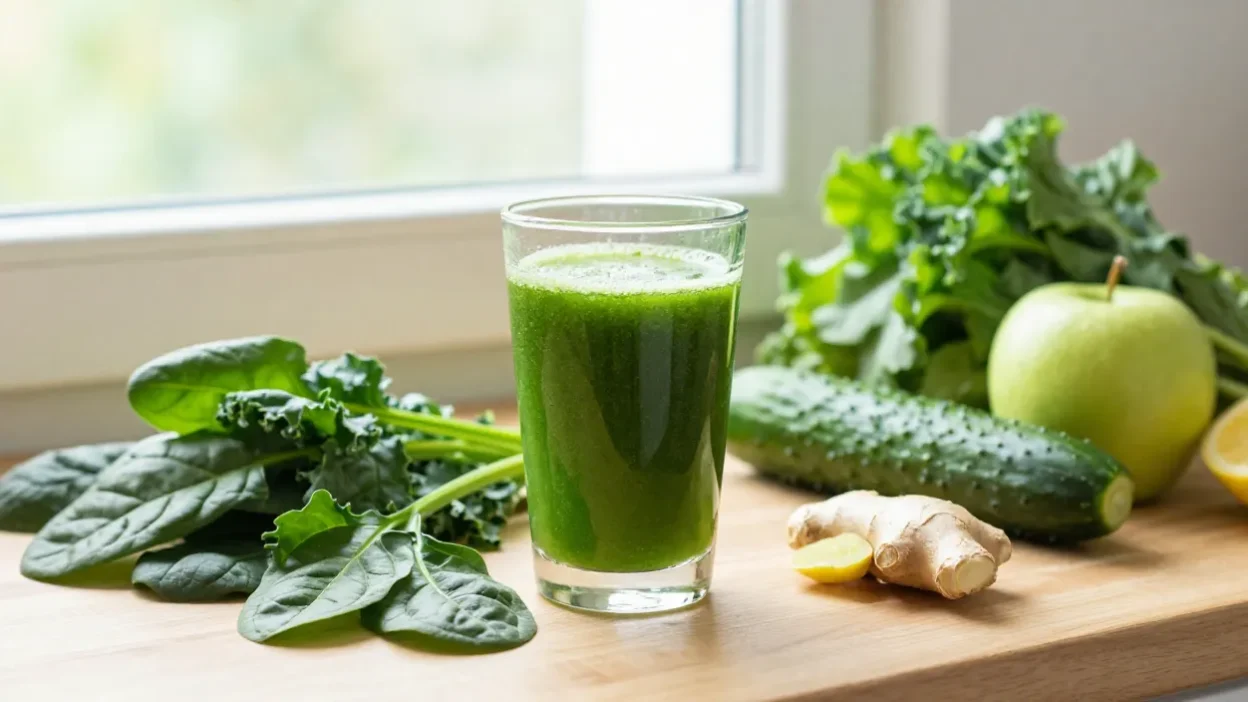
Green juice didn’t enter my routine as a bold decision or a turning point. There was no “from Monday, everything changes” moment. It showed up quietly, almost accidentally, as a small adjustment that didn’t demand much attention.
I started noticing a pattern I didn’t love. Whenever life got busy — work deadlines, travel, stress, just general mental overload — vegetables were the first thing to disappear from my plate. Especially leafy greens. They were easy to skip, easy to delay, easy to promise myself I’d eat “tomorrow.”
And tomorrow kept moving.
Drinking greens turned out to be simpler than eating them. Not better. Not superior. Just easier. That was enough to make me try. And honestly, that’s where this whole thing really begins.
Immunity Is Built Slowly, Even When We Don’t Notice 🛡️
There’s something about immune health that doesn’t photograph well. It’s not dramatic. There’s no clear moment when you can say, “Yes, now my immune system is strong.” Most of the time, it’s either doing its job quietly or struggling quietly.
You usually only notice it when something goes wrong.
The immune system doesn’t wake up only when you catch a cold. It’s always working in the background. Repairing small damage you never feel. Monitoring signals between cells. Managing inflammation levels so they don’t spiral out of control.

That constant work depends on a few very unglamorous things:
- regular nutrition
- enough fluids
- decent sleep
- manageable stress
When one of those is off occasionally, the body adapts just fine. When several of them are off consistently, things shift. Not overnight, but slowly. Immune responses can become sluggish, or sometimes overly reactive. Recovery takes longer. Minor issues feel heavier than they should.
That’s usually when people start searching for fast solutions. I did too.
What took me a while to accept is that immunity doesn’t respond well to panic. It responds to patterns. And patterns don’t need to be extreme to work — they just need to be repeatable. 🌿
Why Green Juice Felt Easier Than “Doing Everything Right” 🥬
I want to be honest here, without pretending that I’m more organized or disciplined than I actually am. I like vegetables. I really do. I enjoy how they taste, I know they matter for health, and I feel the difference when I eat them regularly. The problem was never the vegetables themselves. It was everything that came with them on an average, not-so-perfect day.
When life is calm, cooking with vegetables feels manageable. Even pleasant. But when days get busy or mentally heavy, that same process suddenly feels much bigger than it should. Leafy greens, in particular, tend to demand attention. They don’t wait quietly in the fridge, and they don’t forgive procrastination.
What usually got in the way wasn’t a lack of knowledge, but small, very real obstacles, like:
- needing to plan meals in advance when my schedule was unpredictable
- realizing too late that something I bought “with good intentions” no longer looked appealing
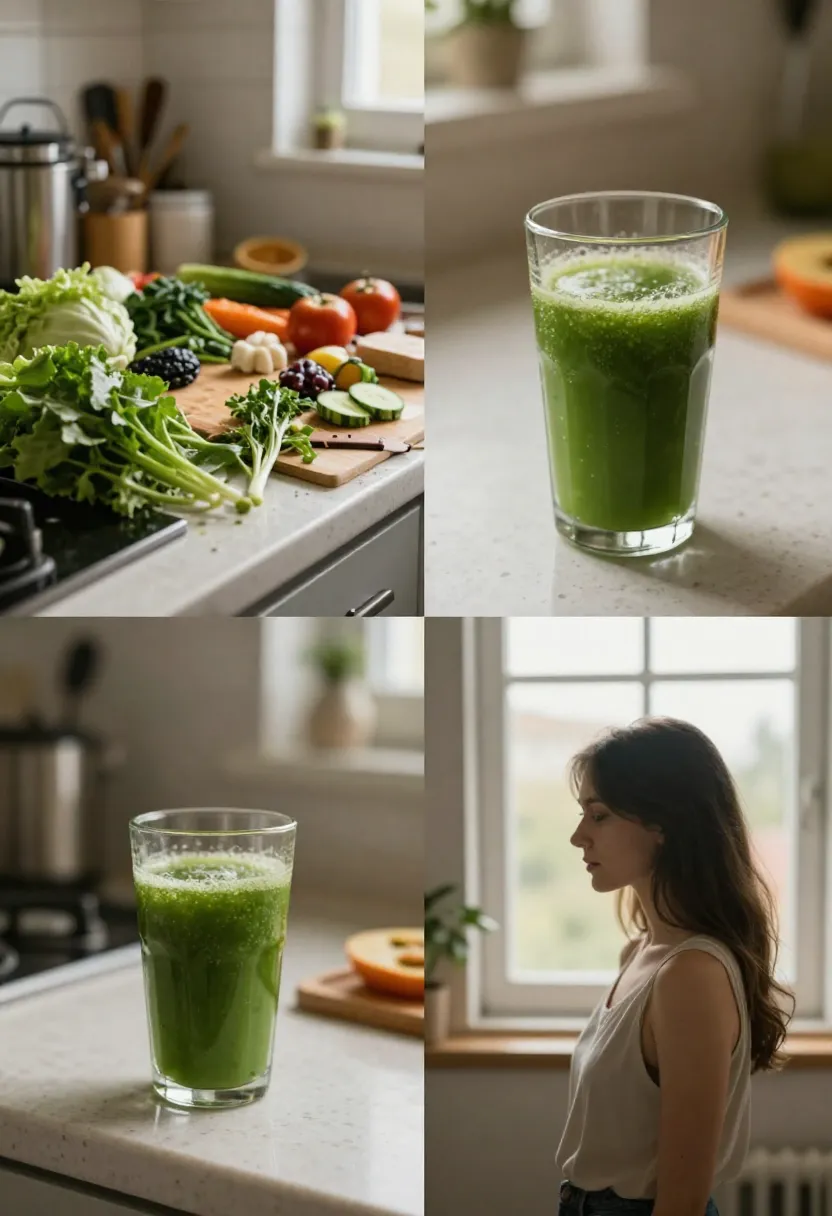
- feeling too tired to cook properly and not wanting another rushed meal
- opening the fridge and feeling mildly guilty instead of inspired
None of these things are dramatic, but together they’re enough to break consistency.
Green juice lowered that mental barrier in a way I didn’t expect. Instead of reorganizing my meals around vegetables, I only had to commit to one simple action: drinking a glass. No pressure to turn it into a full meal. No expectation that it had to look nice or feel special. Just one small, repeatable step.
Another thing that surprised me was hydration. I never thought of myself as someone who forgot to drink water, but once green juice became a regular part of my day, it became obvious that I had been slightly dehydrated more often than I realized. Drinking green juice meant fluids were coming in without any extra effort, and that alone changed how I felt.
I started noticing things like:
- more stable energy instead of afternoon crashes
- less of that vague tiredness that’s hard to explain
- fewer moments of realizing I hadn’t had anything to drink in hours
It wasn’t a transformation story. Nothing dramatic happened. It felt more like friction slowly being removed from my routine. Fewer internal negotiations, fewer skipped intentions, and one small habit replacing several small struggles. 💧🥬
The Ingredients I Kept Coming Back To (and Why) 🌱
At some point, I stopped treating green juice like an experiment. In the beginning, everything felt temporary. I was trying new combinations, swapping ingredients, chasing the idea that there was some “perfect” mix out there that would suddenly feel right. Over time, that approach became tiring.
What replaced it wasn’t boredom, but familiarity. My green juice became predictable, and surprisingly, that’s exactly what made it easier to stick with. I knew how it would taste. I knew how my body would react. There was comfort in that.
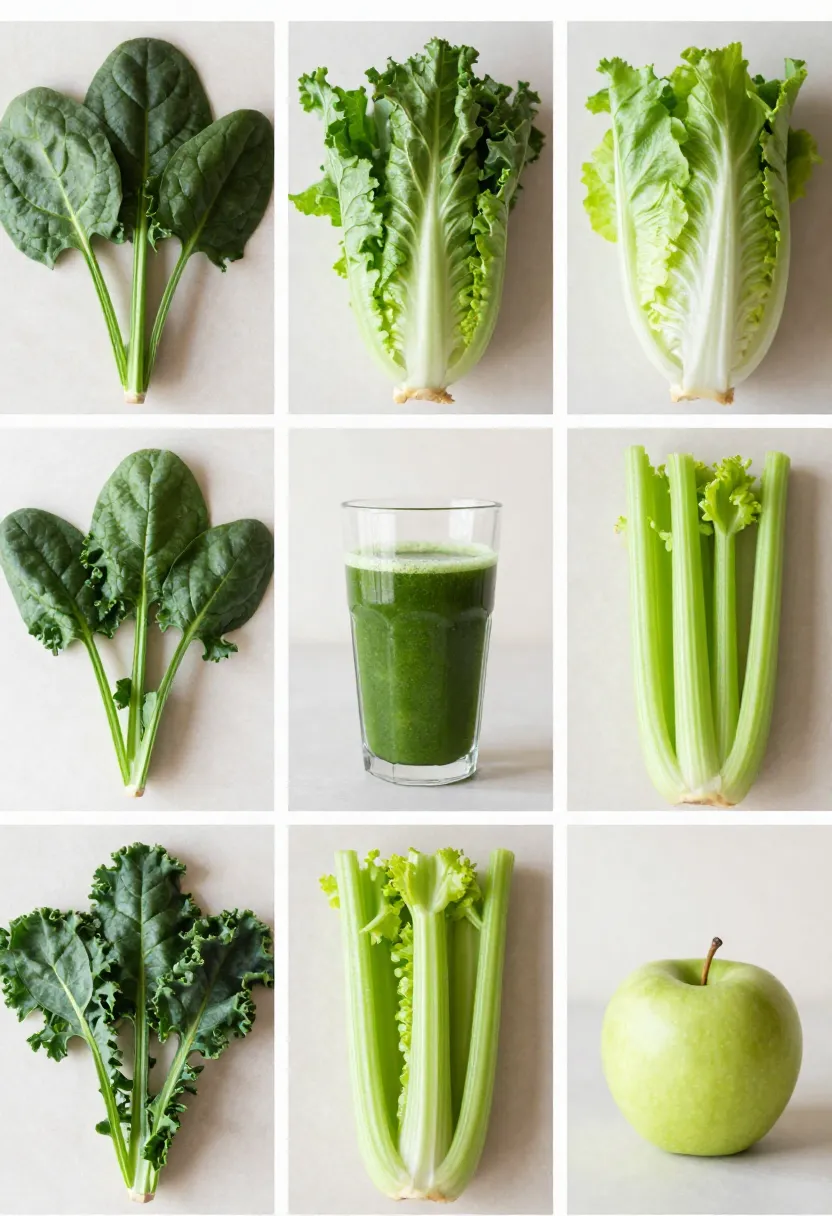
Leafy greens stayed at the center, but even there I learned my preferences the slow way, through trial and a few very unexciting mistakes. Spinach was the easiest to work with. It blended smoothly, didn’t dominate the flavor, and was forgiving when I wasn’t measuring carefully. Kale took longer to appreciate. Too much of it tasted sharp and overwhelming, and for a while I avoided it altogether. Romaine eventually became a middle ground — lighter than kale, more structured than spinach, and easier to drink regularly.
Over time, I noticed that greens weren’t just “adding nutrients” in a simple, direct way. They supported systems in the body, and those effects showed up indirectly. Not immediately, and not always in obvious ways.
For me, that support looked like:
- more stable energy throughout the day, without sudden drops
- digestion that felt calmer and more predictable
- skin that reacted less dramatically to stress, lack of sleep, or changes in routine
Digestion, in particular, surprised me. I hadn’t connected it to immunity at first, but the pattern became clear over time. When digestion felt off, everything else felt harder. When it felt supported, my body seemed to handle seasonal changes and stress with less resistance.
Celery and cucumber slowly became non-negotiable, even though they were never the stars of the juice. They kept everything light and drinkable. Without them, the juice felt thick, heavy, and honestly harder to finish.
What they added wasn’t excitement, but balance:
- enough water content to keep the juice refreshing
- a mild flavor that softened stronger greens
- a texture that felt easier on days when my appetite was low
Fruit stayed intentionally minimal. One green apple or a pear was usually enough. That small amount softened bitterness and made the juice pleasant without turning it into something sweet and heavy. On days when I added more fruit, the drink crossed into smoothie territory, which wasn’t what I wanted most of the time. I wasn’t looking for a meal replacement or dessert. I just wanted something light that didn’t ask much from me.
A More Relaxed Way to Think About Fruit and Sugar 🍏
I went through a phase of cutting fruit out of green juice completely. At the time, it felt like the “right” thing to do. Less sugar. Cleaner ingredients. Better discipline. On paper, it made sense.
In reality, it didn’t last. Without fruit, the juice tasted harsh enough that I started skipping it more often. Not consciously — just quietly. And that was the moment when it clicked that rules don’t matter if they make a habit harder to maintain.
That’s when balance started to feel more useful than restriction.
What helped was reframing the role of fruit:
- it wasn’t there to sweeten the juice excessively
- it wasn’t meant to dominate the flavor
- it was there to make the habit enjoyable enough to repeat
Fruit also brings practical benefits. Vitamin C supports immune function, especially when paired with antioxidants from leafy greens. The goal was never to eliminate sugar entirely, but to keep it in a supporting role rather than letting it take over.
Once I stopped treating fruit as something to fight against, the routine became easier. And ease, more than discipline, turned out to be the thing that kept me consistent.
Small Additions That Ended Up Making the Biggest Difference 🌿
Some of the most meaningful changes came from ingredients I almost didn’t take seriously at first.
Ginger was the first add-in I truly felt. Not instantly, and not dramatically, but through digestion. The juice felt lighter in my stomach. There was less heaviness afterward, less bloating, and a subtle warmth that made the drink feel grounding instead of overly cold.
Turmeric came later and stayed minimal. I learned quickly that more wasn’t better. Too much turmeric overwhelmed everything else and turned the juice into something I had to push myself to drink. A small pinch, on the other hand, added depth without ruining the balance.
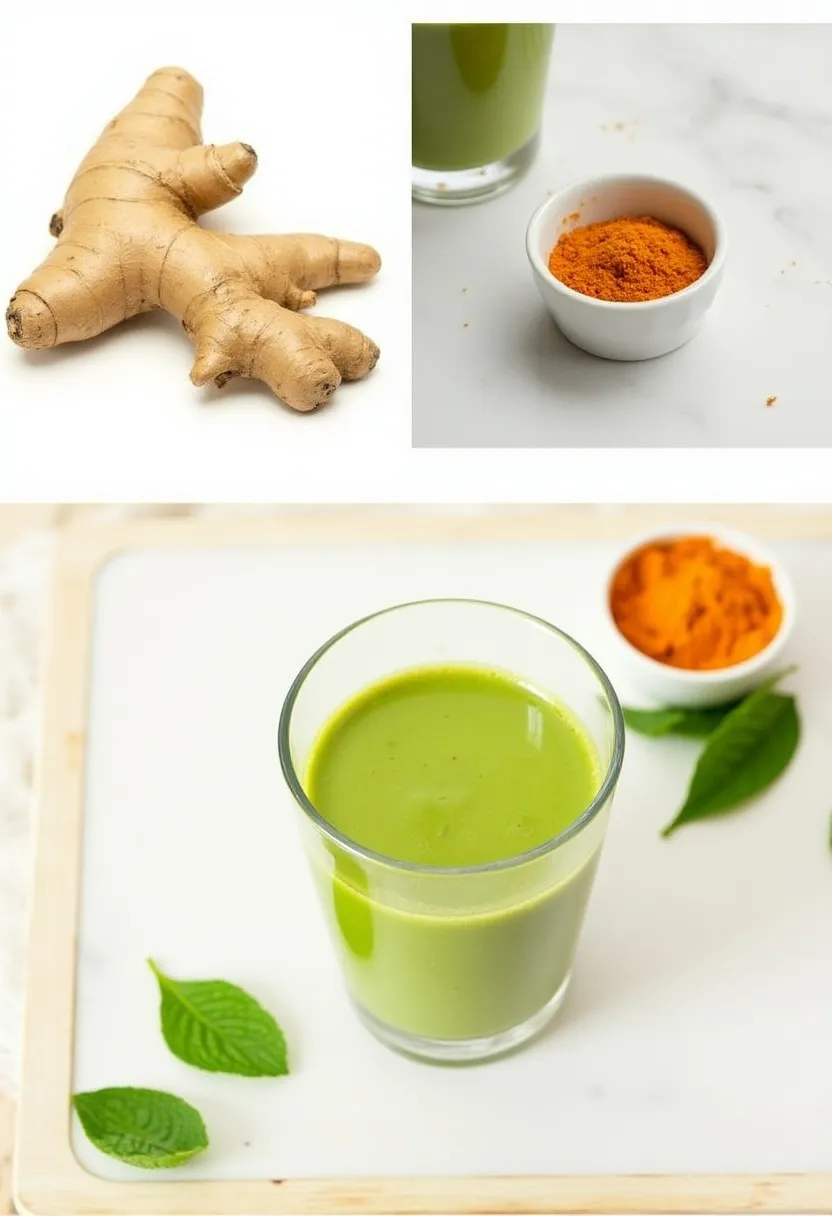
Mint surprised me the most. I added it one summer almost absentmindedly, and suddenly the juice felt fresher and easier to drink, especially on warm days. It didn’t transform the nutritional profile, but it transformed the experience, and that mattered more than I expected.
What all of these additions had in common was that they weren’t really health decisions. They were comfort decisions.
They helped with:
- taste
- texture
- how the juice felt afterward
And habits built around comfort, at least for me, tend to last much longer than habits built purely on willpower. 🌿✨
The Green Juice I Actually Make (Simple, Forgiving, and Easy to Repeat) 🥤🌿
This is not the most impressive green juice recipe you’ll ever see, and that’s exactly why it works. I’ve tried more complicated versions with long ingredient lists and precise ratios, but they never lasted. This one stayed because it doesn’t ask much from me.
It’s flexible, forgiving, and easy to adjust depending on what’s in the fridge. Most importantly, it tastes good enough that I actually want to make it again the next day. For me, that matters more than chasing the “perfect” combination.
Ingredients
- 4–5 celery stalks
- 1 medium cucumber
- 1 green apple or a pear (I switch depending on what I have)
- 2 cups fresh spinach
- 1 cup kale
- Juice of 1 lemon
- 1 small piece of fresh ginger
- Optional: a few mint leaves or a small pinch of turmeric
I don’t weigh or measure obsessively. These amounts are guidelines, not rules.
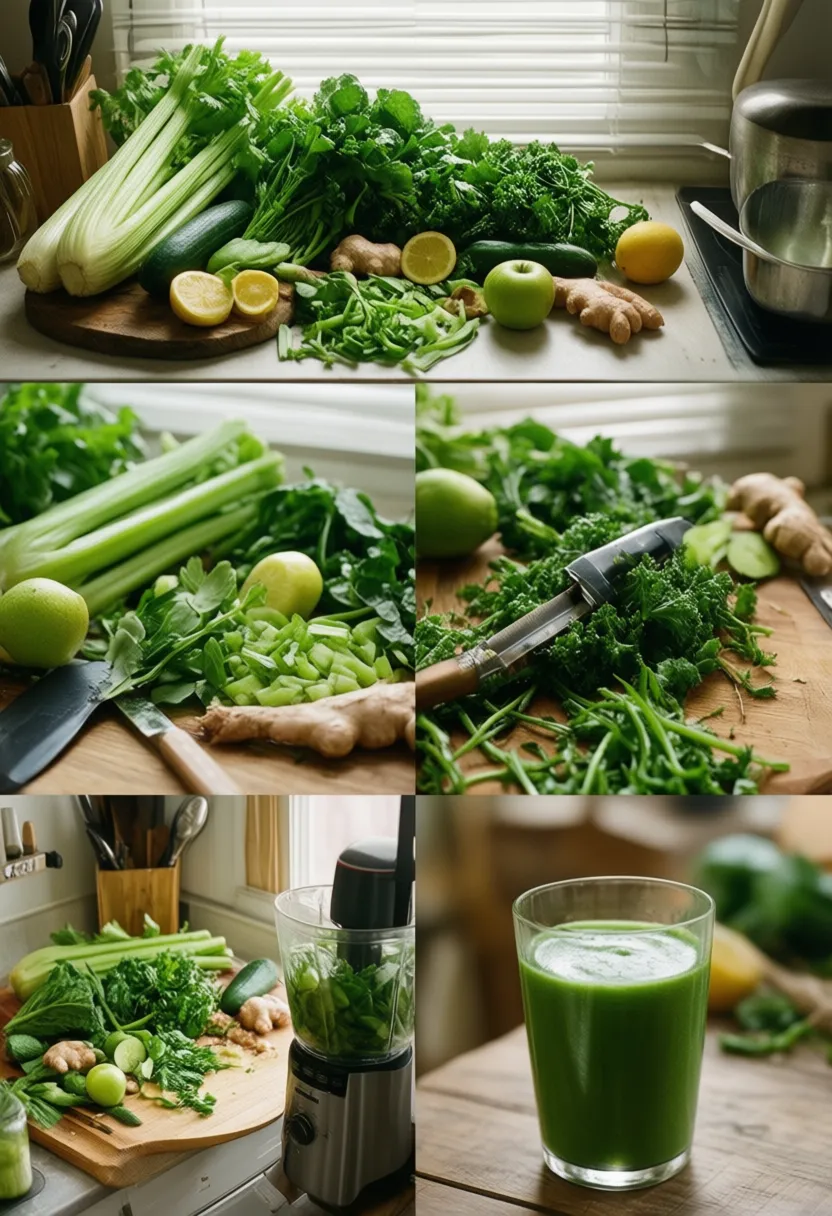
How I Make It
- Wash everything first.
I rinse all the produce under cool running water. Nothing fancy here, just enough to get rid of dirt and anything that shouldn’t be there. - Prep without overthinking.
Celery, cucumber, and apple (or pear) get chopped into pieces that are easy to work with. Kale stems go out, because they make the juice tougher and more bitter than it needs to be. - Juice or blend, depending on the day.
If I’m using a juicer, everything goes straight in. If I’m using a blender, I add a bit of cold water, blend until smooth, and strain it through a fine mesh sieve or nut milk bag. - Taste and adjust slightly.
Sometimes I add a bit more lemon. Sometimes a little extra ginger. I don’t aim for perfection, just balance. - Drink it fresh.
I drink it right away, not because of strict rules, but because it genuinely tastes better fresh and feels lighter.
Small Tips That Make This Recipe Easier to Stick With 💡
These aren’t rules, just things that helped me stay consistent:
- Don’t chase perfect ingredients. I look for basics: greens that aren’t slimy, fruit that smells normal, vegetables that still feel firm. That’s enough.
- If the juice tastes too strong, add cucumber or a bit of water next time instead of forcing yourself to drink something you don’t enjoy.
- Keep fruit minimal. One apple or pear is usually enough to make the juice pleasant without turning it sweet.
- If prep starts to feel like a chore, simplify even more. Fewer ingredients is better than skipping the habit entirely.
- Accept that some days will be messier than others. The juice doesn’t care, and neither does your body.
This recipe works not because it’s perfect, but because it’s repeatable. And over time, repeatable habits tend to matter far more than ideal ones. 🌿✨
When I Drink Green Juice, How I Store It, and What I’ve Stopped Stressing About ⏰🥤
If you asked me what the “best” time to drink green juice is, I honestly wouldn’t know how to answer that anymore. I used to think timing mattered a lot. Morning versus evening. Empty stomach versus with food. All of that.
These days, it’s much simpler.
Most days, I drink green juice in the morning, mostly because it’s convenient and sets a certain tone for the day. Some days, especially when mornings are rushed, it ends up being a mid-afternoon thing. Occasionally, I drink it alongside a light meal if that’s what makes sense in the moment.
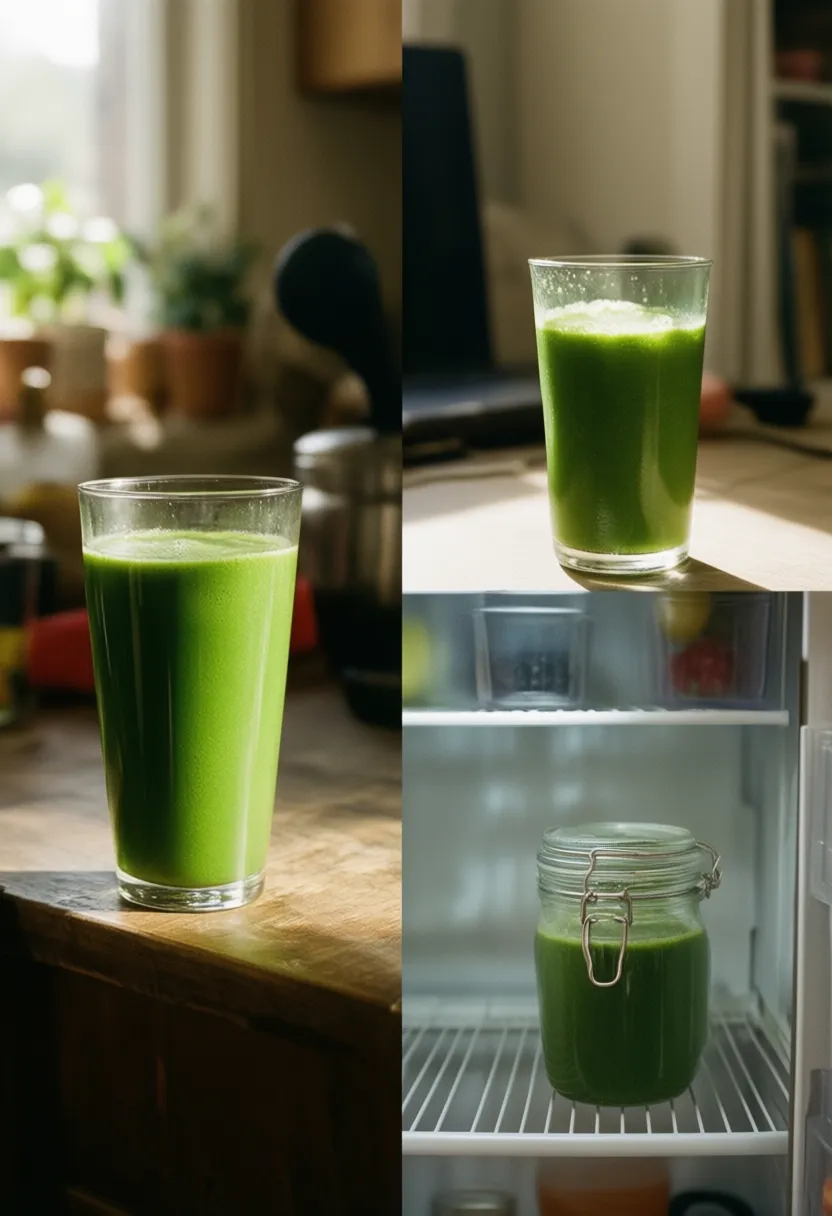
I stopped trying to optimize the timing because optimization was turning into pressure. And pressure is usually the first thing that kills a habit.
What matters more than the clock is that it fits naturally into the day. Once I let go of the idea that there was a “correct” time, it became easier to stay consistent without thinking about it too much.
Storage turned out to be less complicated than I expected as well. If I need to save green juice for later, I pour it into a glass jar, close it tightly, and keep it in the fridge. I try to drink it within a day. Sometimes it separates. I shake it. That’s about it.
There was a time when I worried too much about doing everything “right.” Over time, a few things quietly dropped off my list of concerns, and nothing bad happened because of it.
Here’s what I genuinely don’t worry about anymore:
- exact nutrient numbers or trying to calculate what each ingredient contributes
- perfect ratios or repeating the same recipe the exact same way every time
- missing a day or two and feeling like I’ve “failed”
The habit survives because it’s flexible. When it stops being flexible, it stops being a habit and starts being a chore.
Where Green Juice Actually Fits When It Comes to Immune Health 🌿
Green juice didn’t make me invincible, and I don’t expect it to. I still get tired. I still catch colds from time to time. Life still happens.
What changed was more subtle than that.
Recovery feels easier. Seasonal shifts don’t hit as hard. My body seems a little more resilient overall, especially during periods of stress or when my sleep isn’t ideal. It’s not something I can measure precisely, but it’s something I notice over time.

Green juice supports. It doesn’t replace.
And that distinction matters more than I used to think.
It works best when it sits alongside other basic things:
- reasonably consistent sleep
- actual meals, not just snacks
- some kind of movement, even if it’s minimal
- paying attention to stress instead of ignoring it
In that context, green juice feels like a quiet ally. Not a promise, not a solution, not a dramatic intervention. Just support in the background, doing its job without asking for much attention.
Final Thoughts (Without Trying to Wrap Everything Up Neatly) ✨
I’ve come to believe that health habits don’t need drama to work. They don’t need constant motivation, strict rules, or a sense of urgency. What they really need is space — space to exist without being perfect.
Green juice earned its place in my routine not because it delivered instant results, but because it didn’t demand perfection from me. It allowed for messy days, skipped days, and adjustments without guilt.
Over time, that turned out to be exactly what made it effective.