Contents
There’s something genuinely satisfying about taking a very ordinary ingredient and turning it into something that feels just a bit more special. Potatoes are probably the best example of this. They’re always around, inexpensive, and usually treated as a side that doesn’t require much attention. Most of the time, they’re just there — predictable, reliable, and easy to overlook.
But once you slow down and give them a bit more care, the whole perception changes 🧀
That’s exactly what happens with twice-baked potatoes. On the surface, the idea seems almost too simple to make a difference. You bake a potato, then bake it again. It doesn’t sound like much. But in reality, that second step completely transforms both the texture and the flavor.
The outer skin becomes slightly firmer and lightly crisp, creating structure. Inside, the potato turns soft and creamy, but not heavy — more like a light, whipped filling than a dense mash. It’s a noticeable contrast, and it’s one of the reasons the dish feels more complete.
What makes it even more interesting is how the flavors come together during this process. Instead of tasting each component separately, everything blends into a more balanced, cohesive whole. The butter adds warmth and richness, the creamy elements bring a slight tang, and the blue cheese introduces depth that feels subtle but important.
It’s not a dramatic transformation, but it’s enough to shift the entire experience. You take a bite, and for a moment, you pause — not because it’s surprising in a flashy way, but because it’s simply better than expected.
- lightly crisp, structured skin that holds everything together
- soft, creamy interior with a smooth but not overly processed texture
- balanced flavor with richness, mild tang, and a deeper savory note
- a finish that feels more layered than a standard baked potato
That combination is what makes this dish stand out. It’s still familiar, but it doesn’t feel basic anymore.
🧀 Why Blue Cheese Changes Everything
Blue cheese is one of those ingredients that people tend to have strong opinions about. Some enjoy it right away, while others hesitate because of its sharp aroma and bold taste. It’s not neutral, and it doesn’t try to be.
However, in this dish, it behaves in a much more subtle and balanced way.
When blue cheese is mixed into warm potatoes, its texture softens and its flavor becomes less aggressive. The sharpness fades, and instead of standing out as a dominant ingredient, it blends into the mixture. What you’re left with is not a strong “blue cheese flavor,” but a deeper, slightly tangy richness that supports everything else.
This matters because potatoes on their own can sometimes feel a bit flat. They’re comforting, but not always very dynamic in flavor. Blue cheese adds contrast without overwhelming the dish, which makes the overall taste more interesting and complete.
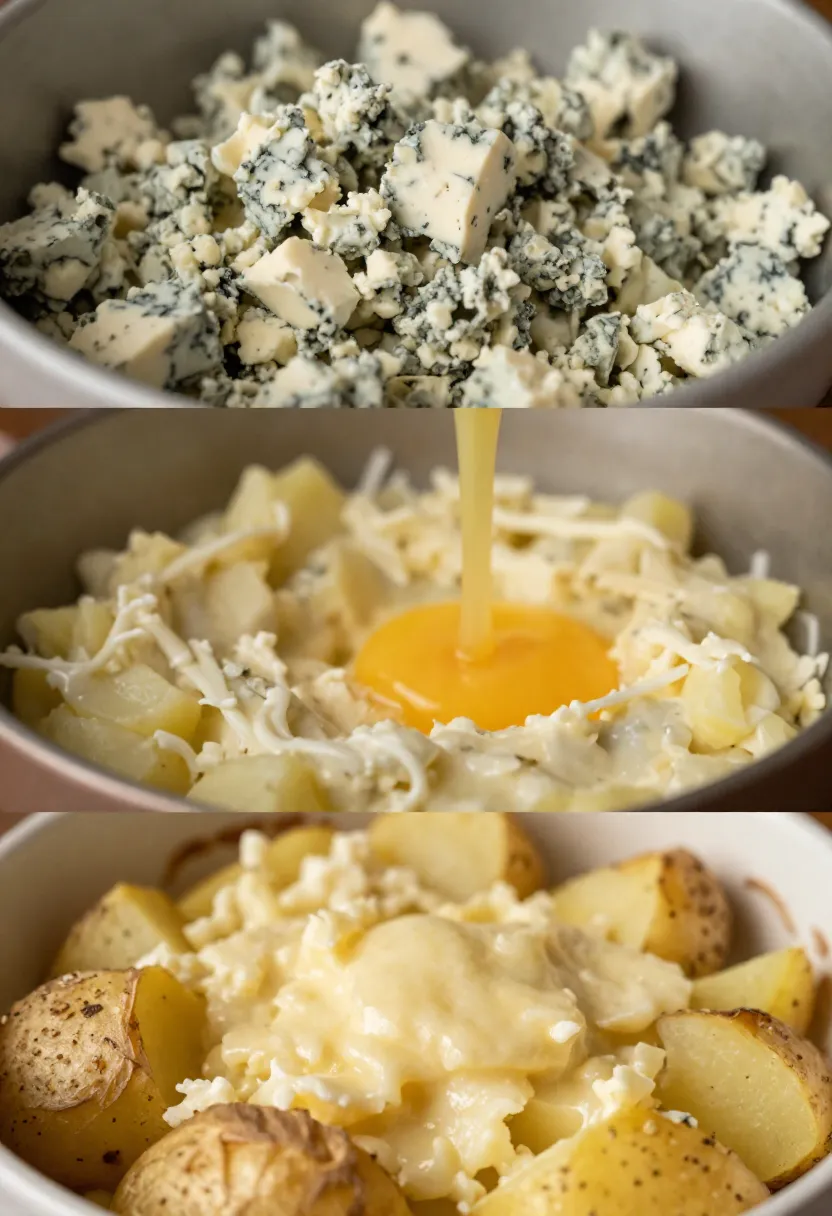
It also changes how the richness is perceived. Without something to balance it, creamy potato fillings can feel a bit heavy. Blue cheese cuts through that slightly, creating a better balance between richness and freshness.
Another important detail is how flexible it is. You can adjust the intensity depending on your preference, which makes the dish accessible even if you’re not completely comfortable with strong cheeses.
- use a smaller amount if you want a milder flavor
- combine it with a softer cheese to reduce sharpness
- taste while mixing to control how noticeable it is
Over time, many people find that they prefer slightly more of it once they get used to how it works in the dish. It stops feeling like a “strong ingredient” and starts feeling like an essential part of the flavor.
For those who already enjoy blue cheese, this combination feels very natural. It doesn’t exaggerate the cheese — it just integrates it in a way that feels balanced and easy to enjoy.
🔥 The Appeal of Cooking Something Twice
Beyond the flavor, there’s also something about the process itself that makes this dish feel a bit more intentional. It’s not complicated, but it involves enough steps to make you more engaged compared to simpler recipes.
The first bake is straightforward. You place the potatoes in the oven and let them cook until they’re soft. It’s a passive step that doesn’t require much attention, which makes it easy to fit into your routine.
The second stage is where things become more hands-on.
You cut the potatoes open, scoop out the inside, and start working with the filling. This is the part where the recipe becomes less rigid. You’re not just following instructions — you’re adjusting texture and flavor based on what feels right. Maybe you add a bit more butter, or slightly more seasoning than originally planned.
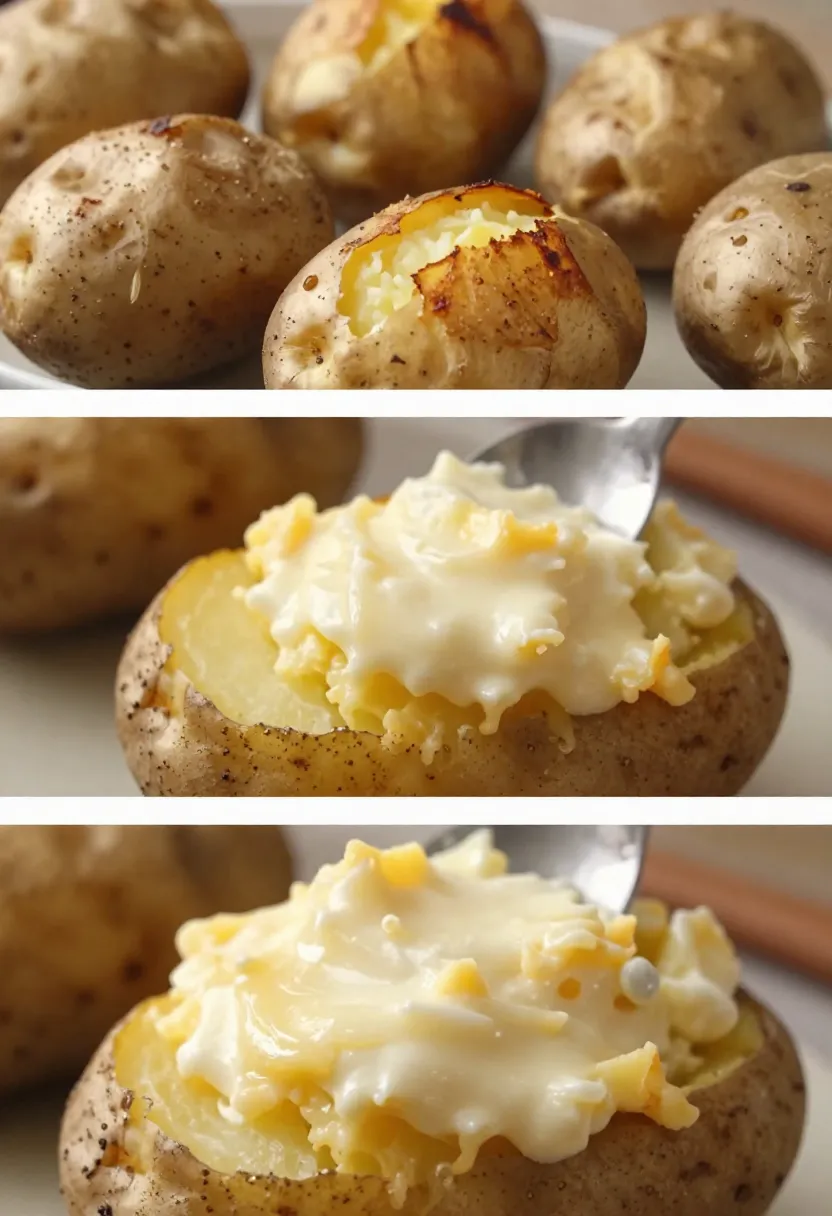
There’s also a small element of unpredictability. Sometimes the skins tear slightly, or the filling ends up a bit more textured than expected. These things don’t really affect the final result, but they make the process feel more real and less mechanical.
- bake until the potatoes are fully soft
- scoop out the inside while keeping the skins intact
- mix the filling and adjust flavor gradually
- refill the skins generously without worrying about perfection
- bake again until the tops are lightly golden
By the time the potatoes go back into the oven for the second bake, most of the work is already done. The final step is about bringing everything together — warming the filling, slightly crisping the surface, and letting the flavors settle into a cohesive whole.
When they come out, they feel finished in a way that a regular baked potato doesn’t. Not because they’re complicated, but because a bit more attention went into making them.
And that difference, even if it’s subtle, is usually noticeable right away.
🍽️ Blue Cheese Twice-Baked Potatoes Recipe
🧾 A Creamy, Savory Potato Dish With a Bold Twist
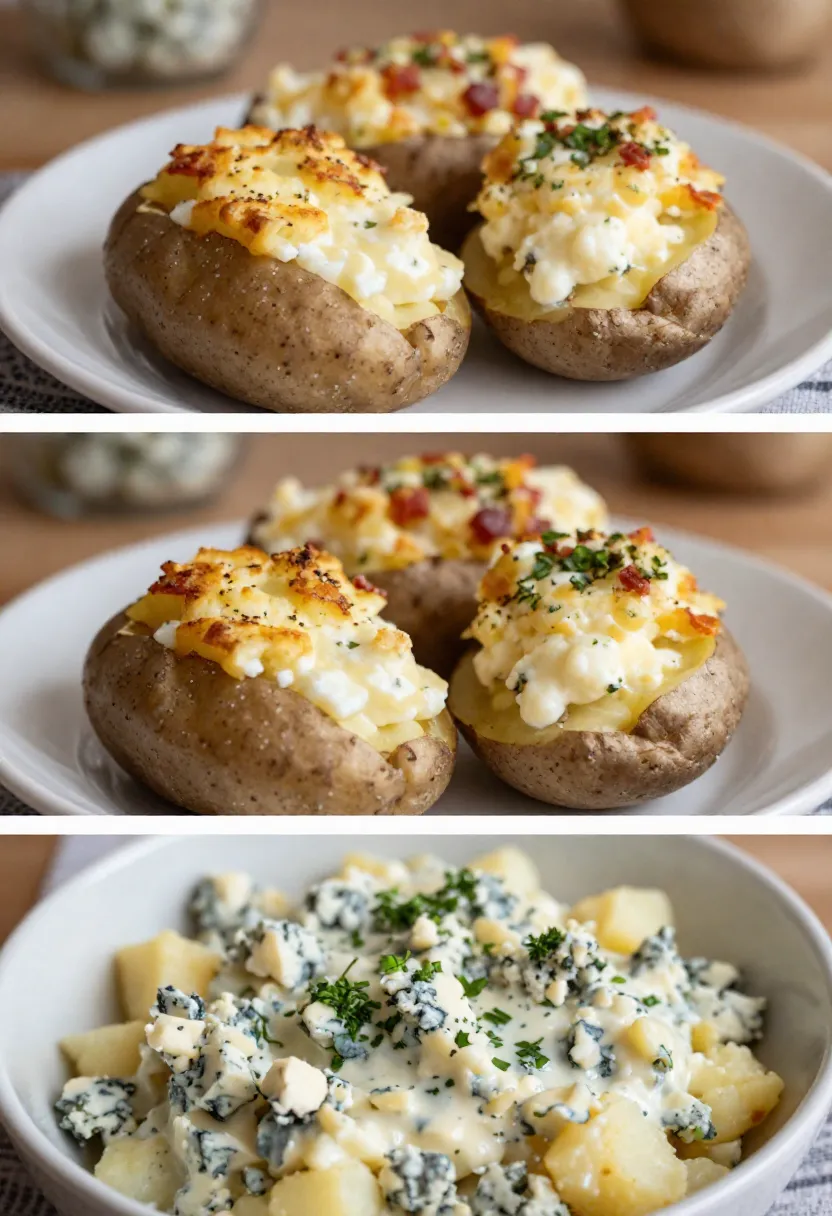
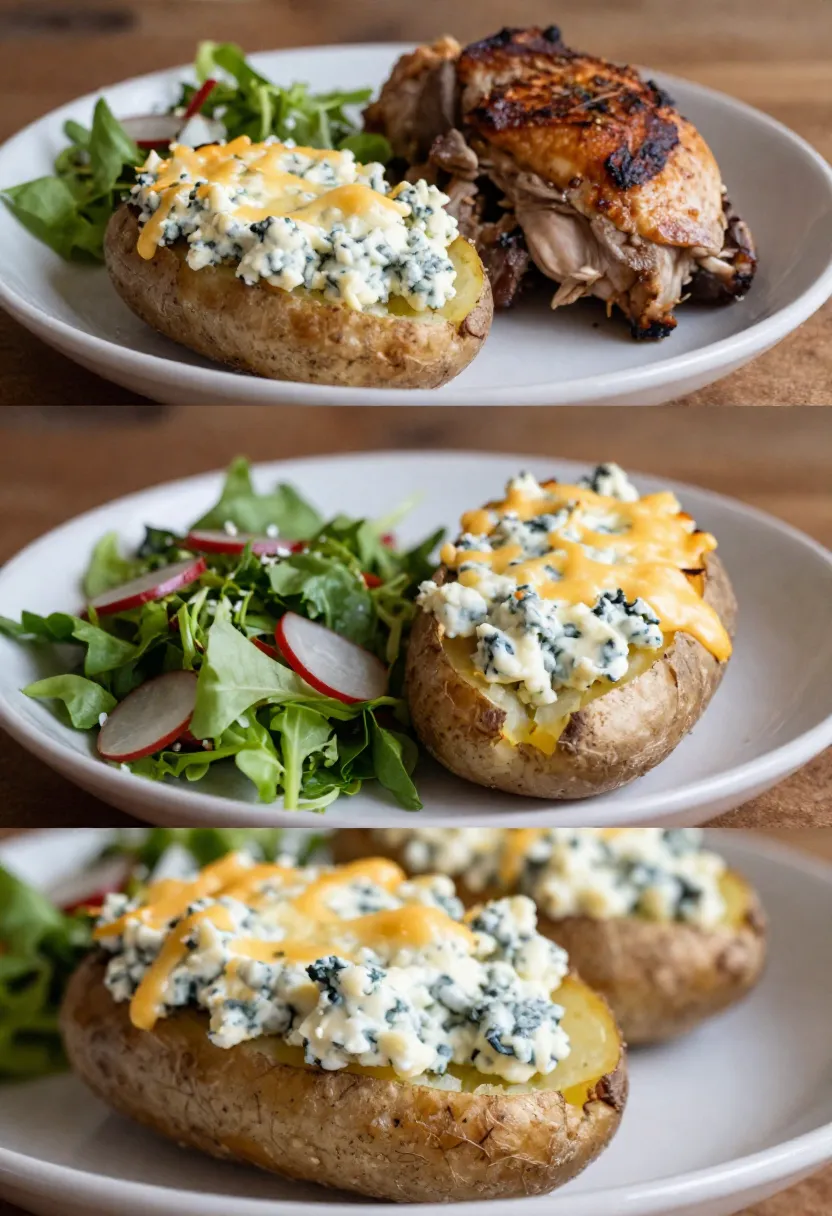
These twice-baked potatoes are one of those dishes that feel both comforting and just a little bit elevated at the same time. On the outside, you get a lightly crisp skin that holds its shape, while the inside turns soft, creamy, and rich without feeling too heavy. It’s the kind of texture contrast that makes each bite more interesting than a regular baked potato.
What really makes this version stand out is the addition of blue cheese. It doesn’t dominate the flavor the way you might expect. Instead, it melts into the filling and adds a subtle tang and depth that balances the richness of the butter and cream. The result is a filling that feels smooth, slightly savory, and layered rather than flat.
There’s also a lot of flexibility built into this recipe. You can keep it simple for a quiet dinner at home, or dress it up a bit with bacon, extra cheese, or fresh herbs when you’re cooking for guests. It works in both situations without feeling out of place.
Another nice thing is that it doesn’t require perfect technique. The filling doesn’t need to be completely smooth, and the potatoes don’t have to look identical. In fact, a slightly rustic look often makes them feel more inviting.
Overall, this is the kind of dish that tends to disappear faster than expected — especially when served warm, straight from the oven 😄
🛒 Ingredients
- 4 large baking potatoes
- 4 tablespoons butter
- ½ cup sour cream
- ¼ cup milk or cream
- 80–100 g blue cheese, crumbled
- ½ teaspoon garlic powder or 1 clove garlic (finely minced)
- Salt, to taste
- Freshly ground black pepper
- 6 slices bacon, cooked and crumbled (optional)
- ½ cup shredded cheese (cheddar, gouda, or similar)
- Fresh herbs (chives or parsley), optional
👩🍳 Instructions
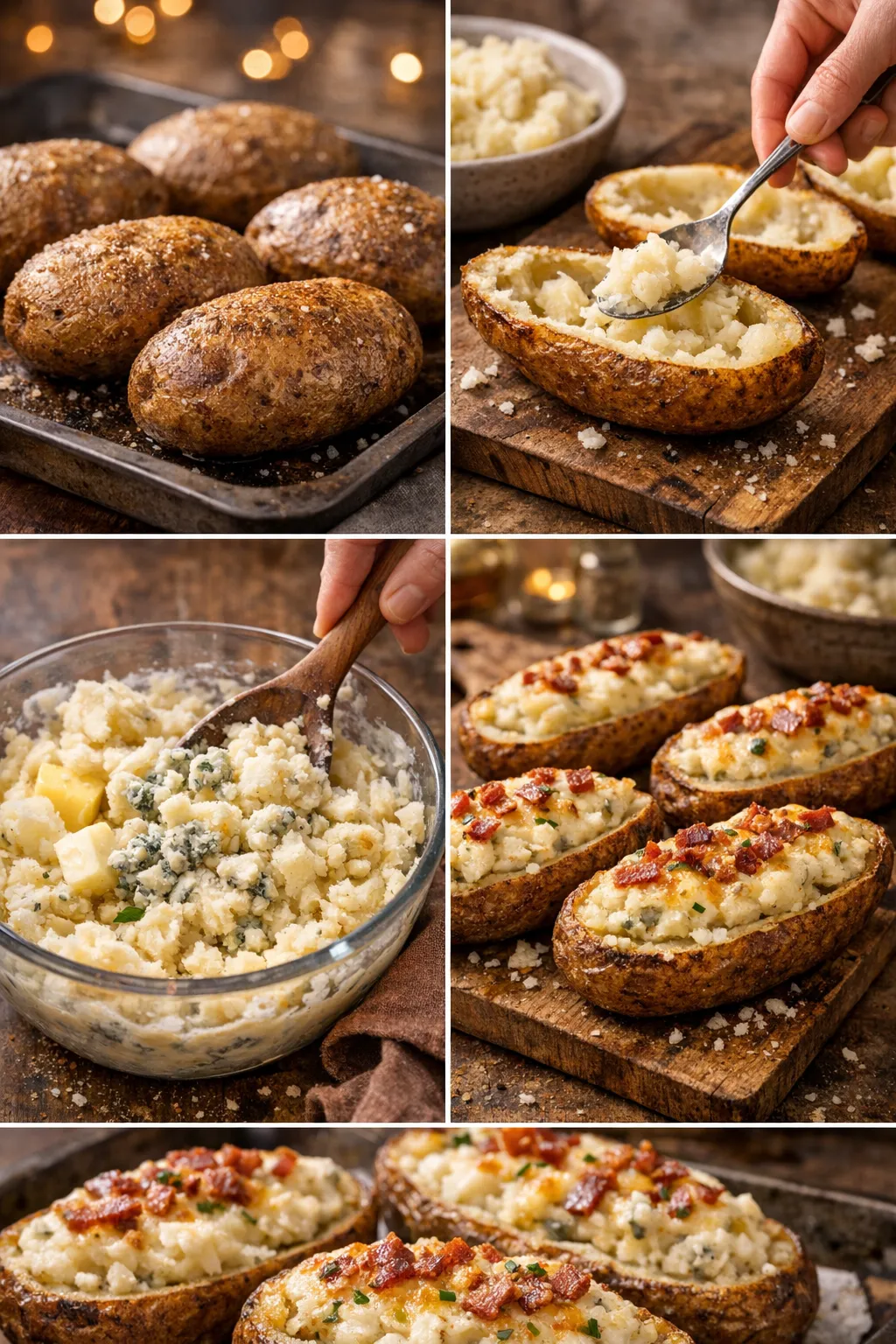
- Preheat your oven to 200°C (400°F). Wash and dry the potatoes, then lightly rub them with oil and sprinkle with salt.
- Place the potatoes directly on the oven rack and bake for about 50–60 minutes, until they are soft inside.
- Remove from the oven and let them cool slightly, just enough to handle comfortably.
- Slice each potato in half lengthwise and carefully scoop out the inside into a bowl, leaving a thin layer attached to the skin.
- Add butter to the warm potato flesh and let it melt. Then mix in sour cream, milk, blue cheese, garlic, salt, and pepper.
- Mash everything together until creamy but not overly smooth. Taste and adjust seasoning if needed.
- Stir in the crumbled bacon if using.
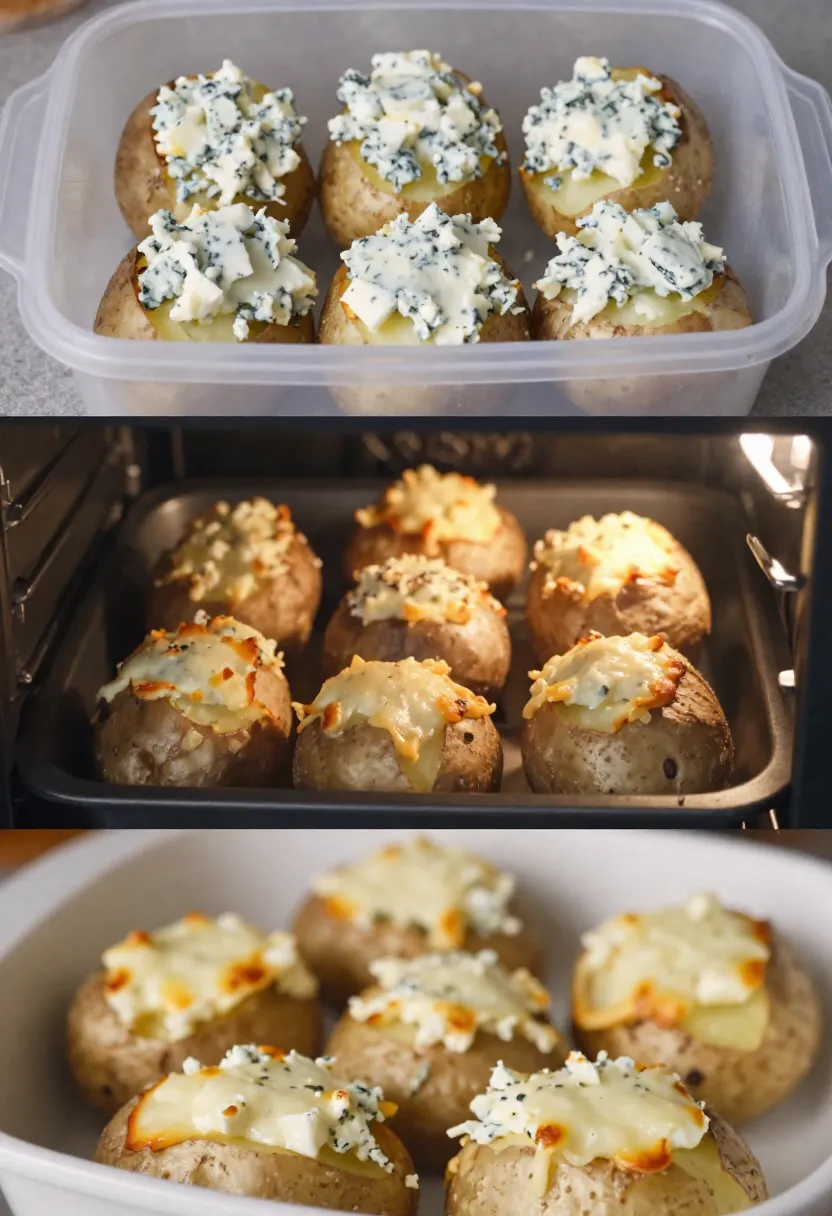
- Spoon the mixture back into the potato skins, filling them generously.
- Sprinkle shredded cheese over the top of each potato half.
- Return to the oven and bake for another 15–20 minutes, until heated through and lightly golden on top.
- For extra color, switch to broil for the last 2–3 minutes.
- Garnish with fresh herbs before serving, if desired.
💡 Small Tips That Make a Difference
- Mash the potatoes while they’re still warm — it makes the texture smoother without extra effort
- Don’t overmix the filling, or it can turn slightly dense instead of light
- Taste before refilling the skins — it’s much easier to adjust seasoning at that stage
- If you want crispier skins, bake the potatoes directly on the oven rack, not on a tray
- Let them sit for a couple of minutes after baking — the filling sets slightly and becomes even creamier