Contents
- Why Apple Pie Feels Like Home 🏡
- Before You Begin: The Ingredients 🍎🧈
- Making the Dough: Quiet, Cold, and Patient ❄️
- Apples Deserve Respect 🍏✨
- Rolling, Filling, and Trusting the Process 🥧
- Baking: When Patience Really Pays Off 🔥⏳
- The Hardest Part: Letting It Cool 😅
- How to Serve It (and Why Less Is More) 🍨
- Mistakes Happen — and That’s Completely Normal 💛
- Making Apple Pie Truly Yours 🍁
- Final Thoughts: Why Apple Pie Matters 🥧✨
There are desserts that shout for attention. They sparkle, they glisten, they practically demand a selfie before you even take a bite. And then there’s apple pie. It doesn’t yell. It doesn’t need to. It quietly claims its place at the table, fills the room with a comforting aroma that tugs at memories you didn’t even know you had, and somehow, without saying a word, makes everyone pause just a little longer, take a slower breath, and feel a tiny warmth spread inside. That is the magic of apple pie — it earns attention the way a good story does, gently, patiently, without forcing itself upon you. 🍂
Apple pie is honest. There are no shortcuts that capture its soul. It doesn’t reward speed, it doesn’t reward carelessness. This isn’t about racing through a recipe just to call it done. It’s about understanding each step, appreciating why it matters, and giving yourself the small luxury of time — because time is what turns flour, butter, and apples into something that feels like love on a plate. And yes… there is a recipe tucked inside this story, not as a block of instructions, but as a part of the narrative itself, flowing naturally, like the scent of cinnamon drifting through a warm kitchen. 🍎✨
Why Apple Pie Feels Like Home 🏡
Apple pie rarely exists in isolation. It’s wrapped in context, draped in memory, and steeped in routine. For some, it is inseparable from the holidays — Thanksgiving dinners, autumn evenings when the light turns golden just before sunset. For others, it’s the quiet weekends, when a mother or grandmother would pull a pie from the oven, wiping her hands on her apron, letting the house fill with a mixture of sweet, tart, and spice.

Even if apple pie wasn’t part of your childhood, it somehow feels familiar. That first forkful sparks recognition — a connection to warmth, to nostalgia, to the universal idea of comfort. Comfort, after all, doesn’t need to reinvent itself. It doesn’t need flashy decorations or fancy techniques. Comfort just needs to be done well, with thought, patience, and a little attention to detail.
Before You Begin: The Ingredients 🍎🧈
Making an apple pie begins long before the oven warms up. It begins with your choices, with the way you approach the ingredients, and with the quiet moments you allow yourself to pause and consider them.
The dough is deceptively simple. Flour, salt, butter, water — that’s all it takes. Two and a half cups of flour and a teaspoon of salt go into a large bowl, mingling like old friends meeting again after a long time. The butter — a full cup, or two sticks — must be unsalted and very, very cold. Not just “fridge cold,” but icy enough that your fingers will protest slightly as you cube it, the chill biting through the warmth of your hands. Keep it in the fridge if your kitchen feels warm. Every chunk is a little promise of flakiness yet to come.
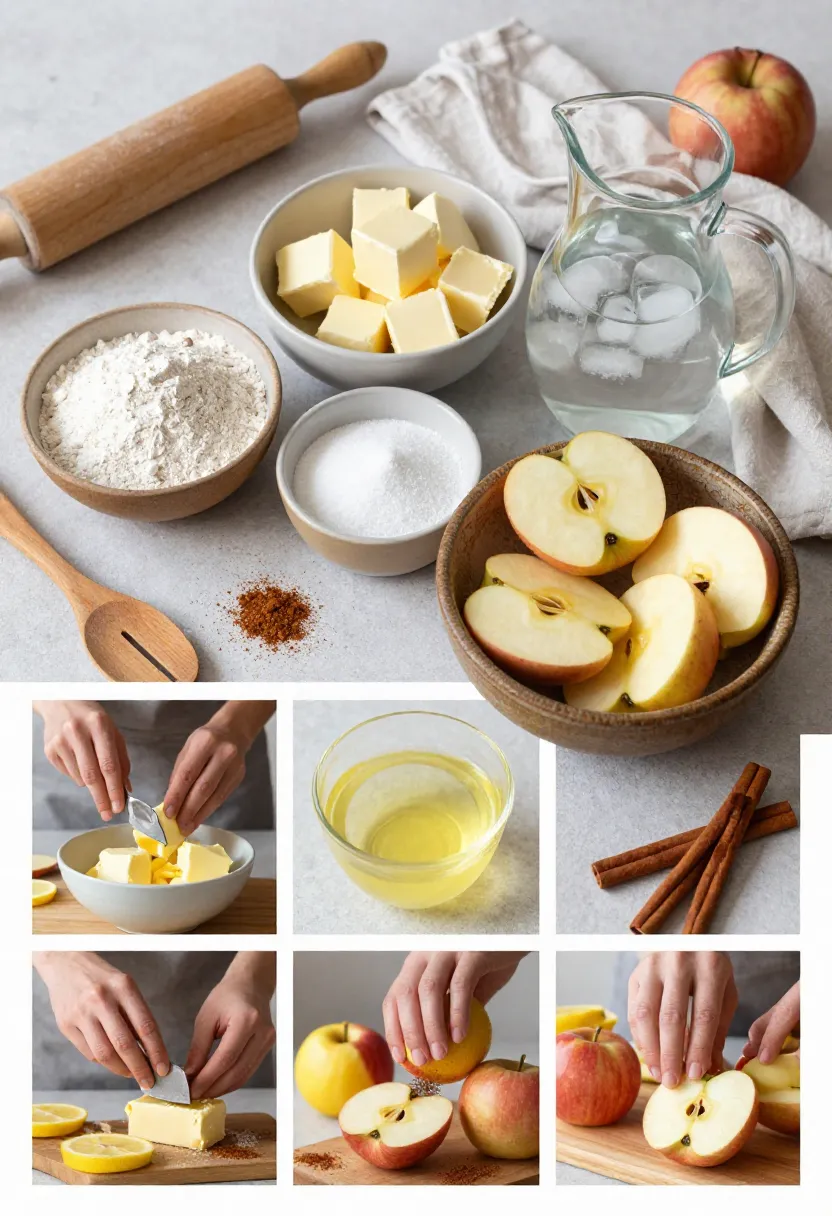
Water, too, matters more than it seems. It must be ice-cold, glacial even, because the dough is sensitive. Add too much warmth and the butter melts too soon. Too little water, and the dough fights back. It’s a balance — delicate, precise, yet forgiving if treated with care.
And then there are the apples. Oh, the apples. The heart of the pie, the reason we pull ourselves away from screens and schedules, the reason the kitchen suddenly feels like a sanctuary. You’ll need around six cups of peeled, cored, and sliced apples — usually six to eight medium-sized ones. But the mix is what makes the magic. Tart Granny Smiths for structure and bite, combined with sweeter Honeycrisp or Fuji for juiciness and aroma. Together, they tell a story in every slice — tartness meeting sweetness, structure meeting tenderness. It’s almost poetic if you pause long enough to notice.
To finish the filling, gather a little sugar — both white and brown — spices like cinnamon and nutmeg, a touch of lemon juice to brighten the flavors, and a small bit of flour or cornstarch to give the filling just the right texture. There’s nothing exotic here. Nothing intimidating. Just thoughtful ingredients treated with care.
Making the Dough: Quiet, Cold, and Patient ❄️
Pie dough intimidates almost everyone at first glance. It looks fragile. It feels cold. It seems as if one wrong move and the whole thing will turn into a tough, unworkable mess. But the truth is… it’s actually very forgiving if you treat it with care and patience. Think of it like tending a small, delicate garden — a few gentle touches, some time, and it will reward you beautifully.
Start by combining your flour and salt in a large bowl. Let them mingle for a moment — imagine the grains like tiny dancers, waiting for their partners. Then, add the cold butter. Key point: this butter must be icy, firm, resistant. Cut it into small cubes, and then incorporate it into the flour using your fingers, a pastry cutter, or even a fork. Work it gently, leaving some pieces the size of peas. Those little chunks aren’t mistakes — they are future pockets of flakiness that will puff up in the oven.
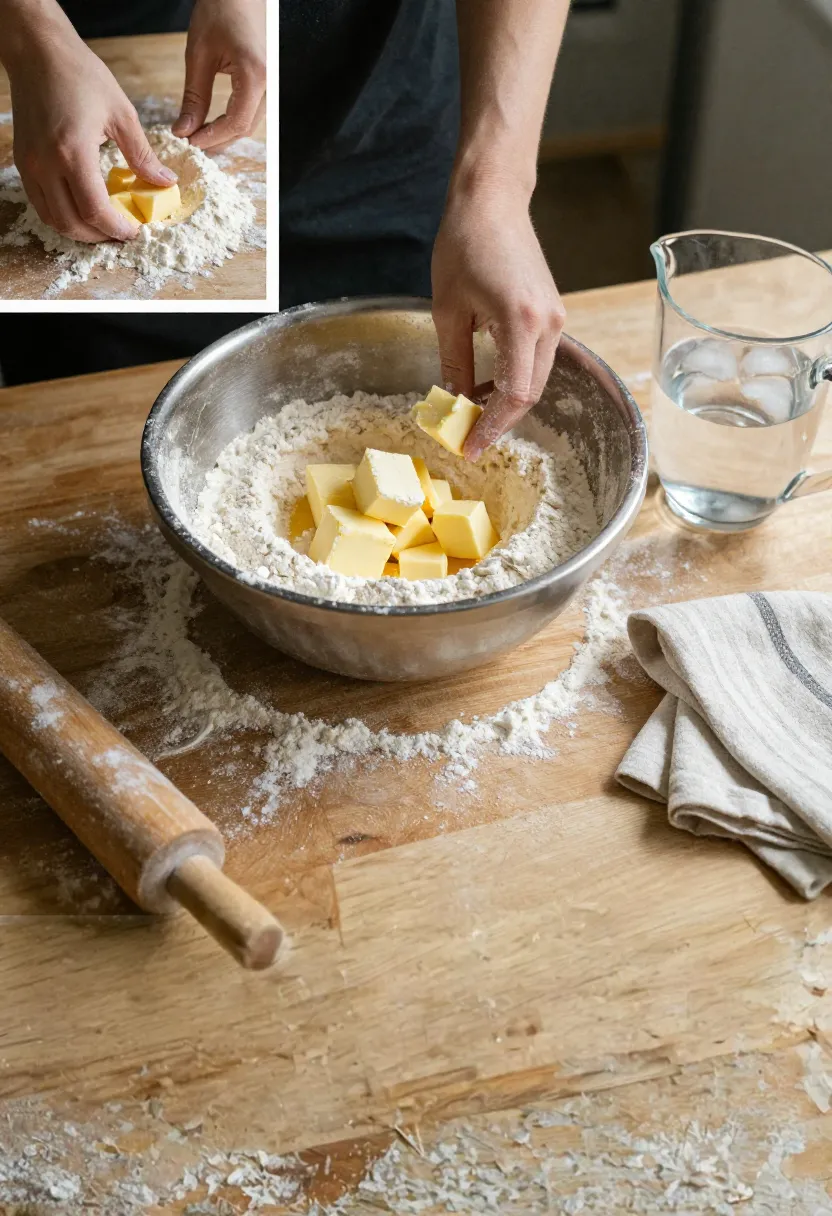
Now, the water. Ice-cold, always. Add it slowly, one tablespoon at a time, mixing gently as you go. Stop the moment the dough just starts to hold together. It should look a bit rough, a bit shaggy, never glossy or sticky. Think of it as “almost assembled,” not “perfectly smooth.”
When it’s ready, divide the dough into two equal portions. Press each into a flat disc, wrap them tightly in plastic, and let them rest in the fridge for at least thirty minutes. This pause is crucial — the dough needs time to relax, and the butter needs to firm up again. And honestly… so do you. Take a moment, breathe, maybe clean up a little. Trust that good things take time.
Quick Dough Checklist:
- 2 ½ cups all-purpose flour
- 1 tsp salt
- 1 cup (2 sticks) unsalted butter, very cold
- ½ – ¾ cup ice water
Apples Deserve Respect 🍏✨
While your dough chills, it’s time to turn your attention to the apples — the real heart of the pie. They aren’t just ingredients; they are flavor, texture, and aroma all rolled into one. Treat them with a little reverence, and they’ll reward you.
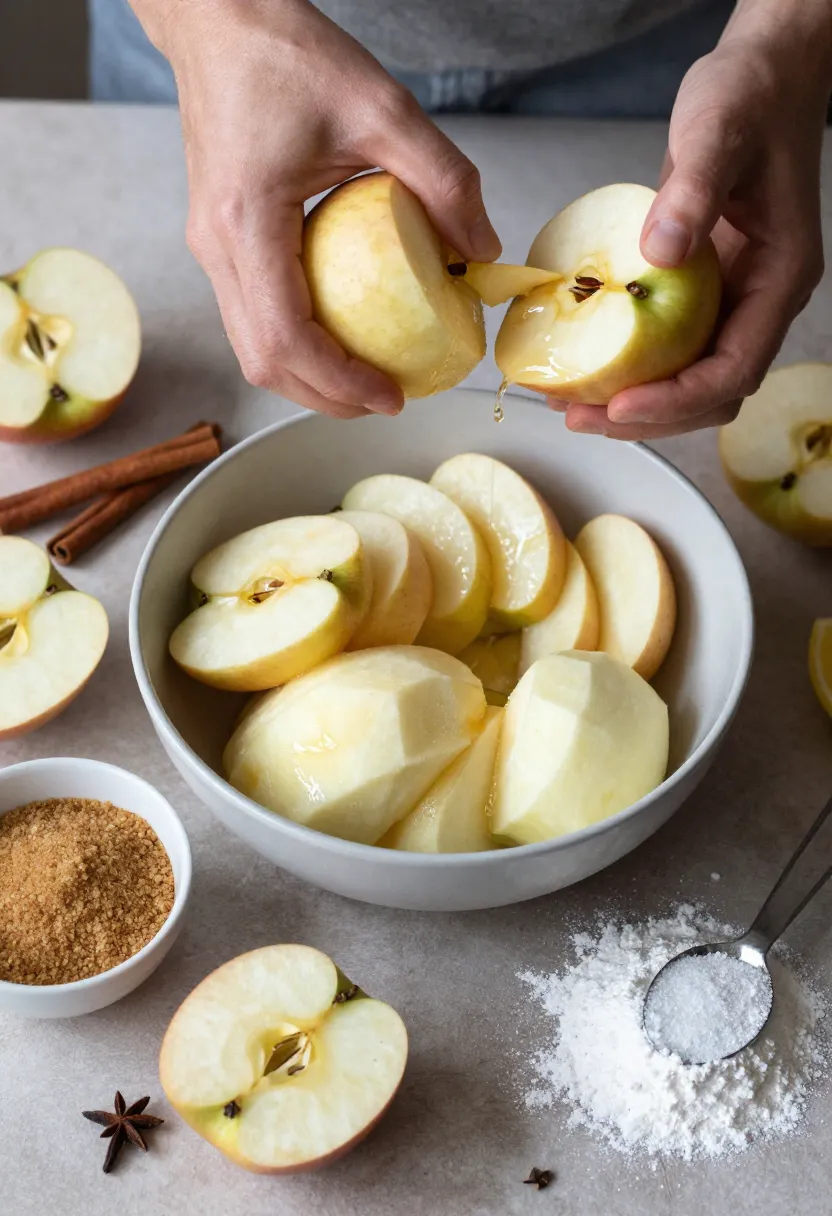
Peel each apple carefully, core it, and slice it evenly — about a quarter-inch thick. This matters more than you might think. Uneven slices cook unevenly, and no amount of sugar or spice will hide a mushy piece next to a firm one.
Once sliced, place the apples in a large bowl. Add:
- ½ cup granulated sugar (adjust to apple sweetness)
- ¼ cup packed brown sugar
- 1 tsp cinnamon
- ¼ tsp nutmeg
- Pinch of cloves (optional, but use sparingly)
- 1 Tbsp lemon juice
Next, add a thickener: either ¼ cup flour or 2 Tbsp cornstarch if you prefer a clearer filling. Toss gently so every slice is coated. Let the mixture sit for a few minutes — watch as the juices begin to form a light syrup. This is exactly what you want. That’s flavor starting to build.
Rolling, Filling, and Trusting the Process 🥧
Preheat your oven to 425°F (220°C). A hot start is important — it helps the crust set quickly and protects the delicate layers.
Take one chilled dough disc and roll it out on a lightly floured surface. Aim for a circle large enough to comfortably fit your pie dish, with a slight overhang. Don’t stretch it — dough remembers and will shrink if pulled too aggressively. Transfer it gently to the pan and let it settle naturally.
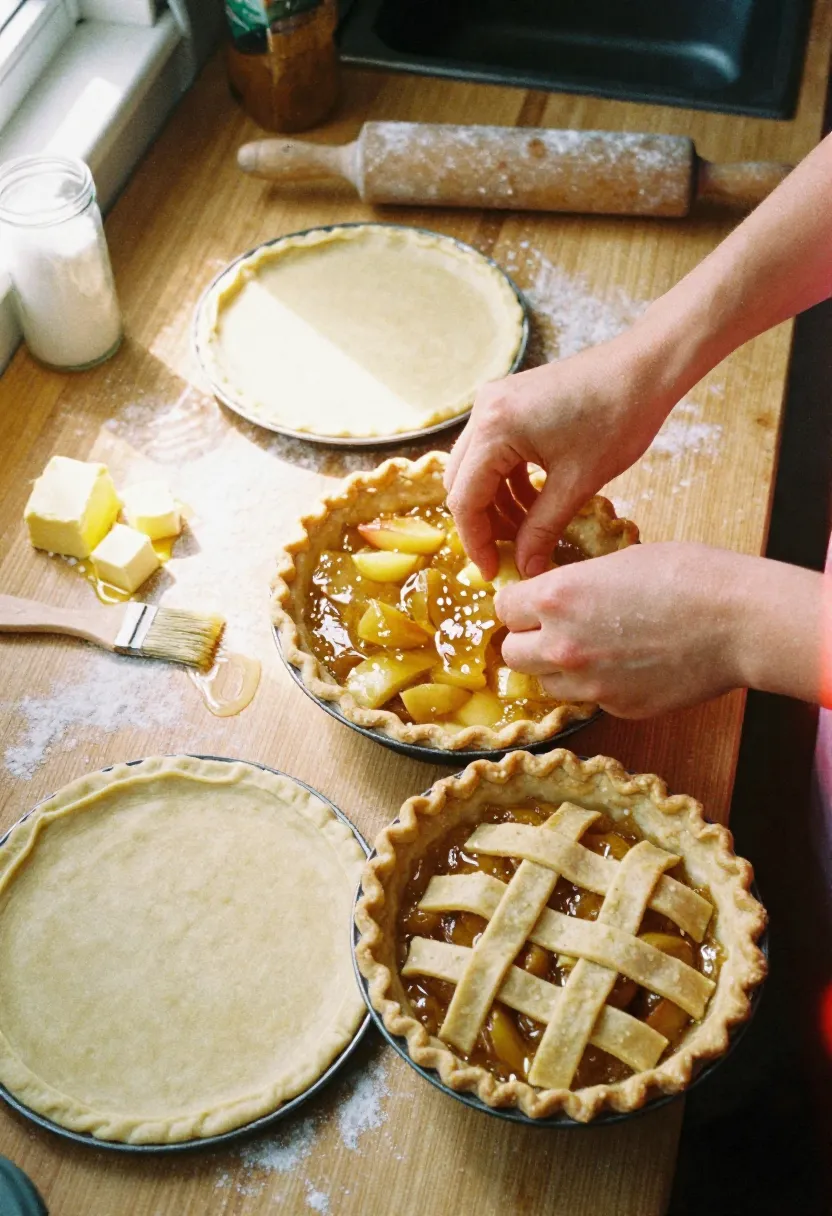
Now, pour in the apple filling. It might look like too much, but trust the process. Apples shrink as they bake, and the juices will thicken into the perfect syrup. Dot the filling with a couple tablespoons of butter, cut into small pieces. This adds richness and helps the texture remain silky.
Roll out the second disc of dough. You have choices here:
- Place it whole on top and cut a few small slits for ventilation
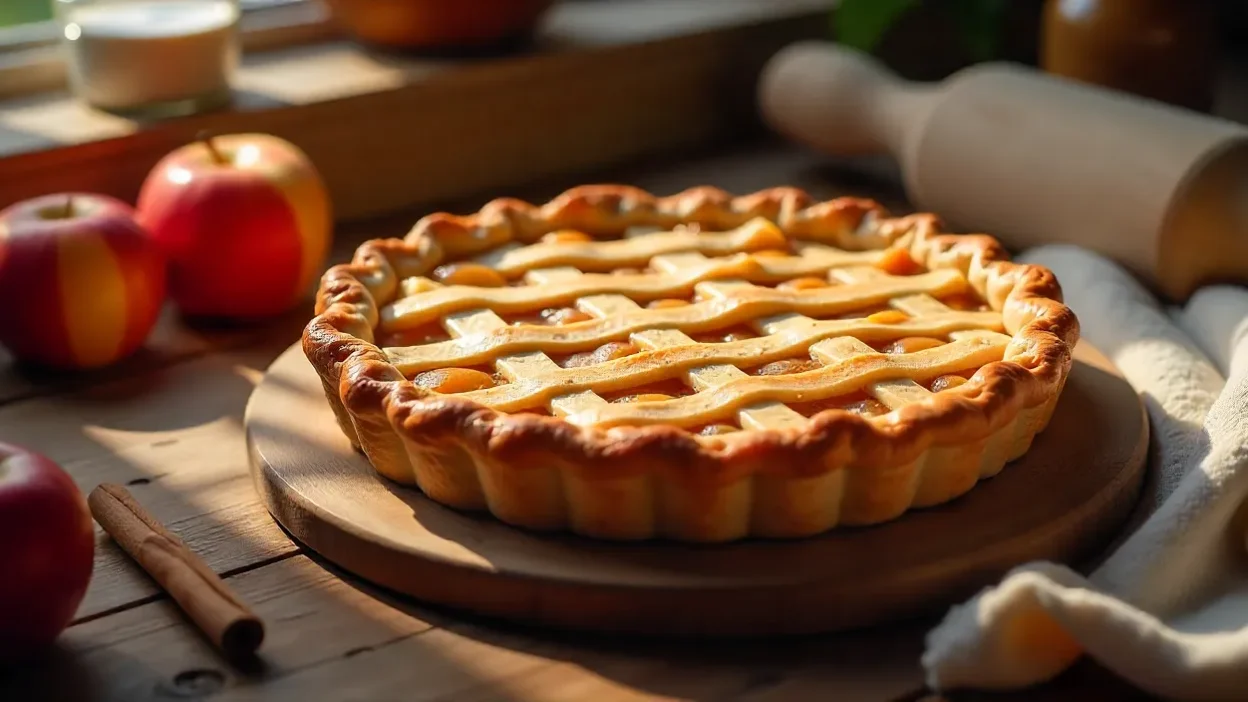
- Cut it into strips and weave a lattice pattern
Do what feels right. This is your pie. Trim the excess dough, seal the edges, and crimp them gently.
Finally, give the top a little shine. Brush it with a beaten egg mixed with a teaspoon of water. For sparkle and a subtle crunch, sprinkle coarse sugar over the top. ✨
Baking: When Patience Really Pays Off 🔥⏳
Now comes the part that tests your patience — but also rewards it more than anything else in the whole process. Place your pie carefully on a baking sheet. Yes, a baking sheet — because apple pies have a habit of bubbling over, and cleaning sticky, caramelized sugar off your oven floor is an unpleasant surprise you really don’t need.
Pop the pie into the oven at 425°F (220°C) for the first fifteen minutes. This initial heat jump helps the crust set quickly, giving it that beautiful golden edge and a slight firmness that will hold all those juicy apples inside.
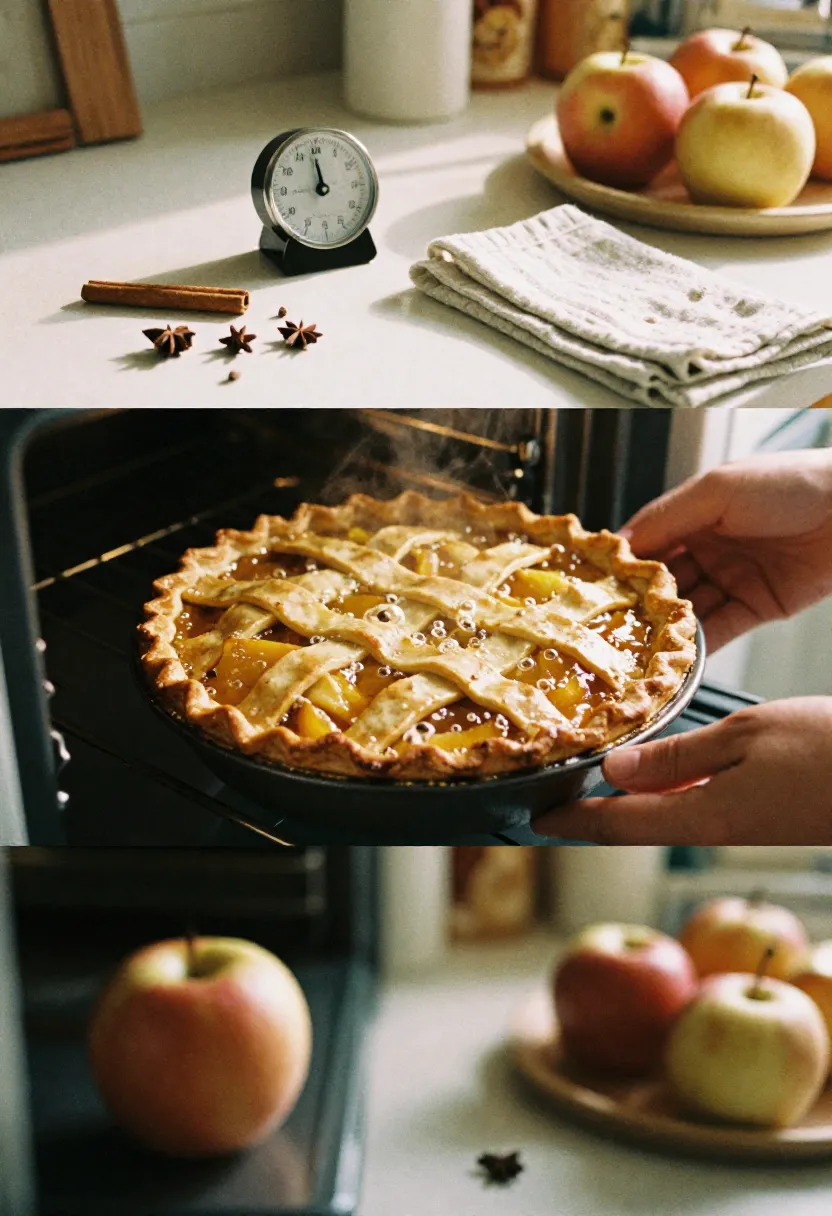
After fifteen minutes, lower the oven temperature to 375°F (190°C) and let the pie bake for another thirty-five to forty-five minutes. This is where the magic happens. The apples soften just enough, the juices mingle with sugar and spices, and the crust transforms from cold dough into a golden, tender, flaky masterpiece.
Here’s what you’re looking for:
- A golden crust — not pale, not burnt, but glowing like it’s been kissed by the sun.
- Bubbling filling — not just at the edges, but through the center. Those bubbles are a sign the apples and sugar are marrying perfectly, thickening into a luscious syrup.
- Aroma that fills the kitchen — warm cinnamon, nutmeg, the sweet tang of apples, and a buttery undertone. Inhale it. Take a moment. This is why we bake.
If the crust starts to brown too fast, don’t panic. Loosely cover the edges with foil. This is not cheating. It’s experience speaking. Sometimes, the oven has its own ideas, and you adapt. That’s baking.
The Hardest Part: Letting It Cool 😅
The moment the pie comes out of the oven, your kitchen will be filled with a smell that makes it almost impossible to wait. It’s tempting, I know. You might want to grab a fork immediately, to taste that perfect filling, that flaky crust, that warm, spicy apple scent. But don’t. Resist.
Let it rest for at least two hours. The filling needs time to set. Cutting too soon will result in a runny mess — not because you did anything wrong, but because physics exists, and sugar syrup needs time to thicken.
Think of this pause as part of the recipe. Waiting is not passive; it’s intentional. It allows flavors to meld, textures to stabilize, and the pie to become exactly what it is meant to be — a slice of comfort, perfectly composed.
How to Serve It (and Why Less Is More) 🍨
Apple pie is humble. It doesn’t need fancy accompaniments or over-the-top garnishes. Sometimes, simple is perfect.
- A scoop of vanilla ice cream is classic for a reason. The cold cream melts into the warm filling, creating an irresistible harmony of textures.
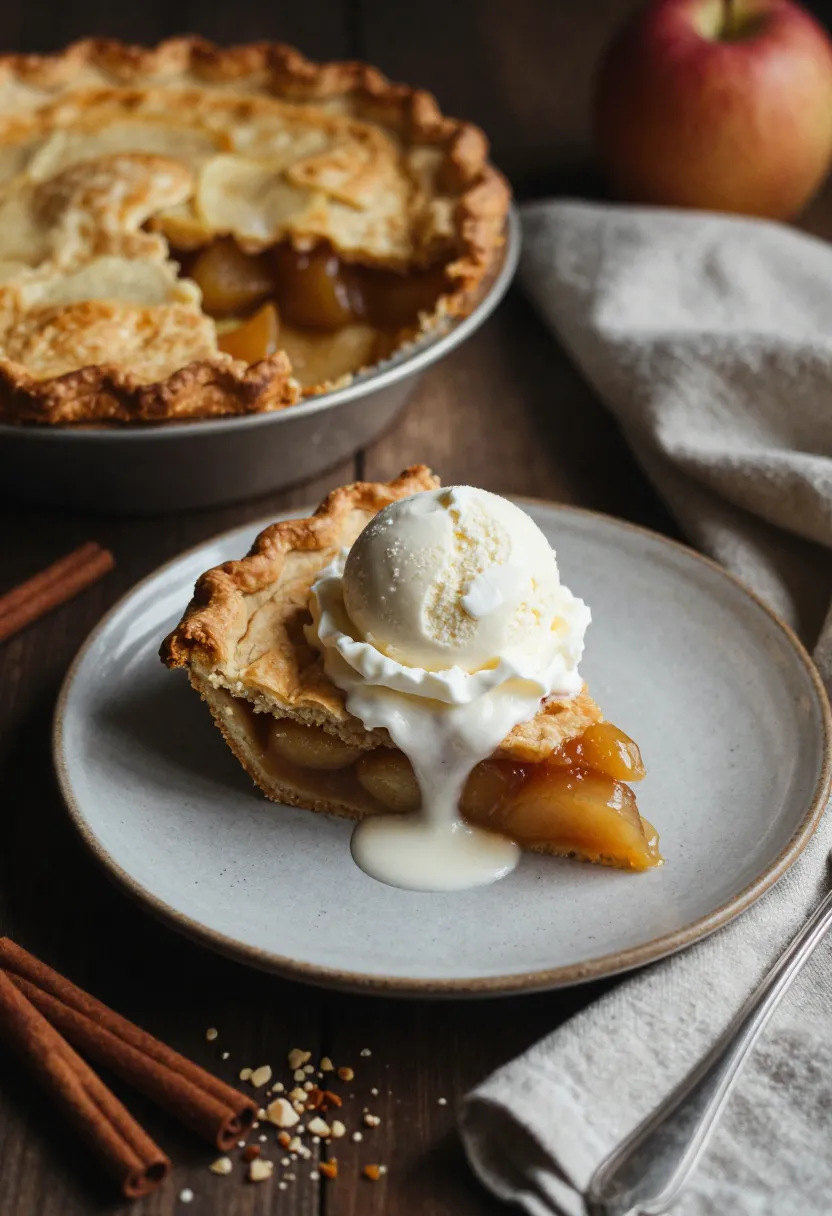
- A dollop of fresh whipped cream is light, airy, and comforting — the perfect contrast to the slightly denser crust and syrupy apples.
- And for the adventurous, a slice with sharp cheddar cheese is surprisingly perfect — the salty bite cutting through sweetness in a way that makes your taste buds sit up and notice.
Serve your pie slightly warm. Not hot enough to burn, but not cold either. Just warm enough that each bite carries the scent of cinnamon and baked apples, the buttery aroma of crust, and the subtle sweetness that makes it feel like home.
If you want, you can sprinkle a little extra cinnamon or a few chopped nuts on top before serving — small gestures, but they make the experience feel personal, handcrafted, and just a little more magical. ✨
Mistakes Happen — and That’s Completely Normal 💛
Let’s be honest: not every pie comes out picture-perfect on the first try. And that’s okay. Truly, it is. Baking is messy, unpredictable, and wonderfully forgiving — but only if you allow it to be.
If the bottom crust is soft, it probably needed a few more minutes in the oven. That’s all. Nothing has “gone wrong,” it just needed a little patience.
If the filling is runny, maybe you cut the pie too soon, or perhaps it could have used a touch more thickener. The world does not end. A slightly runny apple pie still tastes incredible.
If the crust cracked, that’s just dough speaking back to you. Perhaps it was too cold, or maybe it was a little dry. Listen, even the best bakers deal with cracks now and then.
None of these things means you failed. On the contrary — they mean you baked. You touched flour, butter, apples, and your own patience. You participated in a ritual that countless generations have cherished. That’s something to be proud of.
Making Apple Pie Truly Yours 🍁
Here’s the beautiful part: once you’ve made your first apple pie, the second one won’t be the same — and that’s the point. Baking is how traditions are born.
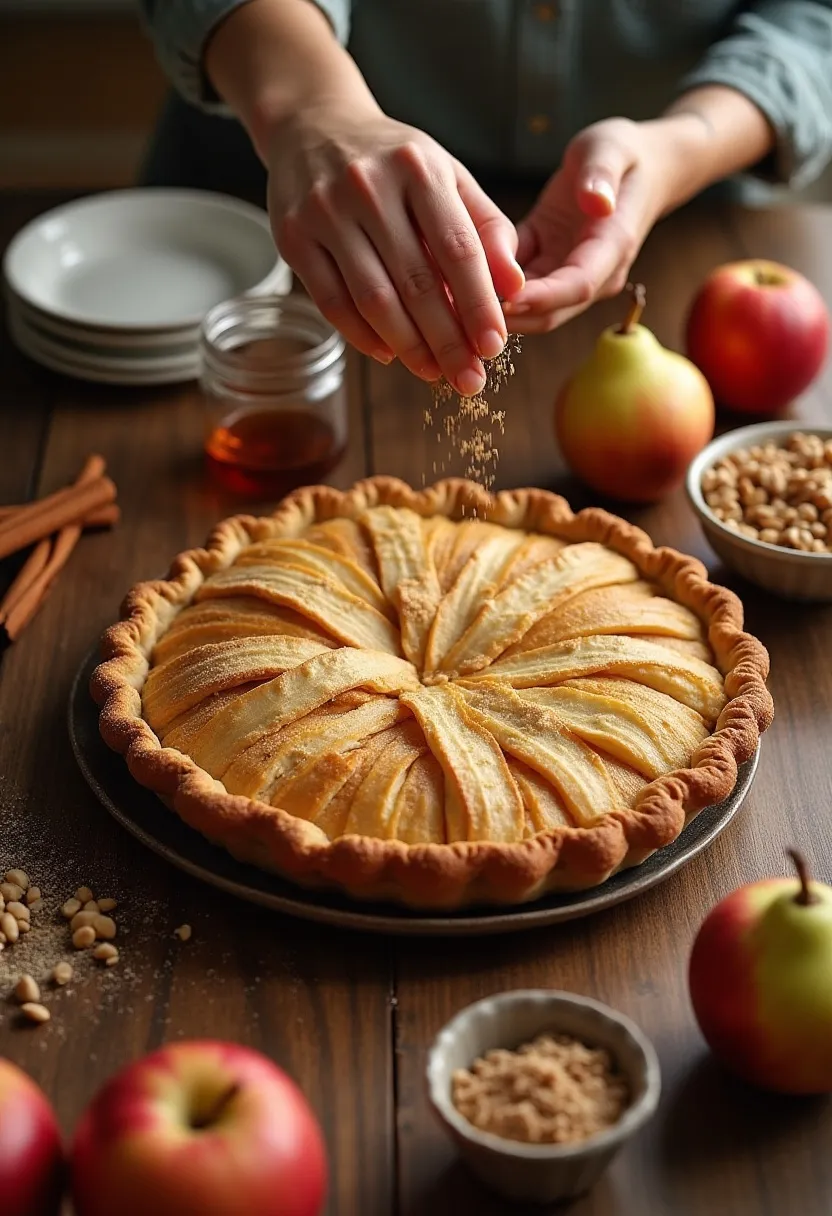
Maybe next time you’ll:
Add more spice — a little extra cinnamon, a hint of ginger, or a whisper of cardamom.
Use less sugar, letting the apples’ natural sweetness shine.
Drizzle a touch of maple syrup over the filling before adding the crust.
Toss in a handful of chopped nuts, or mix apples with pears for a subtle twist.
The magic of apple pie is that it invites personalization. Each change is a memory in the making, a small signature that says: this is mine. And over time, those variations become your family’s tradition — repeated, remembered, and cherished. It’s never about following the rules perfectly; it’s about baking enough that the act itself becomes familiar, comforting, and meaningful.
Final Thoughts: Why Apple Pie Matters 🥧✨
Apple pie isn’t impressive because it’s complicated. Far from it. Its beauty lies in its honesty. It doesn’t pretend to be something it’s not. It asks for time, for care, for a little patience — and in return, it rewards attention in ways that go beyond taste.
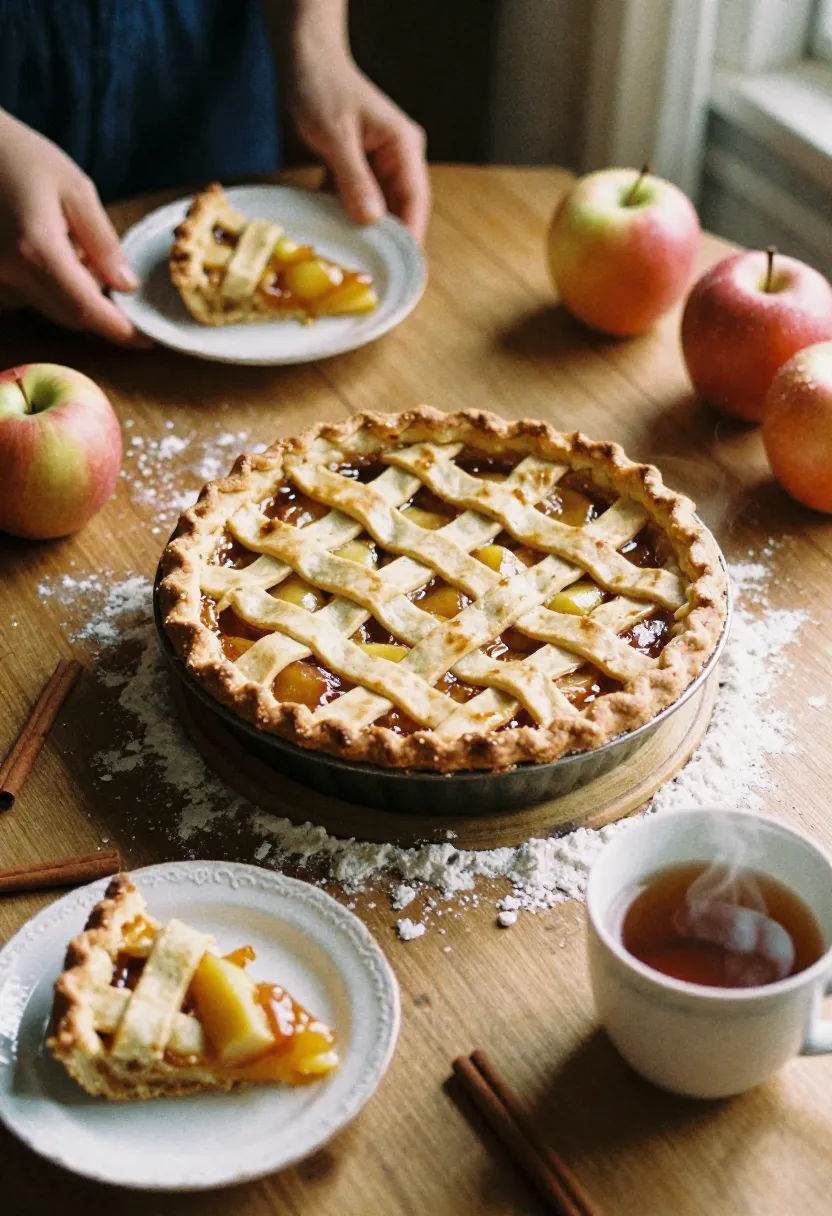
It rewards smell, as the warm aroma fills your kitchen.
It rewards sight, as golden crusts glisten and apple slices glimmer beneath a lattice top.
It rewards memory, because each slice carries whispers of home, of childhood, of kitchens filled with laughter and the quiet comfort of familiarity.
Bake it once, and you’ll understand why people keep coming back to apple pie — not because they have to, but because they want to. Not because it’s perfect, but because it’s comforting, because it’s real, because it carries something timeless on every plate.
And that, in the end, is the best kind of recipe there is: one that connects people, warms hearts, and reminds us that the simplest things — flour, butter, apples, and patience — can create something extraordinary. 🍎💛