Contents
- 🇵🇹 A Quiet Origin With Lasting Impact
- 🔥 Where Texture Does Most of the Talking
- 🍽️ Pastéis de Nata Recipe (Traditional Feel, Home Kitchen Reality)
- ☕ Serving Them Right (Why Simplicity Works Better Than You Think)
- 🧊 Storing and Reheating (Because It Doesn’t Always End With the First Batch)
- 💡 The Small Details You Only Start Noticing Later
There’s a certain kind of dessert that doesn’t really end when you finish it. You eat it, maybe enjoy it in the moment, and that’s it — or at least that’s what you expect. But then, later in the day, it comes back to you. Not in a dramatic way, just a small thought like, “that was actually really good.” And somehow, that thought sticks longer than it should.
Pastéis de nata tend to do exactly that 🍮
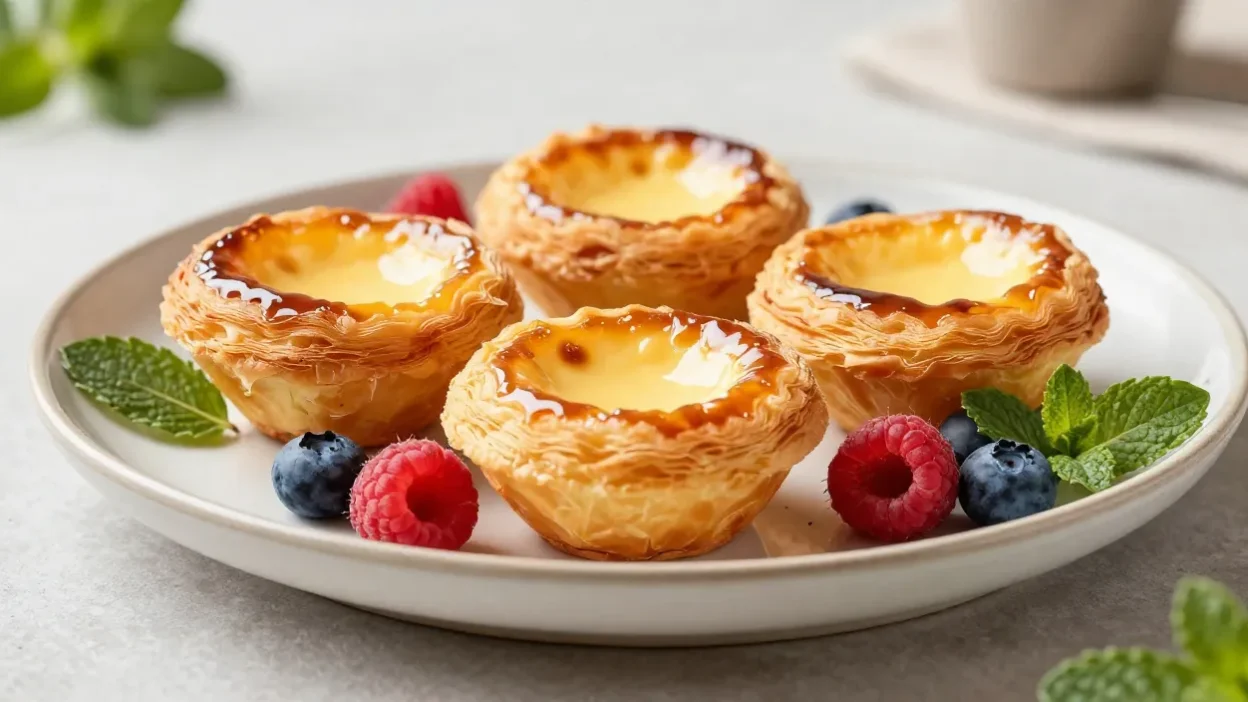
At first glance, they don’t look like something that would leave that kind of impression. They’re small, fairly simple, and honestly a bit understated. No layers stacked high, no decorations, no extra elements trying to grab attention. Just a golden tart with a slightly uneven surface.
If you didn’t know what they were, you might not even stop to look at them. In a display full of desserts, they don’t compete visually. And that’s part of what makes the experience surprising.
Because once you actually try one, the perception changes pretty quickly.
The first bite is usually where it starts. The pastry gives way gently — not with a loud crunch, but with a soft, layered crispness. It feels structured, but not rigid. There’s a slight resistance, and then it breaks cleanly.
Then the custard comes in, and everything slows down a bit. It’s smooth, warm if it’s fresh, and balanced in a way that doesn’t feel heavy. It’s rich, but not in that overwhelming way that makes you want to stop after one bite.
That balance is easy to overlook, but it’s doing a lot of work.
And then there’s the top layer. Slightly darker, sometimes uneven, occasionally even a bit charred. It might look like a mistake if you’re not familiar with it, but it’s intentional. That small amount of caramelization adds depth — just enough to keep the sweetness from feeling flat.
What’s interesting is that none of these elements stand out on their own. If you separate them, they’re all fairly simple. But together, they create something that feels complete.
It’s not a dessert that tries to impress you immediately. It’s more the kind that grows on you over a few bites.
🇵🇹 A Quiet Origin With Lasting Impact
The story behind pastéis de nata isn’t particularly dramatic, and that’s probably why it feels so believable.
There’s no single moment where someone suddenly created the perfect version. Instead, it developed slowly, almost casually, out of a practical need.
In monastery kitchens, ingredients were used carefully. Nothing was wasted if it could be avoided. Egg whites had their uses in different processes, which meant yolks were often left over. And at some point, someone had to figure out what to do with them.
So they started experimenting.
Not in a formal way, not with written recipes or precise measurements. More like adjusting things step by step, seeing what worked and what didn’t. Small changes, repeated over time.
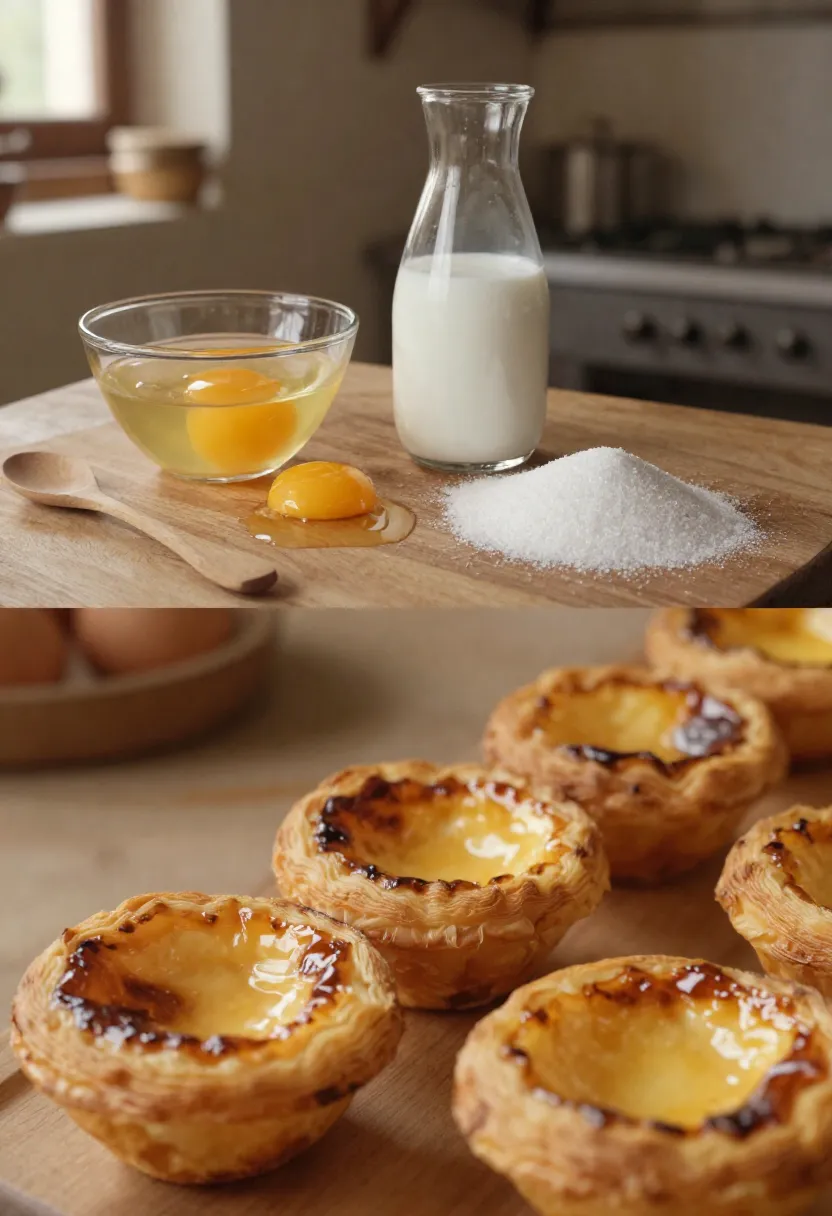
You can imagine the process being something like this:
- trying different ratios of yolks to sugar
- adding milk to soften the texture
- adjusting heat to prevent curdling
- testing how thick or fluid the mixture should be
None of these steps were particularly complex, but together they gradually shaped the result.
Over time, the method became more consistent. What started as a way to use leftover ingredients turned into something more refined, something people actually wanted to make again.
Eventually, the recipe moved beyond monastery kitchens and into bakeries, where it continued to evolve. Techniques became more standardized, and the overall result became more recognizable.
What’s interesting is how little the core idea has changed since then.
Even now, when you make pastéis de nata at home, you’re following essentially the same process. The tools might be different, the measurements more precise, but the logic is still the same.
You’re not reinventing anything. You’re just continuing something that already works.
And in a way, that makes the whole process feel more grounded. It doesn’t feel like you’re chasing perfection — more like you’re participating in something that has already been figured out over time.
🔥 Where Texture Does Most of the Talking
When people try to describe why pastéis de nata are so satisfying, they often start with flavor. That makes sense — sweetness, creaminess, a bit of caramelization.
But if you pay attention, it becomes clear that texture plays a bigger role than expected.
The pastry is the first layer of that experience. It’s thin, slightly crisp, and structured in layers that separate just enough during baking. It doesn’t crumble apart, and it doesn’t feel dry. There’s a balance there that makes each bite feel controlled.
Then comes the custard, and that’s where the contrast becomes more noticeable.
It softens everything. Changes the pace. Instead of crispness, you get something smooth and slightly fluid. But it’s not loose or runny — it still holds together, which is important. That structure keeps the whole tart from feeling messy.
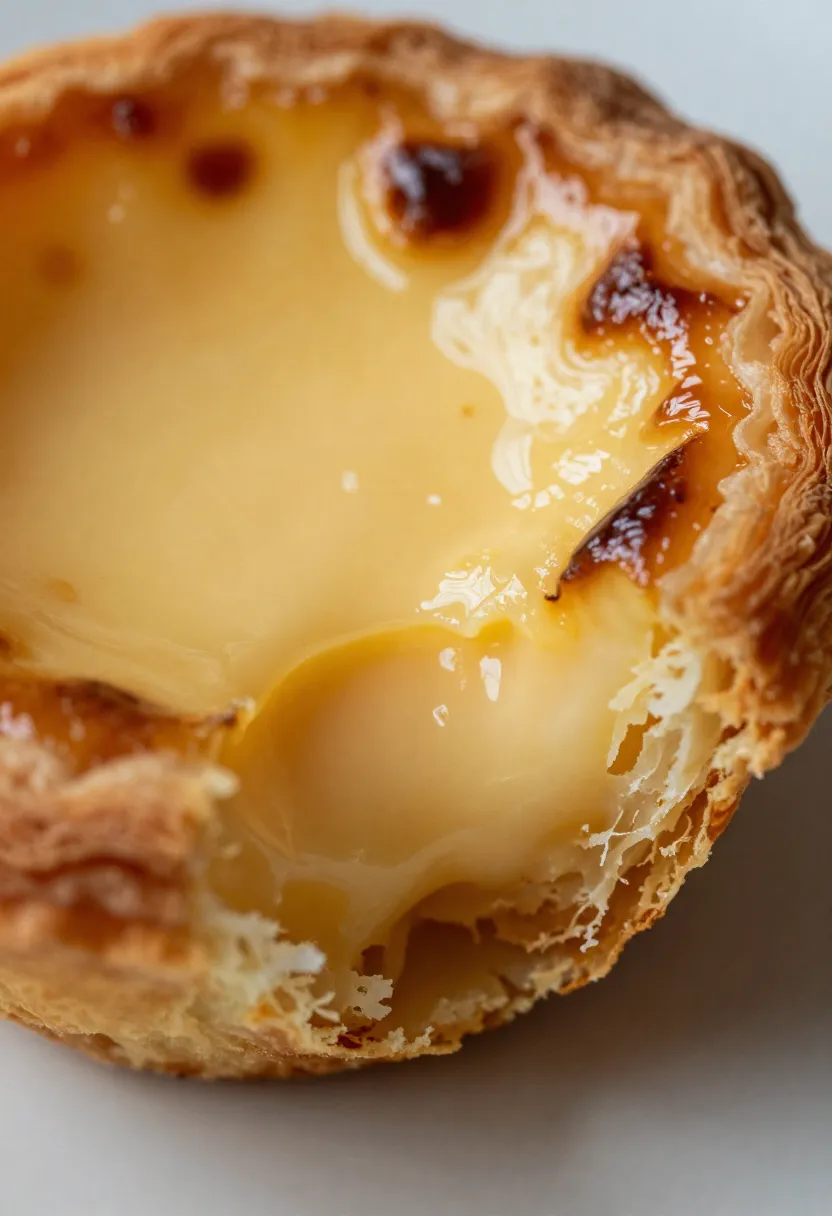
The top layer adds another element that’s easy to overlook but hard to replace. Those darker spots that form during baking introduce a small variation in both flavor and texture. They’re slightly firmer, slightly more intense, and they break up the uniformity of the custard.
If you step back and look at the whole thing, the balance comes from a few key contrasts:
- the outer pastry provides structure without being too hard
- the filling adds softness without losing form
- the top layer introduces variation without overpowering the rest
None of these elements are extreme, and that’s exactly why they work.
The tart doesn’t rely on one standout feature. Instead, it builds its identity through small differences that come together naturally.
And that’s usually the moment when you realize you’re not analyzing it anymore — you’re just eating it.
And probably reaching for another one without overthinking it.
🍽️ Pastéis de Nata Recipe (Traditional Feel, Home Kitchen Reality)
Making pastéis de nata at home has this reputation of being difficult — and to be fair, it can go wrong if you rush it. But at the same time, it’s not nearly as complicated as it sounds when you first read about it.
The trick isn’t in doing something advanced. It’s more about paying attention to small things — temperature, timing, texture. Nothing dramatic, just a series of simple steps that need a bit of care.
And honestly, once you go through the process once, it starts to make sense. The second time already feels easier.
What you’re aiming for here is that balance: a crisp, layered pastry on the outside and a smooth, slightly set custard inside, with just a bit of caramelization on top. When it works, it doesn’t just taste good — it feels right.
You don’t need special equipment. A regular kitchen setup is enough.
You don’t need perfect technique either. A bit of attention and patience will take you further than trying to make everything flawless.
🥛 Ingredients
For the pastry:
- 1 sheet puff pastry (kept cold until the last moment)
For the custard:
- 250 ml whole milk
- 200 g sugar
- 120 ml water
- 6 egg yolks
- 2 tablespoons cornstarch or flour
- 1 cinnamon stick
- Lemon peel (thin strips, no white pith)
- 1 teaspoon vanilla extract
- A pinch of salt
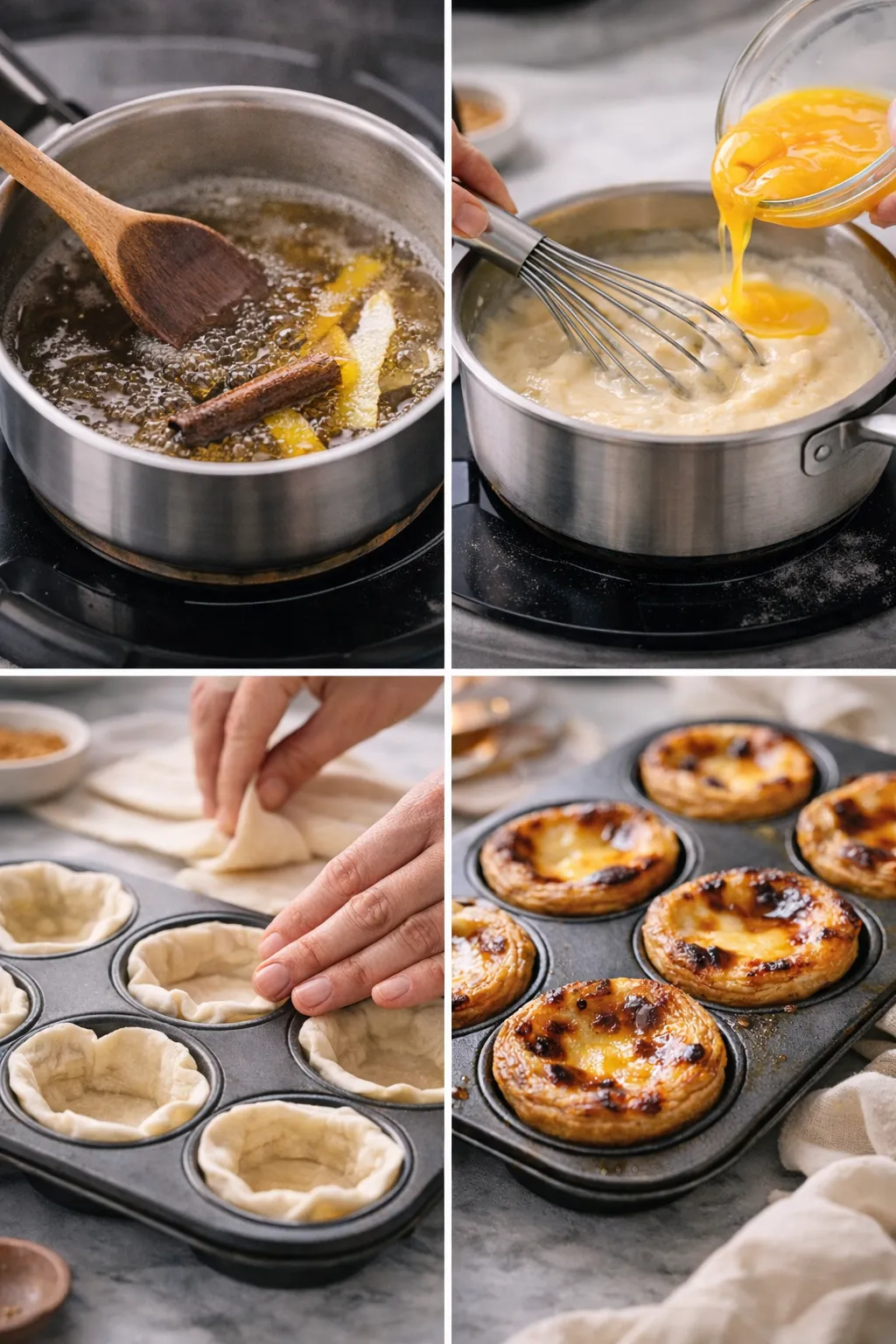
👨🍳 Preparation Steps
- Place the sugar, water, cinnamon stick, and lemon peel into a saucepan. Heat the mixture until it comes to a gentle boil, then let it simmer briefly. You’re not trying to make a thick syrup here — it should stay relatively light. The main goal is to let the flavors develop slowly.
- In a separate saucepan, whisk together the milk, cornstarch, and salt. Heat it over medium heat, stirring constantly. At first, nothing really happens — and then suddenly it starts to thicken. Don’t rush this part. If the heat is too high, the texture can turn uneven pretty quickly.
- Remove the cinnamon stick and lemon peel from the syrup. Start pouring the syrup into the milk mixture in a slow, steady stream while whisking. It might feel like a small detail, but pouring too fast can affect the consistency more than you’d expect.
- Let the mixture cool slightly. It shouldn’t be hot when you add the egg yolks — warm is fine, but not hot. Add the yolks and whisk until smooth. If you want a cleaner texture, strain the custard at this stage. It’s optional, but noticeable in the final result.
- Take the puff pastry and roll it into a tight log. Slice it into equal pieces. When you press them into the muffin tin, try to keep the base thinner and the edges a bit thicker. It doesn’t have to be perfect — just roughly even.
- Fill each pastry shell about three-quarters full. It’s tempting to add more, but too much custard can cause overflow or uneven baking.
- Preheat your oven to its highest setting. This step matters more than it might seem. A high temperature helps the pastry puff properly and gives you that slightly caramelized top. Bake for around 10–15 minutes, but don’t rely only on time — look for visual cues instead.
- Once they’re done, take them out and let them rest for a few minutes. They should still be warm when served, but not straight-from-the-oven hot. The texture settles a bit as they cool.
💡 Small Tips That Actually Make a Difference
Sometimes it’s the small adjustments that improve the result more than anything else. A few things that are worth keeping in mind:
- keep the pastry cold until you’re ready to use it — it helps with layering
- don’t rush the custard thickening stage, even if it feels slow at first
- pour the syrup gradually, not all at once
- use the highest oven temperature you can — it really affects the final texture
- watch the tarts, not the clock — they’re ready when they look ready
None of these are complicated, but together they make the process smoother and the result more consistent.
☕ Serving Them Right (Why Simplicity Works Better Than You Think)
There’s a tendency to overcomplicate desserts when serving them, especially ones that already have a strong reputation. Pastéis de nata fall into that category — people assume they need to be presented in a certain way, maybe styled, maybe paired with something fancy.
But in reality, they don’t benefit from that.
If anything, the more you try to “elevate” them visually, the more you risk losing what makes them feel authentic. These tarts were never meant to be complicated. They work best when they’re treated casually — almost like something you’d grab without thinking too much about it.
A slightly warm tart, placed on a simple plate, already does most of the job. The texture is at its best when it’s not fully cooled down, and the aroma is still noticeable. That alone creates the experience.
You can add a light dusting of cinnamon or powdered sugar, but even that is optional. It’s not about decoration — it’s more about enhancing what’s already there without changing it.
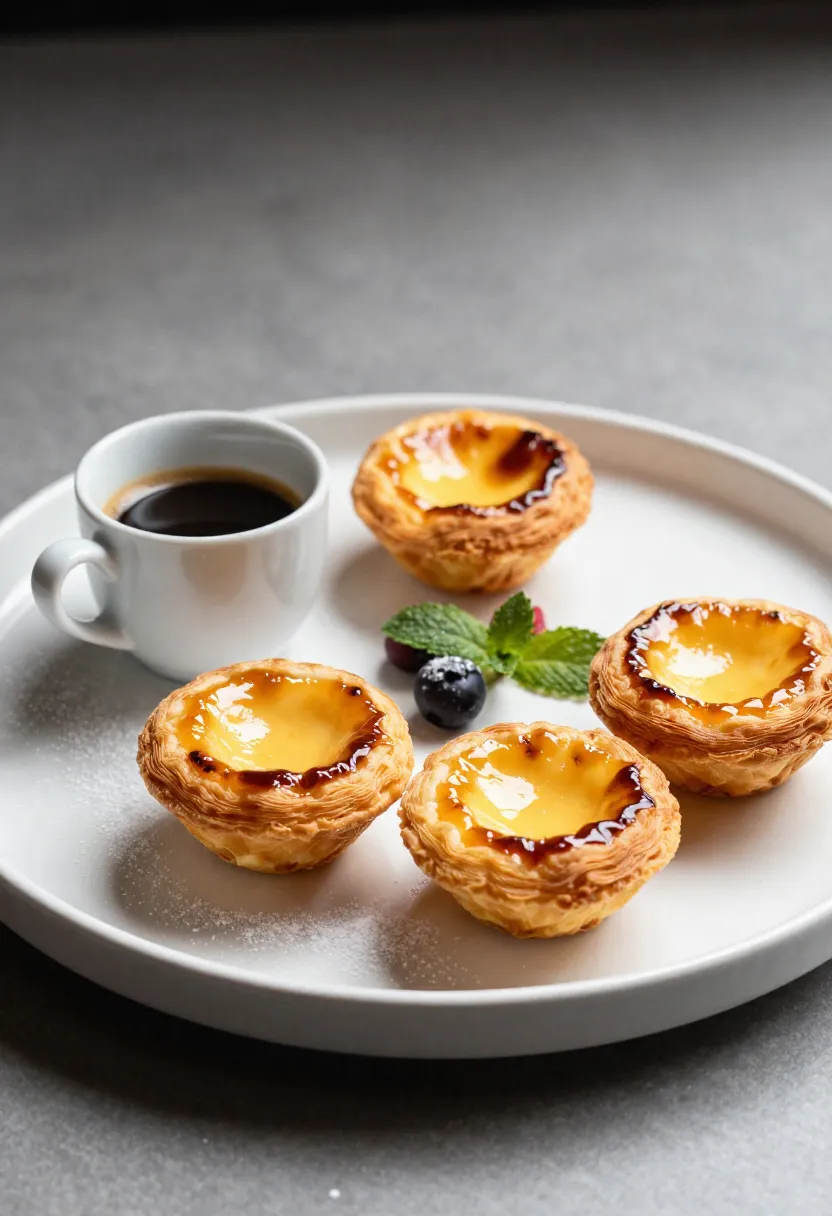
Where things actually start to matter is in what you serve alongside them.
A drink might seem like a small detail, but it changes how the tart feels overall. Without something to balance it, the custard can come across as a bit too rich, especially if you’re having more than one.
That’s why something slightly bitter works so well. It resets your palate between bites and makes each bite feel more distinct.
Some combinations tend to work better than others:
- strong espresso, which cuts through the sweetness almost immediately
- black coffee, simple and reliable, without adding extra flavor
- unsweetened tea, especially if you want something lighter
None of these are complicated choices, but they shift the experience in a noticeable way. The tart feels less heavy, more balanced, and easier to enjoy slowly instead of finishing too quickly.
And in a way, this mirrors the dessert itself. It’s not about adding more — it’s about balancing what’s already there.
🧊 Storing and Reheating (Because It Doesn’t Always End With the First Batch)
Most of the time, these tarts don’t last long enough to worry about storage. You make them, people try one, then another… and suddenly they’re gone.
But every now and then, you end up with leftovers. Maybe you made more than expected, or maybe you just wanted to test a recipe. Either way, storing them properly becomes relevant.
The main issue isn’t the flavor. That stays relatively stable even after a day or two.
The problem is texture.
Fresh out of the oven, pastéis de nata have a very specific contrast — crisp pastry, soft custard, slightly caramelized top. Once they cool down, especially in the fridge, that contrast starts to fade. The pastry absorbs moisture and becomes softer, less defined.
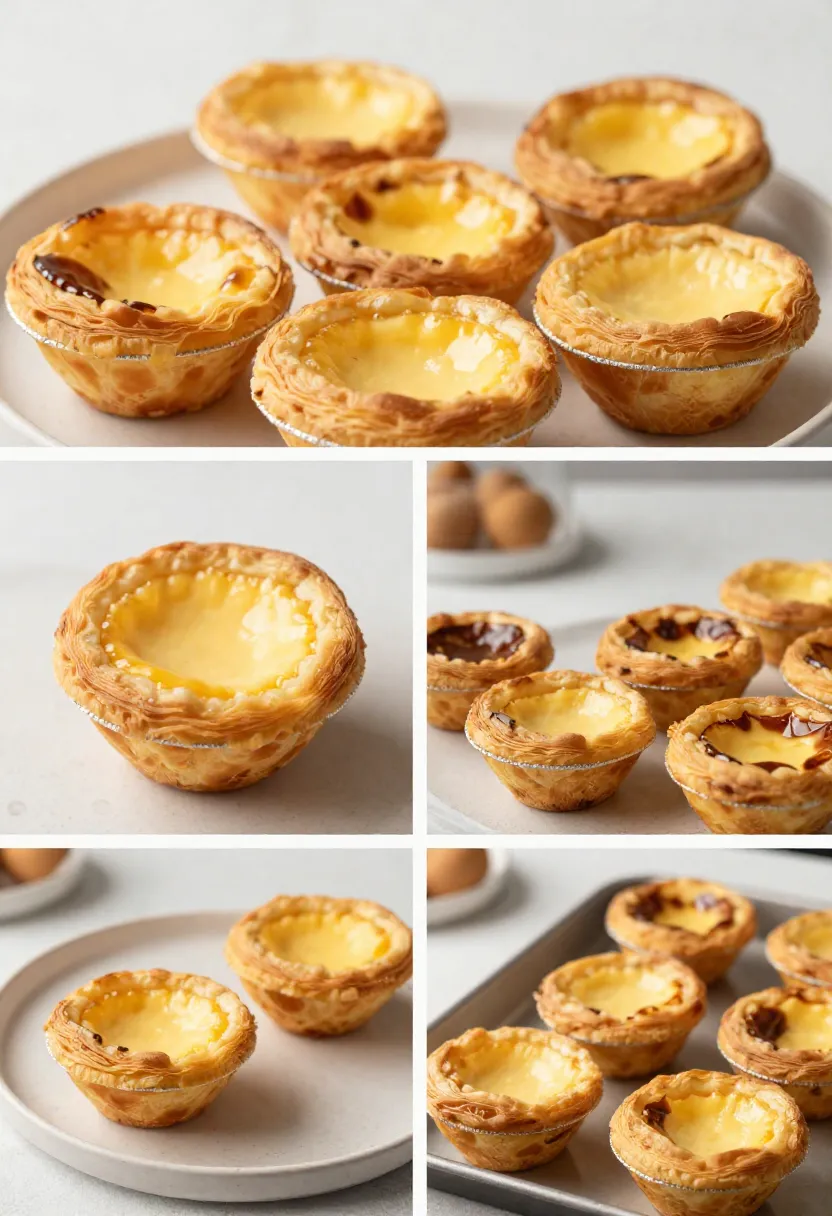
It’s not bad. It’s just… different.
Reheating helps, but the method you choose makes a bigger difference than people expect:
| Method | What Happens to the Tart |
|---|---|
| Hot oven | Brings back some crispness and structure |
| Microwave | Heats quickly but softens everything |
| Room temperature | Keeps flavor, but texture stays flat |
If you have the time, the oven is the better option. It doesn’t fully restore the original texture, but it gets close enough to make the tart feel more balanced again.
The microwave is faster, but it changes the texture quite a bit. The pastry loses most of its crispness, and everything becomes softer. Still edible, still enjoyable — just not the same experience.
Sometimes, though, you don’t reheat them at all. You just eat them as they are. And honestly, that works too.
It’s just a different version of the same thing.
💡 The Small Details You Only Start Noticing Later
At first, making pastéis de nata feels very step-based. You follow instructions, measure ingredients, check timing. It’s a bit mechanical, and that’s completely normal.
But after making them a couple of times, something shifts.
You stop focusing only on what the recipe says and start paying attention to how things behave. Not in a technical way, just small observations that gradually become habits.
Temperature is usually the first thing people notice. It affects more than expected — how the custard thickens, how the pastry rises, how the top caramelizes. A small difference in heat can lead to a slightly different result.
The dough is another one. If it gets too warm before baking, it won’t hold its layers the same way. It still works, but the texture changes a bit.
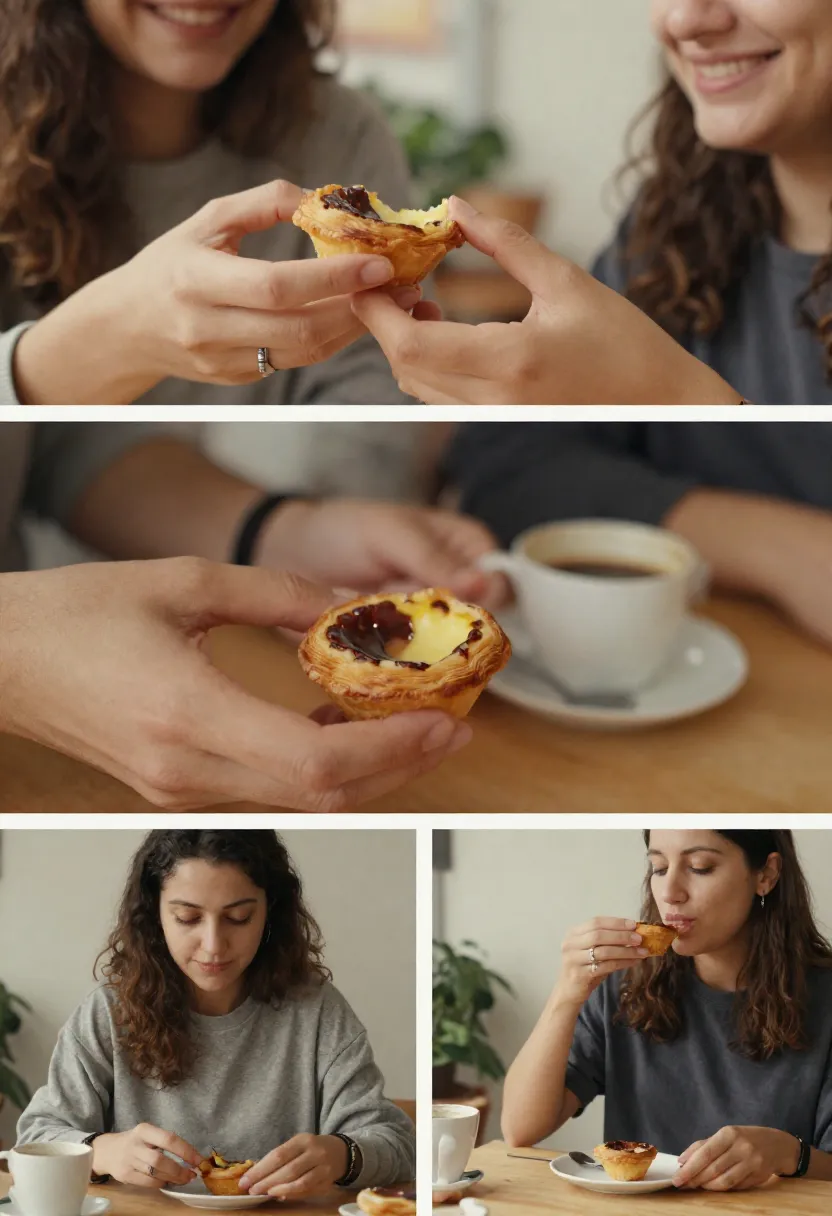
Even the pace of the process matters. Moving too quickly can lead to small inconsistencies, while slowing down just slightly tends to make everything more predictable.
Over time, a few simple habits start to stand out:
- keeping the pastry cold until the last possible moment
- watching the custard as it thickens instead of relying only on timing
- pouring and mixing gradually instead of rushing through steps
None of these are complicated techniques. They’re just small adjustments that make the result more consistent.
And that’s really the point where the process starts to feel more natural.
You’re not just following instructions anymore — you’re reacting to what you see. Adjusting without overthinking it.
That’s usually when the tarts turn out better, almost without trying too hard.
And maybe that’s the most satisfying part of it.
Not perfection, not precision — just the feeling that you understand what you’re doing a little better than before.