Contents
- Why This Soup Feels Comforting Without Being Heavy 🤍
- Meatballs, Cream, and the Quiet Power of Simple Flavors 🌿
- A Soup That Improves With Time ⏳
- The Recipe: Creamy Meatball Soup Made the Calm, Reliable Way 🍲
- How This Soup Holds Up Over Time ❄️
- Why This Soup Feels Filling Without Being Heavy 🌿
- A Recipe Worth Keeping 💛
There are moments when you don’t want to experiment in the kitchen. You don’t want a complicated recipe or something that requires constant attention. You want food that feels steady, warm, and reliable — the kind that lets you relax while it cooks.
That’s exactly where this creamy meatball soup fits in.🍲
It isn’t dramatic or trendy, and it doesn’t try to surprise you. Instead, it offers something much more valuable: a sense of calm. This is the type of meal you make on quiet evenings, when the weather turns colder and the day has taken more energy than expected. The kind of soup that gently fills the kitchen with familiar smells and makes the house feel more settled 🕯️
What makes this dish special isn’t a single ingredient or technique. It’s the way everything works together without demanding attention.
Why This Soup Feels Comforting Without Being Heavy 🤍
Many comfort foods rely on richness alone. They are creamy, cheesy, or deeply fried, and while they taste good in the moment, they often leave you feeling weighed down afterward. This soup takes a different approach.

It manages to be satisfying without being overwhelming because of a few simple choices:
- the broth stays light enough to remain a soup, not a sauce
- the cream smooths the flavors instead of dominating them
- the meatballs are small and tender, spread evenly throughout the bowl
Instead of one dense portion, you get balance in every spoonful.
The soup feels filling because it has structure — protein, vegetables, and fat — not because it’s excessively rich. You finish eating feeling warm and content, not tired.
That balance is what makes this recipe easy to return to again and again.
Meatballs, Cream, and the Quiet Power of Simple Flavors 🌿
Meatballs might not seem like an obvious choice for soup, but they work surprisingly well. When simmered gently, they stay juicy and absorb flavor from the broth rather than losing moisture. Instead of sitting on top of the dish, they become part of it.

The seasoning follows the same restrained philosophy. Nothing is loud or sharp. Warm spices like allspice and nutmeg sit in the background, adding depth without clearly announcing themselves. Onion and carrot bring natural sweetness, while garlic stays subtle and supportive.
Cream is added carefully and late in the process. Its purpose isn’t to make the soup taste “rich,” but to soften edges and tie everything together. The result is a texture that feels smooth and complete, without heaviness.
Fresh herbs at the end add a final lift 🌱
Not enough to change the character of the soup — just enough to keep it from feeling flat.
A Soup That Improves With Time ⏳
This is one of those dishes that quietly gets better after it rests.
As the soup cools and sits, the flavors settle. The meatballs absorb more of the broth, the spices distribute more evenly, and everything feels more cohesive the next day. It’s not a dramatic change, but it’s noticeable.

That’s why this soup works so well for:
- cooking ahead
- slow evenings with leftovers
- reheating without loss of texture or flavor
It’s forgiving, patient, and reliable — much like the kind of cooking it represents.
The Recipe: Creamy Meatball Soup Made the Calm, Reliable Way 🍲
This is not a complicated recipe, but it does ask for your attention in a gentle way. Not the tense, stopwatch kind of focus, but the quieter kind — the kind where you notice how things smell, how they look in the pot, how the texture changes as you go.
This soup doesn’t reward rushing. It rewards presence.
Before you start cooking, it helps to prepare everything in advance. When the vegetables are chopped, the ingredients measured, and the kitchen feels ready, the entire process becomes smoother. There’s less back-and-forth, less distraction, and more space to simply follow what’s happening in front of you.
That calm shows in the final result. The soup comes together evenly, without stress or sharp edges, and the cooking itself becomes part of the comfort.
Ingredients You’ll Need
For the meatballs
- 450 g (1 lb) ground beef
- 225 g (½ lb) ground pork
- ½ cup plain breadcrumbs
- ¼ cup milk
- 1 small onion, finely grated
- 1 large egg
- 1 teaspoon salt
- ½ teaspoon black pepper
- ½ teaspoon ground allspice
- ¼ teaspoon nutmeg
For the soup
- 2 tablespoons butter
- 1 tablespoon olive oil
- 2 medium carrots, diced small
- 2 celery stalks, diced
- 2 cloves garlic, minced
- 3 tablespoons all-purpose flour
- 6 cups beef broth (preferably low sodium)
- 1 cup heavy cream
- ½ cup frozen peas
- 1 tablespoon Worcestershire sauce
- Fresh dill or parsley, finely chopped

How to Cook the Soup
Prepare the meatball mixture. In a large bowl, combine the ground beef, ground pork, breadcrumbs, milk, grated onion, egg, salt, pepper, allspice, and nutmeg. Mix gently, preferably with your hands. Stop as soon as everything is evenly combined. The mixture should feel soft and slightly loose, not dense or sticky.
Shape the meatballs. Roll the mixture into small, bite-sized meatballs, about 2.5 cm (1 inch) in diameter. They don’t need to be perfectly round. A slightly rustic shape is more than fine and actually suits the dish better.
Brown the meatballs. Heat the butter and olive oil together in a large, heavy-bottomed pot over medium heat. Add the meatballs in batches, leaving space between them. Brown them gently on most sides until they develop a light golden crust. This should take a few minutes per batch. Remove the meatballs and set them aside. They do not need to be cooked through at this stage.
Cook the vegetables. In the same pot, add the diced carrots and celery. Cook over medium heat for about 5–7 minutes, stirring occasionally, until they soften and release their sweetness. Add the minced garlic and cook for another 30 seconds, just until fragrant.
Create the base. Sprinkle the flour evenly over the vegetables. Stir continuously for about 1–2 minutes. This step is important — it removes the raw flour taste and creates the base that will gently thicken the soup.
Add the broth. Slowly pour in the beef broth while stirring or whisking. Add it gradually to keep the mixture smooth. Once all the broth is incorporated, the soup should look slightly thickened but still fluid.
Return the meatballs to the pot. Add the browned meatballs back into the soup along with the Worcestershire sauce. Stir gently to distribute everything evenly.
Simmer the soup. Lower the heat and let the soup simmer gently for about 20 minutes. Avoid boiling. During this time, the meatballs finish cooking, the vegetables become fully tender, and the flavors begin to come together.
Add cream and peas. Stir in the heavy cream and frozen peas. Let the soup heat gently for another 3–5 minutes. Do not let it boil after adding the cream — gentle heat is enough.
Finish with herbs and adjust seasoning. Add the chopped fresh herbs, taste the soup, and adjust salt or pepper if needed. The flavor should feel balanced, smooth, and complete.
What the Finished Soup Should Be Like 🍽️
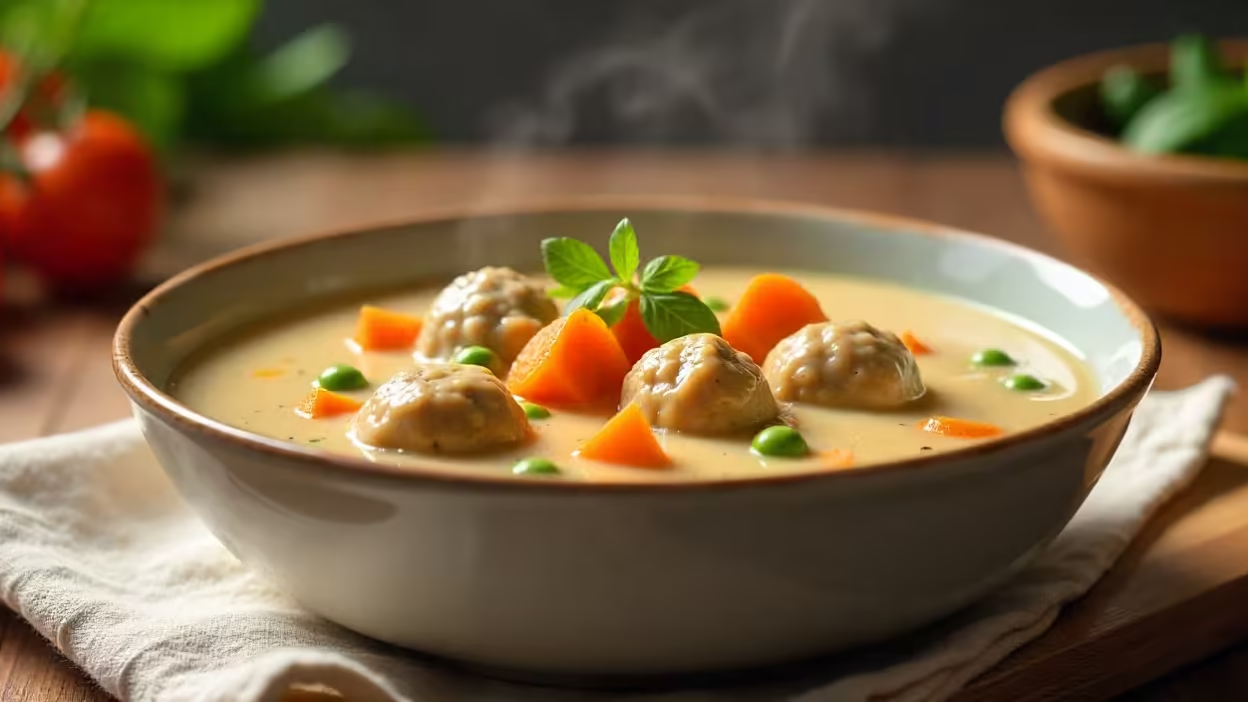
When the soup is ready, the broth should lightly coat the back of a spoon without feeling thick or heavy. The meatballs should be tender enough to break easily with a spoon but still hold their shape. The vegetables should be soft, not mushy.
If the soup feels too thick, a small splash of broth will loosen it. If it feels slightly thin, letting it simmer uncovered for a few extra minutes usually solves the problem.
This is not a soup that needs perfection. It needs balance.
How This Soup Holds Up Over Time ❄️
One of the quiet strengths of this creamy meatball soup is how well it behaves after cooking. Some dishes are best eaten immediately and lose their appeal once cooled, but this one is surprisingly patient.
After a night in the refrigerator, the soup becomes more unified. The meatballs absorb a bit more of the broth, the spices settle, and the flavors feel more rounded. Nothing separates, nothing turns grainy, and the texture remains smooth as long as the soup is reheated gently.

For storage, the soup can be kept in an airtight container in the refrigerator for up to three days without any noticeable loss of quality. If you plan to freeze it, let it cool completely first. Freezing works best in individual portions, which makes reheating easier and more predictable.
When reheating, low heat is essential. Bringing the soup to a boil can cause the cream to lose its smoothness. A slow warm-up on the stovetop, with occasional stirring, keeps everything in balance. If the soup thickens slightly after storage, a small splash of broth or milk brings it back to the right consistency 🥣
Why This Soup Feels Filling Without Being Heavy 🌿
This soup is satisfying not because it overwhelms you, but because it’s well-structured. Each bowl contains protein from the meatballs, gentle fat from the cream, and fiber from the vegetables. Together, these elements create a meal that feels complete.

The portion size is flexible. A smaller bowl works well as a light dinner or lunch, while a larger serving easily stands in as a full meal. The cream adds comfort, but the broth keeps things from feeling too dense. That balance is what allows you to enjoy the soup without feeling sluggish afterward.
It’s also a dish that encourages slower eating. The warmth, the texture, and the steady rhythm of spoonfuls naturally slow things down — and that, more than anything, contributes to the feeling of fullness.
A Recipe Worth Keeping 💛
This creamy meatball soup isn’t meant to impress with novelty or boldness. Its value lies in reliability. It’s the kind of recipe you return to when you want something you can trust, something that consistently turns out well without demanding too much from you.

Over time, it naturally becomes part of your personal cooking routine. You stop measuring quite so carefully. You adjust seasoning by feel. You make it your own without really trying.
And that’s usually the sign of a good recipe — not that it’s perfect, but that it fits easily into real life.