Contents
- Why Lighter Holiday Mains Are Not a Compromise
- Cranberries and Oranges: A Flavor Combination That Just Works 🍒🍊
- 🍽️ Cranberry-Orange Glazed Salmon Recipe
- How to Serve Salmon So It Truly Feels at Home on a Holiday Table ✨
- Small Details That Quietly Improve the Final Result
- Why This Dish Has a Habit of Becoming a Tradition 💛
There is a familiar moment that tends to appear every year as the holidays draw closer. It often starts quietly. The refrigerator door is open a little longer than usual, the grocery list keeps growing, and suddenly the scale of everything becomes clear. There is more food planned than expected, more dishes competing for attention, and more unspoken pressure to make everything feel perfect 🍊
Holiday cooking has a way of carrying extra weight. Traditions bring comfort and nostalgia, but they also come with expectations that are rarely acknowledged out loud. Large centerpiece dishes demand hours of oven time. Side dishes seem harmless on their own, yet together they create a schedule that leaves very little room to breathe. Even leftovers, once a symbol of abundance, can quickly turn into something that feels like an obligation rather than a pleasure.
What often gets lost in the middle of all this is the reason for cooking in the first place. The act of preparing food is meant to bring people together, not quietly push the cook into the background. Somewhere between menu planning, timing everything correctly, and trying to keep the kitchen under control, the experience can begin to feel more like management than enjoyment.
This is usually the point where a different approach becomes appealing. Not an attempt to simplify for the sake of convenience, and not a rejection of tradition, but a shift toward dishes that feel intentional rather than overwhelming. Meals that still belong on a festive table, yet allow space for conversation, movement, and presence. In that context, salmon starts to make sense in a very natural way 🐟✨
Why Lighter Holiday Mains Are Not a Compromise
There is a persistent belief that a holiday main course must be large and heavy in order to feel impressive. Size is often mistaken for generosity, and fullness for satisfaction. In reality, the meals that linger in memory tend to do so for different reasons.
People remember how the table felt.
They remember the pace of the evening.
They remember whether there was still room for dessert and conversation.
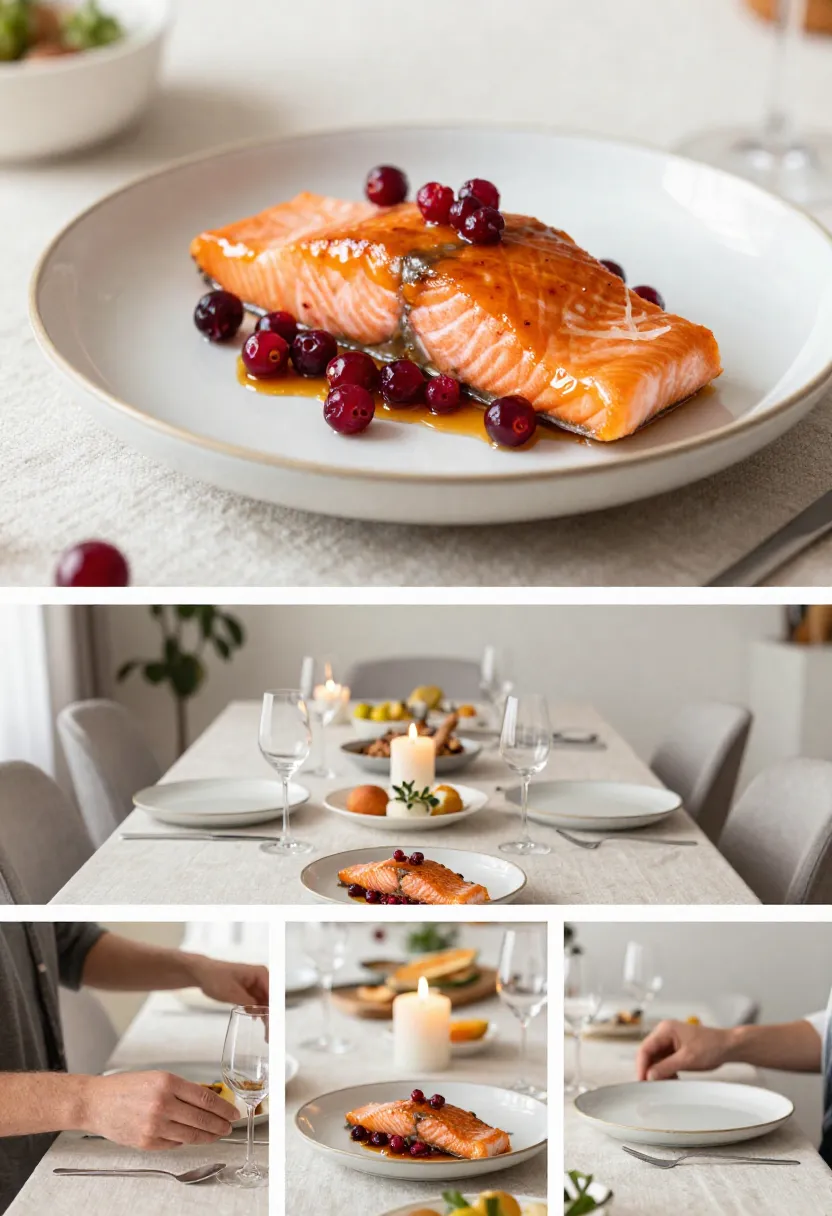
Salmon fits into this picture effortlessly. Its appearance alone brings warmth and richness to the table, even before it is served. When cooked with care, it offers depth and comfort without tipping into heaviness. The texture remains soft and inviting, and the flavor feels complete without demanding excess.
A lighter main course also changes the rhythm of the meal itself. Instead of everyone feeling overly full and ready to retreat to the couch, the atmosphere stays open and social. Conversations continue naturally. Courses flow without urgency. The evening unfolds rather than rushing toward an end.
This kind of balance is increasingly at the center of modern holiday cooking. Rich flavors are still welcome, but they are paired with restraint. Comfort is present, but it does not come at the cost of energy or enjoyment.
Cranberries and Oranges: A Flavor Combination That Just Works 🍒🍊
Some flavor combinations feel carefully constructed, almost experimental. Others feel instinctive, as if they have always belonged together.
Cranberries and oranges fall into the second category. They are deeply associated with winter, yet they avoid feeling predictable. Cranberries bring brightness and a sharp edge that immediately wakes up the palate. Oranges respond with warmth, subtle sweetness, and aromatic citrus notes drawn from both the juice and the zest.
When these two ingredients are gently cooked together, the transformation is gradual but noticeable. The cranberries soften and release their natural pectin, thickening the glaze without the need for heavy sweeteners. The orange rounds out the tartness, creating a flavor that feels balanced rather than aggressive.
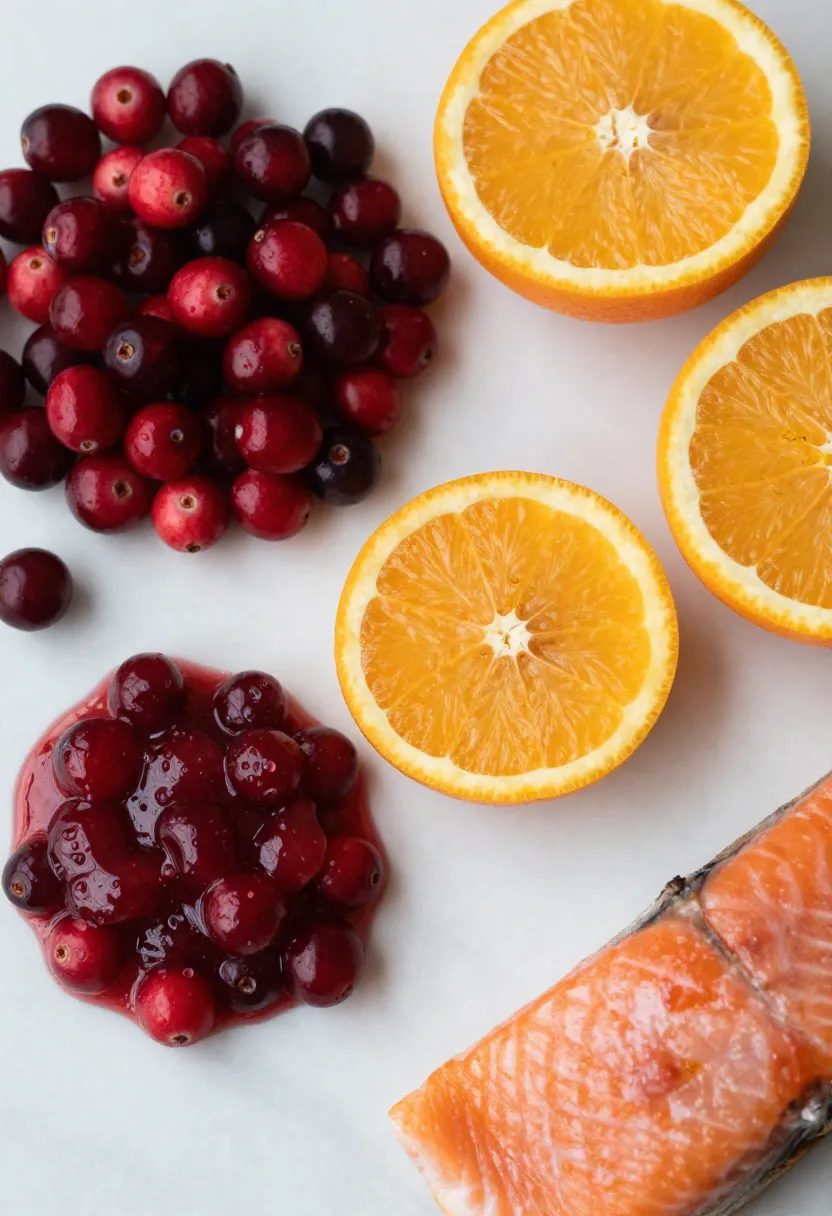
Several things happen at once:
- the sharpness of the cranberries becomes more refined
- the sweetness feels natural instead of dominant
- the glaze develops depth without losing freshness
When paired with salmon, this balance becomes especially important. The glaze does not mask the fish or compete with it. Instead, it highlights salmon’s natural richness and brings contrast where it is needed. Each bite feels composed, layered, and intentionally seasonal.
The result is a dish that feels festive without relying on excess. Bright, warm, and quietly confident — the kind of flavor combination that doesn’t need explanation ✨
🍽️ Cranberry-Orange Glazed Salmon Recipe
This is one of those recipes that tends to surprise people in the best possible way. At first glance, it looks like something that would arrive at the table of a holiday restaurant — glossy, deeply colored, and carefully arranged. The kind of dish that feels deliberate and festive without looking overworked.
What often surprises people even more is how calm this recipe actually is. The ingredients are familiar. The steps are straightforward. There is no special equipment involved and no complicated technique hiding behind the presentation. Everything comes down to timing, balance, and allowing the flavors to do what they naturally want to do.
While this salmon fits beautifully into a holiday menu, it doesn’t feel limited to special occasions. It works just as well on a quiet winter evening, when something warm and comforting is needed, but heavy food feels unappealing. The dish manages to feel both celebratory and grounded at the same time — a combination that is harder to achieve than it sounds ✨
📝 Ingredients (Serves 4)
- 4 salmon fillets (about 5–6 oz each, skin on or off)
- ½ cup fresh or frozen cranberries
- 1 large orange, both zest and juice
- 2 tablespoons honey or maple syrup
- 1 tablespoon Dijon mustard
- 1 clove garlic, finely minced
- 1 tablespoon fresh rosemary or thyme, finely chopped
- 1 tablespoon olive oil
- ½ teaspoon fine salt, plus extra for seasoning
- Freshly ground black pepper
These ingredients are intentionally simple. Each one has a clear role, and none of them overpower the others. The cranberries provide brightness, the orange adds warmth, and the salmon remains the center of attention.
👩🍳 Step-by-Step Cooking Instructions
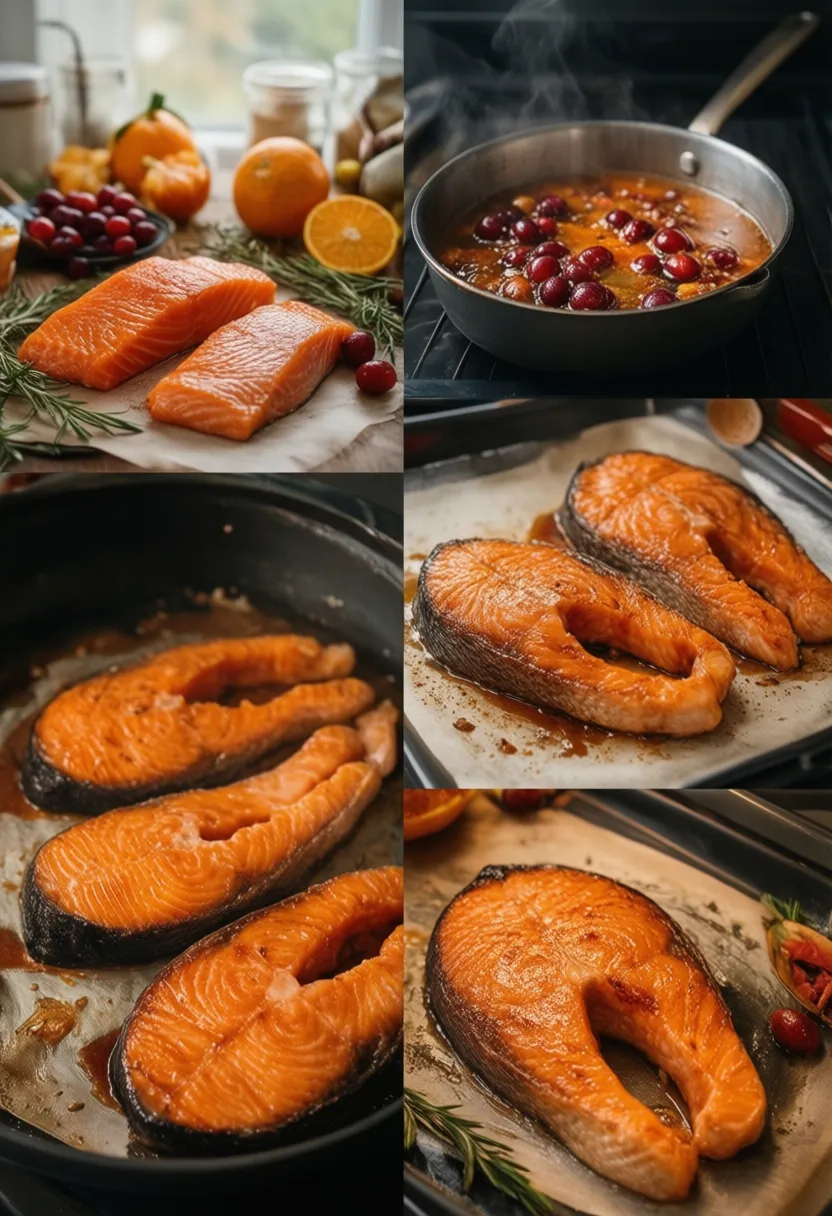
- Prepare the oven and baking sheet.
Preheat the oven to 400°F (200°C). Line a baking sheet with parchment paper. This not only prevents sticking, but also makes cleanup noticeably easier — a small detail that matters during busy cooking days. - Season the salmon properly.
Pat the salmon fillets dry with paper towels. This step is easy to overlook, but it makes a real difference. Removing excess moisture helps the fish roast evenly and allows the glaze to cling instead of sliding off. Season both sides lightly with salt and freshly ground black pepper, then arrange the fillets on the baking sheet with a little space between each one. - Build the cranberry-orange glaze.
In a small saucepan, combine the cranberries, orange juice, orange zest, honey (or maple syrup), Dijon mustard, minced garlic, and salt. Place the saucepan over medium heat and bring the mixture to a gentle simmer. Stir occasionally to prevent sticking. - Let the glaze develop naturally.
Cook the glaze for about 6–8 minutes. As the cranberries heat, they will burst on their own and release natural pectin, which thickens the sauce without any extra ingredients. For a smoother texture, some of the cranberries can be gently pressed with the back of a spoon. Once the glaze looks glossy and slightly thickened, stir in the chopped herbs and remove it from the heat. - Apply the first layer of glaze.
Using a spoon or pastry brush, coat the top of each salmon fillet with about half of the cranberry-orange glaze. This first layer sets the foundation of flavor while the salmon begins to cook. - Bake the salmon gently.
Transfer the baking sheet to the oven and bake for 12–15 minutes, depending on the thickness of the fillets. At this stage, the salmon should be mostly cooked through but still tender and moist in the center. - Finish with the remaining glaze.
Remove the salmon from the oven and brush the remaining glaze over the fillets. Return the baking sheet to the oven for an additional 3–5 minutes. This final step allows the glaze to warm, deepen in color, and lightly caramelize on the surface. - Rest before serving.
Once out of the oven, allow the salmon to rest for about 5 minutes. This short pause helps the juices redistribute throughout the fish, resulting in a softer, more cohesive texture when served.
💡 A Few Practical Tips That Make a Difference
- Don’t wait for the glaze to look “perfect” in the pan.
It will continue to thicken slightly as it cools and even more once it hits the heat of the oven. Pulling it off the stove a bit earlier helps keep the flavors bright. - If the salmon fillets are very thick, trust your eyes more than the clock.
Look for flesh that turns opaque from the sides inward but still has a soft center. Salmon dries out quickly once it goes too far. - Taste the glaze before brushing it on.
Cranberries vary a lot in tartness. A small adjustment — an extra drizzle of honey or a pinch of salt — can completely change the balance. - Skin-on fillets offer a little extra insurance.
Even if the skin isn’t eaten, it helps protect the fish from overcooking and keeps the texture more forgiving. - Let the salmon rest, even if it feels unnecessary.
Those few minutes make the difference between flaky and silky.
How to Serve Salmon So It Truly Feels at Home on a Holiday Table ✨
Presentation often sounds like something that requires effort, planning, and a very steady hand. In reality, it’s usually the opposite. Food tends to look its best when it isn’t trying too hard. This is especially true with salmon, which already brings color, texture, and presence to the table without much help.
A simple serving platter is often enough. Neutral ceramics, stoneware, or even a wooden board work well because they don’t compete with the glaze. A few thin slices of fresh orange placed casually on the side add brightness and quietly echo the flavors of the dish. Fresh herbs, whether rosemary or thyme, don’t need to be arranged with precision — a small, natural-looking sprig does more than a carefully constructed garnish.
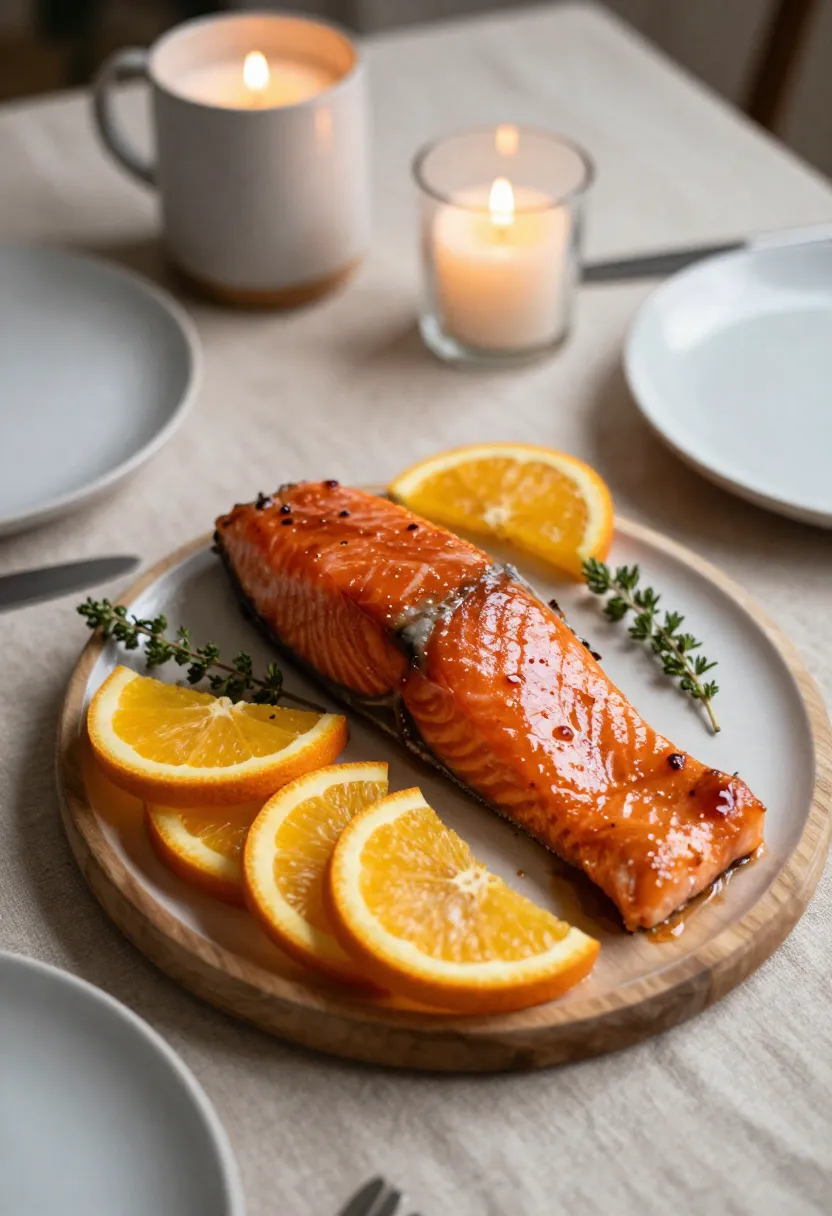
Serving the salmon whole rather than slicing it in advance also changes how the dish is perceived. It creates a sense of abundance without feeling heavy or excessive. Guests can see the glaze, the color, and the texture before serving themselves, which naturally draws attention without demanding it. The glaze, once warm and glossy, reflects light in a way that makes the dish feel inviting even before the first bite.
The surrounding details matter just as much as the plate itself. Small atmospheric choices tend to shape the mood of the meal more than elaborate styling:
- warm plates help keep the salmon at the right temperature and make the dish feel cared for
- candles soften the light and slow the pace of the evening
- linen or cloth napkins subtly signal that the meal is meant to be enjoyed, not rushed
None of these elements are complicated, but together they create an environment where the food feels intentional rather than staged 🕯️
Small Details That Quietly Improve the Final Result
Salmon has a narrow window between perfectly cooked and just slightly overdone, which is why it often makes people nervous. Most mistakes happen not from lack of skill, but from caution. The instinct to “leave it a little longer, just in case” is understandable, but it rarely leads to the best result.
Salmon is at its best when it is removed from the oven while it still looks a touch underdone in the center. The flesh should be opaque around the edges, gently yielding in the middle, and still visibly moist. As it rests, residual heat finishes the cooking process naturally.
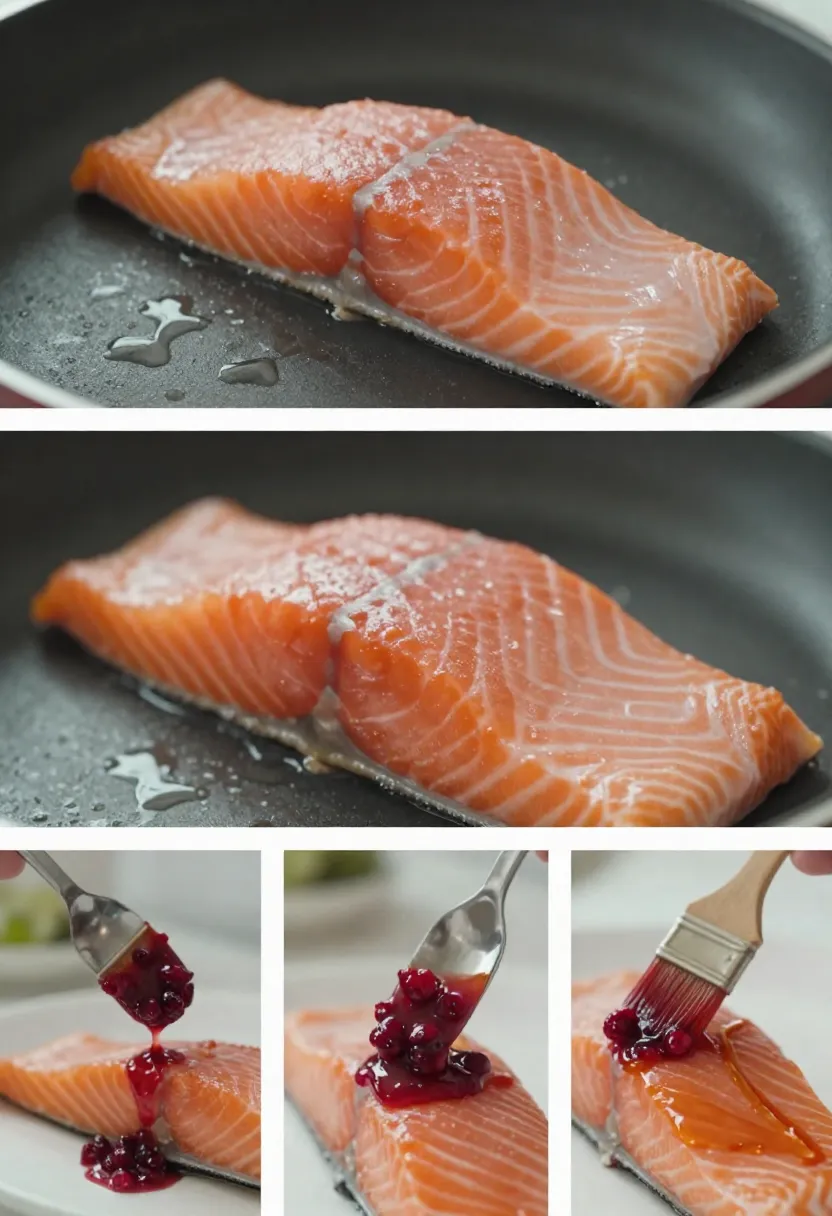
A few practical habits help avoid overcooking:
- checking the salmon a minute or two earlier than planned
- watching how the color changes from the sides inward
- trusting texture more than exact timing
The glaze deserves the same kind of attention. Cranberries can vary significantly depending on the season and the batch. Some are sharp and intense, others slightly sweeter. Taking a moment to taste the glaze before brushing it on allows for small adjustments that don’t alter the character of the dish but improve its balance.
A touch more honey can soften excessive tartness. A pinch of salt can pull the flavors together. These changes are subtle, but they’re often what separates a good dish from a memorable one.
Why This Dish Has a Habit of Becoming a Tradition 💛
Recipes don’t earn a permanent place at the holiday table simply because they taste good. Many dishes taste good once. Far fewer return year after year. What makes the difference is how a recipe fits into the flow of real gatherings.
This cranberry-orange glazed salmon doesn’t require constant attention. Once it’s in the oven, there is space to step away, to talk, to pour drinks, to answer questions, and to stay connected to what’s happening around the table. The cook remains part of the evening instead of managing it from a distance.
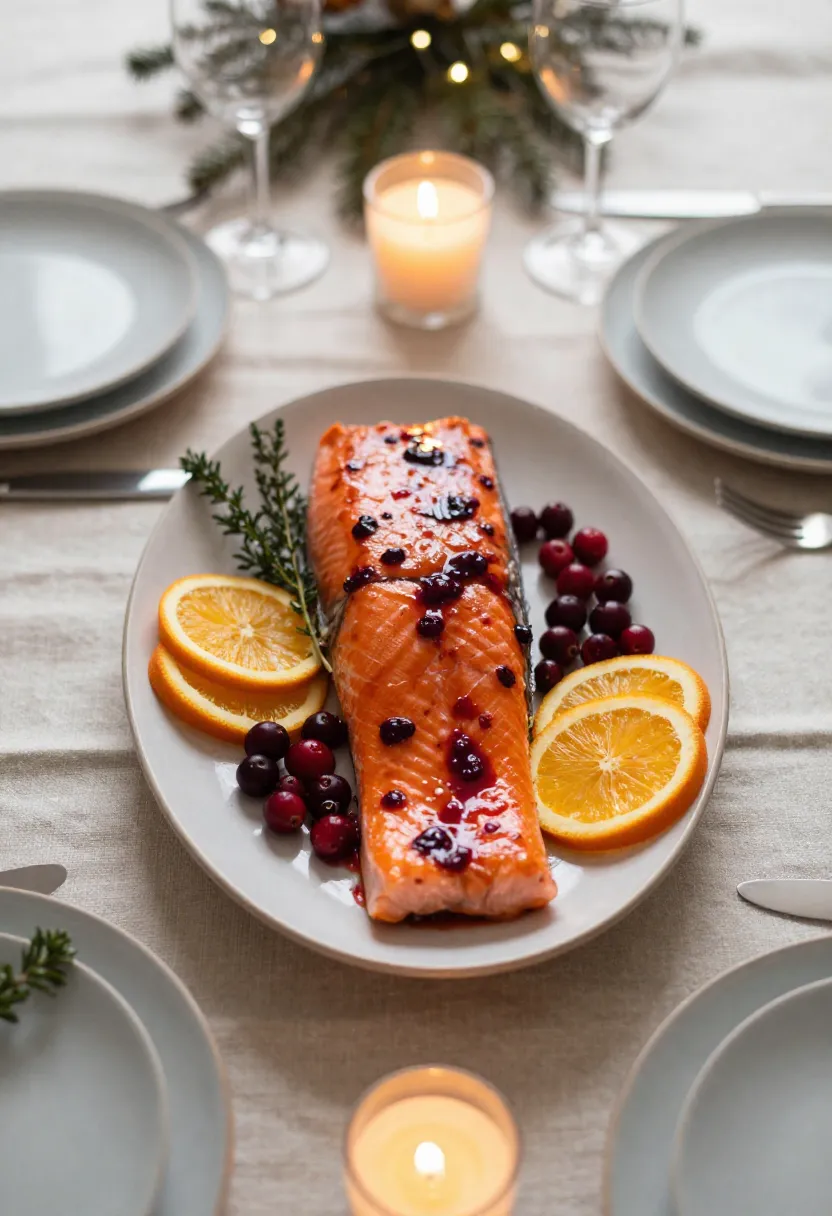
That ease subtly shapes the atmosphere. The kitchen feels calmer. The timing feels less fragile. The meal unfolds naturally rather than feeling tightly scheduled.
Over time, those experiences matter more than the exact flavors or techniques. People remember how relaxed the evening felt. How no one seemed rushed. How the food arrived at the table without tension.
Some holiday traditions don’t begin with intention. They form quietly, through dishes that feel right for the moment and easy to return to. This salmon often becomes one of those dishes — not because it demands attention, but because it allows everything else to fall into place.