There are certain dinners that seem to announce themselves long before they’re ready.
Chicken fried rice is definitely one of them.
The moment minced garlic lands in a hot skillet, followed by a splash of soy sauce and a drizzle of sesame oil, the entire kitchen starts smelling like your favorite neighborhood takeout restaurant. It’s warm, savory, just a little smoky, and somehow impossible to ignore. Even people who insisted they weren’t hungry five minutes earlier usually wander into the kitchen asking, “Is dinner almost ready?”
I’ve always loved that about this recipe.
It doesn’t need hours in the oven or a long list of ingredients to feel satisfying. Everything cooks quickly, yet every step adds another layer of flavor. The chicken browns until it’s lightly golden, the vegetables stay bright and crisp, the eggs become soft little ribbons, and the rice slowly transforms into something far more exciting than it was the day before.
Watching it all come together is surprisingly satisfying.
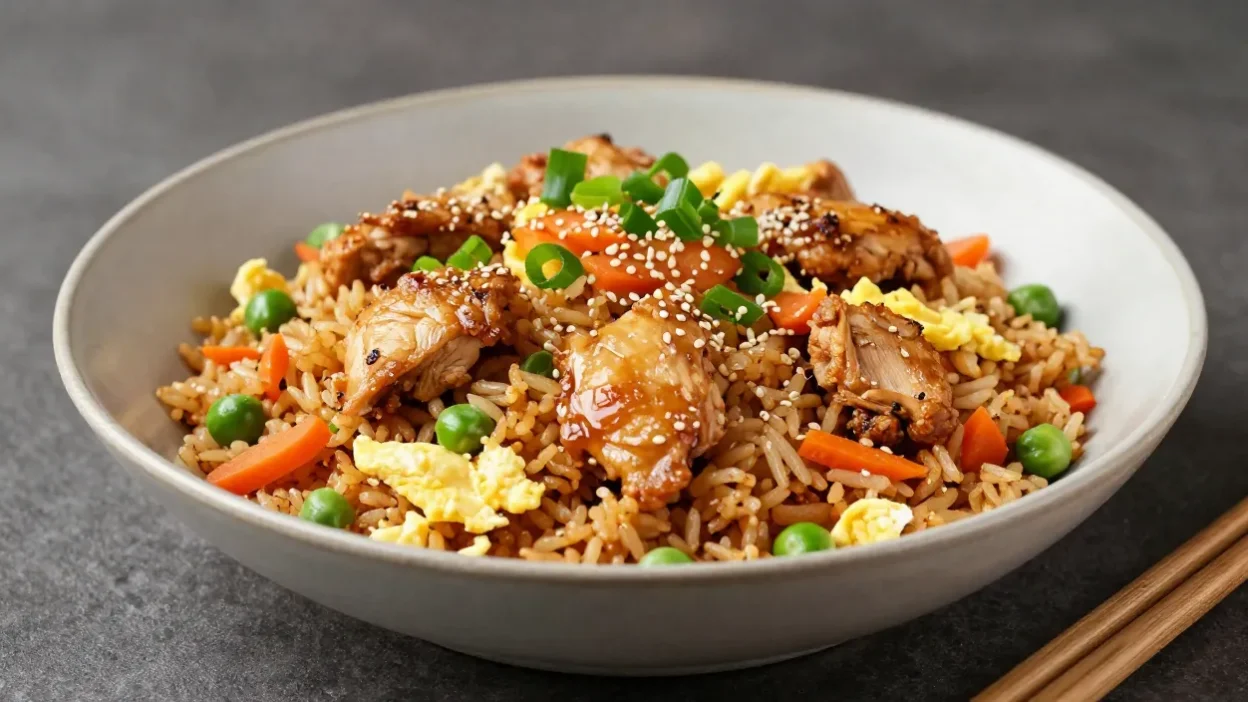
The skillet gradually fills with color. Orange carrots, bright green peas, golden eggs, and tender pieces of chicken are scattered through fluffy rice that’s beginning to pick up lightly toasted edges. Steam rises from the pan while the aroma grows richer with every stir. It looks like comfort food, but somehow still feels fresh and vibrant.
That’s one reason this recipe has become such a regular part of my dinner rotation.
It fits busy weeknights when I don’t have much time, but it never feels like I’m settling for something ordinary. In fact, there are evenings when I look forward to making fried rice more than ordering takeout because I know exactly how I want it to taste.
A little extra garlic.
A handful more green onions.
Maybe another splash of sesame oil right at the end.
Those tiny adjustments make every batch feel just a little different.
Another thing I appreciate is how forgiving the recipe is. It doesn’t demand perfection. If you have leftover chicken from yesterday’s dinner, use it. If there’s half a bell pepper sitting in the refrigerator, slice it up and toss it in. Frozen peas, fresh broccoli, mushrooms, corn, spinach… they all somehow find a place here.
That’s probably why so many people end up making fried rice again and again.
Not because it’s trendy.
Not because it’s complicated.
Simply because it makes everyday cooking feel easier.
A few reasons this recipe earns a permanent place in my weekly rotation:
- ready in about 30 minutes 🍚
- one skillet means less cleanup
- perfect for using leftover rice
- endlessly customizable with different vegetables
- tastes every bit as satisfying as takeout
And here’s something I’ve noticed over the years.
The first time people make chicken fried rice, it’s usually because they have leftover rice sitting in the refrigerator.
The second or third time?
They start cooking extra rice on purpose, knowing exactly what tomorrow’s dinner will be.
That probably says everything you need to know.
🔥 Great fried rice is all about technique, not complicated ingredients
For the longest time, I assumed restaurant fried rice tasted better because professional chefs had access to special sauces or secret ingredients.
It turns out the real difference is much simpler than that.
The ingredient list is surprisingly ordinary. Chicken. Rice. Eggs. Vegetables. Soy sauce. Sesame oil. Garlic. Green onions. Chances are, most of those items are already somewhere in your kitchen.
The magic comes from how those ingredients are treated.
Restaurant-style fried rice isn’t built around heavy sauces or bold seasonings. Instead, every ingredient is cooked in a way that allows it to keep its own personality. The vegetables stay crisp instead of becoming soft. The eggs remain tender rather than disappearing into the rice. The chicken develops golden edges before being mixed back into the pan.
Then there’s the rice.
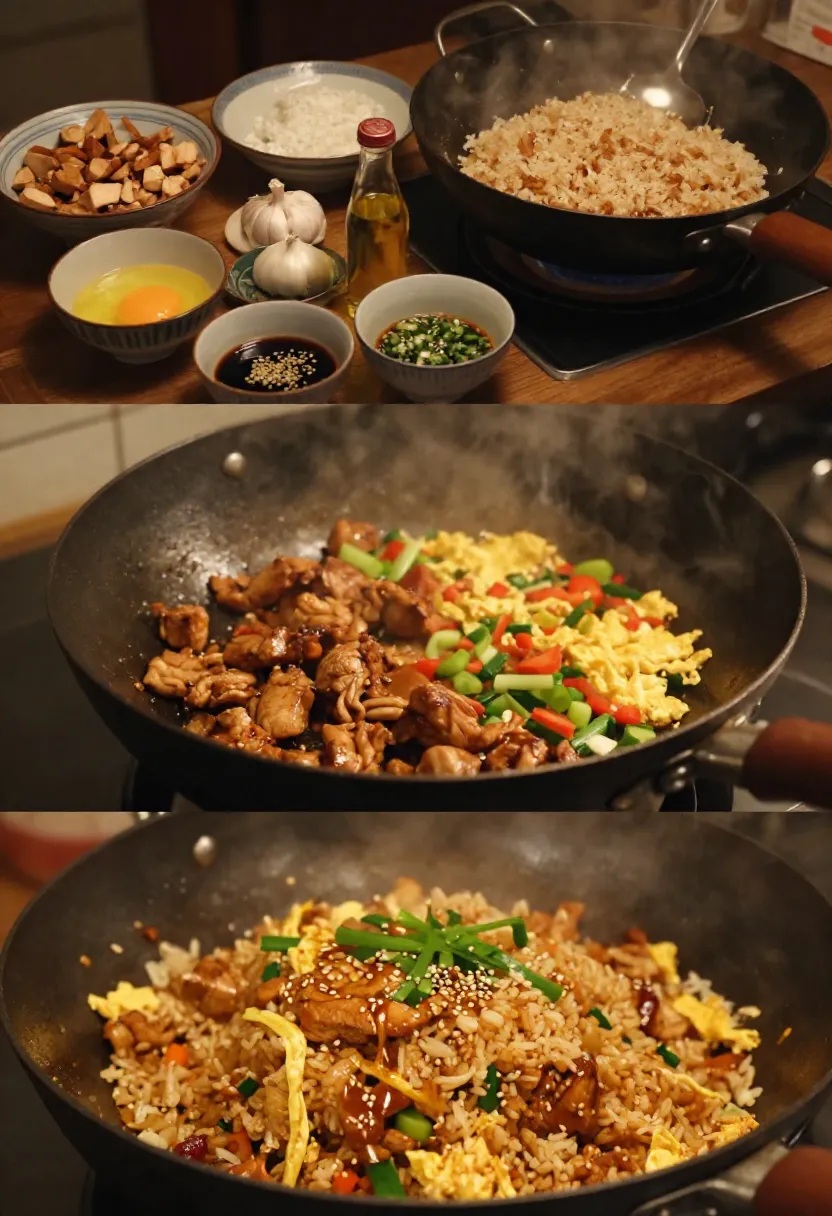
Cold, day-old rice might sound less appealing than freshly cooked rice, but it’s actually one of the biggest secrets behind great fried rice. As cooked rice rests in the refrigerator overnight, it loses just enough moisture to firm up. The grains separate more easily, making it possible to fry them instead of steaming them.
The result is exactly what you’re hoping for.
Individual grains that stay fluffy, lightly toasted, and coated in flavor instead of clumping together into soft, sticky piles.
Every ingredient has an important role to play:
| Ingredient | What It Adds | Texture | Flavor Impact |
|---|---|---|---|
| Chicken | Savory protein | Tender and juicy | Rich, satisfying flavor |
| Cold rice | The foundation | Fluffy individual grains | Absorbs sauces beautifully |
| Eggs | Soft richness | Light, delicate curds | Adds balance and creaminess |
| Mixed vegetables | Freshness and color | Slight crunch | Natural sweetness |
| Soy sauce | Deep seasoning | Light coating | Bold umami flavor |
| Sesame oil | Finishing aroma | Smooth finish | Warm, nutty fragrance |
I’ve also learned that restraint makes a bigger difference than people expect.
Adding extra soy sauce might seem like a good idea while you’re cooking, but too much quickly overwhelms everything else. Suddenly the vegetables disappear behind the saltiness, and the rice loses its light texture.
The same goes for sesame oil.
A little transforms the dish.
Too much dominates it.
Even vegetables benefit from a little restraint. It’s tempting to empty the entire vegetable drawer into the skillet, but overcrowding the pan lowers the temperature and creates steam instead of caramelization. A handful of colorful vegetables often produces a better result than twice the amount.
It’s a recipe built on balance.
No single ingredient tries to steal the spotlight.
Instead, every bite brings together just enough chicken, vegetables, eggs, and rice to keep things interesting from the first forkful to the last.
🥢 Small cooking habits that make every batch better
Chicken fried rice cooks fast.
Really fast.
Once the skillet is hot, there isn’t much time to stop and measure ingredients or chop another carrot. That’s why I almost always prepare everything before turning on the stove. Garlic gets minced, vegetables are sliced, sauces are measured, and the rice is broken apart with my hands so there aren’t any large clumps waiting to cause trouble later.
That small bit of preparation makes the entire cooking process feel relaxed instead of rushed.
The order of cooking matters, too.
The chicken needs enough space to brown rather than boil in its own juices. Once it’s cooked, it comes out of the pan for a few minutes while the vegetables take their turn. The eggs cook separately into soft curds before everything finally comes together with the rice during the last few minutes.
It might seem like an extra step.
It isn’t.
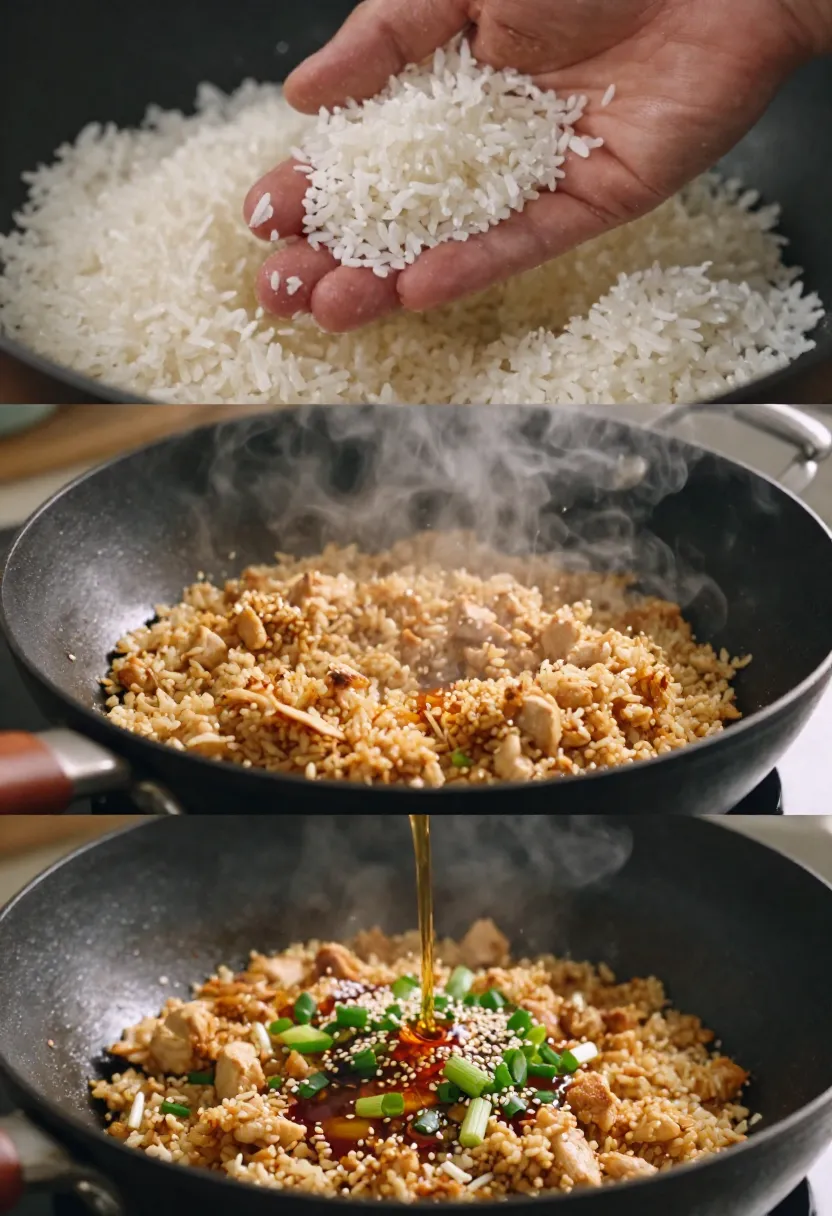
Keeping the ingredients separate until the end helps every component maintain its own texture instead of blending into one uniform mixture.
There are also a few little habits that consistently improve fried rice:
- always use cold, cooked rice
- cook over fairly high heat 🔥
- avoid overcrowding the skillet
- let the rice sit briefly before stirring
- finish with sesame oil and green onions
One habit took me a while to learn.
When the rice first goes into the pan, it’s tempting to stir it constantly. Instead, letting it sit untouched for twenty or thirty seconds allows parts of it to develop tiny golden spots against the hot surface. Those lightly toasted bits add incredible flavor and a little texture that makes homemade fried rice taste much closer to what you’d get from a restaurant.
Another detail that’s easy to overlook is timing the sauce.
Rather than pouring everything in at once, I like adding soy sauce around the edges of the hot skillet. It sizzles almost immediately before coating the rice, creating a slightly deeper flavor than simply pouring it directly onto the food.
Then comes my favorite moment.
Everything is finally back in the pan together. The rice is steaming, the eggs are folded through, green onions add a burst of freshness, and the last drizzle of sesame oil releases one final wave of aroma that fills the kitchen.
That’s usually when dinner officially begins.
Not because the food is on the table yet.
Because everyone has already gathered in the kitchen, waiting for the first serving. 🍚🥢✨
🍗 Chicken Fried Rice Recipe
There are plenty of recipes that promise a quick dinner, but not all of them leave you feeling like you’ve cooked something truly satisfying. Chicken fried rice is one of the few exceptions. It’s fast enough for a busy weeknight, flexible enough to work with whatever vegetables you already have, and flavorful enough that nobody at the table will guess it came together in about half an hour.
One of the biggest reasons I keep returning to this recipe is how well it balances convenience with flavor. Every ingredient has a purpose. The chicken makes it hearty, the vegetables add freshness and color, the eggs create little pockets of richness, and the rice ties everything together while soaking up every bit of savory sauce.
What really makes homemade fried rice special, though, is that you control every detail. You decide how much garlic goes in, how colorful the vegetables should be, and whether you’d like a little extra sesame oil or another handful of green onions at the end.
And unlike takeout, you know exactly what’s in every bite.
The trick isn’t using expensive ingredients or complicated techniques.
It’s simply giving each ingredient enough attention before bringing everything together in one hot skillet.
Once you’ve made it once or twice, you’ll probably find yourself cooking extra rice just to have an excuse to make this recipe again.
🛒 Ingredients
For the fried rice
- 2 tablespoons neutral cooking oil (vegetable, avocado, or canola)
- 2 boneless, skinless chicken breasts or 4 boneless chicken thighs, diced into bite-sized pieces
- Salt and freshly ground black pepper, to taste
- 3 cloves garlic, minced
- 1 small onion, finely diced
- 1 cup carrots, diced
- 1 cup frozen peas
- 4 cups cold cooked jasmine rice (preferably day-old)
- 2 large eggs, lightly beaten
- 3 tablespoons low-sodium soy sauce
- 1 tablespoon oyster sauce (optional but recommended)
- 1 teaspoon toasted sesame oil
- 3 green onions, thinly sliced
Optional additions
- diced bell peppers
- mushrooms
- broccoli florets
- corn
- baby spinach
- chili crisp or sriracha for serving
👩🍳 Instructions
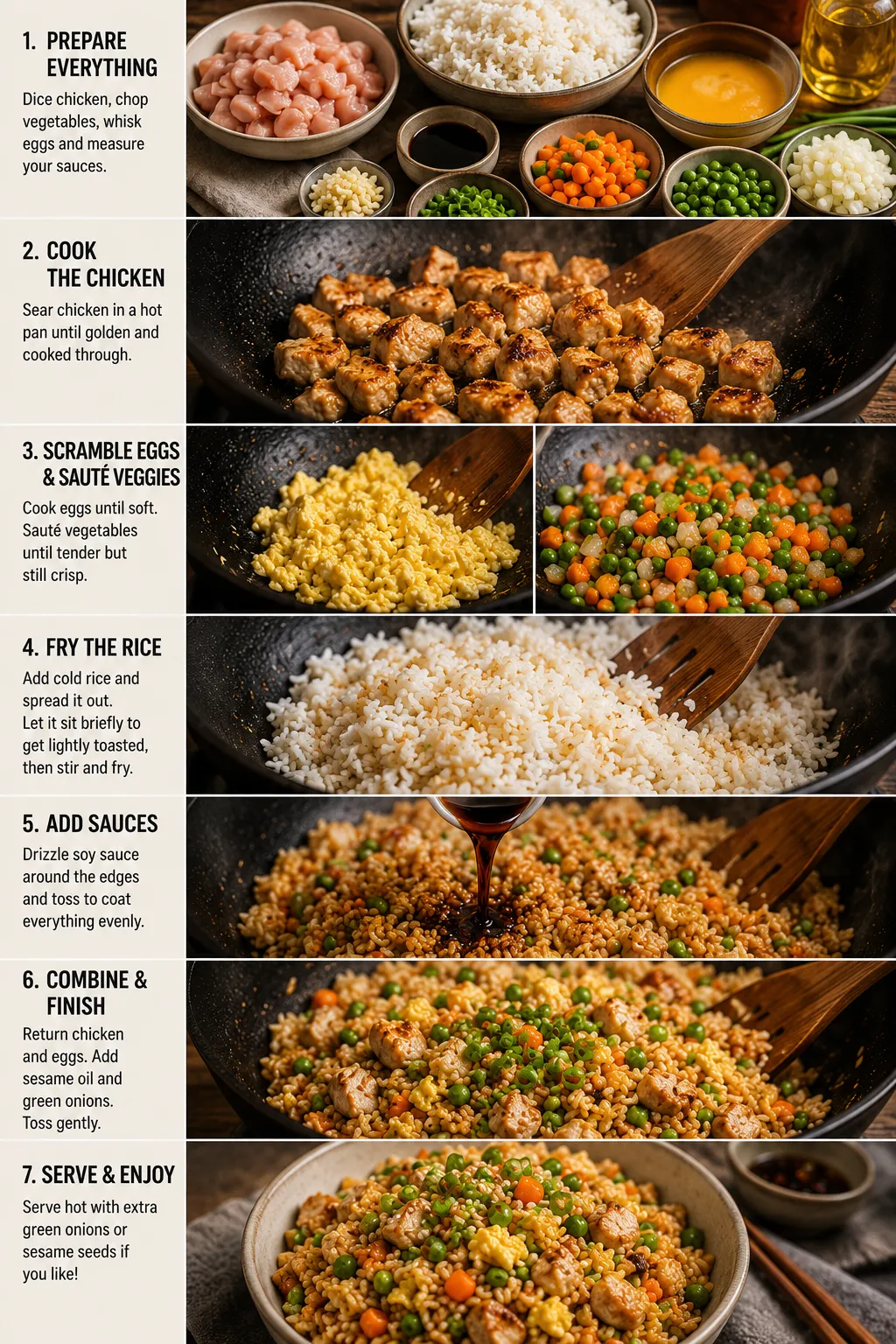
- Prepare everything before you start.
Chicken fried rice cooks very quickly, so it’s worth spending a few extra minutes getting organized first. Dice the chicken, chop all of the vegetables, mince the garlic, whisk the eggs, and measure the sauces. If your rice has been sitting in the refrigerator overnight, gently break apart any large clumps with your hands before cooking. - Cook the chicken.
Heat one tablespoon of oil in a large skillet or wok over medium-high heat. Once the pan is hot, add the chicken in a single layer. Season lightly with salt and pepper, then let it cook undisturbed for a couple of minutes before stirring. This helps the chicken develop lightly golden edges instead of simply steaming. Continue cooking for about 5 to 7 minutes, until the chicken is fully cooked and lightly browned. Transfer it to a clean plate and set it aside. - Scramble the eggs.
Reduce the heat slightly if necessary and add a small drizzle of oil if the pan looks dry. Pour in the beaten eggs and gently stir until they’re just cooked. They should remain soft rather than becoming dry. Transfer them to the same plate as the chicken. - Sauté the vegetables.
Add the remaining tablespoon of oil to the skillet. Stir in the onion and carrots, cooking for about 3 to 4 minutes until they begin to soften while still keeping a little bite. Add the garlic and cook for another 30 seconds, just until fragrant. Next, stir in the peas and any additional vegetables you’re using. Since many vegetables cook at different speeds, try adding sturdier ones first and delicate greens toward the end. - Fry the rice.
Increase the heat to medium-high if needed and add the cold rice to the skillet. Use a spatula to spread it out across the surface rather than immediately stirring. Let the rice sit untouched for about 20 to 30 seconds before tossing it. This allows some of the grains to develop lightly toasted edges, creating the texture that’s so characteristic of great fried rice. Continue cooking for several minutes, stirring occasionally until the rice is heated through and each grain feels separate and fluffy. - Add the sauces.
Drizzle the soy sauce and oyster sauce around the edges of the hot skillet rather than directly over the rice. The sauces will sizzle briefly before coating the ingredients, creating a slightly deeper flavor. Toss everything together until the rice is evenly seasoned. Taste and adjust with a little extra soy sauce if needed, but remember that it’s easier to add more later than to fix overly salty rice. - Return the chicken and eggs.
Add the cooked chicken and scrambled eggs back into the skillet. Gently fold everything together until evenly distributed. The eggs should stay in soft pieces rather than breaking apart completely. - Finish with sesame oil.
Turn off the heat and drizzle the toasted sesame oil over the rice. Add the sliced green onions and gently toss one final time. Adding sesame oil at the very end preserves its rich, nutty aroma and keeps the flavor bright instead of muted by prolonged cooking. - Taste one last time.
Before serving, give the fried rice one final taste. If you’d like a little more brightness, add another handful of green onions. If you enjoy spicy food, now’s the perfect time to stir in chili crisp or a drizzle of sriracha. - Serve immediately.
Chicken fried rice is at its absolute best while it’s still hot from the skillet. The rice stays fluffy, the vegetables remain slightly crisp, and the savory aroma is at its peak. Serve immediately and garnish with extra green onions or sesame seeds if desired.
💡 Helpful Kitchen Tips
- Day-old rice produces the fluffiest fried rice because it contains less moisture.
- Chicken thighs stay especially juicy, but chicken breast works beautifully too.
- Don’t overcrowd the skillet. If doubling the recipe, cook it in batches for the best texture.
- High heat creates lightly toasted rice without making it greasy.
- Add sesame oil only after removing the skillet from the heat.
- Frozen vegetables work just as well as fresh and make weeknight cooking even easier.
- Leftovers keep well in the refrigerator for up to 4 days and reheat beautifully in a hot skillet.
🍽️ What to serve with chicken fried rice
One of the reasons chicken fried rice has earned a permanent place in so many kitchens is that it can be almost anything you want it to be.
On busy evenings, it’s perfectly satisfying all by itself. With tender chicken, fluffy rice, eggs, and vegetables all in one skillet, it already feels like a complete meal. There’s protein, plenty of texture, and enough flavor that you don’t necessarily need anything else on the table.
But if you’re in the mood to turn dinner into something a little more special, fried rice also pairs beautifully with a variety of side dishes.
The flavors are savory without being overpowering, which means they leave plenty of room for fresh vegetables, crispy appetizers, or something with a little extra spice. That’s one of the reasons it’s such a popular choice when you’re serving family or friends. Everyone can build a plate they enjoy.
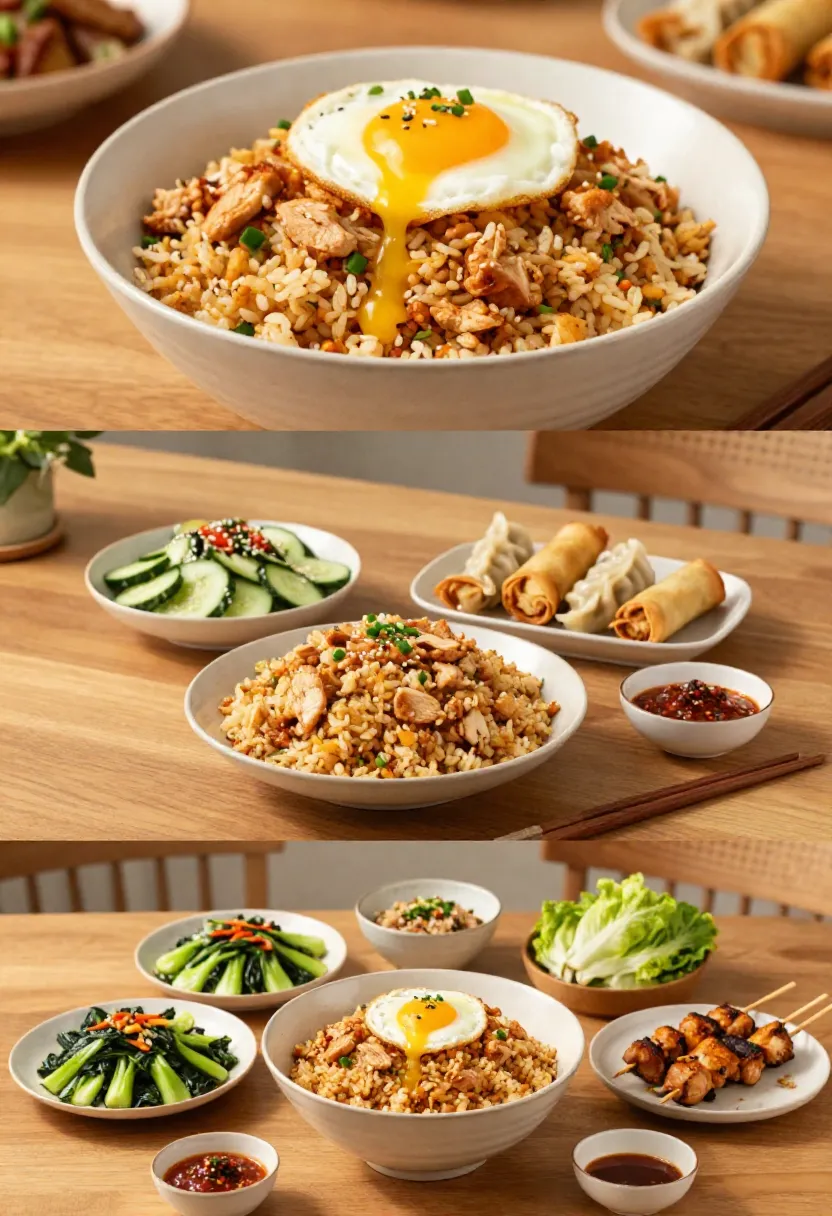
Some of my favorite pairings include:
- crispy spring rolls 🥟
- steamed or pan-fried dumplings
- cucumber salad with sesame dressing 🥒
- steamed broccoli or bok choy
- spicy chili crisp or sriracha 🌶️
- a fried egg with a runny yolk 🍳
A fried egg deserves a special mention.
It might sound like a small addition, but placing a perfectly cooked egg on top of a bowl of hot fried rice changes the entire dish. As the yolk breaks, it creates a rich, silky sauce that coats the rice and brings everything together in the best possible way.
I also love serving fried rice with something crisp and refreshing.
A simple cucumber salad dressed with rice vinegar, sesame oil, and a sprinkle of sesame seeds provides a cool contrast to the warm skillet dinner. It’s a small addition, but it makes the meal feel lighter and more balanced.
And if you’re feeding a crowd?
Chicken fried rice works beautifully as part of a larger spread. Pair it with dumplings, lettuce wraps, stir-fried vegetables, or grilled skewers, and suddenly you’ve created a dinner that feels like everyone’s favorite takeout restaurant—only fresher and made exactly the way you like it.
🥕 Easy ways to make it your own
One of the best things about fried rice is that no two batches ever have to be exactly alike.
In fact, I’d argue they probably shouldn’t be.
Once you’ve mastered the basic method, the recipe becomes less of a strict set of instructions and more of a starting point. Every time I make it, I end up changing something depending on what’s already waiting in the refrigerator.
Sometimes it’s a handful of mushrooms.
Sometimes leftover roasted broccoli.
Other times it’s simply a little more garlic because, honestly, garlic rarely hurts anything.
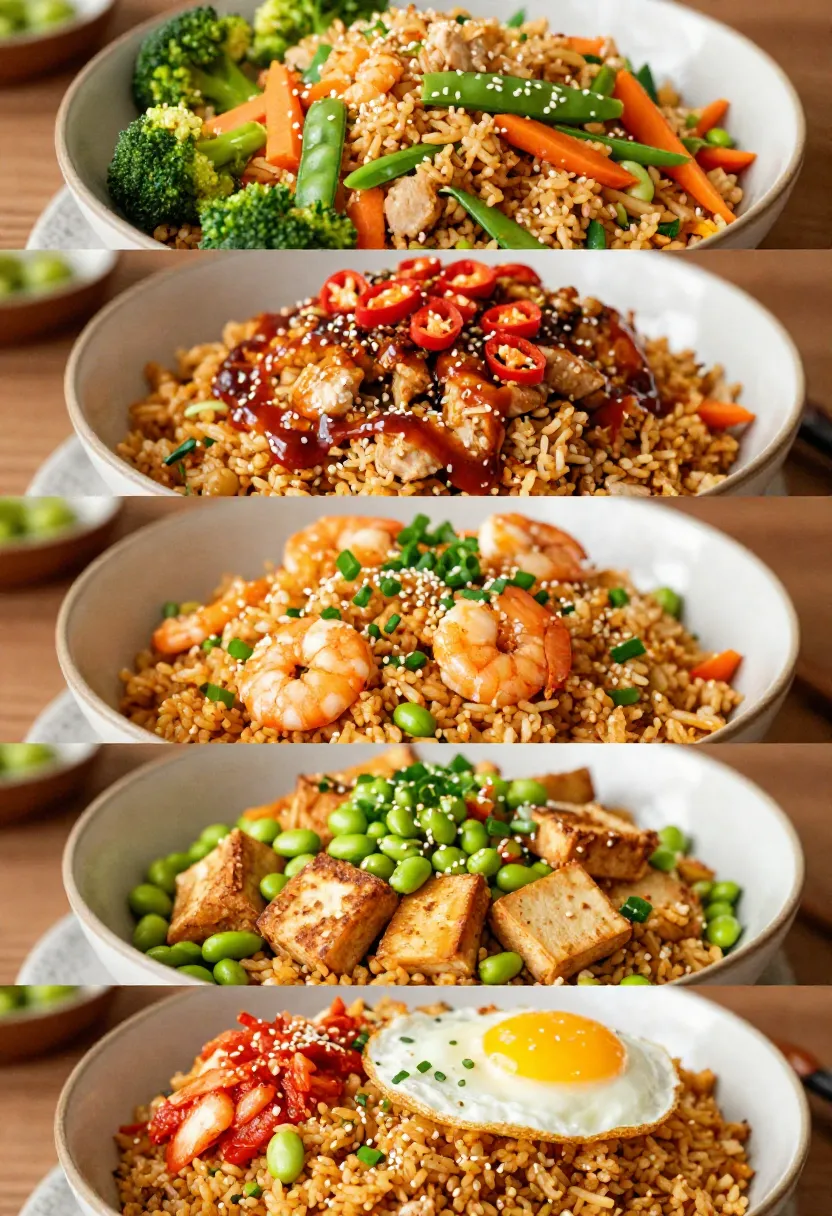
That’s part of what makes fried rice such a reliable recipe. It encourages flexibility instead of perfection.
Here are a few easy variations worth trying:
| If you like… | Try adding… | Flavor Result | Best For |
|---|---|---|---|
| More vegetables | Broccoli or snap peas | Fresh and hearty | Family dinners |
| A little heat | Sriracha or chili crisp | Bold and spicy | Weeknight meals |
| Seafood | Shrimp | Sweet and savory | Special occasions |
| Extra protein | Edamame or tofu | More filling | Meal prep |
| Tangy flavors | Kimchi | Bright and bold | Korean-inspired dinners |
Mushrooms are one of my favorite additions.
As they cook, they release their moisture before developing beautifully browned edges that add another layer of savory flavor. Combined with soy sauce, they make the fried rice taste even richer without adding much effort.
Kimchi is another variation that’s worth trying if you enjoy bolder flavors.
The slight tanginess cuts through the richness of the rice while adding just enough heat to keep every bite interesting. It completely changes the personality of the dish without requiring a completely different recipe.
I’ve even swapped the chicken for leftover steak, roasted pork, or shredded rotisserie chicken.
Every version turns out a little different.
And somehow, they all work.
That’s one of the reasons fried rice has remained popular for generations. It isn’t tied to one exact list of ingredients. It evolves with whatever happens to be available, making it one of the most practical dinners you can keep in your regular rotation.
❤️ The weeknight dinner you’ll come back to again and again
Some recipes are exciting because they’re new.
Others become favorites because they simply make life easier.
Chicken fried rice falls comfortably into the second category.
The first time you make it, you’re probably looking for a quick dinner or a clever way to use leftover rice. Then something interesting happens. You realize how easy it is, how adaptable it can be, and how quickly everyone around the table finishes their plate.
Before long, you’re making it on purpose.
I’ve found myself cooking extra rice at dinner more than once, knowing exactly what I’ll be making the following evening. It’s funny how a recipe that started as a way to use leftovers eventually becomes the reason you create leftovers in the first place.
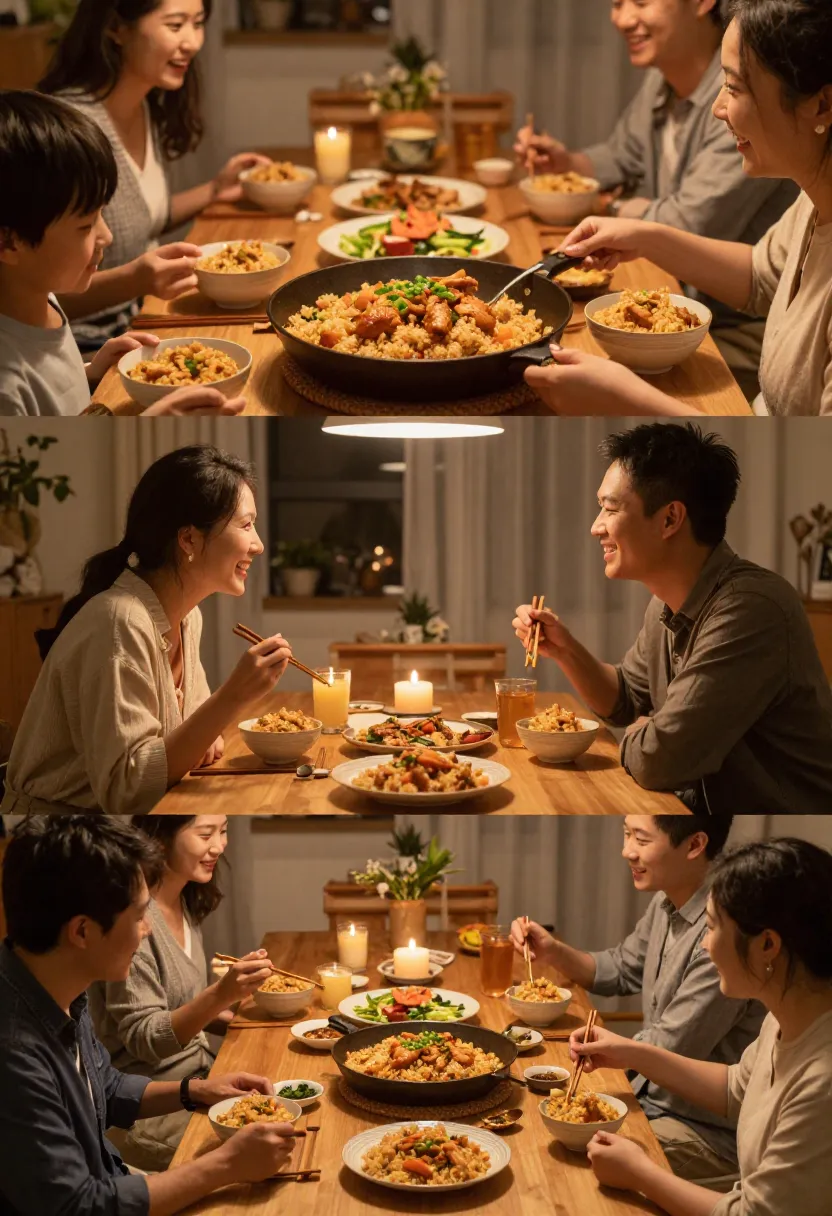
That’s usually a good sign.
Over the years, I’ve learned that the recipes people rely on most aren’t always the fanciest ones. They’re the meals that fit naturally into everyday life. The ones you can make after work without feeling overwhelmed. The dinners that don’t require a special trip to the grocery store or hours of preparation.
Chicken fried rice checks every one of those boxes.
It’s comforting without feeling heavy.
It’s filling without being complicated.
It’s familiar enough to please picky eaters while still leaving plenty of room for creativity if you enjoy experimenting in the kitchen.
And perhaps that’s the biggest reason it has stood the test of time.
It doesn’t ask for perfection.
It simply asks for a hot skillet, a few good ingredients, and about half an hour of your evening.
The rest happens naturally.
So the next time you have leftover rice waiting in the refrigerator—or even if you don’t—consider giving this recipe a try. Let the skillet get nice and hot, take your time building those layers of flavor, and don’t forget the final drizzle of sesame oil.
Then bring the pan straight to the table while everything is still steaming hot.
There’s a very good chance you’ll be scraping the last few bites from the skillet before anyone even starts asking what’s for dessert. 🍚🍗🥢✨