Spaghetti looks harmless until you sit down with a plate of it in front of you.
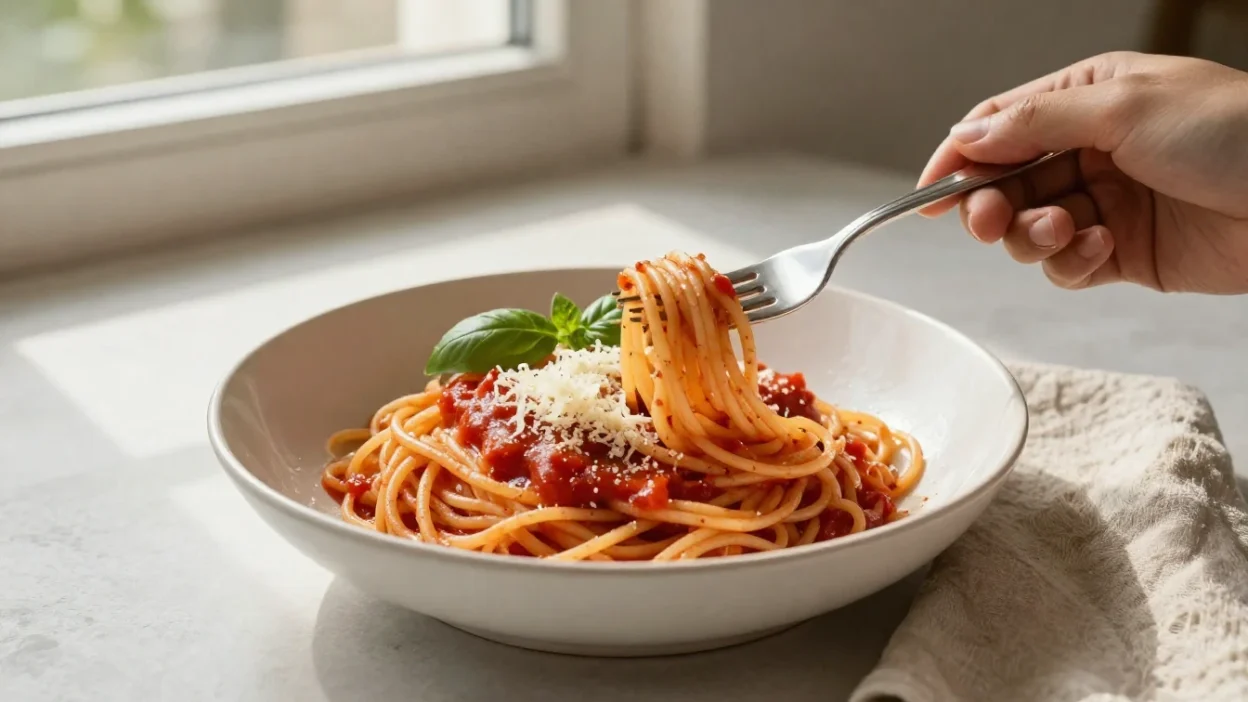
The sauce is glossy. The noodles are long. The Parmesan is melting into everything. You take one confident twist of the fork, and suddenly there is a strand hanging halfway to your chin, a red dot on your shirt, and a small moment of panic at the table.
I love spaghetti, but I also think it is one of those foods that teaches you humility. It is simple food, yes, but eating it neatly takes a little technique.
The good news is that you do not need to act formal or stiff. Learning how to eat spaghetti the right way without making a mess mostly comes down to smaller bites, better twirling, and not rushing the fork to your mouth before the noodles are under control.
This guide will walk you through the easiest way to twirl spaghetti, the little table mistakes that make pasta messier, and a few kitchen tricks that help sauce cling to the noodles instead of splashing everywhere. Because the goal is not to look perfect.
The goal is to enjoy your pasta without wearing it.
Why spaghetti etiquette still matters
Spaghetti is comfort food, not a test.
Nobody should feel nervous around a plate of pasta. Still, spaghetti has a funny way of turning a relaxed dinner into a tiny coordination exercise. Long noodles slide. Sauce drips. A forkful that looked reasonable on the plate can become much too big once it is halfway to your mouth.
That is why a little spaghetti etiquette helps.
Not because you need to impress anyone. Not because pasta should feel fancy. Good table manners are useful because they make the meal easier to enjoy.
Spaghetti is casual, but it can get messy fast
Some foods almost eat themselves. A piece of roasted chicken, a spoonful of soup, a slice of bread with butter. You know what to do.
Spaghetti asks for a bit more attention.
The most common problems are small ones:
- Too many noodles wrapped around the fork
- Sauce splashing when the fork turns too quickly
- Loose strands hanging down after you lift the bite
- Noodles slipping back onto the plate
- A rushed bite that ends with sauce near your mouth, shirt, or napkin
I have done all of these. Usually when I am hungry and too confident.
The trick is to slow down before the first bite. A small, tight twirl is always better than a giant forkful that looks like it belongs in a cartoon.
Good manners make the meal more comfortable
Spaghetti etiquette is really about comfort.
You eat more calmly when you know how to handle the noodles. You do not have to stare at the plate and wonder if the next bite will betray you. You can talk, laugh, sip your water, and actually taste the pasta.
This matters even more when you are eating with other people. A family dinner at home may be forgiving, but a restaurant meal, a work lunch, or a date can make messy pasta feel a little more dramatic than it needs to be.
A few simple habits help:
- Take smaller forkfuls
- Twirl slowly
- Keep the bite compact
- Use your napkin early, not after the damage is done
- Avoid cutting or slurping unless the situation is very casual
None of this needs to look rehearsed. In fact, it should not. The best version of spaghetti etiquette looks natural, quiet, and easy.
There is no need to perform
Some people make pasta manners sound more serious than they are.
You do not need to sit like you are at a royal dinner. You do not need to inspect every strand. You do not need to panic if one noodle escapes the fork.
Spaghetti is still spaghetti. It is meant to be warm, saucy, and satisfying.
The point is simply to make the meal less awkward. Once you learn how much pasta to gather and how to twist it neatly, the whole thing feels easier. You stop fighting the noodles and start enjoying the bowl in front of you.
And honestly, that is the best kind of table etiquette. The kind that disappears.
How to twirl spaghetti with a fork
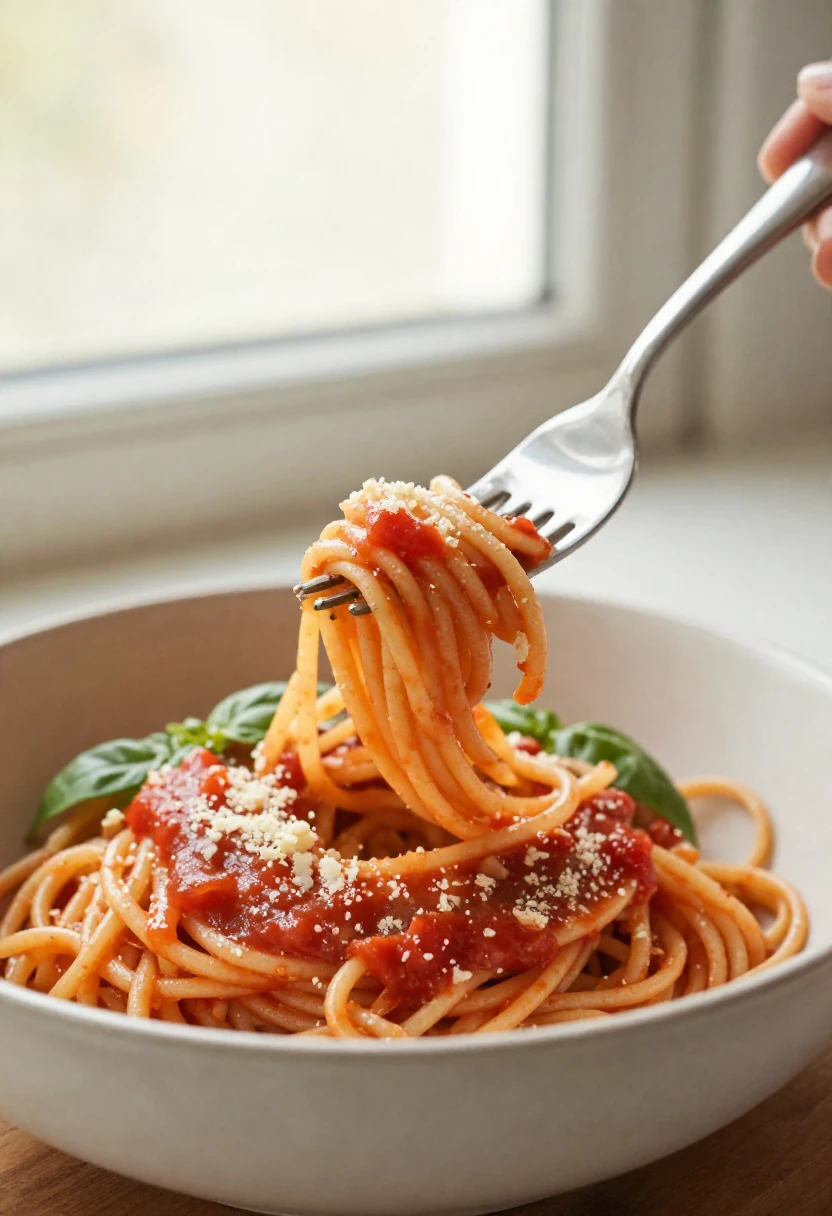
The fork is doing most of the work here, but only if you give it a reasonable job.
The biggest mistake is trying to grab too much spaghetti at once. It feels efficient for about two seconds, then the whole thing turns into a heavy, slippery knot. A good spaghetti bite is smaller than you think. A few strands are enough.
Start with a small amount of pasta
Look for a small section of noodles near the edge of the plate or bowl. Do not stab into the middle and pull up half the serving. That is how you get a forkful with too many loose ends.
Instead, catch just a few strands with the tips of the fork.
Then twirl gently.
The noodles should wrap around the fork in a neat little bundle. If the bundle starts looking wide, heavy, or messy, it is too much. Put some of it back and try again. There is no shame in resetting the bite. Pasta forgives you.
A clean bite usually comes from:
- 3 to 5 strands of spaghetti
- A slow twist of the fork
- A little pressure against the plate
- A quick check before lifting the fork fully
That last part matters. Most spaghetti accidents happen after the fork leaves the plate.
Use the side of the plate or bowl
The side of the plate is your friend.
Press the fork lightly against the curved edge, then rotate it. The rim gives the noodles something to wrap against, so they do not spread out or drag through too much sauce.
A shallow bowl is even better. It gives you a natural curve for twirling and helps keep sauce where it belongs.
If you are eating from a flat plate, choose a quiet corner of the plate and twirl there. Do not chase noodles around the whole dish. Spaghetti is slippery, and the more you chase it, the messier it gets.
Lift, check, and adjust before eating
Once the spaghetti is wrapped around the fork, lift it just a little.
Pause.
Are there long strands hanging down? Is sauce dripping? Does the bite look like it will fit comfortably in your mouth?
If not, lower the fork back to the plate and twirl once more. Or let a few strands slide off.
This tiny pause makes a big difference. It saves you from that awkward moment where you either slurp, bite off the extra noodle, or try to rescue the bite midair.
I like to think of it as the spaghetti checkpoint. Not dramatic. Just practical.
Why a spoon is not always necessary
A lot of people grew up twirling spaghetti with a fork and spoon. You place the spoon under the fork, spin the fork inside the spoon, and build a tidy little nest of pasta.
It works. It can be useful for kids, beginners, or very saucy pasta.
But in many Italian-style dining settings, adults usually twirl spaghetti with the fork alone, using the side of the plate or bowl for support. It looks more relaxed once you get used to it, and it keeps one hand free.
So is it wrong to use a spoon?
No. Not at home. Not if it helps you eat neatly. But if you are at a nice restaurant and want the cleaner, more traditional approach, try using only the fork.
Start small. Twirl slowly. Let the plate do the work.
Common spaghetti mistakes to avoid
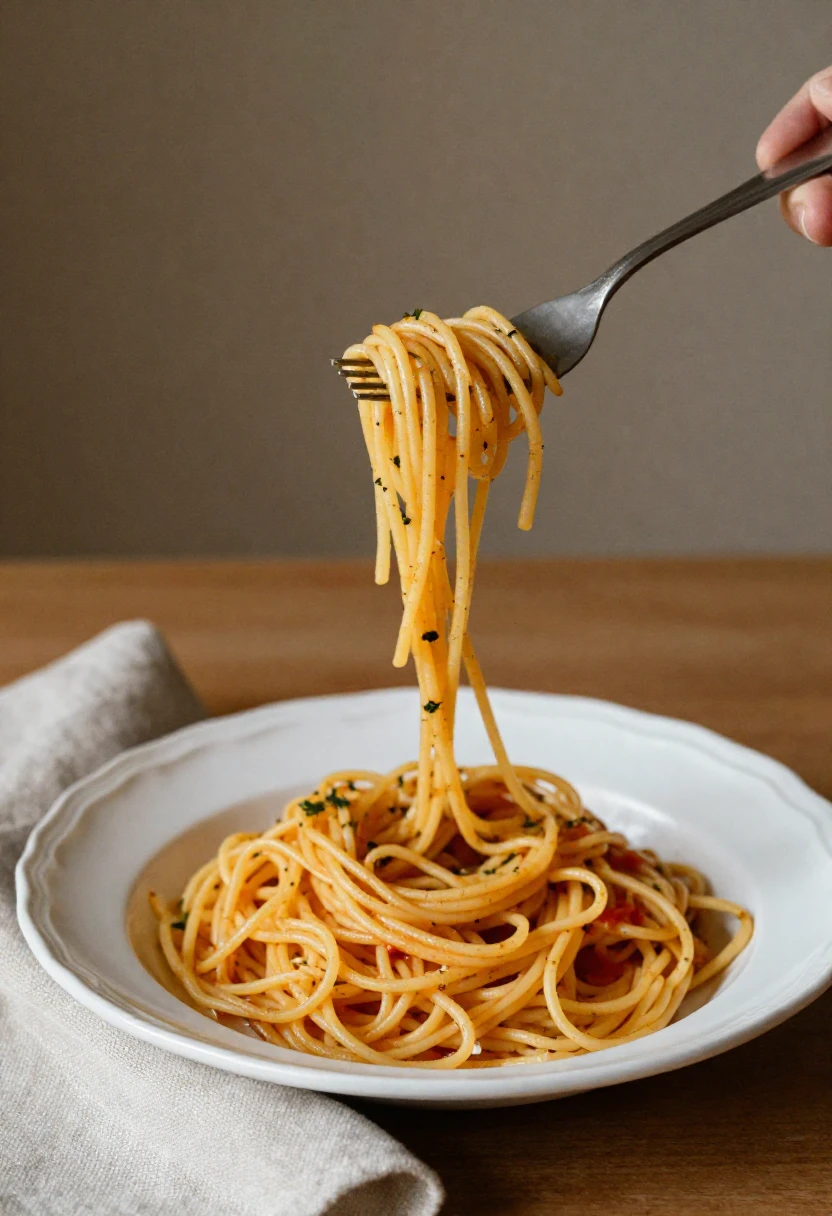
Most spaghetti messes happen for one boring reason: the bite is too big.
It sounds almost too simple, but that is usually it. Too many noodles on the fork, too much sauce clinging to them, too much confidence. Then you lift the fork and suddenly you are negotiating with dinner.
A better approach is to eat spaghetti in small, calm bites. It feels slower at first, but it is actually easier. You stop fixing mistakes and start enjoying the pasta.
Do not slurp the noodles
Slurping spaghetti is tempting when one strand refuses to behave.
I get it. One little noodle is hanging there, and the fastest solution is to pull it in. But slurping is noisy, and with tomato sauce or oil-based pasta, it can send tiny splashes onto your face, shirt, napkin, or the table.
Instead, lower the fork back to the plate and twirl again. If the bite is still too long, let a few strands fall away and start over.
This feels more graceful than trying to rescue the bite at the last second.
Do not bite off extra pasta and let it fall back
This is one of those habits that looks harmless at home but awkward at a shared table.
You lift a large forkful, take the part that fits, bite through the noodles, and let the rest drop back onto the plate. The problem is that the loose ends are already touched, and they usually land in a messy little pile.
A cleaner method is to fix the bite before it reaches your mouth.
If the forkful is too big, put it down. Twist a smaller amount. Try again.
Spaghetti is not going anywhere.
Do not overload the fork
A loaded fork makes spaghetti harder to chew, harder to keep neat, and harder to enjoy.
You want a compact little nest, not a pasta ball. The fork should feel light enough to lift without sauce dripping from the bottom.
A good rule: if you have to open your mouth wider than feels natural, the bite is too big.
Small forkfuls also help you taste the sauce better. With a giant bite, you mostly notice texture. With a smaller one, you get the tomato, garlic, olive oil, cheese, herbs, and that warm pasta smell all at once.
That is the whole point.
Do not lean too far over the plate
A slight lean is normal. We all do it, especially with saucy food.
But if your face is moving toward the plate instead of the fork moving toward you, the meal starts to look messy even before anything spills.
Sit comfortably. Keep the napkin on your lap. Twirl the spaghetti, check the bite, then bring the fork to your mouth.
This small habit changes the whole feel of eating pasta. You look more relaxed because you are not chasing the noodles.
Be careful with napkins and clothing
Tomato sauce has a talent for finding white shirts. Cream sauces are not innocent either.
Use your napkin before you need it. Place it on your lap when you sit down, not after the first splash. If you are eating at home in a very casual setting, tucking a napkin into your collar can be funny and practical. At a restaurant, it usually looks better to keep it on your lap and eat slowly.
Also, watch wide sleeves.
I have learned this the annoying way. A loose cuff can drag through sauce before you even notice. Roll it back, especially if the pasta is served in a low, wide bowl.
Spaghetti does not need fear. Just a little awareness.
How to serve spaghetti so it is easier to eat
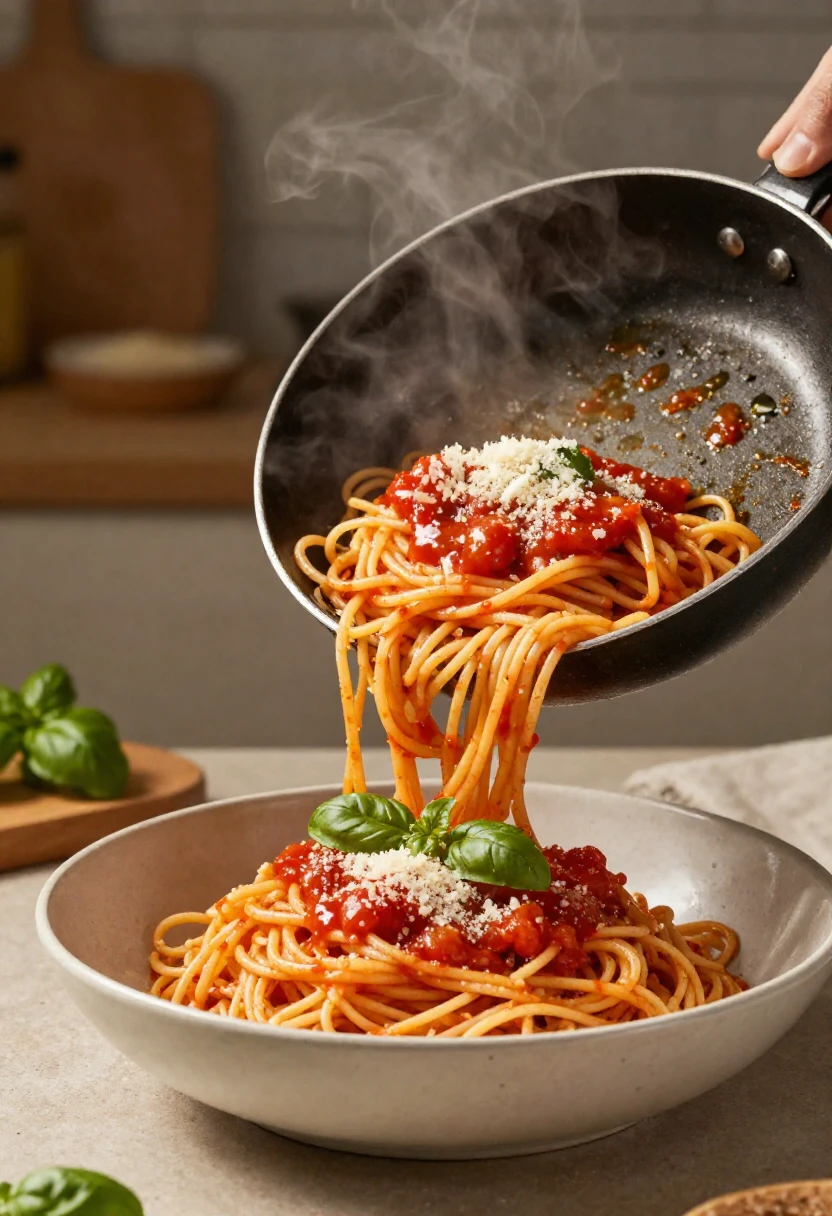
The way spaghetti is served matters more than people think.
A messy plate does not always come from bad table manners. Sometimes the pasta is already working against you before the fork even touches it. Too much sauce. A flat plate with no edge. Noodles that were drained, left sitting, and then covered with a heavy scoop of tomato sauce like a blanket.
Good spaghetti should be easy to gather, easy to twirl, and coated just enough that every bite tastes right.
Use the right plate or shallow bowl
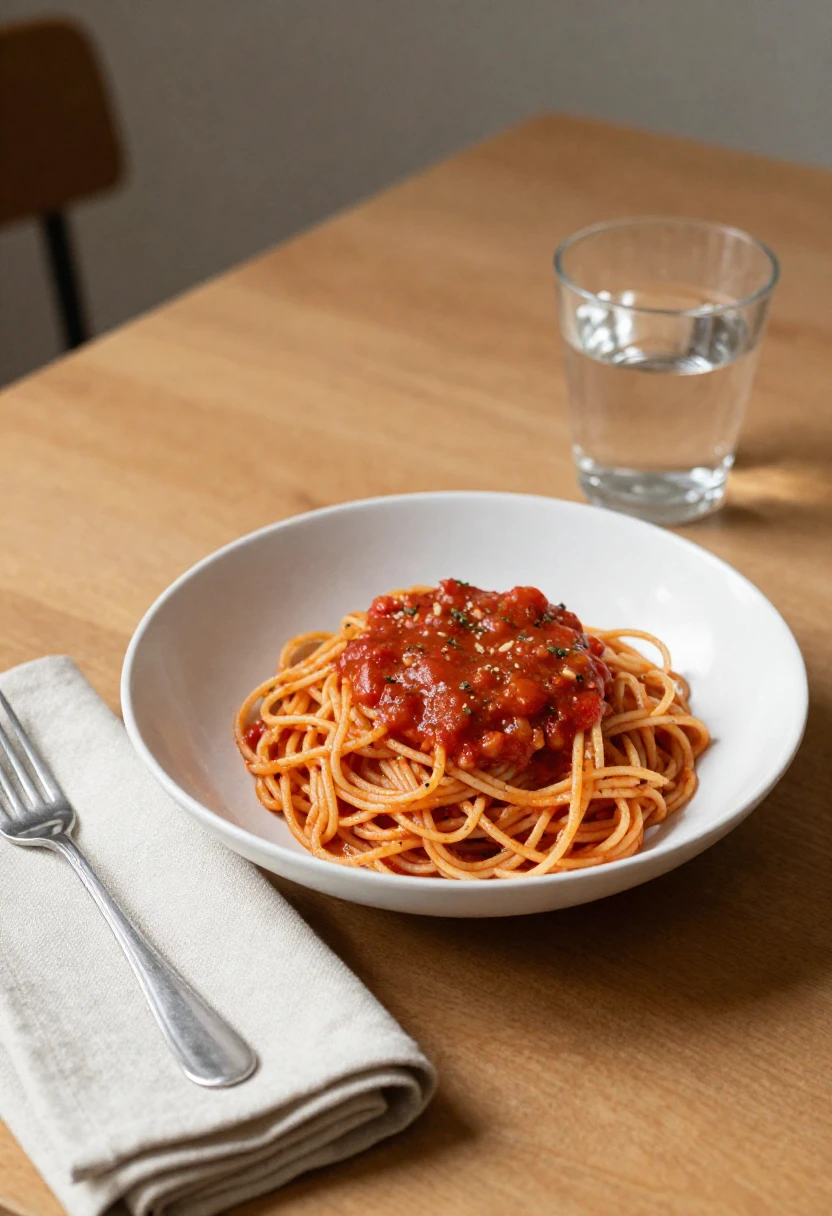
A shallow bowl is usually the best choice for spaghetti.
It gives you enough space to twirl, but the sides help keep the noodles contained. A flat dinner plate can work too, especially for thicker sauces, but it gives you less control. One fast fork movement and the noodles can slide farther than you planned.
Deep bowls are cozy, but they can make twirling awkward if the pasta is piled too high. You end up digging down into the bowl instead of gently gathering a small amount from the side.
For the cleanest serving, use:
- A wide shallow bowl
- A rimmed pasta plate
- A regular dinner plate with a slightly raised edge
The goal is not fancy plating. The goal is a surface that helps the fork do its job.
Toss pasta with sauce before serving
This is one of the biggest kitchen differences between spaghetti that eats neatly and spaghetti that turns chaotic.
Do not put plain noodles on a plate and spoon all the sauce on top.
I know it looks classic in photos, with the red sauce sitting in the center and the pale noodles underneath. But when you eat it, the sauce stays in one place while the spaghetti underneath is dry and slippery. You have to mix it at the table, which usually means more splashing.
Instead, toss the spaghetti with the sauce before serving.
Add the cooked pasta directly into the pan with the sauce. Toss it over low heat for a minute so the noodles get coated. The spaghetti turns glossy, the sauce clings better, and the whole plate becomes easier to eat.
This also makes the flavor better. Every bite gets sauce, not just the first few forkfuls.
Do not drown the pasta
A lot of sauce does not always mean better spaghetti.
Too much sauce makes the noodles heavy and slippery. It also increases the chance of splatter, especially with tomato sauce. You want the pasta coated, not swimming.
A good plate of spaghetti should have enough sauce to cling to the noodles, with maybe a little extra settling at the bottom of the bowl. If there is a puddle, it is probably too much.
This is especially true with thin sauces. A watery tomato sauce or loose garlic oil can run everywhere. If your sauce looks too thin, let it simmer a little longer before adding the pasta. A few extra minutes can change the texture completely.
Add cheese and herbs after plating
Finish the spaghetti after it is in the bowl.
A little grated Parmesan, a few torn basil leaves, black pepper, or a thin drizzle of olive oil can make the plate feel complete without making it harder to eat.
Just do not bury the pasta under cheese. Too much grated cheese can clump, especially if the pasta is very hot or the sauce is thick. A light layer is better.
My favorite finish for tomato spaghetti is simple: Parmesan, black pepper, and a tiny bit of olive oil. Not enough oil to make it slick. Just enough to make the sauce shine.
For garlic and olive oil spaghetti, I like parsley and lemon zest. The lemon wakes everything up, especially if the pasta tastes a little flat.
Serve spaghetti while it is still loose and glossy
Spaghetti does not like waiting.
As it sits, the noodles start to stick together. The sauce thickens. The pasta loses that soft, glossy movement that makes it easy to twirl.
If you are serving dinner for several people, try to bring spaghetti to the table right after tossing it with the sauce. Have the bowls, cheese, napkins, and drinks ready first. Then plate the pasta.
This sounds small, but it helps. Hot, freshly tossed spaghetti behaves better on the fork than pasta that has been sitting in the pot for ten minutes.
And it tastes better too.
Spaghetti at restaurants, dates, and formal dinners
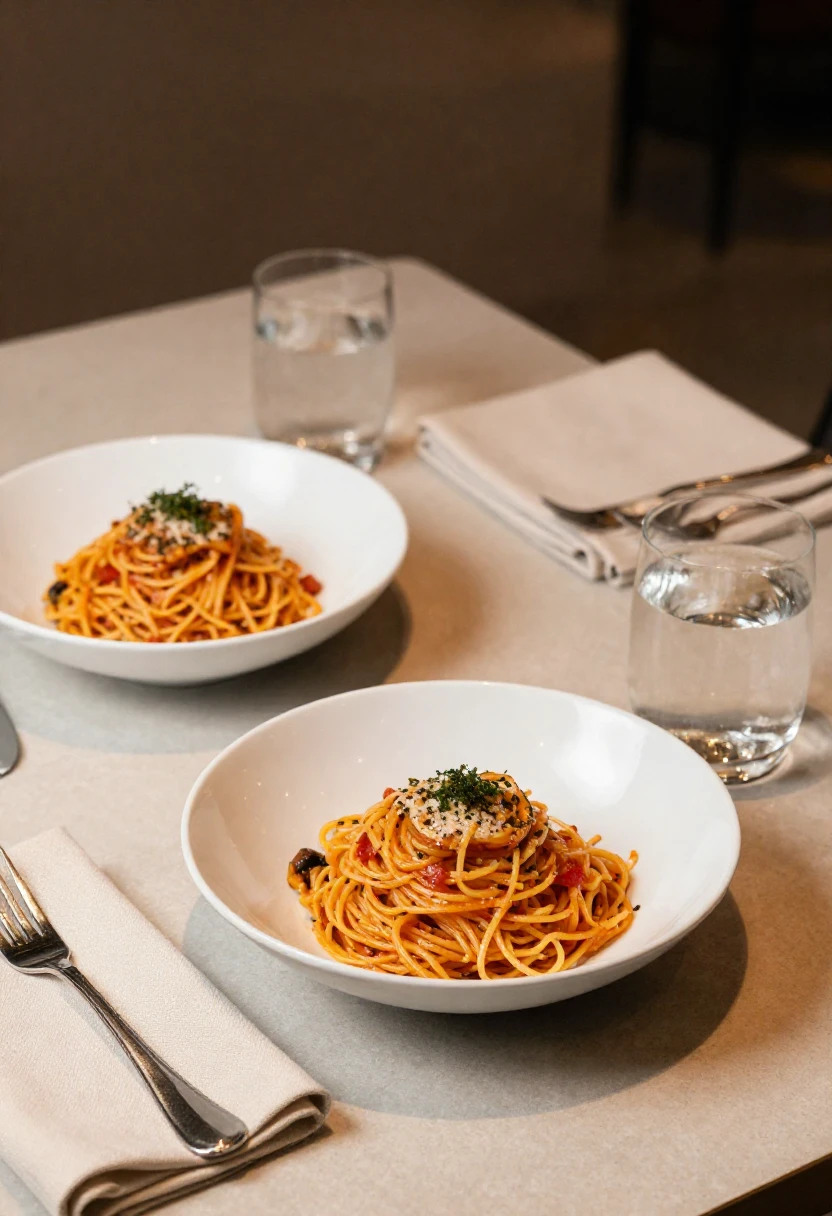
Spaghetti is not hard to eat, but it does ask for attention. That is why the setting matters.
At home, you can relax. You can lean into the bowl a little, laugh when a noodle escapes, and wipe sauce from your chin without making it a whole event. At a restaurant, especially a quieter one, the same plate of spaghetti can suddenly feel more demanding.
This does not mean you should avoid it. Just choose it with the mood of the meal in mind.
When spaghetti is a good choice
Spaghetti is perfect for meals that already feel warm and relaxed.
A neighborhood Italian restaurant. A family dinner. A cozy Sunday lunch. A casual dinner with someone you know well. These are the kinds of places where a bowl of spaghetti feels right.
It works especially well when the sauce is not too runny. Spaghetti with a thicker tomato sauce, meat sauce, pesto, or a creamy sauce is usually easier to manage than spaghetti sitting in a loose, oily sauce.
The best restaurant spaghetti is served already tossed with sauce, not with a heavy pile of sauce on top. You want the noodles coated and glossy. That makes them easier to twirl and much less likely to splash.
When short pasta may be safer
There are times when spaghetti is not the most convenient choice.
For a first date, a business meal, or a formal dinner, short pasta can be easier. Penne, rigatoni, fusilli, farfalle, or orecchiette let you take neat bites without thinking so much about twirling.
This is not about fear of pasta. It is about choosing food that lets you focus on the conversation.
If you are meeting someone for the first time and already feel a little nervous, spaghetti might not help. There is enough going on without having to manage long noodles, red sauce, and a white shirt.
I would still order spaghetti if I really wanted it. But if I wanted the safest pasta choice? Rigatoni wins.
How to eat spaghetti confidently in public
Confidence with spaghetti comes from doing less.
Take a small forkful. Twirl slowly against the side of the plate or bowl. Lift the fork slightly and check for loose strands. Then eat the bite without rushing.
That is it.
A few small habits make the whole meal smoother:
- Keep your napkin on your lap from the start
- Avoid waving the fork while talking
- Finish chewing before joining the conversation again
- Sip water between bites if the sauce is rich
- Use the edge of the plate to clean up a messy twirl
Try not to fuss too much. Constantly adjusting, wiping, and inspecting the fork can make you look more nervous than one loose noodle ever would.
Spaghetti is easier when you treat it like normal food. Smaller bites. Slower hands. Less drama.
How to teach kids to eat spaghetti neatly
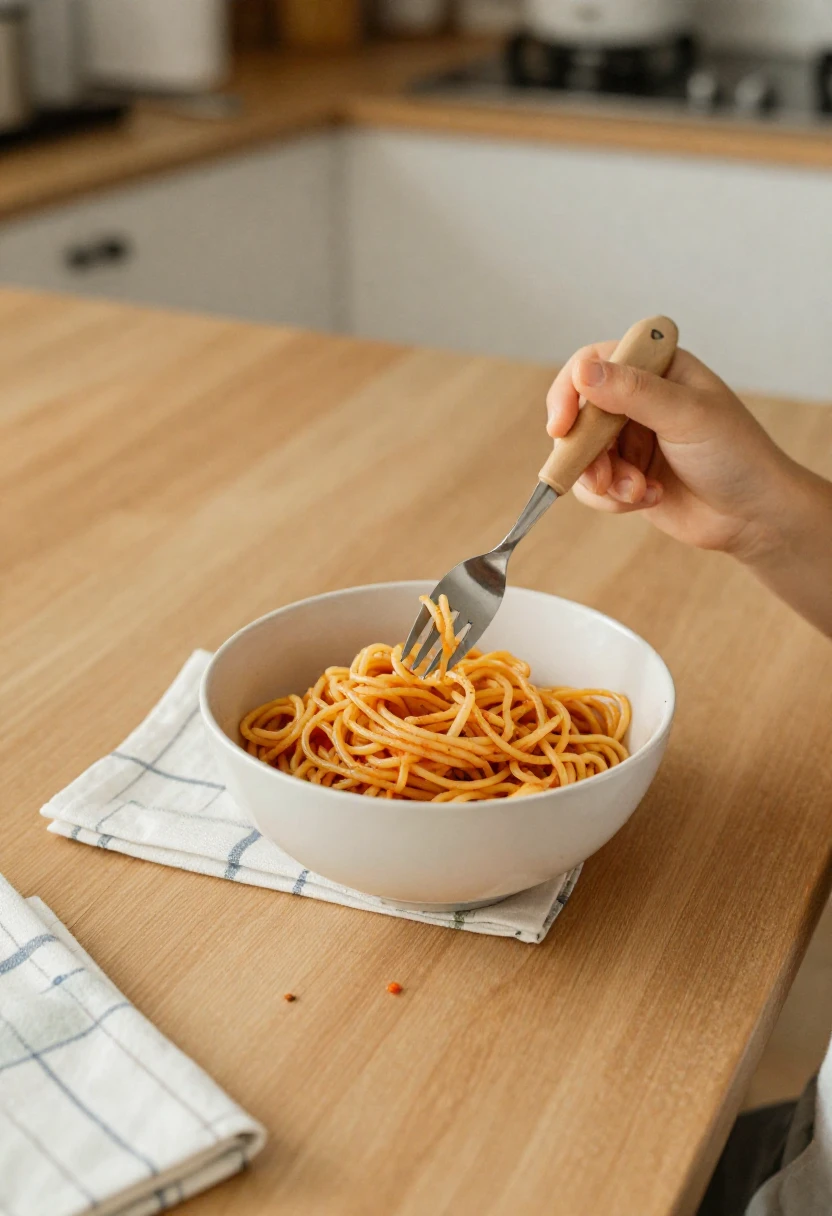
Kids and spaghetti are a beautiful mess.
There is something sweet about a child sitting in front of a bowl of noodles, trying very seriously to twist the fork like an adult. There is also usually sauce on the cheek, sauce on the shirt, and one noodle stuck to the table.
That is normal. Spaghetti takes practice.
The goal with kids is not perfect manners. It is helping them build small habits that make the meal less chaotic each time.
Start with smaller portions
A huge pile of spaghetti is hard for kids to manage.
Serve a small nest of pasta first. They can always have more. A smaller portion cools faster, twirls more easily, and does not spread all over the plate when they start moving the fork around.
For younger kids, a shallow bowl helps more than a flat plate. The sides keep the noodles from sliding away, and the bowl gives them something to press the fork against.
I also like serving spaghetti with a slightly thicker sauce for kids. Thin tomato sauce runs everywhere. A thicker sauce clings to the noodles and gives everyone a better chance.
Cut the pasta only when needed
Adults usually twirl spaghetti instead of cutting it, but kids are different.
For toddlers and very young children, cutting spaghetti is completely fine. Actually, it is practical. Long noodles can be frustrating, and frustration at the table rarely leads to better eating.
Use kitchen scissors or a knife and fork to cut the spaghetti into shorter pieces before serving. Keep the pieces long enough to feel like pasta, but short enough that the child can scoop or fork them without a struggle.
For older kids, start teaching the twirl.
Show them slowly:
- Catch a few strands with the fork
- Press the fork gently against the side of the bowl
- Turn the fork until the noodles wrap around it
- Lift only when the bite looks small enough
It will not work every time. That is fine. Half the fun of spaghetti night is watching everyone learn.
Keep the sauce simple
The messiest spaghetti for kids is usually the one with too much sauce.
A small amount of thick tomato sauce, butter and Parmesan, or a mild meat sauce is easier to handle than a watery sauce with large vegetable chunks. Big slippery pieces of mushroom, onion, or pepper can fall off the fork and make the bite harder to control.
That does not mean kids need boring pasta. You can still add flavor. Garlic, olive oil, finely grated cheese, a little basil, or a smooth tomato sauce all work well.
Just keep the texture manageable.
If your child is learning to twirl, this is not the moment for a very oily spaghetti aglio e olio with parsley flying everywhere. Save that for later. Start with pasta that behaves.
Let the mess be part of learning
A little spaghetti mess is not failure.
Kids learn table manners by repeating the same meals many times. They watch how you hold the fork. They copy how you use the napkin. They notice when you slow down, take smaller bites, and laugh off a loose noodle instead of making it a big deal.
Keep napkins close. Maybe avoid white shirts. Serve the pasta in smaller portions.
Then let them practice.
Spaghetti night is not supposed to feel like a manners exam. It is dinner. Sauce happens.
Small kitchen tips for better spaghetti
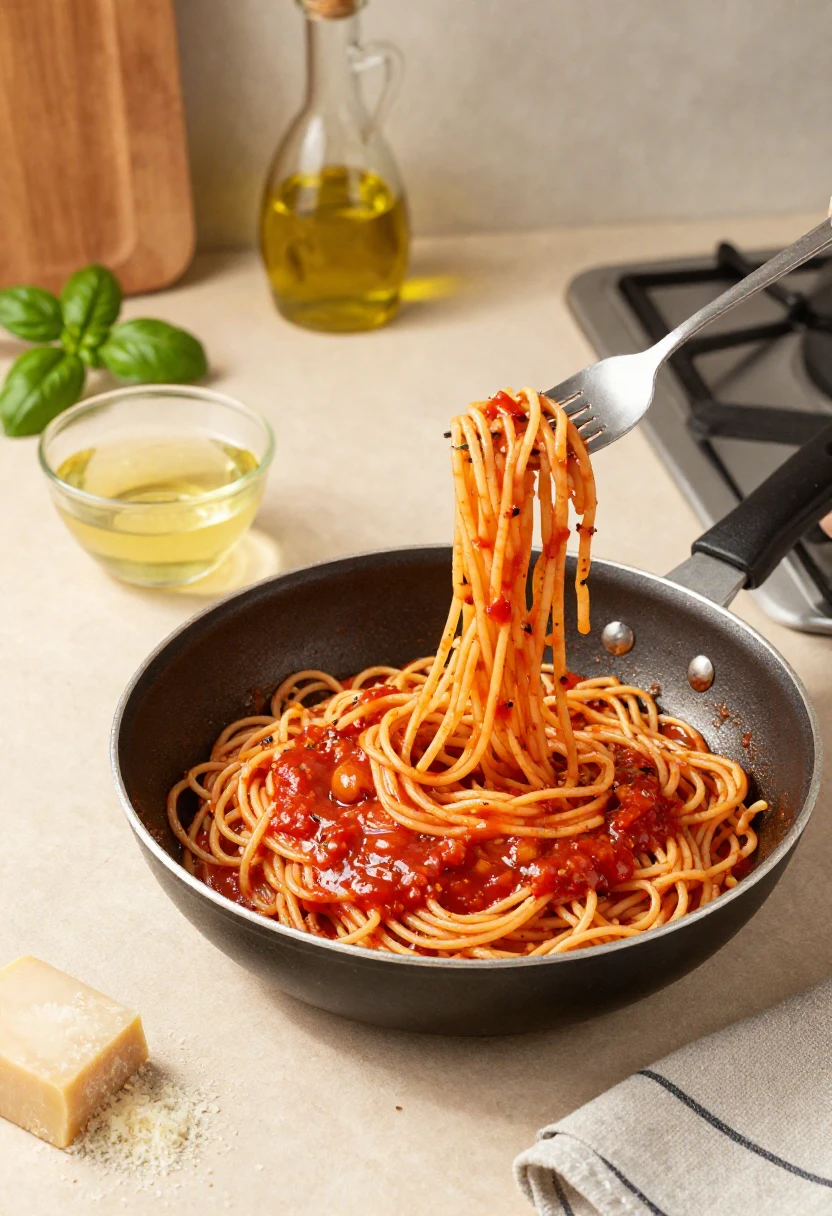
Neat spaghetti starts in the kitchen.
You can have perfect table manners, but if the pasta is overcooked, sticky, watery, or buried under loose sauce, it will still be harder to eat. The fork can only do so much.
The best spaghetti has a little spring to it. The sauce clings. The noodles move together without turning into one heavy clump. That texture makes every bite cleaner.
Cook pasta until it still has bite
Overcooked spaghetti is slippery in the worst way.
It gets soft, limp, and harder to twirl neatly. Instead of wrapping around the fork, it slides and breaks. The bite feels heavy, and the sauce does not cling as well.
Cook spaghetti until it is al dente, which means it should still have a gentle firmness in the center. Not raw. Not stiff. Just enough bite that the noodle holds its shape.
I usually start checking the pasta one or two minutes before the package time. Pull out one strand, let it cool for a second, and taste it. The package is a guide, not a law.
Salt the pasta water
Salted water does not make spaghetti easier to twirl, but it does make it taste better from the inside out.
If the noodles are bland, you end up relying too much on sauce, cheese, or extra oil. That can make the plate heavier and messier.
The water should taste lightly salty. Not like the sea exactly, despite what people always say, but definitely seasoned. Add the salt after the water comes to a boil, then stir in the spaghetti so the strands do not stick together at the start.
Save a little pasta water
Before draining spaghetti, scoop out a small cup of pasta water.
This cloudy water is useful because it helps sauce loosen and cling at the same time. It sounds odd until you see it happen. Add a splash to the pan with the pasta and sauce, toss everything together, and the sauce turns smoother and glossier.
Do not pour in too much at once. Start with a tablespoon or two.
You want the sauce to coat the noodles, not turn into soup.
Finish spaghetti in the pan
This is the step that makes spaghetti feel more restaurant-like at home.
Drain the pasta when it is just shy of done, then move it into the pan with the sauce. Toss it for a minute over low heat. Add a splash of pasta water if it needs help loosening up.
The noodles absorb a little sauce. The sauce thickens around the pasta. Everything becomes one dish instead of plain spaghetti plus sauce sitting on top.
It also makes the pasta easier to eat because the sauce is already where it belongs.
Serve immediately
Spaghetti waits for no one.
If it sits too long, it starts to clump. The sauce tightens. The noodles lose their glossy texture, and suddenly you need to pull at them with the fork. That is when bites get too big and messy.
Have everything ready before the pasta is done:
- Bowls or plates
- Grated cheese
- Napkins
- Serving tongs
- Water or drinks
- Any herbs or finishing oil
Then plate the spaghetti while it is still hot and loose.
That first fresh bowl, when the steam is rising and the sauce still looks shiny, is the easiest one to eat. And honestly, it is the best one too.
Conclusion
Spaghetti does not need perfect manners. It just needs a little patience.
Take less pasta than you think you need. Twirl it slowly against the side of the plate or bowl. Check for loose strands before the fork reaches your mouth. That alone solves most of the mess.
The kitchen helps too. Cook the pasta al dente, toss it with the sauce before serving, and use just enough sauce to coat the noodles. Spaghetti that is glossy and well mixed is much easier to eat than a dry pile of noodles with sauce poured on top.
And if one noodle escapes? It happens.
Wipe your mouth, laugh if you need to, and keep eating. The best pasta meals are still the ones where people feel relaxed at the table.
FAQ
Is it rude to eat spaghetti with a spoon?
It depends on the setting. At home, using a spoon is fine if it helps you twirl the pasta neatly. In many Italian-style dining settings, adults usually twirl spaghetti with only a fork, using the side of the plate or bowl for support. If you are in a casual restaurant, nobody is likely to care much. If the meal is more formal, the fork-only method usually looks cleaner.
Should spaghetti be cut before eating?
Adults usually twirl spaghetti rather than cut it. Cutting the noodles can make the plate look messy and changes the way spaghetti is meant to be eaten. For young children, though, cutting spaghetti is completely fine. Shorter pieces are safer and easier for them to manage.
What is the cleanest way to eat spaghetti?
The cleanest way is to gather a small amount of pasta, twirl it slowly against the side of the plate or bowl, and check the bite before lifting it fully. Avoid slurping, biting off extra noodles, or overloading the fork. A small, tight twirl is much easier to eat neatly than a large forkful.
Is spaghetti a bad choice for a first date?
Not always. If you love spaghetti and feel comfortable eating it, order it. But if you want the easiest, lowest-risk pasta choice, short pasta is safer. Rigatoni, penne, fusilli, or farfalle are easier to eat while talking and less likely to splash sauce.
Why does my spaghetti get so messy?
Usually because the pasta is overcooked, the forkfuls are too big, or the sauce is too loose. Cook spaghetti until it still has bite, toss it with the sauce in the pan, and use smaller forkfuls at the table. Those three changes make a big difference.