Fish pie has a funny habit of looking much less impressive than it tastes.
If someone showed you a photo without telling you what it was, you’d probably see a baking dish covered with mashed potatoes and move on without thinking too much about it. There are no dramatic layers, no colorful toppings piled high for social media, and certainly nothing that feels particularly trendy. At first glance, it looks like a fairly simple casserole. Then you actually eat it, and suddenly the whole thing makes a lot more sense.
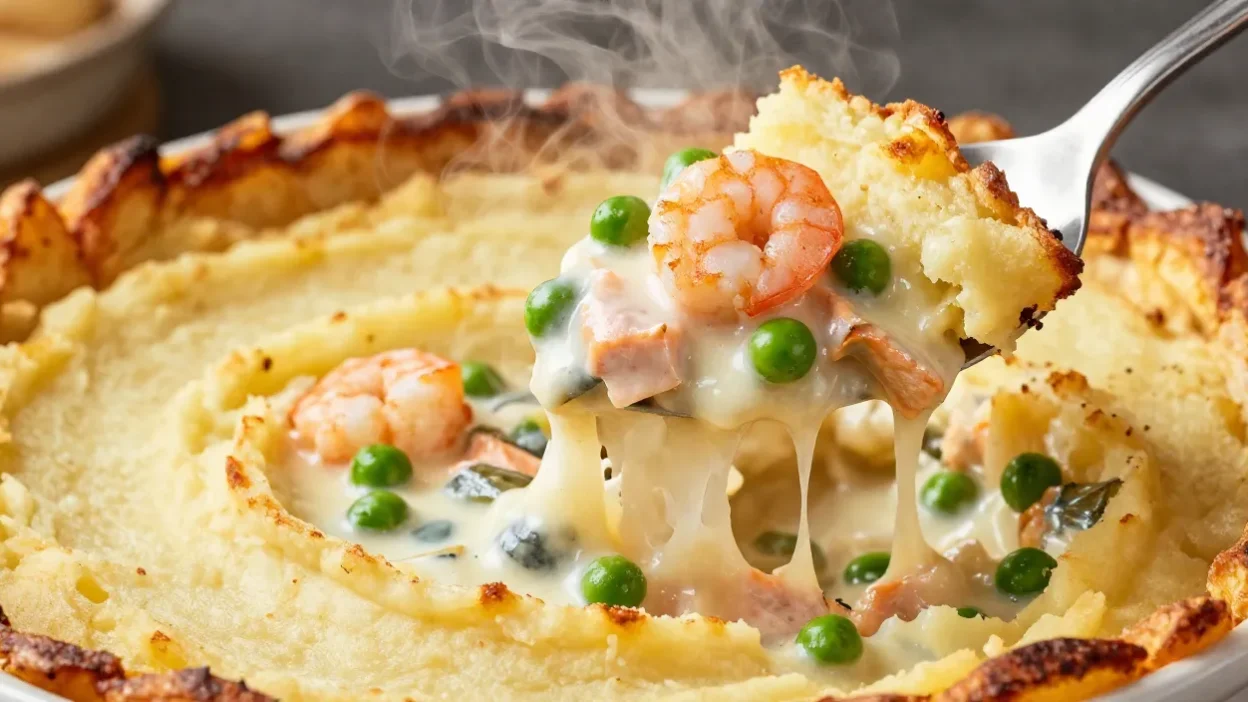
The first spoonful is usually where fish pie wins people over. The golden potato topping gives way to a creamy filling packed with fish, vegetables, and sauce. Steam escapes from the center, the edges are still bubbling from the oven, and every bite feels a little different from the last. One spoonful might have a piece of salmon, the next a shrimp, while another picks up more of the sauce and vegetables. It’s a simple combination, but it works remarkably well.
Maybe that’s why fish pie has survived for so long. It never depended on appearances. Some recipes become popular because they’re exciting. Others because they’re convenient. Fish pie sits somewhere in the middle. People keep making it because it delivers exactly what they expect it to deliver: comfort, warmth, and a dinner that feels satisfying without becoming overly heavy.
That’s actually one of the most surprising things about the dish. Looking at the ingredients, you’d expect something much richer. Creamy sauce, mashed potatoes, cheese, and seafood sound like the sort of combination that would leave you completely full after a few bites. In reality, the fish changes the personality of the entire dish. The filling feels lighter than many other comfort foods, even though it’s every bit as satisfying.
The smell while it’s baking is part of the experience too. The potatoes start browning first, then the buttery aroma begins filling the kitchen. As the seafood warms through underneath, the sauce develops that unmistakable comforting smell that makes people wander into the kitchen asking how much longer dinner will be. It happens almost every time. Nobody pays much attention while the pie goes into the oven, but by the end of the baking time everyone suddenly seems interested in when it’s coming out.
I made fish pie on a rainy Sunday not long ago when the original plan was actually to order takeout. The weather was miserable, nobody felt like leaving the house, and spending time cooking sounded like more effort than it was worth. An hour later the pie came out of the oven, the kitchen smelled incredible, and nobody mentioned takeout again. Those are often the recipes that stick around the longest. Not the dramatic ones or the complicated ones, but the meals that quietly make everyone happy when they arrive at the table.
Why fish pie became a classic in the first place ⚓
Fish pie probably did not begin as a dish anyone thought would become a classic. Most comfort food does not start that way. It usually begins with people trying to make something filling from ingredients they already have, and fish pie fits that idea perfectly. Fresh fish, leftover fish, a bit of smoked fish if there was any, some milk or cream, a handful of vegetables, and potatoes on top. Nothing especially glamorous, but very practical.
That practical side is still part of the charm. Coastal communities had fish, families needed dinner, and a creamy sauce made the seafood go further without making the meal feel thin or unfinished. Mashed potatoes did the rest. They turned the filling into something substantial enough for a full table, while also creating that soft golden topping everyone wants a little extra of when the dish is served.
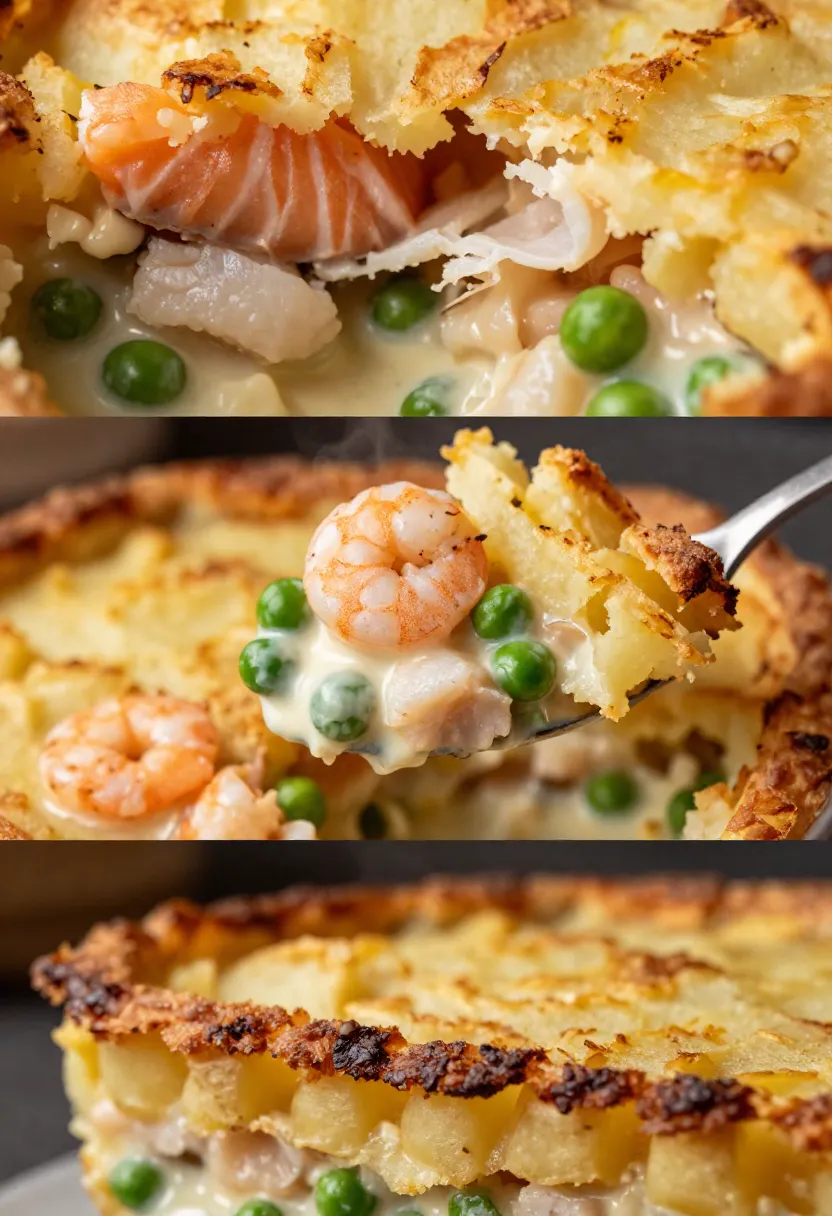
The recipe also survived because it never demanded one exact version. Some homes use cod or haddock. Others add salmon for richness, smoked fish for deeper flavor, or shrimp for sweetness. I like that about fish pie. It feels less like a strict formula and more like the kind of recipe that understands real kitchens. Sometimes you use the fish you planned to buy. Sometimes you use what looked better at the counter. Sometimes you add more peas because the bag was already open.
Still, the basic structure rarely changes. A good fish pie needs delicate seafood, a creamy sauce, and a potato topping that browns just enough in the oven. Take away one of those pieces and the dish starts feeling incomplete. The sauce especially does more work than people give it credit for. Fish has a softer flavor than beef or lamb, so the sauce has to carry the herbs, leeks, cheese, mustard, and seafood together without covering everything up.
That is probably why fish pie has stayed around while so many “clever” recipes come and go. It does not need to prove anything. It feeds people well, it smells wonderful while baking, and it feels familiar even if every household makes it a little differently. There is something quietly reliable about that, and honestly, food does not always need to be more complicated than that.
The ingredients each bring something important to the table 🥄
One thing I appreciate about fish pie is that every ingredient genuinely earns its place.
There aren’t many extras here. Every component contributes something important to the final dish. The seafood brings flavor and texture. The potatoes add comfort. The sauce ties everything together so it feels like a complete meal instead of several separate ingredients sharing the same baking dish.
| Ingredient | Main role | Flavor contribution | Texture contribution |
|---|---|---|---|
| Salmon | Rich seafood base | Mild buttery flavor | Tender flaky pieces |
| White fish | Classic fish pie foundation | Delicate savory taste | Soft flakes throughout filling |
| Shrimp | Sweet seafood contrast | Slight natural sweetness | Firm bite among softer ingredients |
| Leeks | Aromatic vegetable base | Mild onion flavor | Soft texture in sauce |
| Cheese | Adds richness | Savory depth | Creamier filling |
| Potatoes | Golden topping | Comforting neutral flavor | Fluffy inside, crisp on top |
| Cream sauce | Binds everything together | Rich savory character | Smooth luxurious texture |
| Peas | Fresh contrast | Slight sweetness | Small bursts of texture |
What’s fascinating is how much these ingredients change once they start cooking together.
The salmon slowly releases flavor into the sauce. The white fish becomes delicate enough to break apart with almost no effort. The cheese melts into the filling and makes everything feel richer without becoming overwhelming. Meanwhile the potatoes develop those golden ridges on top that everyone secretly fights over when serving the first portion.
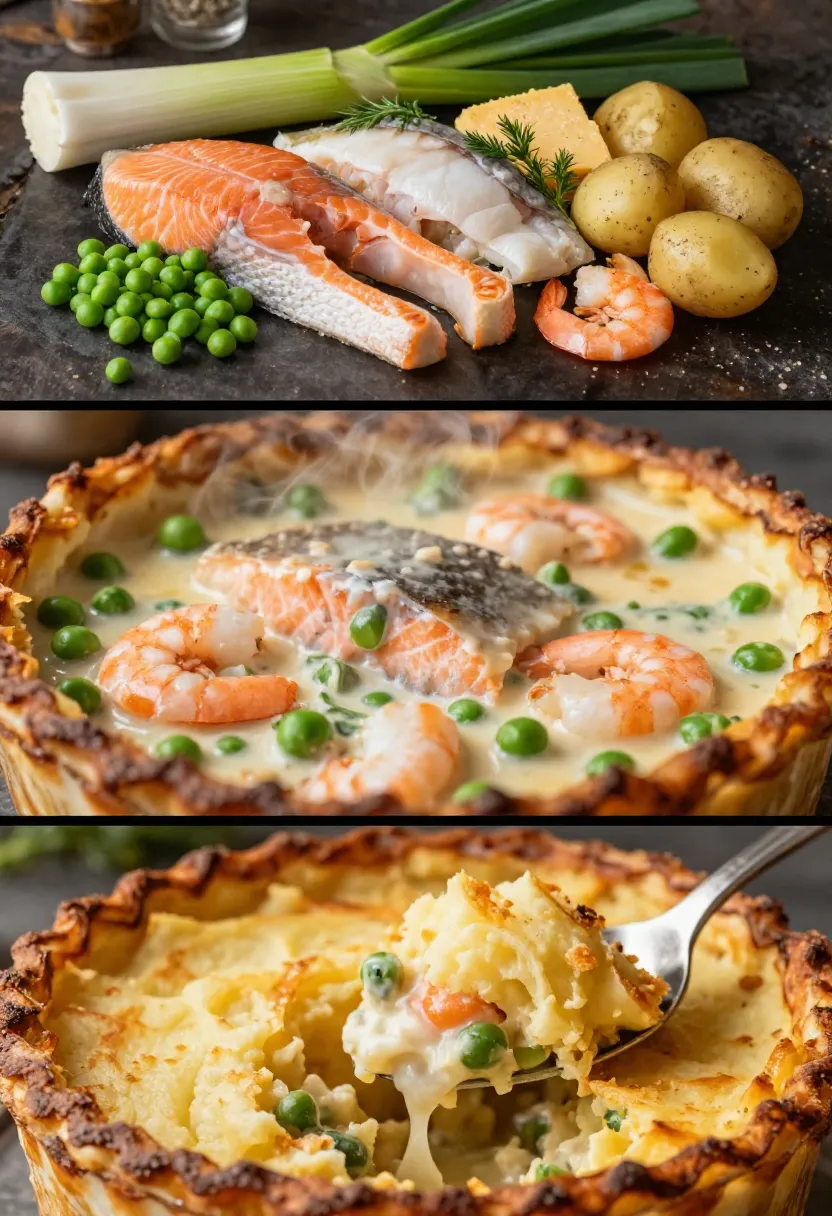
The vegetables matter more than people often realize too.
Without the leeks and peas, the filling could become a little too rich after several bites. The leeks bring sweetness and depth, while the peas add freshness that keeps the sauce from feeling too heavy. Small details, maybe. But recipes like this often succeed because of those small details.
And then there’s the contrast.
A spoonful of fish pie usually contains several textures at once. Creamy sauce. Flaky fish. Soft vegetables. The occasional bite of shrimp. Crispy potato edges from the top. That’s part of what keeps every serving interesting. The dish never becomes monotonous because each bite is slightly different from the one before it.
Fish pie isn’t simply assembled and baked.
Something happens while it’s in the oven. The ingredients start sharing flavors, the sauce thickens around the seafood, and the topping turns golden while protecting everything underneath. By the time it reaches the table, it feels less like separate ingredients and more like a single dish where every component finally found its place.
Classic fish pie recipe 👨🍳
Fish pie is one of those dishes that doesn’t really reveal much about itself until you break into it with a serving spoon.
From the outside, all you see is a golden layer of mashed potatoes with a few darker peaks where the top browned in the oven. It looks comforting, sure, but fairly simple. Then the first portion comes out and suddenly everything underneath is exposed. Creamy sauce spills into the gap, flakes of fish start separating on their own, shrimp peek through the filling, and steam rises fast enough that nobody wants to wait very long before eating.
That’s usually the moment people start helping themselves to larger portions than they originally planned.
The filling is rich without feeling overly heavy, which is probably the biggest surprise. Looking at the ingredients, you’d expect something much richer. There are potatoes, cream, cheese, and seafood all in the same dish. Somehow it stays balanced. The fish keeps the filling lighter than most baked comfort foods, while the sauce adds enough richness to make every spoonful feel satisfying.
I think texture is what makes a good fish pie memorable though. The potatoes stay soft underneath while the ridges on top become lightly crisp in the oven. The salmon breaks apart into buttery flakes, the white fish almost melts into the sauce, and the shrimp add occasional bites that stand out against everything else. Even the peas earn their place because they bring a little freshness to a filling that could otherwise become too rich after a few bites.
The smell while it’s baking deserves a mention too. For most of the cooking time nothing particularly dramatic happens. Then somewhere near the end, the potatoes begin browning, the filling starts bubbling around the edges, and the entire kitchen suddenly smells like dinner. It’s the kind of aroma that makes people wander in from other rooms asking how much longer is left.
Fish pie also has a habit of feeling slightly more special than the amount of effort suggests. It’s comfortable enough for a quiet weeknight dinner but still feels perfectly appropriate for a weekend meal with friends or family. Set the baking dish in the middle of the table and people immediately start reaching for serving spoons.
That’s probably why the recipe has lasted so long. Not because it’s complicated or impressive, but because it consistently delivers exactly what people hope it’s going to deliver: a warm, satisfying dinner that somehow feels even better when the weather outside isn’t cooperating.
Ingredients
For the filling
- 300 g salmon, cut into chunks
- 300 g white fish such as cod or haddock
- 200 g shrimp, peeled
- 2 leeks, thinly sliced
- 1 cup peas
- 3 tablespoons butter
- 3 tablespoons all-purpose flour
- 2 cups milk
- 1 cup heavy cream
- 1 cup grated cheddar cheese
- 1 teaspoon Dijon mustard
- Salt and black pepper to taste
- Fresh parsley, chopped
For the potato topping
- 2 pounds potatoes, peeled and chopped
- 4 tablespoons butter
- 1/3 cup milk
- Salt and pepper to taste
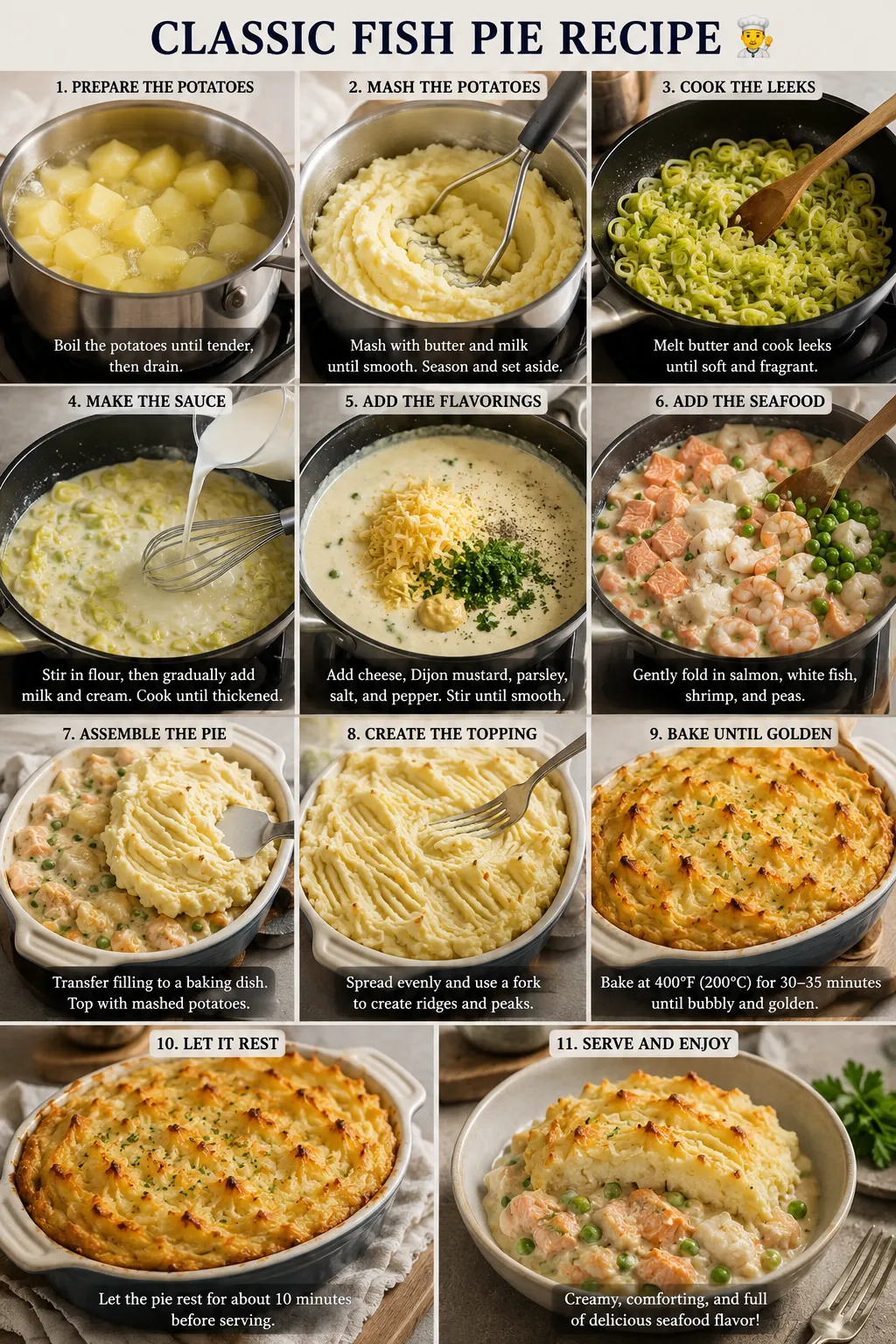
How to make classic fish pie 🐟
- Prepare the potatoes 🥔
Place the potatoes into a large pot of salted water and bring everything to a gentle boil. Cook until the potatoes are completely tender and easily pierced with a fork, which usually takes about 15–20 minutes depending on their size. Drain well, then mash with the butter and milk until smooth and creamy. Season generously with salt and pepper, then set aside while you prepare the filling. - Cook the vegetables 🧅
Melt the butter in a large skillet over medium heat. Add the sliced leeks and cook slowly, stirring occasionally, until they become soft and fragrant. You don’t want them to brown too much here; the goal is to let them soften and release their natural sweetness. This usually takes around 5–7 minutes. - Make the sauce 🥄
Sprinkle the flour over the cooked leeks and stir continuously for about a minute to cook out the raw flour flavor. Gradually pour in the milk and cream while whisking to prevent lumps from forming. Continue cooking for several minutes until the mixture thickens into a smooth, velvety sauce that coats the back of a spoon. - Add the flavorings 🧀
Stir in the grated cheese, Dijon mustard, chopped parsley, salt, and black pepper. Keep stirring until the cheese melts completely into the sauce. At this point the filling should already smell incredibly comforting, with the cheese and mustard adding extra depth to the creamy base. - Add the seafood 🐟
Gently fold the salmon, white fish, shrimp, and peas into the sauce. Try not to stir too aggressively so the fish pieces stay intact. The seafood doesn’t need to cook fully at this stage because it will finish cooking in the oven while the pie bakes. - Assemble the pie 🍲
Transfer the filling into a large baking dish and spread it into an even layer. Spoon the mashed potatoes over the top and carefully spread them to cover the entire surface. Use a fork to create ridges and small peaks across the potatoes. Those rough edges become beautifully golden and slightly crisp during baking. - Bake until golden ✨
Bake at 400°F (200°C) for about 30–35 minutes, or until the filling is bubbling gently around the edges and the potato topping turns golden brown. If you like an extra crispy finish, place the pie under the broiler for the final couple of minutes, keeping a close eye on it. - Let it rest before serving 🍽️
Remove the pie from the oven and allow it to rest for about 10 minutes before serving. This small step makes a big difference because it gives the filling time to settle slightly, making it easier to serve while still staying wonderfully creamy underneath the potato topping.
A few helpful tips 👀
- Use a mixture of fish instead of a single variety for better flavor.
- Smoked fish adds extra depth if you enjoy stronger seafood flavors.
- Don’t overcook the seafood before baking.
- Rough fork marks on the potato topping create crisp golden peaks.
- Let the pie rest before serving to prevent the filling from becoming too loose.
Why fish pie feels even better during colder months 🍂
Technically, fish pie works at any time of year. The ingredients don’t suddenly stop tasting good once spring arrives, and there is absolutely nothing preventing someone from making it in the middle of July. Yet for some reason, most people seem to start thinking about dishes like this when the weather turns colder and the evenings arrive a little earlier than they did a few weeks before.
Part of it is simply temperature. A salad can be refreshing, grilled fish can be wonderful, but neither creates quite the same feeling as a baking dish pulled straight from the oven. Fish pie arrives at the table still bubbling around the edges, filling the room with steam and warmth before anyone even takes a bite. On a cold evening, that matters more than people sometimes realize.
The smell has a lot to do with it too. Fish pie isn’t one of those recipes where the aroma hits you immediately. It develops gradually. First you notice the potatoes starting to brown. Then the buttery smell begins filling the kitchen. After that, the sauce warms through and the seafood joins everything together. Somewhere near the end of the baking time, the entire house starts smelling like dinner.
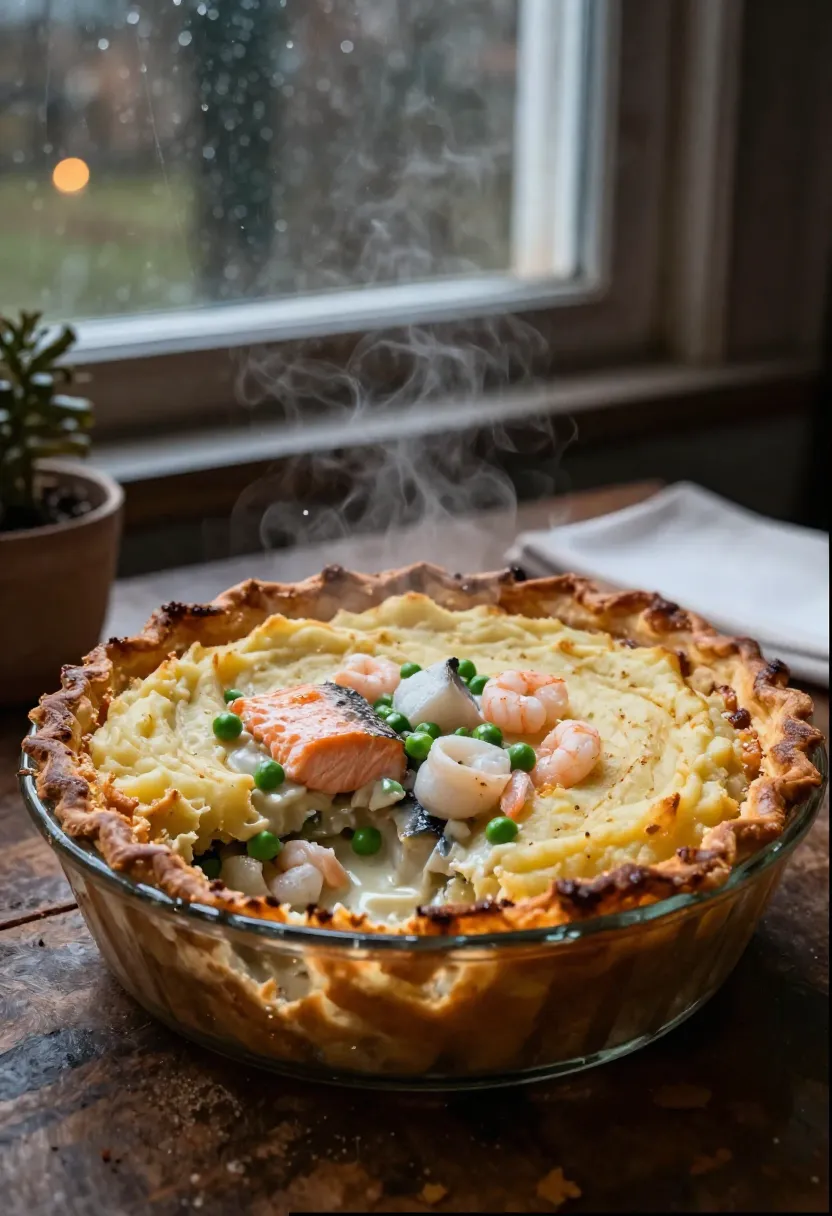
I’ve noticed that people always seem to wander into the kitchen around that point.
Nobody comes in during the first ten minutes. Nobody asks questions while the pie is quietly baking away. Then suddenly someone appears and asks how much longer it needs. Five minutes later somebody else asks the same thing. That’s usually when you know the dish is doing exactly what it’s supposed to do.
There is also something about fish pie that suits slower evenings. It isn’t the kind of meal people rush through. The filling stays hot for a surprisingly long time, so everyone naturally slows down a little. Conversations stretch out. Someone goes back for another spoonful. Another person scrapes a bit of extra sauce from the side of the dish. The meal ends up lasting longer than expected without anybody really planning for it.
Maybe that’s why recipes like this often become associated with certain seasons. They aren’t just connected to ingredients or weather. They’re connected to the pace of life during those months. When the days get shorter, dinners like fish pie somehow start making perfect sense again.
Easy ways to customize the recipe 🦐
If you ask ten people how they make fish pie, you’ll probably get ten slightly different answers.
That’s partly because the recipe has never really belonged to one exact version. Fish pie tends to change depending on what’s available, what the family likes, or what happened to be on sale that week. Sometimes the changes are planned. Other times you’re standing in front of the seafood counter realizing the fish you wanted isn’t there anymore.
Most of the time, the pie turns out perfectly fine anyway.
Smoked haddock is probably the ingredient that changes the dish the most. Even a small amount adds a deeper flavor that spreads through the entire filling while it bakes. The first time I added it, I expected a subtle difference. It wasn’t subtle at all. The whole pie tasted richer, almost as if the sauce had been cooking for much longer than it actually had.
Shrimp create a completely different effect. They don’t dominate the filling, but every time you get one in a bite, there’s a little burst of sweetness that stands out against the creamy sauce. Scallops work in a similar way. They’re not necessary, but they make the pie feel slightly more special if you’re cooking for guests or simply want something a bit different from the usual version.
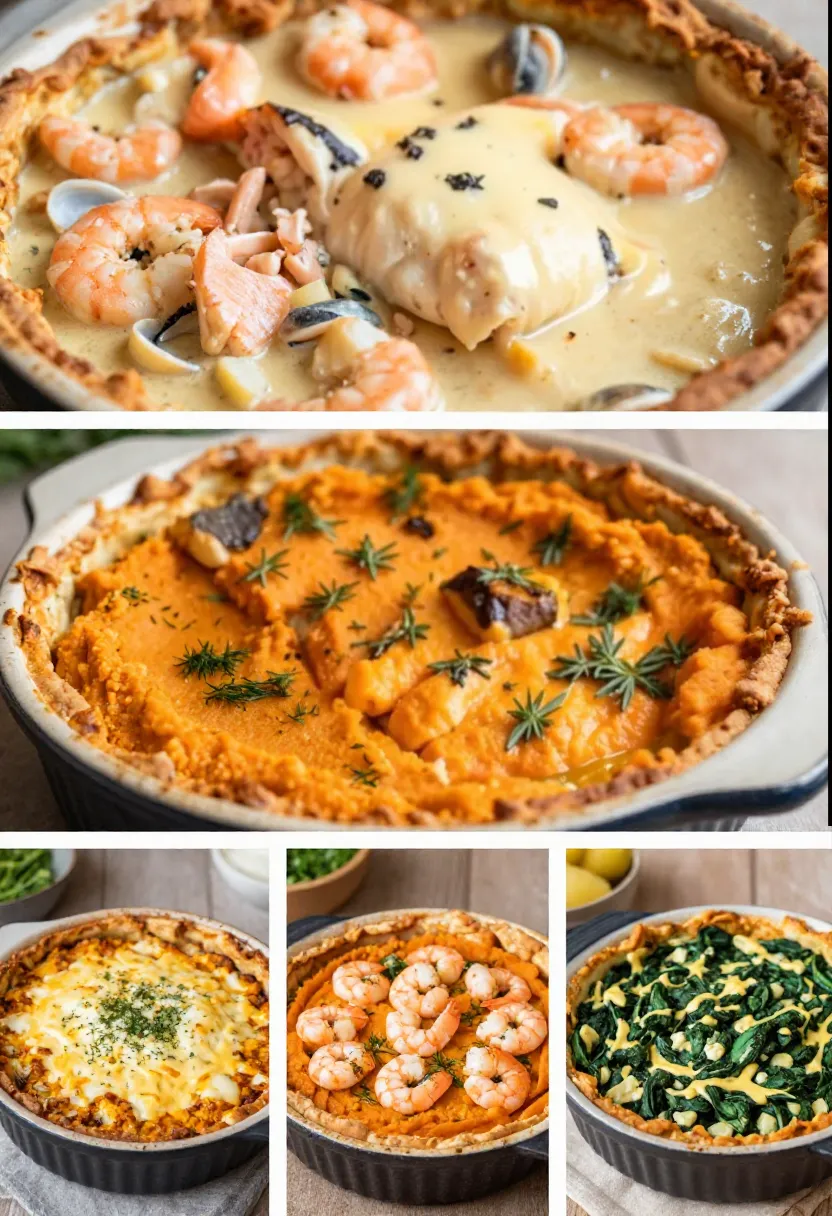
The potato topping changes surprisingly well too. Most people stick with traditional mashed potatoes because they work so reliably, but sweet potatoes create a completely different personality. The filling stays familiar, yet the top becomes slightly sweeter and softer. I wasn’t convinced the first time I tried it. Then I found myself making it again a few weeks later.
Some variations worth trying are:
- Add smoked haddock alongside salmon or cod
- Stir a handful of spinach into the sauce
- Mix fresh dill into the filling
- Sprinkle extra cheese over the potato topping
- Add scallops or extra shrimp
- Replace part of the potatoes with sweet potato mash
The herbs are where I usually experiment the most. Dill works beautifully with seafood, but chives, parsley, and even a little tarragon can completely change the flavor. Sometimes I add whatever is left in the refrigerator rather than making a special trip to buy one specific herb.
That’s probably why fish pie survives in so many households. It doesn’t punish small changes. You can adjust ingredients, swap fish, add vegetables, or use a different herb and the dish still feels like fish pie when it reaches the table. Some recipes are very particular about being followed exactly. Fish pie has always felt a little more relaxed than that.
Why meals like this create lasting memories ✨
Years from now, most people probably won’t remember the exact amount of cheese used in the sauce. They won’t remember whether the pie baked for thirty minutes or thirty-five. They almost certainly won’t remember how many shrimp were in the filling.
That’s not usually how food memories work.
What people tend to remember is everything happening around the meal. The weather outside. The conversation at the table. The smell coming from the oven while everyone waited for dinner. Those details have a strange way of attaching themselves to recipes over time.
Fish pie seems particularly good at collecting those memories.🥔
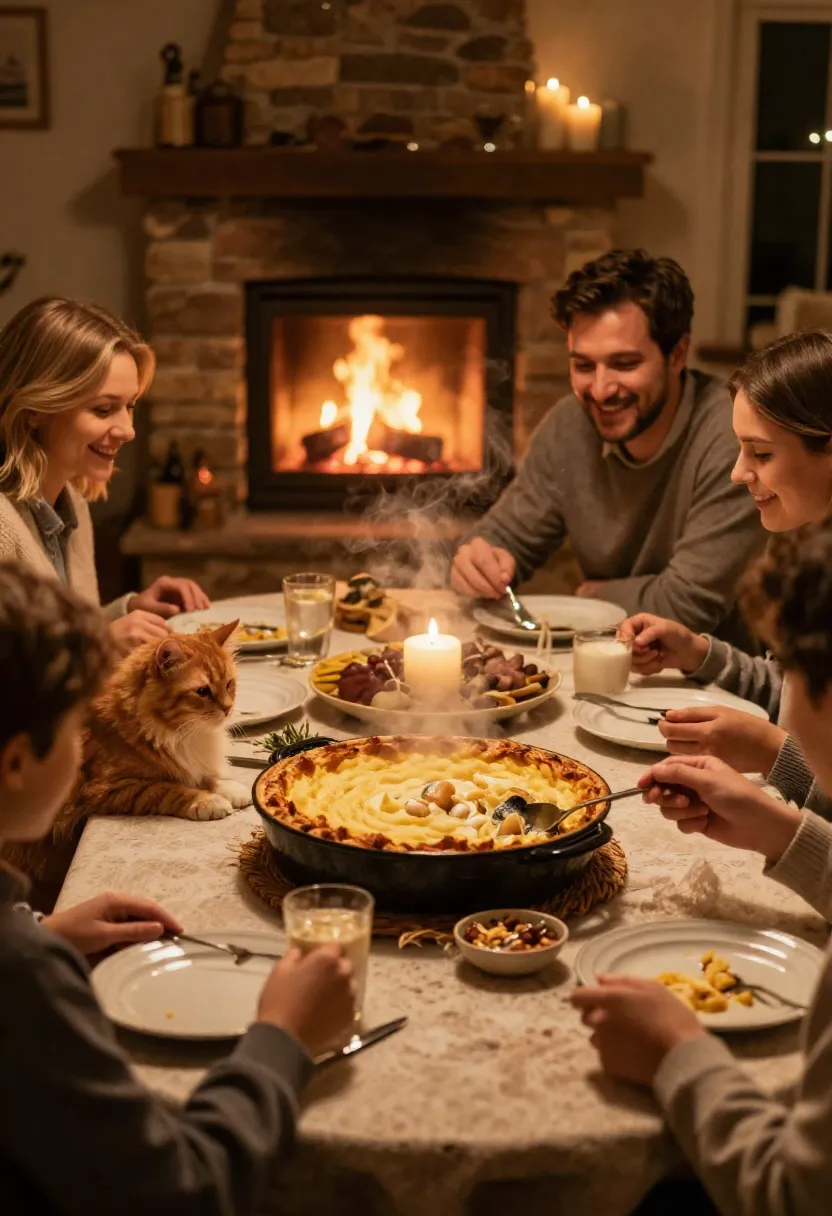
Part of that comes from the way it’s served. A baking dish placed in the middle of the table immediately creates a different atmosphere than individually plated meals. People serve themselves. Someone always takes more potatoes than they originally intended. Another person goes back for extra filling because there happened to be more shrimp in that corner of the dish. The meal feels shared from the very beginning.
I still remember a fish pie my grandmother made years ago, and if I’m being honest, I couldn’t tell you exactly what fish she used. I don’t remember the recipe at all. What I remember is the dish sitting in the middle of the table while rain hammered against the windows outside. I remember everyone waiting because it was too hot to eat straight away. I remember somebody burning their mouth anyway because they didn’t want to wait.
That’s how these things usually work.
The recipe itself matters, of course. But after enough time passes, the food and the memory become tangled together. One starts reminding you of the other.
Maybe that’s why traditional comfort food survives for generations. People aren’t only passing down ingredients and cooking methods. They’re passing down moments. A winter dinner after a long day. A Sunday meal with family. Friends who stayed longer than they planned because the conversation kept going.
Nobody eats fish pie expecting some life-changing culinary experience. They eat it because it feels comforting, familiar, and dependable. Strangely enough, those qualities often create stronger memories than the most impressive meals ever could.
And years later, that’s usually what people remember most. 🐟