Lasagna has a strange reputation. Almost everyone likes eating it, but fewer people make it regularly than you’d expect. It belongs to that category of meals that feel bigger than dinner itself. You think about timing before you even start. There are noodles to manage, layers to assemble, proportions to balance, oven space to free up, and then that final stretch where the pan comes out bubbling and everyone is told to wait before cutting into it.
That ritual has its place. But most evenings don’t really need ceremony.
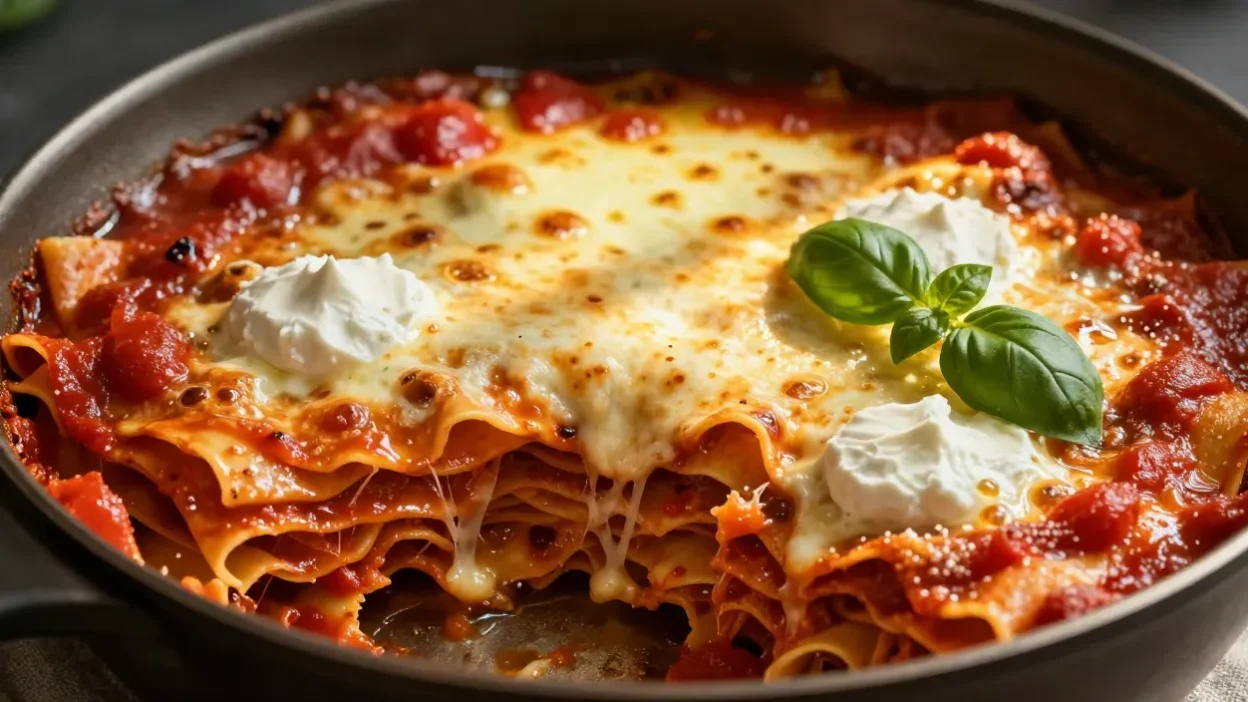
Skillet lasagna feels like a response to ordinary life rather than a shortcut to a classic. It doesn’t try to recreate every rule of baked lasagna in less time. Instead, it keeps the parts people actually miss when they skip making it: the thick tomato sauce, soft pasta, warm cheese, the richness that slowly builds in the pan, and that feeling of serving something generous without needing half the evening to make it happen.
The biggest change happens long before the cheese goes on top. Because everything cooks together, the dish develops differently from the start. Italian sausage browns first and leaves behind seasoning and fat that become part of the base instead of being drained away and forgotten. Onion softens directly in those flavors. Garlic loses its sharpness almost immediately and settles into the background. Then the tomato sauce goes in and starts doing more work than people usually give it credit for.
Instead of coating fully cooked noodles later, the sauce becomes their cooking environment.
That changes texture in a way that feels subtle while cooking and obvious once dinner reaches the table. The noodles absorb liquid slowly, releasing starch back into the pan while becoming softer. The sauce reduces at the same time, turning smoother and slightly deeper in flavor. Ricotta doesn’t form clean bakery-style layers. It lands in irregular spoonfuls that stay creamy inside. Mozzarella melts across the surface and stretches differently depending on where the heat gathers.
The finished dish looks less controlled than classic lasagna and somehow more inviting because of it.
People eat differently around food like this. Nobody waits for perfect slices. Someone serves themselves while standing next to the stove. Someone else comes back with bread to scoop up sauce. Conversations continue instead of pausing for presentation. The whole thing feels less like hosting and more like feeding people.
That’s probably why recipes like this survive. Not because they replace the original, but because they fit evenings that don’t have room for performance.
How the ingredients quietly shape the final dish 📊
| Ingredient | What happens | Texture & flavor | Swap if needed |
|---|---|---|---|
| Italian sausage | Builds the base of the sauce | Rich, savory, fuller body | Ground beef or turkey |
| Marinara + tomatoes | Simmer and reduce together | Thick, smoother tomato flavor | Add extra sauce for looser texture |
| Lasagna noodles | Cook directly in the sauce | Soft centers, irregular edges | Add liquid if needed |
| Ricotta + mozzarella | Melt at different speeds | Creamy pockets and cheese pull | Cottage cheese or mascarpone |
| Fresh basil | Added at the end | Fresher finish, lighter feeling | Flat parsley |
A skillet changes the rhythm of cooking more than people expect 🧀
Some recipes become favorites because they taste impressive. Others stay in rotation because they quietly fit into real life. Skillet lasagna feels like one of those recipes that people start making for convenience and keep making because the result turns out better than expected.
Traditional lasagna has a reputation for being comforting, but it also comes with a surprising amount of management. There’s timing, layering, oven space, cooling time, and the strange pressure of wanting everything to look structured once it reaches the table. None of that is difficult on its own, but together those small decisions turn dinner into something you schedule instead of something you cook.
A skillet changes that rhythm.
Instead of building separate elements and combining them later, the dish develops as one continuous process. The sausage browns first and creates a flavorful base in the pan. Onion follows and softens until it almost disappears. Garlic gets only a short moment before the tomatoes go in. Then the sauce starts doing two jobs at once: carrying flavor and cooking the pasta.
That part is more important than it sounds.
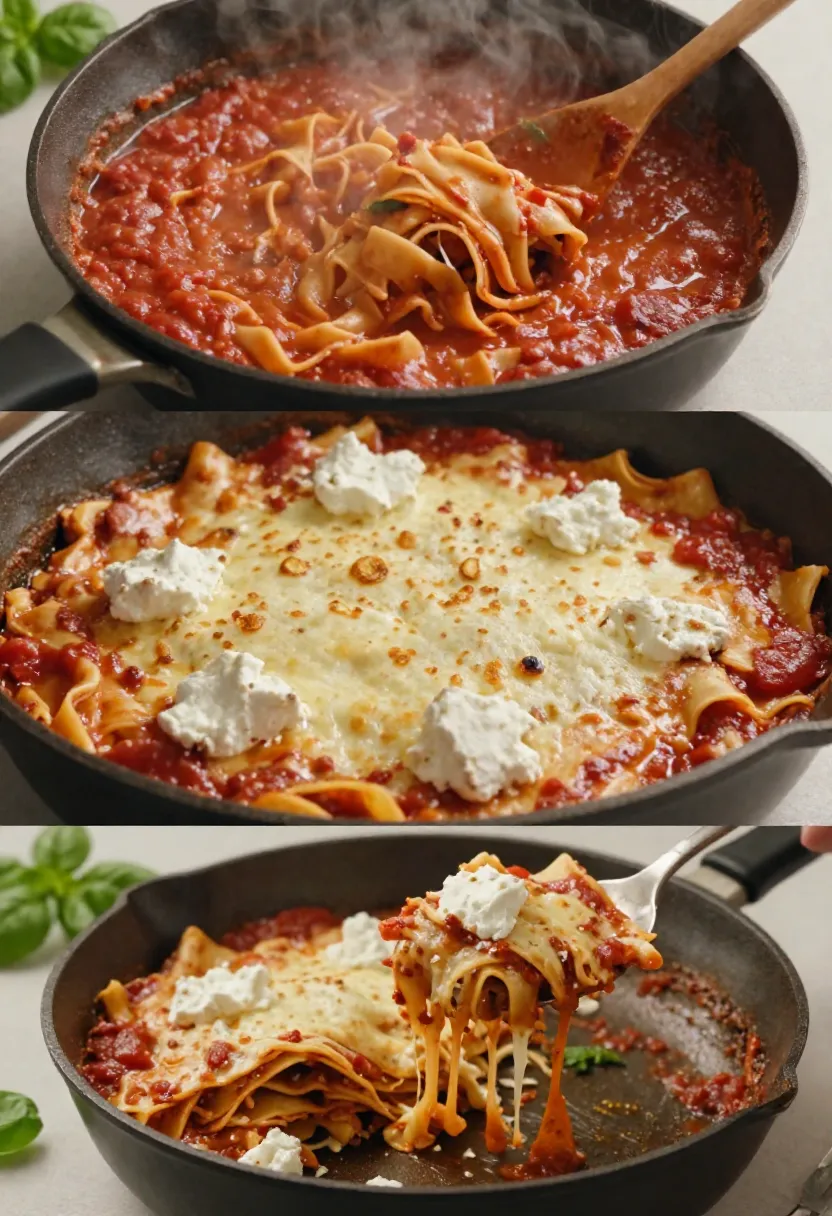
Lasagna noodles behave differently when they cook directly inside the sauce instead of being boiled beforehand. They absorb liquid gradually and release starch at the same time, which thickens everything naturally. You end up with something that feels richer and more integrated without adding cream, extra cheese, or complicated techniques. The sauce becomes slightly deeper in color, smoother in texture, and less separated than oven-baked versions can sometimes become.
Texture is probably where this style of cooking wins people over.
Classic lasagna gives predictable bites because the layers stay mostly intact. Skillet lasagna feels more relaxed. Some spoonfuls catch extra tomato sauce. Some land on melted mozzarella that stretches slightly before breaking. Others pick up cooler ricotta pockets that soften from residual heat but still keep their creamy texture. The variation makes the dish feel homemade in the best way, not messy but alive.
Another thing that surprised me the first few times I made it was how forgiving the process feels. Different marinara sauces reduce differently. Noodle brands absorb liquid at different speeds. Sausage changes salt levels more than people expect. In baked lasagna, those differences sometimes reveal themselves only after everything comes out of the oven. In a skillet, adjustments happen naturally while cooking. If the sauce tightens too early, add a little broth. If the noodles need another few minutes, lower the heat and keep going. Nothing feels ruined.
There’s a small shift in atmosphere too. Because the dish arrives at the table directly from the pan, people stop treating dinner like a plated event. Someone serves themselves immediately. Someone else reaches back for more sauce. The conversation doesn’t pause for presentation.
A few habits make the final result noticeably better without making the recipe feel more complicated:
- keep noodle pieces fairly large;
- stir occasionally but not constantly;
- wait until the end before correcting seasoning;
- cover the skillet while the cheese melts.
And leftovers deserve more credit than they usually get. By the next day, the noodles settle deeper into the sauce and the flavors feel slightly more connected. Reheated slowly, with a spoonful of water and fresh basil added at the end, it tastes less like yesterday’s dinner and more like a second version of the same dish 🍅
The part nobody mentions: skillet lasagna gets better once you stop treating it like a special occasion 🍽️
There’s a pattern that shows up with certain recipes. People love them, talk about them, order them in restaurants, save videos about them, and somehow almost never make them at home. Lasagna ends up in that category surprisingly often. It becomes associated with weekends, guests, larger grocery trips, or evenings when cooking itself is supposed to be the activity.
That expectation changes the relationship with the dish.
Once something starts feeling like an event, it quietly becomes less available. You stop thinking, “I could make this tonight,” and start thinking, “Maybe another time when there’s more time.” The strange thing is that the craving doesn’t disappear. People still want the same flavors: warm tomato sauce, pasta that actually tastes like something, melted cheese, a meal that feels substantial without being heavy.
Skillet lasagna works because it brings those flavors back into ordinary evenings.
It still feels generous once it reaches the table. There’s still bubbling cheese. There’s still the smell of tomato, garlic, and browned meat that makes people appear in the kitchen before dinner is announced. But the cooking process no longer asks you to protect every layer or follow perfect timing. You cook in sequence, not in stages.
That changes how attention works while making dinner.
Instead of concentrating on assembly, you start noticing smaller things. The moment when onions become translucent and stop smelling sharp. The point where the sauce begins to thicken and leaves slower trails across the bottom of the pan. The way broken noodle pieces soften unevenly at first and then suddenly become tender all at once. Small details like that make cooking feel calmer because they give feedback immediately.
One thing I ended up liking more than expected is that skillet lasagna feels unusually adaptable without losing its identity. The base stays recognizable, but little changes don’t break the recipe. Some days the sauce is slightly looser. Some days there’s more cheese. Sometimes spinach ends up in the pan because it needs to be used. Sometimes the sausage becomes ground beef or disappears entirely.
The dish still feels like itself.
That flexibility matters because repetition is usually what turns a recipe into part of someone’s routine. Very few people repeat dishes that require precision every single time. But people repeat meals that allow small adjustments depending on mood, groceries, weather, or energy.
A few situations where this version quietly works especially well:
- evenings when dinner needs to happen without planning;
- casual dinners with friends where people serve themselves;
- colder days when heavier comfort food sounds good;
- cooking once and eating twice.
And then there’s something that only becomes obvious after making it more than once.
Skillet lasagna doesn’t create the same visual satisfaction as slicing into a tall layered bake, but it creates another kind of satisfaction instead: the feeling that dinner appeared naturally. You cooked one pan. You stayed in the kitchen without feeling trapped there. You ate while the cheese was still soft. There were leftovers if you wanted them.
That’s usually enough.
And honestly, those are often the recipes that stay around the longest 🧀
Skillet lasagna recipe
There’s a category of recipes that earns repeat status almost immediately because they solve more than one problem at once. This skillet lasagna lands there quietly. It gives you the flavor people usually want from traditional lasagna, but removes most of the parts that make lasagna feel like something to postpone.
What surprised me most after making it a few times wasn’t the speed. It was the texture.
Because the noodles cook directly inside the sauce, the entire dish feels more connected. Instead of distinct layers with separate personalities, everything softens together and starts sharing flavor. The tomato sauce becomes thicker and smoother as starch releases into the pan. The sausage seasons more than just the meat itself. Cheese melts into places instead of covering everything evenly.
The result sits somewhere between classic baked lasagna and a very good stovetop pasta.
The first spoonful usually feels softer than people expect. Then the texture starts opening up. You notice pieces of noodle that stayed slightly firmer around the edges. Small pockets of ricotta that stayed cool and creamy instead of disappearing completely. Melted mozzarella stretching differently depending on where heat gathered under the lid.
It’s comfort food, but not heavy comfort food.
Another thing I ended up appreciating is how naturally this recipe fits leftovers. Fresh from the pan, the sauce feels loose and glossy. The next day it settles into the pasta and becomes denser, richer, and slightly easier to portion. Reheated slowly with a splash of water, it doesn’t taste tired or dried out. It tastes like the same dinner in a slightly different mood.
That’s probably why recipes like this tend to stay around. You make them because they seem practical. You repeat them because they taste better than practical food usually does 🍅
Ingredients
- 2 tbsp olive oil
- 1 lb Italian sausage
- 1 small yellow onion, finely diced
- 4 garlic cloves, minced
- ½ tsp red pepper flakes (optional)
- 1 tsp dried oregano
- 1 jar (24 oz) good marinara sauce
- 1 can (15 oz) fire-roasted diced tomatoes
- 1 cup water or chicken broth
- ½ cup fresh basil, chopped
- 8 lasagna noodles, broken into large pieces
- 1½ cups ricotta cheese
- 1 cup shredded whole milk mozzarella
- ½ cup grated Parmesan
- Fine sea salt
- Freshly ground black pepper
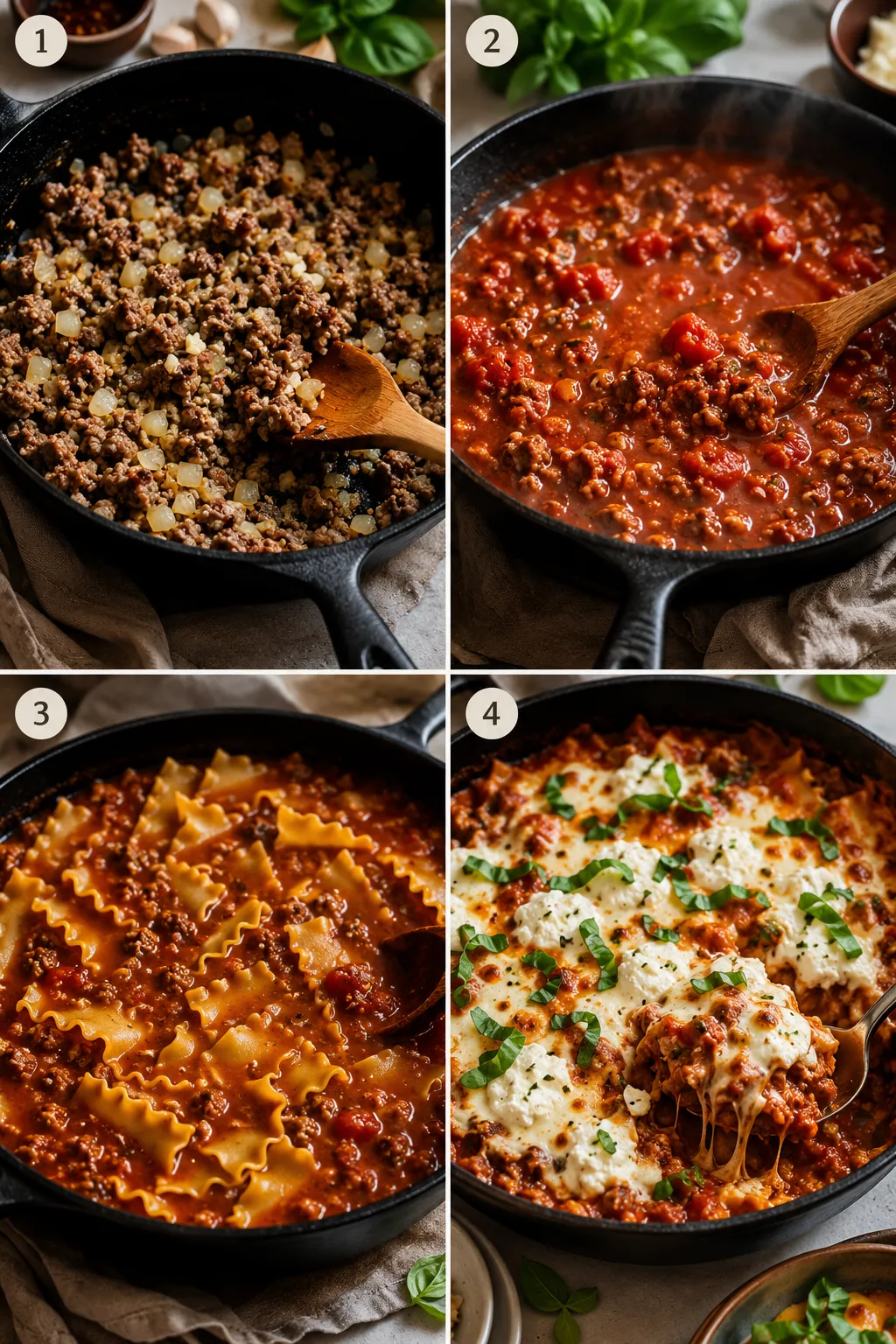
Step-by-step cooking instructions
1. Brown the sausage and build the base
Heat olive oil in a deep skillet over medium-high heat. Add the Italian sausage and cook while breaking it into medium pieces with a wooden spoon. Don’t rush this stage or stir continuously — allow some areas to brown properly because those darker bits become part of the final flavor. If the pan feels overly greasy once the sausage is cooked through, remove a little excess fat but leave enough behind to cook the vegetables.
Add diced onion directly into the skillet and cook for several minutes until softened and translucent. Stir in garlic, oregano, and red pepper flakes and cook briefly, just until everything smells warm and aromatic.
2. Build the sauce directly in the pan
Pour in the marinara sauce, fire-roasted tomatoes with all their juices, and the water or broth. Stir until the browned bits from the bottom loosen into the sauce.
At this stage the mixture should look slightly thinner than finished pasta sauce. That extra liquid matters because the noodles still need room to absorb moisture. Taste once, but season conservatively — the sausage and cheeses will continue adjusting the flavor later.
3. Add the noodles and let the skillet do the work
Break the lasagna noodles into large uneven pieces and place them directly into the sauce. Press them gently into the liquid so most of the surface stays submerged.
Cover the skillet, reduce heat to medium-low, and cook for about 20–25 minutes. Stir occasionally rather than constantly. The goal isn’t perfectly even pasta — a little variation in texture actually makes the finished dish feel more natural.
If the sauce thickens before the noodles soften completely, add small splashes of water or broth and continue cooking.
4. Add the cheese while everything is still hot 🧀
Once the noodles are tender, stir fresh basil into the sauce.
Drop spoonfuls of ricotta across the surface instead of spreading it into a smooth layer. Scatter mozzarella and Parmesan over the top, then cover again for several minutes so the trapped steam melts the cheese gently.
If you prefer a little color on top, place the skillet under the broiler briefly, but watch closely because the cheese browns quickly.
5. Let it settle before serving
Remove the skillet from the heat and leave it for about five minutes before serving.
The sauce will tighten slightly, the cheese will stop sliding, and the noodles will finish absorbing what they need. Serve directly from the skillet and finish with extra basil and freshly ground black pepper if you like.
Small skillet tips ✨
- Use a deeper skillet than you think you need.
- Keep noodle pieces large for better texture.
- Adjust liquid gradually, not all at once.
- Add fresh herbs at the end, not during simmering.
- Reheat leftovers slowly with a spoonful of water.
Why texture ends up doing more work than flavor 🍅
Lasagna usually gets described through flavor first. People talk about tomato sauce, melted cheese, garlic, sausage, herbs, the richness of everything together. But after making skillet lasagna more than once, I started noticing that flavor is often only the thing that gets people interested. Texture is usually what makes them remember the dish later and decide whether they want it again.
That sounds overly analytical for something this comforting, but the difference becomes obvious once the meal is actually on the table.
Classic baked lasagna creates a predictable experience. Every slice gives roughly the same ratio of sauce, pasta, filling, and cheese. That consistency is satisfying in its own way and probably part of why traditional lasagna became such a recognizable comfort dish in the first place. But skillet lasagna moves differently. Since the noodles cook directly in the sauce and everything finishes together instead of in stacked layers, the final texture becomes less uniform and, strangely enough, more interesting.
You notice it in small ways at first.
One spoonful feels slightly richer because more sausage settled there during simmering. Another tastes brighter because extra basil stayed near the surface. Some noodles become especially soft around the edges while thicker folded sections keep more structure. Ricotta doesn’t behave like a formal layer here either. It stays in cooler creamy pockets that soften from heat without disappearing completely, so bites alternate naturally between richer and lighter.
That variation keeps the dish from becoming repetitive.
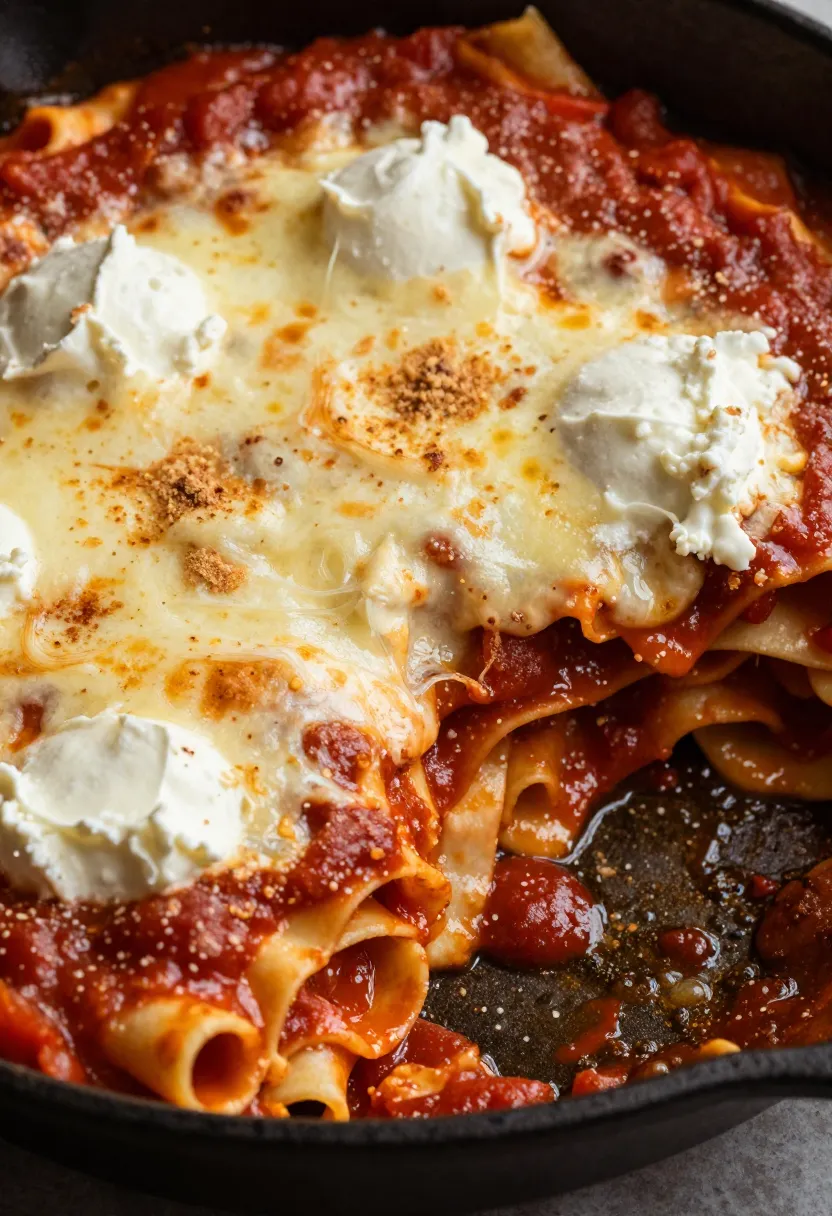
Comfort food sometimes has a strange problem: the first few bites are incredible and then everything starts feeling identical. Richness stacks on richness until your attention fades. This version avoids that quietly because there are enough differences across the pan to keep eating interesting without turning dinner into an experiment.
The sauce plays a bigger role than people expect too.
When noodles cook directly inside it, the sauce stops behaving like a separate element and becomes part of the structure of the dish itself. Starch thickens it naturally. Moisture reduces gradually. The tomatoes soften into something deeper and smoother than they looked at the beginning. By the end, the sauce doesn’t simply sit around the pasta — it feels absorbed into it.
That’s probably why skillet lasagna feels surprisingly substantial without becoming especially heavy.
And texture changes again if you eat it later.
Fresh from the stove, everything feels softer and slightly looser. The cheese stretches more. The sauce still moves across the plate. The next day, after resting overnight, the noodles absorb more liquid and the whole dish settles into itself. Portions become cleaner. Flavors feel more connected. The ricotta becomes gentler and less distinct.
It isn’t better the second day.
It’s different.
And honestly, recipes that stay enjoyable in more than one version usually end up staying in rotation longer than recipes that only shine for twenty perfect minutes after cooking.
Serving changes the mood more than the recipe itself 🧀
One thing that becomes more obvious the more you cook for other people is that recipes never arrive at the table alone. They arrive together with expectations. The exact same dish can feel formal, relaxed, generous, quiet, celebratory, or almost invisible depending on how it is served and how much structure surrounds it. Lasagna is probably one of the clearest examples of that. Traditional baked lasagna already comes with a built-in atmosphere: portions are cut, layers stay visible, plates arrive assembled, and dinner immediately feels organized before anyone even takes the first bite.
Skillet lasagna creates a completely different rhythm without changing the ingredients very much.
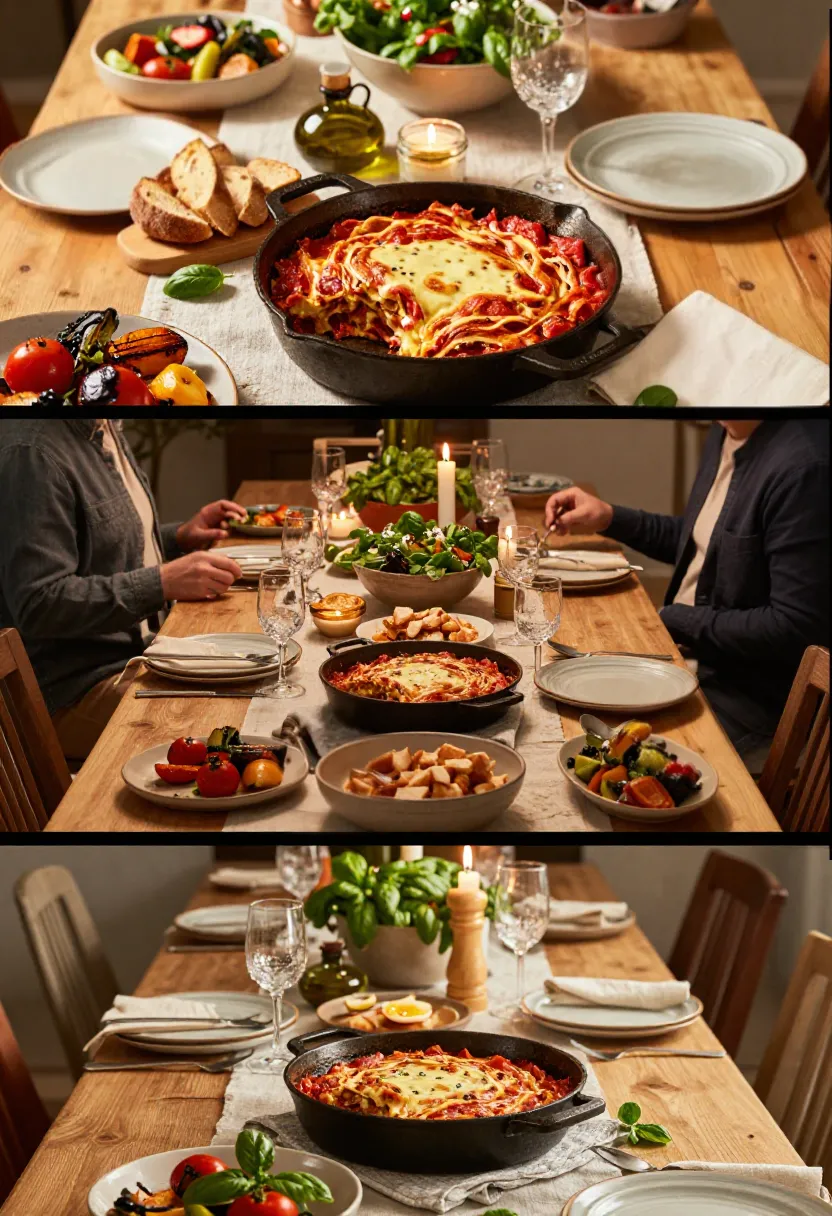
When the pan goes directly onto the table, the meal stays active for longer. Cheese continues softening while people eat. Steam keeps rising. Sauce slowly settles into spaces left by serving spoons. Portions stop feeling fixed because nobody expects them to look identical. People start building their own plate instead of accepting a finished composition, and that small shift changes behavior more than people usually notice.
Someone takes more sauce because that’s their favorite part. Someone else looks for slightly darker areas of melted cheese near the edges. Another person decides halfway through dinner that they actually want more ricotta than they thought. Nobody is trying to preserve presentation anymore, which means people relax earlier and the meal becomes less about serving and more about eating.
That atmosphere matters more than side dishes, honestly.
There’s a temptation to turn meals like this into a larger event and add several supporting dishes, but skillet lasagna already carries enough richness and enough texture variation that it rarely benefits from too much happening around it. Usually the best additions are the ones that introduce contrast instead of competition.
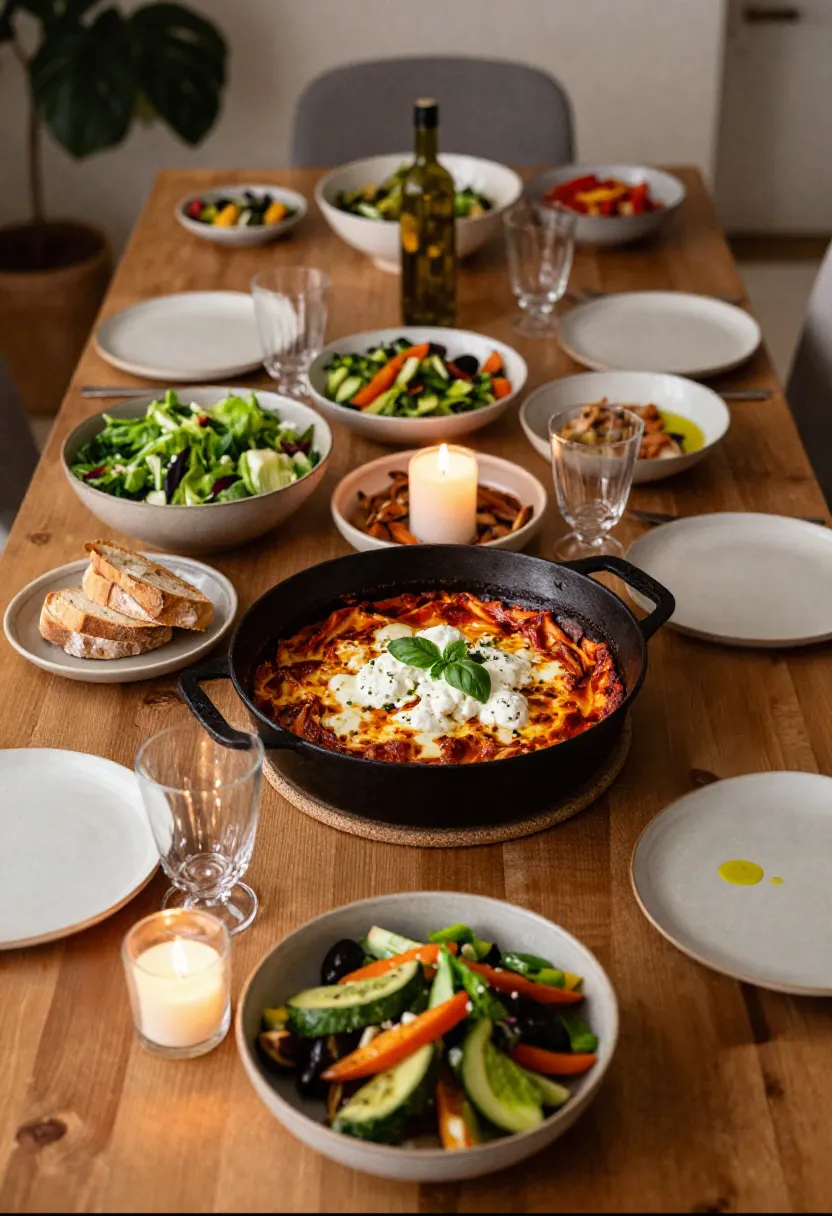
If I wanted to keep the table balanced, I’d stay somewhere around this:
- a crisp salad with sharp acidity;
- roasted vegetables with browned edges;
- warm bread if there’s extra sauce;
- fresh basil and black pepper on the side.
Anything beyond that starts feeling unnecessary rather than generous.
What I like most about serving food this way is that conversations behave differently too. Dinner stretches naturally. People don’t finish at exactly the same moment. Someone goes back for another spoonful in the middle of a story instead of waiting for dessert or a second course. Nobody talks very much about technique or ingredients because the recipe disappears into the background and starts doing what good home food usually does — it supports the evening instead of becoming the entire event.
And strangely, that’s often when people remember it most. Not because they admired the presentation or thought the recipe was clever, but because it felt easy to be around.
The recipes people repeat usually ask for less, not more ✨
Cooking culture quietly encourages a certain idea of progress. Better cooks use more techniques. More advanced recipes require more components. More memorable meals take more time. There’s nothing wrong with ambition in the kitchen, and there’s definitely a place for recipes that ask for more attention. But after a while it becomes surprisingly easy to confuse complexity with value and effort with quality, especially when most cooking content rewards meals that look impressive rather than meals that actually stay in people’s lives.
Then real life interrupts that theory.
People come home tired. Schedules change. Plans disappear. Energy levels move around from week to week. Suddenly the recipes that survive are rarely the ones that depended on ideal conditions or uninterrupted evenings. They’re usually the recipes that stayed satisfying while asking for a little less. Not less flavor, not less comfort, not less cooking — just fewer unnecessary steps between wanting dinner and actually eating dinner.
That doesn’t mean simple food wins automatically. Most people don’t want food that feels unfinished, overly efficient, or designed only to solve a problem. Repeat recipes usually live somewhere in the middle. They still create anticipation while cooking. They still fill the kitchen with recognizable smells. They still feel intentional enough that dinner doesn’t blur into routine. The difference is that they remove friction instead of removing character.
That’s where skillet lasagna ends up feeling unexpectedly successful.
Nothing important disappears from the process. You still brown the sausage instead of throwing everything together and hoping for the best. You still wait for onions to soften properly and let the sauce reduce before moving on. You still watch the noodles slowly change texture and pay attention to when the cheese finally melts into the surface instead of sitting on top. Cooking still feels like cooking. The difference is that your attention stays in one place instead of constantly moving between pots, trays, timers, boiling water, oven timing, and cleanup plans.
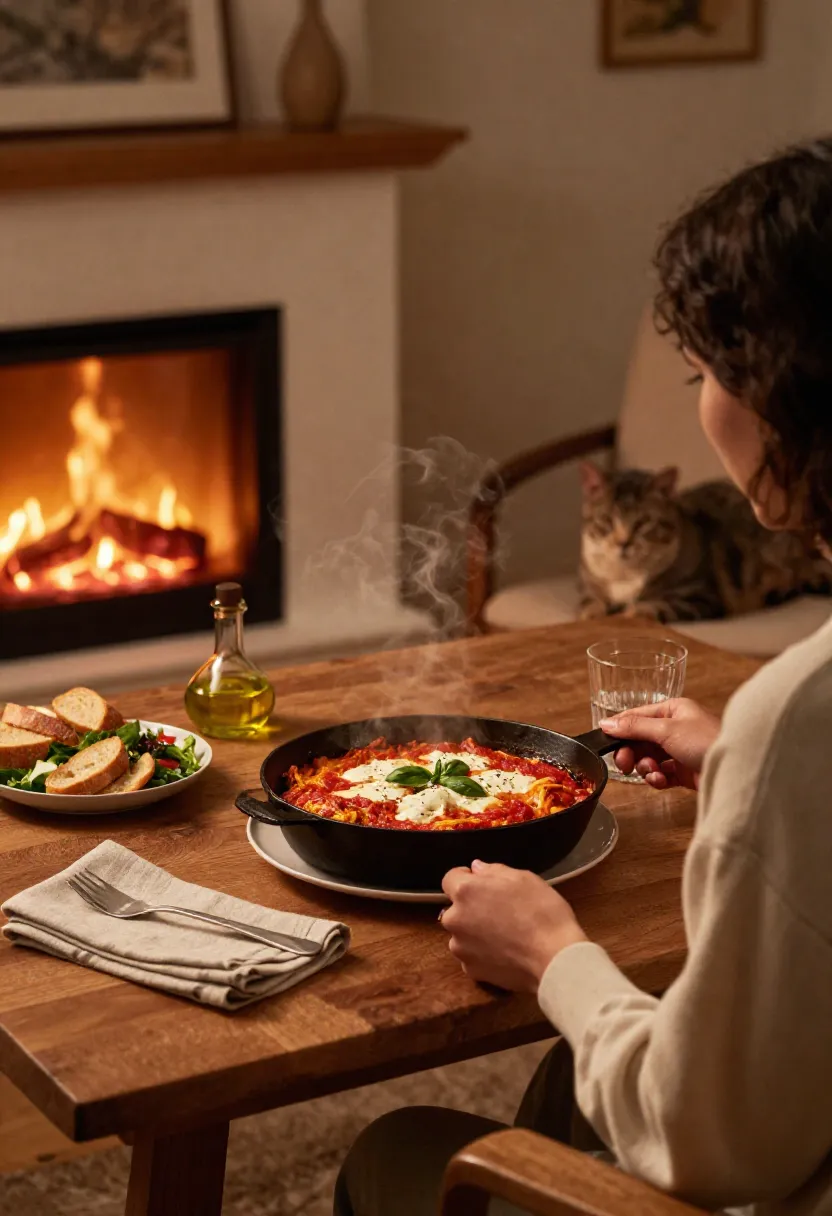
That shift sounds smaller than it feels in practice. Recipes become easier to repeat when they stop interrupting themselves.
And repeatability ends up mattering more than people often admit.
A technically impressive recipe can disappear after one attempt simply because nobody wants to recreate the experience again. Meanwhile another recipe quietly becomes weekly cooking because people remember it as manageable. Not effortless. Not lazy. Just manageable enough that making it again sounds realistic instead of ambitious.
That’s also where repetition starts improving the recipe itself.
The second time you make skillet lasagna, you notice timing more than instructions. The third time, you adjust the sauce without thinking. After a few rounds, measurements become softer and preferences begin showing up naturally. Maybe more basil. Larger noodle pieces. Less ricotta. Extra cheese around the edges. More broth on colder evenings. Added spinach because it’s already in the fridge.
Over time, the recipe stops feeling like instructions and starts feeling like habit.
That’s usually the moment a dish stops belonging to a page and starts belonging to a kitchen. You stop reading every line. You know when the sauce looks right without checking. You buy basil before deciding what dinner is. You already expect leftovers and quietly plan tomorrow’s lunch around them.
Eventually the skillet goes to the table without much ceremony. Somebody serves themselves before sitting properly. Somebody else asks whether there’s enough left for tomorrow.
And without really noticing when it happened, the recipe found a permanent place in the house 🍅