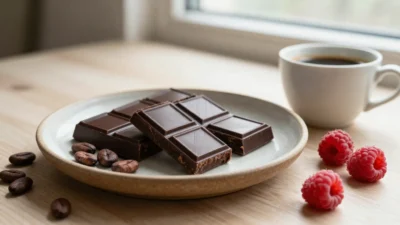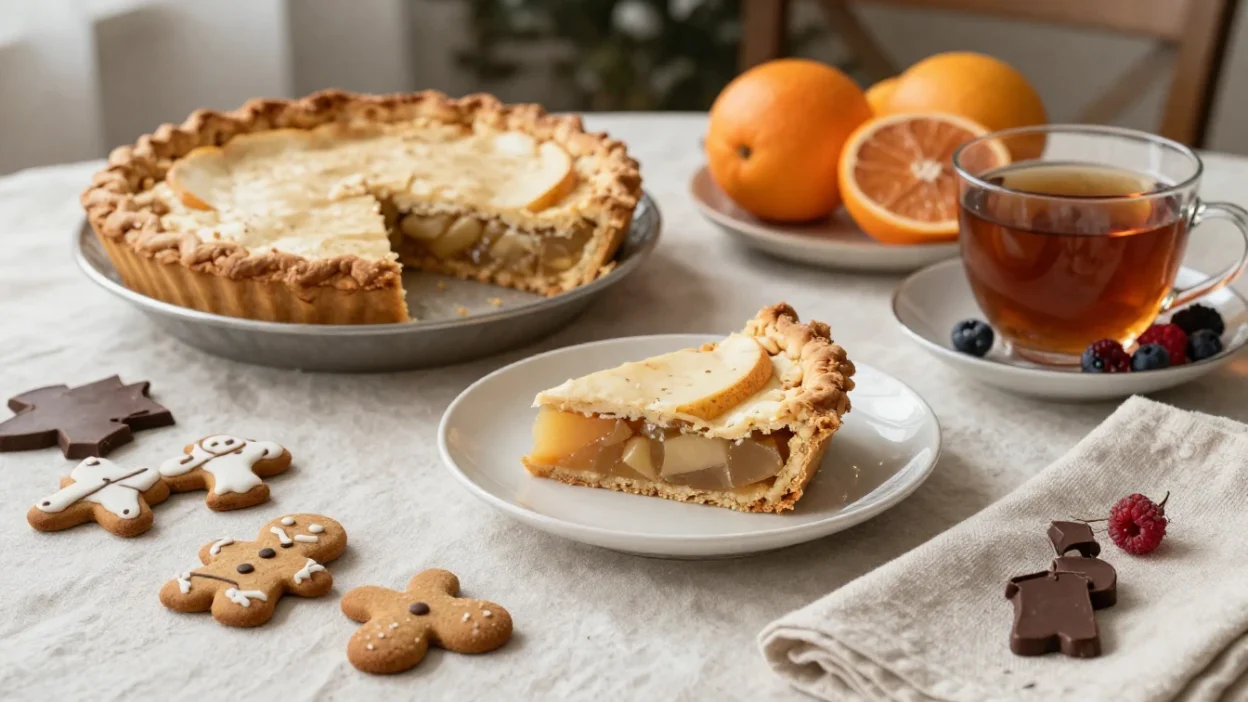
Holiday desserts have a way of bringing out two feelings at once. There is the joy of it all: warm apple pie, powdered sugar on cookies, chocolate melting into your fork, the smell of cinnamon hanging around the kitchen. And then there is that little voice that shows up right after: Should I be eating this? Did I already have too much?
Honestly, that voice can ruin a perfectly good slice of pie.
You do not need to earn dessert by skipping meals. You do not need to turn every cookie into a nutrition debate. And you definitely do not need to spend the holiday season choosing between “being good” and enjoying the foods that make the table feel special.
Holiday desserts without guilt are less about strict rules and more about paying attention. What do you actually want? What tastes worth it? Are you eating because the dessert is delicious, or because it is sitting there and everyone else is reaching for another piece?
There is a softer way to do this.
You can choose your favorite dessert, take a portion that feels satisfying, slow down for the first few bites, and move on with your evening without turning it into a whole emotional event. Some desserts can be made lighter, sure. A smaller slice or a fruit-based option can help, and the reference article also points to simple choices like smaller portions and choosing desserts more intentionally.
But the real goal is not to make dessert disappear.
The goal is to enjoy it without guilt sitting beside you at the table.
Why holiday dessert guilt happens
Holiday dessert guilt usually does not start with the dessert.
It starts earlier. With food rules. With the idea that you should “save calories” all day. With someone at the table making a comment about sugar. With the memory of last year, when you ate too much fudge and promised yourself you would be stricter next time.
Then the dessert table appears, and suddenly a slice of pie feels like a decision with consequences.
That is a lot of pressure to put on pie.
Food rules make desserts feel forbidden
The more forbidden a food feels, the louder it gets.
If you spend the whole week telling yourself you should not eat cookies, the cookies become strangely powerful. You notice them faster. You think about them more. And when you finally have one, it can feel like the rule is already broken, so you might as well keep going.
That “I already messed up” feeling is often what leads to overeating, not the dessert itself.
Mayo Clinic notes that depriving yourself too much can increase cravings, especially when emotions are involved, and suggests making room for satisfying foods and occasional treats instead of removing everything you enjoy. (Mayo Clinic)
A calmer approach sounds less dramatic: dessert is allowed. You can have it. You can enjoy it. And because it is allowed, you do not have to eat it like it is disappearing forever.
Holiday pressure makes choices harder
Holiday food is not just food. It is memory, family, tradition, and sometimes a little emotional chaos on a plate.
Maybe your aunt waits to see if you try her cake. Maybe your grandmother’s cookies only appear once a year. Maybe someone says, “Oh, come on, it’s the holidays,” right after you decided you were satisfied.
And sometimes the pressure comes from the other side: diet talk at the table, jokes about “being bad,” or comments about needing to “work it off tomorrow.”
None of that helps you listen to your body.
It pulls you into other people’s noise.
A better holiday dessert moment starts with this quiet permission: you do not have to explain your plate. You can take dessert. You can skip dessert. You can take some home. You can say, “That looks amazing, I’m starting with this first,” and move on.
Dessert is not the problem
A slice of pumpkin pie is not a moral event. A cookie is not a failure. A small plate of your favorite sweets does not erase your healthy habits.
The problem is usually the guilt spiral: eat dessert, feel bad, decide the day is ruined, eat more because you feel bad, then promise strict rules tomorrow.
That cycle is exhausting.
Mindful eating offers a much softer way through it. Harvard’s Nutrition Source describes mindful eating as paying attention to your food, eating slowly, savoring small bites, and noticing hunger and fullness cues. (The Nutrition Source)
That does not mean staring intensely at your cheesecake like you are doing homework.
It means tasting it.
The buttery crust. The cinnamon. The cool whipped cream. The little crunch at the edge of a cookie. When you actually let yourself enjoy dessert, you may find that you need less of it to feel satisfied.
And even if you eat a little more than planned?
You are still allowed to eat breakfast tomorrow.
Choose the dessert you actually want
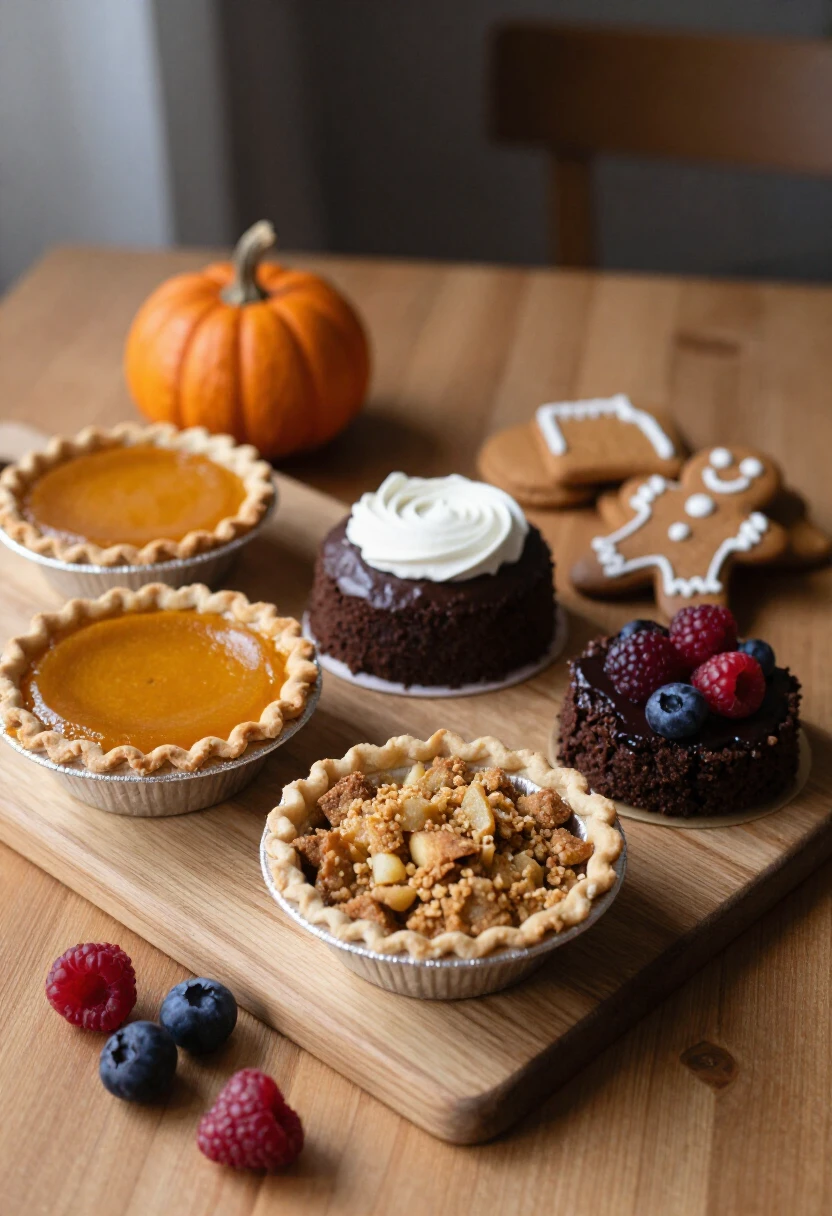
The easiest way to feel better around holiday desserts is also the most overlooked: stop eating the sweets you do not even like that much.
This sounds obvious, but it happens all the time. A dry cookie from the office tray. A piece of candy you grabbed while walking past the bowl. A slice of cake you accepted because someone handed it to you. Before you even reach the dessert you truly wanted, you have already eaten three “just okay” things.
That is when dessert starts to feel messy.
Not because you enjoyed something special, but because you barely noticed half of it.
Do not waste room on “just okay” sweets
Holiday dessert tables can be overwhelming. Everything looks festive, and everyone seems to be reaching for something. But not every dessert deserves your attention.
Pause for a second before you fill your plate.
Ask yourself:
- Do I actually want this?
- Would I be sad if I skipped it?
- Is this special, or is it just nearby?
- Am I choosing it, or am I reacting to it?
If the sugar cookie is bland, leave it. If the store-bought cupcake tastes like frosting and air, you do not have to finish it. If you are only eating the candy because it is in a bowl beside you, move the bowl or step away from it.
Save your appetite for the dessert that makes you think, yes, that one.
Pick one or two favorites
This is where holiday desserts without guilt become much easier.
Choose what you really love.
Maybe it is pumpkin pie with whipped cream. Maybe apple crisp with a buttery oat topping. Maybe pecan bars, chocolate cake, gingerbread, baklava, cheesecake, or your family’s old recipe that only shows up in December.
Pick one or two desserts that feel worth it, then enjoy them properly.
That is very different from grazing all evening. Grazing keeps you half-satisfied and half-looking for the next bite. Choosing gives the dessert a beginning and an end. You put it on a plate. You sit down. You taste it.
A small plate of your favorite dessert will usually feel better than a random trail of cookies, candy, and broken pieces of pie crust eaten while standing in the kitchen.
Make the first bites count
The first few bites are usually the best.
That is when the flavors are clearest: the cinnamon in the apples, the creamy pumpkin filling, the crisp edge of the cookie, the dark chocolate melting slowly. After a while, your taste buds get used to it. The dessert may still be good, but it is not quite as exciting as those first bites.
So give those first bites your attention.
Not in a strict, “mindful eating exercise” way. Just slow enough to notice what is happening.
Take a bite. Put the fork down for a moment. Let yourself taste it.
You may finish the whole piece. That is fine. You may realize halfway through that you are satisfied. That is fine too.
The point is not to eat as little as possible.
The point is to enjoy dessert while you are actually enjoying it.
Use portions without turning dessert into math
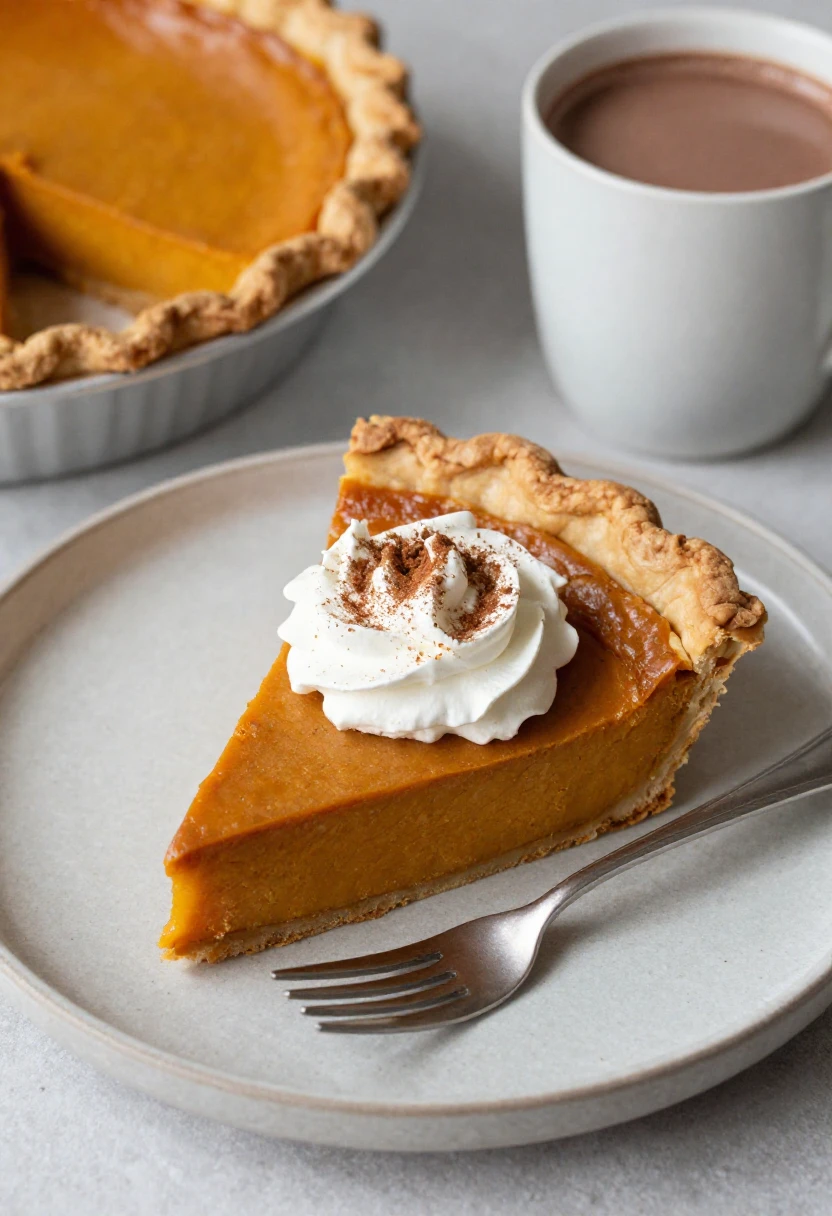
Portion control gets a bad reputation because people often make it feel tiny, strict, and joyless.
A “reasonable portion” does not have to mean one sad bite of pie on a giant plate. It just means choosing an amount that lets you enjoy dessert without leaving the table feeling heavy, uncomfortable, or annoyed with yourself.
You are not measuring your worth in forkfuls.
You are simply giving your body enough room to enjoy the food and still feel good afterward.
A smaller slice can still feel generous
A smaller slice works best when it still looks and feels like dessert.
Put it on a nice plate. Add a spoonful of whipped cream if that is what makes pumpkin pie taste complete to you. Warm the apple crisp. Sprinkle a little cinnamon. Sit down instead of eating it while leaning over the counter.
Presentation matters because your brain notices the whole experience, not just the size.
A small slice eaten slowly can feel much more satisfying than a huge slice eaten while distracted, rushed, or already feeling guilty.
And if you finish it and still genuinely want more, you can decide from there. You do not need to panic. Dessert is allowed.
Share rich desserts when it feels natural
Some holiday desserts are rich in the best way. Pecan pie, cheesecake, chocolate mousse, tiramisu, dense brownies, buttery bars. Delicious, yes. Also the kind of dessert where a few bites can be enough.
Sharing can work well here.
Split a slice with someone who also wants “just a little.” Cut a brownie in half. Take a few bites of two desserts instead of forcing yourself to choose one huge portion. This is especially nice when you want the taste, but you know the full serving may feel like too much.
The important part: share because it feels good, not because you are trying to prove self-control.
There is a big difference.
Add something fresh if you want balance
Fresh fruit can make dessert feel brighter without replacing the dessert itself.
A few berries beside chocolate cake. Orange slices with dark chocolate. Baked apples with cinnamon. Poached pears with vanilla. Pomegranate seeds over yogurt or custard. Even a little citrus zest can make a rich dessert taste less heavy.
This is not about “fixing” dessert.
Dessert does not need to be fixed.
It is about adding contrast: creamy with fresh, sweet with tart, buttery with something juicy. That kind of balance makes the plate more interesting, and sometimes it helps you feel satisfied sooner.
A slice of cake with berries still gets to be cake.
Make holiday desserts a little lighter without ruining them
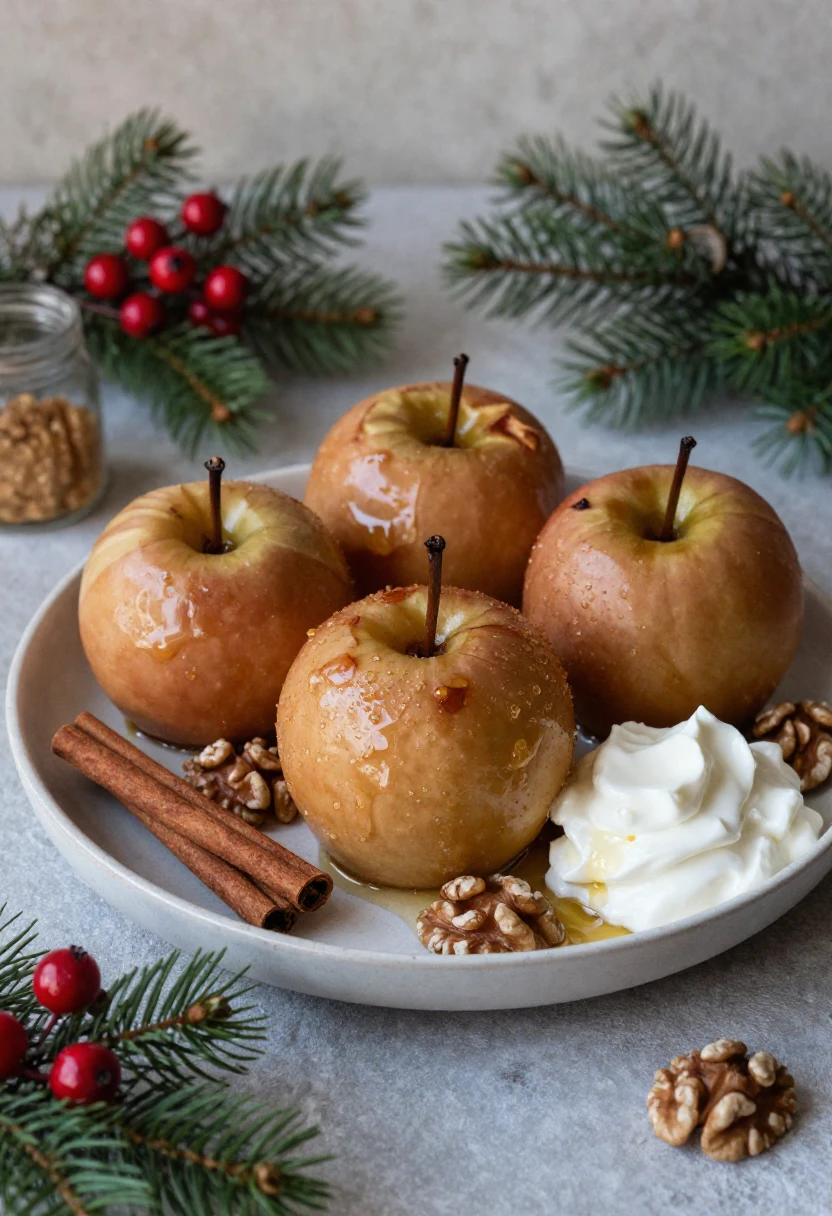
A lighter holiday dessert should still taste like dessert.
That is the rule I would keep. If you make a “healthy” version of pie and everyone quietly misses the real pie, it probably was not worth it. Holiday food carries memory. Texture matters. Butter matters sometimes. So does the smell of cinnamon, chocolate, vanilla, toasted nuts, and fruit bubbling at the edges of a baking dish.
The goal is not to remove joy from the recipe.
The goal is to make small changes where they actually help.
Simple swaps that still taste good
Some swaps work because they improve the dessert instead of making it feel like a compromise.
You can try:
- Greek yogurt instead of heavy cream in some toppings or parfaits
- Less sugar in fruit desserts, especially when the fruit is already sweet
- Extra cinnamon, ginger, nutmeg, cardamom, or vanilla for more flavor
- Dark chocolate instead of very sweet milk chocolate
- Nuts or oats for crunch in crisps and crumbles
- Smaller dessert cups instead of oversized servings
- Fruit layered with yogurt, whipped cream, or pudding
Apple crisp is a good example. You can use plenty of apples, cinnamon, a little lemon juice, and a topping made with oats, walnuts, butter, and just enough sugar to make it golden. It still smells like a holiday dessert. It still tastes warm and cozy. It just does not need to be drowned in sugar to be satisfying.
Where not to cut corners
Some desserts are better left alone.
If your family makes one special pie every year, and the crust is buttery and flaky and everyone talks about it before it even comes out of the oven, let it be the real thing. If your grandmother’s cookies need butter, sugar, and the same old tin they have always been stored in, maybe that is not the recipe to “fix.”
You do not have to make every dessert lighter.
Sometimes the healthier choice is to enjoy the real dessert slowly, with no guilt, instead of eating three “clean” versions that do not satisfy you.
That happens more often than people admit.
Cozy lighter dessert ideas
If you do want lighter options on the table, choose desserts that feel naturally cozy rather than diet-like.
Try:
- Baked apples with cinnamon, walnuts, and a little honey
- Pumpkin yogurt parfaits with granola and nutmeg
- Dark chocolate dipped orange slices
- Mini berry crisps in ramekins
- Poached pears with vanilla and cinnamon
- Greek yogurt with roasted fruit
- Gingerbread energy bites with oats and dates
- Chia pudding with cocoa and berries
These are not replacements for pie if you really want pie. They are simply nice options to have around, especially when you want something sweet but not too heavy.
A good holiday dessert table can have both: the classic family recipe and the lighter fruit dessert.
Eat before the dessert table
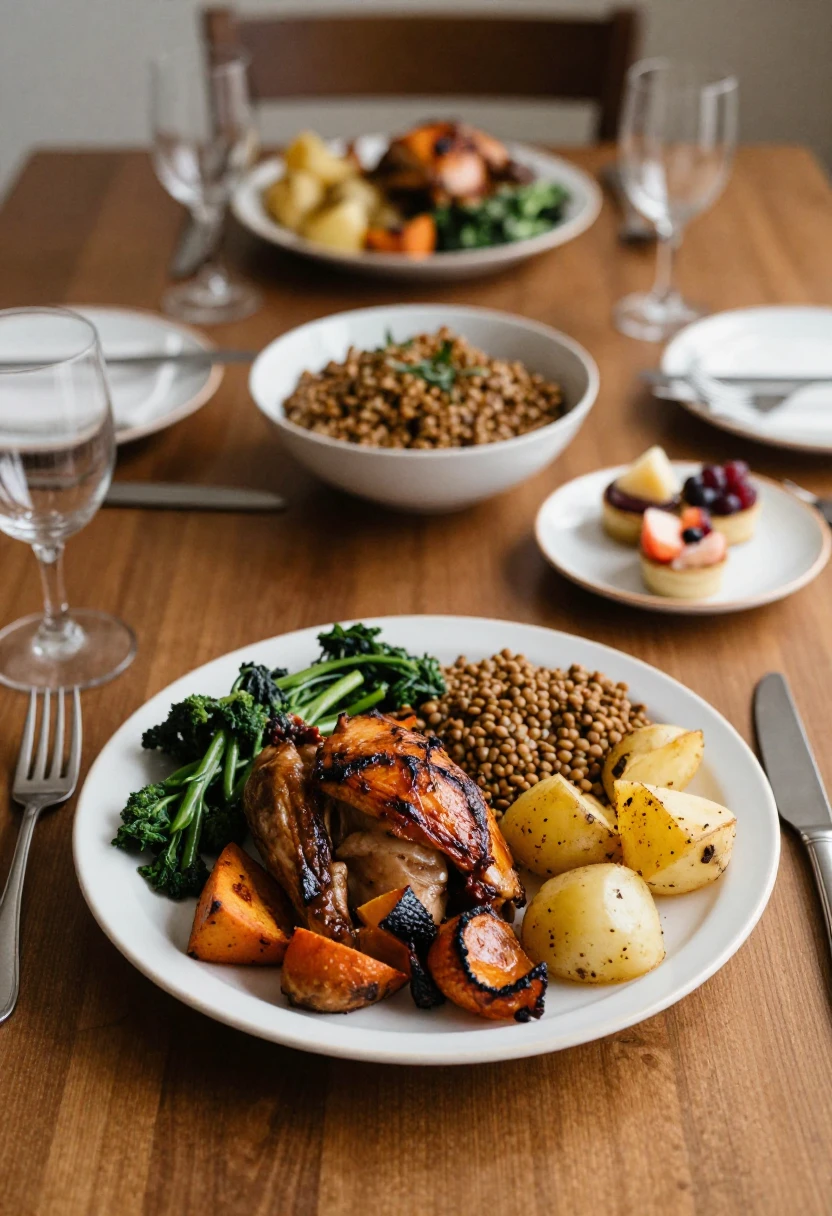
Skipping meals before a holiday party sounds logical for about five minutes.
You think, I’ll save room for dessert. Then you arrive hungry, the room smells like butter and sugar, someone hands you a plate, and suddenly every cookie looks urgent.
That is not lack of willpower. That is hunger doing what hunger does.
When your body is underfed, dessert becomes harder to enjoy calmly. You eat faster. You reach for whatever is closest. You may keep going because your body is trying to catch up, even if your mind is busy judging every bite.
Skipping meals usually backfires
The “save room” trick often turns into the “eat everything quickly” problem.
If you skip breakfast or lunch before a holiday dinner, your blood sugar may feel less steady by the time dessert appears. You might feel shaky, irritable, tired, or extra snacky. And when the sweets finally come out, they feel less like a choice and more like rescue food.
A better plan is simple: eat real food earlier.
Not a giant meal. Not a perfect one. Just something with protein, fiber, and enough substance to keep you grounded.
That might be eggs with toast, oatmeal with nuts, yogurt with berries, soup, leftovers, a turkey sandwich, lentils, or a rice bowl. Boring is fine. Boring works.
Build a steady holiday plate first
Before dessert, try to eat a plate that feels like an actual meal.
Think:
- Protein: turkey, chicken, fish, eggs, beans, lentils, tofu
- Vegetables: roasted carrots, salad, green beans, cabbage, Brussels sprouts
- Carbs: potatoes, rice, bread, pasta, stuffing, grains
- Fat: olive oil, avocado, nuts, cheese, sauce, butter in a normal food-life way
You do not need to make the holiday plate look like a diet poster. Just give your body enough real food before the sugar shows up.
A steady plate might be turkey with roasted vegetables and potatoes. Or salmon with rice and salad. Or lentils with greens and bread. Or whatever is on the table, arranged in a way that feels satisfying.
Then dessert can be dessert.
Not dinner. Not a reward. Not a crisis.
Dessert feels better after real food
Dessert is more enjoyable when you are not desperate for it.
You can taste the apple filling instead of inhaling it. You can notice whether you want whipped cream. You can decide if the brownie is actually worth finishing. You can stop without feeling like someone is taking something away from you.
That is the quiet benefit of eating before dessert: you get more choice.
Practice mindful eating without making it awkward
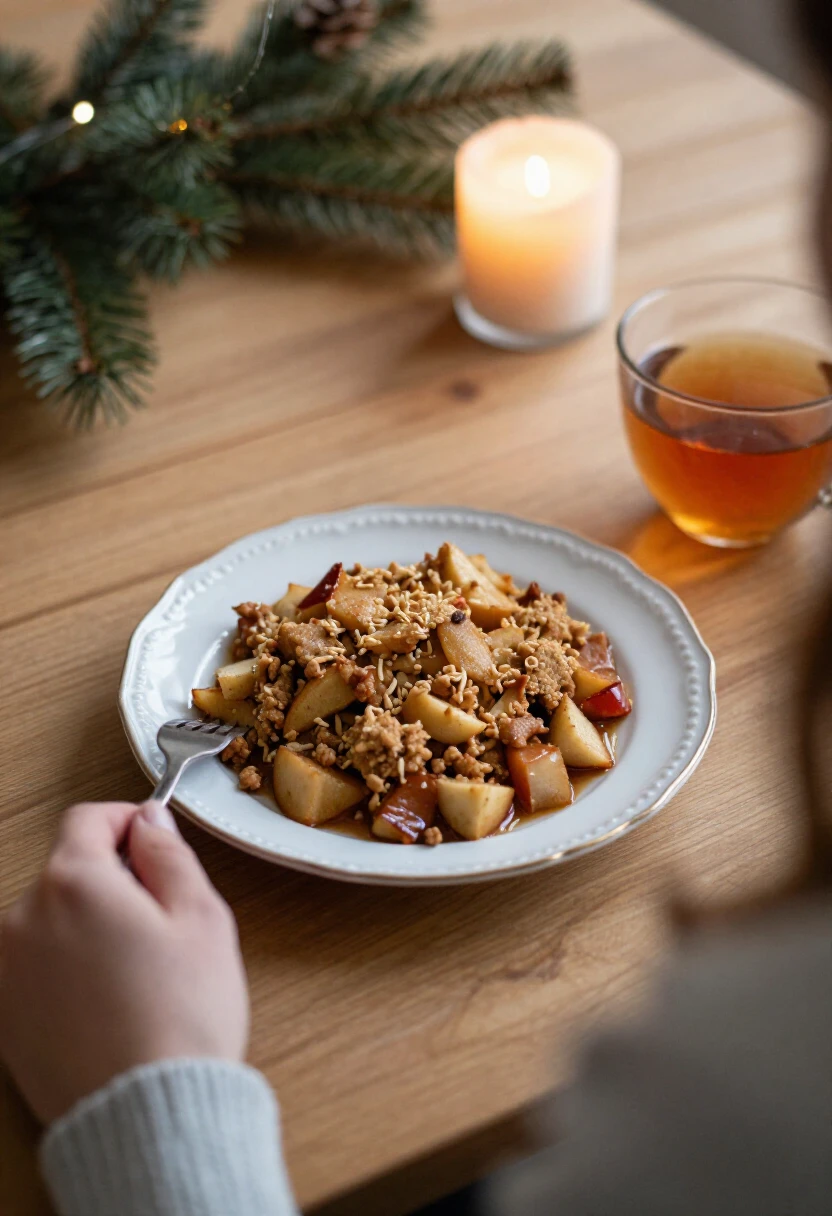
Mindful eating sounds nice until someone explains it in a way that makes dessert feel like a therapy worksheet.
You do not need to stare at your cookie for three minutes. You do not need to chew every bite exactly 27 times. You do not need to turn a holiday party into a silent retreat.
Mindful eating can be much simpler than that.
It means you slow down enough to actually notice what you are eating. The taste. The texture. Whether you still want more. Whether you are satisfied, or just reaching because the plate is in front of you.
That is all.
Sit down with your dessert
This one changes more than you might expect.
Dessert eaten while standing near the kitchen counter barely registers. Same with little bites taken while cleaning up, packing leftovers, or walking past the dessert table for the fifth time.
Sit down if you can.
Put the dessert on a plate. Get a fork or spoon. Let it feel like something you chose, not something that happened by accident while you were carrying dishes.
A slice of pie tastes different when you are not eating it over the sink.
Put the fork down sometimes
This is not a trick to force yourself to eat less. It is just a way to give your brain a second to catch up.
Take a bite. Enjoy it. Put the fork down for a moment. Talk to someone. Sip tea. Notice if the dessert still tastes as good as it did at the beginning.
Sometimes it does, and you keep eating.
Sometimes the flavor fades, and you realize you are done.
Both are fine.
The point is to stay present enough that the dessert does not disappear before you even enjoyed it.
Check your satisfaction
A useful question is:
“Do I want another bite because this still tastes amazing, or because it is there?”
No judgment. Just information.
If the answer is, “Yes, I still want it,” enjoy the next bite.
If the answer is, “Actually, I am full, but I feel weird leaving food,” you can stop. Leftover pie is allowed to exist. So is half a cookie. You are not required to finish something just because it is sweet.
Holiday desserts without guilt become easier when you let satisfaction guide you instead of rules.
Not perfect control.
Just enough attention to enjoy what you chose.
Handle family comments and food pressure
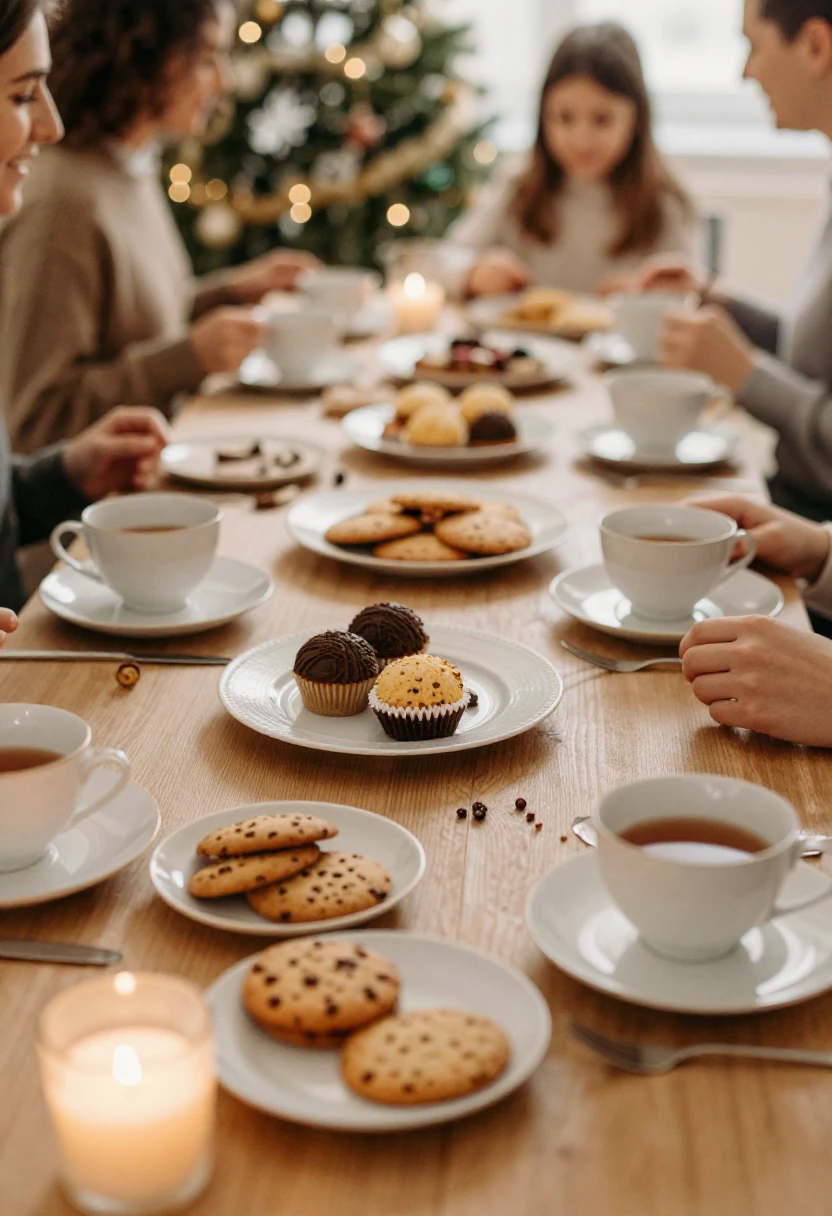
Holiday dessert would be easier if it were only about hunger and taste.
But sometimes there are people involved.
Someone wants you to try their pie. Someone comments on how much sugar is on the table. Someone says, “You’re being good,” because you skipped cake, or “Oh, live a little,” because you said no to a second serving.
Suddenly, your dessert plate feels public.
That can make even a simple choice feel loaded.
Simple phrases that protect your peace
You do not need a speech. Short, calm phrases usually work better.
Try:
- “That looks delicious. I’m starting with this first.”
- “I’m good for now, but thank you.”
- “I may take some home.”
- “I’m enjoying this slowly.”
- “I’m full, but I’d love the recipe.”
- “I already picked my favorite dessert tonight.”
The goal is not to convince anyone. The goal is to move the conversation along without making your food choices the main event.
You can be kind and still protect your peace.
You do not need to explain your plate
This is the part people forget: you are allowed to eat dessert without explaining it, and you are allowed to skip dessert without explaining that either.
No long story about calories. No apology. No lecture about sugar. No nervous laugh while you defend your slice of cake.
A simple “I’m good, thanks” is enough.
And if someone keeps pushing, change the subject. Ask about the recipe. Ask who made the cookies. Ask how their trip went. Most food comments do not need to become food conversations.
Make room for tradition
Holiday desserts often carry more than flavor.
They carry memory.
Maybe your family makes the same apple pie every year. Maybe the gingerbread reminds you of childhood. Maybe someone you love always made walnut cookies, and eating one feels like keeping a little piece of them at the table.
That matters.
Food is not only fuel, especially during holidays. Sometimes it is comfort, history, connection, and love passed around on a plate.
So if the dessert means something to you, let it mean something.
Sit down. Taste it. Enjoy the part that feels special.
You do not have to turn tradition into guilt.
What to do if you overeat dessert
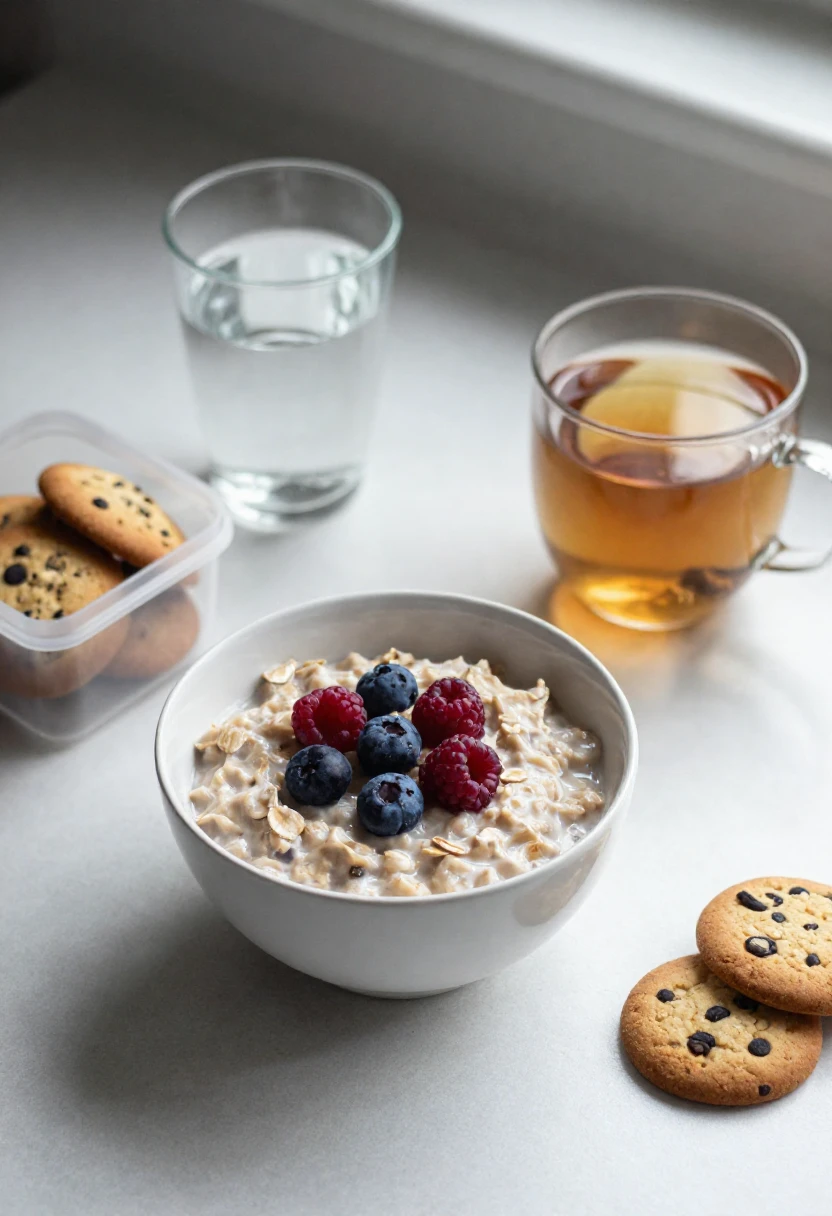
Sometimes you eat more dessert than you planned.
It happens.
Maybe the pie was better than expected. Maybe you were tired. Maybe you skipped lunch. Maybe everyone stayed around the table talking, and the cookie plate kept making quiet little laps in front of you.
The worst thing you can do next is turn one evening into a punishment plan.
No skipping breakfast. No harsh detox. No angry workout to “make up for it.” That usually keeps the guilt cycle going, and honestly, it makes food feel scarier than it needs to be.
Do not punish yourself the next day
If you wake up feeling heavy, bloated, or annoyed, start with normal care.
Drink water. Eat breakfast. Get some protein. Add fiber. Go for a gentle walk if it feels good. Let your body settle.
Your next meal does not need to be tiny because dessert was big.
Try something steady:
- Scrambled eggs with toast and fruit
- Oatmeal with berries and walnuts
- Greek yogurt with cinnamon and apple
- Lentil soup with greens
- Turkey or hummus wrap with vegetables
- Rice bowl with beans, avocado, and salsa
Nothing dramatic. Just food.
Return to normal meals
The fastest way back to balance is usually the most boring one: eat normally.
Not perfectly. Normally.
Have breakfast when you are hungry. Eat lunch. Make dinner something simple and grounding. Soup is great here because it feels gentle without being restrictive. A bowl of vegetable soup, chicken soup, lentil soup, or potato soup can help you feel cared for instead of punished.
If you still have leftovers, decide what you actually want to keep. Save the desserts you love. Share the rest, freeze some, or send plates home with guests.
You are allowed to keep dessert in the house without treating it like an emergency.
Learn without shame
Overeating can give you useful information, but only if you look at it kindly.
Ask yourself:
- Was I too hungry before dessert?
- Did I eat while distracted?
- Did I feel pressured to try everything?
- Was I stressed, tired, or emotional?
- Did I choose desserts I actually wanted?
- Did I keep eating after I stopped tasting it?
This is not an interrogation. It is just noticing.
Maybe next time you eat a real meal before the party. Maybe you choose two favorite desserts instead of grazing. Maybe you sit down with your slice instead of eating while cleaning up.
That is enough.
One dessert-heavy evening does not ruin your health. What matters more is how you come back to yourself afterward.
Build your own holiday dessert plan

A holiday dessert plan should not feel like a contract.
Think of it more like a little kindness you offer your future self. You know there will be cookies, pie, cake, candy, maybe a dessert someone insists you “have to try.” You also know you want to enjoy the holiday without leaving the table uncomfortable or mentally replaying everything you ate.
So make a loose plan.
Not a strict one. A human one.
Before the party
Do not arrive starving.
Eat something steady before you go, especially if the party starts late or you know dinner will be unpredictable. A simple lunch with protein, fiber, and carbs can make the whole evening easier.
You can also decide, quietly, which desserts you are most excited about. Maybe you already know you want the apple pie. Maybe you want one of your aunt’s cookies because she only makes them once a year. Maybe you do not care about cake at all.
That little decision helps. It keeps you from eating everything just because everything is there.
If you are bringing dessert, bring something you actually like. Not the “safe” dessert you think you should bring while secretly wishing someone else made brownies. A fruit crisp, pumpkin parfaits, chocolate dipped oranges, or a classic pie all work. The best choice is the one people will enjoy.
During the party
Once dessert comes out, pause before grabbing a plate.
Look at the options. Choose what you want most. Put it on a plate. Sit down if you can.
Then eat it like it matters.
Taste the first bite. Notice if it is as good as you hoped. Enjoy the creamy part, the crumbly edge, the warm fruit, the chocolate, the spice. If you want more after you finish, you can choose more. If you are satisfied halfway through, you can stop.
No drama either way.
This is also a good time to ignore food comments as much as possible. Someone may talk about calories. Someone may say they are “being bad.” You do not have to join in. You can just enjoy your dessert and talk about something more interesting.
After the party
The next day, return to normal.
That is the whole plan.
Have breakfast. Drink water. Eat a real lunch. Move your body gently if it feels good. Keep the desserts you truly want as leftovers and let go of the ones you only took because they were available.
If you overate, you do not need to “start over.” You are not a computer program. You are a person who had dessert at a holiday gathering.
That is allowed.
A good holiday dessert plan gives you enough structure to feel calm, but enough freedom to enjoy the moment. And honestly, that is where the sweet spot is.
Conclusion
Holiday desserts are meant to be enjoyed, not feared.
You can eat the pie. You can skip the cookie that does nothing for you. You can choose the dessert you love most, take a portion that feels good, sit down, taste it, and move on with your evening. No guilt speech required.
The best way to enjoy holiday desserts without guilt is not to become stricter. It is to become more honest with yourself. Am I hungry? Do I actually want this? Does it still taste good? Would I feel better saving some for later?
Those small questions can bring you back to the moment.
And if you overeat sometimes, you are still fine. Drink water. Eat breakfast. Take a walk if it feels good. Return to normal meals. The holiday season does not need to become a cycle of restriction, guilt, and “starting over.”
Dessert can be part of a healthy life.
Especially when you let yourself enjoy every bite.
FAQ
Can I eat holiday desserts and still eat healthy?
Yes. Healthy eating is not ruined by a slice of pie, a few cookies, or a piece of cake. What matters more is your overall pattern: regular meals, enough protein, vegetables, fiber, water, sleep, and movement.
Holiday desserts can fit into that pattern without guilt.
What is the best way to avoid overeating sweets during the holidays?
Eat real meals before dessert, choose the sweets you actually love, and sit down while you eat them. Skipping meals usually makes dessert harder to enjoy calmly.
It also helps to pick one or two favorites instead of grazing on every sweet thing nearby.
Are lighter holiday desserts actually satisfying?
They can be, if they still taste like dessert. Baked apples, fruit crisps, dark chocolate oranges, pumpkin yogurt parfaits, and poached pears can all feel cozy and festive.
But not every recipe needs to be lightened. Sometimes the most satisfying choice is a smaller portion of the real dessert you truly want.
What should I do after eating too much dessert?
Do not punish yourself. Drink water, eat your next normal meal, get some protein and fiber, and move gently if it feels good.
One dessert-heavy evening does not ruin your health. The best thing you can do is return to your usual routine without turning it into a guilt project.
Say “давай” and I’ll prepare the SEO block: SEO title, meta description, and 10 internal linking keywords.