You can enjoy your favorite foods without feeling guilty, and no, that does not mean eating cookies for dinner every night or pretending nutrition does not matter. It means giving yourself enough freedom around food that one slice of pizza, a bowl of ice cream, or a warm piece of bread with butter does not turn into a moral crisis.
Most of us have at least one food we mentally label as “bad.” Chocolate after lunch. Fries on a road trip. Pasta with extra cheese. The funny thing is, the guilt often ruins the pleasure more than the food itself ever could. You take a bite, you enjoy it for two seconds, and then your brain starts keeping score.
Food is allowed to be more than fuel. It can be comfort, memory, culture, celebration, or just the thing that makes a normal Tuesday feel a little softer. The goal is not to eat perfectly. The goal is to build a calmer relationship with food, where your favorite meals can fit into real life without shame, panic, or the need to “make up for it” later.
In this guide, we’ll talk about why food guilt happens, how to enjoy treats with more balance, and how to keep pleasure in your eating habits without feeling like you have lost control.
Why do we feel guilty about food?
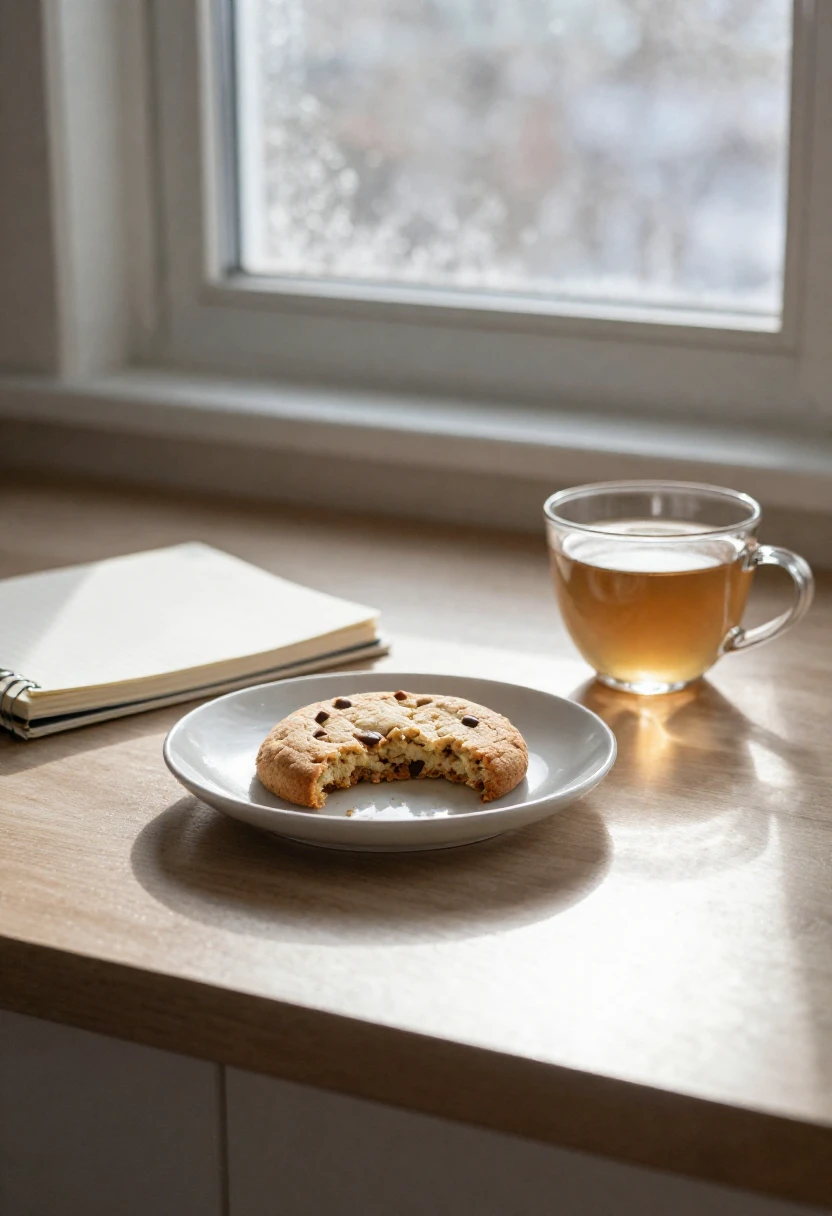
Food guilt usually does not appear out of nowhere. It builds slowly, from tiny messages we hear for years.
Maybe you heard someone say they were “being good” because they ordered a salad. Maybe dessert was treated like a reward you had to earn. Maybe you grew up around diets, weigh-ins, calorie counting, or jokes about “cheat meals” that were not really jokes.
After a while, food starts to feel less like food and more like a test.
Food rules we pick up without noticing
A lot of food guilt comes from quiet rules we never officially agreed to.
You might have some of these in your head:
- Bread is bad.
- Dessert means you have no self-control.
- Eating late at night is always wrong.
- Pasta is only okay if you “worked out enough.”
- Healthy people never crave fried food.
The problem is not that every food choice is the same. Of course, a bowl of lentil soup and a box of candy do different things for your body.
But the language matters.
Once you call food “good” or “bad,” it becomes easy to call yourself good or bad for eating it. And that is where things get messy. A slice of cake is not a personality flaw. It is a slice of cake.
Diet culture and the fear of losing control
Food guilt also feeds on the fear that one choice will ruin everything.
You eat one cookie and think, “Well, I already messed up.” Then suddenly three more cookies feel inevitable because the day is already “bad” anyway.
I think most people who struggle with this do not lack discipline. They are stuck in an all-or-nothing pattern. Either they are perfectly on track, or they feel like they have failed.
That pattern is exhausting.
Real life is not that clean. You can eat a nourishing breakfast, have fries at lunch, make a simple dinner, and still be taking care of yourself. Health is not erased by one snack.
Why guilt rarely leads to better choices
Guilt feels productive for about five seconds. It tricks you into thinking you are holding yourself accountable.
But most of the time, guilt makes food harder.
It can lead to:
- eating quickly because you already feel bad
- hiding food or eating alone
- overeating because “tomorrow I’ll start again”
- skipping meals to compensate
- thinking about food even more
That last one matters. The more forbidden a food feels, the louder it gets in your mind.
When you give yourself permission to enjoy food without turning every bite into a judgment, the food often becomes less dramatic. You can actually taste it, decide if you want more, and move on with your day.
Pleasure is part of healthy eating
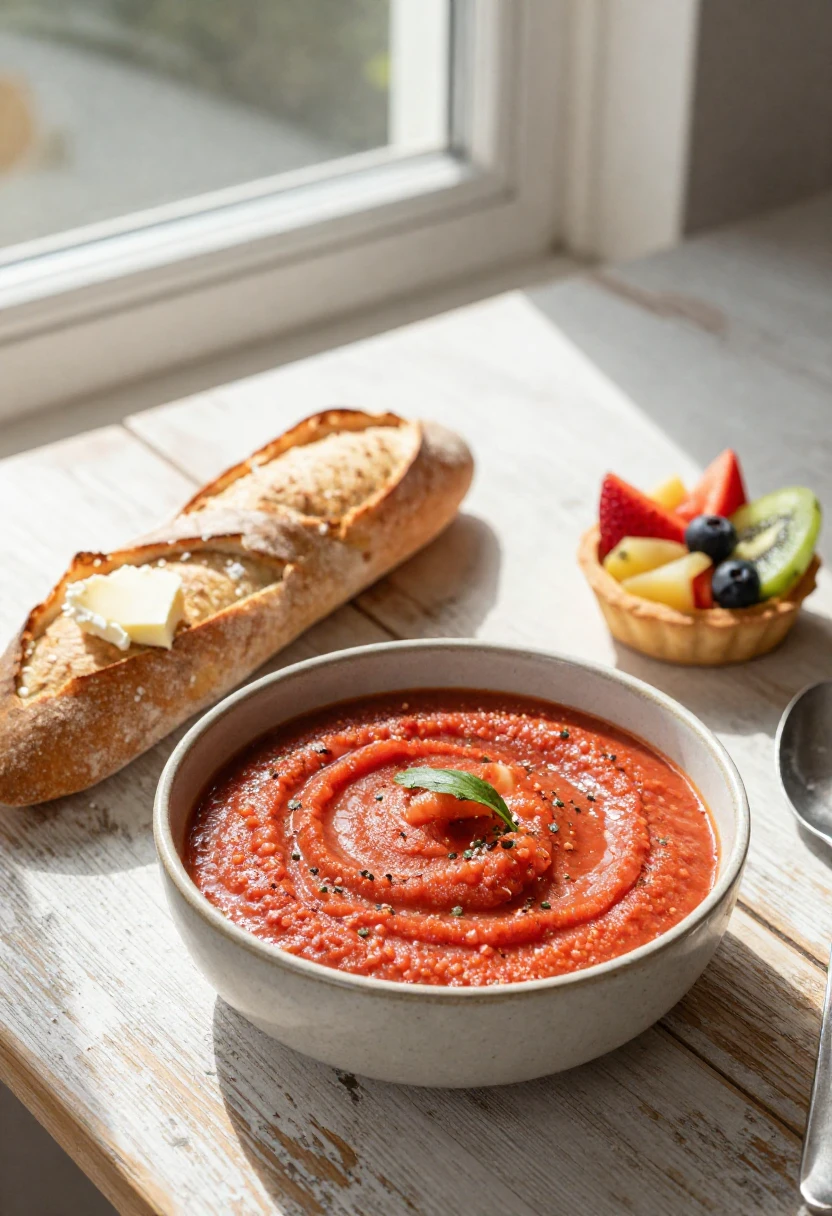
Healthy eating gets a lot easier when it stops feeling like a punishment.
That sounds obvious, but many people still build their meals around what they think they “should” eat, then wonder why they feel restless after dinner. The plate may be balanced, but something is missing. Maybe crunch. Maybe sweetness. Maybe warmth. Maybe the simple feeling of enjoying what is in front of you.
A healthy relationship with food needs room for pleasure. Not as a rare prize. As a normal part of eating.
Food is not only fuel
Yes, food gives your body energy. But that is not the whole story.
A bowl of soup can remind you of someone who used to make it for you. A slice of birthday cake can feel like being included. Toast with butter can be the thing you eat standing in the kitchen on a cold morning, still half-asleep, while the kettle clicks off in the background.
That matters.
If we treated food only like fuel, we would miss half of what makes eating human. We do not choose meals by nutrients alone. We choose them by smell, mood, habit, weather, memory, and sometimes by what sounds good after a very long day.
Why satisfaction matters
You can eat a “perfect” meal and still feel unsatisfied.
I have done it. A big salad with lean protein, plenty of vegetables, a sensible dressing. Technically fine. But if I actually wanted something warm and filling, that salad did not solve the craving. I just ended up looking for crackers or chocolate afterward.
Satisfaction is not greed. It is information.
A satisfying meal usually has a few things working together:
- enough food to actually fill you
- flavor you enjoy
- texture, like crunch, creaminess, or chew
- a little fat, protein, or fiber so you do not feel hungry again immediately
- the food you were truly in the mood for, at least in some form
Sometimes the most balanced choice is not the lowest-calorie option. Sometimes it is the meal that leaves you calm enough to stop thinking about food.
The difference between enjoyment and overdoing it
Enjoying food means you are present for it.
Overdoing it usually feels different. It is faster, more anxious, more automatic. You might barely taste the food after the first few bites, but you keep going because the bag is open, the show is on, or the day was awful and you need something to take the edge off.
No judgment. Everyone has eaten like that at some point.
The useful question is not “Was this food good or bad?” It is “Did this actually feel good?”
A warm brownie eaten slowly after dinner might feel lovely. Half a tray of brownies eaten while standing at the counter, already feeling uncomfortable, probably does not.
Same food. Different experience.
That is why guilt is such a poor guide. It only says, “You should not have eaten that.” Awareness says something more helpful: “I enjoyed the first part, then I stopped paying attention.” That is the kind of honesty you can actually use next time.
Common “guilty pleasures” that do not need so much guilt
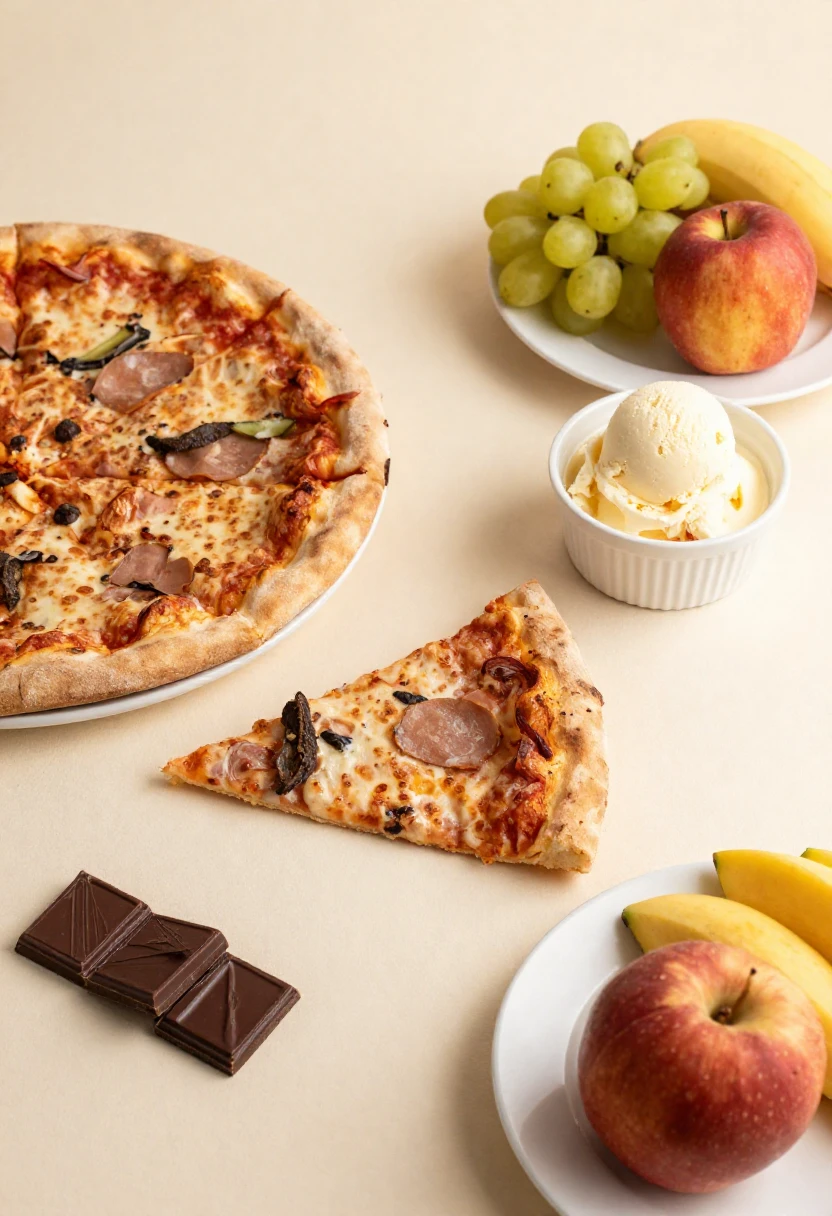
Most so-called guilty pleasures are just normal foods that got wrapped in too much drama.
Chocolate. Pizza. Ice cream. Chips. Fresh bread. Pasta with a heavy handful of cheese. None of these foods need to be eaten every hour of the day, obviously. But they also do not need to come with a mental apology every time they show up on your plate.
The more you treat these foods like forbidden objects, the more powerful they can feel. When they become allowed, they usually become easier to enjoy in a normal way.
Chocolate and sweet desserts
Chocolate is one of the easiest foods to turn into a guilt story.
You tell yourself you will have “just one square,” then you eat it standing up, barely taste it, and feel annoyed at yourself afterward. Or you avoid dessert all week and then feel like you cannot stop once you finally have it.
A calmer approach starts with actually letting dessert be dessert.
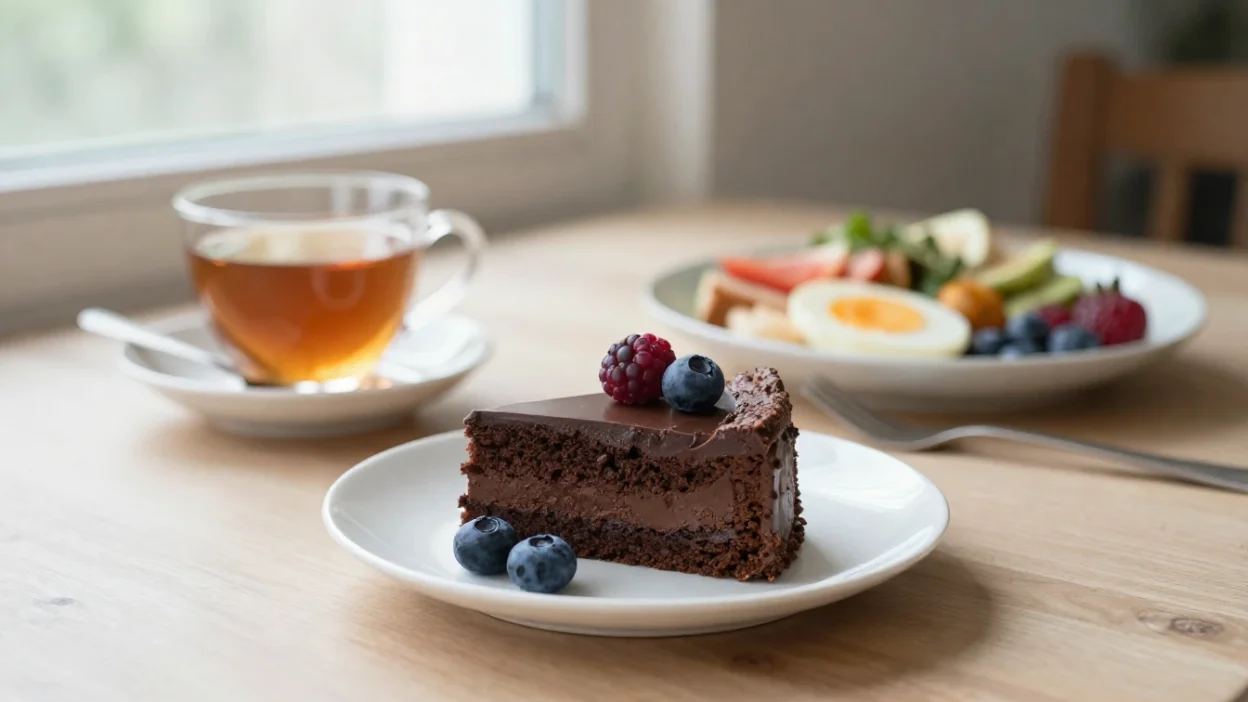
Put it on a plate. Sit down. Taste it properly. Notice the texture, the sweetness, the way good chocolate melts slowly instead of just disappearing while you scroll on your phone.
Sometimes a small piece is enough. Sometimes you want the full dessert. Both can be okay. The difference is whether you are choosing it, enjoying it, and moving on, or eating it like you are doing something wrong.
Pizza, burgers, and comfort meals
Pizza and burgers are not automatically a problem. The bigger issue is how people often eat them, with a mix of hunger, stress, and “I already ruined the day” thinking.
A pizza night can be completely normal. Add a salad if you want something fresh on the side. Choose a burger with ingredients you actually enjoy. Eat slowly enough to notice when the food stops tasting as good as it did at the beginning.
And please, do not turn every comfort meal into a math problem.
You do not need to “earn” pizza with a workout. You do not need to punish yourself the next morning with a sad breakfast. Just come back to your usual rhythm at the next meal.
That is the part people miss. Balance is not dramatic.
Ice cream, snacks, and late-night cravings
Late-night cravings can feel especially loaded with guilt because they often happen when you are tired.
And tired people do not make perfect, polished food decisions. They want something cold, salty, creamy, crunchy, or sweet. Sometimes they want all of it.
Before you judge the craving, check what is really going on:
- Did you eat enough during the day?
- Are you actually hungry?
- Are you exhausted?
- Are you bored or stressed?
- Do you want comfort more than food?
This is not about talking yourself out of the snack. It is about understanding the snack.
If you are hungry, eat something satisfying. If you simply want ice cream while watching a movie, have the ice cream and enjoy it. If you are using food every night to survive stress, that is not a failure, but it may be a sign that you need more support than a snack can give.
Homemade treats vs. mindless eating
There is a big difference between making brownies because you love brownies and eating random sweets from the cupboard because they are there.
Homemade treats often feel more satisfying because they ask you to slow down. You smell the batter, wait for the edges to set, cut a piece while it is still a little warm. There is anticipation.
Mindless eating has almost no pause in it. Open, grab, chew, repeat.
Neither one makes you a better or worse person. But one usually gives more pleasure than the other.
That is a useful thing to notice. If you are going to eat something you love, let it be worth it. Sit down for the cookie. Warm the muffin. Put the chips in a bowl. Make the moment feel like a choice, not a blur.
How to enjoy treats without feeling out of control
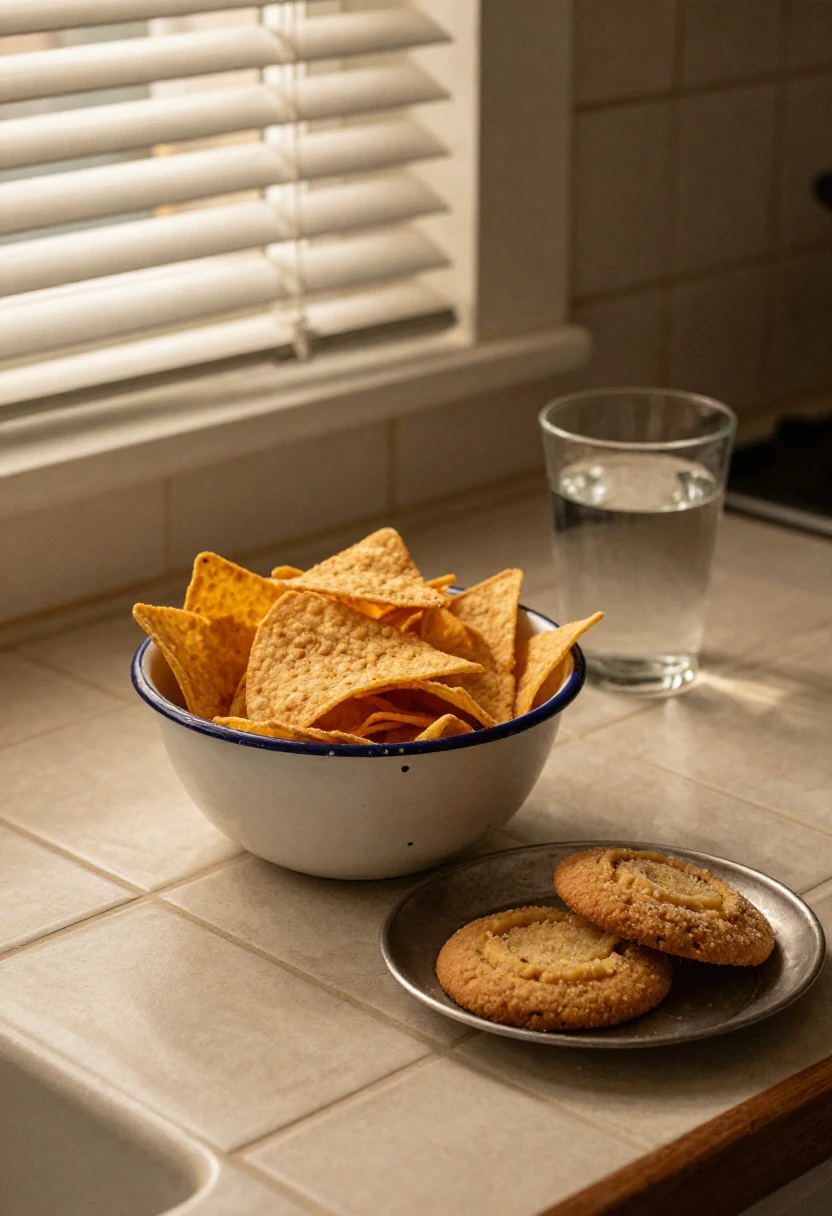
Feeling calm around treats is not about having perfect willpower. It is usually about creating a little space between the craving and the eating.
Not a huge dramatic pause. Not a full journal entry before every cookie.
Just enough space to notice what you actually want.
Because sometimes you want the chocolate. Sometimes you want rest. Sometimes you want a break from making decisions. Food can answer one of those needs, but not all of them.
Pause before you eat
Before you eat the treat, take a small pause and ask yourself one honest question:
What do I need right now?
Maybe the answer is simple: “I want something sweet.” Fine. Have something sweet.
But maybe the answer is:
- I skipped lunch and now I am starving.
- I am irritated and need five quiet minutes.
- I am tired and looking for comfort.
- I want a fun food because the day felt boring.
- I am eating this because it is in front of me.
There is no wrong answer. The point is not to shame yourself out of eating. The point is to stop moving on autopilot.
A craving feels less scary when you understand it.
Put the food on a plate
This sounds almost too simple, but it works.
Put the cookies on a plate. Pour the chips into a bowl. Scoop the ice cream instead of eating straight from the tub. Sit down if you can.
The plate creates a beginning and an end.
When food stays in the package, it is easy to lose track. Your hand keeps going back in before your brain has caught up. Suddenly the snack is half gone, and you barely remember tasting it.
A plate does not make the food “healthier.” It makes the experience clearer.
You see what you chose. You enjoy it more. You can decide if you want more instead of discovering that you already ate more.
Eat slower than usual
The first few bites of a treat are usually the best.
The chocolate tastes richer. The pizza is hotter. The cookie has that soft middle. The ice cream is cold enough to make you slow down for a second.
Then, after a while, the flavor starts to fade. Not because the food changed, but because your attention did.
Eating slower helps you catch that shift.
Try noticing:
- the first bite
- the texture
- the sweetness, saltiness, or richness
- whether the food still tastes as good halfway through
- the moment when you feel satisfied
You do not have to chew like you are in a mindfulness retreat. Just slow down enough to actually be there.
Stop before the pleasure disappears
This is one of the most helpful food habits I know: stop when the pleasure drops.
Not when you feel guilty. Not when the “correct” portion size says so. Not when an app tells you your snack is done.
Stop when the food is no longer giving you much back.
Sometimes that means two bites. Sometimes it means the whole slice. Sometimes it means you save the rest for later because you realize you are full, or because the last few bites are starting to feel more automatic than enjoyable.
That kind of stopping feels different from restriction. It does not say, “You are not allowed.”
It says, “That was good. I had enough.”
Better choices that still feel like a treat
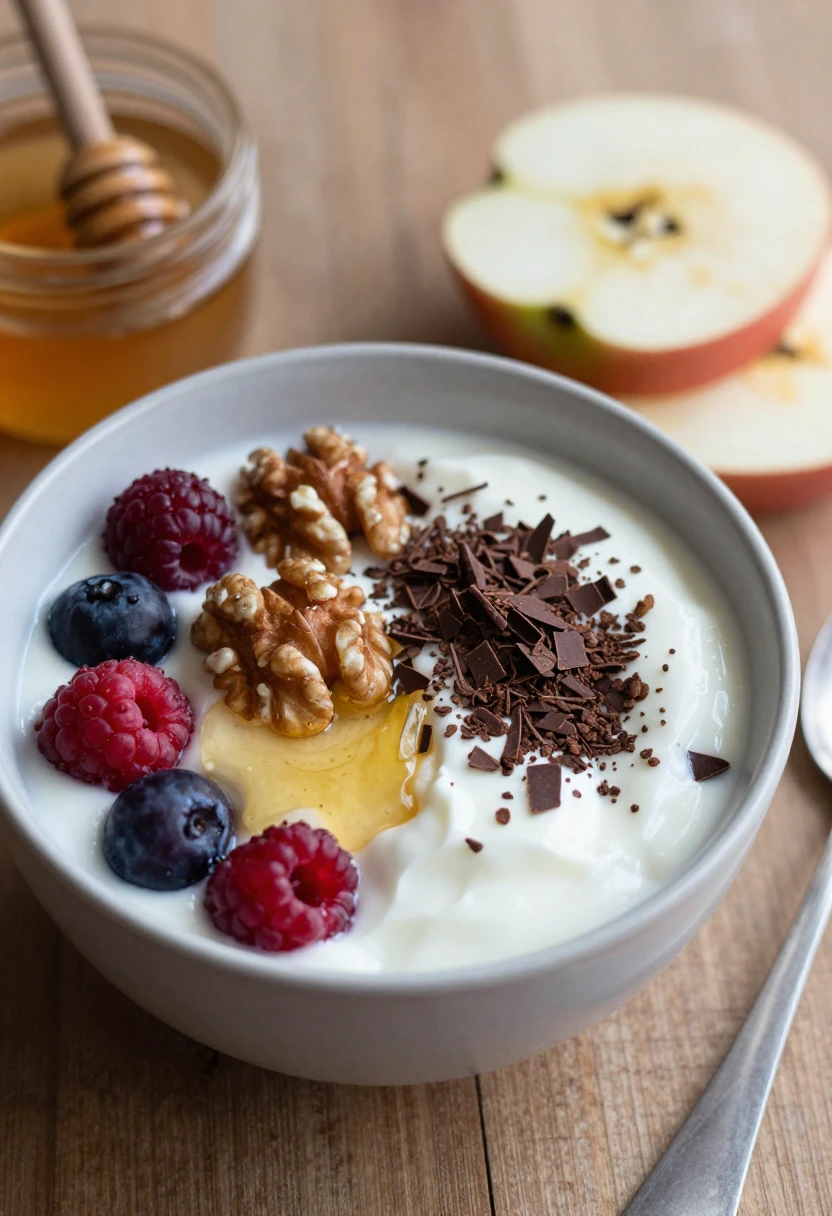
A healthier treat does not have to taste like a compromise.
That is where people often go wrong. They try to replace a food they love with something that looks similar but gives none of the same pleasure. Then they feel disappointed, keep searching the kitchen, and end up eating the original food anyway.
I do not think every craving needs a “healthy swap.” Sometimes you should just eat the brownie.
But there are also times when a slightly different version gives you what you want and leaves you feeling better afterward. Fuller. Less sluggish. More satisfied.
Make the food more satisfying
A treat feels better when it has enough flavor and texture to actually satisfy you.
For example, a plain rice cake with a dusting of cocoa powder is probably not going to fix a chocolate craving. But Greek yogurt with honey, berries, and dark chocolate shavings might. It is creamy, cold, sweet, and a little rich.
Some simple treat-style ideas that still feel good:
- apple slices with peanut butter and cinnamon
- Greek yogurt with honey, walnuts, and berries
- dark chocolate with strawberries or orange slices
- toast with almond butter and banana
- homemade popcorn with olive oil and sea salt
- dates filled with peanut butter and a pinch of flaky salt
- warm oatmeal with cocoa, banana, and chopped nuts
None of these need to be treated like magic health foods. They work because they give you pleasure and some staying power at the same time.
That is the sweet spot.
Upgrade the ingredients, not the joy out of the meal
A better-for-you version should still feel like the food you wanted.
If you want pizza, a flatbread with tomato sauce, mozzarella, basil, and roasted vegetables can be lovely. But only if it still tastes like pizza to you. If it feels like a punishment wearing melted cheese, it will not work.
The same goes for dessert.
You can make banana bread with whole grain flour, add nuts for texture, or use less sugar if the bananas are very ripe. But it should still smell like banana bread when it comes out of the oven. It should still have a soft crumb. It should still make you want a second bite.
Healthy changes should support the pleasure, not erase it.
Keep your favorites instead of replacing everything
There is a strange thing that happens when you try too hard to avoid the food you truly want.
You eat the “healthy” cookie. Then a protein bar. Then a handful of cereal. Then a spoonful of peanut butter. And after all that, you still want the real cookie.
At that point, the real cookie would have been the calmer choice.
Sometimes the most balanced thing you can do is eat the food you actually wanted in the first place. Put it on a plate. Enjoy it. Let it be enough.
You do not need to replace every favorite food with a lighter version. Keep the ones that matter most to you. Make room for them on purpose.
A life with no favorite foods is not healthier. It is just harder to maintain.
How to stop labeling food as “good” or “bad”
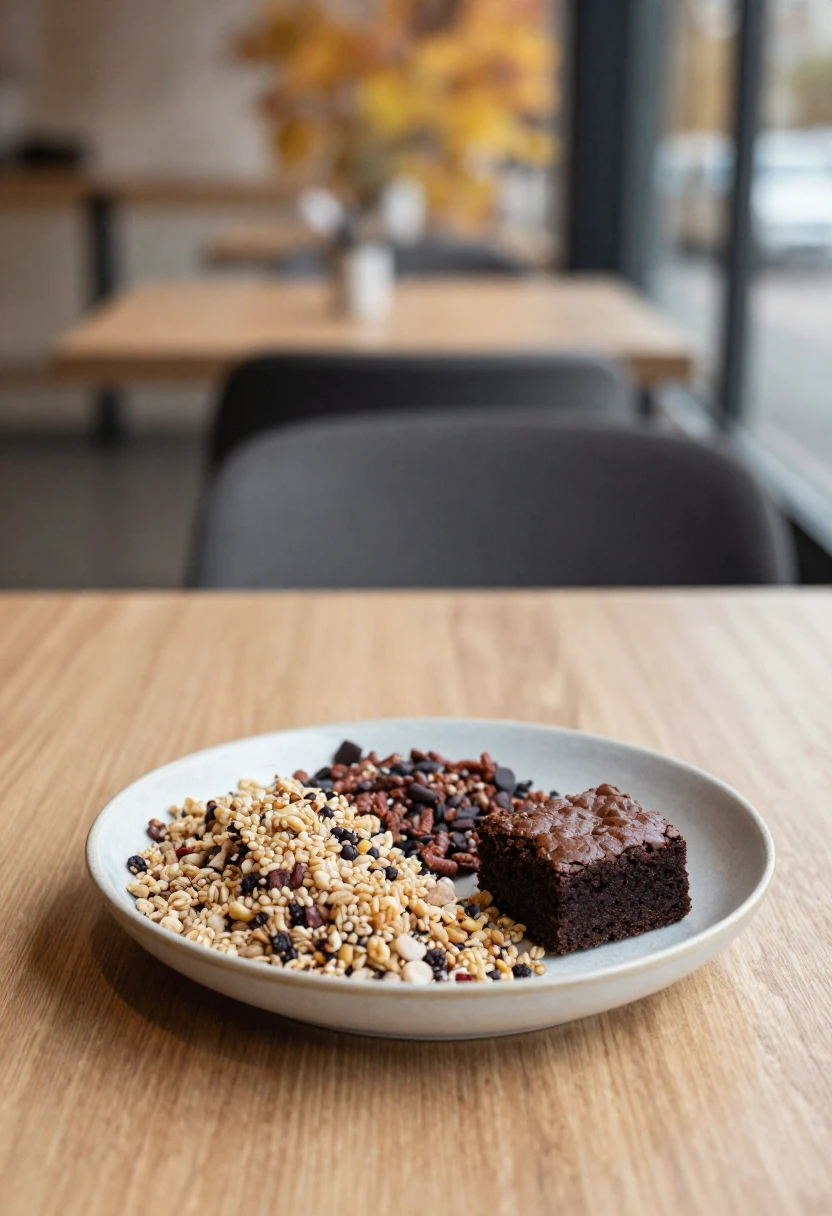
Food language sounds small, but it changes how you feel after eating.
When you call a meal “bad,” your brain often takes the next step without asking: “I was bad.” That is a heavy sentence to attach to lunch.
Food can be nourishing, fun, filling, salty, sweet, comforting, fresh, rich, light, or not very satisfying. Those words describe the food without turning it into a judgment about you.
That shift may sound simple. It is. But simple does not mean useless.
Use neutral food language
Try changing the way you talk to yourself after eating.
Instead of:
- “I was so bad today.”
- “I ruined my diet.”
- “I cheated.”
- “I should not have eaten that.”
- “I have no self-control.”
Try:
- “I had dessert today.”
- “That meal was heavier than usual.”
- “I ate past fullness.”
- “I wanted something sweet.”
- “Next time, I might put it on a plate and slow down.”
The second group is not fake positivity. It is just more accurate.
You are not “bad” because you ate fries. You had fries. Maybe they were delicious. Maybe they were cold and not worth it. Either way, you can learn something without insulting yourself.
Look at the whole pattern
One meal does not define your health.
This is easy to forget because food guilt is dramatic. It wants every choice to mean something huge. A salad means success. A pastry means failure. A second helping means everything has fallen apart.
But your body does not work like that.
What matters more is your usual pattern: what you eat most of the time, how often you feel satisfied, whether you get enough protein and fiber, whether you have energy, whether food feels manageable instead of stressful.
A burger on Saturday does not cancel out the soup, eggs, fruit, grains, vegetables, yogurt, or home-cooked meals you had during the rest of the week.
It is just part of the week.
Build trust with yourself around food
Many people are afraid that if they stop feeling guilty, they will eat treats constantly.
I understand that fear. It can feel like guilt is the only thing holding the whole system together.
But guilt is a weak guardrail. It usually creates more tension, not more trust.
Trust grows when you prove to yourself that you can eat foods you enjoy without turning them into a battle. You can have chocolate in the house. You can eat pasta on a normal Wednesday. You can order dessert and still wake up the next morning without starting a punishment plan.
The more permission you give yourself, the less urgent some foods become.
Not overnight. Not perfectly. But slowly, the cookie becomes a cookie again. Not a secret. Not a failure. Not a reason to start over on Monday.
A simple balanced approach for real life
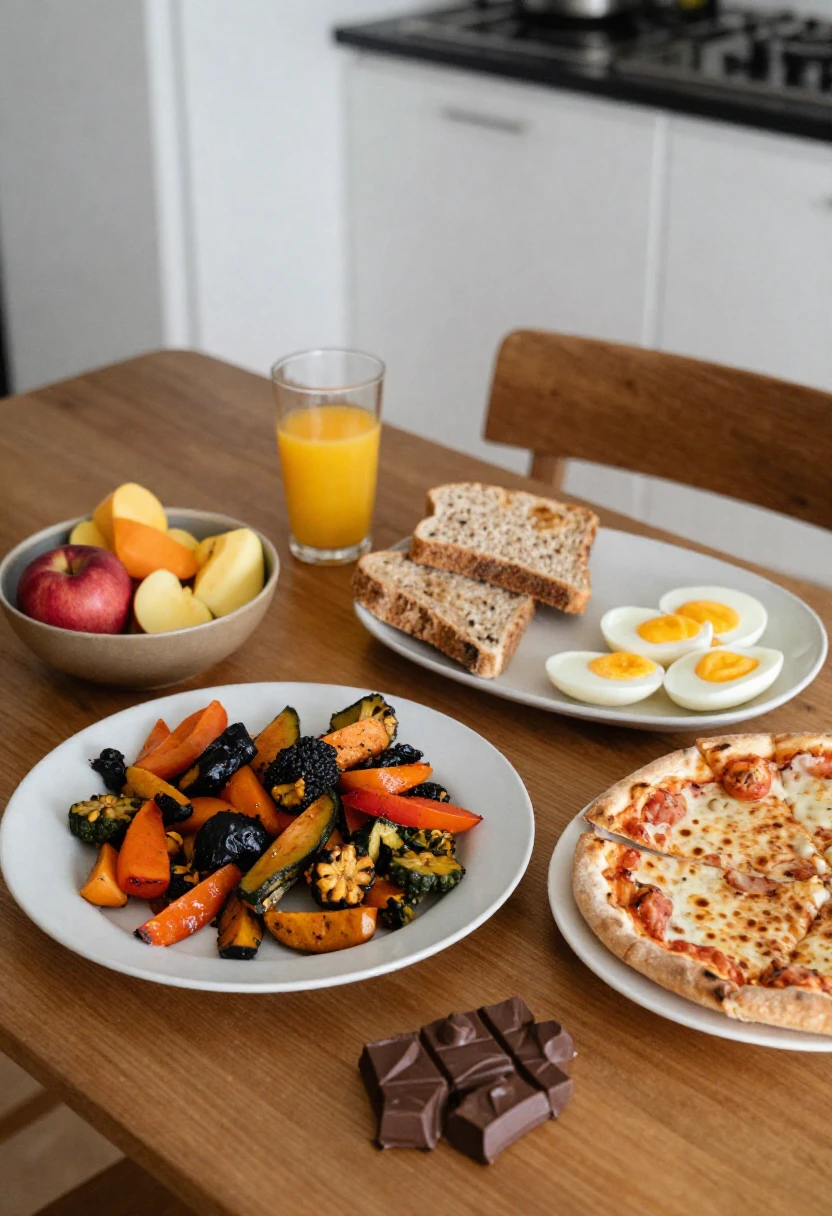
Balance should make eating easier, not more complicated.
If your version of balance requires constant tracking, measuring, negotiating, and feeling bad every time life gets messy, it is probably too strict. Real balance has room for birthday cake, tired-night dinners, family meals, holidays, cravings, and the random snack you eat because it just sounds good.
The point is not to make every choice perfect. The point is to make your usual habits steady enough that one treat does not feel like a disaster.
The 80/20 idea without turning it into another rule
The 80/20 idea can be helpful if you keep it loose.
Most of the time, you choose foods that support your body: meals with protein, fiber, vegetables, whole grains, healthy fats, and enough food to keep you satisfied.
Some of the time, you choose foods mainly because you love them.
That is it.
The problem starts when 80/20 becomes another diet rule. You do not need to calculate the exact percentage of your week. You do not need to earn the 20%. You do not need to panic because a holiday weekend had more dessert than usual.
Think of it as a rhythm, not a scorecard.
Plan small pleasures on purpose
Planned pleasure feels different from sneaking food.
You might decide that Friday is pizza night. Or that you are going to have a real dessert after Sunday dinner. Or that your Saturday morning coffee tastes better with a croissant, so you sit down and enjoy both without checking your phone every thirty seconds.
That kind of choice can feel surprisingly peaceful.
When you plan small pleasures, you are telling yourself, “This food is allowed.” And once it is allowed, it does not have to carry so much emotional weight.
A treat you planned and enjoyed is much easier to move on from than a treat you ate while telling yourself you were failing.
Keep comfort food emotional, not chaotic
Comfort food is not the enemy.
Sometimes soup really does help. Sometimes buttered toast, mashed potatoes, mac and cheese, or a bowl of noodles can soften a hard day. Food has always been tied to comfort, and there is nothing wrong with that.
The problem is when food becomes your only comfort.
If every stressful night ends with eating past the point of pleasure, it may be worth asking what else you need. A shower. Sleep. A walk. A phone call. Ten minutes alone in a quiet room. Something that helps your nervous system without asking your stomach to carry the whole job.
You can still have the food.
Just do not make food do all the emotional work by itself.
Conclusion
You do not need to feel guilty for enjoying food you love.
A healthy way of eating should have room for vegetables, protein, fruit, grains, and all the practical everyday things that keep your body steady. But it should also have room for warm bread, birthday cake, pizza night, chocolate after dinner, and the foods that make you feel human.
The goal is not to eat treats with no awareness at all. The goal is to stop turning every enjoyable food into a personal failure.
Eat slowly. Pay attention. Choose what you actually want. Stop when the pleasure fades. Then move on.
That is a much kinder way to eat. And honestly, it works better than guilt ever did.
FAQ
Is it okay to eat sweets every day?
Yes, sweets can fit into a balanced diet, even daily, depending on the amount and your overall eating pattern. A small dessert after dinner, a few squares of chocolate, or something sweet with coffee does not automatically make your diet unhealthy.
What matters is whether sweets feel calm and enjoyable, or whether they lead to stress, secrecy, or overeating.
How can I stop feeling guilty after eating junk food?
Start by changing the story around it. Instead of saying, “I ruined everything,” say, “I ate something heavier than usual, and now I can return to my normal rhythm.”
Do not skip your next meal to compensate. Do not punish yourself with exercise. Drink water, eat your next regular meal, and move on.
Can comfort food fit into a healthy diet?
Yes. Comfort food can absolutely fit into a healthy diet. Soup, pasta, pizza, mashed potatoes, burgers, baked goods, and cozy homemade meals can all have a place.
The key is to enjoy them with awareness instead of using them as your only way to handle stress, boredom, or exhaustion.
What is the healthiest way to handle cravings?
The healthiest way is to pause before reacting. Ask yourself whether you are hungry, tired, stressed, bored, or simply in the mood for a certain food.
If you want the food, eat it without guilt. Put it on a plate, slow down, and enjoy it properly. A craving is easier to handle when you stop treating it like an emergency.