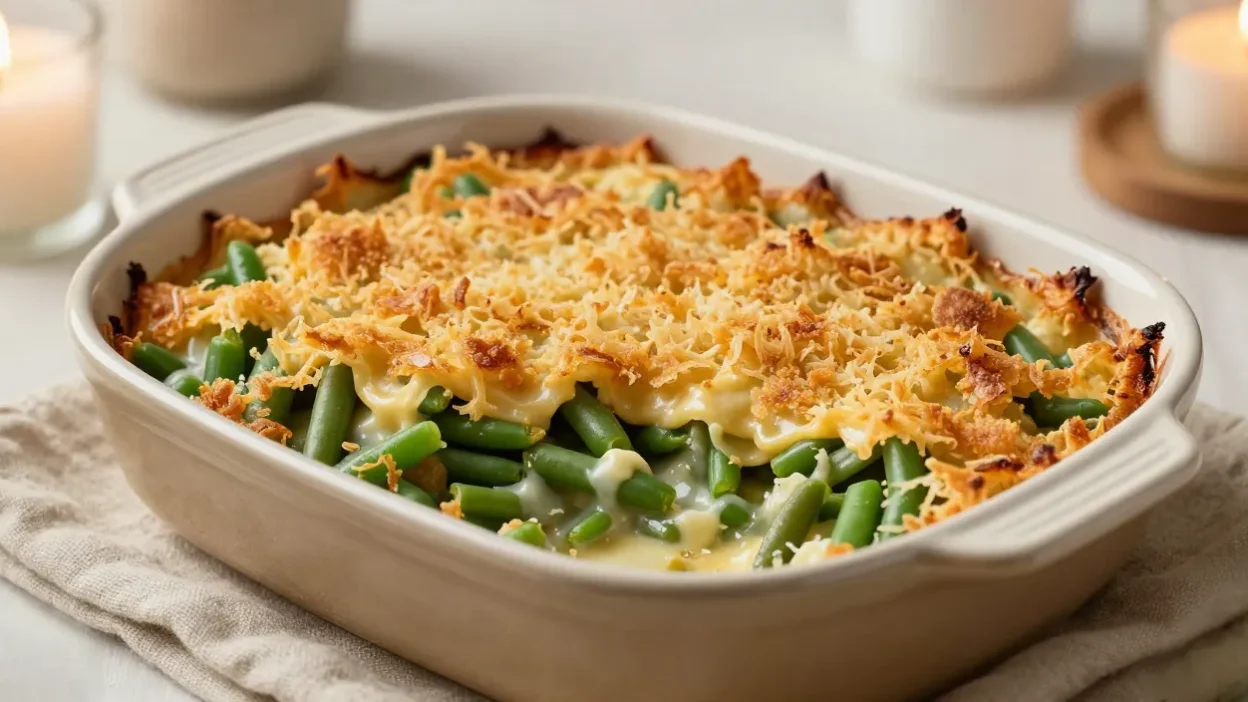
There’s something quietly nostalgic about green bean casserole. It’s not the kind of nostalgia that hits you all at once—it’s softer than that. More like a background feeling that sneaks in when you see it on the table. For a lot of people, it shows up at the same moments every year: holidays, big family dinners, those long meals where there’s a little too much food and nobody really complains about it. 🥘
It’s one of those dishes you don’t really question. It’s just… there. Familiar, expected, almost part of the setting itself. Even if it’s not your favorite, you recognize it immediately. And chances are, you’ve had some version of it more than once.
At the same time, if you think back honestly, a lot of those versions weren’t exactly unforgettable in a good way. They were fine. Just fine.
The beans were often too soft, almost like they’d given up completely. The sauce could feel heavy, sometimes a bit dull, like it was doing more work than it needed to. And everything kind of blended together into one texture, which made each bite feel the same as the last.
If you had to describe it, it might look something like this:
- soft beans without much bite
- a thick, creamy layer that didn’t really stand out
- a topping that started crisp but didn’t stay that way for long
None of that made it bad. It just made it… predictable. The kind of dish you add to your plate because it’s part of the tradition, not because you’re genuinely excited about it.
That’s why it’s actually worth coming back to it with a fresh perspective.
Because once you start making it with real ingredients—even without changing the idea too much—it shifts. Not dramatically, but enough that you notice. The flavors feel clearer. The textures start to make more sense. And suddenly, this familiar dish feels a bit more intentional.
It stops being something you just tolerate out of habit and becomes something you might actually look forward to. Which, honestly, is kind of the whole point.
🍄 Building Flavor from Scratch
One of the biggest differences in a more modern version of this dish comes down to how the flavor is built. Instead of relying on something pre-made to carry everything, you’re creating it step by step. It sounds more complicated than it really is.
In practice, it just means slowing down a little and paying attention to what’s happening in the pan.
Mushrooms are where everything starts. And they’re more important here than people sometimes expect. If you rush them, they stay bland and watery. If you give them a few extra minutes, though, they completely change.
At first, they release moisture and look a bit unremarkable. Then, slowly, that moisture cooks off. And after that, they begin to brown. That’s the moment you’re looking for.
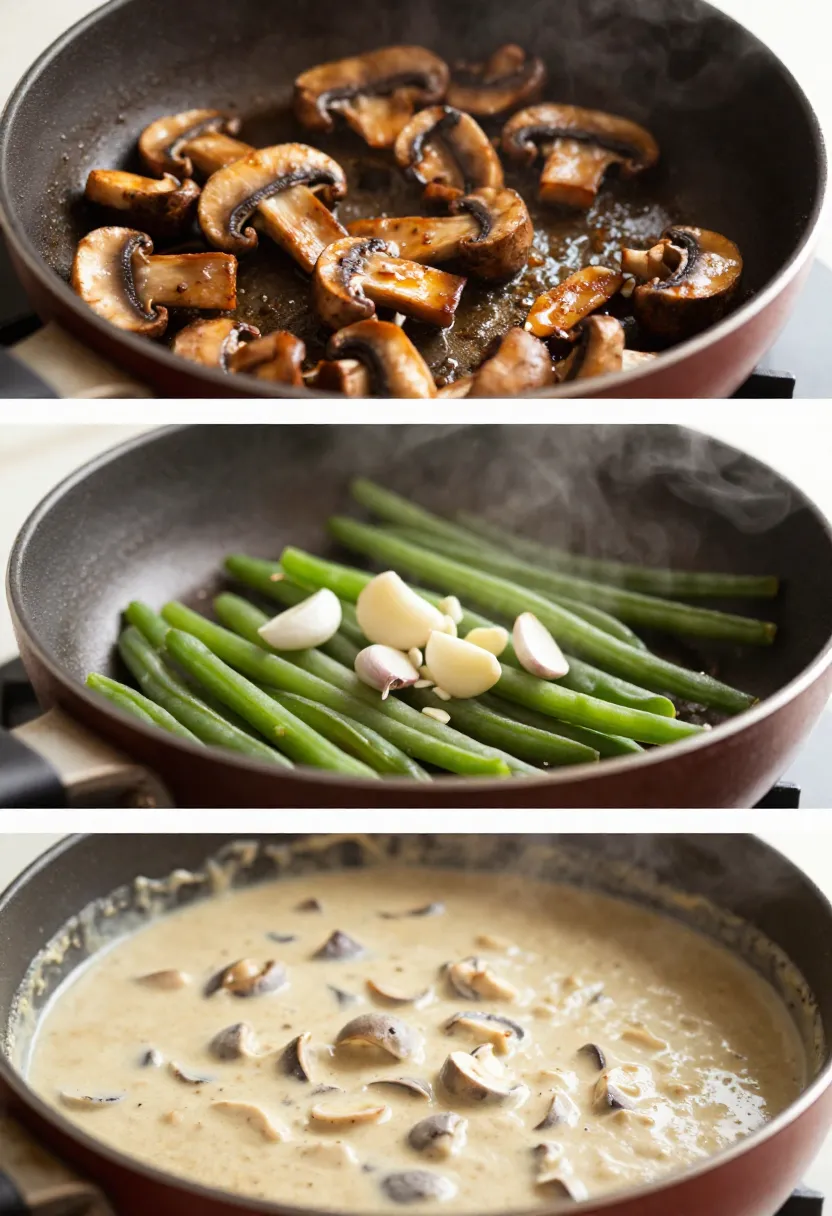
It doesn’t happen instantly, which is probably why it gets skipped so often. But once you let it happen, you get a deeper flavor—slightly rich, a little earthy, and much more interesting than anything from a can.
Garlic comes in right after that. Not too early, because it burns easily, but just at the point where the mushrooms are ready. It adds that familiar warmth and smell that instantly makes the kitchen feel more alive.
From there, the sauce comes together pretty naturally. A bit of flour helps give it structure, then broth and milk turn everything into something smooth and cohesive. Nothing fancy, just a simple combination that works.
What matters most here is balance. You don’t want the sauce to feel too thick or too heavy. It should be creamy, yes, but still light enough that it doesn’t overpower everything else on the plate.
If you look at it a bit more closely, each ingredient is doing its own small job. And when one of them is off, you can usually feel it in the final result.
| Ingredient | What it does in the pan | How it affects flavor | Texture impact | Small tip |
|---|---|---|---|---|
| Mushrooms | Release moisture, then brown | Deep, savory, slightly nutty flavor | Adds body and richness | Don’t stir too often—let them brown properly |
| Garlic | Briefly sautéed after mushrooms | Warm, aromatic, slightly sharp | Doesn’t change texture much, but lifts the whole dish | Add it late so it doesn’t burn |
| Flour | Coats ingredients and thickens liquid | Neutral, but helps carry other flavors | Creates a light, creamy structure | Cook it for a minute to remove raw taste |
| Broth | Adds liquid and depth | Boosts savory notes, makes flavor fuller | Keeps sauce from feeling too dense | Use a good-quality broth if possible |
| Milk | Softens and balances everything | Adds mild creaminess without heaviness | Makes sauce smooth and lighter | Warm it slightly before adding for smoother mixing |
| Butter / Oil | Base for cooking | Adds richness and subtle flavor | Helps everything cook evenly | Butter gives more flavor, oil is lighter |
| Cheese (optional) | Melts into the sauce | Adds saltiness and depth | Makes sauce slightly thicker and richer | Use a small amount so it doesn’t overpower |
When everything comes together, the difference is noticeable—but not in an overwhelming way. It just feels more balanced, more complete.
The sauce tastes like something you actually made, not something that came out of a container. And maybe the best part is that you can adjust it as you go. A little more salt, a bit more broth, maybe less thickness—it’s flexible.
That kind of control is what makes the whole dish feel less like a fixed recipe and more like something you’re actually cooking.
🥄 Texture Is Everything
If flavor is what draws you in, texture is what makes you keep eating. It’s one of those things people don’t always think about directly, but they notice it immediately when something feels off.
A good green bean casserole shouldn’t feel like one single layer of the same thing. That’s usually where older versions fall short. Everything blends together, and after a few bites, it gets a bit repetitive.
What you’re aiming for instead is contrast. Not anything extreme—just enough difference to keep things interesting.
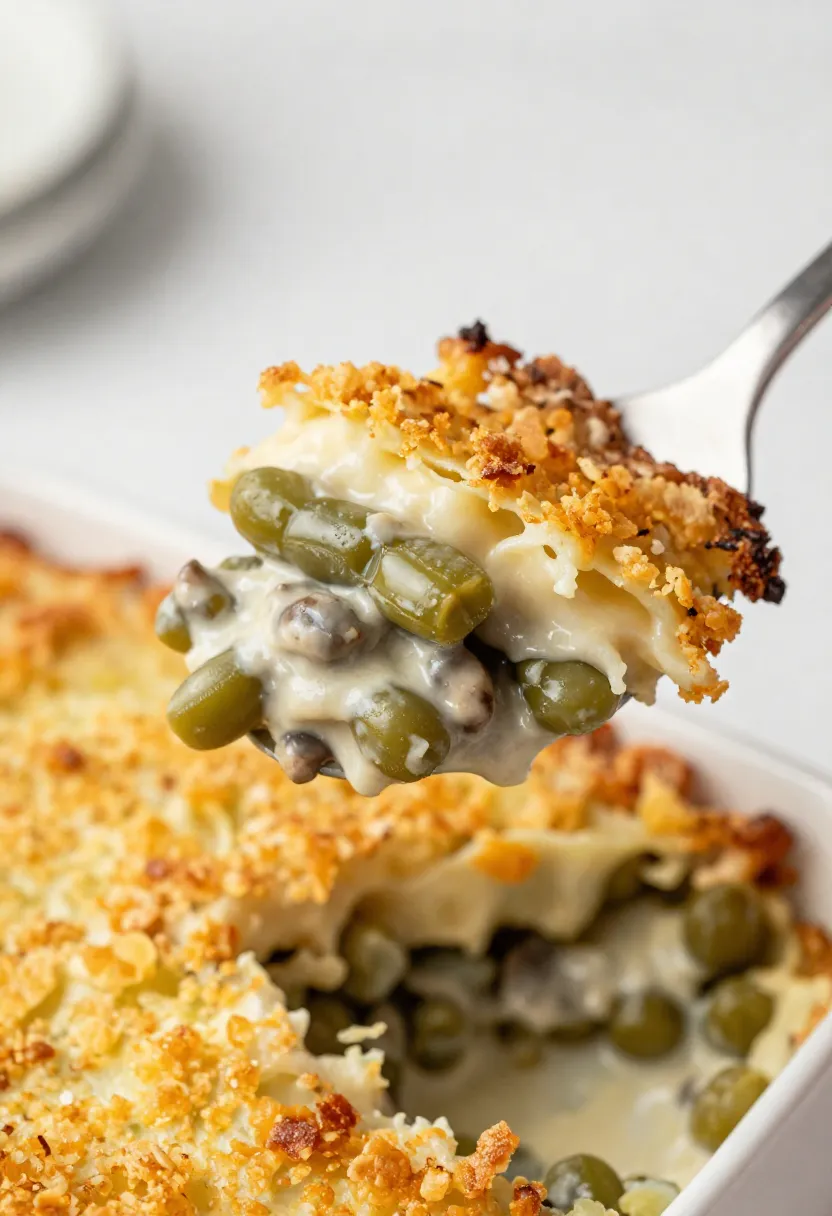
The green beans should still have a bit of structure. Not crunchy, but definitely not falling apart either. There’s a small window where they’re just right, and hitting that makes a bigger difference than you’d expect.
The sauce should sit somewhere in the middle. It’s there to bring everything together, but it shouldn’t take over. If it’s too thick, the dish feels heavy. If it’s too thin, it doesn’t quite hold everything in place. Getting that balance right is part of what makes the whole thing work.
And then there’s the topping, which might be the most noticeable element of all. That crispy layer on top changes the entire experience. Without it, the dish feels softer and a bit one-dimensional. With it, every bite has a bit of contrast.
You end up with three textures working together:
- a soft but slightly firm base from the beans
- a smooth, creamy layer from the sauce
- a crisp topping that adds just enough bite
When those elements are balanced, the dish feels more complete. It’s still simple, still familiar—but it no longer feels like something that was thrown together without much thought.
And that’s usually the moment when people go back for another spoonful, even if they didn’t expect to.
🍽️ Green Bean Casserole Recipe
This version of green bean casserole is all about keeping things simple, but doing them a bit more thoughtfully. Nothing here is complicated or overly technical, but the small details really change how the dish turns out in the end.
Instead of relying on shortcuts, you’re building everything from scratch in a way that still feels manageable. The result is a casserole that’s creamy without being heavy, full of flavor without feeling overwhelming, and—maybe most importantly—actually enjoyable to eat from the first bite to the last.
It’s the kind of dish that fits into different situations without much effort. You can serve it as part of a holiday spread, where it holds its own next to richer dishes, or make it for a quieter dinner when you want something warm and comforting but not too complicated.
There’s also something nice about how flexible it is. You can tweak small things depending on what you have—add a bit more garlic, use a different type of mushroom, skip the cheese or lean into it a bit more. It still works.
And once it comes out of the oven—bubbling slightly around the edges, with that golden, crisp topping—it just feels like something worth sitting down for. 🥘
🧾 Ingredients
For the casserole:
- 900 g fresh green beans, trimmed
- 250 g mushrooms, sliced
- 2 cloves garlic, finely chopped
- 2 tablespoons butter or olive oil
- 2 tablespoons flour
- 1½ cups broth (vegetable or chicken)
- 1 cup milk (any kind you prefer)
- ½ cup grated cheese (optional)
- Salt and black pepper to taste
For the topping:
- 1 medium onion, thinly sliced
- ½ cup breadcrumbs (panko works especially well)
- 1 tablespoon butter or oil
- A small pinch of salt
👨🍳 Instructions
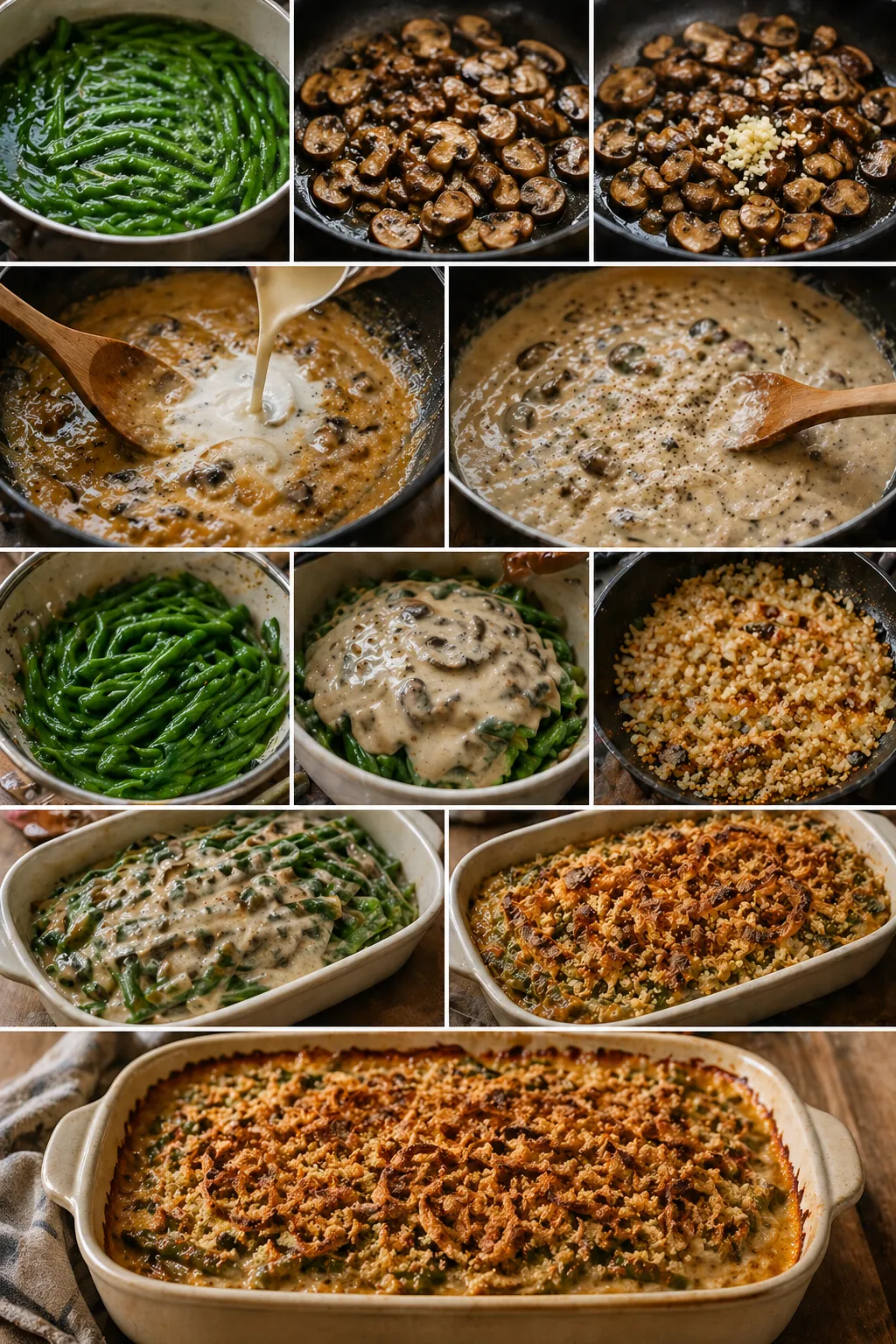
- Bring a large pot of salted water to a boil. Add the green beans and cook for 2–3 minutes, just until slightly tender. Transfer them immediately into cold water, then drain and set aside.
- In a large pan, heat butter or oil over medium heat. Add the mushrooms and cook until they release their moisture and begin to turn golden.
- Stir in the garlic and cook for about 30 seconds, just until fragrant.
- Sprinkle the flour over the mushrooms and mix well. Cook for about a minute, stirring constantly.
- Slowly pour in the broth and milk, stirring as you go to create a smooth sauce. Let it simmer gently until it thickens slightly.
- Add cheese if using, then season with salt and pepper. Taste and adjust if needed.
- In a separate pan, heat a little butter or oil and cook the sliced onions until soft and lightly golden. Add breadcrumbs and cook until everything becomes crisp.
- Combine the green beans with the sauce, making sure they are evenly coated. Transfer to a baking dish.
- Sprinkle the onion and breadcrumb mixture evenly over the top.
- Bake in a preheated oven at 180°C (350°F) for 25–30 minutes, until the casserole is bubbling and the topping is golden.
- Let it rest for a few minutes before serving.
🔥 Small Tips & Helpful Tricks
- Don’t overcook the green beans at the beginning—they’ll finish in the oven anyway.
- Let the mushrooms actually brown instead of stirring constantly. It makes a big difference.
- If the sauce feels too thick, add a splash of broth or milk before baking.
- For extra crispiness, keep the topping loose instead of pressing it down.
- Taste the sauce before assembling—it’s much easier to fix seasoning at that stage.
🔥 Making It Work for You
One of the nicest things about this dish—honestly—is how forgiving it is. Once you’ve made it once or twice, you stop thinking about it as a strict recipe and start treating it more like a base you can adjust depending on your mood, your fridge, or just… what you feel like eating that day.
You don’t have to follow everything exactly. And that’s kind of the point.
If you’re in the mood for something a bit richer, adding cheese into the sauce is an easy win. It melts into everything and gives the dish a deeper, slightly more indulgent feel. A sharper cheese works especially well here—something like cheddar adds a bit of edge, while parmesan brings that salty, slightly nutty flavor that blends really naturally with the mushrooms.
On the other hand, if you want to keep things lighter, you can skip the cheese completely. The mushrooms, broth, and garlic already do a lot of the heavy lifting in terms of flavor. Without the cheese, the dish feels a bit cleaner, maybe even a little fresher. Not less satisfying—just different.
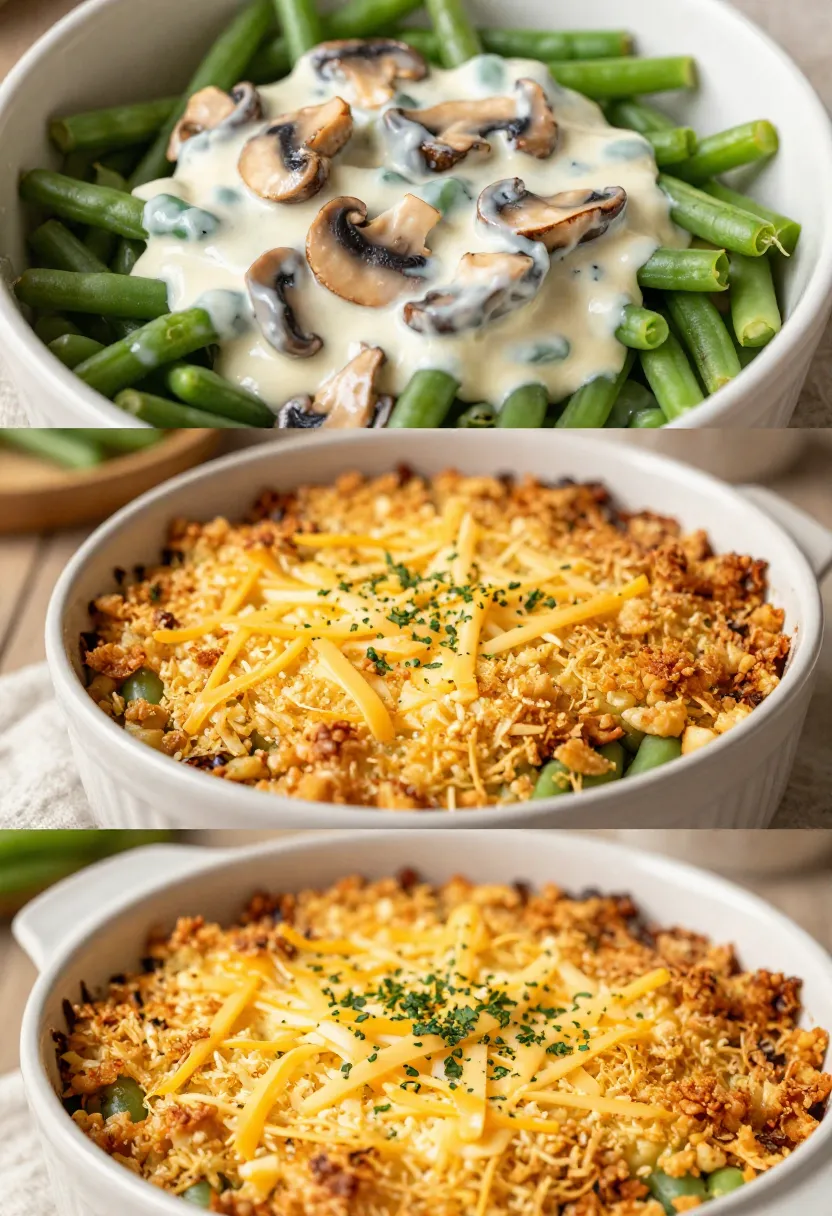
And then there’s the fun part: small tweaks that don’t change the dish entirely, but make it feel a bit more “yours.”
You can play around with things like:
- a pinch of chili flakes if you want a bit of warmth (nothing too intense, just a gentle kick)
- a squeeze of lemon juice at the very end to lift everything slightly
- a handful of fresh herbs if you happen to have them
- even a bit of crispy bacon if you’re leaning into something more savory
None of these are necessary, but they’re the kind of small additions that can shift the flavor just enough to make it feel new again.
And that’s really what makes this dish work so well—it’s flexible without being unpredictable. You can adjust it, but it still holds together.
🍽️ Serving and Presentation
Serving this casserole isn’t complicated, but a little bit of attention here makes a difference. It’s one of those dishes that looks pretty modest at first glance, but has a moment if you catch it at the right time.
The best way to serve it is straight from the oven. Not immediately—give it a few minutes—but while it’s still warm and the topping is crisp. That’s when everything feels at its best.
You’ll notice it right away:
- the edges are gently bubbling
- the top has that golden, slightly uneven color
- and there’s that warm aroma that fills the kitchen before you even set it on the table
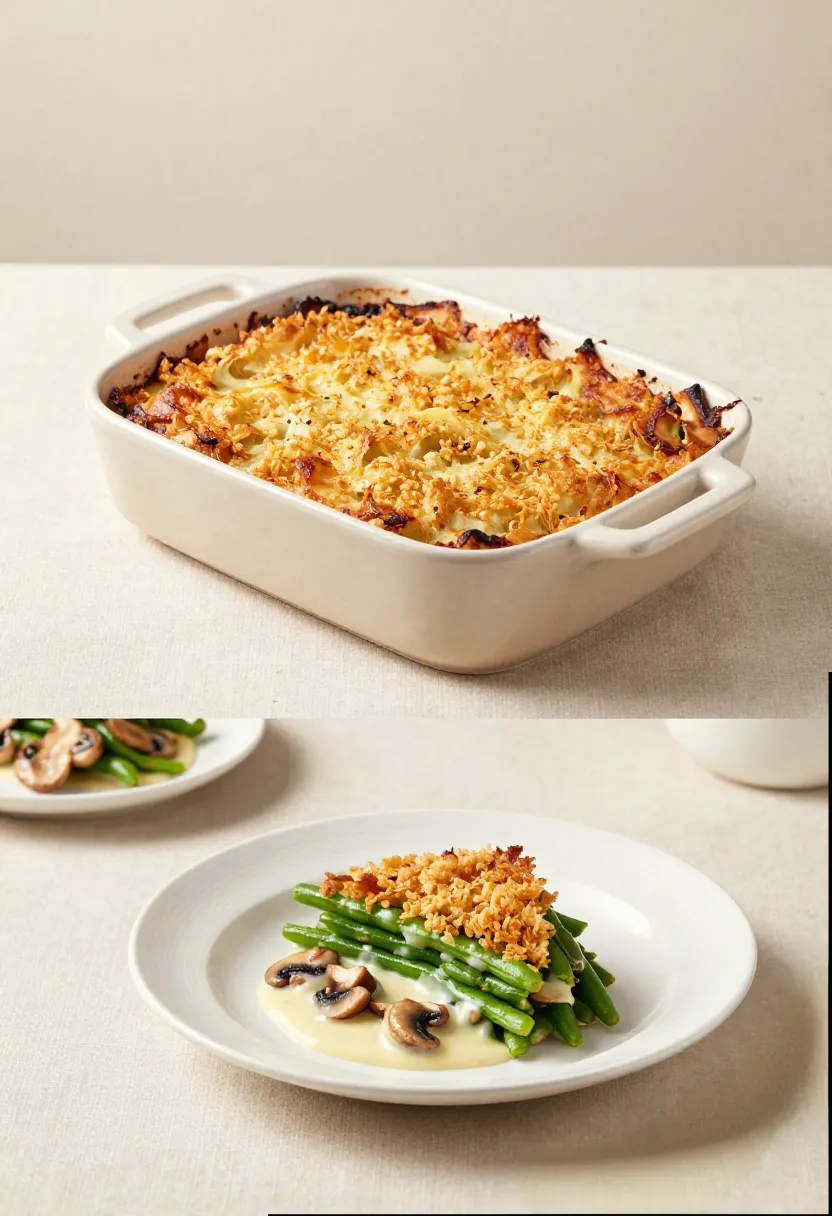
That moment? It’s part of the experience, even if people don’t say it out loud.
As for what to serve it with, it’s pretty flexible. It naturally fits alongside heavier, comforting dishes—roasted meats, potatoes, anything that leans into that cozy, home-cooked feeling. But at the same time, it doesn’t feel out of place next to something simpler either.
It can even stand on its own more than you’d expect. Especially if you’ve balanced the flavors well, it doesn’t just feel like a “side”—it feels complete.
If you want to make it look a bit more put-together without overthinking it, a small finishing touch goes a long way. A sprinkle of fresh herbs—parsley, maybe a bit of thyme—adds just enough color to break up the surface and makes the whole dish feel fresher.
Nothing fancy. Just a small detail that people tend to notice, even if they don’t quite realize why.
💛 A Dish Worth Keeping
Some recipes stay in rotation because they’re easy to make. You don’t have to think too much, you don’t need special ingredients, and you can almost cook them on autopilot. Others stick around for a different reason—they’re tied to specific moments. Family dinners, holidays, certain people, certain places. You don’t just remember the dish, you remember everything around it.
This one quietly does both, but in a way that feels a bit more current.
What makes this version stand out isn’t that it completely changes the idea of a green bean casserole. It doesn’t try to reinvent it or turn it into something unfamiliar. Instead, it focuses on improving the small things that usually get overlooked.
The structure stays the same—green beans, a creamy base, a crisp topping—but the details feel more deliberate. The beans keep their texture. The sauce has more depth without feeling heavy. The topping actually adds contrast instead of just sitting on top.
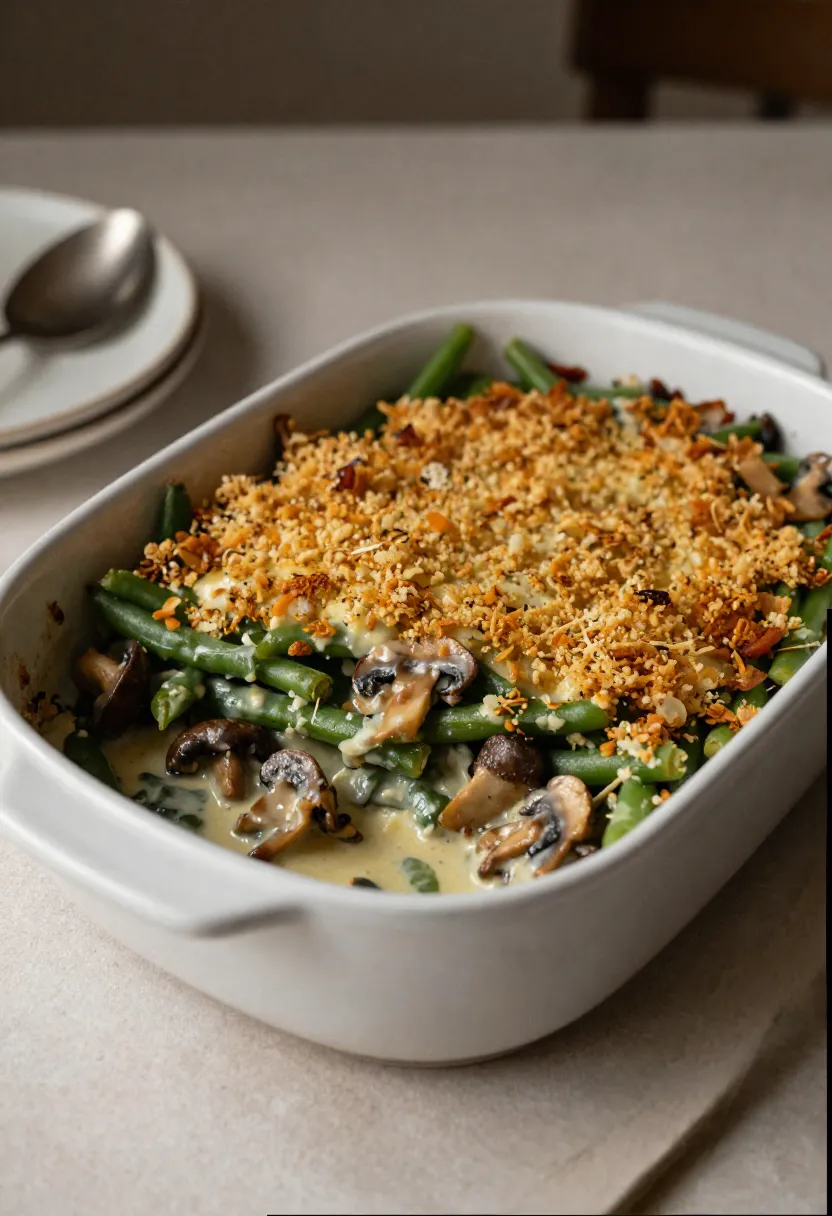
It’s not a dramatic transformation. It’s more subtle than that. But once you notice it, it’s hard to ignore.
The flavors come through more clearly. You can actually tell what you’re eating, instead of everything blending together. The textures feel more balanced, so each bite has a bit of variation. And overall, the dish feels like it was made with intention, not just assembled out of habit.
That kind of change doesn’t need a big explanation. Most people won’t sit there analyzing it—they’ll just notice that it tastes better, or that they’re going back for another spoonful without really thinking about it.
Another thing that tends to happen over time is that the recipe becomes more flexible in your hands. The first time, you might follow everything closely. The second time, maybe you adjust the seasoning a bit. After that, you start making small decisions without even realizing it—slightly more mushrooms, a different type of cheese, maybe a bit less sauce.
Eventually, it stops feeling like a set of instructions and starts feeling familiar. Not in the sense that it’s boring, but in the sense that you understand it. You know how it should look, how it should smell, how thick the sauce should be. And that kind of familiarity makes it easier to come back to.
There’s also something to be said about how this dish fits into different situations. It works just as well as part of a larger meal as it does on its own. It doesn’t demand attention, but it holds up when people do notice it. That balance makes it surprisingly reliable.
If you had to sum it up, it’s probably this:
- it keeps the comfort of the original
- it improves the parts that used to fall flat
- and it stays simple enough that you’ll actually want to make it again
And that last part matters more than anything.
Because in the end, the recipes that last aren’t just the ones that taste good once. They’re the ones you come back to without hesitation. The ones that fit into your routine without feeling repetitive.
This feels like one of those recipes.
Not something you try once and forget—but something that slowly becomes part of how you cook.