There’s a moment most people recognize — you get your blood work back, your doctor circles a number, and suddenly the word cholesterol feels a lot more personal than it used to.
Maybe your levels are borderline. Maybe they’ve been creeping up for a couple of years. Or maybe you’re simply being proactive, which, honestly, is the smartest place to be.
Here’s the thing: cholesterol isn’t the villain it’s often made out to be. Your body actually needs it — to build cell membranes, produce hormones, and keep your nervous system running. The problem isn’t cholesterol itself. It’s the balance. Too much of the wrong kind, not enough of the right kind, and over time your arteries start paying the price.
The good news? That balance is something you have a real say in — and food is one of the most powerful levers you can pull.
This isn’t about following a restrictive diet or giving up everything you enjoy. It’s about understanding what’s actually happening inside your body, making smarter choices at the grocery store and the dinner table, and building a few key habits that compound over time.
What Cholesterol Really Is

Most of us grew up hearing that cholesterol is bad — something to fear, to avoid, to keep as low as possible. But that’s only half the story, and the incomplete version has caused a lot of unnecessary confusion over the years.
Cholesterol is a waxy, fat-like substance produced naturally by your liver. Every single day, your body makes it — because it has to. Cholesterol is essential for producing vitamin D, building the protective sheath around your nerve cells, and synthesizing hormones like estrogen, testosterone, and cortisol. Without it, your body simply wouldn’t function.
The issue isn’t the cholesterol itself. It’s the type — and the amount — that circulates in your blood.
LDL vs. HDL — The Simple Version
You’ve probably seen these two abbreviations on a lab report and wondered what they actually mean.
LDL (low-density lipoprotein) is often called “bad” cholesterol — not because it’s inherently harmful, but because when there’s too much of it, it tends to deposit along the walls of your arteries. Over time, those deposits harden into plaques that narrow your blood vessels and restrict blood flow. That’s when things get dangerous.
HDL (high-density lipoprotein) is the “good” kind. Think of it as a cleanup crew — HDL travels through your bloodstream, picks up excess cholesterol, and carries it back to the liver to be broken down and removed. Higher HDL levels are generally linked to a lower risk of heart disease.
Then there’s triglycerides — another type of fat in your blood that often gets mentioned alongside cholesterol. They’re not the same thing, but they’re related. High triglycerides combined with low HDL is a pattern your doctor will definitely want to address.
A simple way to remember it:
- LDL → Less is better
- HDL → Higher is better
- Triglycerides → Lower is better
When Should You Start Paying Attention?
This is where many people get caught off guard. High cholesterol has no symptoms. You won’t feel it building up. There’s no warning headache, no obvious sign that something is off — which is exactly why routine blood work matters more than most people realize.
General guidelines suggest getting your cholesterol checked:
- Starting at age 20, and every 4–6 years if your levels are normal
- More frequently if you have a family history of heart disease, high blood pressure, diabetes, or if you smoke
- At any age if your doctor flags other cardiovascular risk factors
It’s also worth knowing that genetics play a real role here. Some people eat well, exercise regularly, and still struggle with elevated LDL — a condition called familial hypercholesterolemia. If that sounds familiar, lifestyle changes still help, but they may not be enough on their own. More on that later.
For everyone else, the everyday choices you make — starting with what’s on your plate — have a measurable, meaningful impact on where your numbers land.
The Foods That Work Against You (And How to Swap Them Out)
Before we talk about all the things you can eat — and there are plenty — it helps to understand what’s actually driving your LDL up in the first place. Because for most people, it’s not one dramatic dietary sin. It’s the accumulation of small, everyday habits that quietly tip the balance in the wrong direction.
The good news is that once you see the patterns, the fixes feel a lot more manageable than you’d expect.
Saturated Fats — The Main Culprit
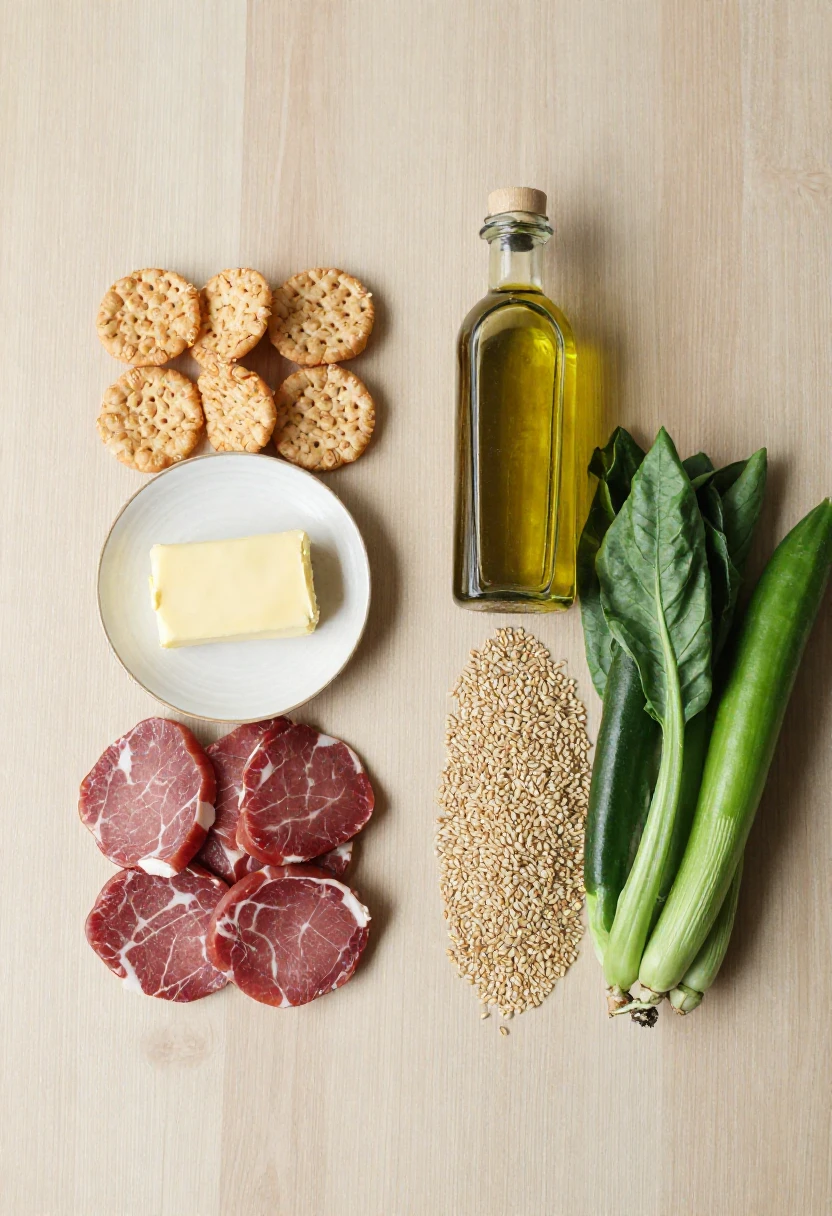
If there’s one dietary factor most consistently linked to raised LDL cholesterol, it’s saturated fat. These are the fats that are solid at room temperature — think butter, lard, the marbled fat in red meat, and the creamy richness of full-fat dairy.
Saturated fat signals your liver to produce more LDL cholesterol and slows down your body’s ability to clear it from the bloodstream. The result? Those numbers on your lab report creep upward over time.
Common sources that tend to fly under the radar:
- Fatty cuts of beef, lamb, and pork — especially processed versions like sausages, bacon, and deli meats
- Full-fat dairy — butter, cream, hard cheeses, whole milk
- Coconut oil and palm oil — despite their “health food” reputation, both are extremely high in saturated fat
- Baked goods and pastries — croissants, biscuits, and most store-bought cookies are loaded with it
This doesn’t mean you need to eliminate these foods entirely. But if they’re showing up at most meals, that’s worth looking at.
Processed Foods and Trans Fats
Trans fats are in a category of their own — and not in a good way. They’re the result of a process called hydrogenation, where liquid vegetable oils are hardened to extend shelf life and improve texture. The outcome is a fat that simultaneously raises LDL and lowers HDL. A double hit in the wrong direction.
Many countries have now banned or heavily restricted artificial trans fats in food manufacturing — but they haven’t disappeared entirely. You’ll still find them hiding in:
- Some margarines and spreads
- Packaged snacks — crackers, microwave popcorn, chips
- Fried fast food — particularly from places using partially hydrogenated oils
- Commercially baked goods — certain cakes, pies, and frosted products
The label to look for? “Partially hydrogenated oils” in the ingredients list. If you see it, put it back.
Beyond trans fats, heavily processed foods tend to be high in refined carbohydrates and added sugars — which contribute to elevated triglycerides and lower HDL over time. It’s rarely just one ingredient doing the damage; it’s the overall pattern.
Smarter Swaps for Everyday Meals
Here’s where things get practical. You don’t need to overhaul your entire kitchen — small, consistent swaps are what actually stick.
| Instead of… | Try this… |
|---|---|
| Butter for cooking | Extra virgin olive oil |
| Full-fat cheese in abundance | Smaller amounts of strong-flavored cheese |
| Processed deli meats | Grilled chicken, turkey, or legume-based fillings |
| Store-bought pastries | Homemade oat-based bakes with less saturated fat |
| Cream-based sauces | Tomato, legume, or vegetable-based sauces |
| Fatty beef mince | Lean mince, or try lentils for half the portion |
None of these swaps require a dramatic lifestyle shift. They’re the kind of changes you make gradually — one meal at a time — and after a few weeks, they just become how you cook.
The goal isn’t perfection. It’s consistency. A mostly good diet, sustained over months, will always outperform a perfect diet that lasts two weeks.
The Foods That Actually Help Lower Cholesterol
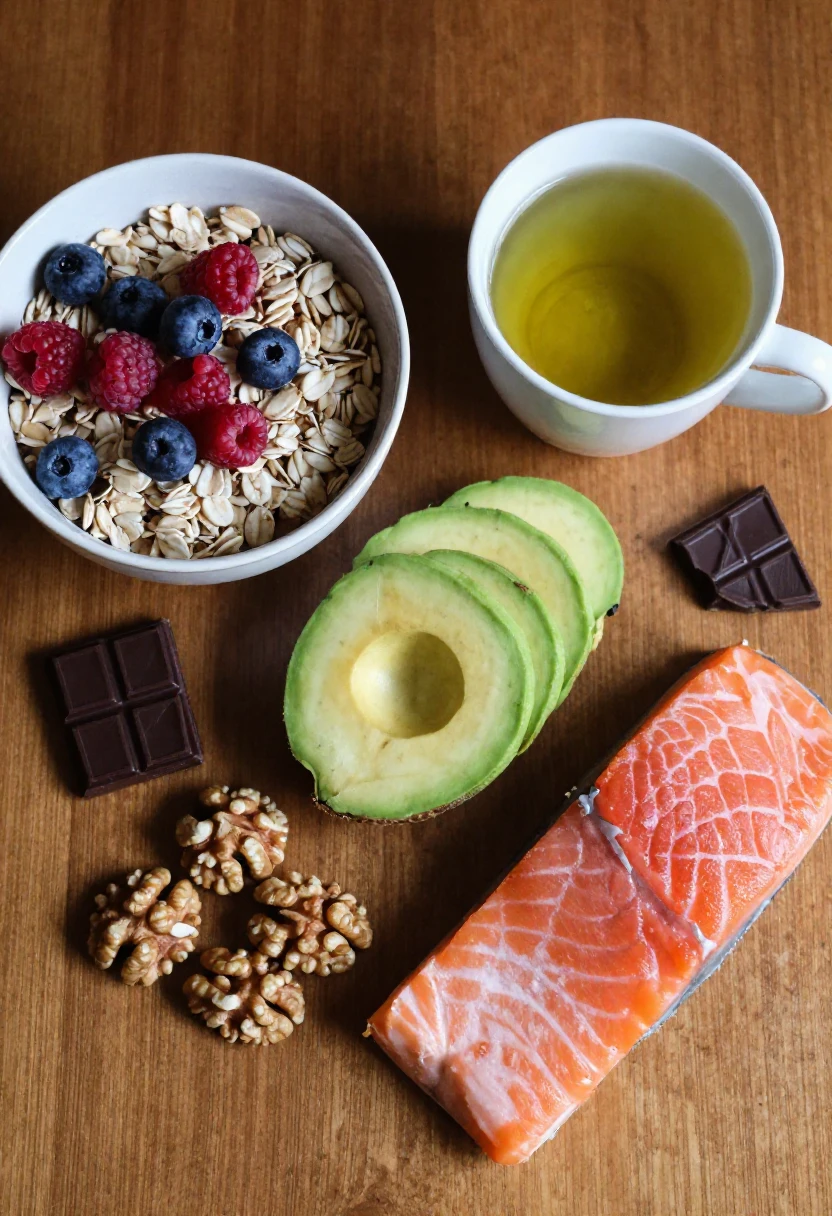
This is where eating for your heart starts to feel less like a restriction and more like an opportunity. Because the list of foods that genuinely support healthy cholesterol levels is long, varied, and — when you cook with them well — deeply satisfying.
No bland chicken breast and steamed broccoli required.
Soluble Fiber — Your Best Friend
If there’s one nutritional concept worth understanding when it comes to cholesterol, it’s soluble fiber. Unlike insoluble fiber (which helps with digestion and keeps things moving), soluble fiber dissolves in water and forms a thick, gel-like substance in your gut.
That gel is remarkably useful. It binds to cholesterol particles in your digestive tract and carries them out of your body before they can be absorbed into your bloodstream. Less absorption means less circulating LDL — simple as that.
The research here is solid. Studies consistently show that increasing soluble fiber intake produces a meaningful reduction in LDL cholesterol over time — without any medication required.
Best food sources of soluble fiber:
- Oats and oat bran — the beta-glucan in oats is one of the most studied cholesterol-lowering compounds in food
- Barley — another excellent source of beta-glucan, great in soups and grain salads
- Legumes — lentils, chickpeas, black beans, kidney beans — filling, affordable, and genuinely powerful
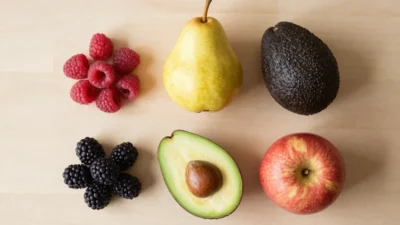
- Apples, pears, and citrus fruits — pectin, the soluble fiber in these fruits, has a notable LDL-lowering effect
- Brussels sprouts, carrots, and sweet potatoes — often overlooked, but rich in soluble fiber
A bowl of oat porridge in the morning with a handful of berries isn’t just a cozy breakfast. It’s genuinely working for your cholesterol before you’ve even started your day.
Omega-3 Fatty Acids and Healthy Fats
Not all fats raise cholesterol. Some actively improve your lipid profile — particularly omega-3 fatty acids and monounsaturated fats.
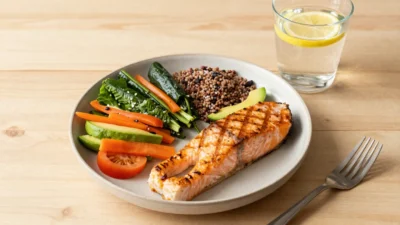
Omega-3s are most famous for their anti-inflammatory properties, but they also help lower triglycerides and can modestly raise HDL levels. The most bioavailable form comes from fatty fish:
- Salmon — wild or farmed, it’s one of the richest sources
- Mackerel — often underrated, extremely affordable, and loaded with omega-3s
- Sardines — small but mighty; great on toast or tossed into a salad
- Herring and trout — excellent options if you want variety
Aim for two to three servings of fatty fish per week. If fish isn’t your thing, flaxseeds, chia seeds, and walnuts provide a plant-based form of omega-3 (ALA), though the conversion rate to active omega-3s in the body is less efficient.
Nuts, Avocados, and Olive Oil
These three deserve their own moment because they’re among the most well-researched cholesterol-friendly foods in existence — and they make food taste better, which is always a bonus.
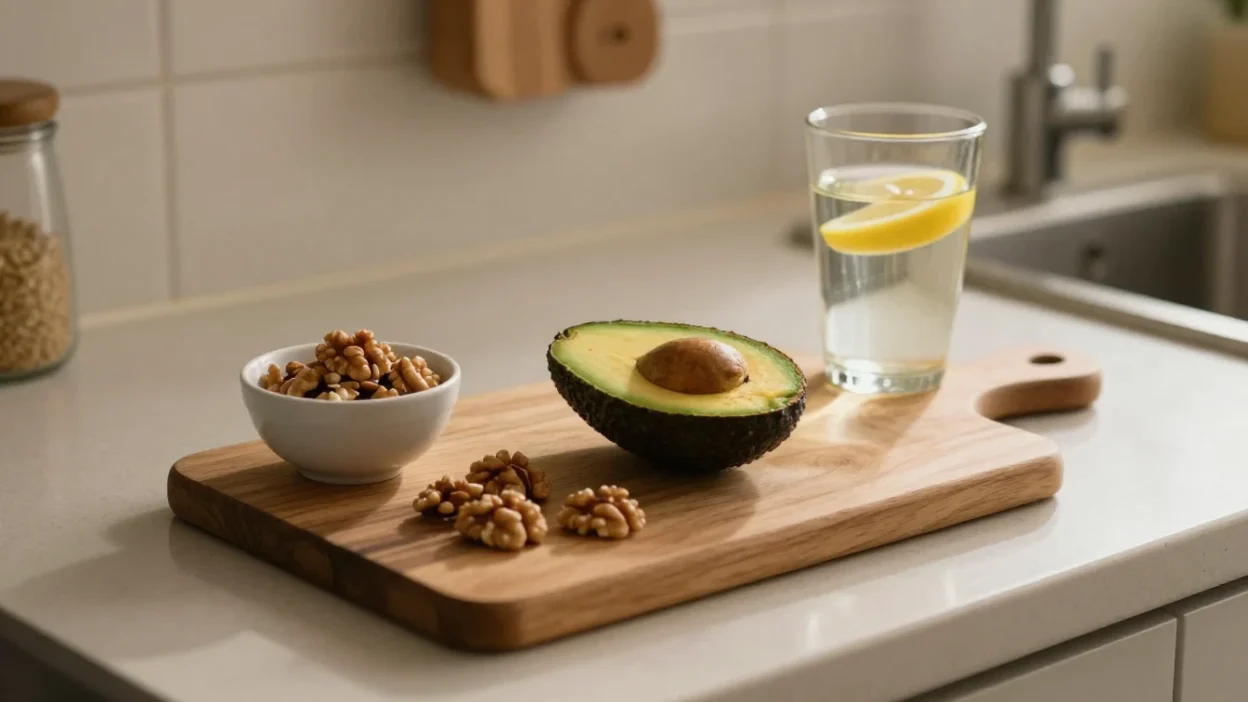
Nuts — particularly walnuts, almonds, and pistachios — are rich in unsaturated fats, fiber, and plant sterols. Multiple studies show that eating a small handful of nuts daily can lower LDL by several percentage points. Just keep portions reasonable; they’re calorie-dense.
Avocados are one of the few fruits that are primarily fat — and that fat is predominantly oleic acid, the same monounsaturated fat found in olive oil. Regular avocado consumption has been linked to lower LDL and higher HDL. Add them to salads, spread them on whole grain toast, or blend them into a smoothie for creaminess without dairy.
Extra virgin olive oil is the cornerstone of heart-healthy cooking for good reason. It’s rich in monounsaturated fats and polyphenols — antioxidant compounds that protect LDL particles from oxidation (oxidized LDL is particularly harmful to arterial walls). Use it generously for cooking, dressings, and finishing dishes.
Plant Power: Beans, Legumes, and Whole Grains
If you eat meat at most meals, shifting even a couple of those meals each week toward plant-based protein sources can make a noticeable difference to your cholesterol over time.
Beans and legumes are exceptional. They’re high in soluble fiber, low in saturated fat, and packed with protein. Lentil soup, white bean stew, chickpea curry — these aren’t compromise meals. They’re genuinely nourishing, and your arteries will thank you.
Whole grains — brown rice, quinoa, farro, whole wheat bread and pasta — retain the fiber-rich bran that refined grains lose during processing. That fiber matters. It also helps stabilize blood sugar, which indirectly supports a healthier triglyceride level.
A simple rule of thumb: if it’s white and refined, there’s probably a whole grain version that does more for your health — and often tastes more interesting too.
Bonus: Dark Chocolate and Green Tea
Yes, really.
Dark chocolate (70% cacao or higher) contains flavonoids — plant compounds that have been shown to modestly improve HDL and reduce LDL oxidation. This isn’t a green light to eat half a bar every evening, but a square or two of good quality dark chocolate after dinner? Genuinely fine. Possibly beneficial.
Green tea is rich in catechins, a type of antioxidant that research suggests can lower total cholesterol and LDL. It’s not a dramatic effect, but swapping an afternoon coffee for a cup of green tea is an easy, pleasant habit that adds up over time.
Sometimes the foods that support your health are also the ones that make life a little more enjoyable. That’s worth paying attention to.
Beyond the Plate — Lifestyle Habits That Move the Needle
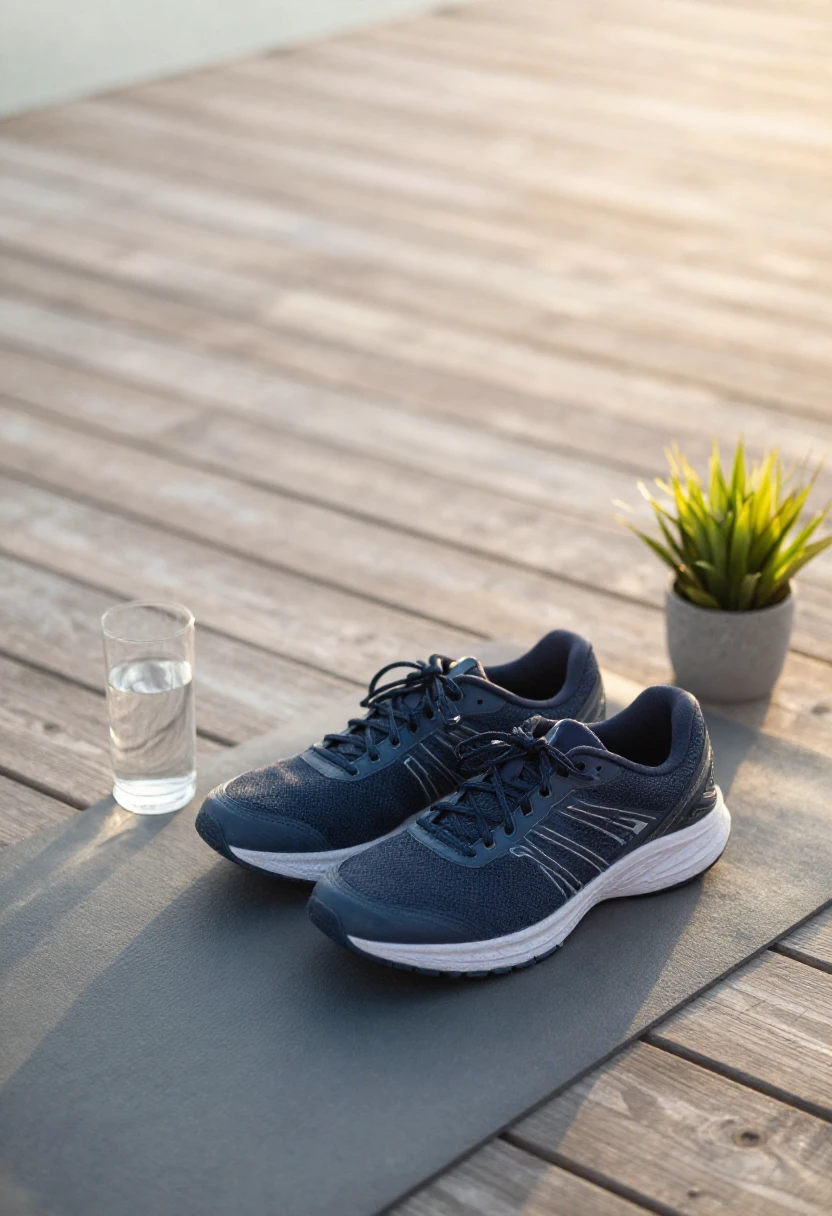
Food is the foundation — but it’s not the whole picture. Your cholesterol levels are shaped by more than just what’s on your plate. How much you move, how well you sleep, how you manage stress, and a few other daily habits all play a measurable role in where your numbers land.
The encouraging part? These factors work together. Improve one, and you often improve the others.
Movement Matters More Than You Think
You don’t need to train for a marathon. But you do need to move — consistently, and with enough intensity to get your heart rate up.
Regular physical activity is one of the most effective natural tools for improving your cholesterol profile. Here’s what the research shows:
- Aerobic exercise — brisk walking, cycling, swimming, jogging — raises HDL cholesterol, sometimes significantly
- It also lowers triglycerides, which are closely tied to cardiovascular risk
- LDL response varies by person, but regular exercise generally improves the quality of LDL particles, making them less likely to cause arterial damage even if the total number doesn’t drop dramatically
The current guidance from most health organizations points to at least 150 minutes of moderate-intensity aerobic activity per week — that’s about 30 minutes, five days a week. If that sounds like a lot, start smaller. Even a 20-minute walk after dinner has genuine cardiovascular benefits when done regularly.
Resistance training — weights, bodyweight exercises, resistance bands — also contributes. It improves insulin sensitivity, helps manage body weight, and supports healthy triglyceride levels. You don’t need to choose between cardio and strength; a mix of both is ideal.
One thing that often gets overlooked: sitting for long, unbroken stretches is independently harmful, even if you exercise. If you have a desk job, building in short movement breaks throughout the day — even just standing up and walking for five minutes every hour — makes a real difference.
Stress, Sleep, and Cholesterol — The Underrated Connection
This is the part most cholesterol articles skip over, but it deserves real attention.
Chronic stress triggers the release of cortisol and adrenaline — hormones that, among other things, prompt your liver to produce more cholesterol. Long-term stress is also strongly associated with inflammatory behaviors: eating more processed food, sleeping poorly, drinking more alcohol, moving less. The cholesterol impact is both direct and indirect.
If your stress levels are consistently high, no amount of oatmeal will fully compensate. Managing stress isn’t a luxury — it’s genuinely part of heart health.
Practical approaches that have evidence behind them:
- Regular physical activity (which also addresses the previous section — two for one)
- Mindfulness and breathing practices — even 10 minutes of focused breathing daily can measurably lower cortisol over time
- Time in nature — underestimated, but consistently shown to reduce stress hormones
- Social connection — loneliness and isolation are real cardiovascular risk factors
Sleep is equally important and equally neglected. Poor sleep quality — less than six hours, or fragmented, unrestorative sleep — is linked to higher LDL, lower HDL, and elevated triglycerides. It also drives cortisol up, increases appetite for high-fat and high-sugar foods, and reduces motivation to exercise.
Seven to nine hours of quality sleep per night isn’t indulgent. It’s one of the most powerful metabolic regulators your body has — and it costs nothing.
If you’re eating well and exercising but still not seeing the results you expect, sleep and stress are worth examining honestly.
Alcohol and Smoking — What the Research Says
Alcohol has a complicated relationship with cholesterol. Moderate consumption — particularly of red wine — was long associated with higher HDL levels, and some studies suggested a protective cardiovascular effect. More recent and more rigorous research has complicated that picture considerably.
The current scientific consensus is shifting toward no truly safe level of alcohol for overall health. While light drinking may not dramatically worsen your cholesterol, it contributes to elevated triglycerides, liver stress, and caloric excess — none of which support a healthy lipid profile. If you drink, keeping it genuinely moderate (and not compensating by drinking more on weekends) is the sensible position.
Smoking is more straightforward: it directly lowers HDL cholesterol — sometimes dramatically — and causes oxidative damage to LDL particles, making them far more likely to contribute to arterial plaque. The cardiovascular case for quitting is overwhelming, and cholesterol improvement is one of the measurable benefits that begins within weeks of stopping.
If you smoke and are concerned about your cholesterol, quitting is the single highest-impact change you can make — more than any dietary adjustment.
How to Build a Cholesterol-Friendly Eating Pattern (Not a Diet)
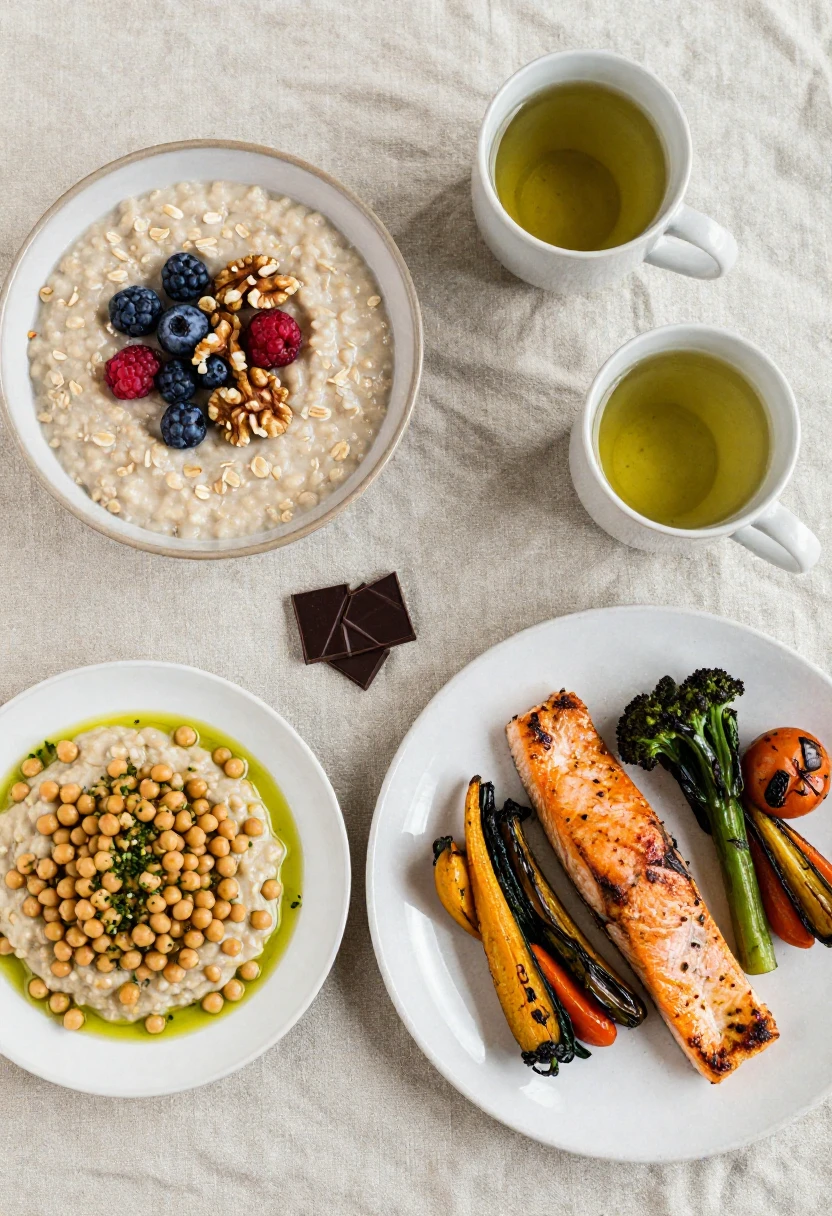
Here’s where a lot of well-meaning health advice falls apart: it tells you what to eat but doesn’t help you figure out how to actually eat that way — consistently, enjoyably, and without feeling like you’re on a permanent program of self-denial.
The word “diet” implies something temporary. Something you go on and come off. What actually moves the needle on cholesterol is an eating pattern — a way of approaching food that becomes your default, not your effort.
The difference matters more than it sounds.
The Mediterranean Approach
If there’s one way of eating that has more cardiovascular research behind it than any other, it’s the Mediterranean diet — though calling it a diet almost undersells it. It’s really just a description of how people in certain regions of the world have eaten for generations, and it happens to be remarkably good for your heart.
The core principles are straightforward:
- Olive oil as the primary fat — used generously for cooking and dressing
- Abundant vegetables and legumes — the base of most meals, not a side thought
- Whole grains — bread, pasta, and grains in their less processed forms
- Fish and seafood — featured several times a week
- Moderate amounts of poultry, eggs, and dairy — present but not dominant
- Red meat eaten occasionally — not as an everyday staple
- Fresh fruit as the default dessert — with sweets saved for special occasions
- Nuts and seeds as everyday snacks
- Herbs and spices for flavor — meaning less need for salt and heavy sauces
What makes this pattern so effective for cholesterol isn’t one single food — it’s the combination. High in soluble fiber, rich in monounsaturated and omega-3 fats, low in saturated fat, anti-inflammatory by nature. The whole is genuinely greater than the sum of its parts.
You don’t need to move to Crete to eat this way. You just need to let these principles quietly reshape how you stock your kitchen and plan your meals.
Small Daily Shifts That Add Up
Wholesale dietary overhauls rarely stick. What does stick is the aggregation of small changes — each one almost trivially easy, but powerful when compounded over months.
Here are shifts worth making one at a time:
- Start your day with oats instead of a sugary cereal or pastry — you’re getting beta-glucan before 9am
- Add a handful of nuts to your afternoon snack instead of reaching for something packaged
- Switch your cooking oil to extra virgin olive oil across the board
- Eat one plant-based dinner per week — then two, then three. Lentil soup, bean stew, chickpea curry — these are satisfying meals, not consolation prizes
- Add a can of beans or lentils to dishes you already make — soups, stews, pasta sauces, grain bowls
- Swap white bread and pasta for whole grain versions — a barely noticeable change with a meaningful fiber upgrade
- Keep fruit visible and accessible — people eat what’s easy to reach; put the apples on the counter, not the biscuits
- Default to water or green tea between meals instead of juice or sweetened drinks
None of these feel dramatic. That’s the point. You’re not overhauling your identity as an eater — you’re just nudging your defaults in a better direction, repeatedly, until they become unremarkable habits.
A Sample Day of Eating for Heart Health
Sometimes it helps to see what this actually looks like on a plate — not as a rigid meal plan, but as a realistic illustration of how these principles come together in an ordinary day.
Breakfast Oat porridge made with water or low-fat milk, topped with sliced banana, a tablespoon of ground flaxseed, and a small handful of walnuts. A cup of green tea on the side.
Why it works: beta-glucan from oats, omega-3s from flaxseed, healthy fats and fiber from walnuts, catechins from green tea.
Lunch A large salad with mixed greens, chickpeas, cucumber, cherry tomatoes, roasted red peppers, and a dressing of extra virgin olive oil and lemon juice. A slice of whole grain sourdough on the side.
Why it works: soluble fiber from chickpeas, monounsaturated fat from olive oil, whole grain fiber from the bread, abundant vegetables.
Afternoon snack A small apple and a handful of almonds.
Why it works: pectin from the apple, unsaturated fats and plant sterols from almonds — and it actually keeps you full until dinner.
Dinner Baked salmon fillet with a side of roasted sweet potato and steamed broccoli, drizzled with olive oil and scattered with fresh herbs. A small square of dark chocolate after.
Why it works: omega-3s from salmon, soluble fiber from sweet potato and broccoli, flavonoids from dark chocolate.
This isn’t a spartan eating plan. It’s genuinely good food — satisfying, varied, and built around ingredients that actively support your cholesterol profile. The goal is for a day like this to feel normal, not virtuous.
When Food Isn’t Enough — Knowing When to See a Doctor

Everything we’ve covered so far is genuinely powerful. A diet rich in soluble fiber and healthy fats, regular movement, better sleep, managed stress — these changes can produce real, measurable improvements in your cholesterol levels. For many people, they’re enough.
But not for everyone.
And knowing when lifestyle changes alone aren’t sufficient isn’t a failure. It’s just being honest with your biology.
There are situations where the conversation needs to move beyond the kitchen and into a doctor’s office:
Your levels are significantly elevated. If your LDL is consistently above 190 mg/dL (or 4.9 mmol/L), that’s a level where lifestyle intervention alone is unlikely to bring things into a safe range — and the cardiovascular risk is serious enough that waiting to see if diet helps isn’t the right approach.
You have familial hypercholesterolemia. This is a genetic condition that causes extremely high LDL from birth, regardless of how well you eat. It affects roughly 1 in 250 people — far more common than most realize — and it almost always requires medication alongside lifestyle changes. If close family members have had heart attacks at a young age, or if your cholesterol has been high since you were a child, this is worth discussing with your doctor.
You have other cardiovascular risk factors. High cholesterol doesn’t exist in isolation. If you also have high blood pressure, type 2 diabetes, are a smoker, or have already had a cardiac event, the threshold for medical intervention is lower. Your doctor will look at your overall cardiovascular risk profile, not just a single number.
You’ve made consistent lifestyle changes and your numbers haven’t moved. Three to six months of genuine dietary effort and increased activity is a reasonable trial period. If your LDL remains elevated after that, it’s time to have a frank conversation about whether medication — most commonly a statin — makes sense for you.
A word on statins, because they carry more stigma than they deserve.
Statins are among the most studied medications in existence. For people with genuinely elevated cardiovascular risk, the evidence for their benefit is substantial. They’re not the right choice for everyone — and they shouldn’t be the first line of response for mildly elevated cholesterol in an otherwise healthy person. But for those who need them, they work. Taking a statin doesn’t mean your lifestyle efforts don’t matter; in fact, the combination of medication and a heart-healthy lifestyle consistently produces better outcomes than either alone.
The goal of everything in this article is to give you the best possible foundation — so that if you do need medical support, you’re coming to it from a position of strength, not starting from zero.
Your doctor is your partner in this, not a last resort. Regular blood work, honest conversations about your habits, and a willingness to adjust your approach based on what the numbers actually show — that’s what long-term cardiovascular health looks like in practice.
Conclusion
Cholesterol management doesn’t have to feel overwhelming — and it certainly doesn’t require you to eat joylessly or overhaul your entire life overnight.
What it does require is consistency. Small, deliberate choices made repeatedly over time: a bowl of oats instead of a pastry, olive oil instead of butter, a walk after dinner instead of collapsing on the sofa, one more night of decent sleep. None of these feel heroic in the moment. But collectively, over weeks and months, they shift your biology in a meaningful direction.
The framework is simple: reduce the foods that raise LDL, increase the foods that lower it, move your body regularly, manage stress and sleep, and know when to ask for professional help. That’s it. Everything else is detail.
Your heart is remarkably responsive to how you treat it. Start with one change this week — just one — and build from there. The best eating pattern is the one you can actually sustain, and the best time to start is now.
Frequently Asked Questions
How quickly can diet lower cholesterol? Most people who make consistent dietary changes — increasing soluble fiber, reducing saturated fat, adding more plant-based meals — begin to see measurable improvements within 4 to 6 weeks. More significant changes typically show up after 3 months of sustained effort. Results vary based on your starting point, genetics, and how comprehensively you apply the changes.
What is the single most effective food for lowering cholesterol? If one food deserves the top spot, it’s oats. The beta-glucan fiber in oats has the strongest and most consistent evidence for LDL reduction of any single food. That said, no one food works in isolation — the overall pattern of your diet matters far more than any individual ingredient.
Can I lower my cholesterol without giving up meat entirely? Absolutely. You don’t need to go vegetarian or vegan to see meaningful cholesterol improvements. The key is reducing fatty and processed meats, choosing leaner cuts, and shifting the balance of your meals so that plants, fish, and legumes feature more prominently. A couple of plant-based dinners per week alongside moderate amounts of lean meat is a sustainable and effective approach for most people.
Is high cholesterol always dangerous? Not automatically. Cholesterol levels are one piece of a larger cardiovascular risk picture. A moderately elevated LDL in an otherwise healthy person with no other risk factors carries different implications than the same number in someone with high blood pressure, diabetes, or a family history of early heart disease. This is why context matters — and why a conversation with your doctor, rather than a number on a page, should guide your response.