
Why Time Efficiency and Weight Loss Can Coexist

For many busy professionals, the idea of weight loss often feels unrealistic before it even begins.
It is not that people lack motivation.
It is that their days are already full.
Mornings start early, often with emails and deadlines instead of quiet breakfasts. Work stretches into evenings. Commutes, family responsibilities, and mental fatigue fill whatever space remains. By the time the day finally slows down, energy is low and willpower is even lower.
In that context, traditional advice about “just cooking more” or “spending an hour at the gym” can feel disconnected from reality.
Most people are not avoiding health on purpose.
They are managing survival in fast-moving lives.
Yet, something important often goes unnoticed.
Weight loss does not require more time.
It requires better alignment with the time you already have.
Sustainable change rarely comes from dramatic overhauls. It grows from small, intelligent adjustments that fit naturally into existing routines. When habits are designed around real schedules rather than ideal ones, they become easier to maintain and far more effective.
Many professionals assume that their careers and their health must compete with each other. In practice, the opposite is often true. When the body is nourished, rested, and supported, focus improves, energy stabilizes, and stress becomes more manageable. Productivity rises. Decision-making becomes clearer. Life feels lighter.
In a culture that constantly celebrates hustle, it becomes increasingly important to build small systems that support both efficiency and emotional balance. Thoughtful lifestyle platforms like hellolovelyliving.com often highlight how intentional routines, simplified habits, and mindful daily choices can transform overwhelming schedules into sustainable rhythms. Weight loss, especially for busy lives, works best within this same philosophy — not as a dramatic overhaul, but as a series of calm, realistic decisions that fit naturally into your day.
This creates a powerful feedback loop.
Better habits lead to better performance.
Better performance creates more control.
More control makes healthier choices easier.
In this guide, we will explore realistic, time-efficient strategies that work with demanding schedules instead of fighting against them. From practical nutrition approaches and simple movement habits to sleep optimization and stress management, each section is designed to help you build progress without adding pressure.
Because successful weight loss is not about perfection.
It is about consistency, clarity, and compassion for the life you are actually living.
Understanding the Busy Professional Challenge

Before any meaningful change can happen, it is important to understand the environment in which that change is supposed to take place.
For busy professionals, daily life is often shaped by constant demands on attention, time, and energy. Meetings overlap. Deadlines shift. Messages arrive late in the evening. Travel, commuting, and remote work blur the boundaries between professional and personal space.
In this reality, health rarely disappears because of neglect. It disappears because of overload.
Most people are not choosing unhealthy habits.
They are responding to pressure.
The Problem of Decision Fatigue
One of the most underestimated obstacles to healthy living is decision fatigue.
Throughout the day, professionals make hundreds of small and large decisions: strategic choices, problem-solving, negotiations, emotional regulation, and multitasking. By evening, mental resources are depleted.
At that point, choosing balanced meals, planning workouts, or preparing healthy snacks feels exhausting. Convenience becomes the default.
Fast food, delivery, vending machines, and ultra-processed snacks are not signs of weakness. They are signs of depleted cognitive capacity.
Irregular Schedules and Unpredictable Days
Unlike structured routines, professional schedules are often unstable.
A planned lunch can turn into a rushed meeting.
A gym session can disappear because of overtime.
A prepared dinner can be replaced by late-night emails.
This unpredictability makes rigid diet plans unsustainable. When plans fail repeatedly, motivation erodes and self-trust weakens.
People begin to think, “I can’t stick to anything,” when the real issue is that the system was never flexible enough.
Emotional Eating and Stress Cycles
Stress is not just psychological. It is biological.
Chronic pressure increases cortisol, disrupts appetite hormones, and intensifies cravings for quick energy. Sugary and fatty foods temporarily reduce stress signals in the brain, which explains why they become so appealing during demanding periods.
Over time, this creates cycles of emotional eating followed by guilt and frustration.
Breaking this cycle requires understanding, not punishment.
Social and Professional Expectations
Many professional environments normalize unhealthy patterns.
Working through lunch.
Celebrating with heavy meals.
Late-night networking.
Constant coffee and sugar.
When these behaviors are embedded in workplace culture, resisting them can feel socially uncomfortable.
Weight management becomes not only a personal challenge, but a social one.
The Hidden Cost of Neglecting Health
When health is consistently postponed, the consequences accumulate quietly.
Energy declines.
Sleep quality worsens.
Mood becomes unstable.
Focus decreases.
Ironically, these effects make work more difficult, creating even less time for self-care.
This is how people become trapped in cycles of exhaustion and frustration.
Reframing the Challenge
Understanding these pressures changes the narrative.
Weight struggles are not moral failures.
They are system failures.
Most busy professionals are operating in environments that make unhealthy choices easier than healthy ones. The goal is not to “try harder,” but to redesign routines so that better choices require less effort.
Once this shift happens, progress becomes realistic.
Mindful Prioritization — Choosing What Truly Matters

For many busy professionals, time rarely feels scarce because of laziness or poor planning. It feels scarce because almost everything seems important at once. Work responsibilities, family needs, financial goals, social obligations, and personal ambitions compete constantly for attention.
In this environment, health is often treated as something optional — something to focus on “when things calm down.” Unfortunately, that moment rarely arrives.
Mindful prioritization begins with a simple but difficult realization: not everything can receive equal energy at the same time. When everything is treated as urgent, the most fundamental needs are usually the first to be sacrificed.
Redefining What “Busy” Really Means
Being busy does not always mean being productive.
Many professionals spend large portions of their day reacting rather than acting. Emails, messages, meetings, and last-minute requests fragment attention and create the feeling of constant urgency. In this state, long-term goals such as health and fitness are easily pushed aside.
Mindful prioritization encourages stepping back and asking which activities truly support long-term success and which merely create short-term pressure.
When health is reframed as a foundation rather than a luxury, it becomes easier to protect time for it.
Health as a Performance Tool, Not a Distraction
One of the most powerful mindset shifts is viewing health as a professional asset.
Adequate nutrition supports concentration.
Regular movement improves stress resilience.
Quality sleep enhances decision-making.
When the body is supported, work becomes more efficient. Tasks take less time. Mistakes decrease. Recovery from stress becomes faster. In this sense, investing in health often saves time rather than consuming it.
Identifying Non-Negotiable Habits
Mindful prioritization does not require overhauling an entire lifestyle. It focuses on establishing a small number of non-negotiable habits that protect well-being even during busy periods.
These might include:
A consistent breakfast or protein-rich snack
A short daily walk
A regular bedtime window
A weekly meal preparation session
When these anchors are in place, everything else becomes more flexible.
Letting Go of All-or-Nothing Thinking
Many people delay starting because they believe they must do everything perfectly.
If they cannot exercise five times a week, they do nothing.
If they cannot cook every meal, they order takeout.
If they miss one healthy day, they abandon the plan.
Mindful prioritization replaces this mindset with practicality. Progress is built through consistency, not perfection. Partial effort, repeated over time, produces far better results than short bursts of extreme discipline.
Creating Space Through Boundaries
Priorities are protected through boundaries.
This may involve declining unnecessary meetings, limiting late-night work, or scheduling personal time with the same seriousness as professional commitments. While this can feel uncomfortable at first, it is essential for sustainable success.
Without boundaries, even the strongest intentions eventually collapse.
Aligning Daily Choices with Long-Term Values
At its core, mindful prioritization is about alignment.
It is about ensuring that daily actions reflect long-term values rather than short-term pressures. When health is consistently honored in small ways, it stops feeling like an extra responsibility and becomes part of personal identity.
Over time, this alignment reduces internal conflict and increases self-trust.
And self-trust is one of the most powerful drivers of lasting change.
Nutrition That Works With Your Clock

For busy professionals, nutrition often becomes a daily negotiation between intention and reality.
Most people know what “healthy eating” looks like in theory. Balanced meals, fresh ingredients, regular timing, and mindful portions are familiar concepts. The challenge is not knowledge. The challenge is execution within limited time and fluctuating energy.
When schedules are full, food decisions must be simple enough to survive real life.
This is where time-efficient nutrition becomes essential.
Moving Away from the “Perfect Meal” Mentality
One of the biggest obstacles to consistent healthy eating is the belief that meals must be elaborate to be valuable.
In reality, most sustainable nutrition comes from repetition and simplicity.
A protein source, some fiber, healthy fats, and basic carbohydrates are enough to support energy and satiety. These elements do not require complicated recipes or long preparation times.
When meals are designed around practicality rather than perfection, they become easier to maintain.
Designing Meals Around Predictability
Busy days are unpredictable, but eating patterns often are not.
Most professionals follow similar rhythms: a morning start, a midday break of varying length, and an evening wind-down. Nutrition becomes more manageable when it is aligned with these patterns.
For example:
A consistent, high-protein breakfast reduces mid-morning hunger.
A prepared lunch prevents impulsive choices.
A flexible dinner plan avoids late-night overeating.
When food is predictable, mental effort decreases.
The Power of Strategic Meal Prep
Meal preparation does not need to mean spending entire weekends in the kitchen.
Effective prep focuses on components rather than full meals.
Cooking proteins in advance.
Washing and chopping vegetables.
Preparing grains or legumes.
Portioning snacks.
These small actions dramatically reduce friction during busy days. They make healthy choices faster than unhealthy ones.
Speed matters.
Smart Use of Convenience Foods
Time-efficient nutrition does not require avoiding convenience foods.
It requires choosing better ones.
Pre-cut vegetables, frozen fruits, canned beans, pre-cooked grains, rotisserie chicken, and ready-made salads can all support healthy eating when used thoughtfully.
The goal is not to eliminate convenience, but to redirect it.
Eating Regularly to Prevent Energy Crashes
Skipping meals is common among busy professionals, especially during demanding workdays. While this may seem efficient, it often backfires.
Long gaps between meals increase cravings, reduce concentration, and promote overeating later in the day.
Regular, balanced meals stabilize blood sugar and improve cognitive performance. Even small, structured snacks can make a significant difference.
Building a “Default” Food System
One of the most effective strategies is creating default options.
A standard breakfast.
Two or three reliable lunches.
Several quick dinners.
A few go-to snacks.
When decisions are automated, consistency improves.
These defaults do not have to be boring. They simply need to be dependable.
Hydration as Part of Nutrition
Hydration is often overlooked in busy environments.
Mild dehydration reduces focus, increases perceived fatigue, and can mimic hunger. Keeping water easily accessible and integrating it into routines supports both energy and appetite regulation.
Sometimes, better eating begins with better drinking habits.
Nutrition That Supports, Not Controls
The purpose of time-efficient nutrition is not restriction.
It is support.
Food should stabilize energy, improve mood, and enhance performance. When nutrition works with your schedule rather than against it, it stops feeling like another responsibility and starts feeling like a resource.
And that shift changes everything.
The Power of Protein & Fiber for Satiety
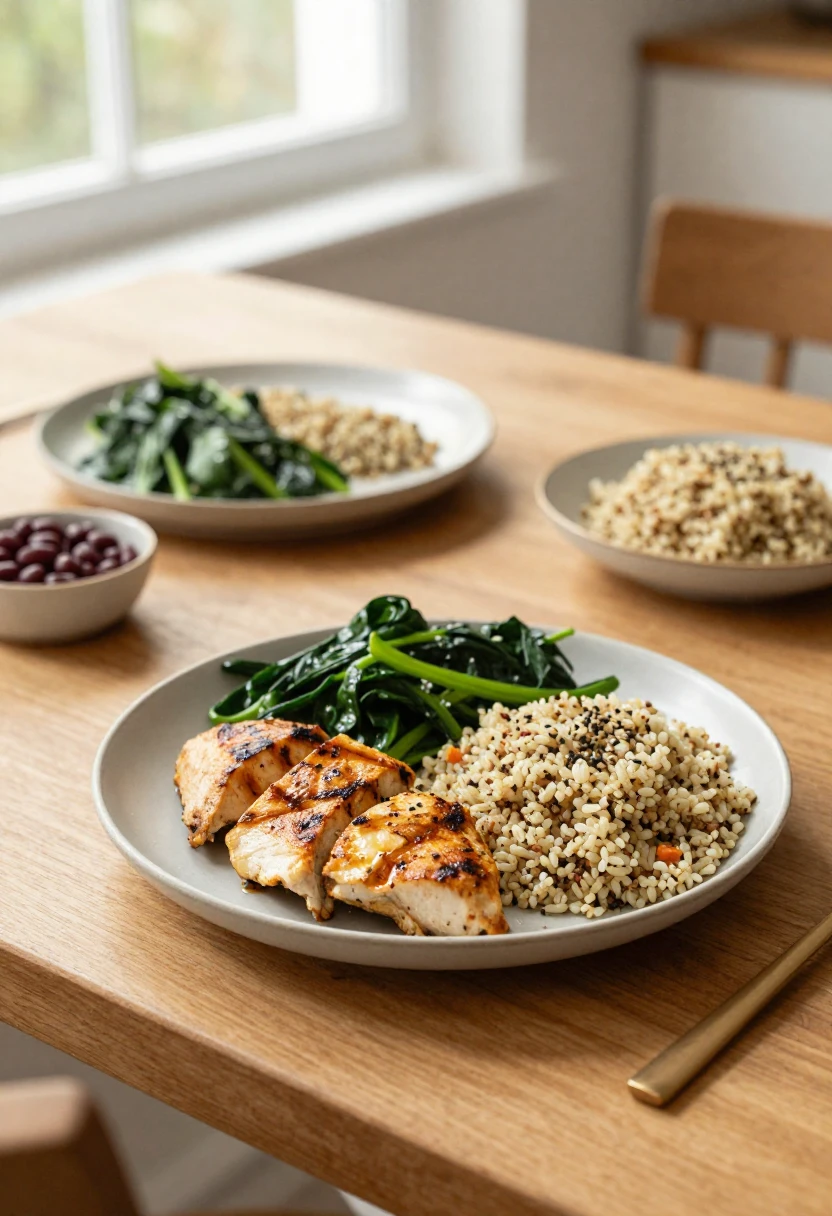
One of the most common challenges busy professionals face is constant hunger that seems to appear at the most inconvenient times. Mid-morning fatigue, afternoon cravings, and late-evening snacking are rarely signs of weak willpower. In most cases, they are signals that meals earlier in the day did not provide enough lasting nourishment.
Protein and fiber play a central role in solving this problem.
Together, they create the foundation for stable energy, better appetite control, and more predictable eating patterns.
Why Protein Matters in a Demanding Schedule
Protein is essential for maintaining muscle mass, supporting metabolism, and regulating appetite. When meals contain sufficient protein, digestion slows down, and satiety hormones remain elevated for longer periods. This helps reduce sudden hunger and the urge to reach for quick, highly processed snacks.
For busy professionals, this effect is especially valuable.
A protein-rich breakfast can prevent energy crashes before lunch.
A protein-focused lunch supports concentration during long meetings.
A balanced dinner helps regulate evening cravings.
Without adequate protein, even calorie-rich meals can leave people feeling unsatisfied.
The Role of Fiber in Appetite Control
Fiber works alongside protein by adding volume and structure to meals without excessive calories. It slows digestion, stabilizes blood sugar, and supports healthy gut bacteria.
High-fiber foods such as vegetables, legumes, whole grains, seeds, and fruits help create a sense of fullness that lasts beyond the meal itself. This fullness is not heavy or uncomfortable. It is steady and reassuring.
For people who eat quickly or under stress, fiber becomes particularly important because it compensates for rushed eating by extending satiety.
How Protein and Fiber Work Together
While protein and fiber are powerful individually, their greatest benefit appears when they are combined.
A meal that includes lean protein and fiber-rich plants is digested more slowly, produces a smoother glucose response, and reduces the likelihood of overeating later.
For example, a salad with grilled chicken and beans is far more satisfying than vegetables alone. Oatmeal with seeds and yogurt provides longer-lasting energy than refined cereal. A sandwich with whole-grain bread and hummus supports focus better than white bread and spreads.
These combinations create metabolic stability.
Practical Ways to Increase Protein and Fiber
Incorporating more protein and fiber does not require complicated planning.
It often involves simple adjustments:
Adding eggs, tofu, Greek yogurt, or legumes to breakfast
Including beans, lentils, or lean meats in lunch bowls
Choosing whole grains over refined options
Snacking on nuts, fruit, and hummus instead of sweets
These changes gradually reshape appetite without requiring rigid rules.
Preventing Emotional and Impulsive Eating
When the body receives adequate protein and fiber, it becomes more resilient to stress-related cravings. Hunger is less intense, and food decisions feel calmer.
This physiological stability supports emotional regulation. People are less likely to eat out of frustration, exhaustion, or anxiety when their bodies are well nourished.
Over time, this creates a more trusting relationship with food.
Supporting Long-Term Weight Management
Sustainable weight loss depends less on strict calorie control and more on appetite regulation.
Protein and fiber make this regulation possible.
They help people naturally eat appropriate portions, maintain energy, and avoid cycles of restriction and overeating. For busy professionals, this approach is realistic because it aligns with existing routines rather than fighting against them.
Making Satiety a Daily Standard
When meals consistently provide protein and fiber, hunger becomes predictable and manageable.
Eating stops feeling chaotic.
Cravings lose intensity.
Confidence increases.
Food becomes a source of stability rather than stress.
And that stability is what makes long-term progress possible.
Simple Strength Training for Lasting Results

For many busy professionals, exercise is one of the first things to disappear when schedules become demanding. Long workdays, mental fatigue, and competing responsibilities often make regular gym visits feel unrealistic. As a result, physical activity is postponed indefinitely, even when people understand its importance.
However, lasting weight loss does not require long, exhausting workouts.
It requires consistency and intention.
Strength training, in particular, offers exceptional benefits in limited time when approached strategically.
Why Strength Training Matters for Weight Management
Strength training supports weight loss in ways that cardio alone often cannot.
Building and maintaining muscle increases resting metabolic rate, meaning the body burns more energy even at rest. Muscle tissue also improves insulin sensitivity, supports joint health, and enhances overall physical resilience.
For professionals who spend many hours sitting, strength training counteracts postural strain and muscular imbalance, reducing pain and improving daily comfort.
These benefits extend far beyond appearance.
Time Efficiency Through Compound Movements
One of the greatest advantages of strength training is its efficiency.
Exercises that engage multiple muscle groups simultaneously provide maximum benefit in minimal time. Movements such as squats, lunges, push-ups, rows, and deadlifts stimulate large areas of the body and elevate heart rate naturally.
A well-designed twenty-minute session using compound exercises can deliver significant metabolic and muscular benefits without requiring extended gym visits.
Home and Office-Friendly Training
Strength training does not require specialized equipment.
Bodyweight exercises, resistance bands, and small dumbbells can support effective workouts in limited spaces. Many professionals integrate short sessions into their mornings, lunch breaks, or evenings at home.
Even offices can support movement through discreet routines such as wall sits, chair squats, and resistance band exercises.
When exercise becomes location-independent, consistency improves.
The Role of Micro-Workouts
Micro-workouts involve short periods of focused movement distributed throughout the day.
Three ten-minute sessions can be as effective as one longer workout when performed with intention. These sessions reduce mental resistance and make activity easier to initiate.
For individuals who struggle with motivation after work, micro-workouts provide a practical alternative to all-or-nothing thinking.
Supporting Recovery and Injury Prevention
Busy professionals often underestimate the importance of recovery.
Insufficient rest, poor sleep, and high stress increase the risk of injury and burnout. Strength training programs should include adequate warm-ups, stretching, and recovery days.
Moderation protects progress.
It allows people to maintain activity over months and years rather than weeks.
Integrating Strength Training Into Existing Routines
The most sustainable exercise habits are those attached to existing behaviors.
Some people train immediately after waking.
Others exercise after work.
Some prefer weekends.
There is no universal schedule.
The key is selecting a time that aligns with personal energy patterns and protecting it consistently.
Psychological Benefits of Strength Training
Beyond physical changes, strength training builds confidence.
Progress becomes measurable.
Movements become easier.
Posture improves.
This visible and tangible development reinforces motivation and supports long-term adherence.
People begin to identify as active individuals rather than people who “try to exercise.”
Strength as a Foundation for Sustainable Health
When incorporated thoughtfully, strength training becomes a stabilizing force in busy lives.
It improves energy.
Supports metabolism.
Reduces stress.
Enhances resilience.
Most importantly, it fits into demanding schedules without requiring sacrifice of professional or personal priorities.
And that balance is what makes it last.
Movement Throughout the Day — Beyond the Gym

For many busy professionals, physical activity is often associated exclusively with scheduled workouts. If there is no time for the gym, exercise is mentally categorized as “missed,” and the day is considered inactive.
In reality, this way of thinking limits progress.
Movement does not begin and end with formal training. It exists in small, repeated actions throughout the day, and these actions can significantly influence metabolism, energy levels, and overall well-being.
When movement is woven into daily routines, it becomes sustainable.
The Cost of Prolonged Sitting
Modern professional life is largely sedentary.
Long meetings, extended screen time, and commuting keep the body in static positions for hours. Over time, this reduces circulation, weakens muscles, slows metabolism, and increases stiffness and fatigue.
Even people who exercise regularly can experience negative effects if they remain inactive for the rest of the day.
This is why daily movement matters as much as structured workouts.
Reframing Movement as Part of Work Life
Movement becomes easier when it is no longer treated as a separate task.
Instead of thinking, “I need time to exercise,” it becomes more effective to think, “How can I move more within what I already do?”
This shift changes behavior.
Walking during phone calls.
Standing during short meetings.
Using stairs instead of elevators.
Parking farther from entrances.
Stretching between tasks.
These actions may seem minor, but their cumulative impact is substantial.
Walking as a Foundation Habit
Walking is one of the most accessible and underestimated forms of activity.
It supports cardiovascular health, improves mood, enhances digestion, and promotes fat metabolism. It also requires no special equipment or preparation.
Busy professionals who prioritize short walks before work, during lunch, or after dinner often experience improved energy and mental clarity.
Regular walking also reduces stress, which indirectly supports weight management.
Creating Active Transitions
Transitions between activities offer natural opportunities for movement.
Before starting work.
After finishing meetings.
Between focused sessions.
After commuting.
Using these moments for light movement, such as stretching, walking, or mobility exercises, prevents physical stagnation and refreshes concentration.
Over time, these transitions become automatic.
The Role of Posture and Micro-Movements
Movement is not limited to large actions.
Posture adjustments, core engagement, and small mobility exercises throughout the day improve circulation and reduce muscular tension. Rolling shoulders, standing up regularly, and performing brief mobility sequences support physical comfort and reduce fatigue.
These micro-movements protect long-term joint and spinal health.
Technology as a Support Tool
Many professionals benefit from using reminders or wearable devices that encourage regular movement.
Gentle prompts to stand, walk, or stretch help counteract long periods of sitting without becoming disruptive.
When used thoughtfully, technology reinforces awareness rather than creating pressure.
Psychological Benefits of Daily Movement
Frequent movement supports more than physical health.
It improves mood through endorphin release.
It reduces mental fatigue.
It enhances creativity.
It improves stress resilience.
Professionals who move regularly throughout the day often report greater emotional stability and improved focus.
These benefits indirectly support healthier food choices and better sleep.
Building an Active Identity
When movement becomes part of daily life, it changes self-perception.
People stop viewing themselves as “too busy to exercise” and begin seeing themselves as naturally active. This identity shift reinforces positive behavior and increases confidence.
Activity becomes normal rather than exceptional.
Sustainable Activity Through Integration
The most effective movement habits are those that require minimal effort to maintain.
By integrating activity into work and personal routines, professionals reduce reliance on motivation and increase consistency. Over time, this consistency supports metabolism, energy balance, and weight management.
Movement becomes part of life, not something added to it.
And that is what makes it sustainable.
Sleep & Stress — The Invisible Drivers of Weight

When weight loss feels unusually difficult despite reasonable eating and regular movement, the underlying cause is often not food or exercise. It is exhaustion.
Sleep deprivation and chronic stress quietly influence almost every system involved in weight regulation. For busy professionals, these factors are especially powerful because they are often treated as unavoidable side effects of ambition and responsibility.
In reality, they are central variables that determine long-term success.
How Sleep Regulates Appetite
Sleep plays a critical role in controlling hunger hormones.
When sleep is insufficient, the body produces more ghrelin, which increases appetite, and less leptin, which signals fullness. This imbalance leads to stronger cravings, larger portions, and reduced satisfaction from meals.
In practical terms, people who sleep poorly are more likely to:
Feel hungry shortly after eating
Crave sugary and high-fat foods
Snack late at night
Overeat under stress
These patterns are biological responses, not personal failures.
Sleep and Energy Efficiency
Beyond appetite, sleep influences how efficiently the body uses energy.
Chronic fatigue reduces motivation to move, weakens exercise performance, and impairs recovery. It also increases perceived effort, making healthy behaviors feel harder than they should.
When sleep improves, many people notice that eating well and exercising require less willpower.
The Impact of Stress Hormones
Stress activates the body’s survival mechanisms.
When cortisol remains elevated for extended periods, the body becomes more likely to store fat, particularly around the abdomen. High cortisol also disrupts blood sugar regulation and increases cravings for quick sources of energy.
For professionals facing constant deadlines, high expectations, and emotional labor, this stress response can become permanent.
Weight management becomes difficult not because of lack of discipline, but because the nervous system is constantly in protective mode.
Emotional Eating as a Stress Response
Stress also influences behavior.
Food often becomes a coping tool when emotional resources are depleted. Eating provides temporary comfort by activating reward pathways in the brain. Over time, this creates habits that associate stress relief with food.
These habits are reinforced by fatigue, time pressure, and lack of alternative recovery strategies.
Breaking them requires addressing stress directly rather than focusing only on calories.
Improving Sleep Without Major Lifestyle Changes
Many professionals believe they cannot improve sleep because of work demands.
In reality, small adjustments often produce meaningful results:
Maintaining consistent bedtimes
Reducing screen exposure before sleep
Limiting late caffeine
Creating a calm evening routine
Optimizing bedroom environment
These changes do not require large time investments, but they significantly improve sleep quality.
Building Daily Stress Regulation
Stress cannot be eliminated, but it can be managed.
Effective strategies include:
Short walks
Breathing exercises
Quiet transitions between tasks
Brief mindfulness practices
Physical movement
These practices help reset the nervous system and prevent chronic overload.
Importantly, they do not require long sessions or special conditions.
The Relationship Between Rest and Discipline
Well-rested people make better decisions.
They regulate emotions more effectively.
They resist impulses more easily.
They plan more clearly.
When sleep and stress are managed, self-control improves naturally. Weight loss becomes easier not because of stronger discipline, but because the body is functioning optimally.
Rest as a Productivity Strategy
For busy professionals, reframing rest as a performance tool is essential.
Sleep and stress management support:
Sharper focus
Better memory
Improved creativity
Greater resilience
They are investments in both health and career success.
Creating Sustainable Balance
Long-term weight management requires cooperation between body and mind.
Without adequate rest, even the best nutrition and exercise plans struggle to succeed. With proper sleep and stress regulation, progress becomes steadier and more predictable.
Balance is not achieved through constant effort.
It is achieved through intelligent recovery.
Sustainable Lifestyle Habits — Small Changes, Big Impact

Long-term weight management is rarely the result of dramatic transformations or short periods of extreme discipline. For most busy professionals, meaningful progress is built through small, consistent behaviors that gradually reshape daily routines.
This approach is not only more realistic. It is also far more effective.
When habits are designed to fit naturally into existing schedules, they become easier to maintain and more resistant to disruption. Instead of relying on motivation, they rely on structure, familiarity, and thoughtful design.
Why Sustainable Habits Outperform Intensive Programs
Highly restrictive programs often fail because they demand continuous self-control. They require constant planning, emotional energy, and social sacrifice. Over time, this creates fatigue, frustration, and eventually abandonment.
Sustainable habits work differently.
They reduce friction.
They simplify decisions.
They minimize emotional strain.
By focusing on manageable behaviors, such as preparing simple meals, maintaining regular sleep schedules, or walking daily, professionals create systems that support progress even during high-pressure periods.
Building Habits Through Existing Routines
One of the most effective ways to create lasting habits is to attach them to routines that already exist.
For example, preparing lunch while cleaning up dinner, stretching while reviewing emails, or planning meals during weekly scheduling sessions allows healthy behaviors to become part of established patterns.
When habits are embedded in familiar routines, they feel natural rather than imposed.
Designing a Supportive Environment
Daily choices are strongly influenced by physical surroundings.
When healthy foods are visible and accessible, they are chosen more often. When movement-friendly spaces are available, activity increases. When bedrooms are calm and organized, sleep quality improves.
Small environmental changes can have significant long-term effects.
Keeping nutritious snacks nearby, storing less supportive foods out of immediate reach, preparing water bottles in advance, and creating comfortable spaces for relaxation all contribute to better daily decisions.
Consistency as the Primary Goal
Many professionals fall into cycles of intense effort followed by burnout.
They commit to rigid schedules, push themselves beyond reasonable limits, and eventually become overwhelmed. When exhaustion sets in, routines collapse, and confidence suffers.
Sustainable habits prioritize repeatability over intensity.
Moderate effort performed regularly produces far better results than sporadic extremes. A consistent routine builds trust in one’s ability to maintain change.
Flexibility as a Core Feature
Rigid systems rarely survive real life.
Travel, illness, deadlines, and family responsibilities inevitably disrupt routines. When plans are inflexible, these disruptions feel like failures and often lead to abandonment.
Flexible systems, by contrast, adapt.
They allow adjustments without guilt, encourage quick recovery after interruptions, and maintain momentum despite changing circumstances.
Flexibility protects long-term progress.
Monitoring Progress Without Creating Pressure
Tracking can support awareness and motivation, but it must be used thoughtfully.
Excessive focus on daily numbers often increases stress and undermines confidence. Weight fluctuations, energy changes, and appetite variations are normal and should not be overinterpreted.
Many professionals benefit from focusing on broader patterns over weeks or months rather than daily outcomes.
This perspective encourages patience and emotional stability.
Reinforcing Identity Through Behavior
Repeated behaviors gradually shape self-perception.
A person who plans meals regularly begins to view themselves as organized and capable. Someone who moves daily starts to identify as active. These identities reinforce further healthy choices.
Change becomes internalized rather than forced.
The Cumulative Effect of Small Actions
The true strength of sustainable habits lies in accumulation.
Each balanced meal, each consistent night of rest, each period of movement, and each thoughtful choice contributes to long-term physical and emotional resilience. Over time, these actions compound, creating momentum that supports continued progress.
Energy stabilizes.
Confidence grows.
Healthy routines feel familiar.
This is how lasting change develops — not through sudden breakthroughs, but through steady, well-designed systems that respect the realities of busy lives.
Overcoming Common Time-Scarcity Pitfalls

Even highly motivated professionals often struggle with weight management, not because they lack discipline, but because they fall into predictable patterns created by time pressure, fatigue, and unrealistic expectations. These patterns quietly undermine progress and reinforce frustration.
Recognizing and addressing them is an essential step toward sustainable change.
Relying on Willpower Instead of Systems
One of the most common mistakes is depending on motivation and self-control.
During periods of high stress or exhaustion, willpower becomes unreliable. Long workdays, emotional demands, and poor sleep reduce the brain’s capacity to regulate impulses. In these conditions, even the strongest intentions are difficult to maintain.
Sustainable progress requires systems that function when motivation is low.
Prepared meals, predictable routines, and accessible healthy options remove the need for constant decision-making. When good choices are automated, consistency improves naturally.
Skipping Meals to “Save Time”
Many professionals skip meals in an attempt to increase productivity or manage workload.
While this may appear efficient, it often leads to reduced concentration, irritability, and overeating later in the day. Long gaps between meals destabilize blood sugar and increase cravings for highly processed foods.
Regular nourishment supports cognitive performance and emotional regulation. Eating consistently is a productivity strategy, not a distraction.
Overestimating Available Time
Another frequent pitfall is designing routines that require more time than is realistically available.
Ambitious workout schedules, complex meal plans, and elaborate food preparation routines often collapse under real-world pressure. When plans repeatedly fail, people begin to doubt their ability to succeed.
Effective systems are built around worst-case scenarios rather than ideal conditions.
When routines work on the busiest days, they remain reliable.
Allowing One Disruption to Derail Progress
Travel, illness, family emergencies, and unexpected deadlines are inevitable.
Many professionals respond to these disruptions by abandoning their routines entirely. A missed workout or unplanned meal becomes a justification for disengagement.
Sustainable systems treat disruptions as temporary deviations rather than failures.
The ability to resume habits quickly after interruption is far more important than avoiding interruptions altogether.
Using Food as the Primary Stress Outlet
Under pressure, food often becomes the most accessible coping mechanism.
Emotional eating is not a lack of discipline. It is a response to unmet psychological needs such as rest, connection, or relief from mental overload.
When stress management relies solely on food, weight management becomes unstable.
Developing alternative recovery strategies, such as short walks, breathing exercises, or brief periods of mental disengagement, reduces dependence on eating for emotional regulation.
Neglecting Planning During Calm Periods
Many professionals only think about health when problems arise.
During calmer periods, routines are often neglected because urgency feels low. When pressure returns, there are no systems in place to provide support.
Using lower-stress periods to prepare meals, refine routines, and establish habits creates resilience for future challenges.
Setting Unrealistic Expectations
Unrealistic timelines and comparisons undermine motivation.
Social media, marketing, and anecdotal success stories create distorted perceptions of progress. When results do not appear quickly, people become discouraged and disengage.
Healthy weight loss is gradual and nonlinear.
Expectations that reflect biological reality protect confidence and persistence.
Building Awareness Instead of Self-Criticism
Many pitfalls are reinforced by harsh self-judgment.
Criticism increases stress, reduces motivation, and weakens self-trust. Awareness, by contrast, creates opportunities for adjustment.
Viewing setbacks as information rather than failure encourages learning and adaptation.
This mindset is essential for long-term success.
Designing Resilient Systems
Overcoming time-related obstacles requires intentional design.
Resilient systems are flexible, realistic, and forgiving. They anticipate busy periods, accommodate unpredictability, and prioritize recovery.
When systems are strong, progress becomes less dependent on mood, energy, or external conditions.
And that stability is what transforms effort into lasting change.
Frequently Asked Questions (FAQ)
As busy professionals begin to implement time-efficient weight management strategies, practical questions naturally arise. These answers address common concerns and help clarify how to maintain progress in realistic, demanding environments.
Can I Lose Weight Without Going to the Gym?
Yes, it is entirely possible.
Weight loss depends primarily on consistent nutrition, daily movement, and lifestyle habits rather than formal gym attendance. Walking, bodyweight training at home, and active routines can support fat loss effectively when combined with balanced eating.
Structured workouts are helpful, but they are not mandatory for success.
How Much Time Do I Really Need Each Day?
Most people can make meaningful progress with thirty to forty-five minutes of combined activity, meal preparation, and self-care spread throughout the day.
This time does not need to be continuous. Short walks, brief workouts, simple meal planning, and consistent sleep routines often produce better results than occasional long sessions.
The focus should be on integration rather than addition.
What If My Schedule Changes Every Week?
Unpredictable schedules require flexible systems.
Instead of fixed routines, focus on principles such as eating protein at every meal, moving daily in some form, and maintaining consistent sleep windows. These principles adapt easily to changing circumstances.
Flexibility protects long-term consistency.
Is Intermittent Fasting Good for Busy Professionals?
Intermittent fasting can work for some individuals, but it is not universally beneficial.
For professionals under high stress, skipping meals may increase fatigue, irritability, and overeating. Many people perform better with regular, balanced meals.
Personal experimentation and self-awareness are essential.
How Do I Handle Business Travel and Client Dinners?
Travel and social obligations are common challenges.
Preparation is key.
Packing protein-rich snacks, choosing balanced menu options, staying hydrated, and prioritizing sleep help maintain stability. Occasional indulgence does not undo progress when overall habits remain consistent.
Perspective matters more than perfection.
What Is the Best Diet for Busy People?
There is no single ideal diet.
The most effective approach is one that fits personal preferences, cultural context, and schedule constraints. Balanced meals with adequate protein, fiber, and healthy fats are more important than specific labels.
Sustainability determines success.
How Do I Stay Motivated Long Term?
Motivation fluctuates.
Long-term success depends on systems, identity, and supportive environments rather than constant enthusiasm. Celebrating process-based achievements, maintaining realistic expectations, and focusing on quality of life help sustain engagement.
Confidence grows through repeated success.
Can I Still Enjoy Treats and Social Events?
Yes, and doing so is important.
Rigid restriction often leads to burnout and rebound eating. Including enjoyable foods within a balanced pattern supports emotional health and long-term adherence.
Moderation is more effective than avoidance.
How Soon Will I See Results?
Visible changes vary based on genetics, lifestyle, and starting point.
Most people notice improvements in energy, sleep, and mood within weeks. Physical changes typically appear gradually over several months.
Patience supports persistence.
What If I Plateau?
Plateaus are normal.
They often indicate the need for small adjustments in nutrition, movement, sleep, or stress management. Reviewing routines and making minor changes usually restores progress.
Plateaus are signals, not failures.
Should I Track Calories?
Calorie tracking can be useful for awareness, but it is not required.
Many busy professionals succeed by focusing on portion control, food quality, and satiety rather than detailed tracking. Choose the method that supports consistency without increasing stress.
Conclusion — Consistency Over Perfection
For busy professionals, successful weight management is rarely about finding the “right” program, the “perfect” routine, or the most extreme strategy. It is about building a way of living that supports health without competing with work, relationships, and personal responsibilities.
Perfection is neither realistic nor necessary.
What matters is consistency.
Consistent nourishment that stabilizes energy rather than creating cycles of deprivation and overeating. Consistent movement that supports strength and resilience without exhausting limited time. Consistent rest that protects mental clarity and emotional balance. Consistent self-respect that replaces guilt with understanding.
When these elements are in place, progress becomes natural rather than forced.
Throughout this guide, one principle remains constant: sustainable change emerges from alignment. When habits fit real schedules, real pressures, and real human limitations, they stop feeling like obligations and start functioning as support systems.
Busy lives do not require extreme solutions.
They require intelligent ones.
Small, well-designed choices made repeatedly are far more powerful than occasional bursts of discipline. Over time, they reshape metabolism, confidence, and self-trust. They reduce internal conflict and increase stability.
Most importantly, they restore a sense of control.
Health stops feeling like something postponed for “later” and becomes part of everyday life. Weight management shifts from a constant struggle into a quiet background process that supports performance, well-being, and long-term satisfaction.
This is not about doing everything right.
It is about doing enough, often enough, for long enough.
And that is how lasting change is built.