There are certain smells that don’t just fill a room — they change it. They shift the air, the pace, even the way people move for a moment. Fresh coffee does that. Warm bread absolutely does. And then there’s citrus simmering slowly in sugar.
That smell doesn’t just feel cozy. It feels bright. Almost hopeful. Like sunlight trapped in steam, like something good is about to happen even if nothing else on your to-do list gets done that day.
Candied orange slices belong to that category of kitchen projects that are more about atmosphere than efficiency. They’re not something you throw together in a rush. They ask you to stay nearby. To glance into the pot. To inhale deeply without thinking too hard about why it feels so good.
They’re not just a recipe. They’re a small ritual.🍊✨
At first glance, candied orange slices look almost unreal. Thin rounds of citrus turn glossy and translucent, their color deepening from fresh orange to something richer, warmer, almost jewel-like. They look like the kind of thing you’d expect behind glass in a bakery window — carefully arranged, expensive-looking, maybe slightly intimidating.
But here’s the quiet truth: they’re incredibly approachable.
No special tools.
No professional techniques.
No ingredients you have to hunt down.
Just:
- fresh oranges
- sugar
- water
- and time
That’s it. And somehow, that simplicity makes the end result feel even more special 🧡
If you’ve ever stopped mid-walk to admire a cake topped with glowing orange slices, or opened a gift box and found candied citrus nestled inside like treasure, this is your reminder: you don’t need permission to make things like that at home. You don’t need to “be the kind of person who does this.” You become that person the moment you start.
And honestly? The waiting — the gentle simmering, the slow transformation — that’s where most of the magic lives.
Why Candied Orange Slices Feel So Special
There’s a reason candied citrus feels different from most homemade sweets. It’s not loud. It doesn’t overwhelm you with sugar. It doesn’t try to be clever.
Its luxury is quiet.
Part of it is visual. The peel softens and turns translucent, catching the light in a way fresh fruit never does. Part of it is flavor. The bitterness doesn’t disappear — it relaxes. It steps back just enough to let sweetness come forward without flattening everything into one note.
But a big part of the appeal is emotional.
Candying citrus feels:
- slow
- intentional
- almost old-fashioned in the best way
You don’t multitask aggressively while making candied oranges. You don’t rush them. You let the pot do its thing, checking in occasionally, adjusting the heat, noticing the smell shift from sharp and fresh to warm and mellow.
In a kitchen culture obsessed with shortcuts and “10-minute miracles,” that kind of patience feels almost rebellious.
And strangely comforting.
What Makes Candied Oranges Different From Dried or Caramelized Citrus
It’s easy to assume that anything involving oranges and sugar falls into the same category. But candied orange slices are very much their own thing — and understanding that helps you appreciate them more.
Here’s how they differ from similar citrus treatments:
Dried orange slices
- dehydrated, not cooked in sugar
- firm or brittle
- mostly decorative or used for teas and garnishes

Caramelized oranges
- cooked quickly in sugar or syrup
- soft and juicy
- best eaten warm, often spooned over desserts
Candied orange slices
- simmered slowly over time
- sugar gradually replaces the water inside the peel
- chewy but tender
- sweet, bitter, and citrusy all at once
That slow sugar infusion is what makes candied oranges unique. The sweetness isn’t sitting on the surface. It’s woven all the way through the fruit. Every bite tastes intentional, layered, and complete.
It’s preservation and dessert meeting somewhere in the middle 🍊
A Little History (Without Getting Boring)
Before refrigeration was a given, sugar played a much bigger role than we usually remember. It wasn’t just a flavor — it was a method. A way to stretch seasons. A way to hold onto fruit long after trees had gone bare.
Citrus, especially oranges, were precious. They traveled far. They didn’t grow everywhere. Candying them was a sign of care, effort, and abundance.

Candied citrus found its way into:
- holiday breads
- ceremonial cakes
- special-occasion sweets
- edible gifts meant to impress
And what’s fascinating is how little the technique has changed. The same slow simmer. The same simple ingredients. The same waiting.
That continuity gives candied orange slices a timeless quality. They don’t feel trendy. They don’t feel outdated. They feel steady — like something people have always made when they wanted to turn something simple into something lasting.
Why Homemade Is Always Better
Store-bought candied citrus isn’t terrible. Let’s start there. It exists, it’s convenient, and in a pinch, it can do the job.
But it’s also… predictable. Flat. Sometimes aggressively sweet. Sometimes strangely tough, like it’s been sitting around far longer than you’d like to think about.
Homemade candied orange slices are a completely different experience.
When you make them yourself, you’re not just following steps — you’re making decisions. Small ones, yes, but they add up in a way you can taste.
You get to choose:
- how thick or thin each slice is
- how long they simmer
- how much bitterness you keep
- whether the final result leans bright, mellow, or deeply citrusy
That control changes everything.
Commercial versions often aim for consistency and shelf life. Homemade versions aim for balance and character. The sweetness doesn’t bulldoze the orange flavor — it works with it. The peel stays chewy instead of rubbery. And the bitterness, instead of being erased, softens into something warm and pleasant.
And then there’s the smell.
This part deserves its own paragraph.
While the orange slices simmer gently in sugar, the kitchen fills with a scent that’s hard to describe without sounding dramatic — but dramatic is honestly appropriate here. It’s sweet, but not cloying. Fresh, but softened. Comforting in a way that feels seasonal and nostalgic at the same time.
It smells like:
- a slow winter afternoon
- holiday baking without the stress
- sunlight bouncing off citrus peels
Even if it’s the middle of summer, that aroma shifts the mood of the entire space ☀️
And as a quiet bonus? You’re left with orange-infused syrup at the end — thick, fragrant, and wildly underrated. Drizzle it over yogurt, spoon it into tea, brush it onto cakes, or stir it into cocktails. It’s one of those happy accidents that makes homemade projects feel generous.
Choosing Oranges That Actually Work
Candied orange slices are simple, but they’re not forgiving when it comes to ingredients. This is not the moment for forgotten fruit rolling around in the crisper drawer.
The orange matters. A lot.
Because in this recipe, the peel isn’t a background detail — it’s the main event.
When you’re shopping, pay attention to a few things:
- Oranges that feel heavy for their size
- Skin that looks smooth and firm, not wrinkled
- A peel that feels slightly thick when gently squeezed
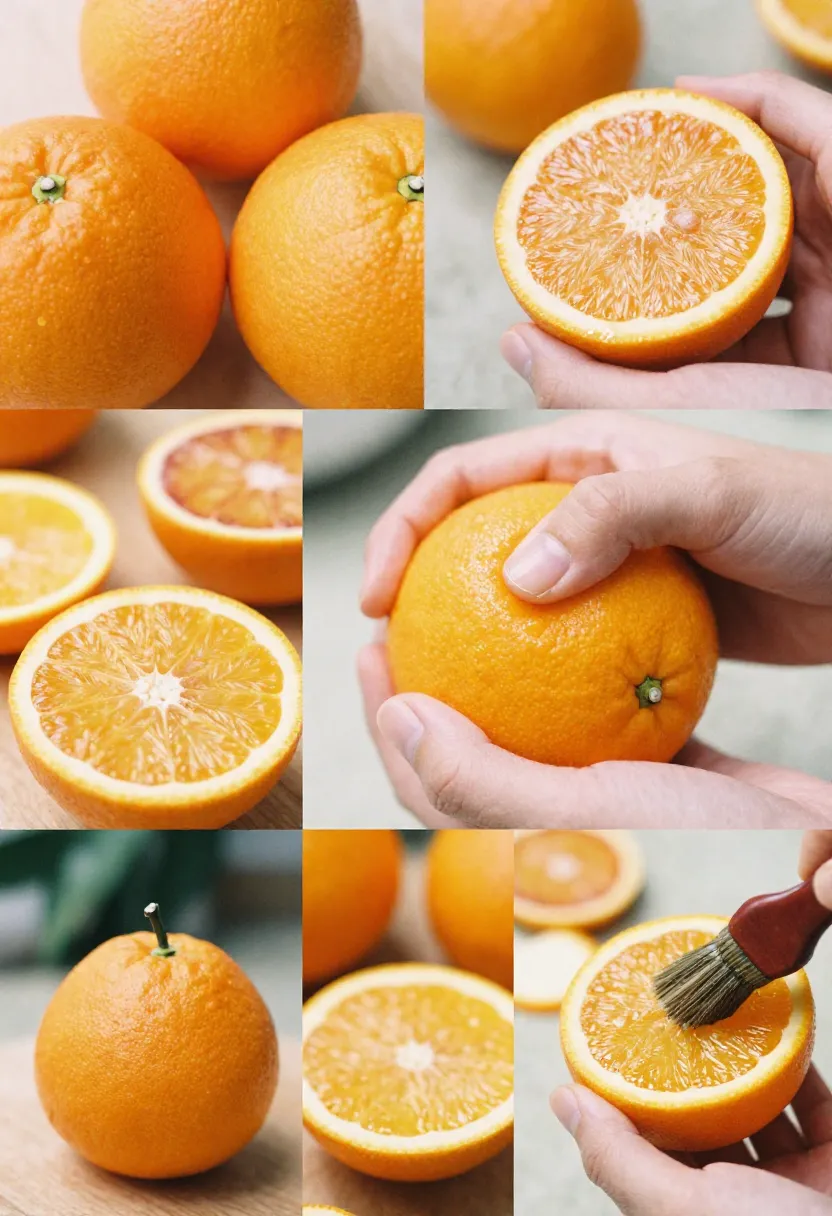
Thicker peels hold up better during the long simmer. They soften without falling apart and give you that satisfying, chewy bite that makes candied citrus so addictive.
As for varieties:
- Navel oranges are reliable, balanced, and easy to work with
- Valencia oranges have a brighter, slightly sharper flavor
- Blood oranges bring drama — deeper color, subtle berry notes, and a striking final look
If you’re lucky enough to find organic oranges, go for them. You’re eating the peel, after all 🌱 Reducing wax and chemical residue isn’t just a “nice idea” here — it genuinely affects both flavor and peace of mind.
And one more small but important thing: wash your oranges well. Even organic fruit benefits from a good scrub. It’s a tiny step that makes the whole process feel more intentional from the very beginning.
The Recipe: Classic Candied Orange Slices 🍊
Yield: about 24–30 slices
Prep time: 15 minutes
Cooking time: around 90 minutes
Drying time: overnight (or longer)
Ingredients
- 3–4 large oranges
- 2 cups granulated sugar
- 2 cups water
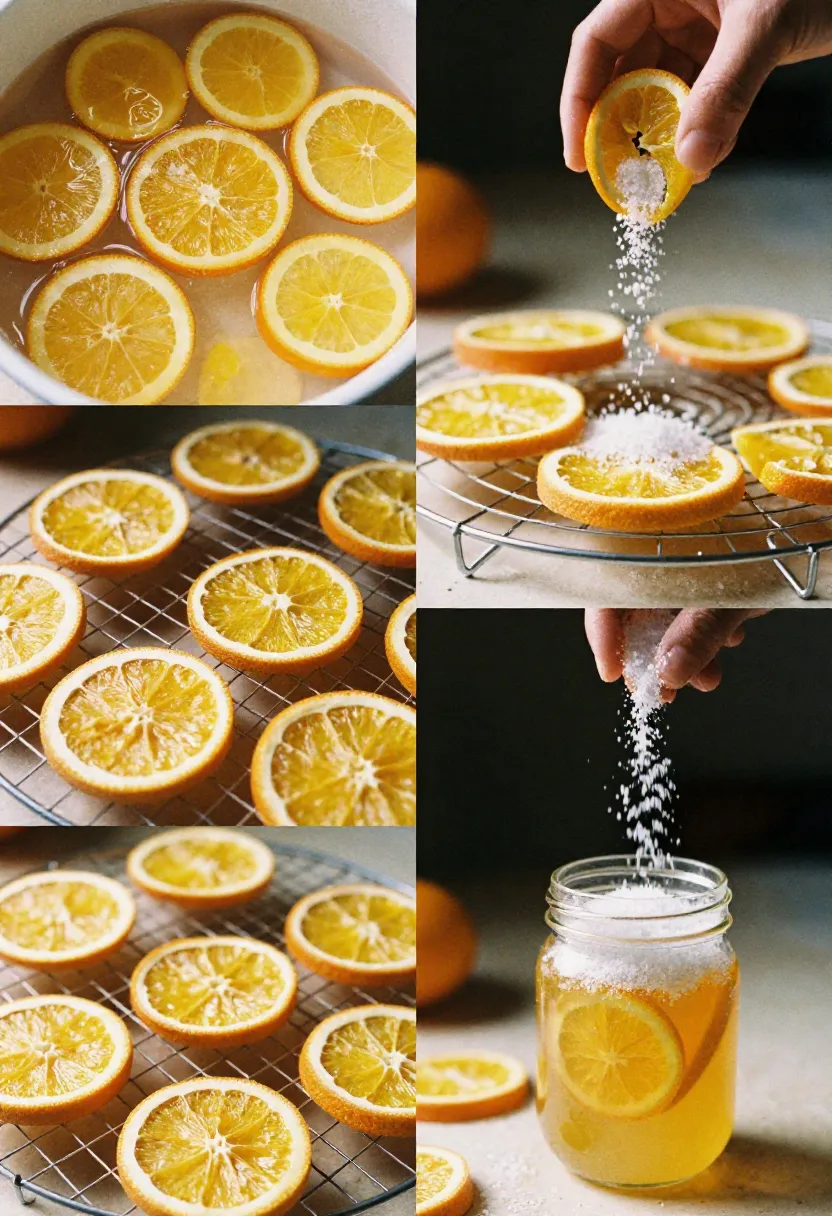
- Extra sugar for coating (optional, but pretty ✨)
That’s it. No corn syrup. No additives. Just fundamentals.
Before You Start: A Few Small but Important Notes
Before the stove even comes on, a couple of things are worth keeping in mind:
- Choose a wide pot or deep skillet so the slices don’t crowd each other
- Expect repetition — blanching happens more than once, and yes, it matters
- Lower heat is always better than higher heat here
Candying citrus is about restraint. If you’re unsure, turn the heat down.
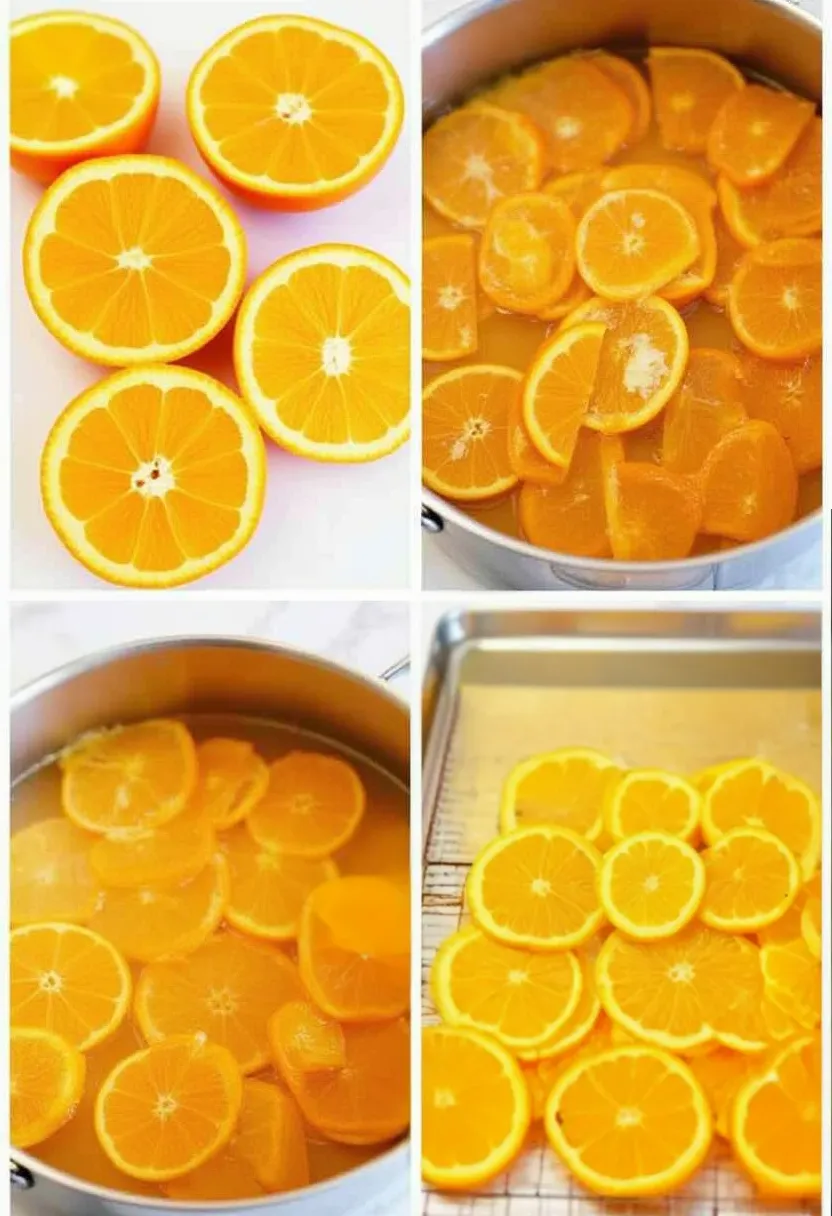
Step One: Washing and Slicing the Oranges
Start by washing the oranges thoroughly. Even if they look spotless, give them a good scrub under warm water. You’re using the peel, so this step isn’t optional — it’s foundational.
Slice the oranges into even rounds, aiming for:
- ⅛ to ¼ inch thick
- thin enough to soften
- thick enough to hold their shape
As you slice, remove any visible seeds. It’s a small thing, but it saves annoyance later.
Set the slices aside and take a moment to appreciate how good they already smell.
Step Two: Blanching (Yes, More Than Once)
This is the part that feels repetitive — and it’s also the part that determines whether your final result tastes balanced or harsh.
Place the orange slices in a pot and cover them completely with cold water. Bring it to a boil, then lower the heat and let them simmer gently for about 10 minutes.
Drain the water completely.
Now do it again:
- fresh water
- bring to a boil
- simmer
- drain
And then — one more time.
Three rounds total.
Why this matters:
- it softens the bitterness of the peel
- it keeps the citrus flavor clean, not sharp
- it prevents that mouth-coating bitterness some candied fruit has
After the final drain, set the slices aside. They’ll look softer already — that’s exactly what you want.
Step Three: Making the Syrup
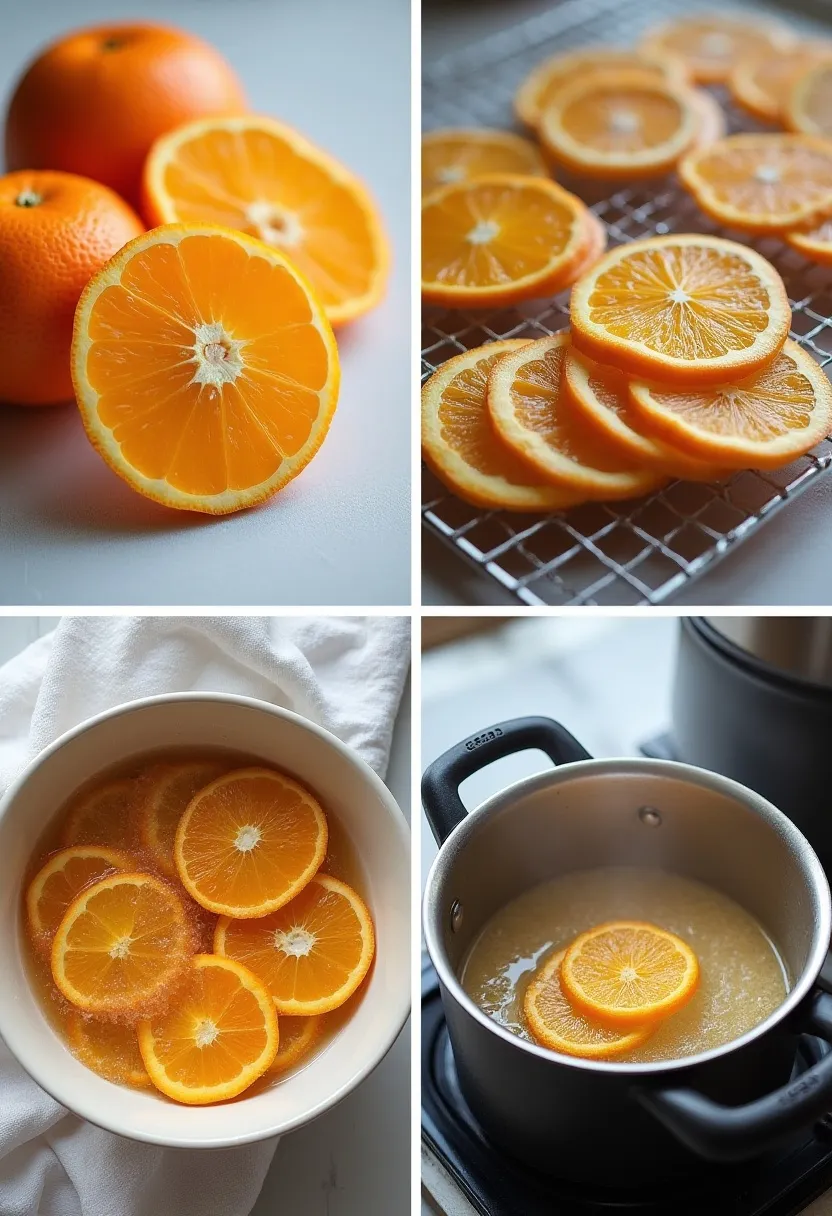
In a wide pot or deep skillet, combine the sugar and water. Heat gently, stirring just until the sugar dissolves and the liquid becomes clear.
You’re not looking for caramel. You’re not looking for bubbles going wild. Just a calm, clear syrup that’s ready to do its job.
Once dissolved, bring it to a gentle boil.
Step Four: The Long Simmer (Where the Transformation Happens)
Carefully add the blanched orange slices to the syrup. They should be mostly submerged — overlapping slightly is fine, crowding is not.
Lower the heat immediately. The syrup should:
- barely simmer
- show slow, lazy bubbles
- never aggressively boil
Now comes the waiting.
Let the slices simmer gently for 60 to 90 minutes, checking occasionally but not constantly. Over time, you’ll notice subtle changes:
- the white pith turns translucent
- the color deepens and warms
- the syrup thickens slightly
- the slices begin to glow
This is sugar slowly replacing water inside the peel. It’s not fast, and it’s not meant to be.
If you’re unsure whether they’re ready, look for flexibility. They should bend easily without breaking.
Step Five: Lifting and Drying
Once the slices look glossy and translucent, lift them out gently using tongs or a slotted spoon. Let excess syrup drip back into the pot — don’t rush this.
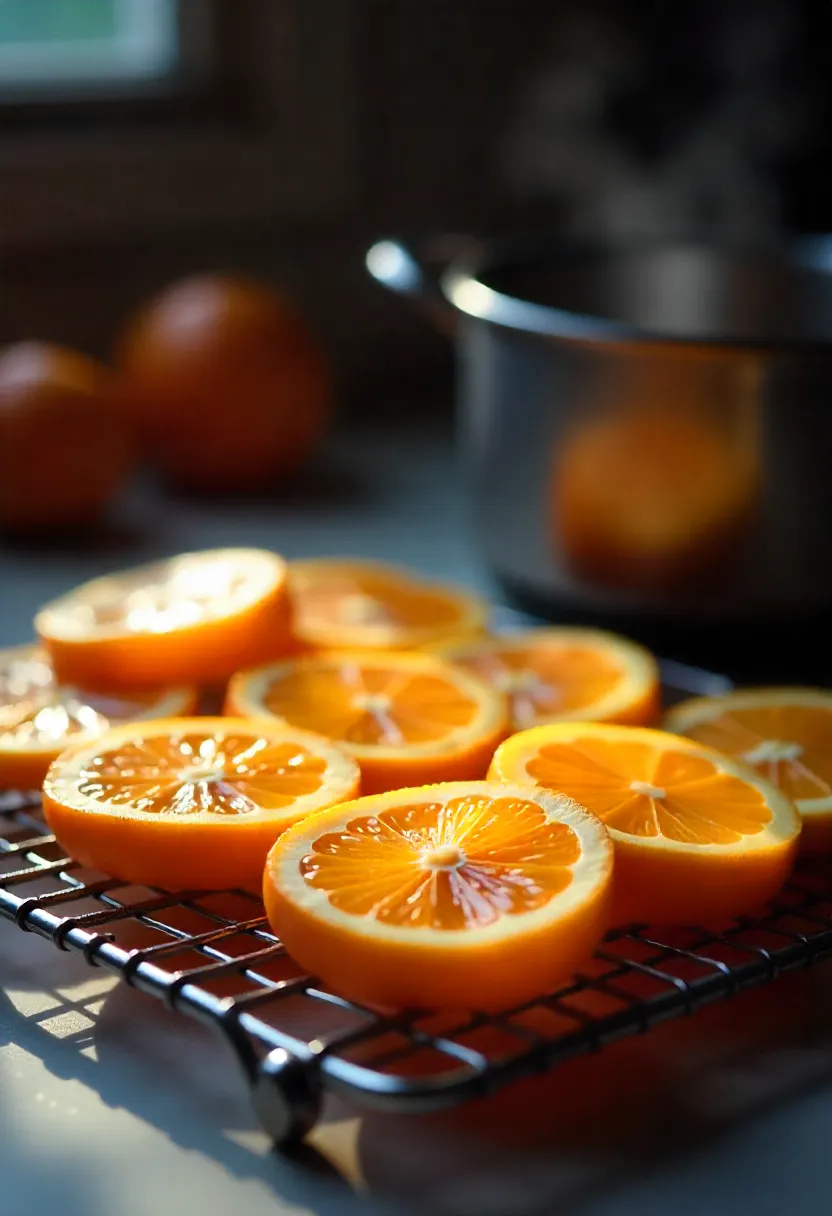
Place each slice on a wire rack set over a baking sheet. Give them space. This helps them dry evenly.
Now step back.
Resist the urge to:
- touch them
- rearrange them
- test one immediately
Let time and gravity handle the rest.
Common Problems (And Why They Happen)
Even the simplest recipes have their quirks — and candied oranges are no exception. The good news? Almost all “mistakes” are fixable, and each teaches you a little more about patience and sugar chemistry.
Too bitter?
- Often caused by skipping or rushing the blanching step.
- The solution is simple: give the oranges time in boiling water — three rounds, no shortcuts. That gentle treatment tames the pith without erasing all of the citrus personality.
Still sticky after days?
- Humidity is sneaky. Even a perfect batch can cling together in a damp kitchen.
- Fix it by allowing more drying time, and make sure they have air circulation. A wire rack near a window or a fan on low can work wonders.
Syrup crystallizing?
- Usually, the heat was a bit too aggressive. Candying citrus is not a race — it’s a slow transformation.
- Solution: low and slow wins. Watch the syrup, adjust the heat, and trust the process.
The bottom line: candying fruit isn’t about perfection. It’s about attention, patience, and subtlety. Every batch teaches you a little more about timing, texture, and flavor.
Playful Variations That Look Impressive (But Stay Easy) ✨
Here’s the fun part: once your oranges are glossy, chewy, and fully dry, the possibilities multiply. Think of them as a blank canvas — beautiful on their own, but endlessly customizable.
Chocolate-dipped classics 🍫
- Melt dark chocolate gently.
- Dip half of each slice, let the excess drip off, and lay them on parchment to set.
- The flavor combination of bittersweet chocolate and candied citrus is timeless. It’s indulgent but approachable.
Warm spice infusion
While simmering the syrup, try adding:
- a cinnamon stick
- a few whole cloves
- star anise
- a thin strip of fresh ginger
The orange absorbs subtle warmth from the spices without being overpowered, making it a cozy treat for autumn or winter.

Experimenting with different citrus
Once you’ve mastered oranges, the method works for:
- Lemons — bright, tangy, and cheerful
- Grapefruit — sophisticated, slightly bitter, elegant
- Blood oranges — dramatic color, subtle berry undertones
Each citrus behaves a little differently in texture and sweetness, which keeps the process interesting and playful.
Sweet meets salty
- For chocolate-dipped slices, sprinkle a little flaky sea salt over the chocolate while it’s still soft.
- That tiny contrast intensifies flavors and creates a more complex bite.
The point here: these variations don’t require new skills. They just invite creativity, experimentation, and a little playfulness.
How to Actually Use Candied Orange Slices (Beyond Snacking) 🍊
Sure, you can eat them straight from the cooling rack — that’s perfectly fine. But once you’ve made them, you’ll notice they can elevate almost anything.
In baking and desserts
- Place slices on top of chocolate cakes or loaf cakes for a glossy, decorative finish
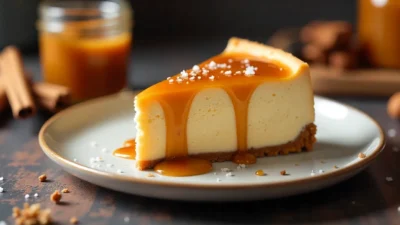
- Layer them on cheesecakes for a pop of color and flavor
- Tuck them into frosting on cupcakes for visual appeal and citrus aroma
- Chop and fold into biscotti, cookies, or even granola bars
Candied slices add texture, flavor, and visual intrigue — sometimes more than they add sweetness.

In drinks
- Perch a slice on the rim of a cocktail or mocktail for flair
- Drop them into hot tea or mulled wine for natural sweetness
- Stir into coffee-based drinks or hot chocolate for aroma and color
The citrus oils release fragrance even without biting — your guests notice it before tasting it.
On boards and platters
- Pair with dark chocolate squares
- Serve alongside sharp or aged cheeses
- Add to dessert boards for contrast, color, and elegance
Candied orange slices bridge sweet, bitter, and salty flavors effortlessly.
As gifts
- Pack slices into glass jars, parchment-lined boxes, or cellophane bags
- Add a handwritten note or ribbon for a personal touch
Even if they’re never eaten, these slices make thoughtful, beautiful gifts. Bonus: fully dried slices can also become edible décor — hang them on a tree, use in wreaths, or tie onto packages 🎄. They look gorgeous and smell incredible.
Storing Them Without Ruining All Your Work
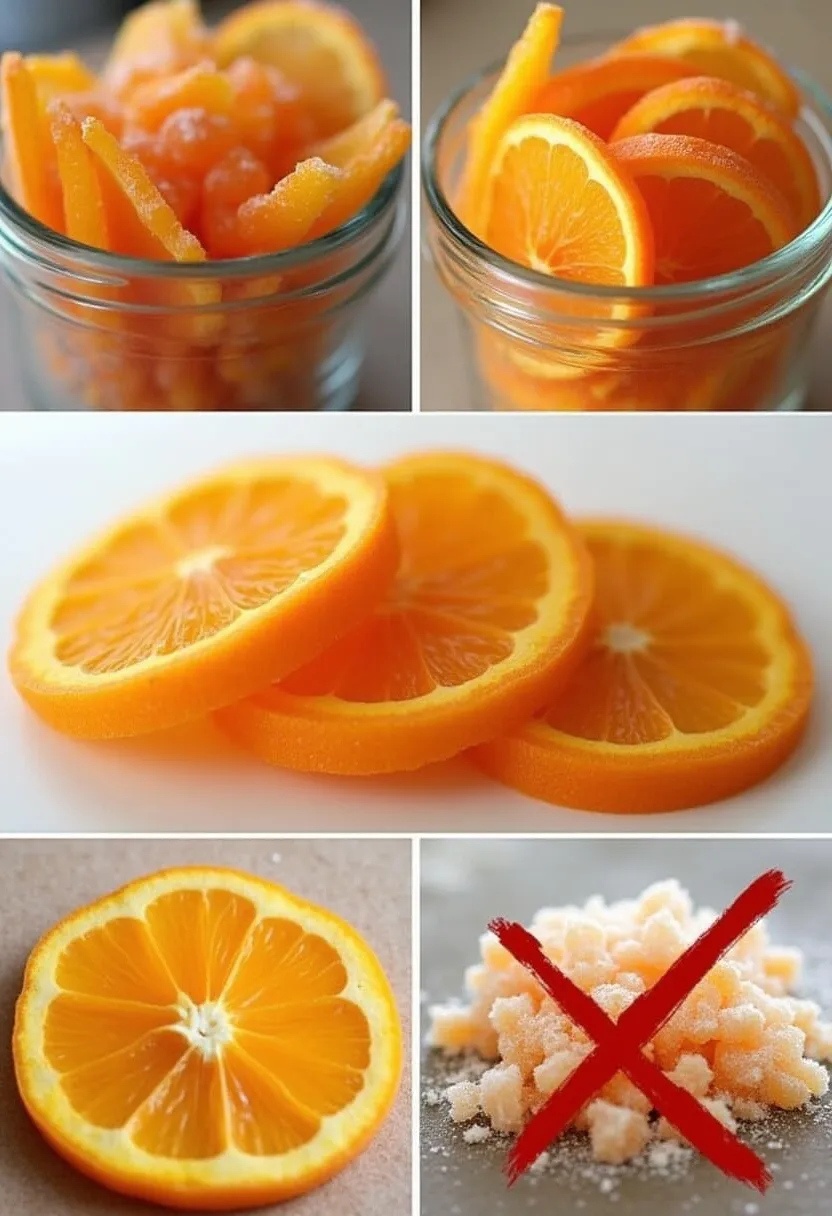
Once your slices are perfectly dry — glossy on the outside, tender and chewy on the inside — storage is mostly simple. But a few small details make all the difference between a batch that stays beautiful for weeks and one that turns sticky or dull.
The best method:
- Place the slices in an airtight container.
- Keep them at room temperature, away from sunlight.
- Stored this way, they will stay at their peak for two to three weeks, sometimes longer depending on the humidity in your kitchen.
Refrigeration
- Will extend the shelf life slightly.
- The texture softens a little — they’re still delicious, just not as satisfyingly chewy.
Freezing
Not recommended. Freezing changes the delicate texture, leaving them limp or uneven when thawed. Candied slices are meant to be enjoyed fresh or gently aged, not frozen solid.
A small tip: if a few slices stick together over time, dust them lightly with granulated sugar. That quick fix brings them back to life in seconds.
A Quick Word on Nutrition (Without Pretending It’s Salad)
Let’s be honest: candied orange slices are a treat, not a salad. They’re sugar, after all. And that’s okay.
But they’re still fruit-based, and that counts for something. Each slice carries:
- Natural citrus oils from the peel, giving aroma and subtle flavor
- Small amounts of fiber from the peel
- Vitamin C (some survives the candying process)
The most important thing? How you enjoy them. Slowly. Intentionally. As a small, beautiful moment of pleasure, rather than something you inhale mindlessly. Desserts don’t need justification — they just need to be appreciated.
Final Thoughts 🍊💛
Candied orange slices are a gentle reminder of why cooking can feel magical. Not for speed. Not for precision. But for the quiet joy of watching something transform under your care.
With only fruit, sugar, water, and time, you end up with something that feels:
- Old-fashioned, in the best way — timeless and comforting
- Modern, because it adapts to your taste and style
- Generous, both in flavor and in what it gives to anyone who tastes it
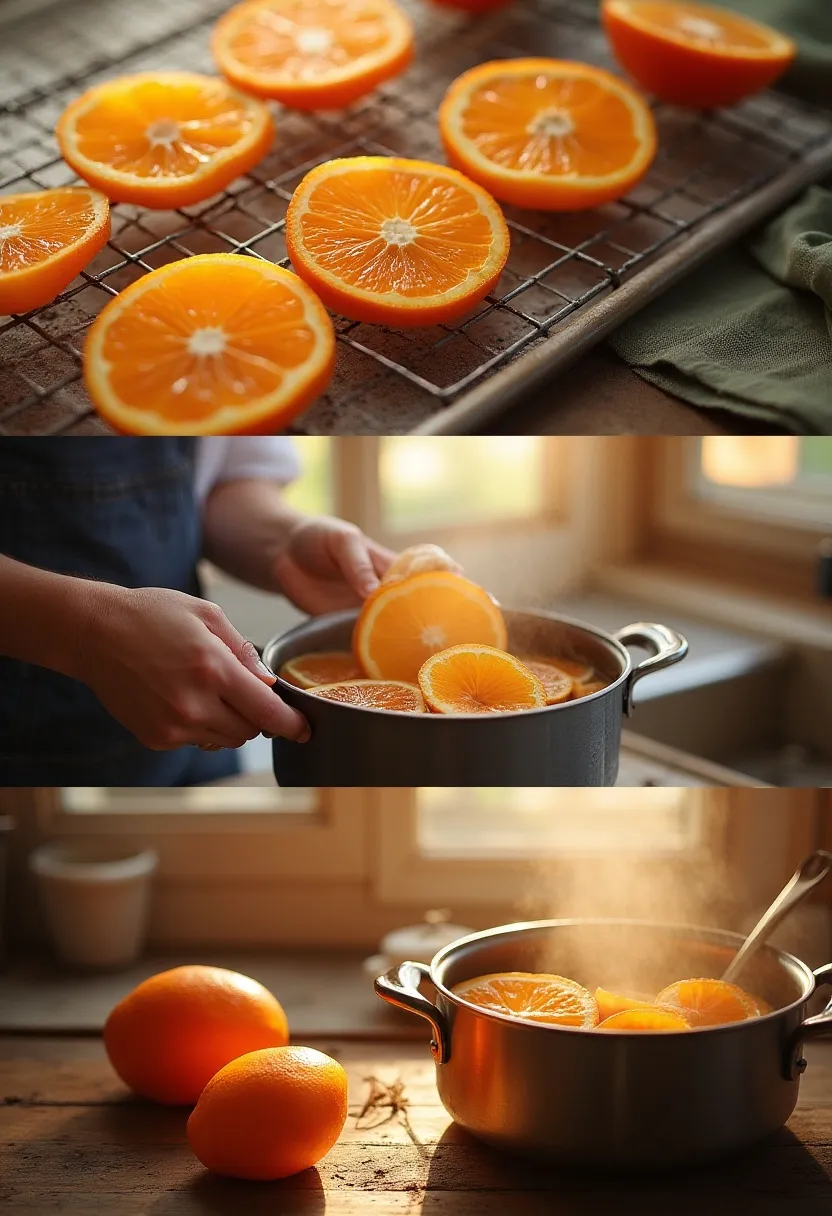
Whether you’re preparing them for a celebration, creating handmade gifts, or simply leaving them on the counter while your kitchen fills with citrus-sweet aroma, these slices carry a warmth that can’t be rushed or faked.
So here’s what you do:
- Slice the oranges.
- Lower the heat.
- Let the syrup slowly, quietly do its work.
And then — just enjoy the slow magic. Let the process be part of the pleasure. Watch the sugar and citrus transform. Breathe in the scent. Smile a little. 🍊✨