
Some dishes enter our lives quietly, without ceremony or introduction, yet somehow they settle in as if they have always belonged there. Korean Carrot Salad is exactly that kind of dish: simple in appearance, easy to prepare, and made from ingredients that are so familiar we almost overlook them. However, when the flavors come together — the natural sweetness of carrots, the warmth of spices, the brightness of vinegar, and the earthy depth of garlic — the result feels surprisingly layered, comforting, and full of personality.🥕✨
The first time I tried it, I remember expecting something very ordinary. I saw a bowl of thinly sliced carrots — nothing unusual, nothing extravagant. But the flavor caught me by surprise. There was something lively and cheerful in the way the garlic and spices awakened the sweetness of the carrot, and something very grounded and reassuring in the way the salad lingered after each bite. It reminded me of long kitchen afternoons, of the sound of knives chopping, and of people assembled around a table, talking freely and laughing in an unstructured, familiar way.
It became one of those dishes that feel like they carry a story — not in a dramatic way, but gently, through memory and flavor. 🌿
A Dish with a Journey: How It Came to Be 🌍
Although the name suggests otherwise, Korean Carrot Salad did not originate in traditional Korean cuisine. Instead, it emerged within the community of ethnic Koreans who were relocated to Central Asia during the Soviet period. Far from the ingredients traditionally used for kimchi — cabbage, daikon radish, specific Korean chili peppers — families had to adapt their cooking to what was available in local markets.
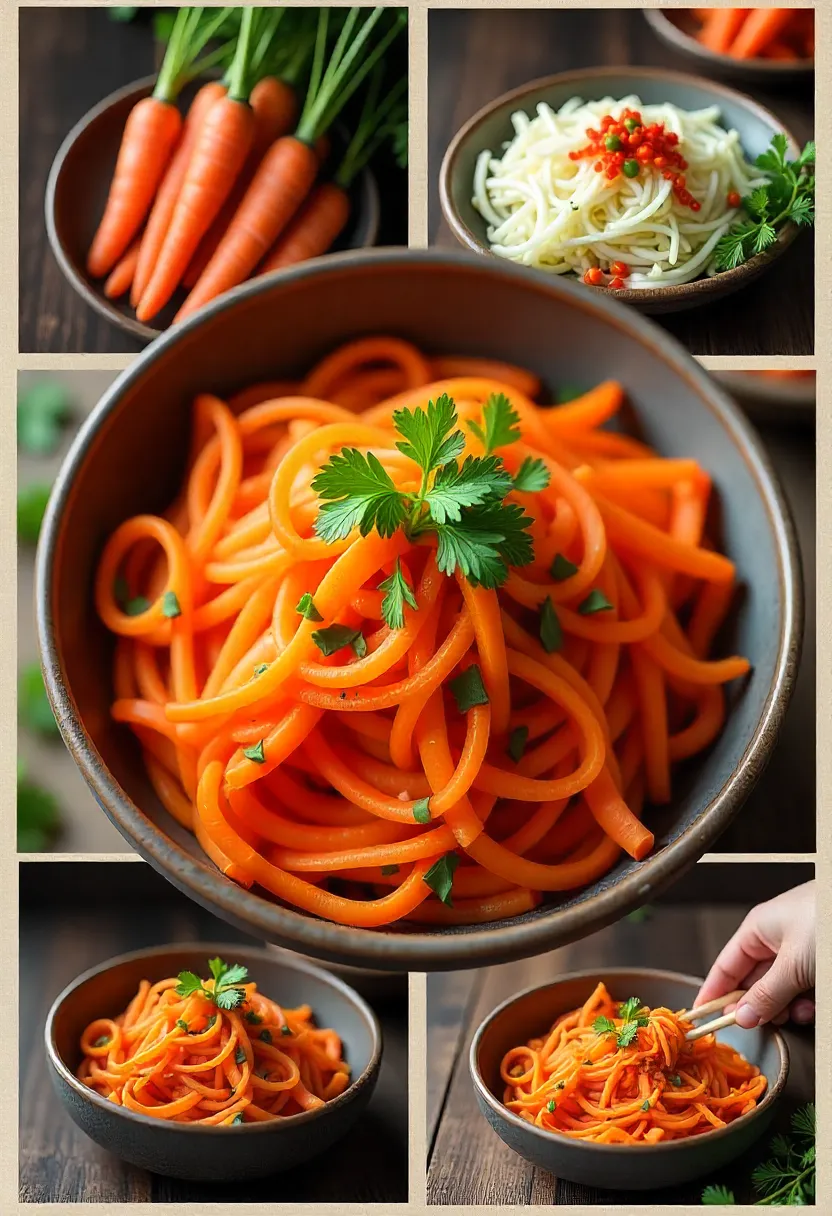
Carrots were abundant: inexpensive, easy to store through winter, and familiar enough to be used daily. So, instead of giving up the remembered flavors of home, these families reshaped the idea of seasoned vegetable salad, keeping the bright, bold, and lightly spicy character, but applying it to a new main ingredient.
The salad that resulted reflects what happens when food moves across borders but retains memory. It is rooted in adaptation — not just to survive, but to preserve identity, connection, and the sense of home at the table.
In that sense, this salad is not simply a culinary invention. It is a quiet expression of continuity. 😊
Ingredients and Their Roles 🥕🧄🌶️
Even though this salad looks simple at first glance, every ingredient actually matters, and skipping or overdoing any of them can change the way the whole thing tastes. The beauty of Korean Carrot Salad is that it feels balanced only when each component plays its part without trying to dominate. It’s like a little orchestra — everyone contributes, and when it works, it’s just right.
Carrots
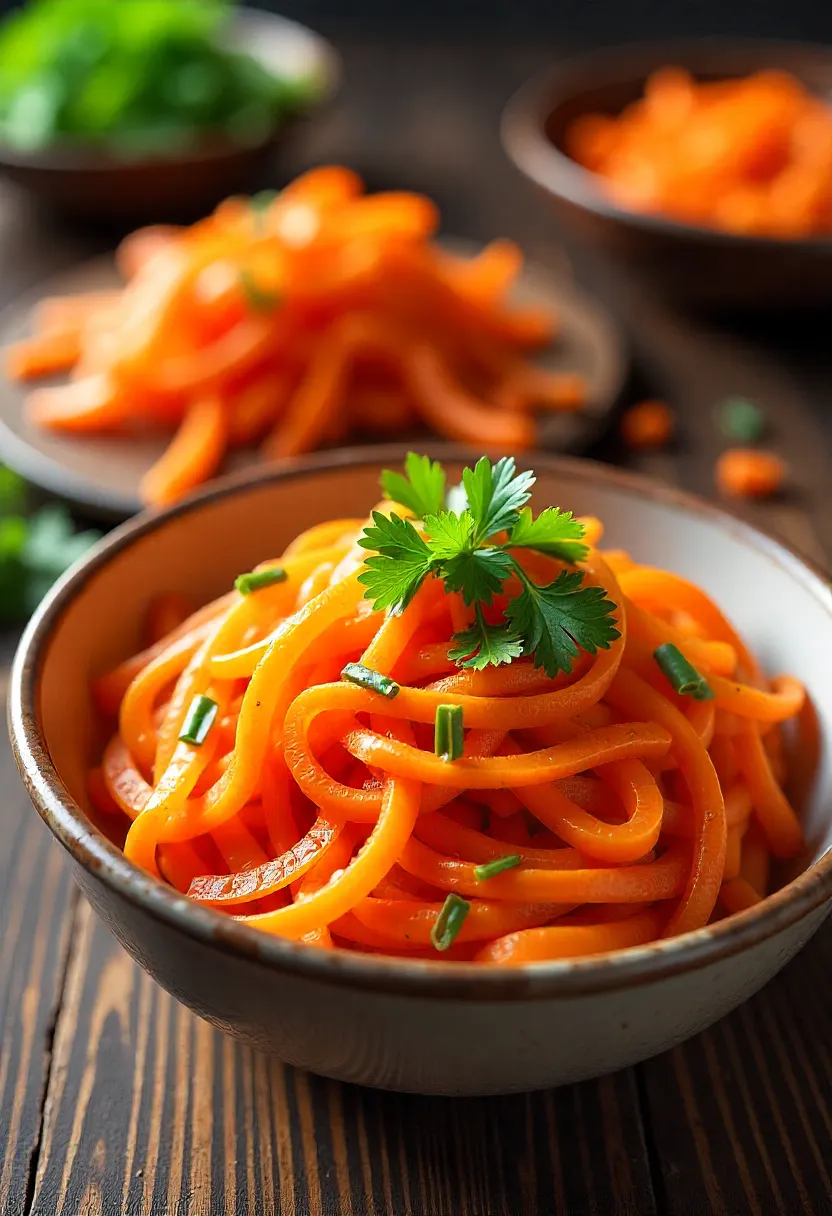
These are, of course, the heart of the salad 🥕. They’re fresh, slightly sweet, and packed with texture, and they really set the tone for everything else. The way you cut them makes a difference: long, thin strips allow the dressing and spices to coat each piece evenly, giving you flavor in every bite. Too thick, and the crunch might feel heavy; too thin, and they can get lost in the seasoning. Taking a bit of care here makes the salad feel thoughtful, like someone really considered each bite.
Garlic
Garlic is what gives the salad personality 🧄. When finely minced or pressed, it blends into the carrots so that every bite has a gentle warmth and a little zing without being overpowering. Some people like a stronger garlic punch — and that’s fine — but the trick is to let it complement, not fight with, the other flavors. It’s subtle, but it makes the whole salad feel more lively.
Vinegar
Vinegar introduces brightness and a gentle tang 🍋, which keeps the salad from feeling flat or dull. Rice vinegar adds a soft, slightly sweet flavor, apple cider vinegar gives a fruity note, and white vinegar brings a clean, sharp lift. The acidity balances the natural sweetness of the carrots and the warmth of the garlic, making the flavors feel alive. A little splash at a time and tasting as you go is usually the safest way to get it just right.
Oil
Oil is the glue that ties everything together 🛢️. A neutral oil like sunflower or vegetable oil works best, and if you warm it slightly before adding, it wakes up the garlic and spices in the most amazing way. It softens the raw edge of the garlic and lets the seasoning cling to the carrots, giving the salad a smooth, rounded texture. Some people like a touch of olive or sesame oil for extra flavor, but too much can easily overpower the delicate sweetness of the carrots.
Coriander
Coriander 🌿 is subtle but essential. It has a warm, slightly citrusy aroma that rounds out the flavors and keeps the salad from tasting flat or one-note. It’s one of those things that doesn’t scream for attention but adds an unmistakable layer of depth that makes the whole salad feel complete.
Black Pepper and Chili
These allow you to control the heat 🌶️. Black pepper gives gentle warmth, while chili flakes or powder add a kick. You can make it mild or fiery depending on your mood, and the right amount will make the salad lively without overwhelming the other flavors. Personally, I like just a hint of heat that lingers, teasing the taste buds without taking over.
Sugar and Salt
A touch of sugar isn’t there to make the salad sweet; it simply balances the acidity from the vinegar 🧂. Salt, on the other hand, enhances everything else — it makes the carrots taste brighter, the garlic more aromatic, and the spices more noticeable. Just a little is enough to bring everything together into a harmonious, well-rounded flavor.
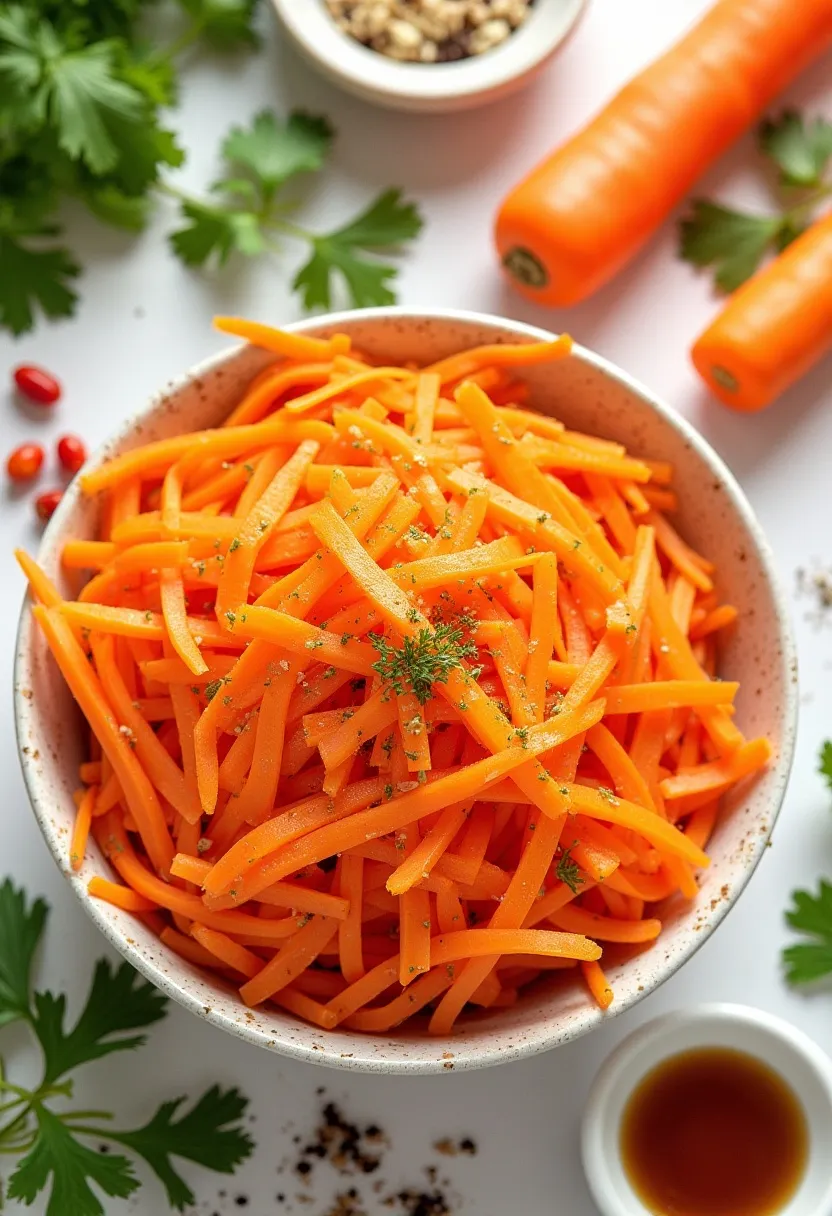
Put all these ingredients together — the carrots, garlic, vinegar, oil, coriander, pepper, chili, and a little sugar and salt — and what you get is a salad that’s crisp, fresh, bright, and flavorful without being sharp, warm without being heavy, and simple yet layered. It’s a dish that doesn’t need to shout to impress; it just works, quietly, perfectly, and leaves you coming back for more. 🥰
Preparing the Salad: Slow, Calm, and Enjoyable 🧡
One of the best things about this salad is that the preparation process feels relaxed. There is no rush and no complicated technique.
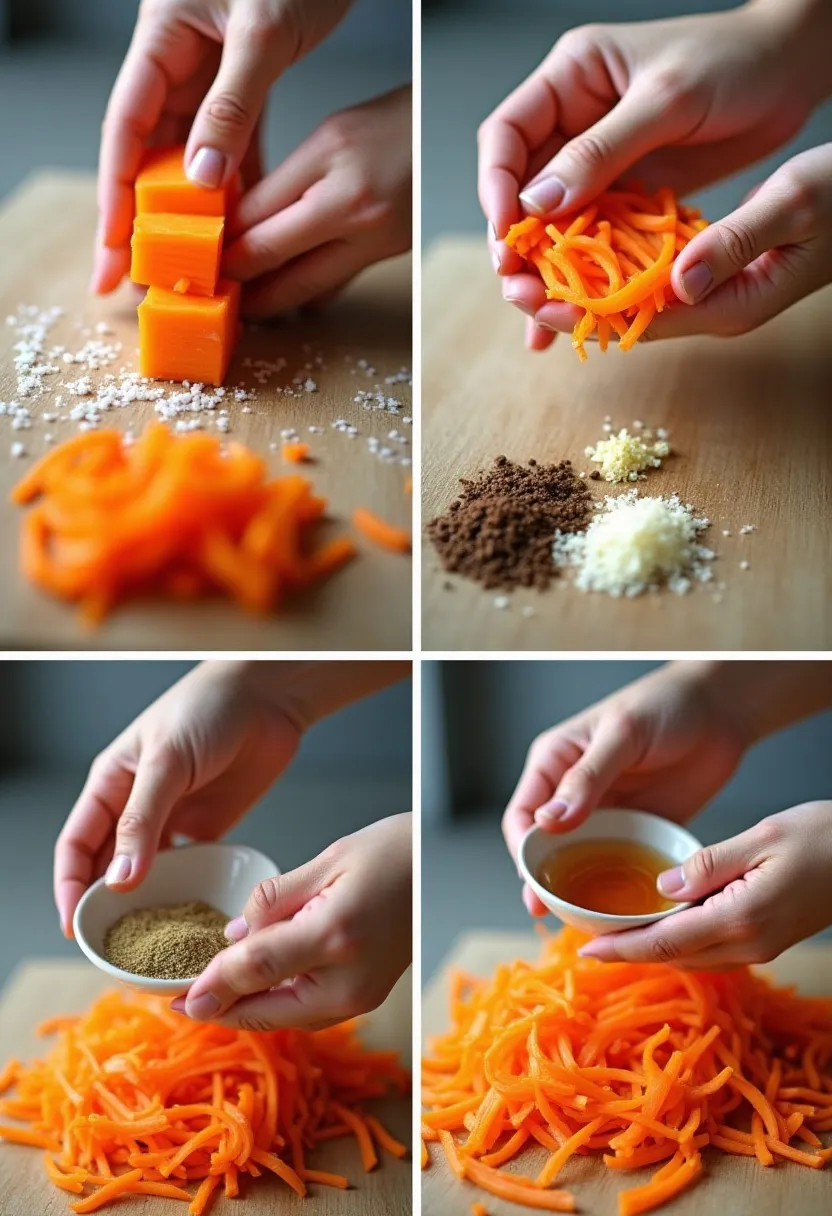
- Start with fresh carrots.
Choose firm, brightly colored ones. Peel them and cut into very thin, even strips. A julienne slicer helps, but a sharp knife works just fine if you take your time. - Add salt and let the carrots rest.
This softens them just a little and helps them absorb flavors more deeply.
- Add garlic and spices.
Finely minced garlic blends better than chopped. Sprinkle coriander and black pepper evenly so the carrots are lightly dusted, not clumped. - Warm the oil.
The oil should be warm, not smoking. Warm oil blooms the spices and carries their aroma beautifully. - Pour the oil over the carrots, then add vinegar and a touch of sugar.
Mix slowly and thoroughly, making sure every ribbon of carrot is coated. - Let the salad rest.
Even 30 minutes can make a difference, but a few hours allows the flavors to blend elegantly.
The moment of pouring warm oil onto the garlic-spice mixture is especially fragrant — like the flavor awakens right in front of you 🥰.
Serving and Pairing Ideas 🍽️
One reason Korean Carrot Salad has become so popular is its incredible versatility. It fits into everyday meals just as easily as it does festive spreads, and depending on what you serve it with, it can feel light and refreshing, hearty, or even elegant.
Some of my favorite pairings include:
- Roasted or grilled chicken 🍗 — the salad’s brightness cuts through the richness of the meat.
- Baked fish 🐟 — a perfect, crisp contrast to soft, flaky fish.
- Rice pilaf or steamed rice 🍚 — adds flavor and texture without overwhelming.
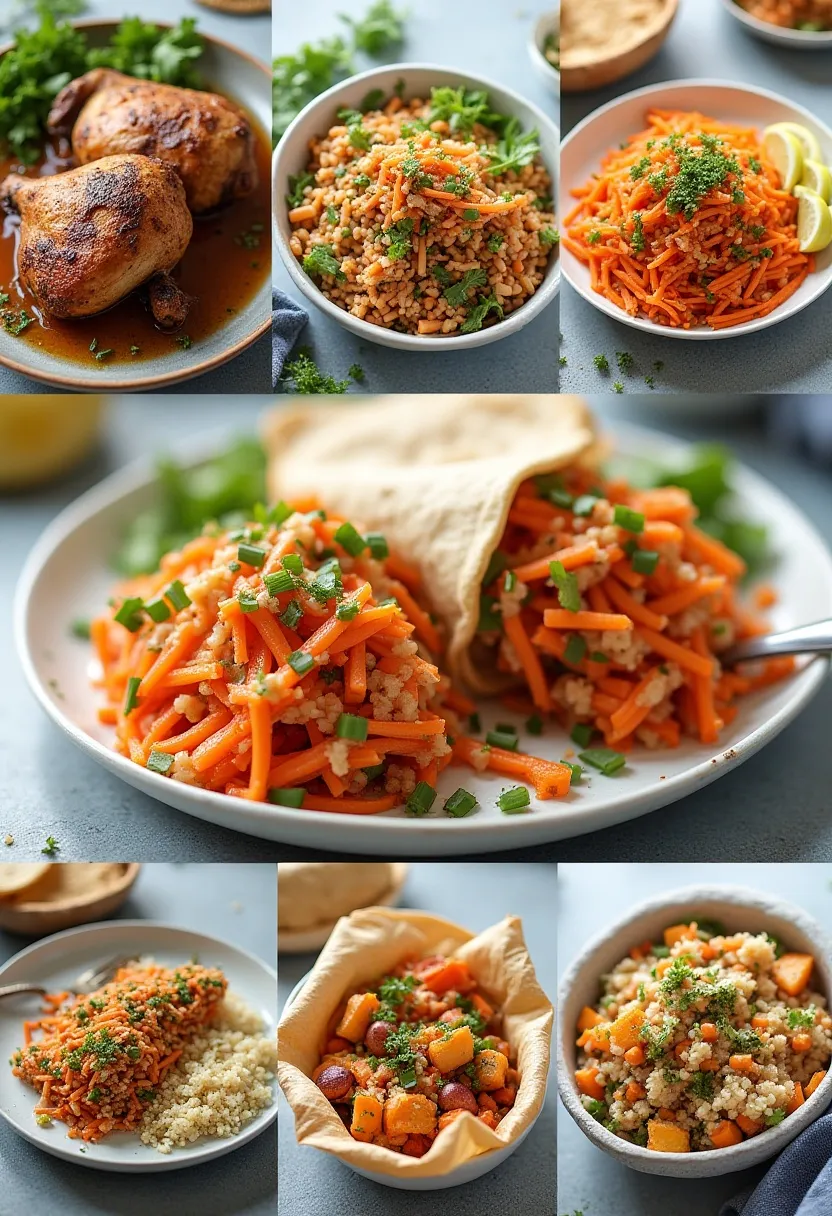
- Roasted potatoes 🥔 — yes, the crunch and the spices with tender potatoes are amazing together.
- Wraps, sandwiches, or flatbreads 🌯 — a quick way to brighten any handheld meal.
- Light soups or grain bowls 🥣 — it brings a fresh, zesty note that lifts the whole dish.
And of course, sometimes you just need a quick forkful straight from the bowl, cold from the fridge, which is honestly just as satisfying as any plated meal. There’s something comforting about that — the flavors are ready, balanced, and lively, and it’s almost like a little pick-me-up for your day.
Variations to Try 🎨
Even though the classic version of Korean Carrot Salad is already fantastic, the beauty of this dish is that it’s wonderfully adaptable — it’s basically a canvas for your taste buds. You can stick to the traditional flavors, or you can tweak things a little to match your mood, your pantry, or what’s in season.
For example, you might try adding:
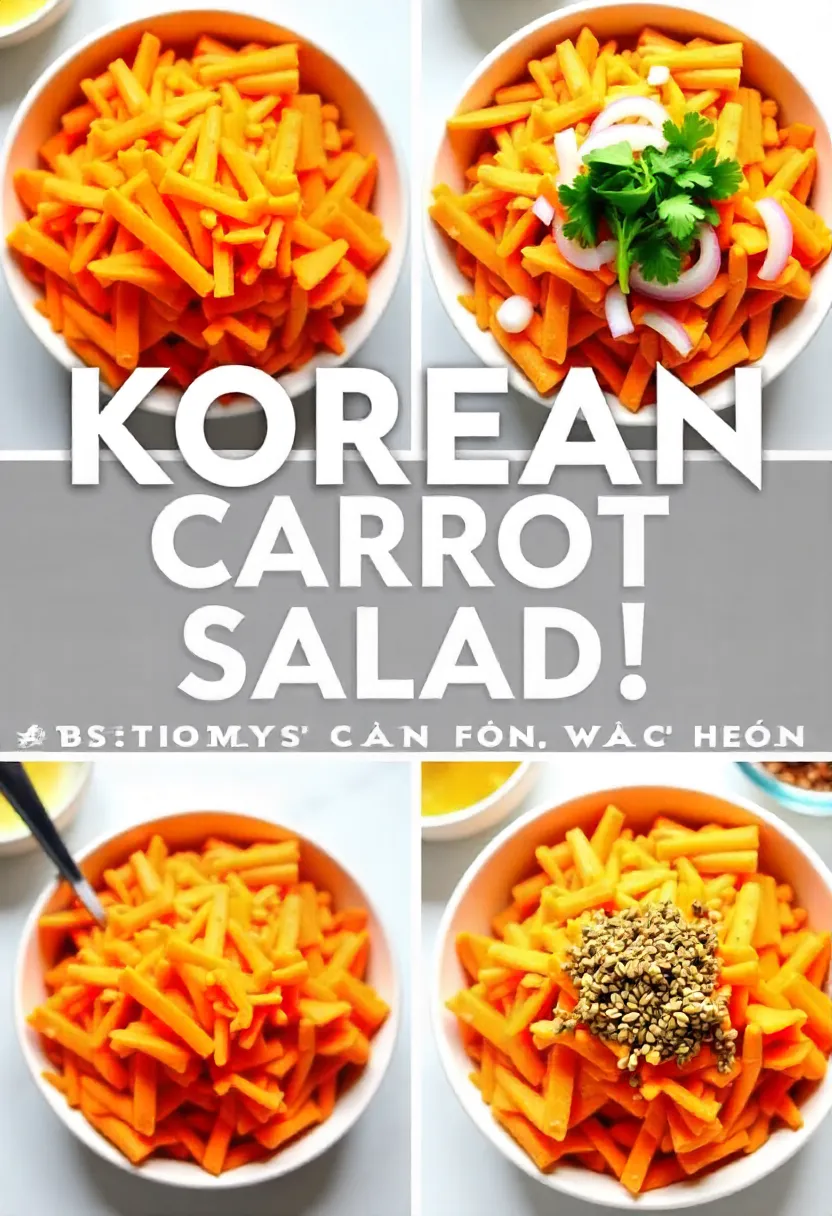
- Thinly sliced onions for a sharp, crunchy contrast that cuts through the sweetness of the carrots.
- Fresh cilantro or parsley to introduce a lively herbal note — it brightens the salad and adds a fresh, almost zesty edge.
- Toasted sesame seeds for a nutty, slightly crunchy accent that makes the texture more interesting.
- A pinch of chili flakes if you want a little playful heat — it wakes up the flavors without being overwhelming.
- A splash of lemon juice for a subtle twist in acidity, giving the salad a slightly brighter, tangier profile.
On the other hand, if you want something a bit softer, more delicate, you can:
- Reduce the garlic so it’s gentler and less punchy.
- Add a bit more vinegar to lighten the flavor and make it more refreshing.
- Let the salad rest longer so the spices mellow and integrate fully, giving it a smoother, rounder taste.
The wonderful thing is, there’s really no “right” version — only what tastes best to you. Experimenting is half the fun, and sometimes the best tweaks come from just seeing what you have on hand and trusting your instincts.
Storage and Flavor Over Time 🥡⏳
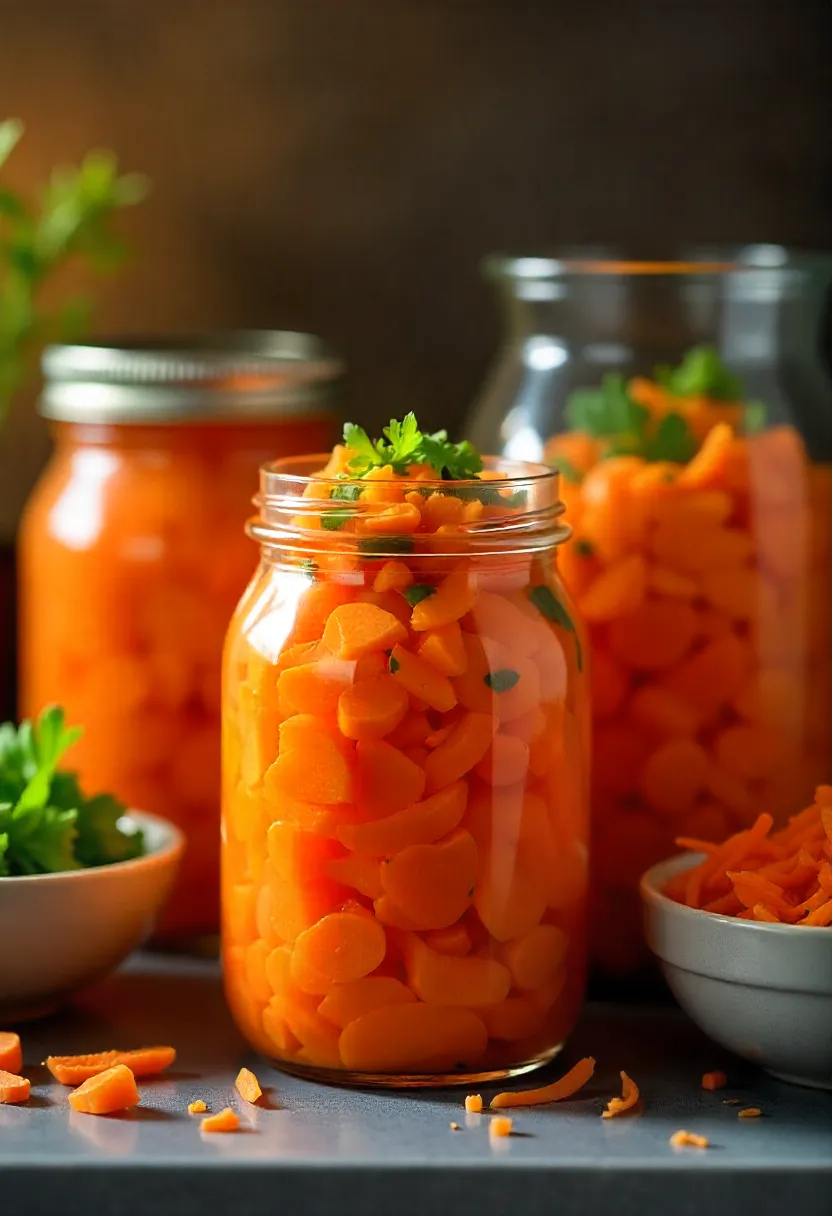
One of the best things about this salad is that it keeps beautifully. Stored in a sealed container in the fridge, it can stay fresh and flavorful for up to a week. Over time, the carrots soften just a little, and the spices have a chance to blend even more deeply, which often makes the salad taste even better on the second or third day — almost like it’s had a chance to “settle in” and come together fully.
If, after a day or two, the flavors feel a bit too gentle, a tiny refresh works wonders:
- Add a small splash of vinegar to lift the brightness.
- Sprinkle a little freshly ground black pepper to wake up the spices.
- Add a pinch of salt to bring everything back into balance.
Even the smallest adjustment can completely revive the salad, making it taste lively again. Honestly, I love having this salad in the fridge — it’s like a little ready-made burst of flavor, always there to grab whenever you need a quick snack, a side for dinner, or just something fresh and satisfying.
Conclusion: A Dish That Brings Comfort Without Demanding Attention 💛
At first glance, Korean Carrot Salad might seem simple, almost unassuming, but that’s exactly where its charm lies. There’s a quiet depth to it, a kind of humble elegance that doesn’t shout for attention but quietly makes its presence felt on the table. Beyond just being a tasty side, it tells a story — of adaptation, of creativity in the kitchen, and of traditions that endure even far from home. Every bite carries a sense of care, a memory of kitchens where ingredients were simple, yet meals were shared with warmth and thoughtfulness.
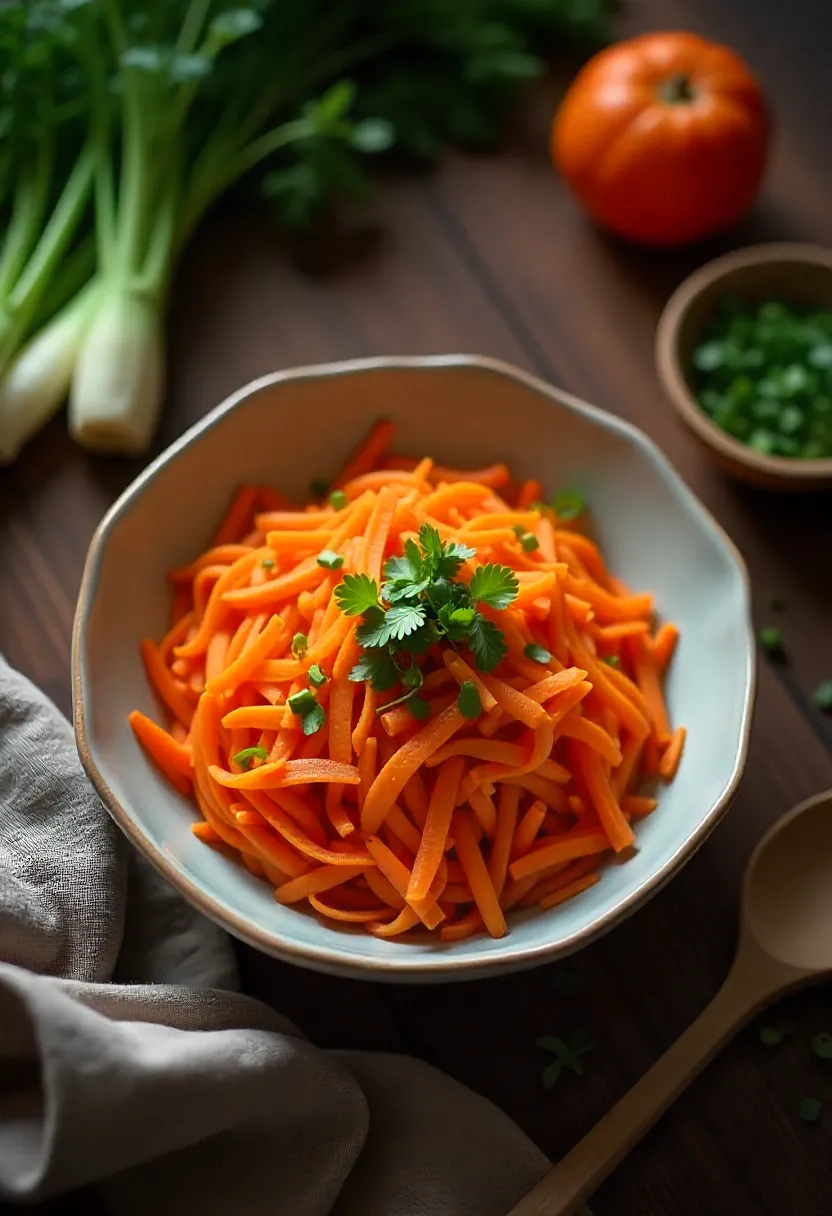
What’s remarkable about this salad is that it manages to be both ordinary and special at the same time. It’s everyday food that doesn’t need to impress, yet it feels expressive, layered, and thoughtful. There’s no pretense here — just honest flavors, textures that make you pause for a second, and aromas that feel familiar, comforting, and a little like home.
It’s the kind of dish that lingers in memory, not because it’s flashy or complicated, but because it feels human. Every time you make it or serve it, it welcomes people to the table without demanding anything in return. It’s comforting, reliable, and quietly joyful — the kind of dish that makes you smile without even thinking about it.
And maybe that’s its greatest gift: it reminds us that sometimes the simplest meals are the ones that nourish not just our bodies, but also our hearts. 💛