Contents
There’s something about winter gatherings that feels different from any other time of the year. The air outside turns sharp, the windows fog slightly from the warmth inside, and conversations seem to stretch longer than usual. You don’t rush through dinner in December. You linger. You refill glasses. You talk a little more honestly. Even the lighting changes everything — candles flicker, lamps glow softer, and the table itself starts to matter just as much as what’s on it.
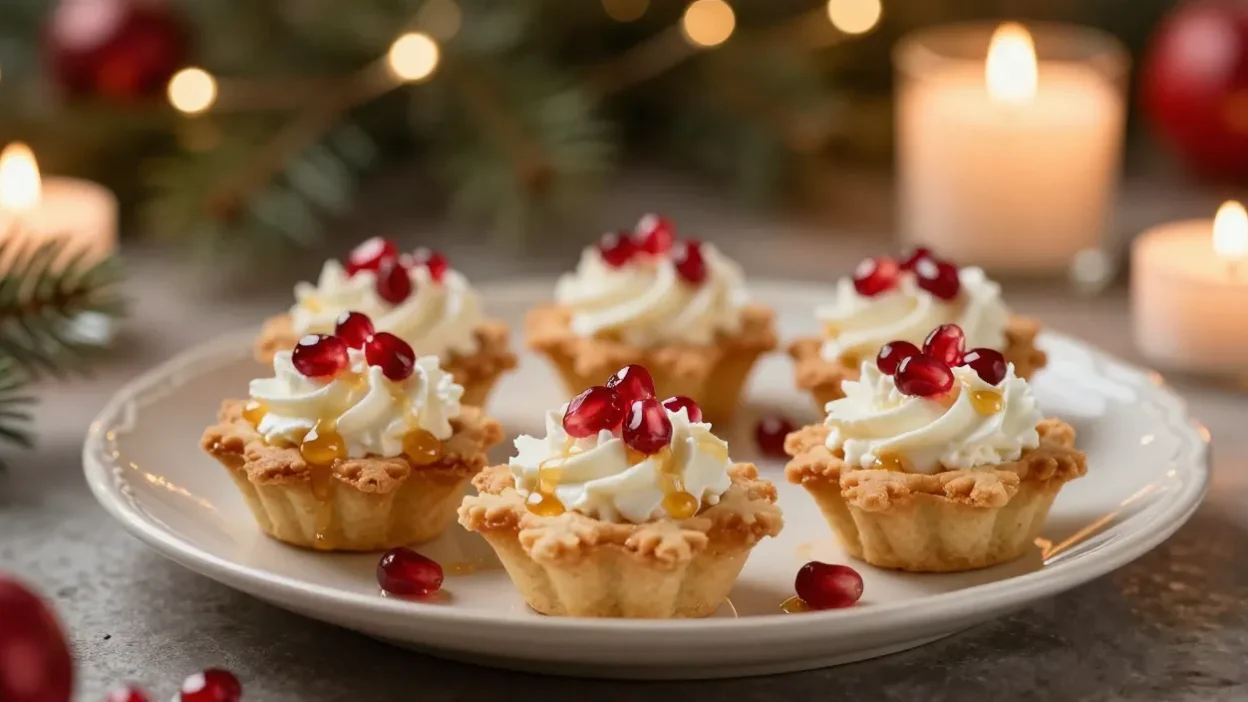
In winter, a table shouldn’t feel accidental. It should feel considered, even if the menu is simple. There’s a quiet charm in placing something beautiful in the center and watching people notice it without you pointing it out. That’s exactly the role these snowflake tartlets play. They don’t demand attention, but they earn it. A golden pastry shaped like a snowflake holds a swirl of creamy goat cheese, topped with jewel-like pomegranate seeds and a light drizzle of honey that catches the light just enough to make someone pause.
What I love most is how they create atmosphere without being dramatic. They feel festive, but not loud. Elegant, but not stiff. If you had to describe their energy, it would probably be something like this:
- warm rather than flashy
- refined but approachable
- seasonal without feeling themed
- delicate, yet satisfying
When someone takes the first bite, the experience unfolds naturally. The pastry gives a gentle crispness, the cheese softens on the tongue, and then a bright pop of pomegranate cuts through the richness. The honey lingers quietly at the end, almost as an afterthought. It doesn’t scream sweetness; it simply rounds everything out. The balance feels thoughtful, and that’s what makes them memorable.
And here’s the slightly surprising part — they look far more complicated than they are. Most guests assume you’ve spent hours crafting something intricate, when in reality the process is calm and straightforward. There’s no advanced technique hiding behind that delicate snowflake shape.
The Art of Sweet and Savory Harmony 🧀🍯
There’s a reason cheese and fruit have shared a plate for centuries. It isn’t random. It’s chemistry — and instinct. Our taste buds naturally respond to contrast. When something is rich, we crave brightness. When something is tangy, a hint of sweetness makes it gentler. Texture matters just as much as flavor; too much softness becomes boring, too much crunch becomes overwhelming.
Goat cheese works beautifully here because it carries personality without overpowering the bite. It’s creamy, slightly tangy, and just earthy enough to feel substantial. Pomegranate seeds add freshness and that tiny burst of juice that wakes everything up. Honey smooths out sharper edges, bringing warmth instead of obvious sweetness. And the pastry — buttery, lightly golden — anchors it all with structure and depth.
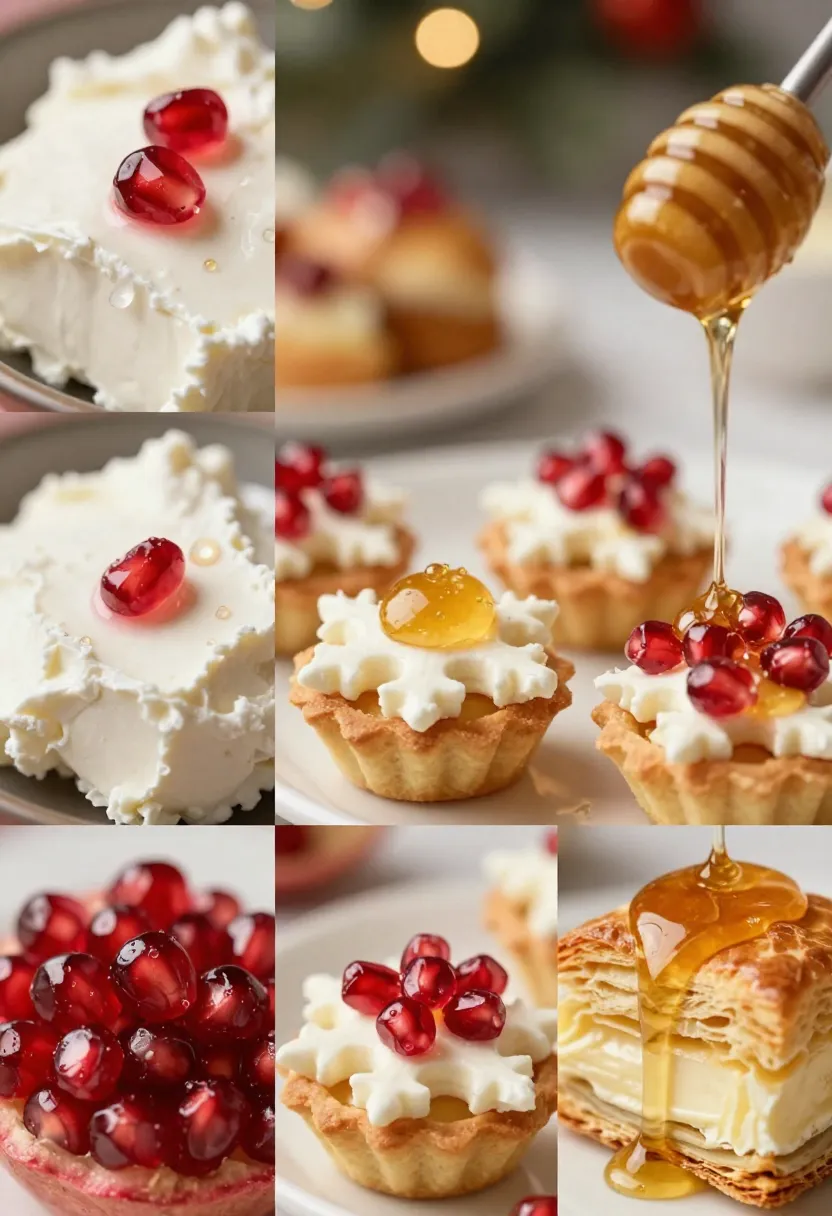
The harmony comes from a few simple contrasts working together:
- creamy filling against crisp pastry
- bright fruit against rich butter
- floral honey against tangy cheese
None of these ingredients would feel as interesting alone. Together, though, they create something layered and surprisingly nuanced. The tartlets never feel heavy, which is important during the holidays when tables are often filled with rich dishes. Instead, they act almost like a palate refresher — a small bite that feels indulgent but doesn’t weigh you down.
What’s especially satisfying is how the flavors reveal themselves in stages. First the pastry, then the cheese, then the pop of fruit, and finally that gentle sweetness. It’s subtle, but you notice it. And that layered experience is usually what makes people reach for another one without even thinking about it.
Small Bites, Big Impression ✨
There’s something undeniably charming about miniature food. Small portions invite people in. They feel safe, easy to try, and somehow more elegant than large servings. A snowflake shape instantly sets a winter tone, but it does so quietly. It doesn’t turn the evening into a theme party — it simply nods to the season.
These tartlets fit almost anywhere. They look just as natural on a formal holiday table as they do at a relaxed evening gathering with close friends. You could serve them at:
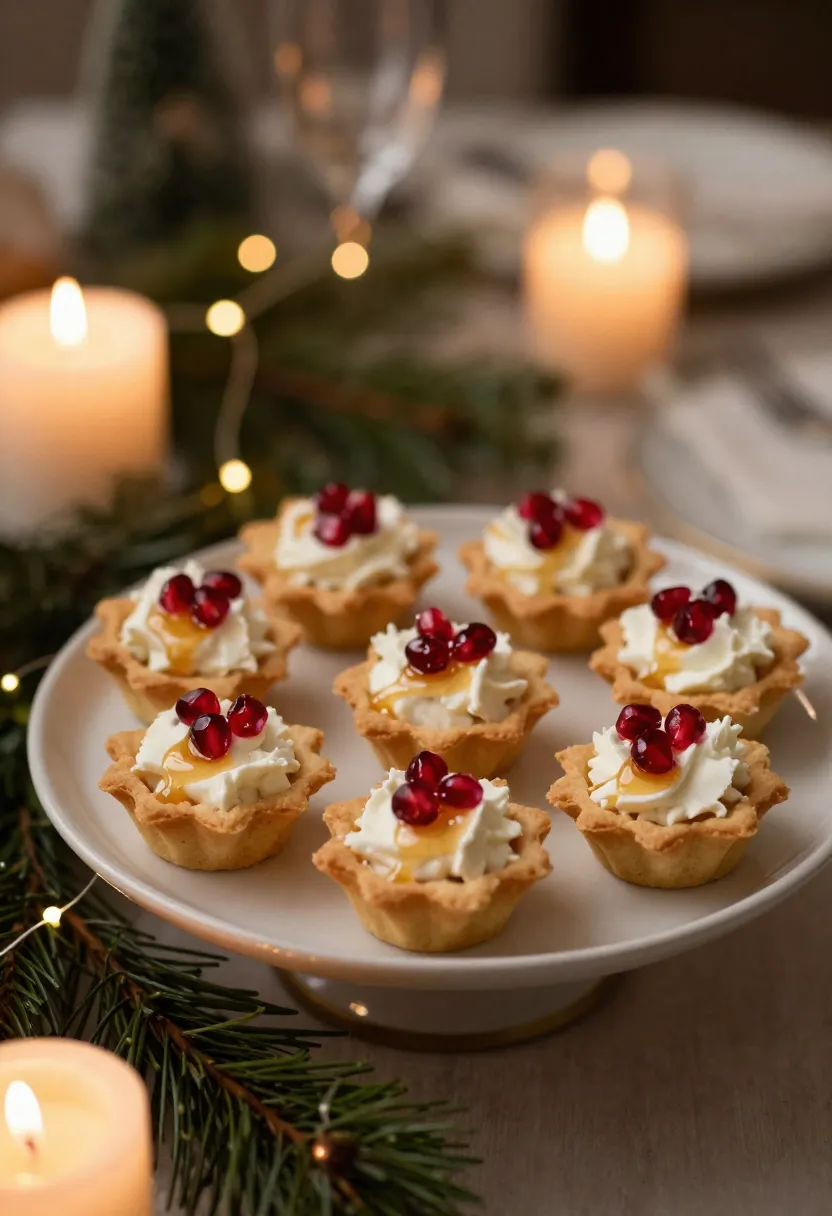
- a Christmas dinner as an elegant starter
- a New Year’s Eve cocktail party alongside sparkling wine
- a winter brunch with soft cheeses and fresh fruit
- an engagement or bridal shower
- even a cozy date night at home with candles and music playing softly
Their versatility is part of their charm. They feel special, yet never intimidating. No one hesitates before picking one up. There’s no complicated slicing or plating involved — just a simple, satisfying bite.
Making them is surprisingly calming, too. Rolling out the dough, cutting the snowflake shapes, arranging each piece carefully — it slows you down in the best possible way. It turns cooking into a quiet ritual instead of a rushed task. By the time you’re drizzling the honey over the finished tartlets, the kitchen smells warm and buttery, and there’s a small sense of accomplishment that’s hard to explain unless you’ve felt it.
When you place them on the table and step back, you’ll notice something subtle but important: they make the entire setting look more intentional. Not because they’re extravagant, but because they show care. And during winter gatherings, that sense of care is what people remember long after the plates are cleared.
Now, let’s move on to the recipe itself and bring these delicate snowflake tartlets to life. ❄️
Snowflake Tartlets Recipe ❄️🍯
These snowflake tartlets feel like winter captured in a single bite. Crisp, buttery pastry shaped into delicate snowflakes cradles a smooth, tangy goat cheese filling. On top, glossy pomegranate seeds bring a bright pop of freshness, while a light drizzle of honey adds warmth and softness that ties everything together.
They’re the kind of appetizer that looks carefully crafted — almost too pretty to touch — yet once you take a bite, the elegance gives way to comfort. The contrast between flaky pastry and creamy filling feels indulgent but not heavy. The sweetness from the honey doesn’t overpower; instead, it gently rounds out the tang of the cheese. Meanwhile, the pomegranate adds not only color but that subtle burst of juice that keeps the flavor from feeling flat.
These tartlets are perfect for winter entertaining because they feel thoughtful without requiring complicated techniques. The ingredients are simple, but when combined, they create something that tastes layered and refined. Whether served at a holiday dinner, a festive brunch, or an intimate gathering with friends, they tend to disappear from the platter faster than expected.
Ingredients
For the Pastry Shells
- 1½ cups all-purpose flour
- ½ teaspoon fine salt
- ½ cup unsalted butter, very cold and cut into small cubes
- 4–6 tablespoons ice water
For the Filling
- 4 ounces soft goat cheese, room temperature
- 2 ounces cream cheese (optional, for a smoother texture)
- 1 tablespoon finely chopped fresh chives or thyme
- Freshly ground black pepper to taste
For Topping
- ½ cup fresh pomegranate arils
- 2–3 tablespoons honey
- Optional: small mint leaves or rosemary tips for garnish
Preparation Steps
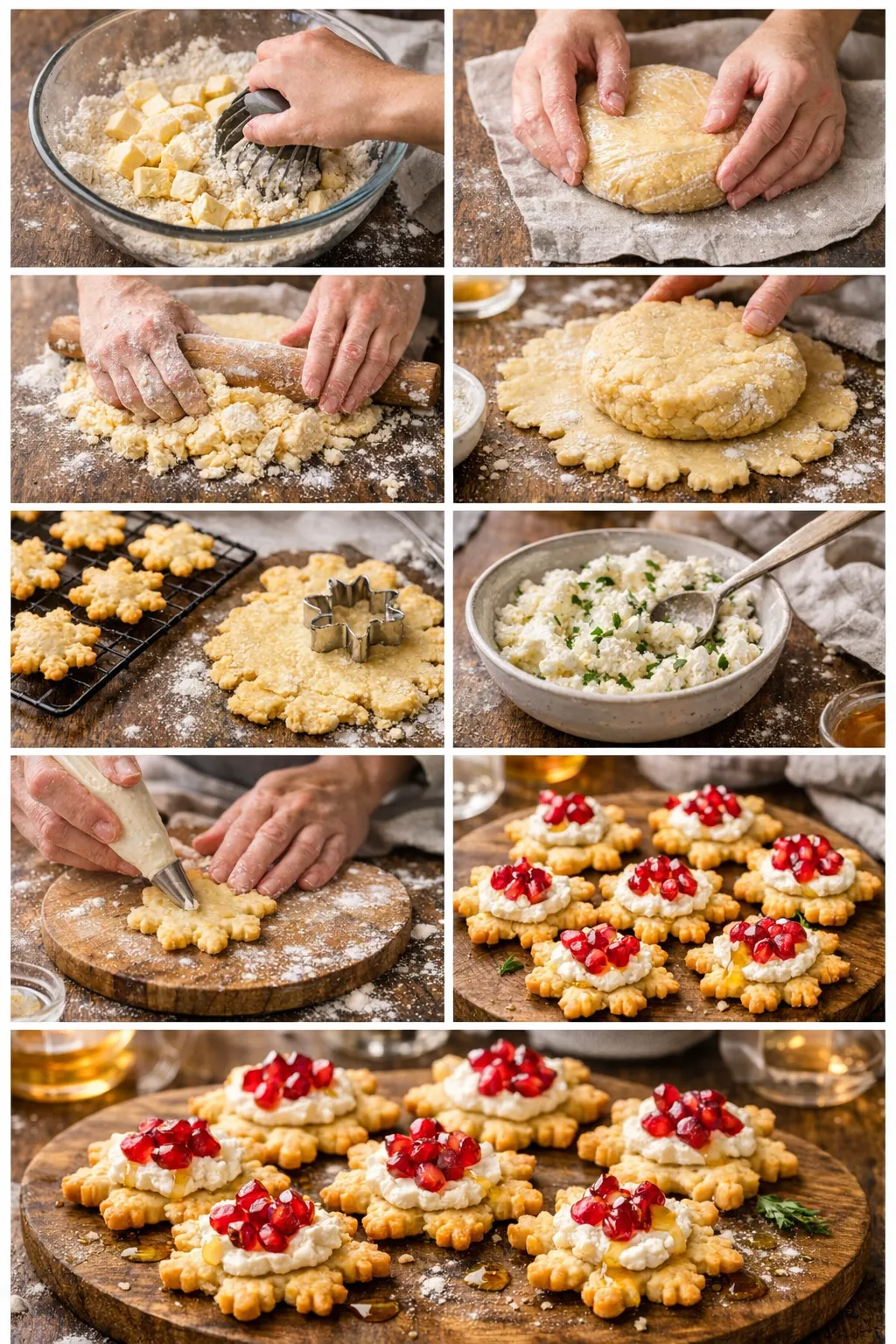
- Prepare the dough.
In a large bowl, whisk together the flour and salt. Add the cold cubed butter and work it into the flour using your fingertips or a pastry cutter. Continue until the mixture resembles coarse crumbs with small visible pieces of butter. Those little bits are what create a flaky texture later, so don’t overwork them. - Add the water.
Slowly add ice water one tablespoon at a time, gently mixing after each addition. Stop as soon as the dough begins to hold together. It shouldn’t feel sticky — just cohesive. Overmixing can make the pastry dense instead of tender. - Chill the dough.
Shape the dough into a flat disc, wrap it tightly in plastic wrap, and refrigerate for at least 30 minutes. This step allows the butter to firm up again and helps the dough roll out more easily. - Preheat the oven.
Set your oven to 375°F (190°C). Line a baking sheet with parchment paper so the pastry doesn’t stick and cleanup stays simple. - Roll and cut.
On a lightly floured surface, roll out the chilled dough to about ⅛-inch thickness. Try to keep the thickness even so the tartlets bake uniformly. Use a snowflake-shaped cookie cutter to cut out shapes and gently transfer them to the prepared baking sheet. - Dock and bake.
Lightly prick each pastry shape with a fork to prevent puffing. Bake for 10–12 minutes, or until the edges turn lightly golden. Keep an eye on them — they can go from pale to too dark quickly. Once baked, transfer to a wire rack and let them cool completely. - Prepare the filling.
In a small bowl, combine goat cheese, cream cheese (if using), chopped herbs, and black pepper. Mix until smooth and creamy. If the cheese feels stiff, let it sit at room temperature a little longer before mixing. - Assemble the tartlets.
Spoon or pipe the cheese mixture onto each cooled pastry base. Don’t overload them — a modest swirl keeps the flavors balanced. - Finish and serve.
Sprinkle pomegranate arils evenly over the cheese layer. Just before serving, drizzle honey lightly on top and garnish with fresh herbs if desired.
Serve immediately for the best texture, when the pastry is still crisp and the filling is soft but structured.
A Few Helpful Tips & Little Kitchen Tricks ✨
- Keep your butter very cold before mixing it into the flour — even chilling the cubes in the freezer for 10 minutes helps create extra flakiness.
- If your kitchen is warm, place the cut pastry shapes in the refrigerator for 10 minutes before baking to help them hold their shape.
- For cleaner presentation, use a piping bag (or a zip-top bag with the corner snipped) to add the cheese filling.
- Drizzle the honey just before serving so the pastry stays crisp.
- Taste your goat cheese before mixing — some varieties are tangier than others, so you can adjust honey or pepper slightly if needed.
These small details may seem minor, but they truly make a difference in the final result. And once you’ve made them once, you’ll realize they’re not just beautiful — they’re surprisingly simple to repeat.
Creating a Beautiful Serving Moment 🕯️
Presentation is one of those details that quietly changes everything. You can cook the most delicious appetizer in the world, but if it lands on the table without thought, it loses a bit of its charm. With snowflake tartlets, the beauty is already there — delicate shapes, jewel-toned pomegranate, that soft golden pastry — but the way you serve them can elevate the entire experience.
You don’t need expensive platters or dramatic styling. In fact, simple often feels more authentic. A wooden serving board gives them a cozy, almost cabin-in-the-mountains feel. A white porcelain platter makes the colors stand out and adds a touch of quiet elegance. Even a slightly imperfect ceramic plate can look beautiful if the lighting is warm and soft.
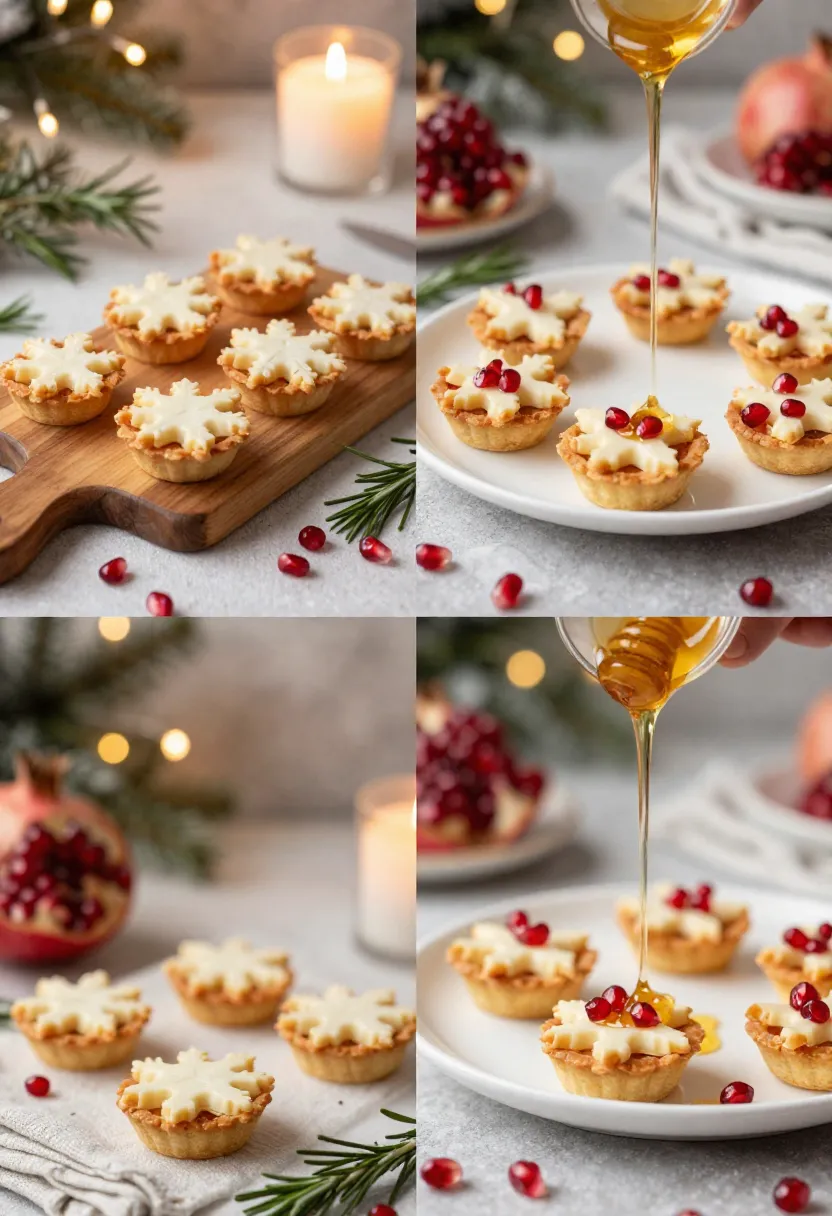
Small touches make a surprising difference. A few extra pomegranate seeds scattered around the tartlets create a sense of abundance without looking messy. A sprig or two of rosemary adds contrast and a subtle fragrance that guests will notice when they lean in. If you want to lean into the winter aesthetic, you can lightly dust the serving board with powdered sugar so it looks like a soft frost — but keep it subtle. Too much and it starts to feel staged.
The drinks you serve alongside also shape the mood. Sparkling wine or champagne adds a celebratory note and pairs beautifully with the creamy-tangy filling. A crisp white wine with good acidity balances the honey’s sweetness. If you prefer something alcohol-free, a citrus herbal tea with a hint of honey feels just as thoughtful.
Here are a few easy ways to elevate the serving moment without overcomplicating it:
- use warm, soft lighting instead of bright overhead lights
- choose neutral plates so the colors of the tartlets stand out
- add one natural element (rosemary, greenery, linen napkins) for texture
- drizzle the honey just before serving so it still glistens
It’s not about perfection. It’s about atmosphere. When someone pauses before taking a bite and says, “These look beautiful,” you’ll know the effort paid off.
Practical Tips and Flavor Variations 🌿✨
Even though this recipe is approachable, there are a few small technical details that make a big difference. Pastry responds strongly to temperature, and a little attention here prevents frustration later.
Cold butter is essential. When it hits the heat of the oven, it releases steam, which creates those delicate layers inside the crust. If the butter softens too much while you’re working, the pastry can turn dense instead of flaky. If your kitchen runs warm, don’t hesitate to chill the cut shapes for ten minutes before baking. It’s a small pause that often saves the texture.
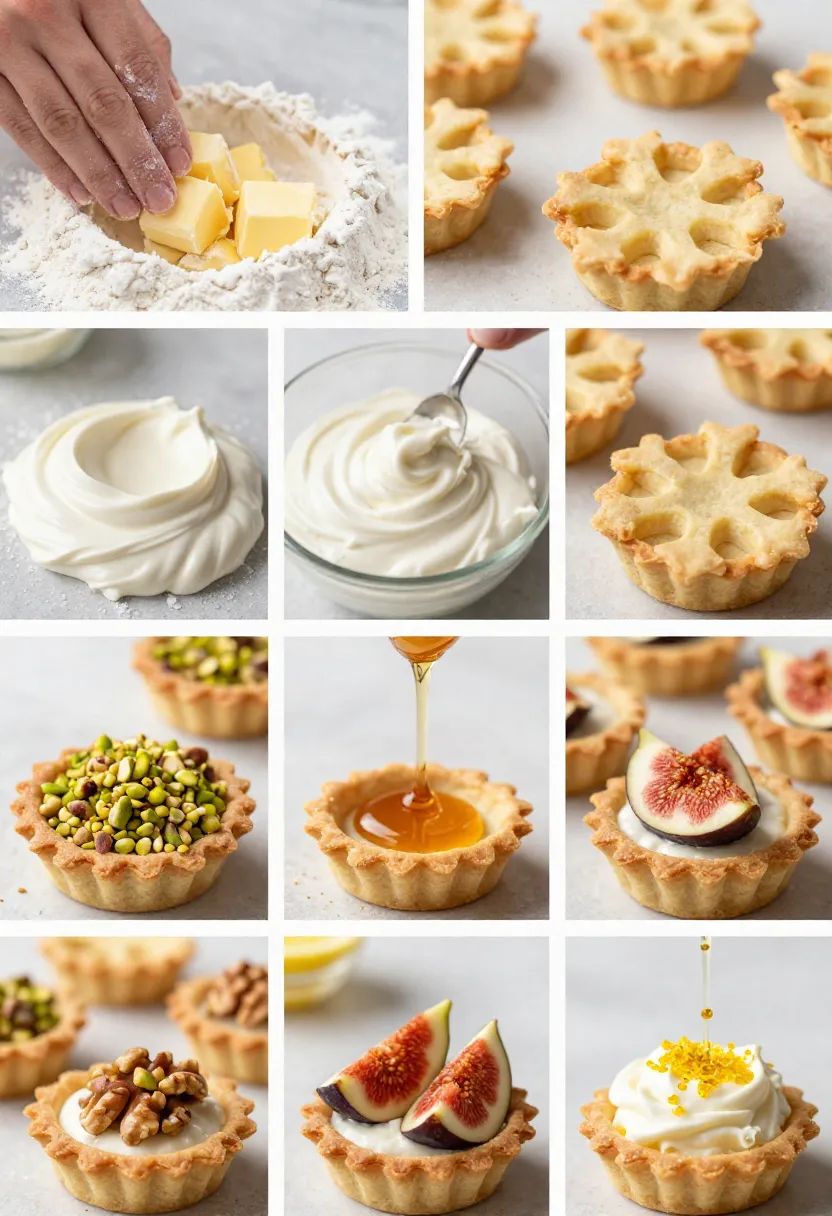
The filling also benefits from patience. Goat cheese blends much more smoothly when it’s fully at room temperature. If it’s too cold, you’ll end up fighting small lumps instead of getting that creamy consistency. And while it’s tempting to assemble everything early, try to wait until shortly before serving. That way, the shells stay crisp and the contrast between flaky pastry and soft filling remains intact.
Once you’ve made the base version, you can start playing with flavors. The structure is flexible, and that’s part of the fun. You might try:
- adding crushed pistachios or toasted walnuts for a bit of crunch
- using hot honey instead of regular honey for subtle warmth
- replacing pomegranate with thin slices of fresh fig in autumn
- mixing a little lemon zest into the cheese for brightness
- swapping shortcrust for puff pastry if you prefer a lighter texture
The beauty of this recipe is that it adapts. As long as you keep the balance between crisp, creamy, fresh, and sweet, you can adjust the details to match your mood or the season.
A Final Reflection on Winter Simplicity ❄️
There’s something reassuring about recipes that feel special without being complicated. Not everything memorable has to involve advanced techniques or rare ingredients. Sometimes it’s about combining familiar elements in a thoughtful way.
These snowflake tartlets capture that spirit. They bring a sense of care to the table. They look refined but still feel approachable. They’re festive without crossing into overly themed territory. And most importantly, they taste balanced — which means people genuinely enjoy eating them, not just admiring them.
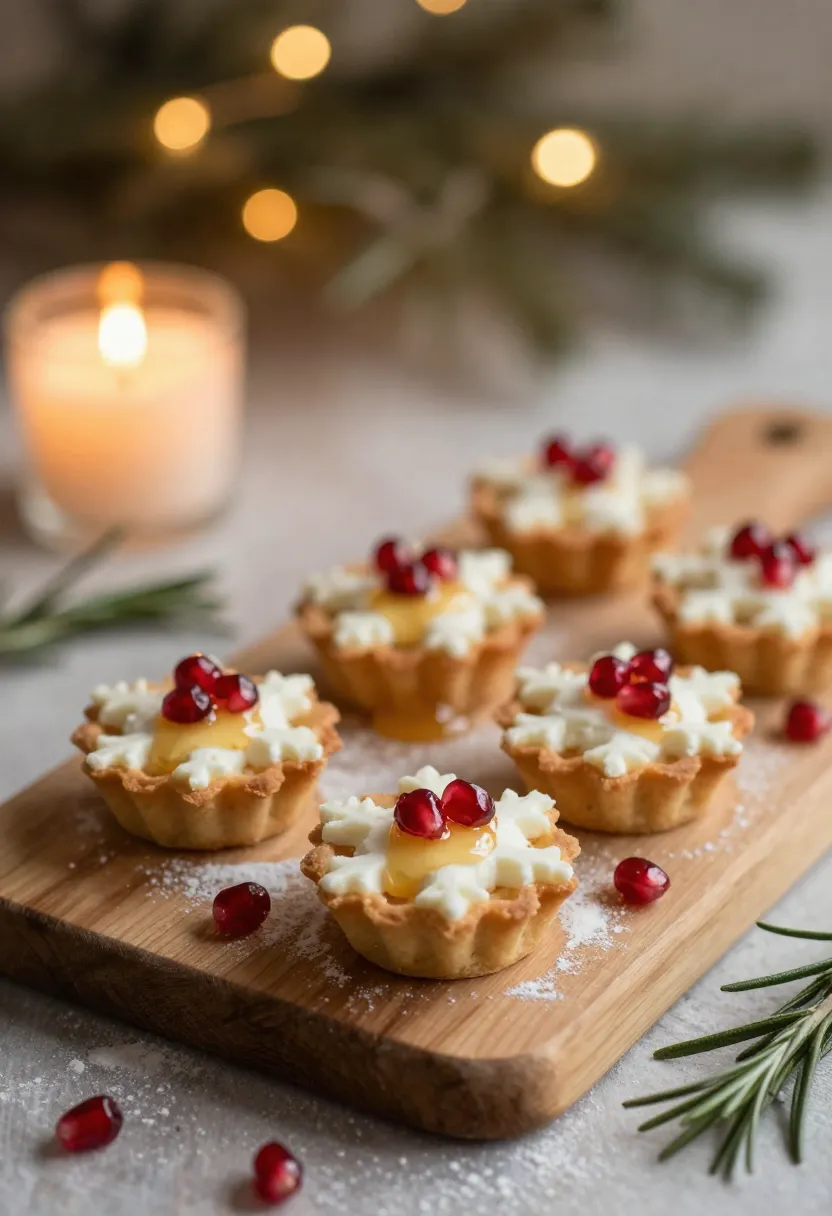
There’s also something quietly satisfying about the process. Rolling out dough on a calm afternoon. Cutting snowflake shapes one by one. Watching them turn golden in the oven. It slows you down. It turns cooking into something almost meditative. By the time you drizzle honey over the finished tartlets, the kitchen smells warm and buttery, and there’s a small, undeniable sense of accomplishment.
When you set them on the table, they don’t scream for attention. They simply sit there, delicate and inviting, waiting for someone to reach for one. And usually, once the first one disappears, the rest follow quickly.
That’s the kind of elegance that feels genuine — simple ingredients, handled with care, creating something that makes people smile. And honestly, during the winter season, that’s exactly the kind of magic we need. ✨