Contents
There’s something almost theatrical about a holiday table, though not in an exaggerated or staged way. It’s more like a quiet kind of anticipation that settles into the room. Candles flicker and drip a little wax onto the holders, someone subtly straightens a napkin, another person shifts the centerpiece just a few centimeters to the left because it somehow feels “more right.” Glassware catches the golden light, and the entire table begins to glow in that unmistakable December way. When the food finally appears, something shifts. Conversations slow down, people lean forward almost instinctively, and someone says, without even thinking about it, “Oh wow, that looks beautiful.” 🎄
Appetizers play a much bigger role in that moment than we usually admit. They are not just small bites meant to hold people over until the main course. They quietly shape the atmosphere of the evening. They are the first real taste, the first shared reaction, the first “try this” passed across the table. During Christmas, when the air already feels heavy with memory and emotion, those small details matter even more. A simple dish can suddenly feel layered with meaning because it exists in that warm, glowing context.
At the same time, there’s often a desire to do just a little more during the holidays. Not more in a stressful way, but in a thoughtful one. You want a dish that feels intentional. Something that makes people pause before they take a bite. Something that doesn’t just fill space on the table but gently draws attention. That’s where the idea of shaping deviled eggs into a Christmas tree becomes unexpectedly powerful. It keeps everything people already love about the dish but adds a visual twist that makes it feel new again.
What makes this idea work so well is the balance between comfort and creativity. It manages to be:
- familiar enough to feel safe and nostalgic
- festive without becoming overcomplicated
- impressive in appearance but simple in execution
That combination is rare, especially during a season that can easily slip into excess.
Why Deviled Eggs Never Go Out of Style
Deviled eggs have quietly endured every wave of food trends for decades, and it’s not by accident. They don’t rely on novelty. They rely on consistency. The texture is creamy but not dense, the flavor savory with just enough tang to keep things interesting, and the size perfectly manageable. Guests can take one without committing to a full plate, which somehow makes it easier to take two.
There’s also something deeply reassuring about seeing them on a holiday table. They’ve been present at so many gatherings over the years that they carry a certain emotional familiarity. Many people associate them with family kitchens, handwritten recipe cards, and relatives who insisted on using “the good mayonnaise.” That quiet nostalgia gives them staying power. They don’t feel trendy, and they don’t need to. They feel dependable.
During Christmas in particular, when menus tend to become heavier — rich meats, buttery casseroles, dense desserts — deviled eggs provide contrast. They offer richness, yes, but in a lighter format. The whipped yolk filling feels soft rather than overwhelming, and the brightness from mustard or lemon cuts through the richness of everything else on the table. They function almost like a palate reset without anyone consciously realizing it.
Another reason they remain so popular is their flexibility. With just a few subtle adjustments, they can lean in different flavor directions while still maintaining their identity. For example:
- a touch of smoked paprika adds warmth and depth
- finely chopped herbs introduce freshness and color
- a small amount of heat, like Dijon or even a hint of chili, sharpens the flavor
None of these changes transform the dish completely, but they allow it to evolve gently, which is often more appealing than radical reinvention.
Turning deviled eggs into a Christmas tree doesn’t alter their essence. It simply reframes them. Instead of being one appetizer among many, they become a focal point. And surprisingly, that small visual shift makes them feel more deliberate, more festive, and somehow more memorable.
When Presentation Becomes Part of the Celebration
Food communicates more than we usually acknowledge. It reflects care, effort, and intention. During the holidays, when we decorate our homes with such attention — adjusting lights, layering textures, choosing colors — it feels natural for the food to follow the same rhythm. Presentation stops being superficial and becomes part of the experience.
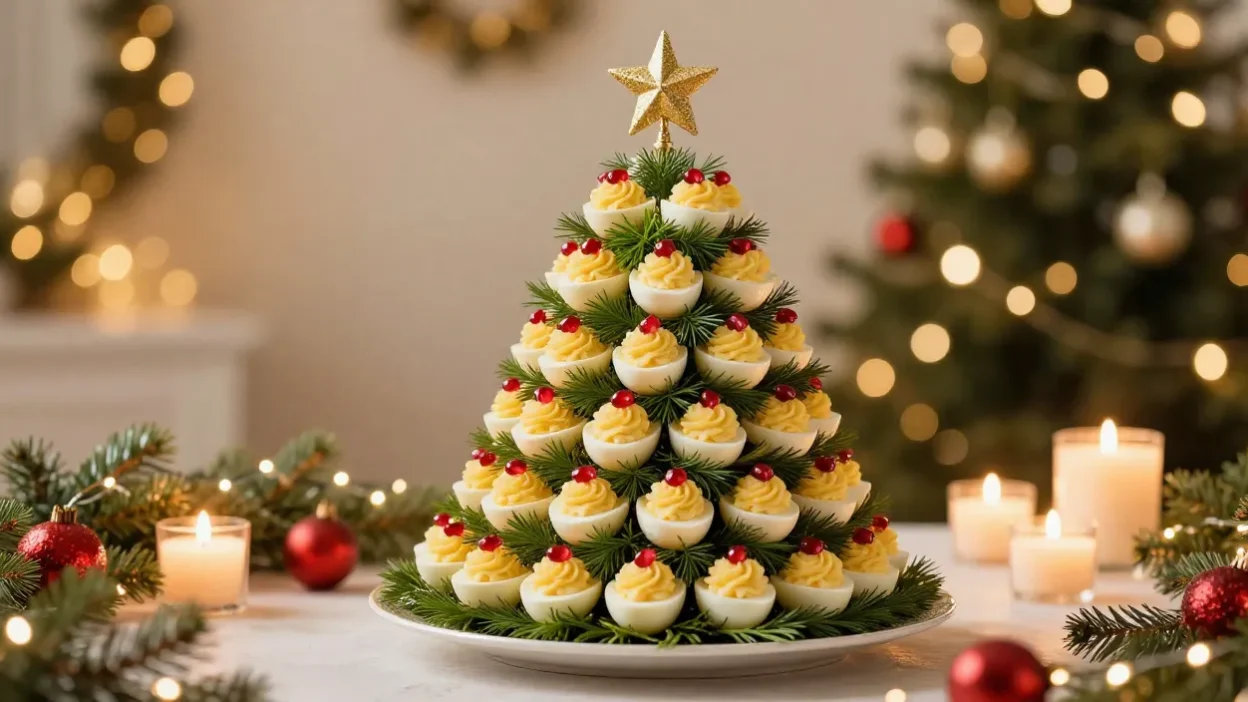
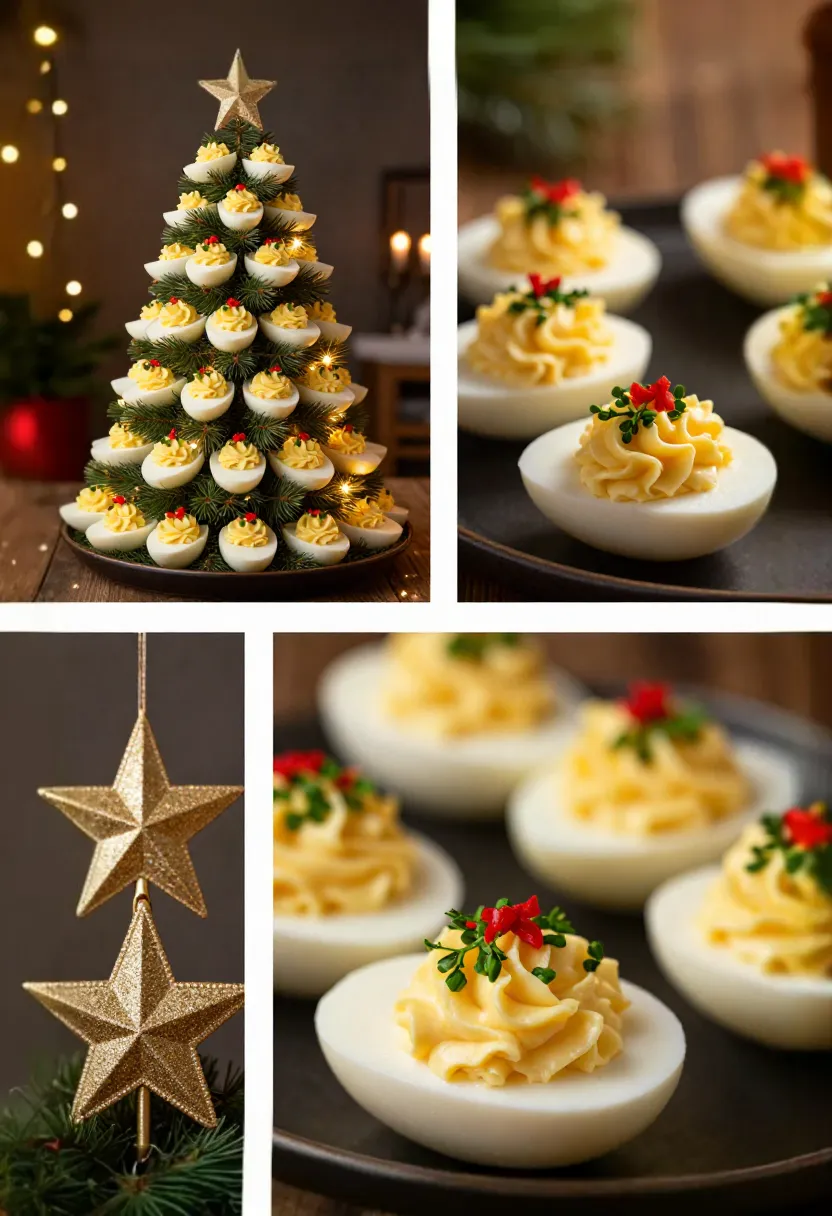
Arranging deviled eggs into the shape of a tree transforms them in a way that feels playful but not childish. Fresh herbs scattered over the top create a soft green layer reminiscent of evergreen branches. Small red accents add contrast and warmth. A modest star placed at the top completes the image without pushing it into excess. The result isn’t flashy; it’s charming. It feels homemade in the best sense of the word.
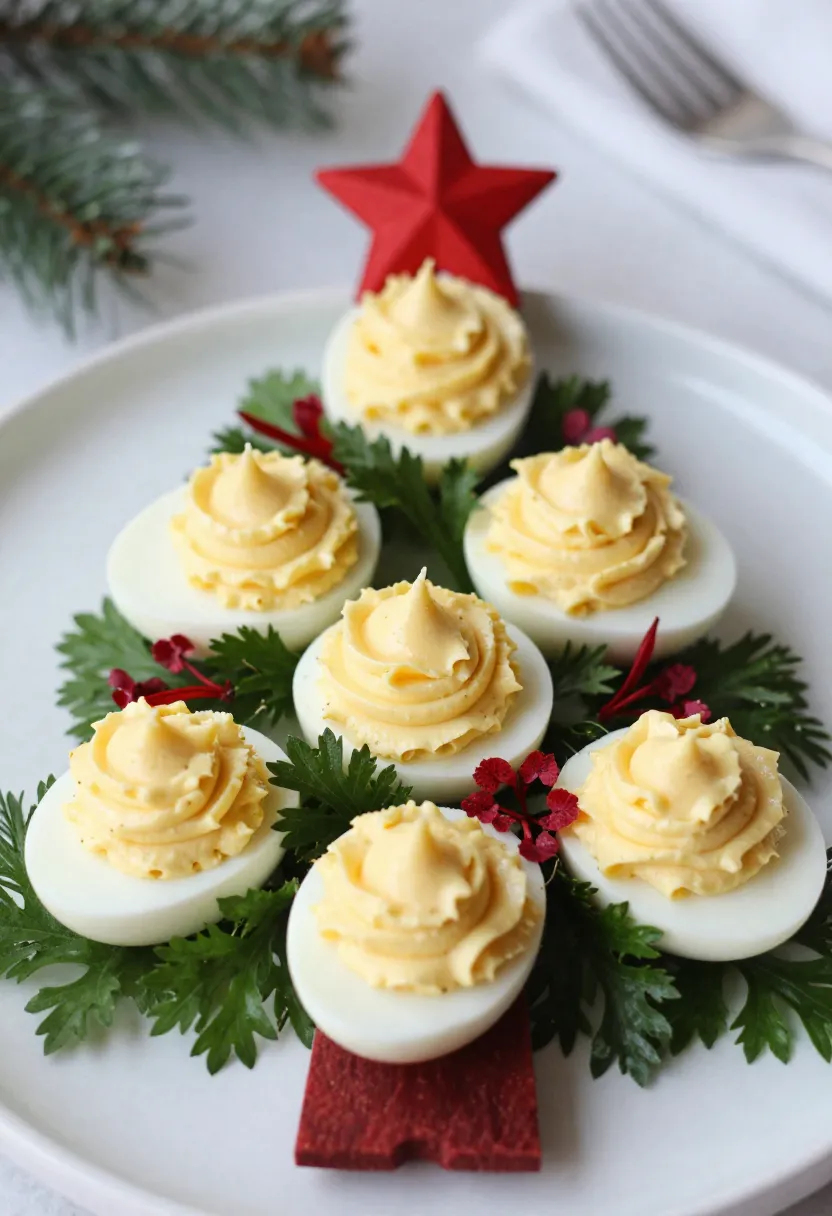
Importantly, it doesn’t require perfection. The rows don’t need to be mathematically precise, and the garnishes don’t have to be evenly spaced. In fact, slight asymmetry often makes the arrangement feel more inviting. Guests respond to authenticity more than to technical flawlessness. They notice when something feels personal rather than manufactured.
What elevates the presentation even further is the sensory contrast it creates:
- the softness of the creamy filling against the firmness of the egg whites
- the brightness of red garnishes against the green herbs
- the subtle aroma of fresh dill or parsley as the platter is placed on the table
These small details combine into something that feels thoughtfully composed rather than randomly assembled.
And then comes the most important part — the first bite. When the visual charm is supported by flavor that’s balanced, smooth, and just slightly tangy, the experience feels complete. The decoration draws people in, but the taste convinces them to reach for another. ✨
🍳 Christmas Tree Deviled Eggs Recipe
This festive appetizer takes something wonderfully familiar and gives it a holiday glow-up. At its core, it’s still the deviled egg everyone knows and secretly hopes to see on the table — creamy, slightly tangy, smooth in texture, comforting in flavor. But when those delicate egg halves are arranged into the shape of a Christmas tree and finished with fresh herbs and jewel-like garnishes, the entire dish feels transformed.
The filling is rich yet balanced. Dijon mustard adds depth without overpowering, lemon juice brightens everything just enough, and fresh dill brings that subtle herbal freshness that makes each bite feel lighter than you expect. The texture should be velvety and airy rather than dense, almost mousse-like when piped into the egg whites. When chilled properly, the flavors settle and become even more harmonious.
Visually, the contrast is what makes this dish shine. The soft yellow filling, the vibrant green herbs, the bright red pomegranate seeds — together they create something that feels festive without being overly decorative. It looks thoughtful. Intentional. And honestly, it’s one of those dishes that people photograph before tasting.
These Christmas Tree Deviled Eggs are ideal for holiday dinners, office parties, winter potlucks, or cozy evenings at home when you simply want the table to feel a little more magical. They’re elegant enough for formal gatherings, yet approachable enough that no one feels intimidated reaching for one.
Ingredients
For the eggs and filling:
- 8 large eggs
- 1/3 cup good-quality mayonnaise
- 1 tablespoon Dijon mustard
- 1–2 teaspoons fresh lemon juice
- 1/4 teaspoon salt (adjust to taste)
- 1/8 teaspoon freshly ground black pepper
- 1 tablespoon finely chopped fresh dill
- Optional: pinch of smoked paprika
For decoration:
- Extra finely chopped dill or fresh parsley
- 3 tablespoons pomegranate seeds
- 1/3 cup finely diced red bell pepper
- 1 slice firm cheese (for cutting out a star) or a slice of starfruit
Preparation Steps
- Place the eggs in a saucepan and cover them with cold water by about one inch. Bring the water to a gentle boil over medium-high heat. As soon as it reaches a full boil, turn off the heat, cover the pot with a lid, and let the eggs sit in the hot water for about 12 minutes. This method helps prevent overcooking and keeps the yolks bright.
- Transfer the eggs immediately into a bowl filled with ice water. Let them cool completely before peeling. The rapid cooling stops the cooking process and makes the shells easier to remove.
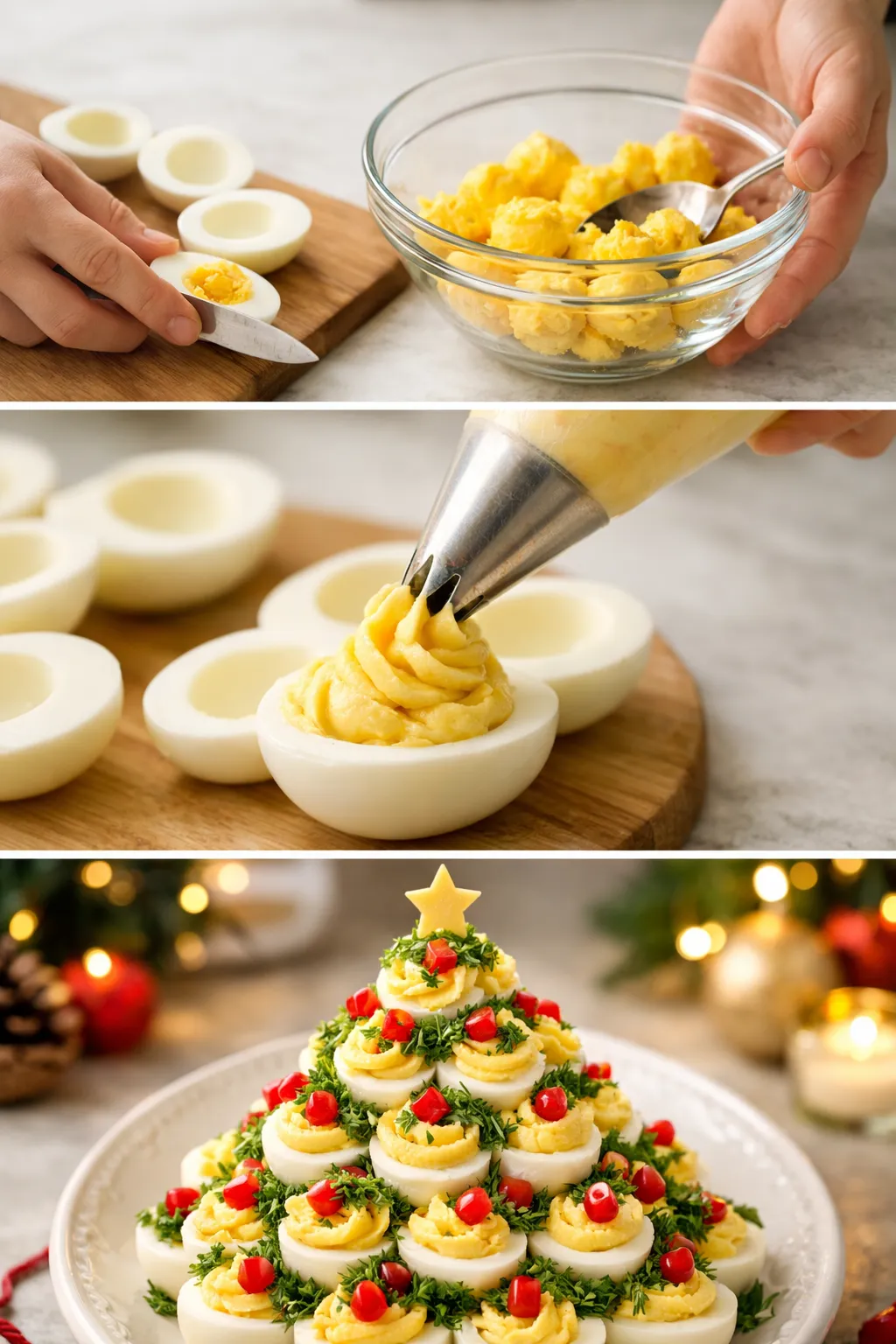
- Peel the eggs carefully and slice them in half lengthwise using a sharp knife. Gently remove the yolks and place them in a mixing bowl. Arrange the egg white halves on a tray or large plate.
- Mash the yolks thoroughly with a fork until they become fine and crumbly. For a smoother, more refined texture, press the yolks through a sieve before mixing in the other ingredients.
- Add the mayonnaise, Dijon mustard, lemon juice, salt, pepper, and chopped dill to the yolks. Stir until the mixture becomes creamy and uniform. Taste and adjust the seasoning if needed — sometimes a tiny splash of lemon makes all the difference.
- Spoon the filling into a piping bag fitted with a star tip. If you don’t have one, a zip-top bag with the corner cut off works perfectly well. Pipe the filling generously into each egg white half, creating soft swirls.
- On a large serving platter, begin arranging the filled eggs into the shape of a Christmas tree. Start with a wide base row and gradually reduce the number of eggs in each row as you move upward, finishing with a single egg at the top.
- Sprinkle finely chopped herbs over the eggs to create a green “tree” effect. Scatter pomegranate seeds and diced red bell pepper across the surface like ornaments.
- Cut a small star from the cheese slice and gently position it at the top of the tree.
- Refrigerate the assembled tree for at least 30 minutes before serving. Chilling helps the flavors meld and keeps everything firm and neat.
Serve cold, place it at the center of the table, and watch how quickly it becomes the topic of conversation. 🎄
Small Tips & Holiday Kitchen Hacks ✨
- For extra-smooth filling, blend the yolk mixture briefly with a hand mixer instead of mashing by hand.
- Dry the egg whites gently with a paper towel before piping to help the filling stay in place.
- Assemble the tree on the serving platter you plan to use — transferring it later can shift the shape.
- Add the red garnishes just before serving so the colors stay vibrant.
- If transporting, keep the filled eggs chilled and decorate them on-site for best results.
✨ Serving Ideas That Elevate the Experience
A dish like this deserves more than just being placed on the table at the last minute. It deserves a small moment. The way you present it can completely change how it’s perceived. A wooden board gives it that cozy, almost countryside Christmas feel, while a large white ceramic platter makes the colors stand out sharply — the green herbs look fresher, the red pomegranate seeds shine brighter, and the whole arrangement feels a little more polished.
You don’t need anything extravagant, but small details matter. A few sprigs of rosemary tucked around the edges can mimic pine branches and add a subtle aroma when someone leans in closer. A scattering of fresh cranberries (not too many) can create a natural frame. Even the placement on the table makes a difference — center stage, where people naturally gather, works best.
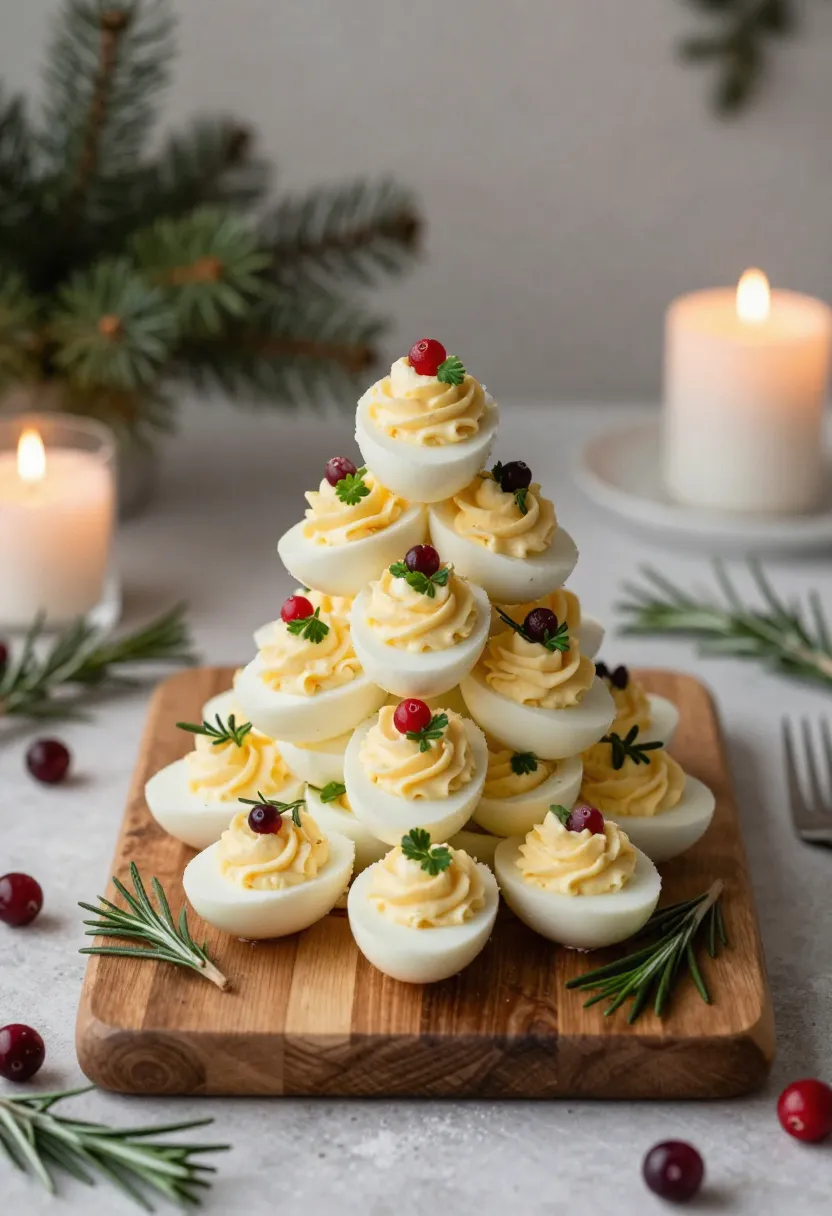
Lighting is something people underestimate. Soft candlelight reflects beautifully off the glossy filling and jewel-like garnishes. It creates warmth and depth that overhead lighting simply can’t replicate. The tree starts to glow gently, and suddenly it doesn’t feel like just food — it feels like part of the décor.
If you’re building a larger appetizer spread, think in terms of contrast. The deviled eggs are creamy and smooth, so pairing them with different textures makes the table more dynamic. For example:
- crisp crackers or toasted baguette slices
- a small bowl of marinated olives
- roasted nuts with a hint of salt
- mild cheeses that won’t overpower the eggs
This balance keeps everything interesting. Guests can move between textures and flavors without feeling overwhelmed, and the egg tree remains the quiet focal point rather than competing for attention.
🥂 Flavor Variations and Creative Twists
One of the reasons deviled eggs never get boring is because they’re incredibly adaptable. Once you’ve mastered the base filling, it’s surprisingly easy to shift the flavor profile without losing the essence of the dish. And honestly, experimenting can be part of the fun — especially if you test a spoonful before piping and adjust as you go.
If you want to add depth or personality, small tweaks can make a noticeable difference. For example:
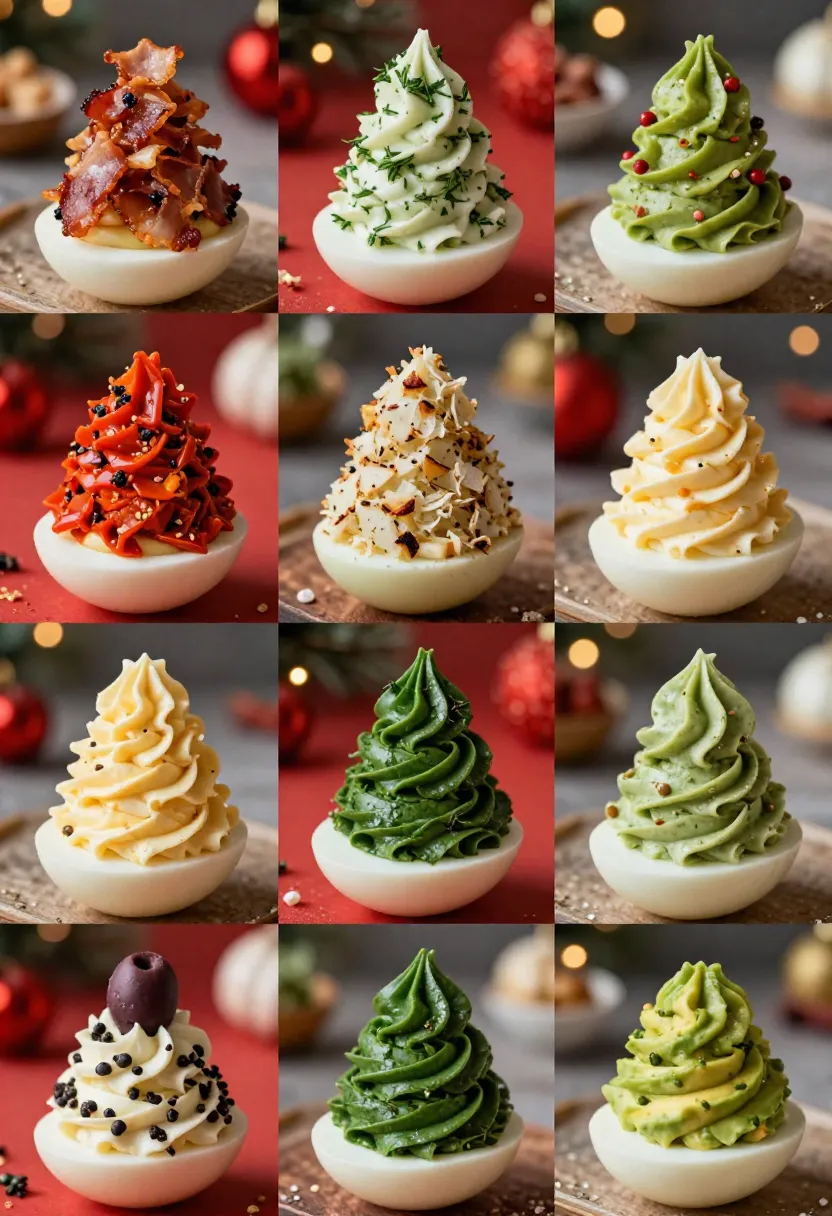
- Finely crumbled crispy bacon adds smokiness and a little texture contrast.
- A small spoonful of prepared horseradish introduces gentle heat without overwhelming the palate.
- Roasted garlic brings sweetness and warmth that feels especially fitting in winter.
- A tablespoon of cream cheese makes the filling slightly richer and smoother.
- Chopped chives can replace dill for a milder, onion-like freshness.
You can even play with color. Blending a tiny amount of spinach purée into part of the filling deepens the green tone and enhances the “tree” effect without changing the flavor too dramatically. It’s subtle, but visually it can make the arrangement look fuller and more vibrant.
The key is not to overcomplicate it. One adjustment is usually enough. Too many additions at once can muddy the flavor, and the beauty of deviled eggs lies in their simplicity.
💛 Making Holiday Cooking Feel Joyful Again
The holidays have a way of building pressure. Long grocery lists, packed schedules, expectations (both spoken and unspoken) that everything should look perfect. It’s easy to forget that food is meant to bring people together, not exhaust the person preparing it.
Dishes like this Christmas tree of deviled eggs gently shift the focus back to enjoyment. Yes, it’s decorative. Yes, it looks impressive. But it doesn’t require hours of complicated technique or specialty ingredients. It invites creativity without demanding perfection.
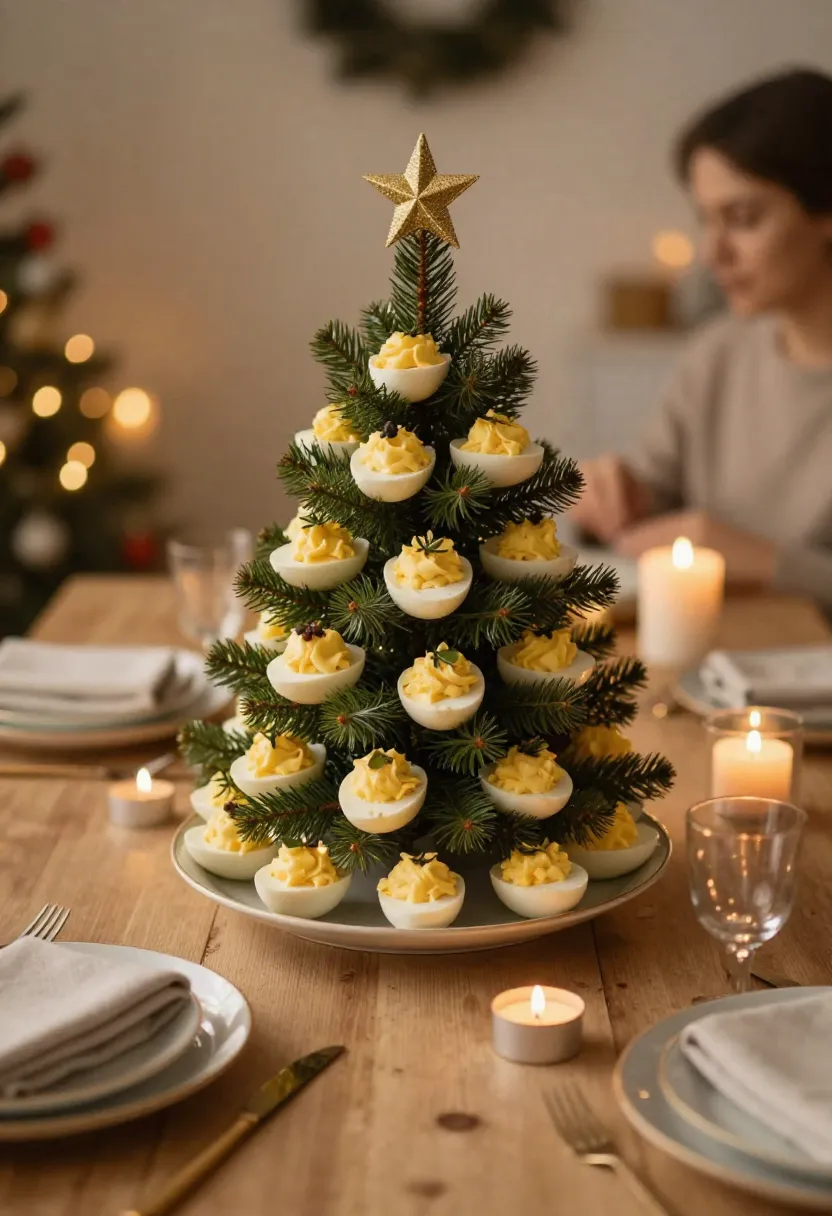
There’s something oddly satisfying about arranging the rows, adjusting them slightly, stepping back, then nudging one egg half just a bit to the left. It doesn’t have to be symmetrical to be beautiful. In fact, the slight imperfections often make it feel more personal. And inevitably, someone will sneak one before guests arrive. That’s usually a good sign.
Holiday cooking feels lighter when you remember a few simple truths:
- not every dish needs to be elaborate to be memorable
- effort is more important than perfection
- people remember how a gathering felt more than how flawless it looked
When you bring this deviled egg Christmas tree to the table, you’re offering more than an appetizer. You’re offering a small piece of joy — something thoughtful, a little playful, and undeniably festive. It encourages people to gather closer, to smile, to take photos, to taste and reach for another.
And in the end, that’s what the season is really about: warmth, generosity, and shared moments that linger long after the plates are cleared. 🎄✨